

At that point, the bottleneck stops being a staffing problem and becomes a sequencing problem. Specifically: the collision between contractually-protected meal and rest windows, a checkout-heavy clean queue, and a front desk that needs room-ready times by 3:00 PM. Managers who try to solve it by quietly compressing breaks or unilaterally reassigning floors are not just risking guest service — they are walking into a grievance.
This is the playbook for handling that day without burning out the team or burning the contract.
The 92% Occupancy Trap: Why Same-Day Spikes Break Housekeeping First
Housekeeping is already the hardest department to keep staffed. In a recent AHLA survey, 71% of hotels reported having job openings they were unable to fill, with the largest percentage of shortages (38%) being in housekeeping. On average, hotels are trying to fill six to seven open positions per property.
That's the baseline. There is no slack on a normal day, let alone a spike day. A follow-up AHLA survey published in March 2026 confirms that more than half of hotel owners still report being understaffed, and rising labor costs have become the industry's top operational concern alongside workforce shortages.
Now add the workload math. A long-cited operational rule of thumb is that a room attendant can clean about 13 to 14 rooms per shift. Cornell's housekeeping operations research ties this to the common formula of dividing guestrooms by 13 or 14. That rule assumes a roughly normal checkout/stayover mix. It collapses fast when the mix shifts.
A time-motion study by Hotel Management magazine in an all-suite hotel found that check-out rooms took 85% longer to clean than stayovers. UNITE HERE's own modeling assumes a difference of four rooms between an all-stayover and all-checkout room cleaning shift. So when occupancy clears 92% on a heavy-checkout day, your 14-rooms-per-attendant board is suddenly a 10-or-11-rooms-per-attendant board — and you have not added a single body.
That is the trap. The front desk is staring at a 3:00 PM check-in deadline, the board is mathematically impossible, and the only "flexible" inputs left are break windows and workload caps that the CBA explicitly protects.
What Union Break Rules Actually Require (and Where Managers Get It Wrong)
In UNITE HERE, HTC, and similar shops, the same-day moves a manager wants to make are the exact moves the contract restricts. Common provisions include:
- Protected meal and rest windows tied to clock or hours-worked triggers.
- Workload caps that adjust by checkout ratio, floor count, or room type. For example, one negotiated UNITE HERE language reduces the daily room quota by one room when an attendant is assigned to three different floors, and by two rooms when assigned to four floors.
- Seniority-based offer cascades for open shifts and overtime.
- Mandatory delegate or steward involvement when disputes arise.
The legal exposure is bigger than the contract itself. Under the NLRA, an employer with a recognized union has a duty to bargain over changes to terms and conditions of employment — and unilaterally reassigning rooms or compressing break windows to hit a check-in deadline can land as both a grievance and an unfair labor practice charge.
Cal/OSHA's housekeeping standard reinforces this. Section 3345 is intended to control the risk of musculoskeletal injuries and disorders to housekeepers in hotels and other lodging establishments. The required worksite evaluation must identify and address potential risks to housekeepers including excessive work-rate and inadequate recovery time between housekeeping tasks. Translation: "just push them through the break" is not just a contract problem in California — it is a regulatory one. A unique aspect of this standard is that it requires procedures for involving housekeepers and their union representative.
Warning
Compressing a contractual break to hit a 3:00 PM check-in deadline is a three-way exposure: a grievance under the CBA, an unfair labor practice charge under the NLRA, and — in California — a Cal/OSHA citation under §3345 for excessive work-rate and inadequate recovery time.
Where managers get it wrong
The three most common mistakes on a spike day:
- Skipping the seniority cascade when offering an open call-in shift, because the senior attendant "never picks up." The grievance still attaches. The offer has to be made and logged.
- Reassigning rooms mid-shift without recalculating the workload cap when the floor count or checkout mix changes.
- Pulling non-bargaining-unit staff (managers, supervisors, front desk) to clean rooms to recover time. In most CBAs, that is a direct contract violation regardless of intent.
The 24-Hour Demand Signal: Catching the Spike Before It's a Shortfall
The difference between a controlled spike and a 9:00 AM firefight is when you saw it coming.
Most properties still forecast labor off revenue projections. That is a lagging proxy. Traditionally, many hotels have used revenue projections to anticipate their labor needs. But revenue typically isn't an accurate predictor of the specific position-by-position staffing levels you'll need at a specific time. A more effective approach is to implement a volume-based labor forecasting strategy that aligns with the ways in which work is performed. Tracking and evaluating the following metrics will help you to more effectively anticipate your staffing needs: Occupied Rooms – This is the most reliable metric to predict the workload of your front office, housekeeping and engineering staff.
For housekeeping specifically, the signal you want is not occupancy alone — it is the checkout-to-stayover ratio combined with arrival peak window. A 70% occupancy day with 80% checkouts and a 2:00–4:00 PM arrival cluster is a harder housekeeping day than a 92% occupancy day with mostly stayovers and rolling check-ins.
Build a same-day trigger
The rule is simple: when forecasted occupancy and checkout mix cross a defined threshold the night before, the system should open call-in shifts to seniority order before sunrise — not at 9:00 AM when the board is already burning.
| Signal (by 6:00 PM previous night) | Action | Trigger time |
|---|---|---|
| Forecast occupancy ≥ 88% | Pre-stage open-shift offers in seniority order | 6:00 PM T-1 |
| Checkout ratio ≥ 60% | Reduce per-attendant cap per CBA workload formula | 6:00 PM T-1 |
| Arrival cluster ≥ 50% in a 2-hour window | Pre-position runner/houseperson coverage | 10:00 PM T-1 |
| Forecast occupancy ≥ 92% with ≥ 60% checkouts | Activate cross-property flex pool offer | 6:00 AM day of |
The earlier the signal fires, the more likely you are to fill the gap with a senior attendant who actually wants the shift — and the less likely you are to be making unilateral mid-shift reassignments at 11:00 AM.
Building a Seniority-Compliant Open-Shift Offer in Under 15 Minutes
Once the trigger fires, the workflow needs to be tight. Here is what "good" looks like:
- Identify the gap by zone or floor, not just headcount. A two-attendant gap on the high-checkout tower is not the same as a two-attendant gap across stayover floors.
- Generate the open-shift offer with the workload cap pre-applied (floor count, checkout ratio, deep-clean adjustments).
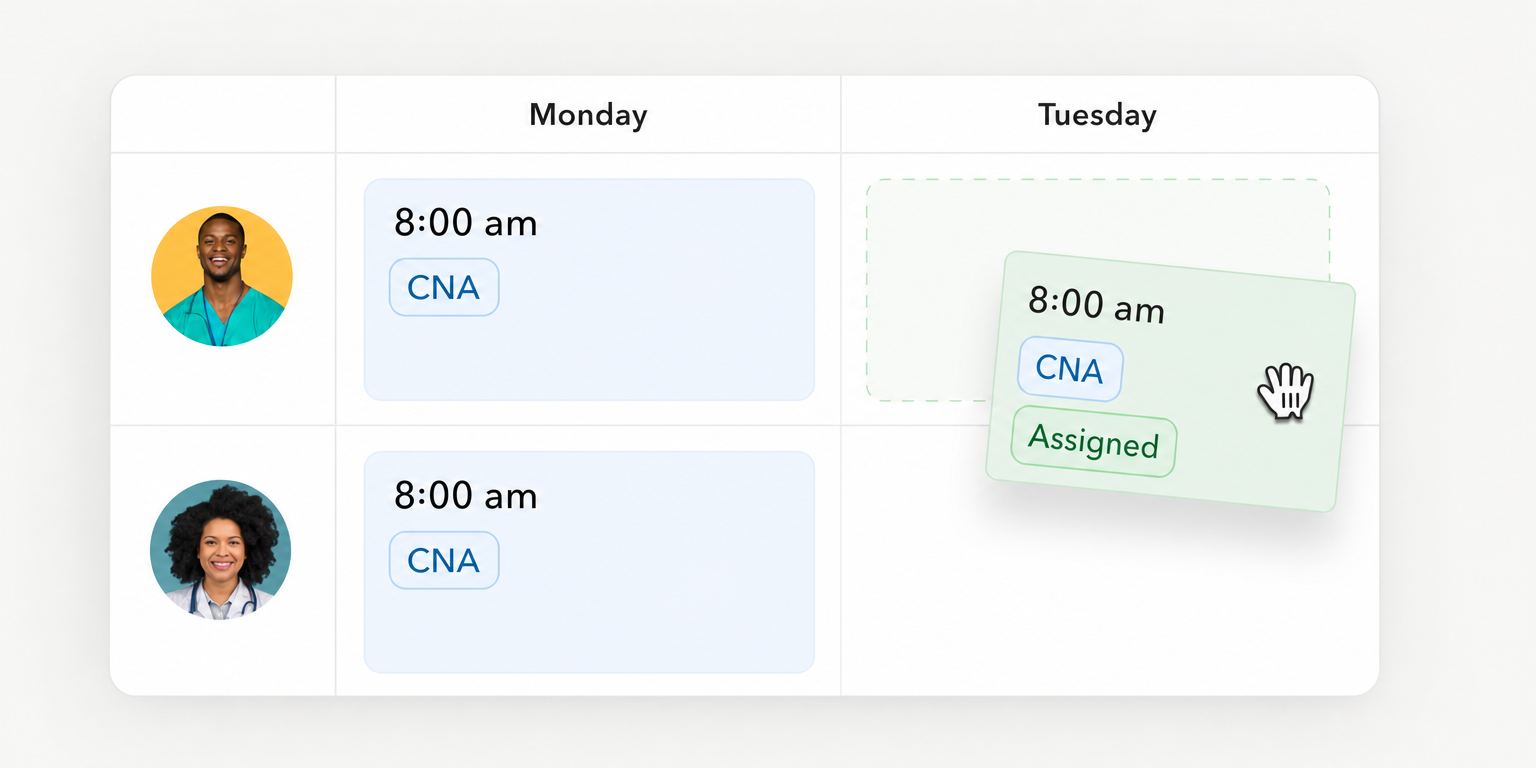
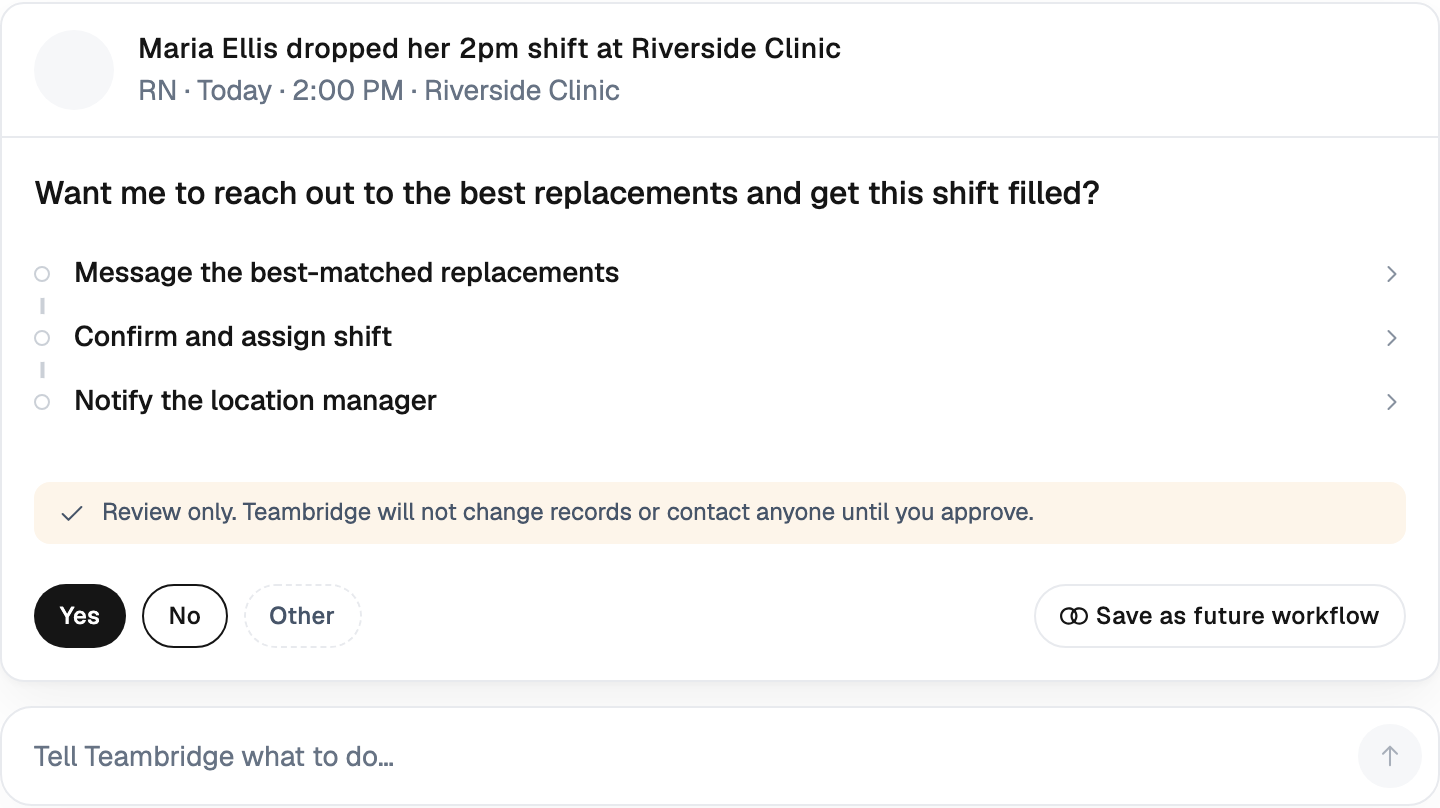
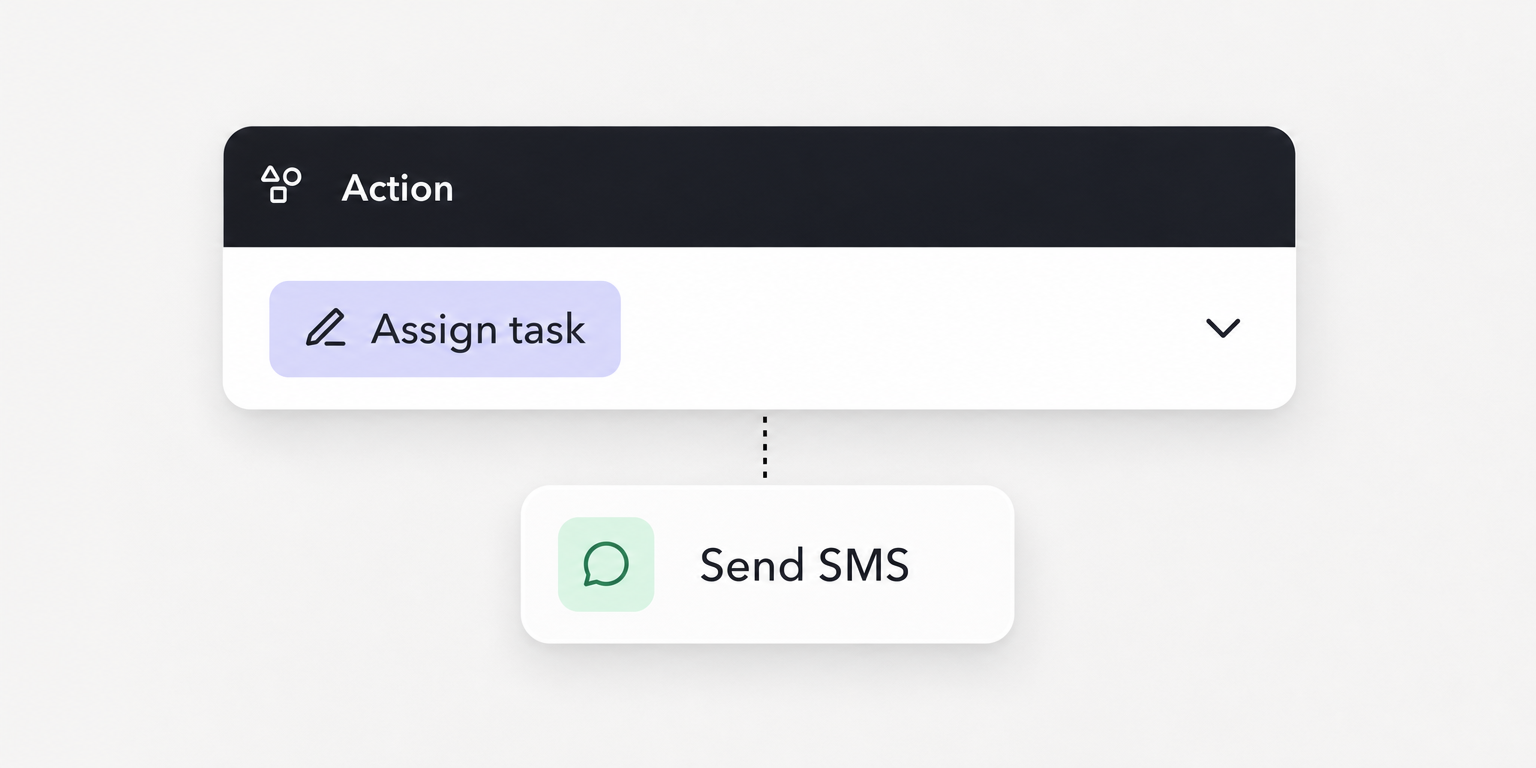
- Push the offer to qualified attendants in CBA seniority order, by mobile, with a defined response window — typically 15 to 30 minutes per tier before cascading to the next.
- Log every offer, every response, and every decline with timestamps. This is your grievance defense before the delegate ever asks.
- Auto-confirm the first qualifying acceptance and update the board, with the cap and break schedule already attached to the new assignment.
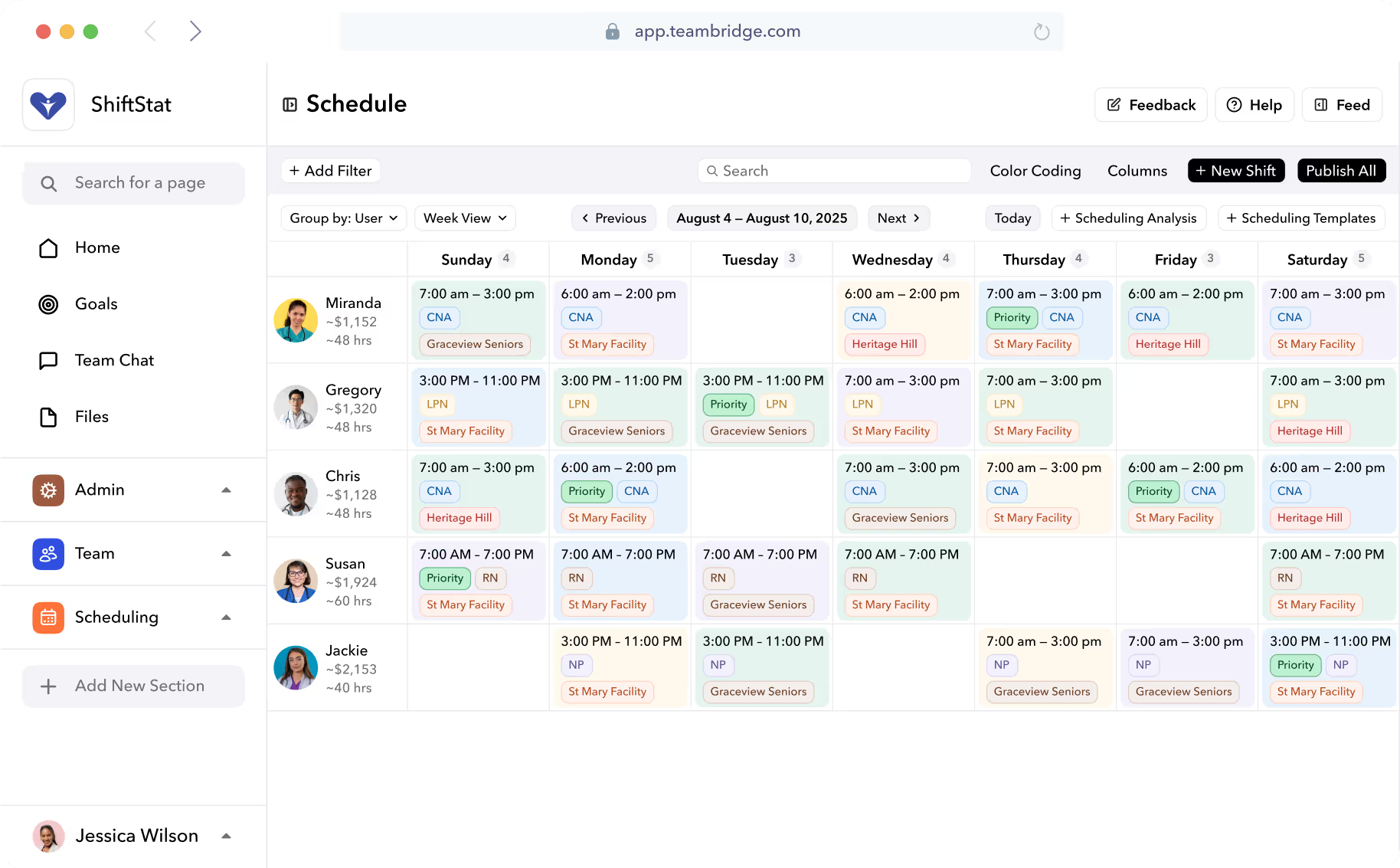
Doing this in 15 minutes by text message and a spreadsheet is how managers end up in front of a delegate. Doing it through a scheduling system that enforces credentials, seniority order, and rest-period rules automatically is how you keep the speed without the unilateral-change exposure. The offer goes out through the worker mobile app, the response is timestamped, and the audit trail builds itself.
Protecting the Break Without Losing the 3 PM Check-In Deadline
Assume you can't add bodies. The next lever is sequencing — and sequencing is where most of the recoverable time hides.
Split checkouts and stayovers across the shift
Front-load checkouts in the first half of the shift, when energy is highest and the front desk pressure for room-ready times is rising. Push stayovers into the back half, where turn-time variance is lower. This keeps the rooms touching the protected break windows in the lower-variance queue, so a delayed return from break does not blow up a check-in deadline.
Stagger meal breaks by zone, not by clock
If every attendant breaks at 11:30, the entire clean queue stops at 11:30. Stagger by zone or floor so checkout flow continues. The CBA almost always permits this — it just requires that each individual's meal/rest window remains within the contractual envelope.
Pre-position carts during the break
A runner or houseperson can restock linen and amenity carts while the attendant is on break. That recovers 8 to 12 minutes per attendant on return — without compressing the break itself.
Use a runner to absorb the bottleneck task
Stripping is the most physically demanding and most variable task in the turn. Assigning a houseperson or runner to strip checkouts ahead of the attendant means the attendant's time is spent on the cleaning value-add, not the bottleneck. Cal/OSHA pays close attention here — recall that the worksite evaluation must identify and address potential risks including lifting or forceful whole body or hand exertions, torso bending, twisting, kneeling and squatting, pushing and pulling. Offloading stripping is both an MSD-prevention move and a throughput move.
Tip
The cheapest minute you'll find on a 92% day is the one a runner saves an attendant by pre-stripping the next checkout. It costs you nothing in the workload cap and it returns directly to room-ready time.
The Cross-Property and Flex Pool Backstop
When in-house seniority offers don't fill the gap, the next tier is cross-property transfers within a brand or a flex pool. This is where the post-Safe-Hotels-Act regulatory environment matters.
The Safe Hotels Act generally prohibits hotels with more than 100 employees from using subcontractors to fill housekeeping, front desk, or front service roles, instead requiring hotels to "directly employ" such "core employees," per analysis from Gibson Dunn. For NYC subcontractors who work across multiple industries, the law's direct hiring requirement may stop them from working at hotels altogether.
The practical implication: in NYC and any jurisdiction that follows it, the temp-agency reflex on a spike day is no longer available for core housekeeping roles in covered properties. What is available is a directly-employed flex pool — attendants on your payroll who can move between sister properties as demand dictates.
That only works if a single workforce platform tracks the credential status, training currency, panic-button issuance, and CBA classification of every worker across every property. A manager pulling a verified room attendant from a sister property the same day should be able to confirm in one place that the worker is current on Cal/OSHA MIPP training (where applicable), human trafficking training (required under Safe Hotels Act), and that the assignment respects the worker's home-property seniority and break entitlements. That is the compliance layer the Hotels & Hospitality workflow has to enforce.
The Audit Trail: Documenting Every Same-Day Decision for the Delegate
After a 92%+ day, the delegate's questions are predictable:
- Who got offered the call-in shift first, and in what order?
- Were breaks taken, and were they on time?
- Was any attendant's workload cap exceeded based on their actual room mix?
- Did any non-bargaining-unit staff perform bargaining-unit work?
- Were any reassignments made mid-shift, and were caps recalculated?
If the answer is a manager scrolling through text threads and a printed board with handwritten changes, the grievance is already half-won by the union. Your contract (also known as a collective bargaining agreement, or CBA) is a legally binding document that details the majority of your rights and responsibilities during your employment. Many of the answers you seek are detailed in this document. For instance: holiday pay, vacation time, healthcare, retirement plan, discipline, grievance procedure (a system for fighting disciplinary action), scheduling, seniority, etc.
The documentation a manager needs ready before the delegate walks in:
- Timestamped open-shift offer log — who was offered, in what order, when, and what their response was.
- Break punches — actual break start and end times tied to the schedule's required windows.
- Room-assignment history — initial assignment, any mid-shift reassignment, and the cap calculation at each version.
- Workload cap audit — the contractual formula applied to each attendant's actual board on the actual day.
- Classification log — confirmation that bargaining-unit work was performed only by bargaining-unit staff.
This is grievance prevention, not paperwork. A unified time tracking and scheduling system replaces the spreadsheet-and-paper defense with a single timestamped record. When the delegate asks, you open a screen, not a binder.
From Firefight to Playbook: Turning the Next Spike Into a Non-Event
The 92% spike is not an emergency. It is a recurring, forecastable event — and given the demand picture, it is going to happen more often.
The hospitality industry is projected to have an 18% shortfall below required levels for 2026, with guest-facing, low-skilled and specialized operational roles likely to be the hardest positions to fill. Add the FIFA World Cup demand surge across multiple host cities and the picture is clear: the squeeze between protected break windows and checkout-heavy clean queues will hit more often, not less.
The four-part playbook:
- Early signal. Volume-based forecasting (occupied rooms, checkout ratio, arrival peak) firing the night before, not the morning of.
- Compliant offer cascade. Seniority-ordered, mobile-pushed, time-bounded, fully logged.
- Workload sequencing. Split checkouts and stayovers, stagger breaks by zone, pre-position carts, use runners to absorb stripping.
- Audit trail. Timestamped offer logs, break punches, cap calculations, classification logs — ready before the delegate asks.
The properties that handle the next spike well will not be the ones with the most attendants. They will be the ones whose systems make it impossible to skip the seniority offer, miss the break window, or exceed the workload cap by accident. Speed and compliance stop being a tradeoff when the cascade is automated and the audit trail is automatic.
The alternative is the same firefight, the same grievances, and the same 3:00 PM check-in delays — every time the pickup report comes in heavier than the forecast.

About the author

Content Writer at Teambridge
Anis Nanai is a content writer at Teambridge, with a focus on workforce management and the realities of running hourly teams. He prioritizes conversations with customers, staying close to the market, and understanding how workforce needs are changing. His writing connects those concerns to practical decisions about scheduling, time tracking, staffing, and automation. He examines product developments through the questions that matter to operators: what does this solve, how would it work for my team, and what evidence supports it?
Company perspective: this author works at Teambridge. Customer outcomes are attributed to their published sources.
View LinkedIn profile