A call-off text lands at 5:47 AM. The 7 AM client needs Hoyer-lift transfers, has moderate dementia, and a documented preference for a female caregiver who's been in the home before. The scheduler has roughly 45 minutes to find a replacement who actually fits — not just someone who's free.
Most agencies fail this test, and the failure isn't always visible. The visit gets covered, EVV ticks green, but a caregiver without dementia training spends two hours with a sundowning client, or a CNA without Hoyer certification improvises a transfer they shouldn't be attempting. The empty visit is a problem. The wrong caregiver in the home is a bigger one.
The Real Cost of a Mismatched Same-Day Replacement
The industry has been running on a depleted bench for years. Home care turnover hit 79.2% in 2023 and dropped only modestly to 75% in 2024 — still the highest attrition of any segment in healthcare. New hires are even shakier: data from early 2026 shows that roughly 70% of newly hired caregivers quit within their first 100 days.
That churn collides with a demand wall. In 2025, 59% of home care agencies reported they are operating with insufficient staff, a number that has remained consistent or worsened in recent years despite recruitment incentives. 63.3% of providers had to turn down cases in 2023 due to insufficient staffing.
The financial math is ugly even before you count clinical risk. Every time a caregiver leaves, you lose $2,600 to $5,000 in recruitment and training costs — and that's just the direct cost. Revenue per care employee increased by $1,000, resulting in $14,822 in revenue per hire, which means each unfilled or mishandled assignment chips at a meaningful slice of annualized revenue.
Important
The hidden cost of a same-day reassignment isn't the empty visit. It's the wrong caregiver showing up to a client whose care plan they can't safely execute — and the silent erosion of client trust that follows.
The scale matters because it constrains the math. With a constantly thinning bench, the probability that the next "available" caregiver also has the right care plan training, the right certifications, and a history with the client drops sharply. Agencies that rely on warm-body coverage are statistically guaranteed to mismatch — sometimes daily.
Why Spreadsheet Scheduling Breaks at 6 AM
Watch a real reassignment unfold and the tooling problem becomes obvious. The on-call scheduler pulls up the client's care plan in one system, the caregiver's credentials in a second, current availability in a third, and client preferences from a sticky note, a Slack thread, or memory.
The decision window is 15 to 30 minutes. The math is hostile.
What actually happens
- Call-off arrives via text at 5:47 AM.
- Scheduler scans a roster of 200+ caregivers for who's not already on shift.
- Cross-references against the client's care plan in the EMR.
- Tries to remember which caregivers have been in this home before.
- Calls or texts three or four people, hoping one picks up.
- Takes the first yes.
Step six is where the system fails. "First yes" optimizes for fill rate, not match quality. A caregiver with an expired CPR card, a CNA without the wound care competency the client needs, or someone the client previously asked not to be re-assigned — any of these can clear the bar of "available and willing."
The tooling most agencies use was never designed for sub-hour reassignment. A spreadsheet doesn't know that Maria's TB test lapsed last week. A group text doesn't know the client requested a male caregiver after a fall incident. The scheduler is the integration layer, and at 5:47 AM, that integration layer is half-asleep.
The Match Criteria That Actually Matter (Beyond Geography)
"Who's nearby and free" is necessary but nowhere close to sufficient. A real same-day match has to clear a stack of filters that agencies typically can't query in real time.
| Criterion | What it covers | Where it usually lives |
|---|---|---|
| Care-plan skills | Hoyer transfer, G-tube, wound care, ventilator, medication administration scope | EMR / care plan PDF |
| State certification | HHA, CNA, PCA — varies by state and payer source | HR file / credentialing folder |
| Client preferences | Gender, language, pet tolerance, smoking, prior incidents | Client chart / scheduler memory |
| Continuity history | Has this caregiver been in this home before? | Visit log |
| EVV / payer eligibility | Authorized under client's funding source (Medicaid waiver, VA, LTCi) | Billing system |
| Credential status | CPR, TB, flu, background check expiration | Compliance tracker |
| Hours / overtime guardrails | Will this push the caregiver into OT or beyond legal limits? | Payroll system |
EVV adds a hard floor. Skilled home care services billed to Medicaid and most managed care plans require Electronic Visit Verification, which means the replacement caregiver also needs to be authorized under the client's funding source and tied to a valid auth. A caregiver who clears every clinical filter but isn't enrolled with the client's MCO can't legally take the visit.
The concentration of concerns around caregiver interaction with EVV systems (86%) particularly highlights the need to balance compliance requirements with practical usability. Translation: agencies know EVV is non-negotiable and they know their current systems don't make it easy.
The industry is moving — slowly — toward more granular, data-driven matching. Organizations are starting to think about the chronic conditions of the individual being cared for, the skill levels of the caregiver, and whether those match into billable hours. Same logic applies to reassignment: the match isn't just acceptable, it has to be billable.

Building a Pre-Vetted Backup Pool by Care Plan, Not by Zip Code
The fix isn't a faster phone tree. It's pre-segmenting the workforce so the system already knows who's eligible before the call-off lands.
That means tagging every caregiver against the same dimensions you'd filter on at 6 AM:
- Care-plan competencies — explicit skills, not job titles. "CNA" doesn't tell you who can run a Hoyer.
- Active credentials and expiry dates — and whether they cover the payer source for this client.
- Client history — every visit a caregiver has logged in a specific home, ranked by recency.
- Preferences and exclusions — caregiver flagged off a client, or a client's stated preferences.
- Realistic availability — not just the schedule, but proximity to overtime thresholds.
When those tags exist as structured data instead of tribal knowledge, the system can surface a ranked replacement list the moment a call-off hits — usually before the scheduler has finished her coffee.
This is also a retention play. Agencies with the lowest turnover rates share several operational characteristics. They publish schedules at least two weeks in advance. They minimise last-minute schedule changes and compensate when they're unavoidable. They give each caregiver a primary client assignment rather than scattering them across multiple unfamiliar clients.
Match quality and retention are the same lever pulled twice. A caregiver assigned to the same three clients she knows is statistically more likely to stay than one being shuffled into unfamiliar homes every shift. The system that protects clients also protects your bench.
Hard Stops: Credential Expiry and Scope-of-Practice Guardrails
A reassignment system that only suggests good matches isn't enough. It has to refuse bad ones — automatically, at the moment of offer, no override without an explicit supervisor reason code.
The non-negotiable hard stops:
- Expired CPR, TB, or flu — caregiver doesn't appear in the eligible list, full stop.
- Lapsed background check or state license — same treatment.
- Scope-of-practice mismatch — a PCA isn't offered a skilled visit requiring an HHA or CNA.
- Client-level exclusions — caregiver flagged off this specific home for any reason.
- EVV / payer ineligibility — caregiver not credentialed under the client's funding source.
- OT / hours violations — accepting the shift would breach an OT cap or state hours rule.
These aren't optional polish. Regulatory requirements, insurance costs, and administrative expenses are also rising. In addition, funding pressures from programs like Medicare and Medicaid are tightening margins for providers. A single mismatched assignment can trigger a payer clawback or surface during a state survey, and at current margins, neither is something you can absorb quietly.
Warning
An override-anyway scheduler is a compliance risk wearing a hero cape. If the system lets a credential-expired caregiver clock in "just this once," you've engineered the exact event that will show up on your next survey.
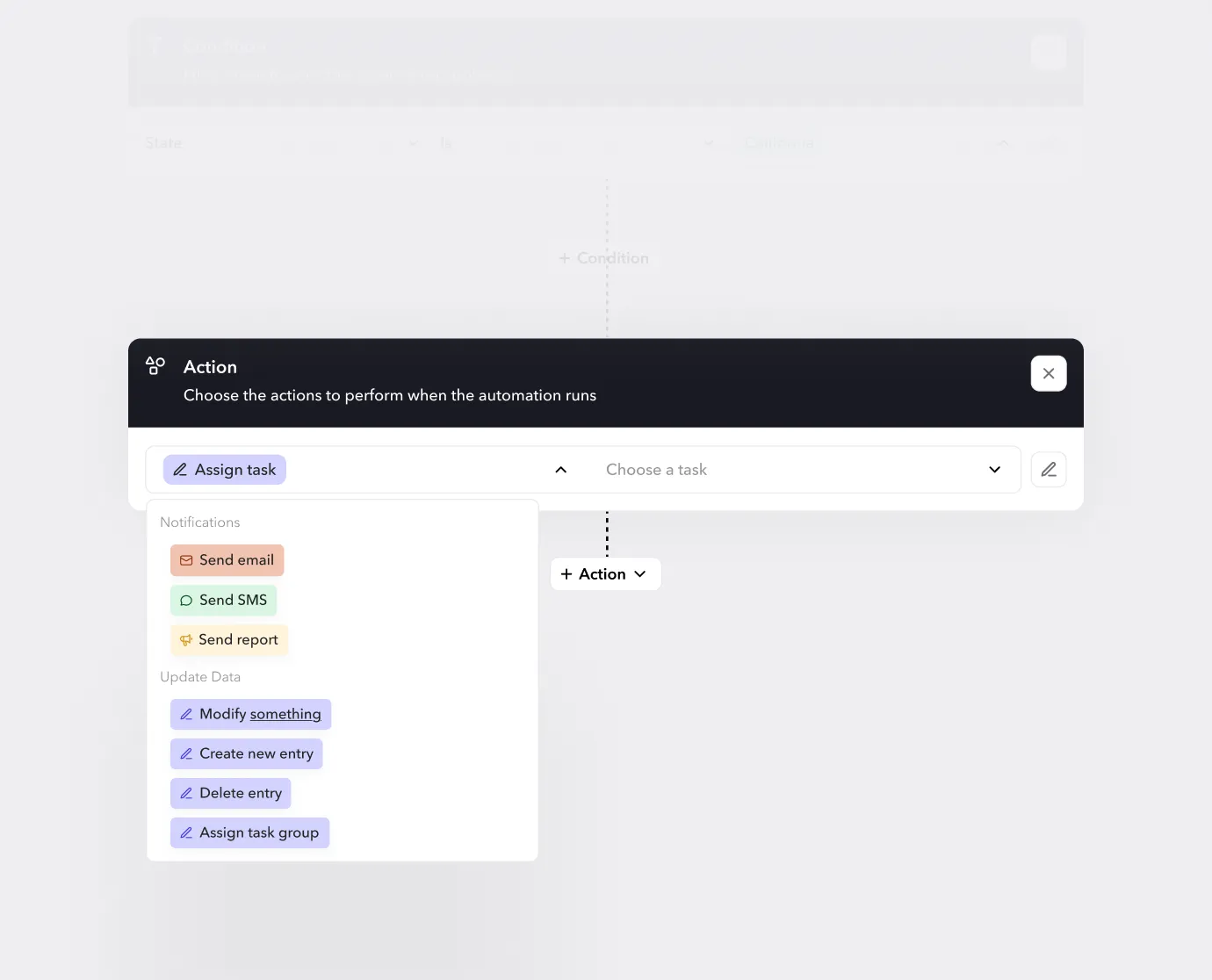
The right pattern is to bake credential enforcement into the scheduling layer itself, then drive renewals through automations that fire at 60, 30, and 7 days before expiry. The goal is for credential lapses to never reach the reassignment moment — they should have been resolved or surfaced weeks earlier.
The 15-Minute Reassignment Workflow
Here's what a same-day reassignment looks like when the system is doing the work instead of the scheduler:
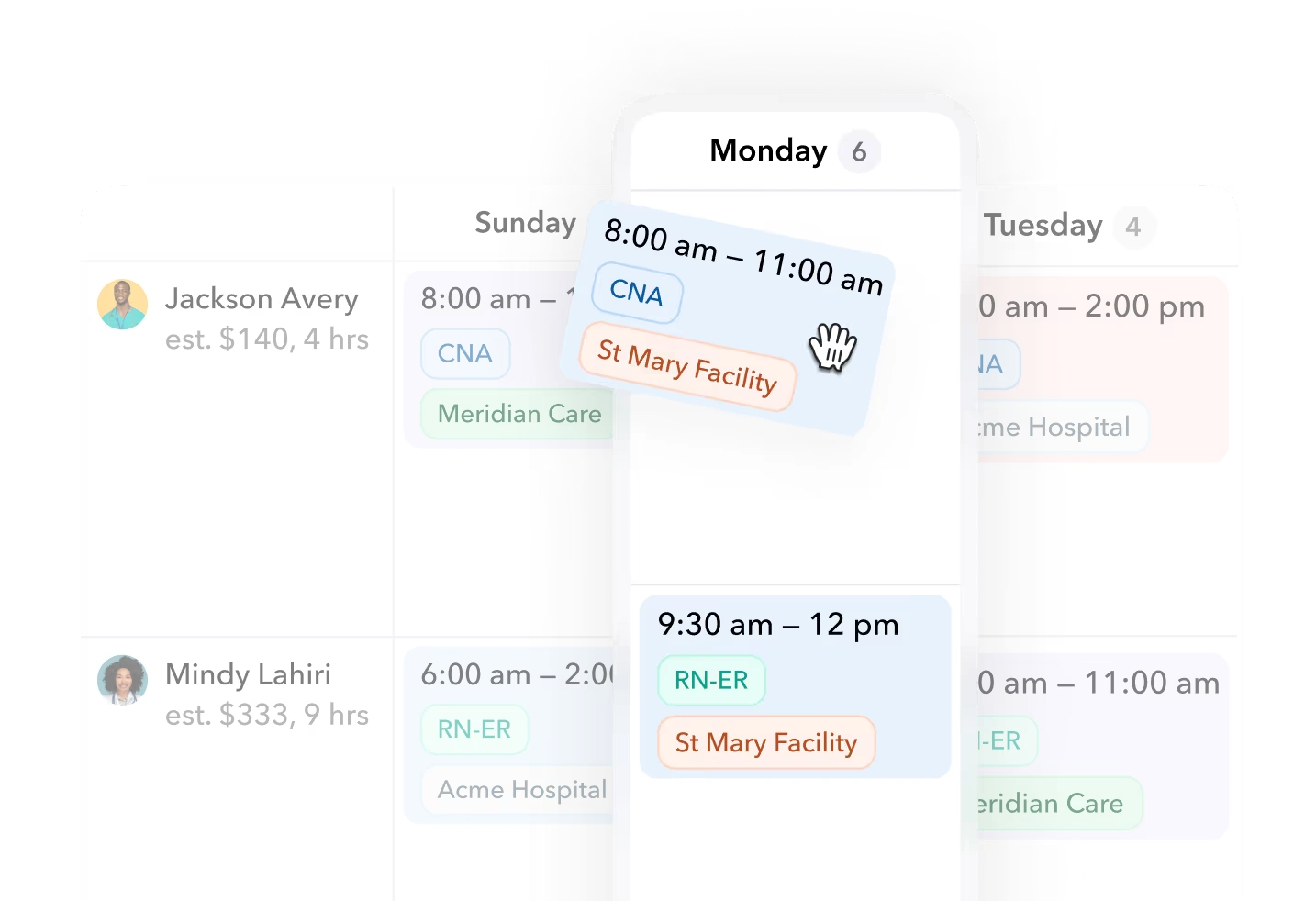
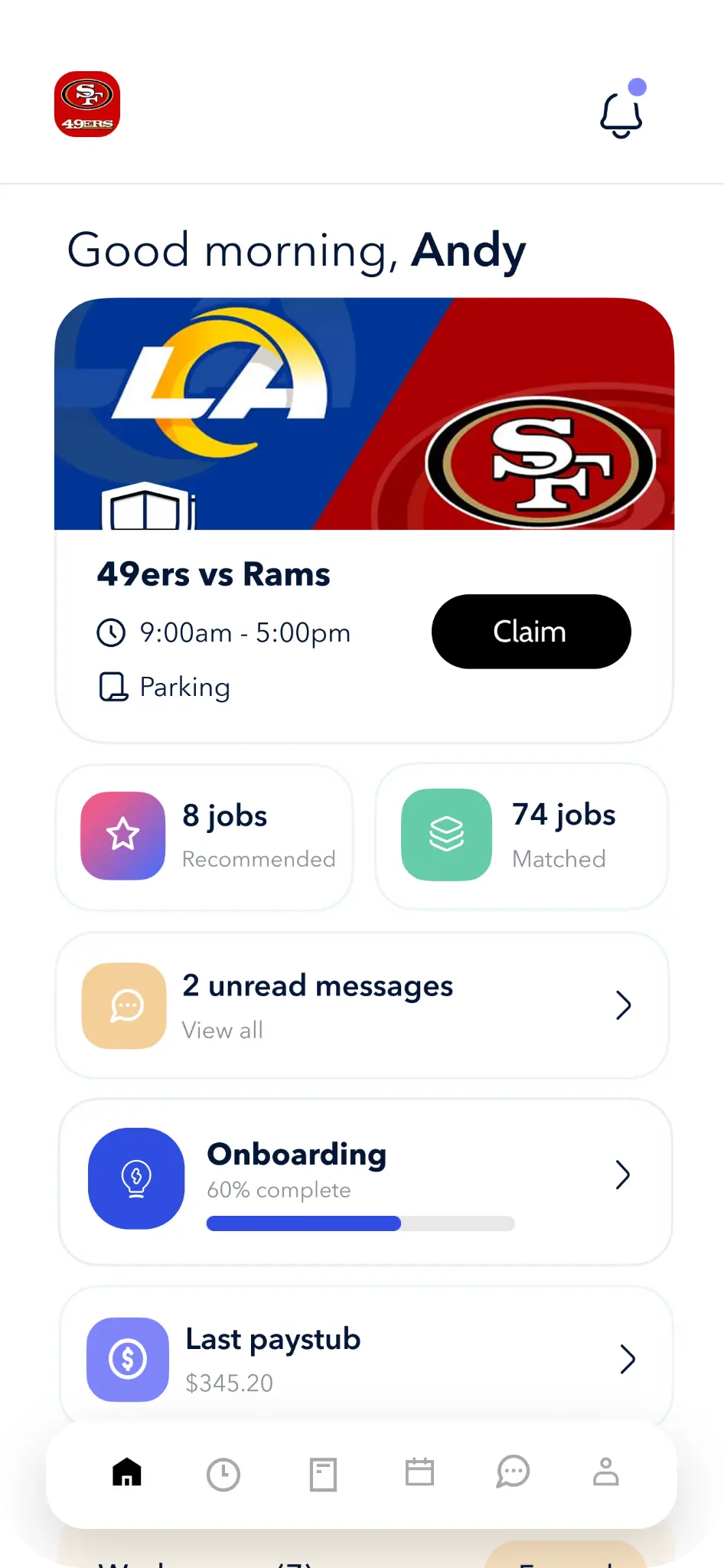
- Call-off lands in the system via the caregiver app at 5:47 AM. Status flips automatically; the open shift becomes searchable.
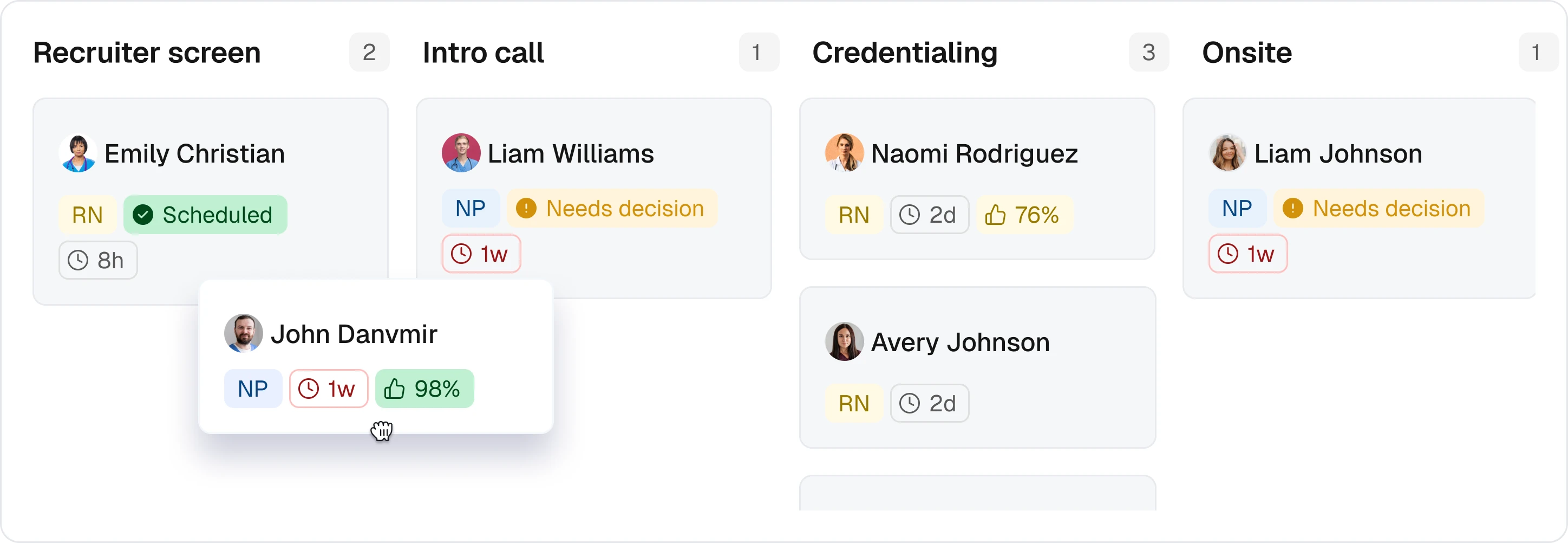
- Eligible caregivers auto-filter by care-plan competencies, active credentials, payer eligibility, client history, and realistic availability. Hard stops eliminate ineligible workers without scheduler input.
- Ranked offer goes out via SMS and push notification to the top three to five candidates, ordered by client history, then proximity, then continuity score.
- First eligible acceptance locks the shift. The system confirms with the caregiver and updates the schedule.
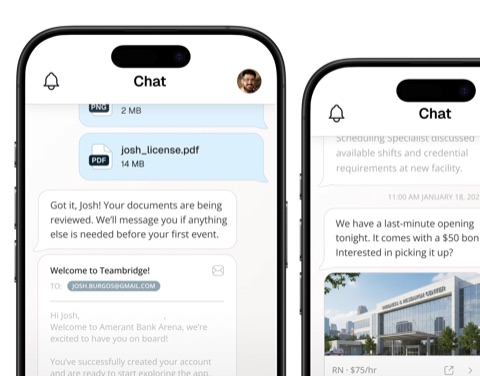
- Client is notified with the new caregiver's name, photo, and ETA — by SMS or in-app, depending on preference.
- EVV record updates to reflect the substituted caregiver under the correct authorization.
Elapsed time: 8 to 15 minutes, with the scheduler approving exceptions rather than driving the search.
Manual vs. automated, side by side
| Step | Manual workflow | Automated workflow |
|---|---|---|
| Detect call-off | Scheduler reads text, opens spreadsheet | System ingests via app, flags shift |
| Identify eligible workers | Memory + open tabs | Filtered list in seconds |
| Verify credentials | Manual check, often skipped | Hard-stop enforced |
| Make contact | Phone calls + texts to 4-6 people | SMS blast to ranked top 5 |
| Confirm acceptance | Wait for callback | First acceptance auto-locks |
| Notify client | Phone call (often skipped) | Auto-SMS with name + ETA |
| Update EVV | End-of-day correction | Real-time update |
| Total time | 45-90 minutes | 8-15 minutes |
| Mismatch rate | High | Near-zero on hard criteria |
The time savings are real, but the bigger win is that the scheduler stops being the integration layer. She approves edge cases. The system handles the 90% that follow predictable rules.

Measuring Match Quality, Not Just Fill Rate
Most agencies track fill rate — what percentage of open shifts got covered — and stop there. Fill rate is necessary but it's the lowest bar in the building. A 100% fill rate with 30% mismatched assignments is not a healthy operation; it's a survey finding waiting to happen.
The metrics that actually correlate with client retention and caregiver retention:
- Continuity rate on reassignments — what percentage of same-day replacements had prior visit history with the client.
- Full-match rate vs. partial-match rate — did the replacement clear every care-plan requirement, or just enough to fill the slot?
- Client complaint rate on reassigned visits — segmented from the baseline so you can see the gap.
- Caregiver-reported confidence — a one-tap signal at offer-acceptance: "Do you feel prepared for this client?"
- Time-to-fill — useful, but secondary to the above.
Clients rated their care professionals' abilities as the top satisfaction factor, while employees reported the highest satisfaction with the compatibility between clients and care professionals. Compatibility is the metric. Fill rate is a proxy that's easy to game.
Caregivers scheduled across three unfamiliar clients in a day churn faster than those with consistent assignments — even at the same wage.
That's not speculation. It's what the retention data on primary-client assignment shows, and it cuts directly against the temptation to plug holes with whoever's free. Match-quality KPIs make the trade-off visible: when fill rate is up but continuity rate is down, you're solving today's coverage problem by deepening tomorrow's turnover problem.
What to Put in Place Before the Next Call-Off
The operational fixes are unglamorous but tractable. None of them require a six-month implementation. Most can be staged in 30 to 90 days.
- Audit your caregiver tag taxonomy. Do you actually know — in structured, queryable data — who's Hoyer-trained, who has dementia experience, who's done G-tube feeds? If the answer lives in someone's head, it doesn't exist for reassignment purposes.
- Digitize care plan requirements. Care plans need to be machine-readable: required certifications, specific competencies, client preferences, exclusions. PDFs don't filter.
- Set credential expiry alerts at 60, 30, and 7 days, with automatic offboarding from the eligible-shift pool at expiry. No manual chase.
- Build a ranked backup list per client, refreshed on visit completion. Continuity is a renewable resource only if you're tracking it.
- Move the reassignment workflow off phone trees. Ranked offers via SMS / app, first-acceptance lock, automatic client notification.
- Track match quality, not just fill rate. Add the four KPIs above to your weekly ops review.
Most of this is plumbing, not magic. The agencies that handle same-day reassignment well aren't operating with a fundamentally different caregiver pool — they've just removed the scheduler from the critical path on the 90% of decisions that follow rules.
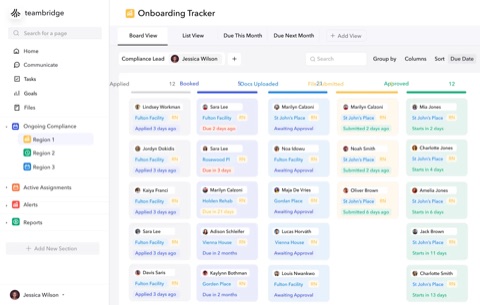
For agencies running this on the Teambridge home care platform, client-caregiver matching, EVV, credential enforcement, and the reassignment workflow live in the same system — so a 5:47 AM call-off doesn't require a scheduler to play integration layer between five disconnected tools. The decision logic that takes a human 45 minutes to execute manually runs in the background, and the scheduler's job becomes approving edge cases instead of chasing them.
The next call-off is coming. The question is whether your system already knows who fits, or whether the scheduler is going to find out the hard way.