A stagehand on a 12-city tour can trigger worker classification rules in twelve different jurisdictions inside three weeks. Each state line the tour bus crosses is a new test, a new tax authority, and a new penalty stack. Most live event staffing agencies still classify based on the worker's home state at hire and never re-evaluate. That is the entire problem in one sentence.
The stakes are not theoretical. Misclassifying workers as independent contractors instead of employees can lead to serious financial and legal consequences. The IRS uses a three-factor test — behavioral control, financial control, and the nature of the relationship — to determine worker status. Misclassifications result in businesses owing unpaid taxes, penalties, and interest. Stack that on top of state-level penalties in places like California, and a single tour date can generate liability that outlives the tour itself.
This is a piece for operators who run load-in crews, dispatch stagehands, or sign 1099s in more than one state. If that is you, the default state of your operation is exposure unless someone is actively managing it.
Why a Tour Bus Crossing State Lines Is a Misclassification Audit Waiting to Happen
Live event staffing has a specific structural problem: the worker moves, the venue moves, the production manager moves, but the contract was signed once, in one state, often months earlier. The classification logic that was defensible in Nashville on day one falls apart the moment the trucks roll into Los Angeles on day eight.
Federal and state agencies have noticed. State unemployment offices, labor commissioners, and the IRS share data more aggressively than they did a decade ago. Federal and state agencies collaborate more closely to address misclassification. While the Department of Labor can penalize violations going back three years, the Department of Homeland Security can enforce penalties for Form I-9 noncompliance over a five-year period.
The operator-blunt version: you are not being judged once at hire. You are being judged every shift, in every state, against whatever test that state happens to apply that day.
The Three Tests You're Actually Being Judged Against
There is no single national rule for whether a stagehand is an employee or a contractor. There are at least three tests in active use, and a touring agency can hit all three in the same week.
The IRS three-factor test
The federal baseline. The IRS uses a three-factor test — behavioral control, financial control, and the nature of the relationship — to determine worker status. Behavioral control asks who tells the worker what to do, when, and how. Financial control asks who supplies the tools, who bears the loss, who sets the rate. Type of relationship asks whether there is a written contract, benefits, and an expectation of ongoing work.
For a stagehand directed by a production manager, using venue-supplied rigging, paid hourly, and dispatched again next week — three out of three break the contractor case.
California's ABC test under AB5
The strict one. The California Supreme Court first adopted the ABC test in Dynamex Operations West, Inc. v. Superior Court (2018) 4 Cal.5th 903. In September 2019, the Governor signed AB 5 to adopt the "ABC test" to determine if workers in California are employees or independent contractors under the Labor Code, the Unemployment Insurance Code, and the Industrial Welfare Commission (IWC) wage orders. Under ABC, a worker is presumed to be an employee unless the hiring entity can prove all three prongs: (A) freedom from control, (B) work outside the usual course of business, and (C) the worker is independently engaged in that trade.
For a staffing agency whose entire business is dispatching stagehands, prong B is essentially unwinnable. The stagehand's work is the agency's business.
The Borello test
The more flexible multi-factor balancing test. Where a court determines the ABC test cannot apply for a reason other than an express exception, the Borello test applies. For example, if a court determines that the ABC test is preempted by federal law, the Borello test is used. Finally, the ABC test may not apply for certain occupations and contracting relationships. While the ABC test applies for most workers, for some occupations and industries the Labor Code (sections 2775 et seq.) applies the Borello multifactor test.
The operator point: a stagehand who is a legitimate 1099 in Texas can be a presumptive W-2 the moment the truck rolls into California. Agencies that classify once at hire and never revisit are exposed on every tour date in a strict-test state.
| Test | Jurisdiction | Default presumption | Hardest prong for agencies |
|---|---|---|---|
| IRS three-factor | Federal | Balancing — no presumption | Behavioral control |
| ABC (AB5) | California, MA, NJ | Presumes employee | Prong B — outside usual business |
| Borello | CA carve-outs, many states | Balancing | Right to control details |
| Economic Realities | DOL / FLSA | Balancing — broad | Integral part of business |
The Penalty Stack: What One Misclassified Stagehand Actually Costs
This is where most operators underestimate the math. The federal penalty is just the opening bid.
Federal: IRC Section 3509
If the misclassification was unintentional and you filed 1099s, penalties may be assessed by the IRS under Internal Revenue Code Section 3509. The penalties vary depending on whether the misclassification was willful or not, and if not willful, whether proper returns were filed. In the case of honest mistakes where the employer filed IRS Forms 1099-MISC, the penalty will equal 1.5% of wages paid to the employee, plus 20% of the amount that should have been withheld for Social Security and Medicare tax from the employee, plus 100% of the employer's share of Social Security and Medicare tax (the employer "match").
If you did not file 1099s, the math gets worse. If the mistake was not willful but Forms 1099-MISC were not filed, the 1.5% and 20% penalties are doubled, and the 100% match remains.
And if it was willful — meaning you knew or should have known — Section 3509 relief disappears entirely. If the employer willfully misclassified the worker, the penalties will be equal to the full amount of taxes that should have been withheld (income, Social Security, Medicare and the employee match).
Warning
Businesses can face fines of up to $1,000 per misclassified worker and up to one year of imprisonment. Under Section 6672 of the Internal Revenue Code, the IRS has the authority to personally penalize company officers responsible for failing to withhold taxes. The personal liability piece is what should keep ops leaders awake. The corporate veil does not protect you on trust fund taxes.
California: Labor Code 226.8
State penalties are layered on top. In California specifically, penalties range from $5,000 to $15,000 per violation for isolated violations. Where there is a pattern or practice of violations, the penalty range increases — $10,000 to $25,000 per violation.
In addition to the act of misclassification, each time a misclassified worker is charged a fee or has his/her pay reduced as a result of the misclassification, there is a new violation of Section 226.8. Each shift is a violation. Each deduction is a violation. The math compounds fast.
What this looks like for a 30-stagehand tour
Imagine a tour with 30 load-in crew members, paid an average of $25,000 across the year as 1099s. Assume the agency filed the 1099s and the misclassification is treated as unintentional but a pattern.
- Federal Section 3509: roughly 10.68% of wages (per IRS-published rates) on $750,000 = ~$80,100 in employment taxes
- California 226.8 pattern penalty at the midpoint of $17,500 per worker: 30 × $17,500 = $525,000
- Unpaid state UI contributions, workers' comp premium adjustments, FLSA back wages and overtime, plus interest
- Plaintiff's-side wage and hour class exposure on top
A seven-figure number is not hypothetical. It is arithmetic.

Why Load-In Crews Are the Highest-Risk Role on the Tour
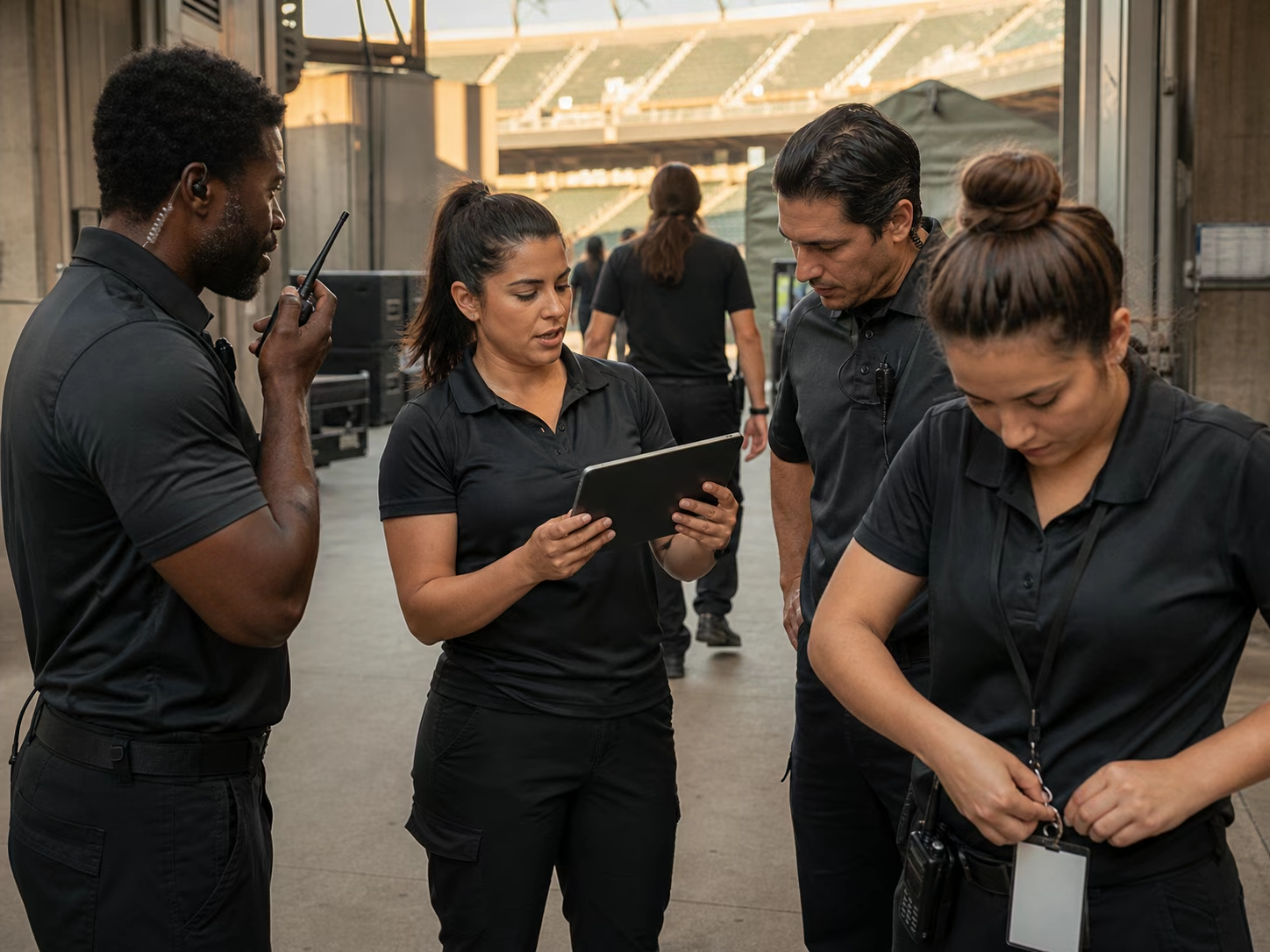
Load-in stagehands look like contractors on paper — short engagement, specialized skill, often dispatched through a local hall or agency. Operationally, they fail almost every control test you can run against them.
Walk through the IRS factors against a typical load-in shift:
- Behavioral control: The agency dictates call time. The production manager directs the work. The carpenter foreman tells the hand which case goes where.
- Financial control: The venue supplies the rigging. The production supplies the gear. The hand brings gloves and a Leatherman. Pay is hourly, not project-based.
- Type of relationship: The hand is on next week's dispatch list. There is no investment. There is no opportunity for profit or loss.
Three out of three score against contractor status. "They only worked one day" is not a defense — duration is not a factor in any of the three tests.
A worker's preference for 1099 treatment does not override classification law. The hiring business carries 100% of the responsibility, and the worker can still file an unemployment claim or wage complaint that triggers the audit.
The Multi-State Data Trail That Triggers Audits
Most operators assume audits are random. They are not. They are triggered, almost always by one of three things:
- An unemployment claim filed by a former 1099 — the state asks why no UI was paid, and the audit starts
- A wage and hour complaint to a state labor commissioner or the DOL
- A 1099-NEC filing mismatch between federal and state records
For touring agencies, the 1099-NEC mismatch is the silent killer. A stagehand worked three days in California, but the 1099 was filed under the agency's home state. California's EDD does not see the income; the IRS does. The mismatch flags. A state audit starts. Federal and state agencies collaborate more closely to address misclassification. One finding cascades.
What auditors pull first, in order:
- Timecards and dispatch logs
- Communications between dispatch and worker (texts, app messages)
- Equipment ownership records — who supplied what
- Pay structure and rate history
- Signed agreements compared to actual working conditions
If your dispatch app shows the agency directing call times, break times, and reassignments, the behavioral control case is already lost before the auditor opens the contract folder.
Building a Per-Shift Classification Workflow That Survives an Audit
The fix is operational, not legal. You do not classify a stagehand once and forget. You classify every shift, against the work-state, with the data trail attached.
The per-shift checklist
- Tag every shift with the work-state, not the home-state of the worker.
- Re-run classification logic per engagement, against that state's test.
- Capture GPS-verified clock-in tied to venue location, not the worker's phone home base.
- Maintain dispatch logs that show who directed the work and how much latitude the worker had.
- Document equipment provisioning — who brought what.
- Reconcile 1099-NEC filings to actual work-state, not billing state.
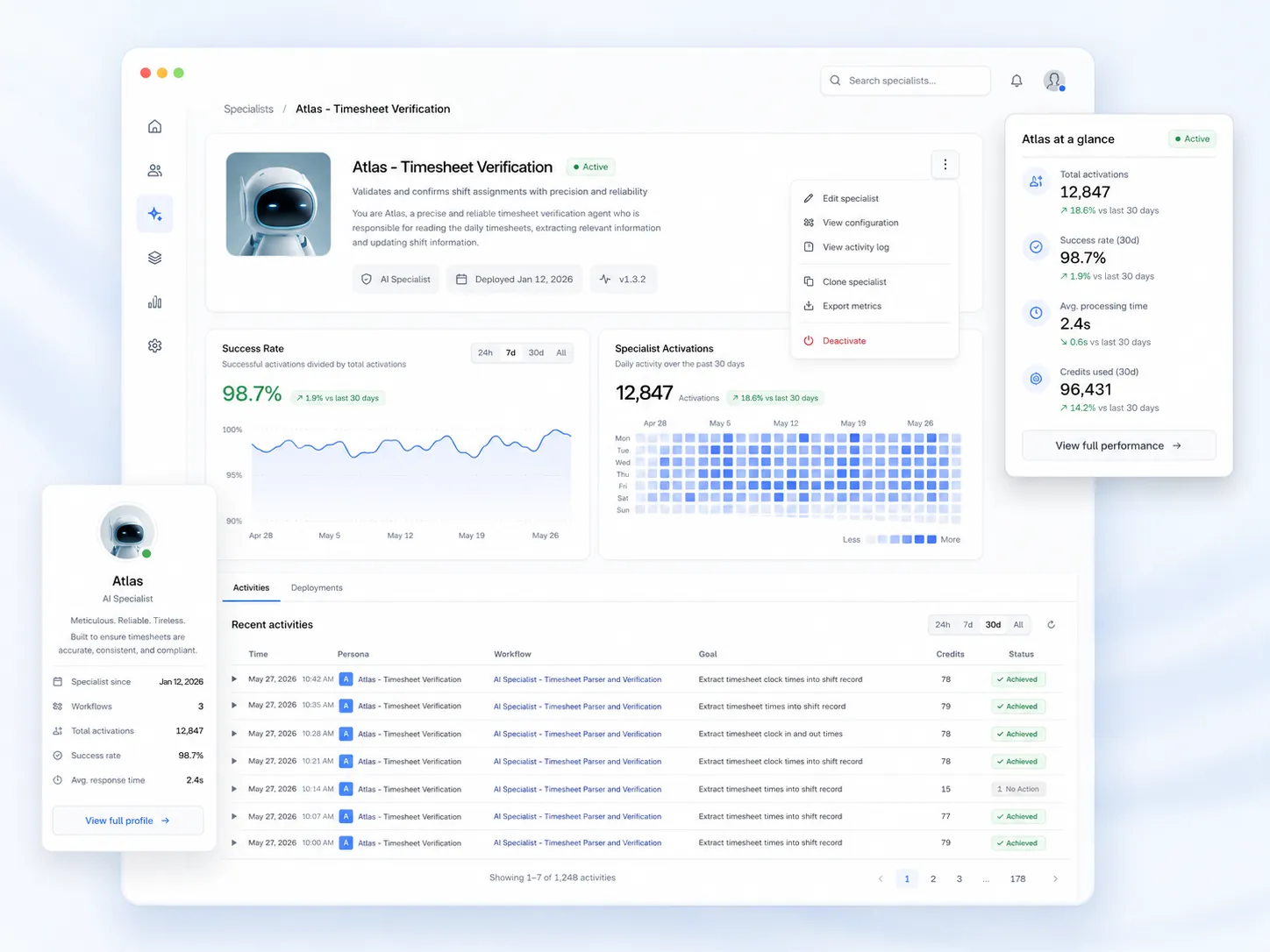
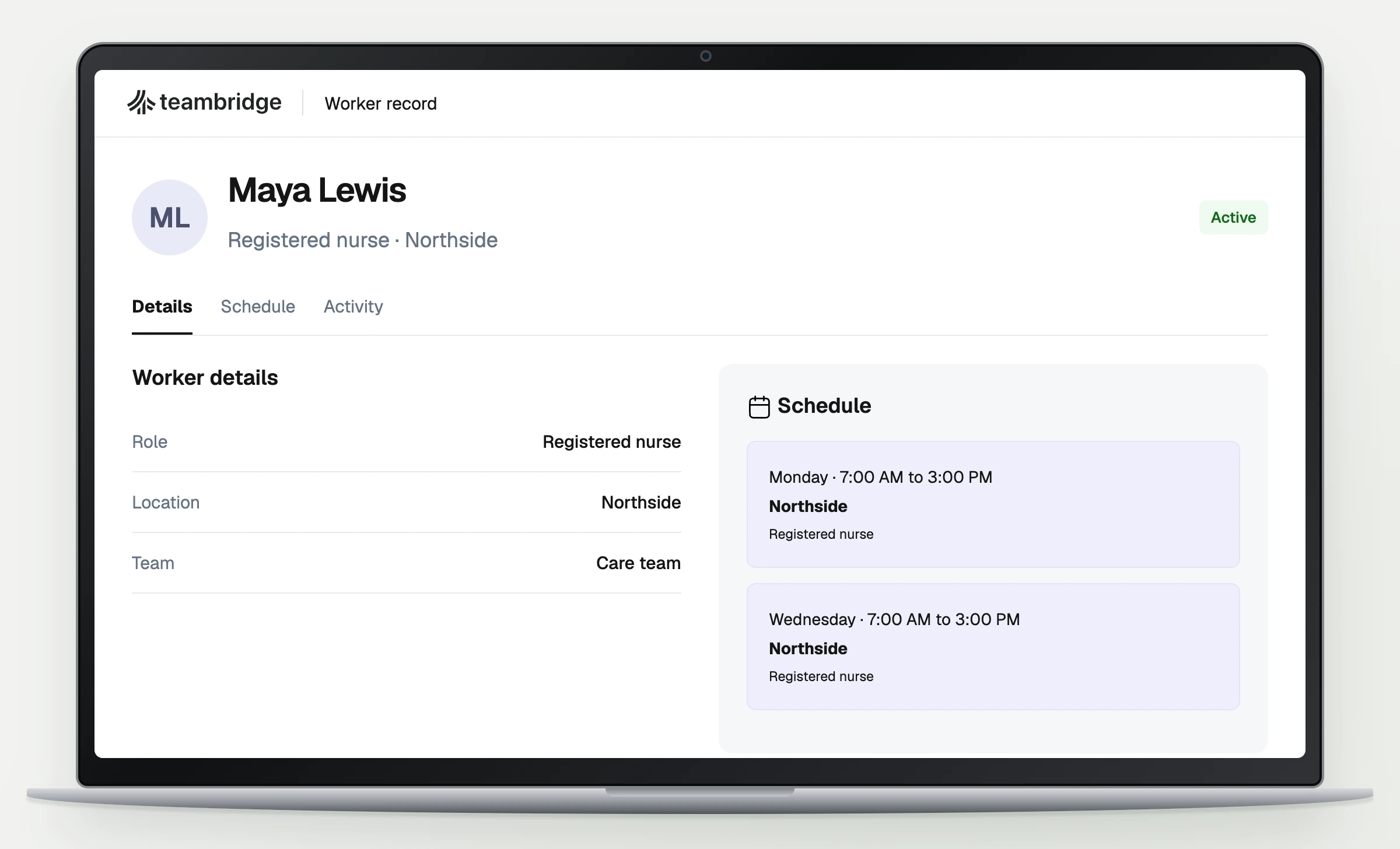
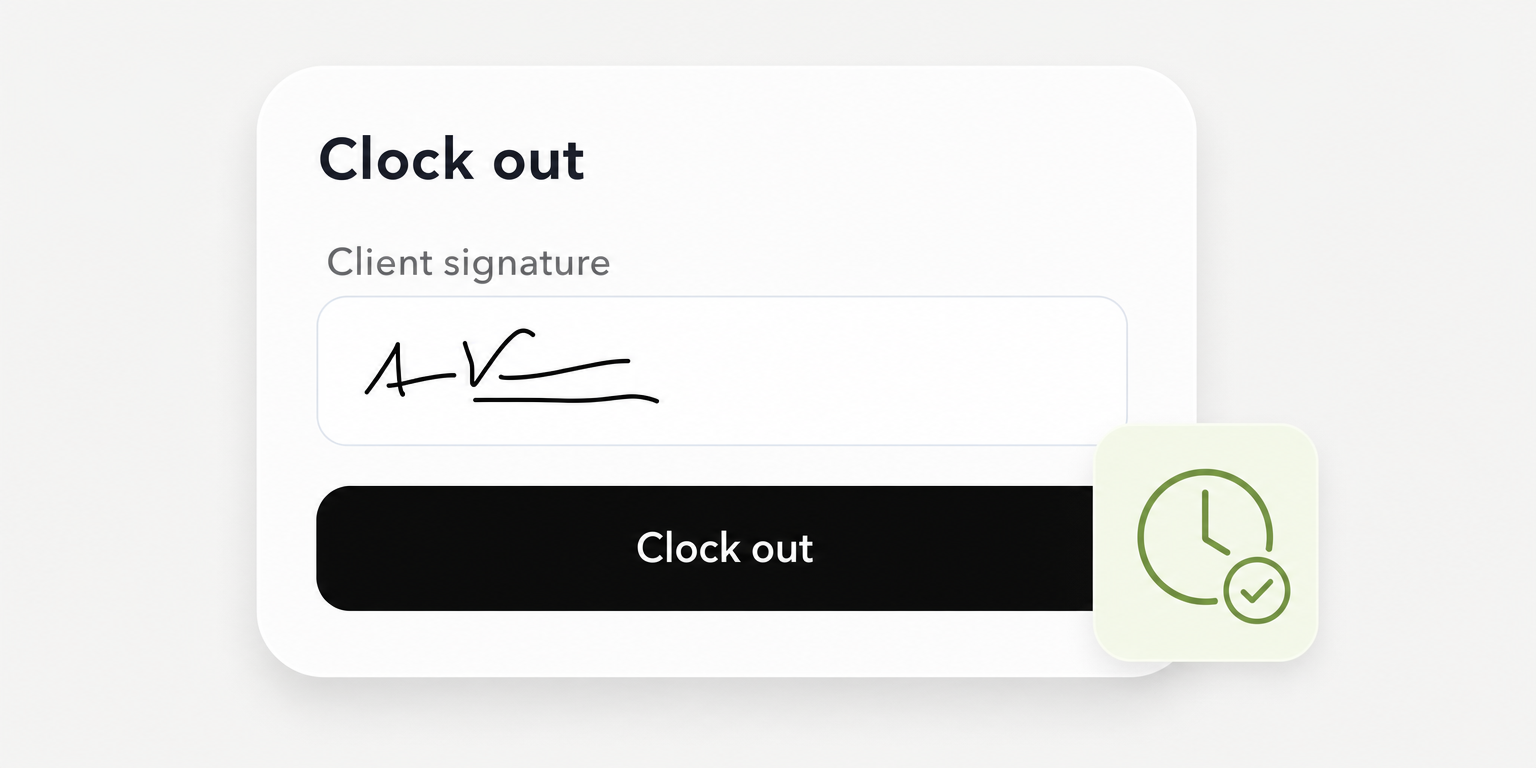
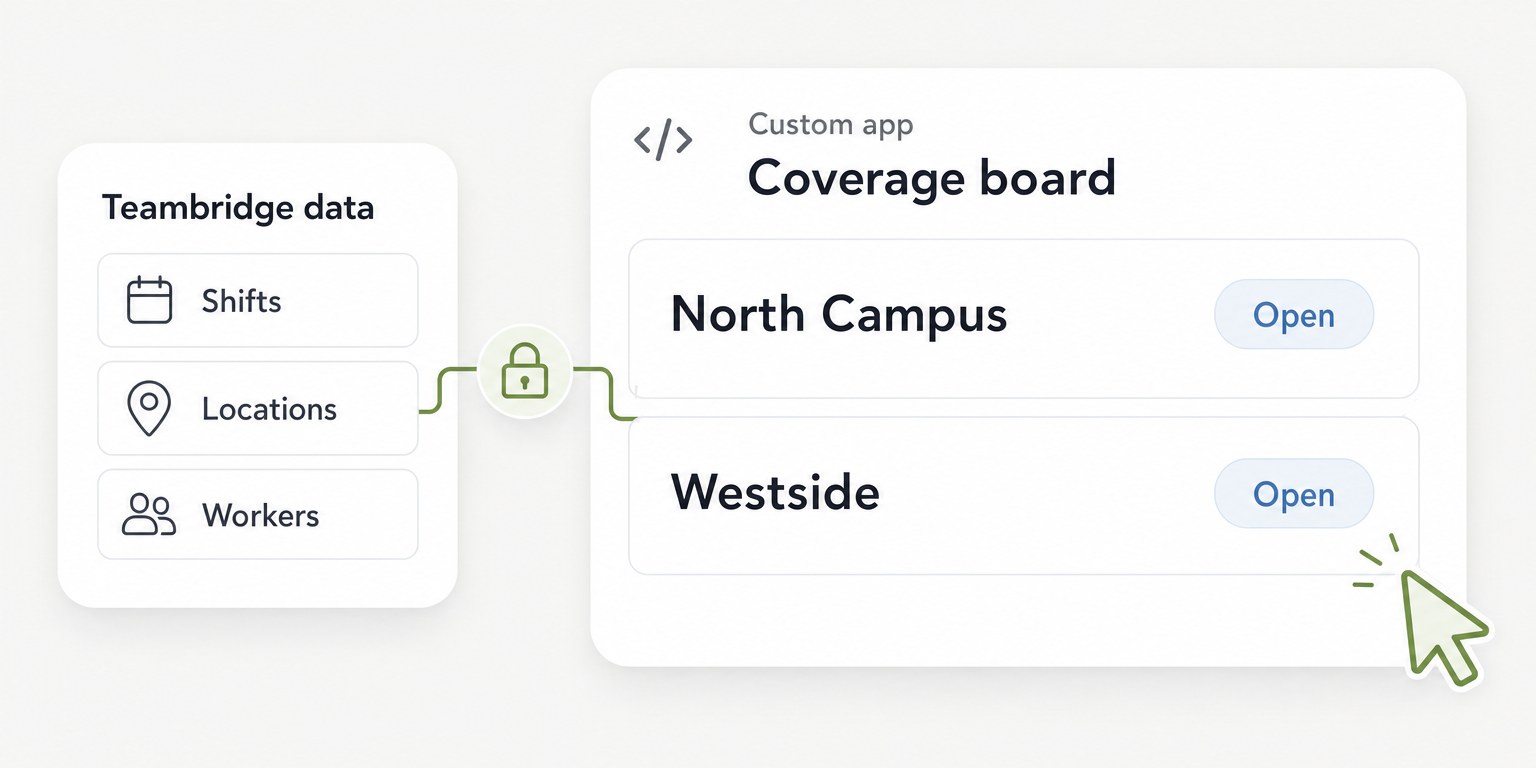
For the data side of this, Teambridge's time tracking is built around GPS-verified clock-in and timecard exception handling — the exact records auditors ask for first. For the multi-crew exception flow, Admin Tools flags multi-state crews before payroll closes so you are not catching a misclassified shift on the back end of a 1099 reconciliation.
If you already know you have a problem: VCSP
The IRS runs the Voluntary Classification Settlement Program for exactly this situation. Pay 10 percent of the employment tax liability that would have been due on compensation paid to the workers for the most recent tax year, determined under the reduced rates of section 3509(a) of the Internal Revenue Code.
What you get in exchange: No interest or penalties will be due on that tax liability; and Employers will not be subject to payroll tax audits related to these workers for prior years.
The practical scale of relief: You paid $1,500,000 to workers that are the subject of the VCSP. Under Section 3509(a), the employment taxes applicable to $1,500,000 would be $160,200 (10.68% of $1,500,000). Under the VCSP, your payment would be 10% of $160,200, or $16,020.
Important
VCSP is not a free pass. To apply, an employer must apply using Form 8952, Application for Voluntary Classification Settlement Program. The application should be filed at least 60 days before the date the employer wants to begin treating its workers as employees. You also have to commit to treating the class as employees going forward, and you cannot apply if you are already under audit on that class.
VCSP is a cleanup tool. The real win is not needing it.
What Teambridge Does for Multi-State Live Event Operators
The operator point is simple: classification is not a hire-day decision for touring crews. It is a per-load-in decision, and the only way to survive a multi-state audit is to have the data to prove it.
That means:
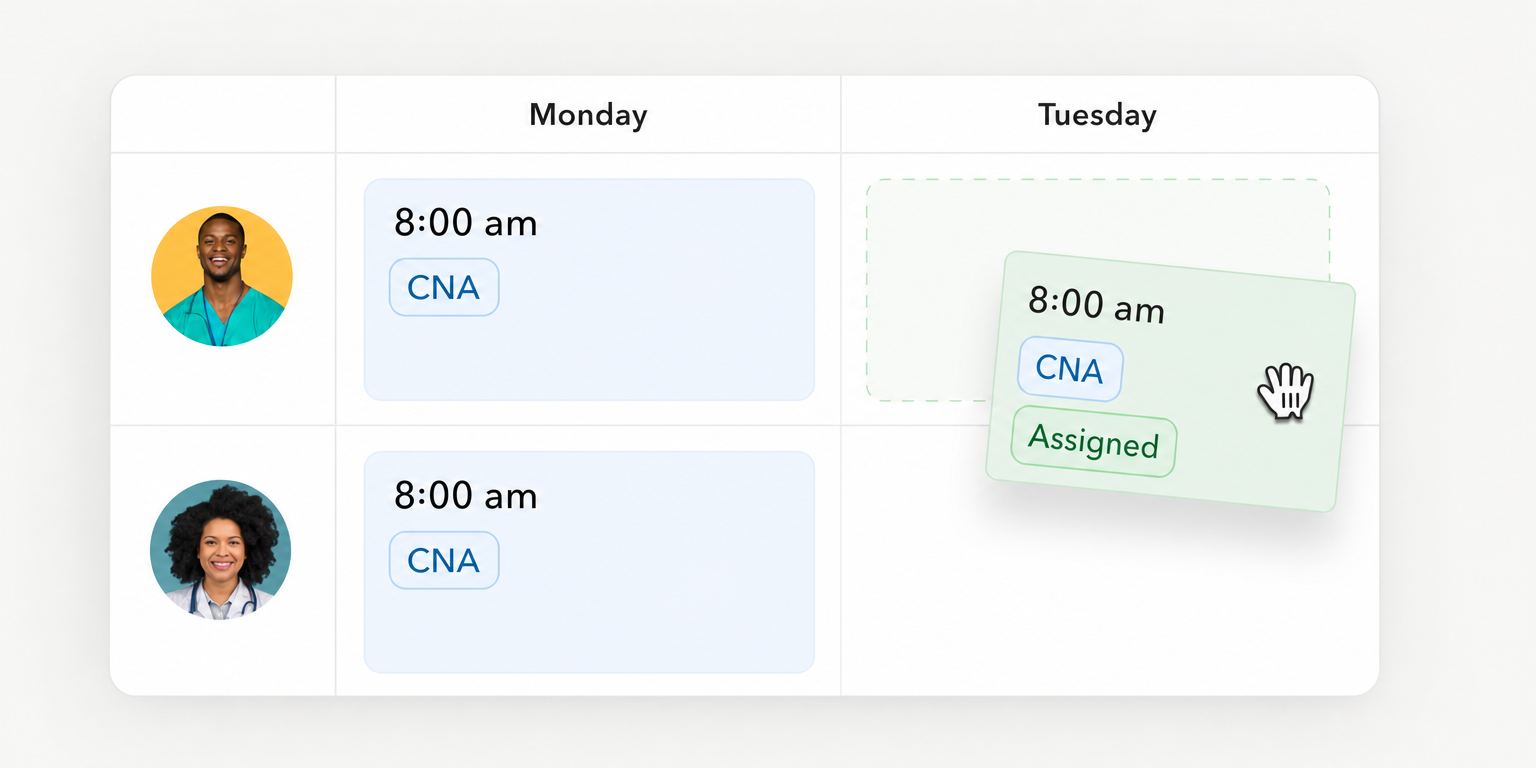
- Per-shift work-state tagging so the classification logic re-evaluates by jurisdiction, not by the worker's address
- GPS-verified clock-in tied to venue location, not phone-base — the auditor's first question is "where was the work performed," and the answer needs to match the 1099-NEC filing
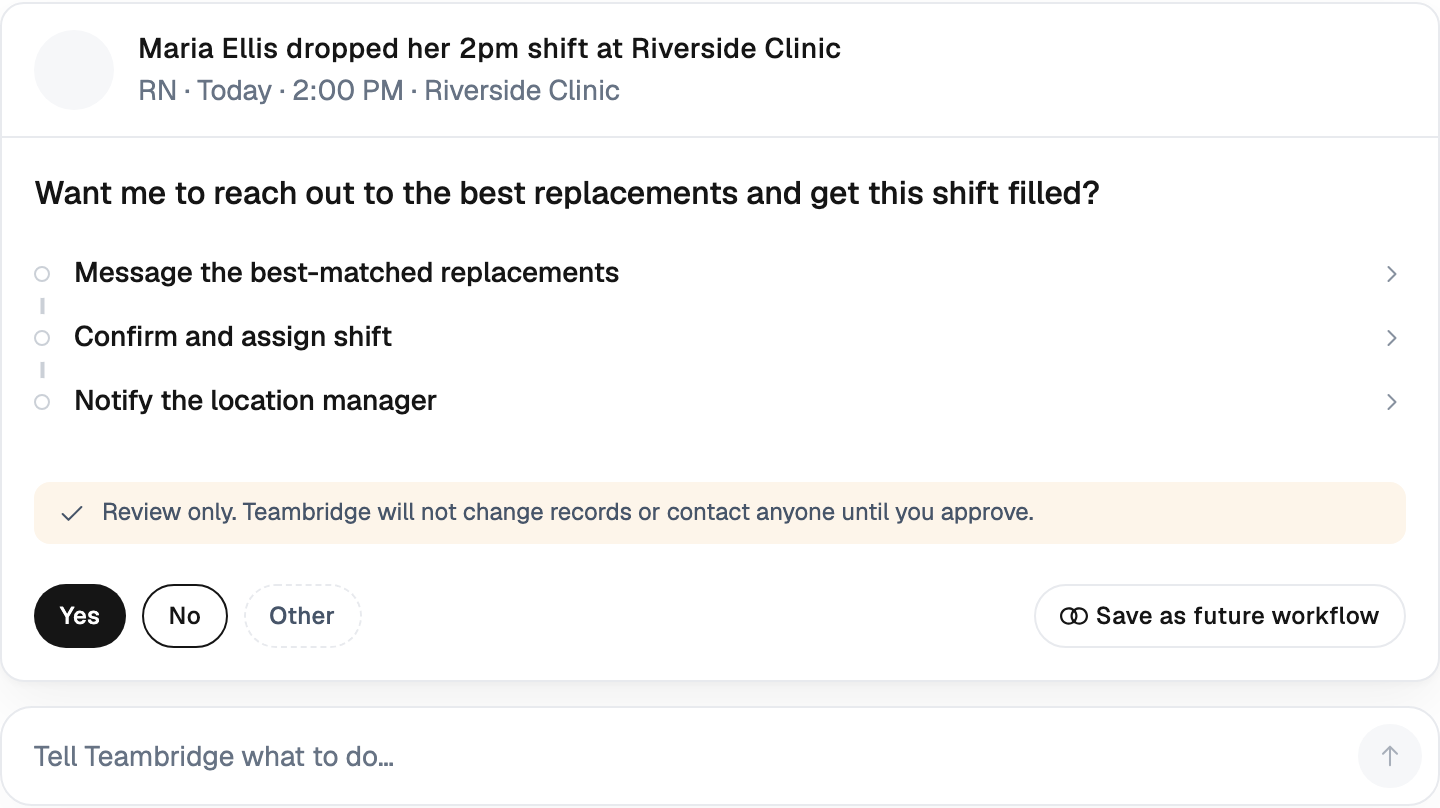
- Timecard exception handling that flags multi-state crews before payroll closes, not after
- Audit-ready exports that match 1099-NEC filings to actual work locations and pull the dispatch communications associated with each shift
- Classification rules per jurisdiction so a Texas-resident stagehand working a California load-in gets routed through California's ABC logic, not Texas Borello
For agencies running concert tours, festivals, and arena dates across state lines, the Live Events industry build wraps these workflows into a single dispatch-to-payroll loop. The full system view sits at the Teambridge Platform.
The blunt finish: the agencies that get hit hardest in multi-state audits are the ones who treated classification as a paperwork question. The ones who survive treated it as a per-shift data question — and built the records before the auditor asked for them.