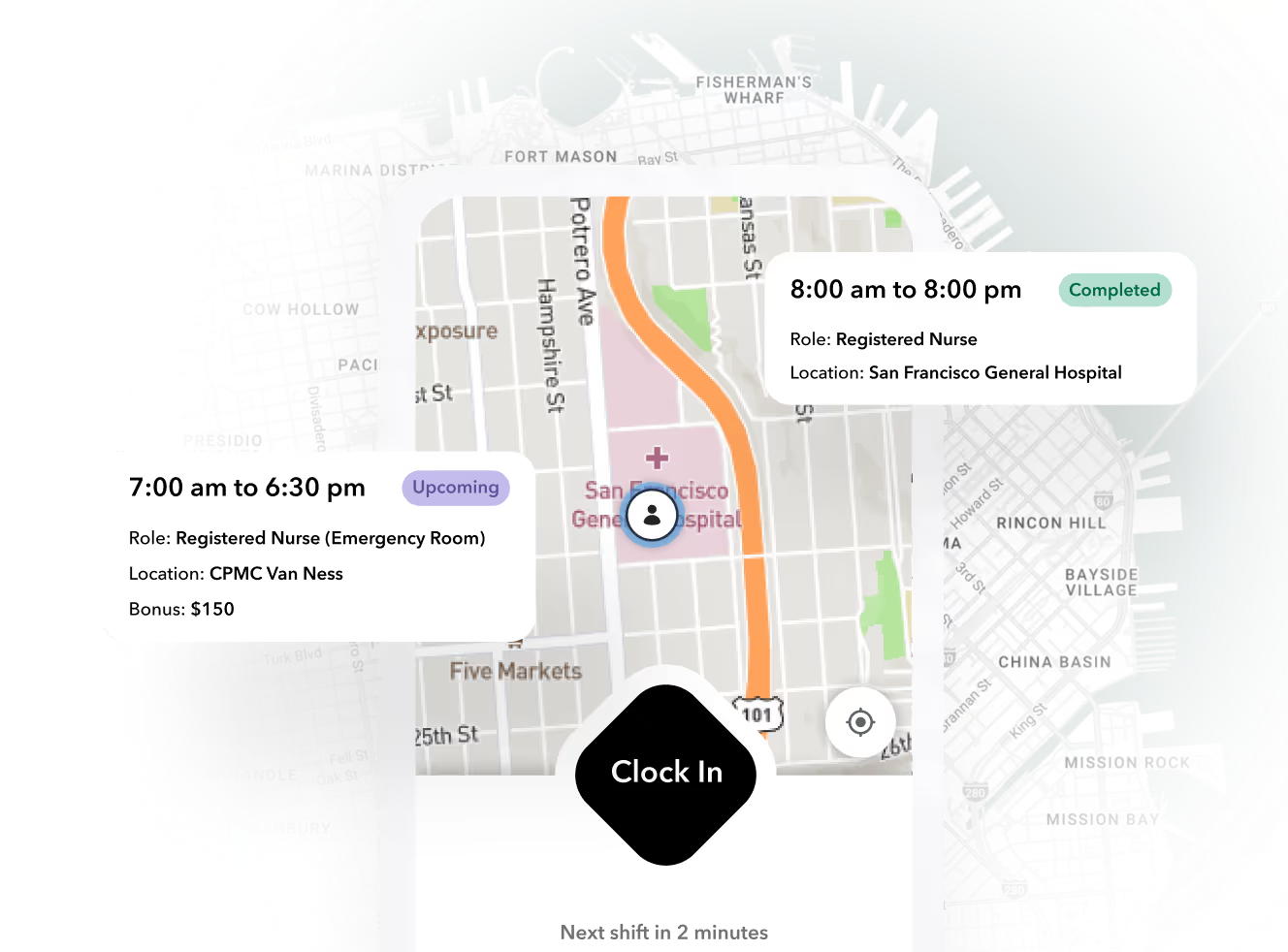
When a single W-2 contingent worker picks up a Monday warehouse shift, two per-diem nursing visits midweek, and a Saturday event gig, three different client time systems just generated three different timecards. The clients see three discrete assignments. The IRS sees one employee, one EIN, and one set of aggregated hours that the staffing agency — not the client — is on the hook for.
That gap between how clients track hours and how the IRS counts them is where measurement-period math, rehire windows, and 226-J letters quietly stack up. This is the operational reality of ACA hour tracking for staffing: a problem that looks like a reporting issue on paper and behaves like a real-time scheduling problem in practice.
The split-site problem: one worker, three sites, one EIN
The ACA's employer shared responsibility provisions apply to applicable large employers — companies with 50 or more full-time-equivalent employees in the prior year. Under the employer shared responsibility provisions, ALEs must either offer minimum essential coverage that is affordable and provides minimum value to their full-time employees, or potentially make an employer shared responsibility payment to the IRS. For staffing agencies, the wrinkle is that the IRS generally treats the agency as the common-law employer of contingent W-2 workers, which means the agency owns the offer of coverage and the reporting.
That ownership comes with an aggregation rule most ops leaders underestimate. All hours of service across all locations that operate as part of a controlled group/aggregated reporting member group must be aggregated. This is particularly relevant for restaurant groups, healthcare organizations, and retail chains with multiple locations. Employers need systems that can consolidate hours across sites.
For a staffing agency, every client site sits under the same EIN. So if Maria works 14 hours in a warehouse, 10 hours at a clinic, and 9 hours at a stadium in the same week, the agency's measurement-period math sees 33 hours — not three part-time gigs. She just crossed the 30-hour threshold, and nobody at any of the three client sites knows it.
Where the reconciliation actually breaks
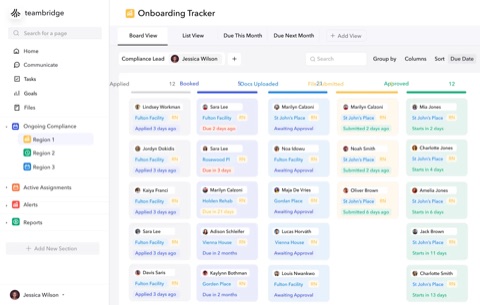
Most agencies stitch this together with a combination of client portals, a VMS export, and a payroll spreadsheet. The handoff between those systems is where eligibility errors are born:
- Client A's portal closes Friday at 5pm. Client B's closes Sunday at midnight.
- The event gig books last-minute through a different scheduling tool entirely.
- PTO and on-call hours sit in a fourth system, if they're tracked at all.
- By the time payroll sees the consolidated picture, the worker's measurement-period clock has already moved.
No one inside the agency is doing this on purpose. The infrastructure simply doesn't surface the cross-site total in real time.
What the IRS actually counts: variable-hour and the 30-hour threshold
The ACA defines a full-time employee narrowly. A full-time employee is defined as an employee that has, or is expected to have, at least 30 or more hours of service a week or 130 or more hours of service a month. For staffing, almost no contingent worker can be reasonably classified that way at hire — which is exactly why variable-hour classification exists.
The ACA defines an employee as a variable hour employee if, based on the facts and circumstances on the employee's start date, an employer cannot determine whether the employee is reasonably expected to work an average of at least 30 hours per week during the initial measurement period because the employee's hours are variable or uncertain. That's most of a staffing agency's W-2 roster.
But variable-hour status is not a permanent shield. If temporary/short-term employees do not meet the seasonal employee requirements and are expected to work more than 30 hours per week, then under applicable ACA rules they should be classified as full-time, benefits eligible employees. And once a variable-hour employee crosses the 30-hour weekly average during a measurement period, they flip into full-time status for the next stability period — which triggers an offer-of-coverage requirement.
What it costs when you miss
The penalties are not theoretical. For 2026, the annual penalty amount associated with an ALE that fails to offer MEC to substantially all full-time employees (and at least one full-time employee goes to the Marketplace/Exchange and receives a premium tax credit) is $3,340 ($278.33 per month) per full-time employee, minus the first 30 full-time employees. This is an increase from $2,900 ($241.67 per month) in 2025.
The (b) penalty is steeper per head. For 2026, the annual penalty amount associated with an ALE failing to offer affordable and minimum value coverage to a full-time employee is $5,010 ($417.50 per month) for each full-time employee who was not offered either affordable or minimum value coverage who receives a premium tax credit to purchase coverage in the Marketplace/Exchange.
Reporting penalties stack on top. Per ADP's 2025–2026 ACA guidance, failure to file correct information returns runs $340 per form, and failure to furnish correct payee statements is another $340 per form. For an agency running 800 contingent workers, the math gets ugly fast.
| Penalty type | 2025 | 2026 |
|---|---|---|
| 4980H(a) — no offer to 95%+ | $2,900 / FT employee | $3,340 / FT employee |
| 4980H(b) — unaffordable / no MV | $4,350 / FT employee | $5,010 / FT employee |
| Affordability threshold | 9.02% | 9.96% |
| 1095-C late / incorrect | $340 / form | $340 / form |
Sources: Brown & Brown, ADP SPARK.
Important
The (a) penalty is calculated on your entire full-time headcount minus the first 30 — not just the worker who triggered the gap. Miss the offer for one misclassified per-diem nurse who buys subsidized Marketplace coverage, and you're exposed across the whole roster.
Three clocks running on every contingent worker
The look-back measurement method is built around three overlapping periods, and a contingent worker juggled across multiple clients makes it easy to lose track of which bucket they belong in.
- Initial measurement period (IMP) — applies to newly hired variable-hour employees. The ACA distinguishes between an initial measurement period for newly hired variable hour employees and a standard measurement period for ongoing employees. The initial measurement period begins on or near the hire date and is used to determine benefits eligibility for the employee's first stability period. The standard measurement period is a fixed annual cycle used for all ongoing employees. Both can range from 3 to 12 months in length, and employers should establish consistent rules that apply to all employees in the same category.
- Administrative period — an optional buffer (up to 90 days) between the end of measurement and the start of stability, used to enroll newly eligible employees.
- Stability period — the locked-in period during which an employee's full-time / part-time status, determined by the prior measurement, governs the offer-of-coverage requirement.
Concrete example
Maria starts on March 3 with the agency. She works 9 weeks at Client A averaging 24 hours/week. She has a 4-week gap. She picks up 6 weeks at Client B averaging 38 hours/week. Where is she?
- The 4-week gap is well under the 13-week break-in-service threshold, so prior service hours carry forward.
- The agency rolls up her hours under one worker record across both clients.
- Her running average inside the IMP is now somewhere around 27 hours/week and trending up.
- If she ends the IMP averaging 30+, the agency must offer coverage at the start of her stability period.
If Client A and Client B's portals never roll up to a single worker record, the agency may not see the trend until 1095-C generation in January — months too late.

The break-in-service trap: 13-week rehire rules in a high-churn book
The rehire rule is the single most common place staffing agencies trip over themselves. ACA's break-in-service rules require careful attention. If an employee returns after 13 weeks (26 for educational organizations), they can be treated as a new hire. If they come back sooner, prior service hours must be counted toward eligibility.
For a high-churn book — seasonal events, per-diem nursing, warehouse peak season — workers cycle in and out constantly. Staffing firms see this constantly with seasonal workers, event staff, or employees who pick up occasional shifts. One missed rehire window can put compliance at risk.
There's also the rule of parity, which applies to short tenures. Rule of Parity. If an employer wants to use a break period shorter than 13 consecutive weeks, they can apply this rule of parity. Under this rule, an employee can be treated as a new employee if the number of weeks during which no services are performed is both (1) at least four weeks long and (2) exceeds the number of weeks of employment immediately preceding the period during which no services are performed.
Most ATS-only systems don't surface this automatically. The recruiter sees a familiar name in the database, opens a fresh record, and re-engages the worker as a "new hire" — without checking whether the gap actually qualifies for new-hire treatment under the 13-week rule.
Where staffing agencies actually slip: five operational failure points
This is what shows up in 226-J responses, in our experience working with agencies across staffing, healthcare, and light industrial:
1. Client timecard portals don't sync to agency payroll until end of week
A worker is already at 28 hours by Wednesday across two sites, but neither client's portal pushes data until Friday. The agency can't intervene because it doesn't see the running total in real time.
2. Workers double-booked across overlapping shifts
Dispatch at Client A schedules a 2pm–10pm. The healthcare desk schedules a 6pm–2am at Client B the same day. Both shifts are GPS-validated when the worker shows up — but the agency just paid for an impossible 12-hour overlap and double-counted the hours toward the ACA threshold.
3. Credential-driven shift swaps that don't update hour totals
A per-diem RN swaps a 12-hour shift with a coworker because of a license expiration. The credential system updates. The hour total doesn't. The original employee is still showing the hours on the schedule even though they didn't work them.
4. PTO and on-call hours mis-coded
Hours include each hour for which an employee is paid or entitled to payment for performing duties for the employer or entitled to payment even if no work is done — meaning PTO, holiday, jury duty, and on-call time count toward the 30-hour threshold. Most field-level timekeeping treats these as out-of-scope and quietly under-reports.
5. Re-engagements logged as new hires when they shouldn't be
A worker returns at week 11. The recruiter creates a new profile. Prior measurement-period hours vanish from the running total. The worker should have been treated as a continuing employee with carry-forward hours — and may already have been benefits-eligible.
What multi-site hour aggregation actually needs to look like
The operator-level requirements aren't complicated, but they have to be enforced at the system level — not as a process living in someone's head:
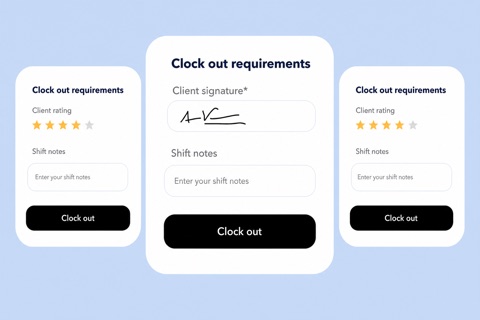
- GPS-verified clock-in at each client site, captured under one worker record regardless of which client owns the shift.
- Automatic roll-up of hours across assignments under a single EIN, including PTO, holiday, on-call, and paid leave codes.
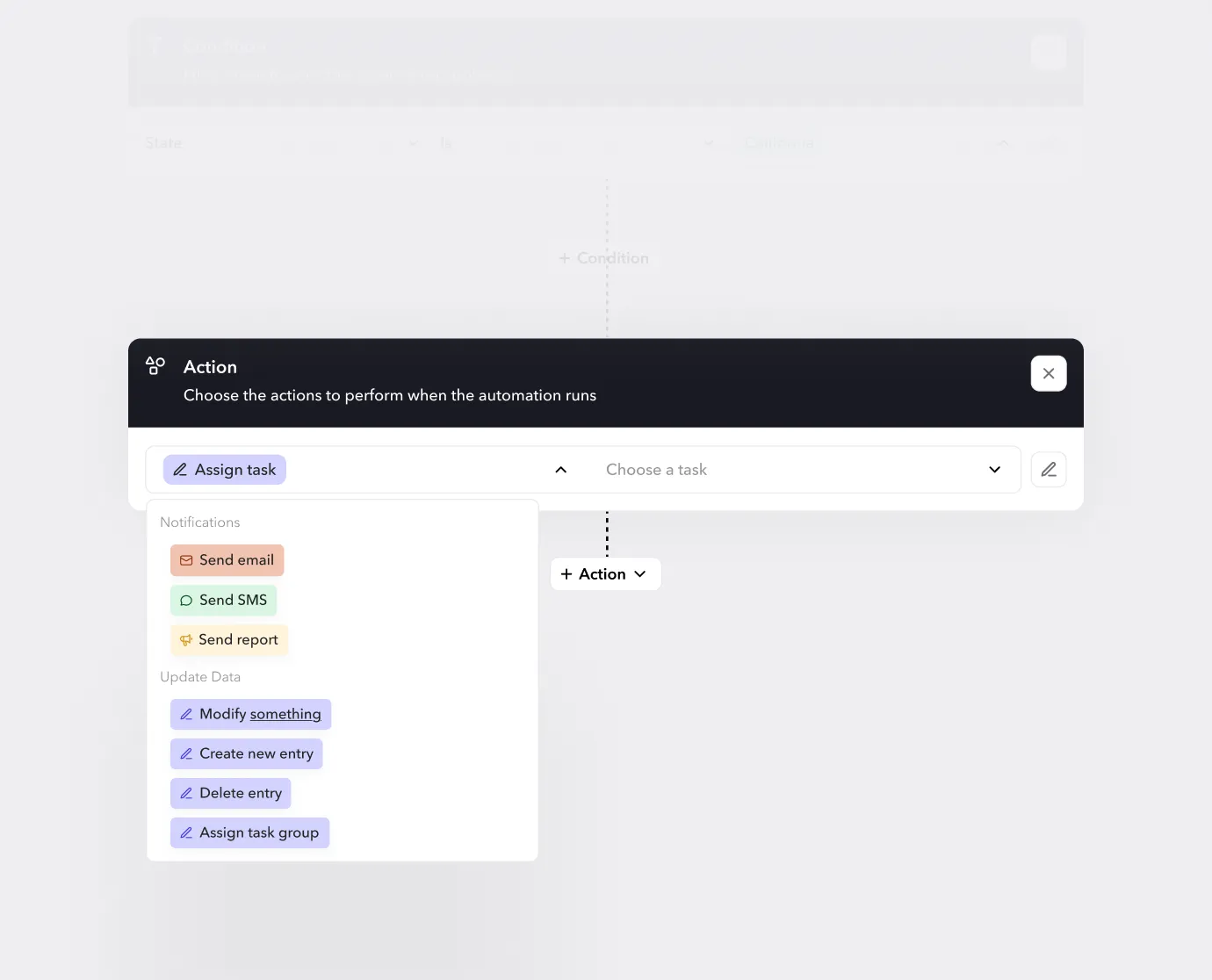
- Real-time alerts as a worker approaches 25, 28, and 30 weekly hour thresholds and as they near a measurement-period boundary.
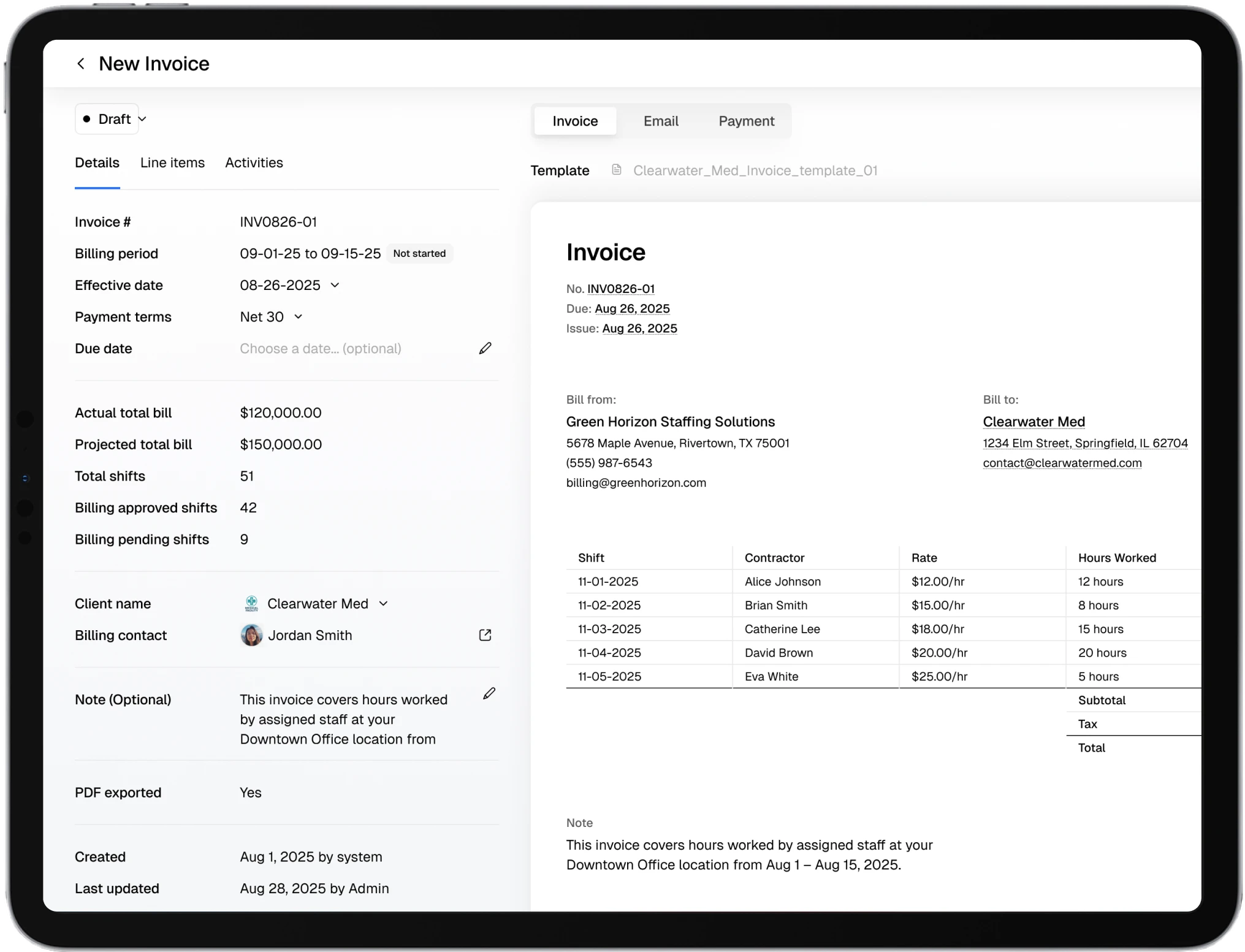
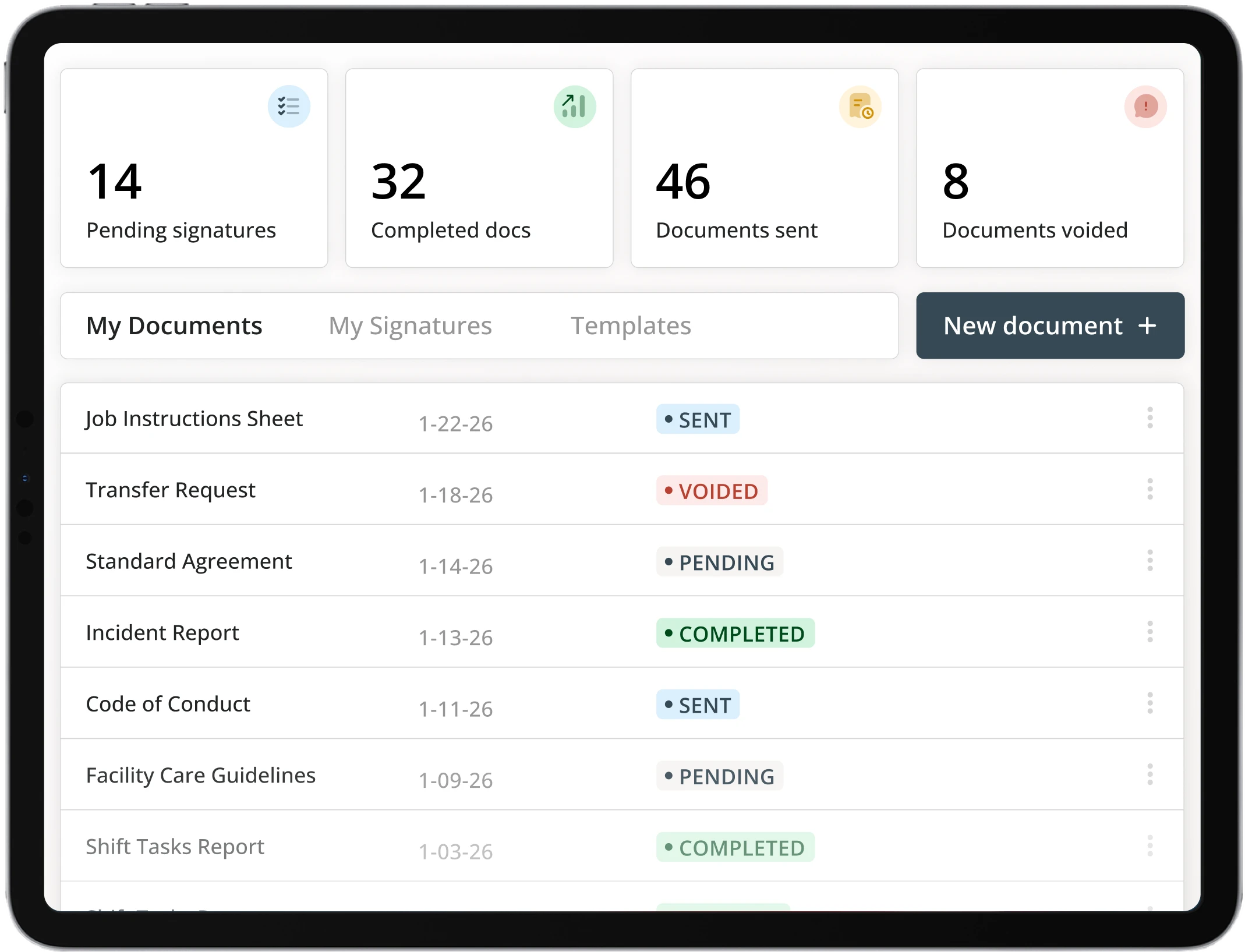
- Audit-ready timestamped records that can be pulled for a DOL or IRS inquiry without a 6-week reconciliation project.
- Rehire-window logic that flags returning workers and applies the 13-week / rule-of-parity test before the recruiter creates a new record.
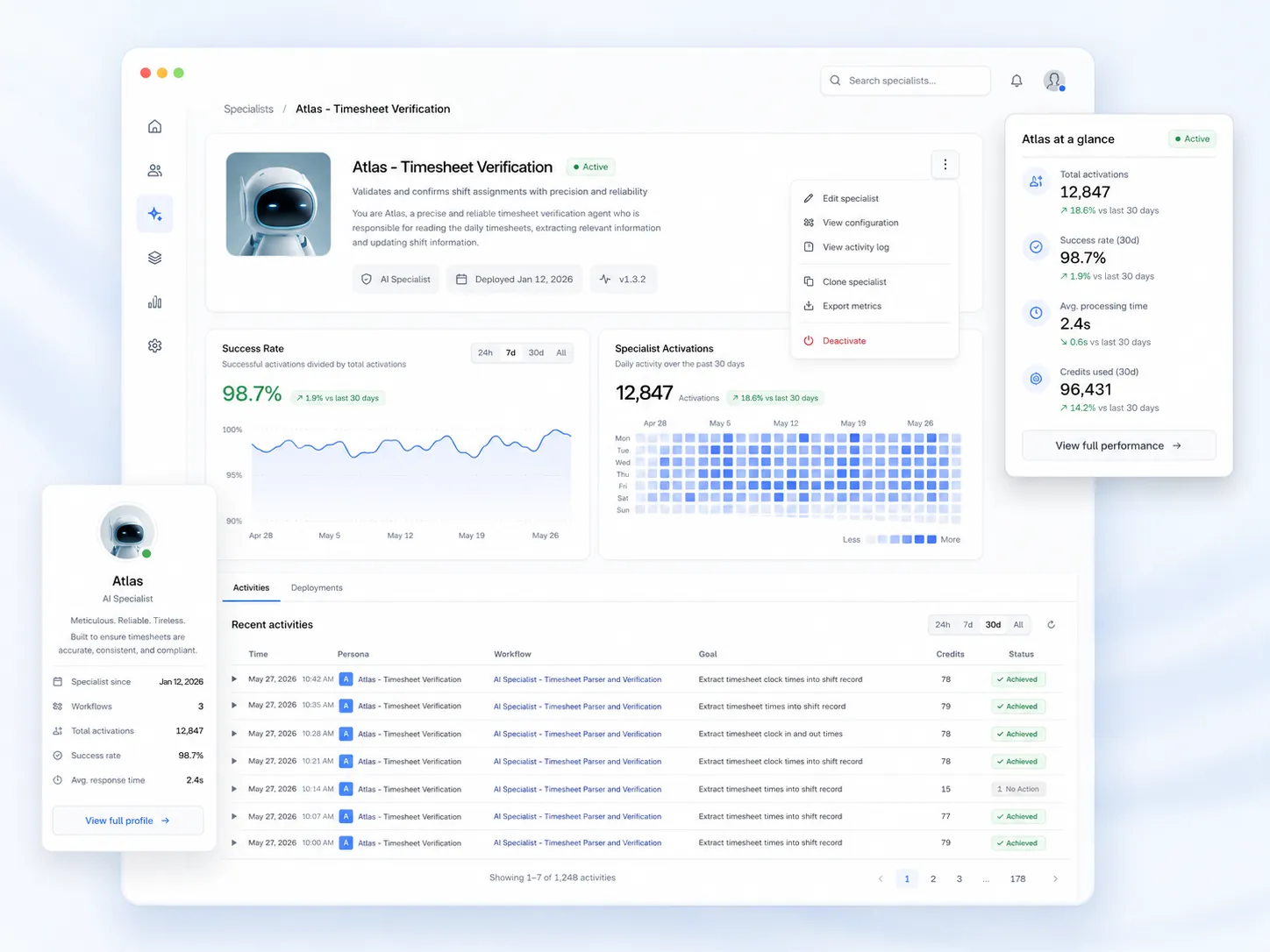
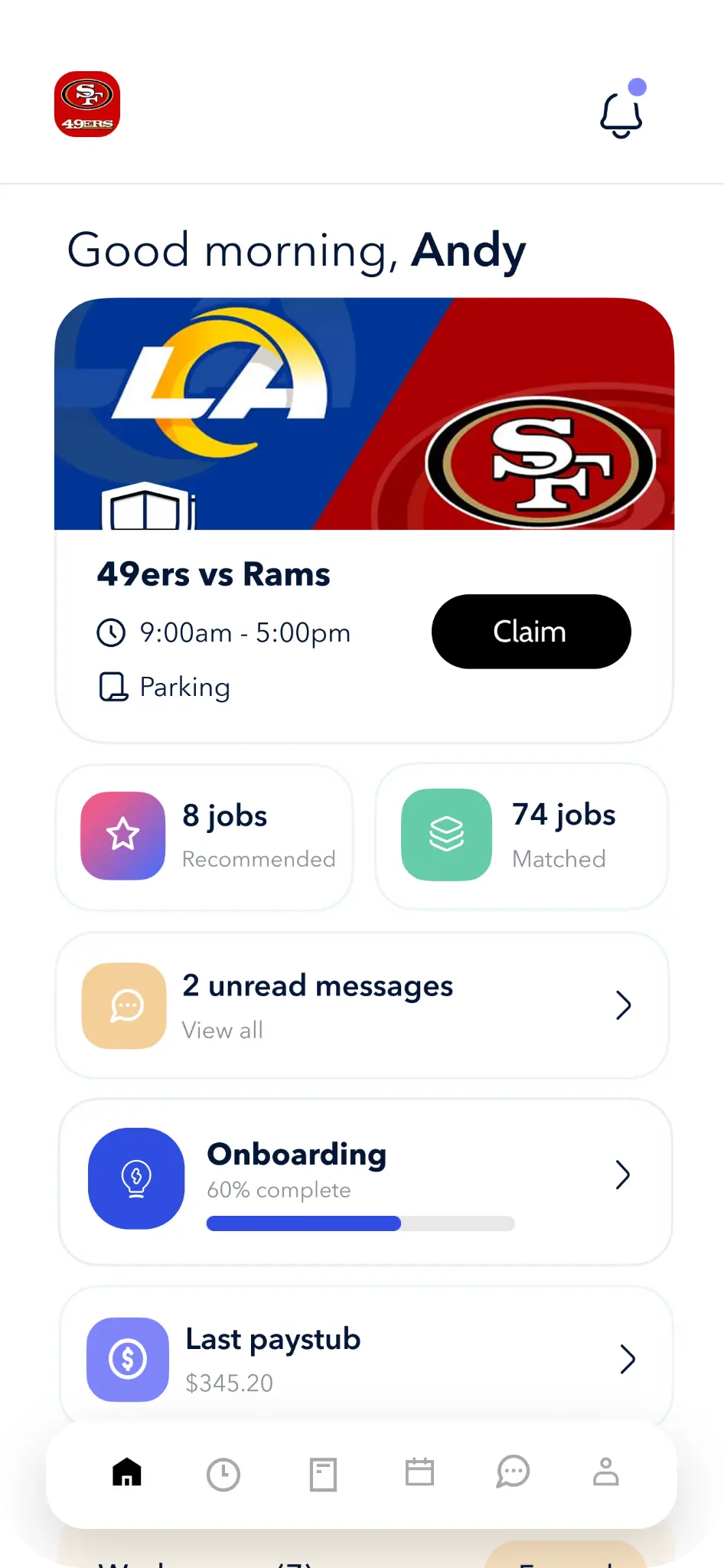
This is the layer Teambridge's Time Tracking module is built around — single-record aggregation across every client assignment under one EIN, with alerts that fire before the threshold is crossed instead of after.
And because over-allocation often starts at the schedule itself, the better lever is upstream. AI-driven scheduling can prevent the cross-client 33-hour week from being booked in the first place — flagging the conflict at assignment time rather than reporting it at year-end.
Tip
If your audit trail requires a spreadsheet to assemble, you don't have an audit trail. You have a reconstruction project.
The 2025–2026 reporting shift: less margin for error, not more
Two recent laws — the Paperwork Burden Reduction Act and the Employer Reporting Improvement Act — change the surface area of ACA reporting. ACA compliance is always evolving, and 2025 brings new opportunities for staffing firms to modernize. With the Paperwork Burden Reduction Act and the Employer Reporting Improvement Act, reporting is set to become more streamlined. That means fewer forms and more accurate IRS validations—but it also means less margin for error.
In practical terms: Under the alternative method of furnishing statements, employers are no longer required to send Form 1095-C to individuals automatically. The requirement for furnishing the statement is met if the employer responsible for providing the statements provides clear, conspicuous, and accessible notice on its website that an individual may request a copy of their statement, and the copy is furnished in a timely manner.
Fewer forms in the mail does not mean fewer obligations. It means the IRS's validation engine gets to the underlying data faster. Agencies still doing year-end reconciliation in Excel will see errors surface during IRS validation — not at the December finance close.
Warning
The 226-J letter window is short. If the IRS advises an employer that it may be subject to a Code § 4980H(a) or § 4980H(b) penalty, a response is generally due within 30 days. Therefore, employers should be on the lookout for these letters from the IRS and be prepared to respond quickly and thoroughly as to whether it agrees with the proposed penalty. Thirty days is not enough time to rebuild a year of cross-site timekeeping from client portals.
What to put in place this quarter
A practical checklist for staffing ops leaders heading into the 2026 reporting cycle:
- Audit your multi-site time-capture flow end-to-end. Pick one worker who logged hours at three or more clients last month. Reconstruct their week from raw data. How long does it take?
- Confirm hours roll up under one worker record across every client assignment, including PTO, on-call, and paid-leave codes.
- Set automated alerts at 25, 28, and 30 weekly hour thresholds. The intervention has to happen before the threshold is crossed, not after.
- Document your measurement-period methodology in writing — IMP length, standard MP dates, administrative period, stability period, rule of parity election. If it's not documented, it's not defensible.
- Test a 226-J response. Pick a random worker and pull a complete audit trail today. If you can't produce it inside an hour, you can't produce it inside 30 days under pressure.
- Review rehire workflow with recruiting. Anyone re-engaging a former W-2 worker should be auto-prompted with the prior employment dates and break-in-service calculation before opening a new record.
For agencies ready to consolidate scheduling, time tracking, and ACA-grade aggregation under one platform, the Teambridge platform is built around exactly this problem — one worker record, every client site, every hour code, in one audit-ready place.
The agencies that get hit hardest by 226-J letters in 2026 won't be the ones running the most contingent workers. They'll be the ones whose systems still treat each client site as a separate world.