A carpenter clocks in Monday morning at a federally funded school renovation. Wednesday at 1pm, the superintendent pulls him and two helpers across town to frame out a private warehouse. Friday they're back at the school. Payroll sees one timecard with 40 hours.
That timecard is a violation waiting to happen. Not because anyone cheated. Because the classification context — which site, which funding source, which wage determination, which task — got lost the moment the crew moved.
This is where prevailing wage compliance actually breaks. Not in the WH-347 spreadsheet. At the job site, between Monday morning and Friday afternoon, in the gap between a superintendent's radio call and what eventually lands in payroll.
The Mid-Week Site Switch Problem Superintendents Already Know
Every superintendent running mixed public and private work has lived this. A crew gets pulled because another site is behind. The prime needs framers now. You move the people. The schedule recovers. The timecards do not.
The stakes have climbed sharply. The DOL recovered $322 million in back wages last year from contractors who got Davis-Bacon wrong, with violations carrying penalties per worker, 3-year federal debarment, and criminal prosecution for willful offenders. Civil monetary penalties run into five figures per violation, and DOL can now cross-withhold back wages from a contractor's other federal contracts, even those issued by different agencies, and prime contractors are now responsible for subcontractor back wages regardless of any showing of intent.
The enforcement environment is also more aggressive than it looks on paper. Despite DOL Wage and Hour Division investigator headcount at 611, the lowest since at least 1973, recovery amounts have increased substantially, suggesting DOL is focusing enforcement resources on larger, higher-impact cases with more substantial violations. That means when an investigator does show up, they are not there for paperwork tweaks.
Layer on the funding wave. IIJA, IRA, and CHIPS dollars are flowing through projects that did not previously carry Davis-Bacon obligations, and expanded "site of the work" definitions extend coverage to off-site workers. More crews are crossing public/private lines more often. The mid-week switch is no longer the exception.
Warning
Under the 2024 Final Rule, prime contractors inherit subcontractor back-wage liability without any finding of intent. Your subcontractor's sloppy timecard is now your debarment risk.
Why Weekly Timecards Break When Crews Cross Project Types
Auditors do not need to find malice. They need to find inconsistency. And weekly timecards, summed at the end of the week by a payroll clerk who was not on site, generate inconsistency by default.
Three failure modes show up over and over:
- Wrong classification applied for the hours. A worker performing carpentry gets logged as a laborer because the foreman wrote "laborer" in the morning huddle and nobody updated it after the task changed.
- Outdated wage rate. The job kicked off under one wage determination, the determination got reissued, and the field never got the memo.
- Inconsistent certified payroll filings. Week 12's WH-347 shows the worker as a carpenter on the school. Week 13 shows him as a laborer. Same person, same project, no documentation of why.
The trap that catches the most contractors is splitting classifications without supporting time data. An investigation by the Department of Labor Wage and Hour Division recently found that a subcontractor on two Washington, D.C. affordable housing projects willfully violated the Davis-Bacon Act multiple times when it failed to pay workers the prevailing wage and misclassified skilled sheet metal workers and pipefitter mechanics as lower-skilled laborers, thereby underpaying required wages and fringe benefits. The result: the company had to pay $596,443 in back pay and fringe benefits, and DOL WHD debarred the company and its owner from bidding on federal construction contracts for 3 years.
The legal threshold here is brutally clear. Employers must match job duties, rather than job titles, to assign the correct wage determination rates. This means that when classifying workers, it's important to look at the specific duties the workers perform to evaluate how local prevailing practice would classify the work. A title-based timecard cannot survive that test.
What the Superintendent Actually Owns vs. What Payroll Owns
Most compliance failures are handoff failures. The superintendent thinks payroll will sort it out. Payroll thinks the field data is correct. Neither is true.
Here is the blunt division of labor:
| Responsibility | Field (Superintendent / Foreman) | Back Office (Payroll) |
|---|---|---|
| Which worker is on which site | Owns | Cannot reconstruct |
| Classification at time of work | Owns | Cannot reconstruct |
| Hours per classification per day | Owns | Cannot reconstruct |
| Posted WH-1321 and wage determination on site | Owns | Cannot verify remotely |
| WH-347 submission within 7 days of pay date | Cannot file without clean field data | Owns |
| Fringe calculations and cash-in-lieu math | Cannot do without clean classifications | Owns |
| Statement of Compliance signature | N/A | Owns |
The handoff is the failure point. If field data is wrong or ambiguous, payroll cannot fix it without rework. And rework is exactly what triggers the inconsistent-filing finding that opens the door to a full audit.

The wage determination requirement is not abstract. The Davis-Bacon prevailing wage is the combination of the basic hourly wage rate and any fringe benefits listed for a specific classification of workers in the applicable Davis-Bacon wage determination. A wage determination lists wage rates determined by the Wage and Hour Division to be prevailing in a specific geographic area for a certain type of construction and is required to be posted by the contractor at the site of the work in a prominent and accessible place where it can be easily seen by the workers. Posted at the site of the work means at every site of the work — not just the one you remember.
Capturing Classification at Clock-In, Not at Payroll Run
If you take one thing from this article: classification has to be tied to the punch, in the moment, at the location. Not retroactively. Not on Friday. Not when the timecard hits the controller's desk.
That means three operational shifts:
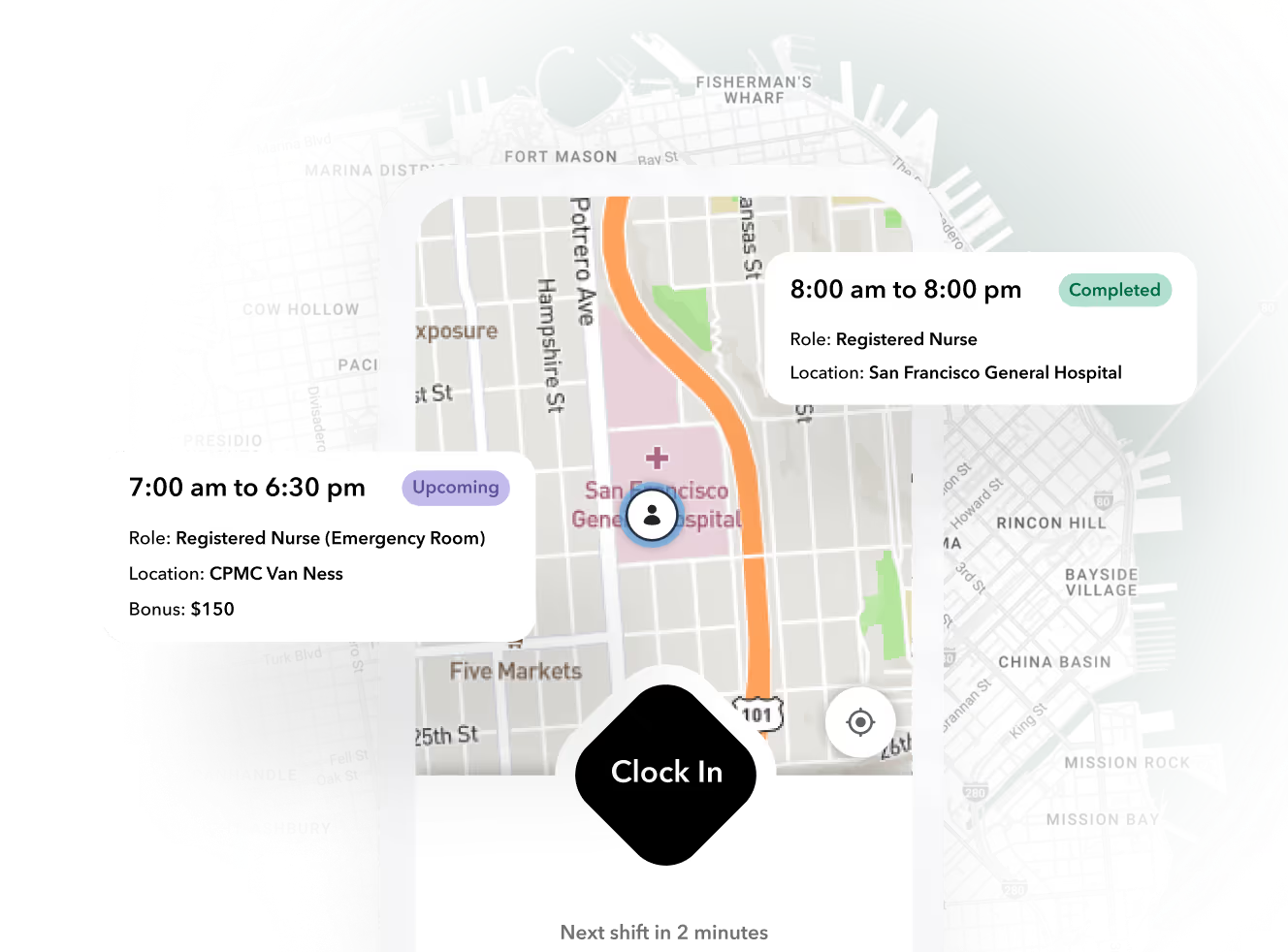
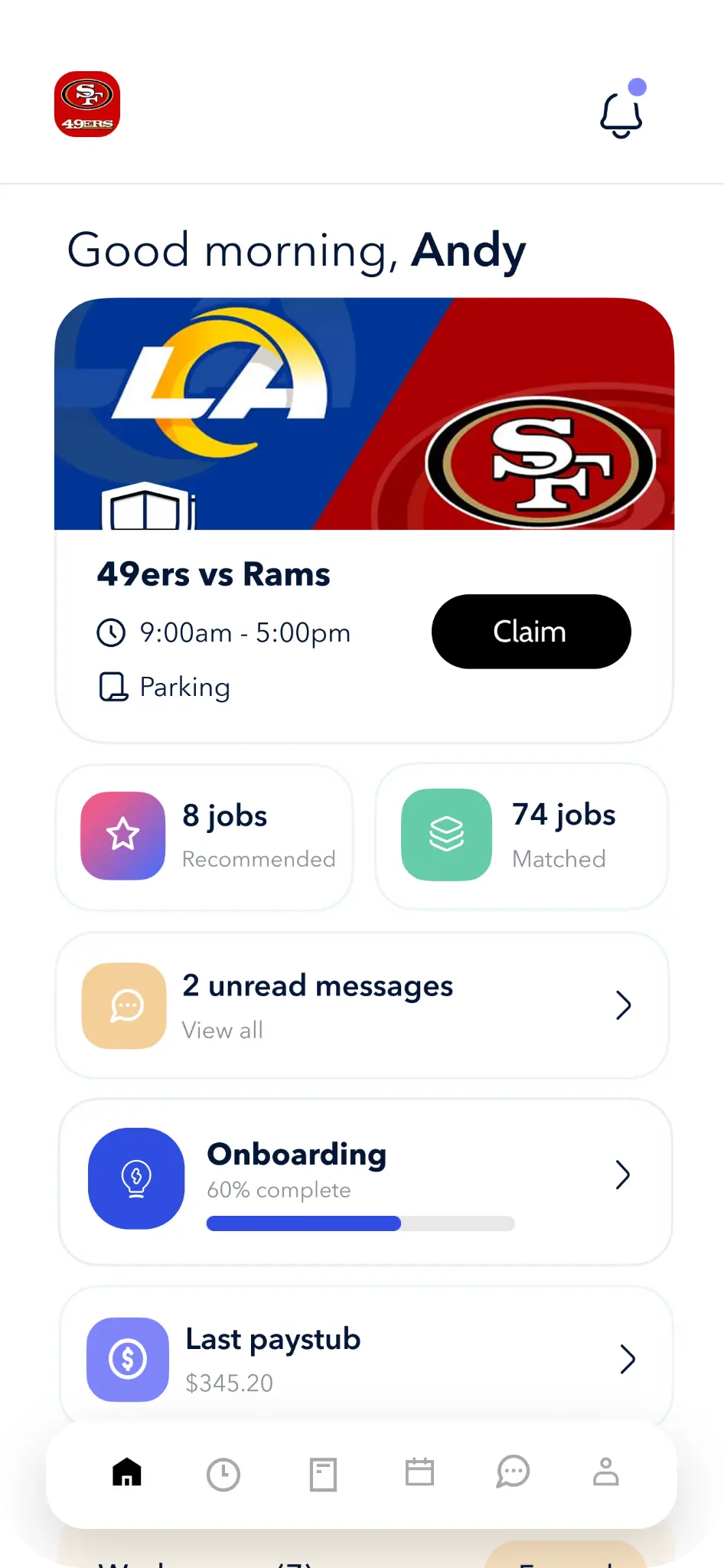
- Geofenced punches. Clock-in is bound to a specific job site. When the carpenter shows up at the warehouse, the system knows it is not the school. The shift segment opens with a different project code, a different wage determination, and a different applicable classification.
- Project-level cost codes tied to wage determinations. Each active project carries its own determination, its own posted classifications, and its own fringe schedule. Hours flow into the right bucket because the bucket was selected at clock-in, not at clock-out.
- Per-classification time entries. When a worker performs more than one classification in a day, each segment is its own entry. The carpenter who frames in the morning and runs cleanup in the afternoon has two entries. Each entry has its own rate.
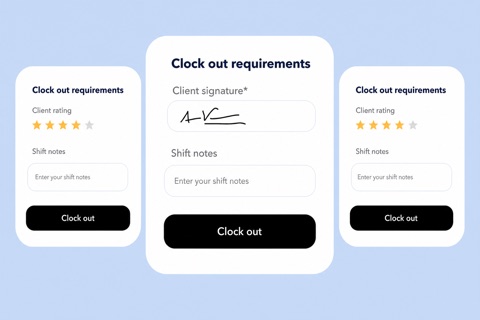
This is the model Teambridge runs for construction operators. GPS-verified clock-in, classification at the punch, and timecard exception handling all sit in one system. Our time tracking product was built specifically so the field data that hits payroll is the field data that actually happened.
The fringe math is where contractors quietly get themselves in trouble. The base rate plus fringe is the floor. Even if hourly wages are compliant with the prevailing wage, employers must pay required fringe benefits to avoid liability. Under the DBA, wage and fringe benefits can be combined. But cash-in-lieu shortfalls cannot be papered over by blending hours across classifications. If the wage determination calls for $42.18 base plus $18.40 fringe, and you are paying cash, the worker gets $60.58 per hour worked in that classification — full stop. You cannot average it down with the laborer rate from earlier in the day.
Important
If your time-tracking system cannot distinguish between hours worked under different classifications on the same day, you do not have a prevailing wage system. You have a guess.
Multi-State and Multi-County Crews: The Hidden Layer
Federal Davis-Bacon is the floor, not the ceiling. 28 states plus DC enforce their own prevailing wage laws with thresholds from $0 (NY, NJ) to $500,000+ — contractors must pay the higher rate when both apply.
That creates jurisdictional friction the field cannot solve from memory. A few examples worth knowing:
- California: covers public works at any dollar amount. There is no de minimis project size for state-level coverage.
- New York: As of December 30, 2024, all contractors and subcontractors submitting bids or performing construction work on public work projects or private projects covered by Article 8 of the Labor Law are required to register with the New York State Department of Labor.
- Off-site work: the federal expanded site-of-work definition pulls more fabrication and staging activity into coverage. Off-site no longer means off the hook.
When a crew crosses a state line for a single day to deliver materials and assist with install, payroll tax obligations follow them. So does prevailing wage if the destination project is covered. Superintendents working multi-jurisdiction work cannot hold this in their head — and should not have to.
Site-level rules need to live in the scheduling system. When the dispatcher assigns a worker to Site B for Wednesday afternoon, the system should already know Site B's funding source, applicable wage determination, posted classifications, and any state-specific overlay. Our scheduling product handles that lookup at assignment time, before anyone clocks in.

The Pre-Shift Checklist That Prevents 80% of Violations
Most violations are not exotic. They are the predictable consequence of moving people without updating the system. A short pre-shift checklist run before any reassignment catches the majority.
- Confirm the receiving site's funding source and wage determination. Federal? Federally assisted? State public works? IRA-funded clean energy? Each carries its own rules.
- Verify each worker's classification matches the actual task. Not their title. Not what they did last week. The duties they are about to perform today.
- Confirm posted WH-1321 and wage determination are visible at the new site. If the worker shows up and the poster is not there, you are out of compliance from minute one.
- Log the move with timestamps so the system splits hours correctly. Geofenced punches do this automatically. Manual systems require explicit entry.
- Flag apprentices for IRA-specific ratio requirements. To potentially qualify for increased credit or deduction amounts of certain clean energy tax incentives under the Inflation Reduction Act, taxpayers generally need to ensure laborers and mechanics are paid no less than applicable prevailing wage rates and employ apprentices from registered apprenticeship programs for a certain number of hours. By meeting the necessary prevailing wage and apprenticeship requirements, taxpayers can increase the base amounts of many clean energy tax incentives by five times. Miss the ratio and the tax credit multiplier disappears.
This is exception-prevention, not paperwork. Five questions, two minutes, before the truck leaves for the new site.
A subcontractor's three-year DOL investigation that ended in $195,000 in back pay and a near-debarment began in 2021 and was not fully resolved until almost three years later. That is the cost of a missed checklist item.
Where the IRA Recordkeeping Bar Actually Sits
IRA-funded projects raise the documentation floor for everyone. For purposes of showing compliance with the Inflation Reduction Act's prevailing wage provisions, the taxpayer must maintain records that are sufficient to establish that the taxpayer and the taxpayer's contractor and subcontractor paid wages not less than such prevailing wage rates. Such records could include, but are not limited to, documentation identifying the applicable wage determination, the laborers and mechanics who performed construction work on the facility, the classifications of work they performed, their hours worked in each classification, and the wage rates paid for the work.
Read that list carefully: applicable wage determination, who performed the work, what classifications, hours per classification, rates paid. Every item on that list lives in the field, not in payroll. If the field system does not capture it, the records do not exist.
What "No Payroll Rework" Actually Looks Like
When field data is clean at the source, certified payroll generation becomes a review step, not a reconstruction project. Here is the contrast in operational terms:
| Without classification at clock-in | With classification at clock-in |
|---|---|
| Payroll clerk calls superintendent every Friday to reconstruct who was where | Timecard arrives with site, classification, and hours already split |
| WH-347 submitted late or with corrections | WH-347 generated and reviewed within 7 days of pay date |
| Inconsistent classifications across weeks trigger audit interest | Consistent classifications backed by geofenced punches |
| Statement of Compliance signed under pressure with caveats | Statement of Compliance signed clean |
| Prime contractor inherits subcontractor surprises | Prime sees subcontractor data in real time, not at month-end |
| Cash-in-lieu fringe shortfalls discovered at audit | Fringe math runs on every punch, exceptions surface immediately |
The operational picture matters because the next public bid depends on it. DOL also issued a Notice of Debarment. This is an extreme remedy that we in the government contracts world often refer to as the death penalty because it means the contractor no longer is eligible for federal work until the period of debarment expires.
Three years off the federal bid list, in a market where Davis-Bacon and Related Acts apply to approximately $217 billion in federal and federally assisted construction spending annually, representing about 63% of all government construction, is not a fine. It is a business model collapse.
Where Teambridge Fits
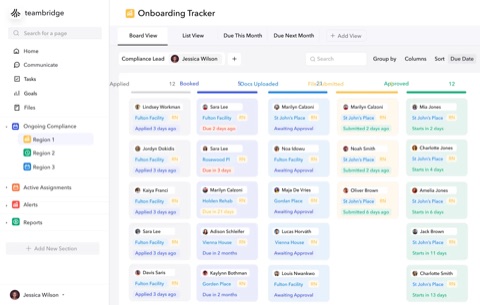
Teambridge is the workforce operations platform that ties classification, geofenced punches, scheduling, and certified payroll output together. Superintendents move crews when the work demands it. The system handles the classification context underneath. Payroll gets clean data without chasing the field.
If you are running mixed public and private work, the Teambridge platform is built for the operational reality the WH-347 form does not describe. The form just records what happened. The system has to make sure what happens is correct.
FAQ
The full FAQ is below. The short version: do not let your timecards be the last system to find out a crew moved.