

Defining "PEO"
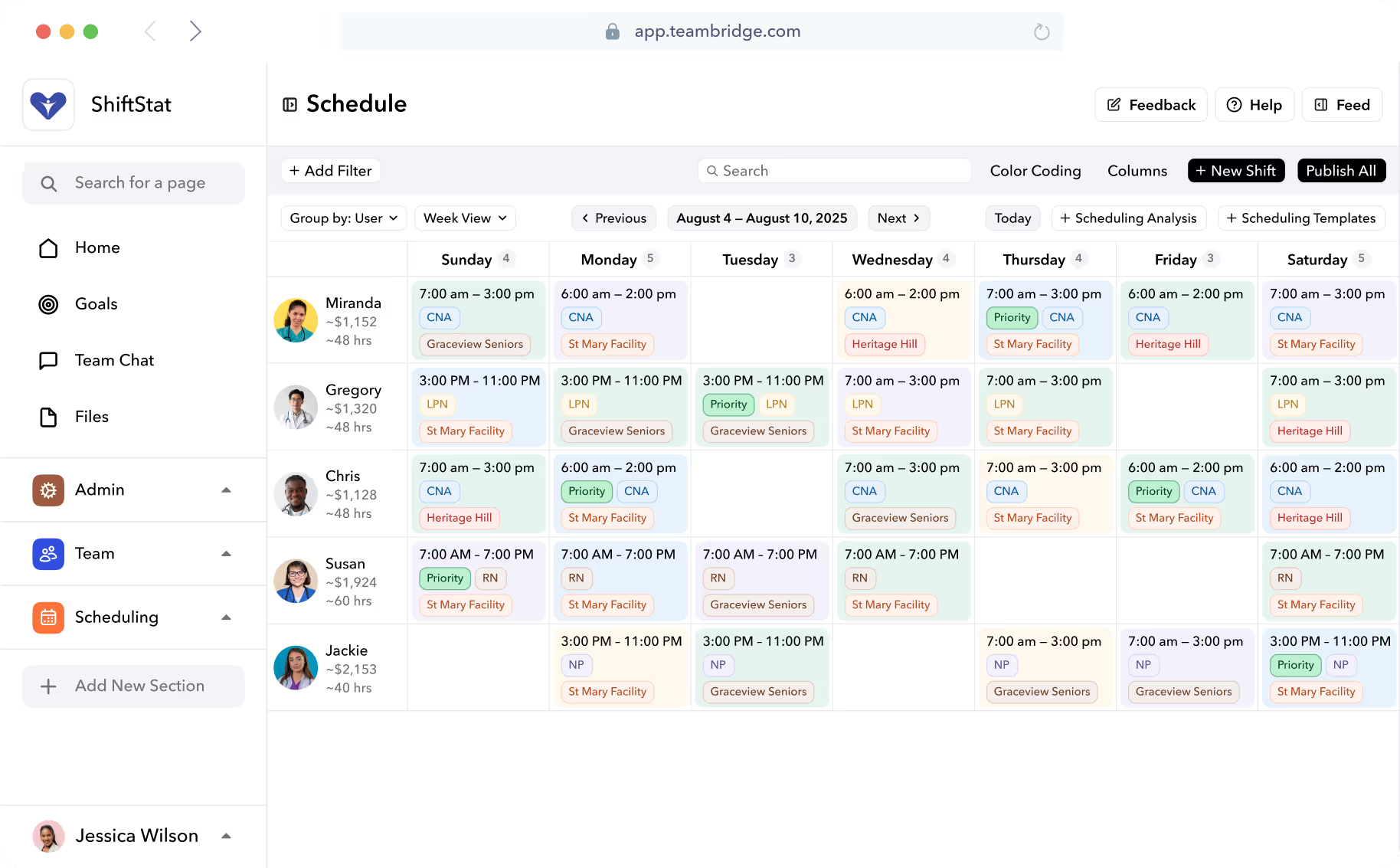
A Professional Employer Organization, or PEO, is a company that partners with businesses to handle their human resources tasks. Think of it as an outsourced HR department that manages everything from payroll and benefits administration to compliance and workers' compensation. This arrangement allows you to focus on growing your business while the PEO takes care of the complex administrative work.
How PEO is commonly used
In the healthcare industry, PEOs are often used to manage the complex HR needs of medical practices, from handling payroll for a diverse staff of doctors and nurses to navigating intricate compliance regulations. This allows practice managers to offload administrative burdens and focus more on patient care and operational efficiency.
Why PEO Matters & Industry Context
Historic context
Historically, smaller businesses struggled to offer the same robust benefits and navigate the complex HR landscape as their larger counterparts, putting them at a disadvantage in attracting top talent. PEOs emerged as a strategic solution, allowing these companies to pool their employees to gain access to enterprise-level benefits and expert compliance management, effectively leveling the playing field.
Relevance in healthcare settings
In fast-paced healthcare environments, staffing agencies are constantly placing temporary professionals like travel nurses and locum tenens physicians, creating a significant administrative burden. A PEO partnership streamlines this process by managing complex credentialing, payroll, and benefits across different states and facilities. This frees the agency to focus on sourcing top medical talent quickly, ensuring hospitals and clinics can maintain optimal staffing levels without getting bogged down in HR paperwork.
How a PEO Supports Medical Staffing Operations and Other Organizations
For medical staffing agencies, the administrative burden can be immense. Juggling multi-state payroll, complex compliance requirements, and benefits for a transient workforce creates a constant operational drag. This diverts focus from the core mission of sourcing and placing qualified healthcare professionals where they are needed most.
A PEO steps in as a strategic partner to solve this problem directly. By taking over HR functions like payroll processing, tax filing, and benefits administration, it frees up the agency to concentrate on recruitment and growth. This streamlined approach ensures operational efficiency and allows the business to scale without getting bogged down in paperwork.
The tangible benefits of a PEO partnership
Beyond just saving time, a PEO partnership offers strategic advantages. It helps mitigate compliance risks and provides access to enterprise-level benefits packages you couldn't secure alone. This not only protects your business but also makes you a more attractive employer, helping you win and retain top talent in a competitive market.
Key HR and Compliance Services a PEO Provides to Organizations
A PEO's support extends far beyond just payroll and benefits. They tackle complex HR challenges like managing employee relations, developing workplace safety programs, and handling unemployment claims. This expert oversight not only minimizes legal risks but also helps you build a safer and more structured work environment, freeing you to focus on your team's performance and growth.
Comparing PEOs to Traditional HR and Payroll Approaches
When deciding how to manage your workforce, it's helpful to see how a PEO stacks up against more traditional methods. While in-house HR and basic payroll services handle specific tasks, a PEO offers a fundamentally different, more integrated approach. Understanding these distinctions is key to choosing the right model for your business.
- In-House HR: Manages all employee functions internally, which can be costly and require significant expertise, especially for smaller teams.
- Payroll Services: Focuses solely on processing paychecks and filing payroll taxes, leaving you to handle benefits, compliance, and other HR duties.
- PEO Model: Acts as a co-employer, bundling payroll, benefits, compliance, and HR support into a single, comprehensive service.
Evaluating Whether a PEO Is Right for Your Organization
Deciding on a PEO means weighing the trade-offs between control and convenience. It's a strategic move that can unlock significant benefits, but it's not the right fit for every organization. Consider these key points to see if it aligns with your goals.
- Expertise: You gain immediate access to a team of HR, legal, and compliance specialists, which is often more cost-effective than hiring them in-house.
- Focus: Offloading administrative tasks allows your leadership team to concentrate on core business activities like strategy, growth, and innovation.
- Control: You'll be handing over certain HR functions, which can feel like a loss of direct oversight for some business owners.
- Culture: A PEO's standardized processes might not perfectly align with a highly unique or unconventional company culture.
Steps to Implementing a PEO Partnership in a Healthcare Setting
This is how you can seamlessly transition to a PEO partnership and start streamlining your healthcare operations.
- Assess your needs. Identify your biggest HR challenges, whether it's managing multi-state payroll for travel nurses, handling complex benefits administration, or ensuring regulatory compliance. Knowing your pain points helps you find a PEO that offers the right solutions.
- Vet potential partners. Look for PEOs with proven experience in the healthcare sector. Ask for case studies or references from other medical staffing agencies or clinics. Ensure they understand the unique demands of your industry, from credentialing to compliance.
- Plan the transition. Work with your chosen PEO to create a clear implementation roadmap. This includes migrating employee data, communicating the changes to your team, and integrating their platform with your existing systems. A smooth rollout is key to minimizing disruption.
- Launch and optimize. Once live, establish regular check-ins with your PEO representative to review performance and address any issues. A true partnership involves ongoing collaboration to ensure the service continues to meet your evolving business needs and supports your growth.
Final Takeaways
A Professional Employer Organization (PEO) serves as a strategic partner, taking on complex HR tasks like payroll, benefits, and compliance so you don't have to. This frees your business, especially in demanding fields like healthcare staffing, to focus on its core mission instead of administrative burdens. By providing access to expert support and enterprise-level benefits, a PEO helps you mitigate risk and attract top talent. Ultimately, it's a powerful model for streamlining operations, but it's important to evaluate if this co-employment approach is the right fit for your organization's goals.

About the author
Content Writer at Teambridge
Anis Nanai is a content writer at Teambridge, with a focus on workforce management and the realities of running hourly teams. He prioritizes conversations with customers, staying close to the market, and understanding how workforce needs are changing. His writing connects those concerns to practical decisions about scheduling, time tracking, staffing, and automation. He examines product developments through the questions that matter to operators: what does this solve, how would it work for my team, and what evidence supports it?
Company perspective: this author works at Teambridge. Customer outcomes are attributed to their published sources.
View LinkedIn profile