

This is the part of workforce operations nobody puts on a slide. It is also where most operators leak the most time and most compliance risk.
The Hidden Cost of Manual Timecard Reviews
Timecard exceptions are the dark matter of payroll. They do not show up in your KPI dashboard, but they consume hours from payroll, supervisors, and frontline workers every cycle. And the underlying labor cost they touch is not small.
Total employer compensation costs for private industry workers averaged $46.15 per hour worked in December 2025, according to the Bureau of Labor Statistics (BLS ECEC Q4 2025). That number matters because every timecard exception is a measurement error on a unit cost of roughly $46 per hour worked.
Do the math on a 200-person operation running 40 hours a week:
- Weekly labor base: 200 × 40 × $46.15 = $369,200
- Annualized: roughly $19.2M
- A 1% measurement error from bad punch data: $192,000 in annual exposure
That exposure cuts two ways. If you over-report hours, you are paying for time that was not worked. If you under-report, you are sitting on wage-and-hour liability. Most operators have no idea what their actual exception rate is — and that is the problem.
The dashboard is not the work. The chase is the work.
What Counts as a Timecard Exception (and Why They Multiply)
An exception is any timecard that cannot be approved as-is. In the wild, they fall into a predictable set of categories:
- Missed punches — clocked in, never clocked out (or vice versa)
- Early or late clock-ins — outside the scheduled window
- Missed meal breaks — required break not recorded
- Unapproved overtime — hours over threshold without sign-off
- Geofence violations — punch outside the approved location
- Shift mismatches — worked shift does not match scheduled shift
- Unsigned cards — worker or supervisor approval missing
Exception volume is structural, not accidental. Workers forget. Devices die. Schedules shift mid-shift. Supervisors approve in bulk just to clear the queue before payroll close. The result is a steady-state rate that most operations never bother to measure.
The formula is simple:
Exception rate = (Timecards with exceptions ÷ Total timecards) × 100
If you actually run this number, two things tend to surface. First, the rate is higher than leadership thinks — often 15-30% for shift-based operations. Second, exceptions cluster. When 80% of your missed punches come from three locations or two shift patterns, that is not a workforce problem. That is a process or equipment problem hiding inside a payroll problem.
The Real Time Cost: Mapping a Typical Exception Workflow
Here is what one exception actually costs in elapsed time and human attention:
- Payroll pulls the exception report.
- Payroll emails the supervisor for context.
- Supervisor checks the schedule, then texts the worker.
- Worker replies — eventually. Often hours later, sometimes the next day.
- Supervisor interprets the reply and edits the card.
- Payroll re-pulls the report and re-validates.
- If anything is still off, the loop restarts.
Now multiply that by 50 to 500 exceptions per pay period. The compounding effect is brutal: the longer an exception sits, the worse worker recall gets, and the more guessing creeps into the edit. Guessed edits are exactly the kind of records the Wage and Hour Division finds when they audit.

And the DOL is not slowing down. The U.S. Department of Labor's Wage and Hour Division recovered more than $259 million in back wages for nearly 177,000 employees nationwide — an average of $1,465 per worker — in fiscal year 2025 (U.S. Department of Labor). FLSA recovery reached over $184 million in 2025, compared to just under $150 million in 2024, per HR Dive.
High-violation industries are exactly the ones running on exception-heavy timekeeping. The food services industry had 4,088 violations resolved in 2025, with WHD recovering over $42 million in back wages. Likewise, the healthcare industry had 2,370 violations resolved in 2025, with WHD recovering more than $53 million in back wages there.
Every one of those cases starts with a timecard that was wrong, edited by guess, and never confirmed with the worker.
Warning
Supervisor-driven bulk edits without worker confirmation are the single highest-risk pattern in wage-and-hour audits. "It looked about right" is not a defense.
Why Generic Time Tracking Software Doesn't Solve It
The time tracking category is mature. Almost every modern platform can:
- Flag missed punches in real time
- Geofence clock-ins and clock-outs
- Calculate overtime thresholds
- Export clean files to payroll providers
That is genuinely useful. It is also where most platforms stop. They hand a list of exceptions to a human and call it automation.
The failure mode is the same across every vendor: nobody follows up with the worker, nobody verifies the correction, and nobody closes the loop before payroll cutoff. The exception dashboard is a to-do list, not a resolution. Your payroll team is still the bottleneck. The supervisor is still the messenger. The worker is still the source of truth — and nobody is asking them in time.
Here is the gap in one table:
| Capability | Generic Time Tracking | What Operators Actually Need |
|---|---|---|
| Detects exceptions | Yes | Yes |
| Routes to supervisor | Yes | Yes |
| Contacts worker directly | No | Yes |
| Validates response against schedule + GPS | No | Yes |
| Drafts the edit automatically | No | Yes |
| Closes loop before payroll cutoff | No | Yes |
| Escalates only true edge cases | No | Yes |
How an AI Timecard Exception Specialist Closes the Loop
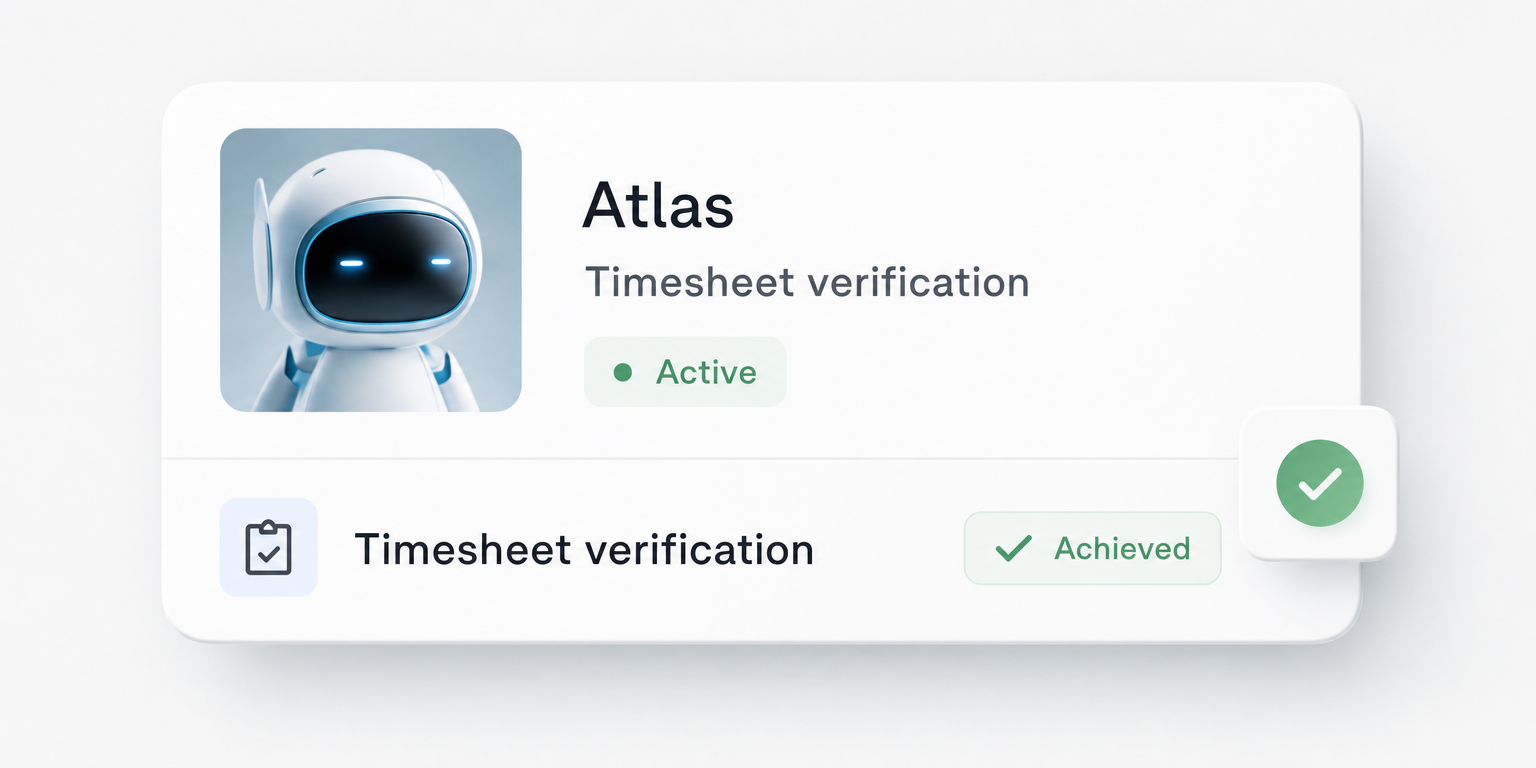
An AI Specialist is not a dashboard. It is an autonomous agent that owns the exception from detection to resolution and only escalates when it cannot reach a confident answer on its own.
The workflow looks like this:
- Detect. The agent monitors punches in real time against the schedule, geofence, and break policy. The instant a card becomes an exception, it is queued for resolution — not at payroll close, right now.
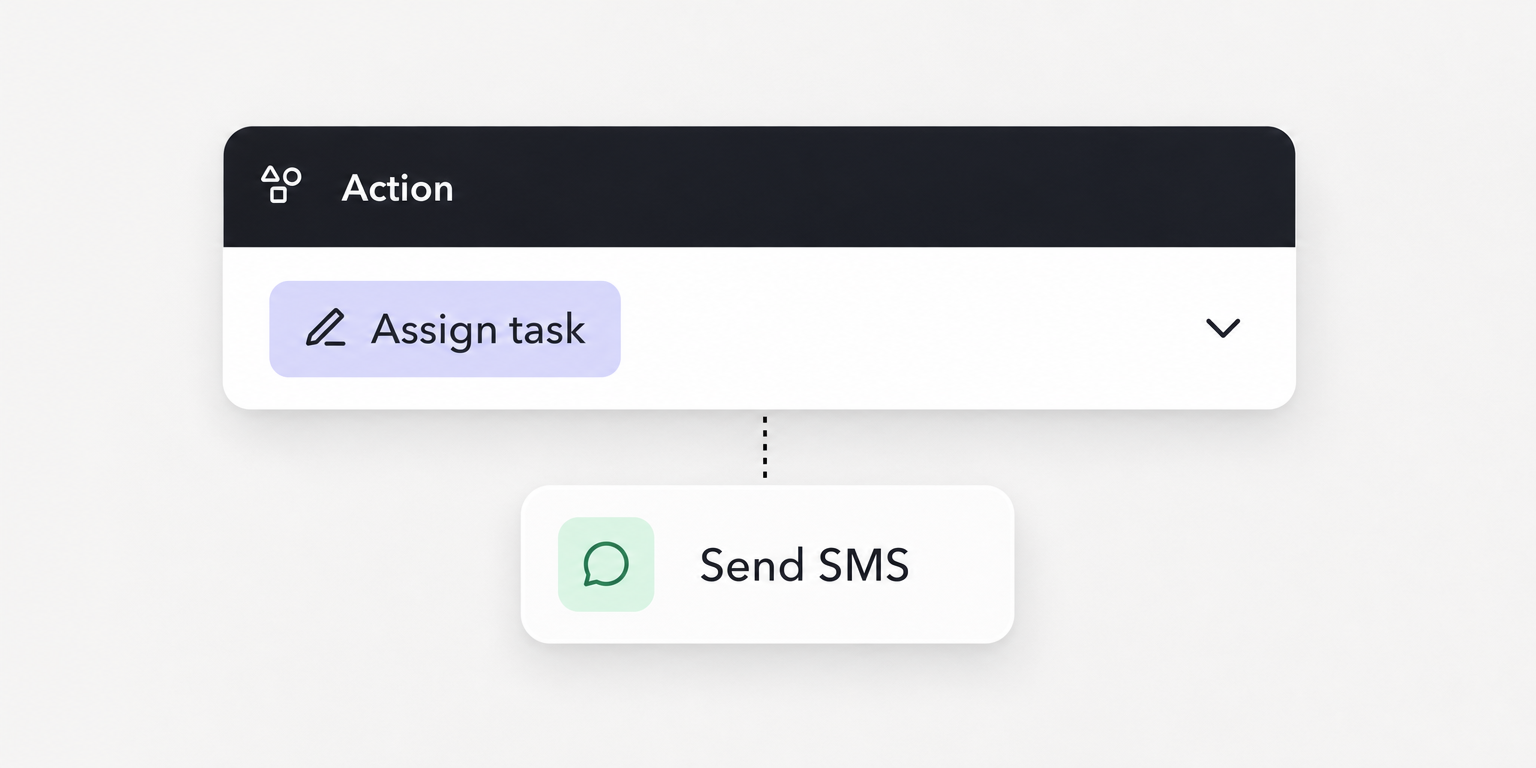
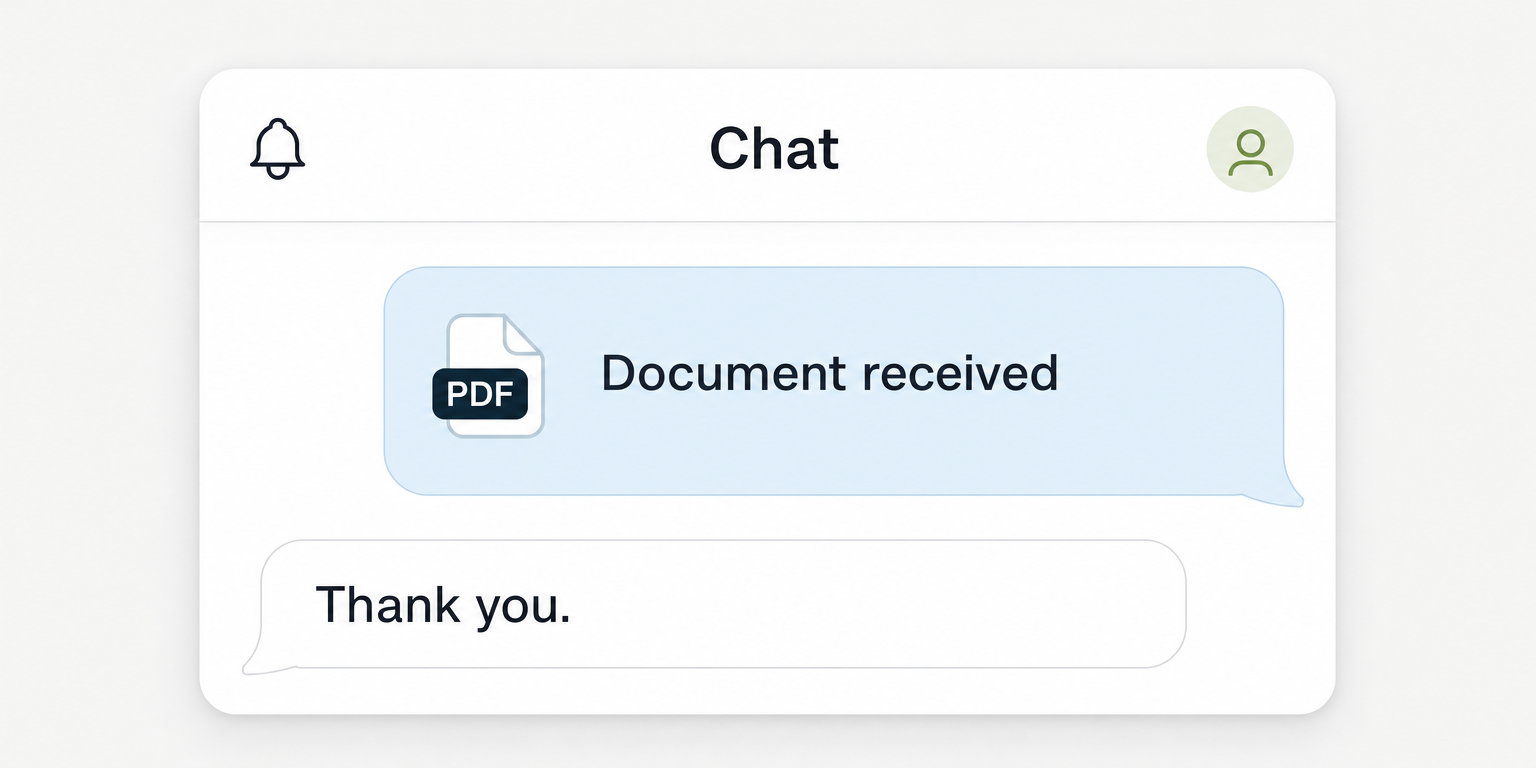
- Contact the worker directly. Instead of routing through the supervisor, the agent texts the worker with a specific, time-stamped question: "You clocked in at 7:02 this morning but there is no clock-out. When did your shift end?"
- Validate the response. The reply is cross-checked against the published schedule, GPS history, and any related punches. If the worker says they left at 3:30 and the geofence shows them at the site until 3:28, the agent treats that as a clean match.
- Draft the edit. The agent writes the proposed edit with the worker's confirmation attached as evidence.
- Escalate only the edge cases. If the worker does not reply, the response conflicts with location data, or the edit would trigger overtime or a meal-break premium, the agent routes the case to a human with full context.
The workflow swap is the entire point: instead of payroll chasing 200 exceptions, payroll reviews 20 escalations. Teambridge's AI Platform and Time Tracking products are built around this loop — detection, conversation, validation, and edit, with the worker as the source of truth.
Cutting Edits by 50%: What Operators Actually See
When workers self-correct in real time instead of admins guessing days later, the operational picture changes in concrete ways:
- Resolution time drops from days to minutes. Most missed-punch responses come back inside an hour while the shift is still fresh in the worker's head.
- Manual edits cut by roughly half. The supervisor is no longer the editor of first resort; the worker is. Supervisors only step in on true exceptions.
- Payroll runs on time. No Friday-afternoon scramble. The exception queue is empty by cutoff because it was never allowed to accumulate.
- Audit trails get cleaner. Every edit is tied to a timestamped worker confirmation, not a supervisor override. That is the difference between a defensible record and a guessed one.
There is a secondary benefit that most operators underestimate. Once exception data stops being a payroll fire drill, it becomes a leading indicator. Concentrated missed punches at one site point to a broken clock-in device. A pattern of late clock-ins on a specific shift points to a schedule that does not match the actual workflow. The data was always there. Nobody had time to look at it.
Tip
Track exception rate as a weekly operations metric, not just a payroll metric. A rising rate in one location is almost always a process problem you can fix in days, not a workforce problem you have to live with.
Compliance and Audit Trail Benefits
The wage-and-hour case for closing the exception loop is straightforward. The DOL recovered more than $295 million in back wages in FY 2025, up from $202 million in FY 2024, according to agency data. The increase in recovered back wages comes despite the department conducting fewer compliance actions in FY 2025 than it did in FY 2024 — 17,000 compliance actions were concluded in FY 2025 compared to 17,300 in 2024. Additionally, the DOL assessed $58.7 million in penalties in FY 2025, compared to $35.9 million in FY 2024.
Fewer investigations, higher recoveries per investigation, and bigger penalties. The cost of being wrong is going up.
Clean exception records help on three fronts:
- FLSA defensibility. Every edit is backed by a worker confirmation captured at or near the time of work — not reconstructed weeks later.
- Fewer back-pay corrections. When workers confirm in real time, the edit is right the first time. Less rework, fewer payroll re-runs, fewer corrected pay stubs.
- Timestamped logs on every change. Who edited what, when, on what evidence, with what worker reply attached.
This matters most for the operators carrying the highest DOL exposure: staffing agencies, healthcare, and home care, where shift-based work, multiple worksites, and per-diem patterns produce exception volume by default. Teambridge's Admin Tools surface this audit trail in the reports your counsel and your auditors actually want to see, with bulk actions for the cases that do need human review.
What to Look for in a Modern Exception Workflow
If you are evaluating tools — or evaluating whether your current tool is actually pulling its weight — run it through this checklist:
- Does it contact the worker directly? Not just the supervisor. The supervisor is not the source of truth; the worker is.
- Does it verify responses against schedule and location data? A text reply alone is not validation. The system has to cross-check.
- Does it draft the edit, or just flag the problem? Flagging is the easy half. Drafting the corrected record is the work.
- Does it close out before payroll cutoff? A tool that finishes resolving exceptions after payroll runs is solving the wrong problem.
- Does it learn which exception types are recurring? Repeat exceptions at the same site or shift should surface as operational signals, not just individual cases.
- Does it escalate cleanly? When the agent cannot resolve a case, the human reviewer should get the full context — original punch, worker reply, schedule, location data — in one view.
If the answer to any of those is no, you are still paying the hidden tax. Your payroll admin is still the messenger. Your supervisors are still doing the chasing. And your audit trail is still as good as whoever happened to be on shift that week.
Stop reviewing exceptions. Start eliminating them.
FAQ

About the author

Content Writer at Teambridge
Anis Nanai is a content writer at Teambridge, with a focus on workforce management and the realities of running hourly teams. He prioritizes conversations with customers, staying close to the market, and understanding how workforce needs are changing. His writing connects those concerns to practical decisions about scheduling, time tracking, staffing, and automation. He examines product developments through the questions that matter to operators: what does this solve, how would it work for my team, and what evidence supports it?
Company perspective: this author works at Teambridge. Customer outcomes are attributed to their published sources.
View LinkedIn profile