

Agency owners who keep treating this as a hiring problem are pouring water into a leaky bucket. The math doesn't work. The fix sits upstream — in who you match to which client, how you schedule, and how the first 100 days feel on the caregiver's phone.
This is a tactical breakdown of what actually moves the needle in 2026: AI caregiver matching software, mobile-first scheduling, predictive churn signals, and the unsexy engagement levers that hold caregivers past the danger zone.
The 75% Turnover Problem Isn't a Hiring Problem — It's a Matching and Operations Problem
Start with the numbers. The median turnover rate for professional caregivers increased from 77.1% in 2022 to 79.2% in 2023, and the report also found that nearly four out of five caregivers leave their job within the first 100 days of employment. The 2025 benchmarking data shows a modest dip to 75%, but the early-tenure exit pattern hasn't changed.
Replacement cost is where it gets painful. On average, turnover costs agencies $171,600 each year, with the cost to replace a single caregiver averaging $2,600. For an agency running 100 caregivers at 75% annual turnover, that's roughly $195,000 a year you're paying just to stand still.
It gets worse on the revenue side. The shortage of available care staff forces over half of all home care agencies to turn away potential clients, with 38.5% reporting that they do this consistently. You can't bill hours you can't staff.
Important
If your turnover is 75% and 80% of exits happen in the first 100 days, your problem isn't your job posting. It's what happens between offer letter and day 90.
The operator point: you cannot out-recruit a leaky bucket. Activated Insights emphasizes that retention efforts must begin as soon as a job is posted. The levers that actually work in 2026 are matching, scheduling stability, and communication — not another Indeed boost campaign.
What 'AI Caregiver Matching' Actually Means in 2026 (Beyond Skills + Availability)
For years, "matching" meant a scheduler scrolling a list and asking two questions: who's certified, and who's free? That approach is what produces the 100-day exit. Modern AI caregiver matching software weighs a far wider set of signals.
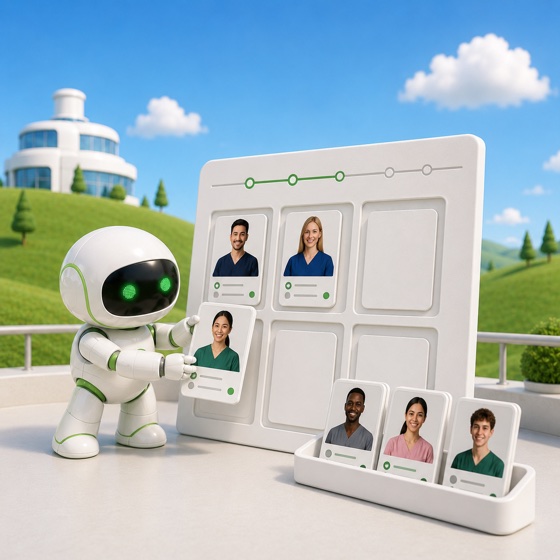
AxisCare's matching engine is a good reference point for what's now table stakes. The system uses advanced algorithms to perform AI-Powered Caregiver Matching, considering a wide range of data points including caregiver availability, skills, certifications, acceptable driving distance, preferred weekly hours, overtime status, schedule history, and specific client/caregiver preferences (e.g., pet allergies, smoking environment, gender preference).
The caregiver experience matters as much as the algorithm. It also empowers caregivers through the mobile app by allowing them to view and request open visits. When requesting a visit, the app displays an "attribute score" (a percentage) that clearly reflects how well their qualifications and preferences align with the client's needs and environment. A caregiver who sees a 92% match before accepting is making a different decision than one who's blindly assigned.
Old matching vs. AI matching
| Factor | Manual matching | AI matching (2026) |
|---|---|---|
| Skills check | Yes | Yes |
| Availability | Yes | Yes |
| Drive time | Straight-line miles, if at all | Real-time traffic and GPS-derived commute |
| Client preferences (pets, gender, language) | Sticky note on file | Weighted scoring factor |
| Overtime risk | Manually flagged | Auto-blocked or surfaced |
| Shift history with client | Scheduler's memory | Continuity score |
| Caregiver-visible match score | None | Attribute % shown before accept |
Why this matters operationally: according to a 2026 homecare agency trends survey, 65% of respondents identified AI as the leading technology trend in home care. But this isn't about futuristic possibilities — agencies are deploying AI-powered tools today, and the biggest impact is in scheduling and caregiver matching.
Warning on the marketing language: a lot of vendors are slapping "AI" on rules engines. If the tool can't explain why it picked a caregiver — drive time, certs, history with the client — it's not AI matching. It's filter-and-sort.
Continuity of Care: Why the Same Caregiver on Recurring Shifts Beats a Filled Schedule
A filled shift with a stranger isn't a win. It's a complaint waiting to happen, a client wondering why three different people showed up this week, and a caregiver doing intake instead of care.
To bridge this gap, home care agencies are using advanced algorithms to improve caregiver satisfaction with their schedules and prioritize continuity of care. Assigning the right caregiver to each client can significantly affect patient outcomes as well as caregiver satisfaction. By automating caregiver matching based on skills, schedules, and preferences, agencies achieve stronger relationships and consistent care that fosters meaningful connections and better outcomes for everyone.
Continuity is a retention lever that hides in the schedule. When a caregiver sees the same three clients on a stable rotation, they build relationships, they know the routines, and they stop dreading Monday. The match-and-stick model also reduces the silent churn driver: caregivers who don't quit but disengage because every week feels like the first week.
For agencies running home care operations, the unit of measurement should shift from "shifts filled" to "shifts filled with the preferred caregiver." Those two numbers tell completely different stories.
Mobile-First Scheduling: Killing the 6 AM Callout Scramble
Here's the scene every scheduler knows. A caregiver calls out at 6 AM, and you have 47 clients who need coverage. You're scrolling through availability lists, checking certifications, calculating drive times, and praying someone answers their phone. Meanwhile, clients wait. Families worry. And you're burning out.
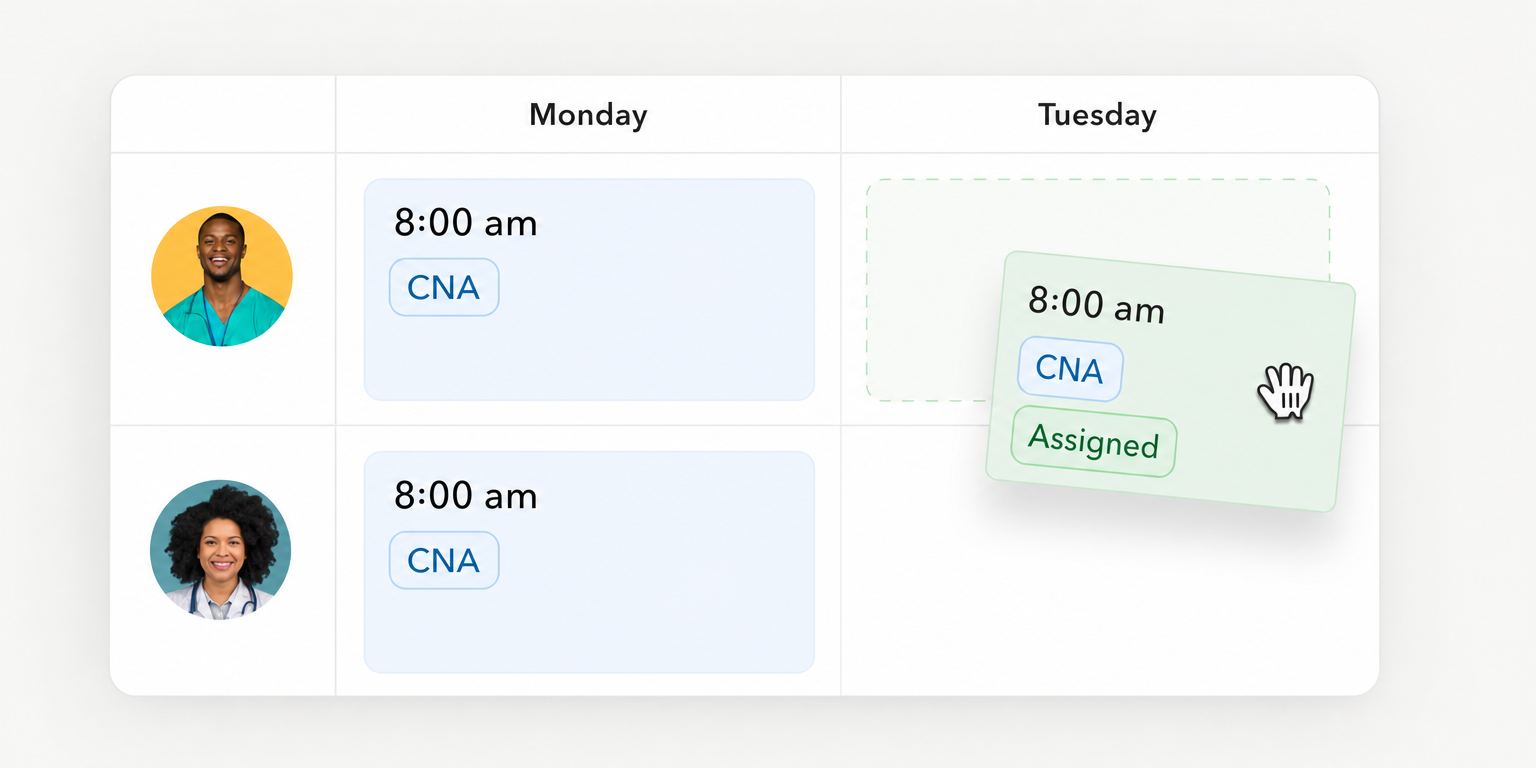
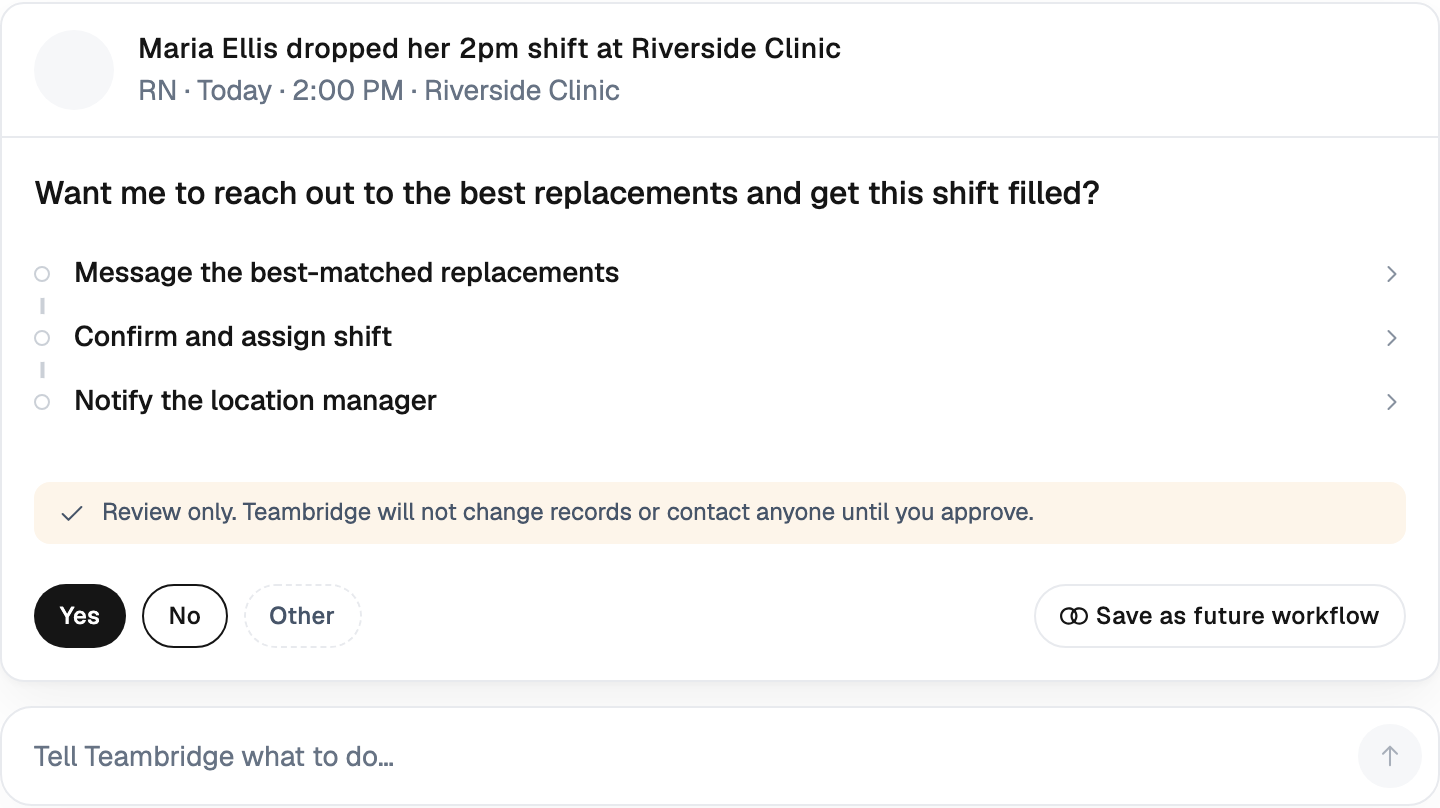
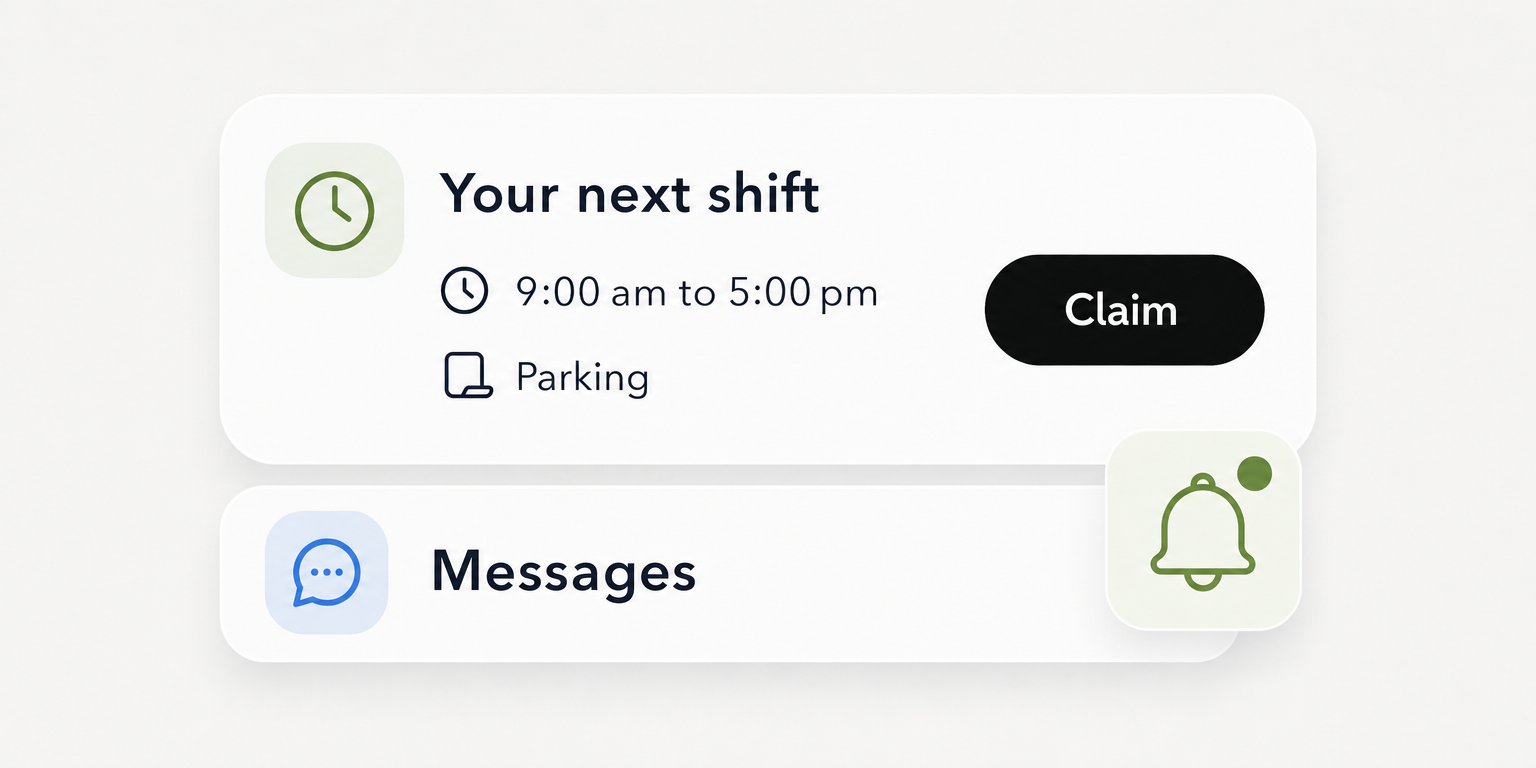
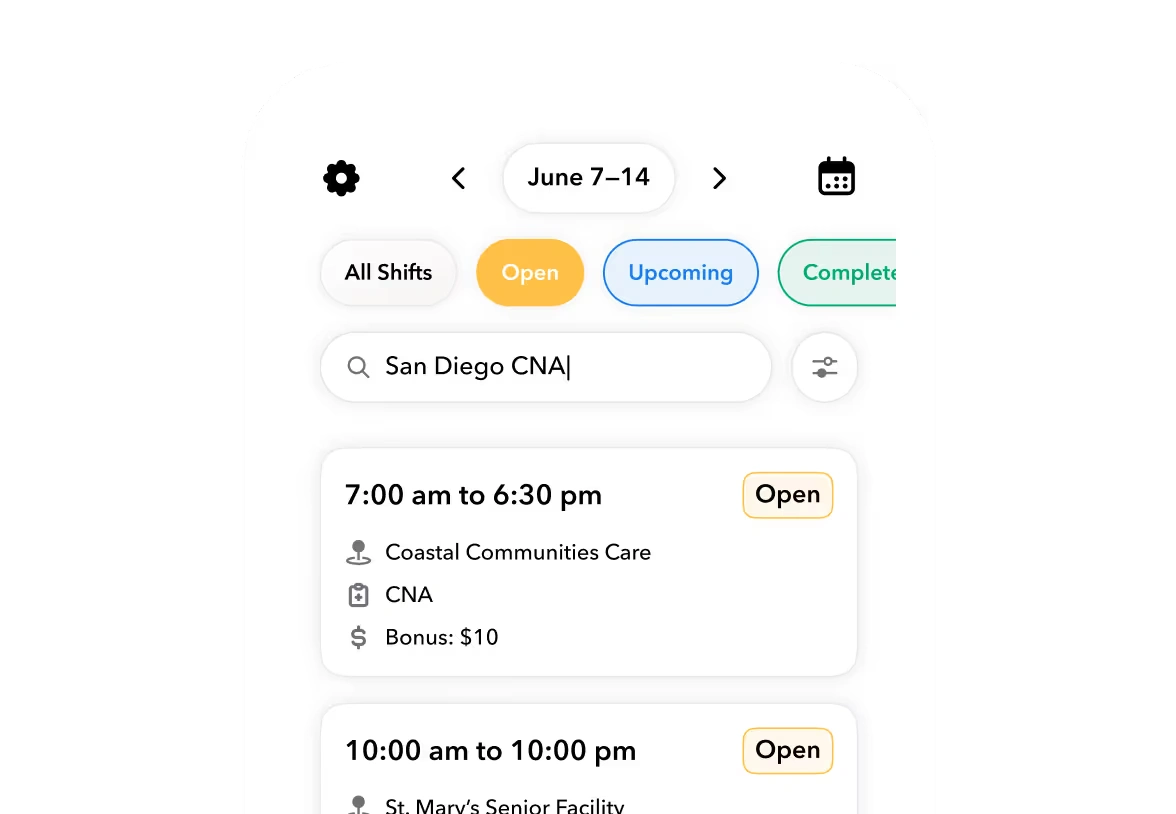
Mobile-first scheduling — done right — replaces that workflow with a push notification. The system already knows who's qualified, who's nearby, who's not in overtime, and who's previously worked with the client. It broadcasts to the top-ranked few, shows them their attribute score, and the first qualified accept locks the shift.

The time savings aren't incremental. According to AxisCare, agencies using AI-powered scheduling are building schedules 90% faster than manual methods. The efficiency gains from AI scheduling are measurable. For agencies with 40+ caregivers, this translates to 10-15 hours per week saved in scheduling administration alone.
Tip
The right test of a scheduling tool isn't how pretty the calendar looks. It's how long it takes to refill a 6 AM callout — measured in minutes, with the caregiver seeing the match score before they accept.
What to look for in a scheduling product:
- Real-time re-optimization when something breaks
- Push notifications with shift detail and match score
- Drive-time based on actual roads, not crow flies
- Overtime and credential blocks enforced before assignment, not after
- Two-way confirmation back to the scheduler dashboard
- SMS fallback for caregivers without the app installed
Predicting Churn Before the Two-Week Notice: Burnout Signals AI Can Actually See
The two-week notice is the lagging indicator. By then, the decision is made and the caregiver is mentally gone. The leading indicators were sitting in your data for weeks.
Modern predictive retention models watch for signal patterns: rising shift decline rates, drift toward shifts further from preferred zones, declining clock-in punctuality, back-to-back long shifts, and gaps in two-way message responses. Pair the model with a human action — a scheduler check-in, a schedule rebalance, a swap offer — and you intervene before the resignation.
AI-Based Caregiver Retention leverages predictive analytics to anticipate a caregiver's churn risk, helping agencies retain top talent. The output isn't a magic answer. It's a weekly list of 8–12 caregivers your ops team should call this week.
The other side of the same coin is workload fairness. Schedulers themselves are leaving too; agencies that lose a scheduler often see a linked caregiver exodus. Poor balance means good aides get overbooked, newer aides sit idle, and both groups start scanning job boards. Predictive models catch the imbalance before it becomes a resignation cluster.
Shift imbalance drives turnover faster than pay issues.
That single observation from the Activated Insights data should reshape how every agency owner reads their schedule. You're not just filling hours — you're distributing them.
Engagement Levers That Actually Move the Needle: Same-Day Pay, Recognition, Real Two-Way Comms
The unglamorous truth: most agency owners can't unilaterally raise wages by $3/hour. The median hourly wage for home care aides is $15.14, far below the national living wage threshold. Annual caregiver turnover reached 77% nationally in 2024, as noted by the Home Care Pulse Benchmarking Report. Fewer than 20% of caregivers receive employer-sponsored health insurance.
What you can fix without a margin overhaul:
Pay timing
Same-day or next-day pay is the single biggest perceived-compensation lever you can pull without changing the rate. A caregiver who finishes a Tuesday shift and sees the wages in their account Tuesday night feels paid differently than one waiting until Friday-after-next. Instant pay also reduces the slow-burn financial stress that drives caregivers to second jobs and competing agencies.
Real two-way communication
Driving client retention in 2024 was communication, the report found. The same is true for caregiver retention. HIPAA-compliant two-way chat — with read receipts, broadcast capability, and SMS fallback for caregivers without the app — replaces the chaos of personal cell numbers and unmonitored group texts. Look for communication tooling built for shift workers, not adapted from office Slack.
Recognition tied to behavior
Lightweight rewards programs tied to attendance, shift acceptance rates, tenure milestones, and zero-callout streaks cost very little and signal that the agency sees the work. The Visiting Angels location cited in the 2025 benchmarking report is a useful case study. An example of improved company culture is a Visiting Angels location, which set out to improve onboarding, recognition and ongoing communication with employees in 2024. The location achieved its top growth quarter in company history, attributing the success to creating an environment in which caregivers want to stay.
Onboarding the First 100 Days: Where 4 in 5 Caregivers Quit
If 80% of exits happen in the first 100 days, that's where you spend the disproportionate ops attention. A concrete playbook:
- Digital credential collection before day one. No paperwork on the first shift. ID, certifications, I-9, direct deposit all loaded through the mobile app during the offer-accept window.
- Mobile app walk-through during orientation. The caregiver should clock in, accept a shift, send a message, and view their pay schedule before they leave orientation.
- Match the first client carefully. This is the highest-leverage matching decision the AI will make. A bad first-client pairing erases everything you did in onboarding.
- First-shift pairing with a tenured caregiver. Even an hour of shadow time on visit one cuts early-exit risk noticeably.
- Structured 30/60/90 check-ins logged in the platform. Not optional. Not informal. Owned by a specific scheduler or coordinator.
- Credential expiry tracking automated. Nothing kills retention faster than a caregiver pulled mid-shift because their CPR card lapsed and nobody told them.
Warning
The single biggest 100-day retention factor isn't training quality or orientation video production value. It's whether the caregiver's first client assignment was a good match.
The early-tenure window is also where most predictive models work best. Decline rates, clock-in punctuality, and message response time in weeks 2–6 are strong leading indicators for the 90-day exit. Build a 30/60/90 retention dashboard, not a 12-month one.
What to Look For in a Caregiver Retention Platform in 2026 (Buyer's Checklist)
Not every "AI-powered" platform actually is. Use this checklist when you're evaluating tools — and push back hard on vendors who can't demo each item live.
Matching and scheduling
- Real-time re-optimization (not nightly batch)
- Attribute scoring visible to the caregiver in the mobile app
- Drive time based on actual road data
- Continuity-of-care weighting, not just availability
- Overtime, credential, and authorization blocks enforced at assignment
Mobile-first caregiver experience
- Native iOS/Android app, not a wrapped website
- Shift request, accept, swap, and decline in two taps
- Clock-in with EVV/GPS
- Two-way messaging with the office
- Same-day pay accessible in-app
Compliance and credentials
- EVV integration with your state's aggregator
- Automated credential expiry tracking and renewal nudges
- HIPAA-compliant data handling end to end
Retention intelligence
- Predictive churn flags surfaced weekly
- 30/60/90 retention dashboards
- Workload-fairness reporting (hours, drive time, overnight load by caregiver)
Data architecture
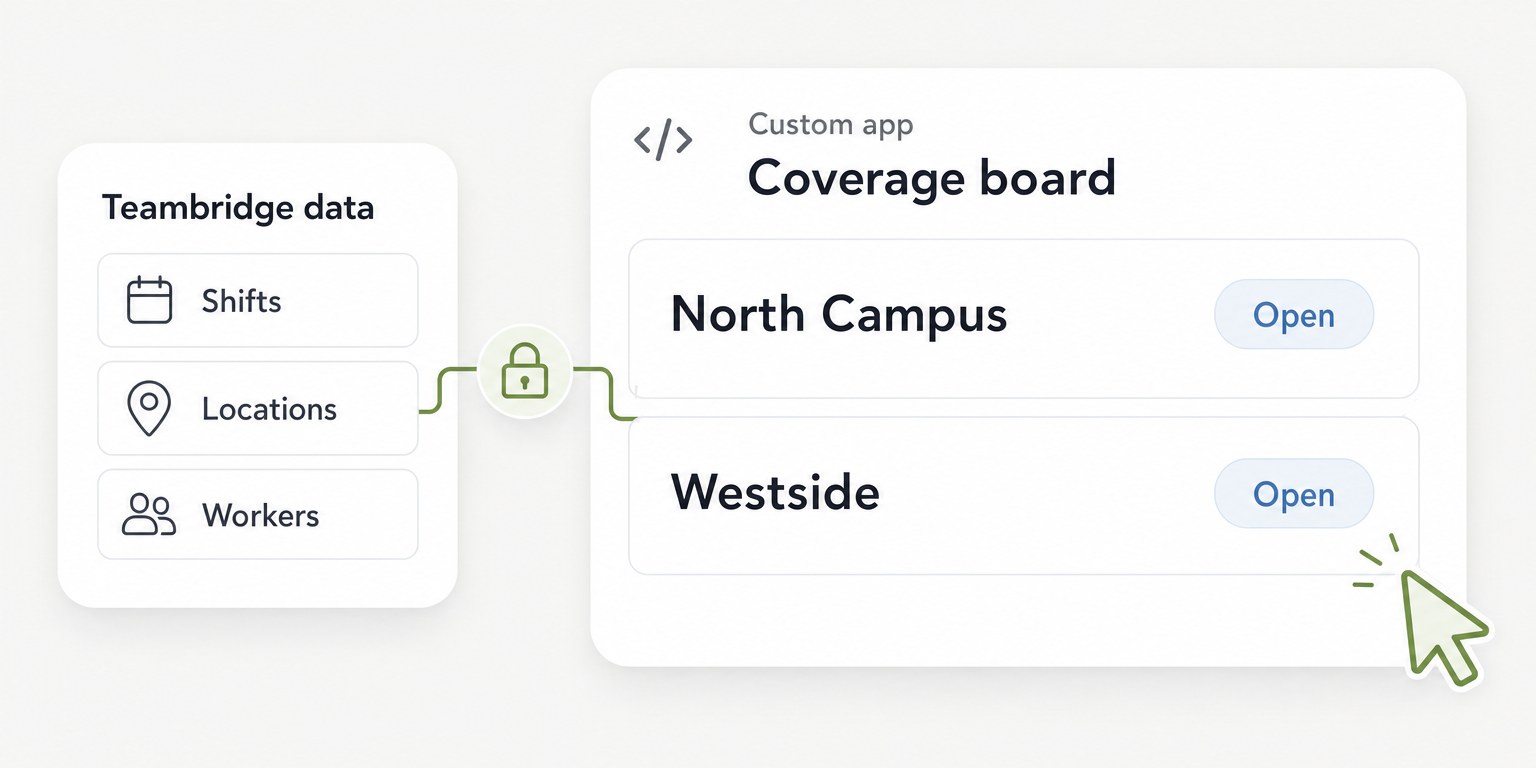
- Open API that connects scheduling to payroll, HR, and EVV
- Audit log on every assignment decision
- Reporting that crosses the silos, not 12 separate exports
Caution
If a vendor's "AI" can't explain a specific match in plain English — "assigned Maria because of dementia certification, 3.2-mile commute, prior shift with this client" — it's a rules engine in a marketing wrapper.
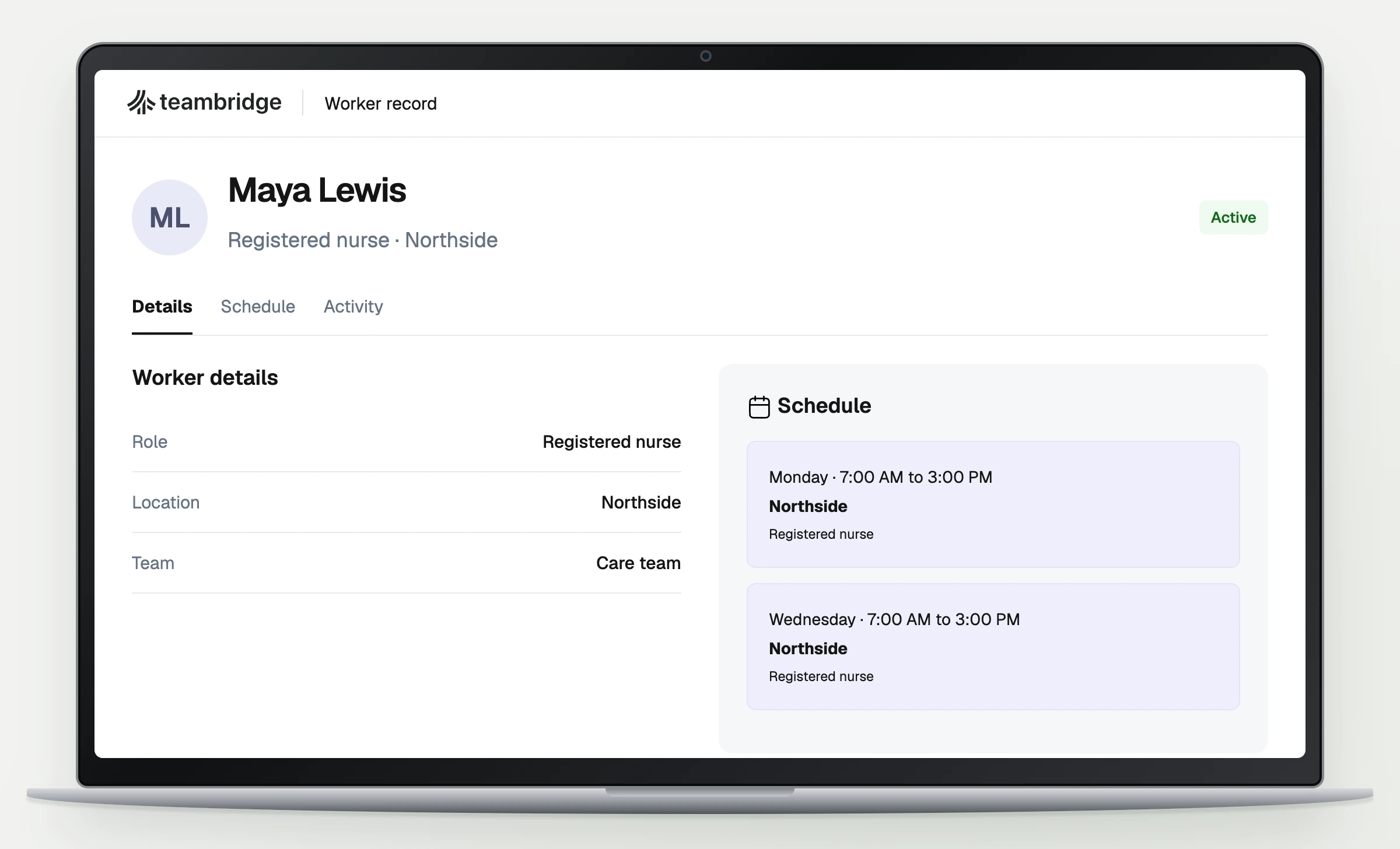
The deeper play is treating the whole stack as one system. Scheduling, time tracking, pay, communication, and compliance running on separate platforms is what produced the data silos that broke matching in the first place. A unified workforce operations platform — where the schedule knows about credentials, the credentials know about pay, and pay knows about hours worked — is the architecture that lets AI matching, predictive churn, and instant pay actually compound.
The 75% turnover number didn't get better because the industry suddenly figured out hiring. It got better because the agencies running on modern operations stopped losing people to fixable problems — bad matches, late paychecks, broken communication, surprise credential expirations. The agencies still doing those things the old way are the ones holding the industry average up.
The gap between the top quartile and the bottom quartile of home care operators is widening, and the tooling is now the difference. Pick accordingly.

About the author
Content Writer at Teambridge
Anis Nanai is a content writer at Teambridge, with a focus on workforce management and the realities of running hourly teams. He prioritizes conversations with customers, staying close to the market, and understanding how workforce needs are changing. His writing connects those concerns to practical decisions about scheduling, time tracking, staffing, and automation. He examines product developments through the questions that matter to operators: what does this solve, how would it work for my team, and what evidence supports it?
Company perspective: this author works at Teambridge. Customer outcomes are attributed to their published sources.
View LinkedIn profile