Most private duty home care software was built to do two things: drop visits onto a calendar and generate an invoice. That was enough when the operating constraint was billing accuracy. In 2026, the operating constraint is the caregiver workforce — and a prettier calendar is not going to keep them on staff.
The agencies winning right now treat their software like an operations layer, not a scheduling tool. They run credential expiry, missed-visit recovery, shift swaps, and payroll reconciliation as one connected workflow. The ones still stitching together a scheduling app, a credential tracker, a messaging tool, and a payroll export are bleeding margin every week.
The Real Operational Pain Behind Private Duty Care in 2026
Walk into a mid-sized private duty office on a Monday morning. There are 50+ caregivers spread across dozens of clients, a coordinator on the phone trying to cover a 6 a.m. call-out, a printout of expired CPR certifications on the desk, and a billing assistant cross-referencing EVV logs against a spreadsheet. This is the actual job.
The macro picture explains why. According to an industry report commissioned by AxisCare, staffing shortages are keeping home care leaders up at night more than any other challenge, with 54% of respondents stating this was the leading pain point for growth. Demand is not the problem. Capacity is. In 2026, the direct care workforce supply is projected to meet only 91.9% of total demand, according to the PHI National Direct Care Workforce State Index.
Turnover compounds the math. Caregiver turnover runs at approximately 79% industry-wide according to Home Health Care News data, and roughly 80% of that turnover happens within the first 90 days of employment — meaning agencies are losing caregivers before they've recouped the cost of hiring them. And that cost is not small. Losing a single caregiver in today's market costs an agency between $2,600 and $5,000 in recruitment and training expenses.
Warning
59% of agencies report running with insufficient staffing. If your software can't help you fill open shifts faster than competitors, you are losing clients to them — not to lack of demand.
This is the backdrop. Scheduling-first software was built for a world where you could hire your way out. That world is gone.
Private Duty Is Not Medicaid Home Care — Your Software Shouldn't Pretend It Is
A lot of "home care" software is really Medicaid home care software with a private duty skin painted on. The difference matters more than vendors admit.
Private duty is paid directly by clients and families. There's no state authorization to chase, no Medicaid reimbursement cycle, no EVV mandate driving the billing logic. What you do have is a higher-margin business that lives or dies on caregiver continuity. Agencies operating private duty report 40% to 60% margins, while Medicare home health typically delivers 10-20% margins. Private duty is where profitability lives.
The shift structures are different too. Shift-based pricing with 4-hour minimums, 8-hour shifts, and overnight premiums appeals to clients needing consistent daily support. Monthly packages — for example, 40 hours weekly at discounted rates — lock in committed clients and smooth revenue. 24-hour live-in rates of $100-200 daily plus room and board serve clients with intensive needs.
Now look at what most software does with that. It tries to wedge a live-in into an hourly grid. It can't model a monthly package without three workarounds. It treats overnight differentials as a manual adjustment in payroll export. The tool is fighting the business model.
What private duty actually needs from software
- Flexible shift structures: hourly, 4-hour minimum, overnight, 24-hour live-in, weekly and monthly packages
- Client-caregiver matching that holds — not just a list of who's available
- Rate logic that handles differentials without manual reconciliation
- Retention mechanics built in: predictable scheduling, mobile-first communication, shift visibility
- A path from clock-in to client invoice and caregiver pay without re-keying
If your software can't do those five things natively, you're not running a private duty agency. You're running a workaround.
The Scheduling Engine: Beyond Drag-and-Drop Calendars
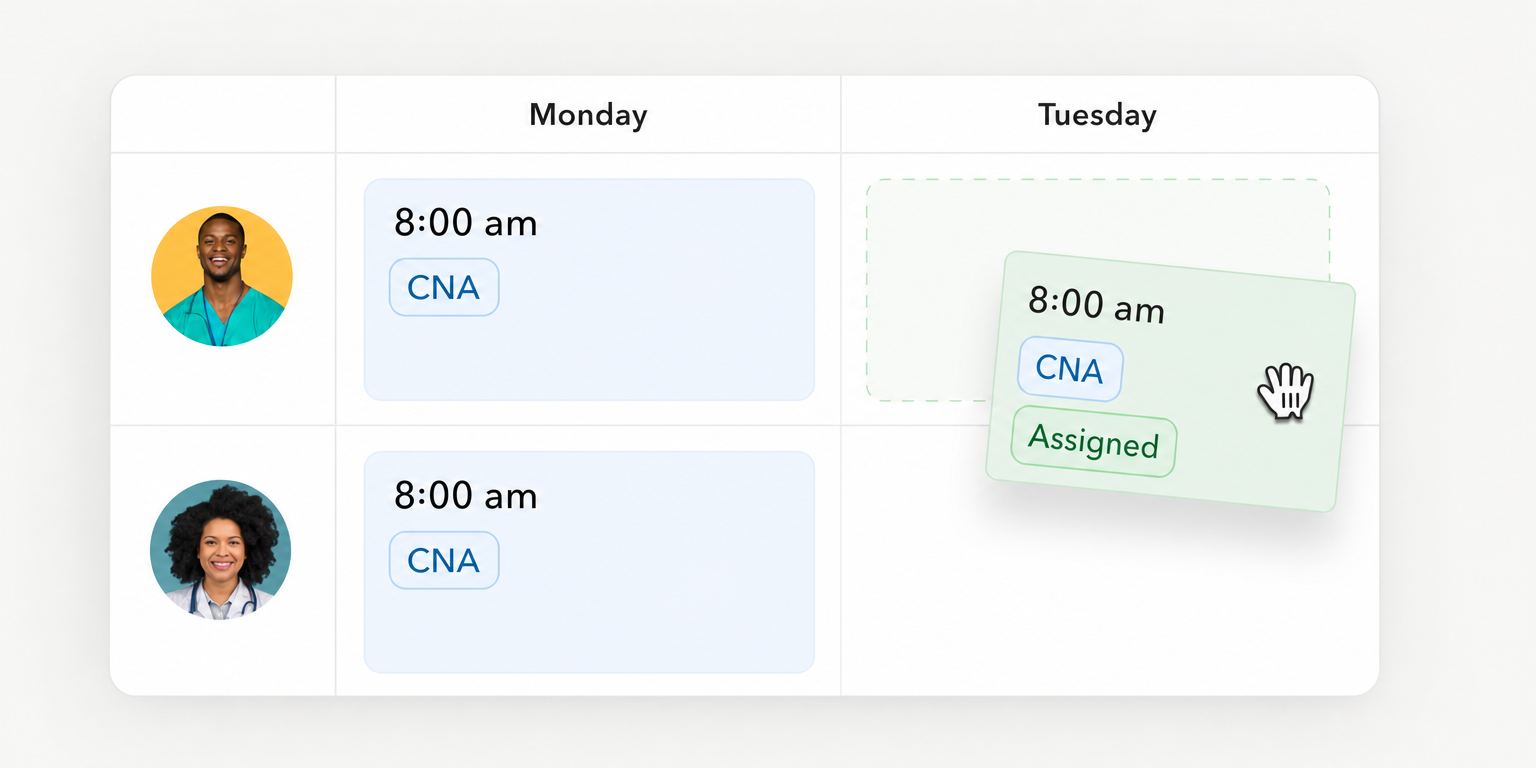
Drag-and-drop is table stakes. It does not differentiate one vendor from another in 2026, and it does not solve the problems coordinators actually have.
The real work of a scheduling engine is matching the right caregiver to the right client, on the right shift, with the right credentials, at the right pay rate — and doing it again when someone calls out. That is a constraint-solving problem, not a calendar problem.
What modern scheduling has to do
- Match availability automatically against client preferences and caregiver history
- Broadcast open shifts to qualified caregivers via mobile in real time
- Block schedule conflicts at the source — overtime risk, expired credentials, double-booking
- Handle recurring visits without rebuilding the schedule every week
- Surface utilization data so you can see who's underused and who's burning out
The failure mode of legacy tools is well-known: schedules scattered across a desktop scheduling tool, a group text chat, a paper printout taped to the wall, and three coordinators' heads. When a 4 a.m. call-out hits, none of those systems talk to each other.
Scheduling stability is also a retention lever, not just an operations one. Home health care agencies have been struggling with high rates of turnover, in part because of high levels of schedule volatility. It is common for employees to learn of their schedule for the next day only the night before. One study concluded that just 30 days of high schedule variability in a year increases the odds a nurse will quit by 20%.
That is a software problem disguised as an HR problem. A scheduling engine that gives caregivers 2-week visibility, holds their recurring clients steady, and lets them self-serve swaps directly addresses the volatility that drives them out.
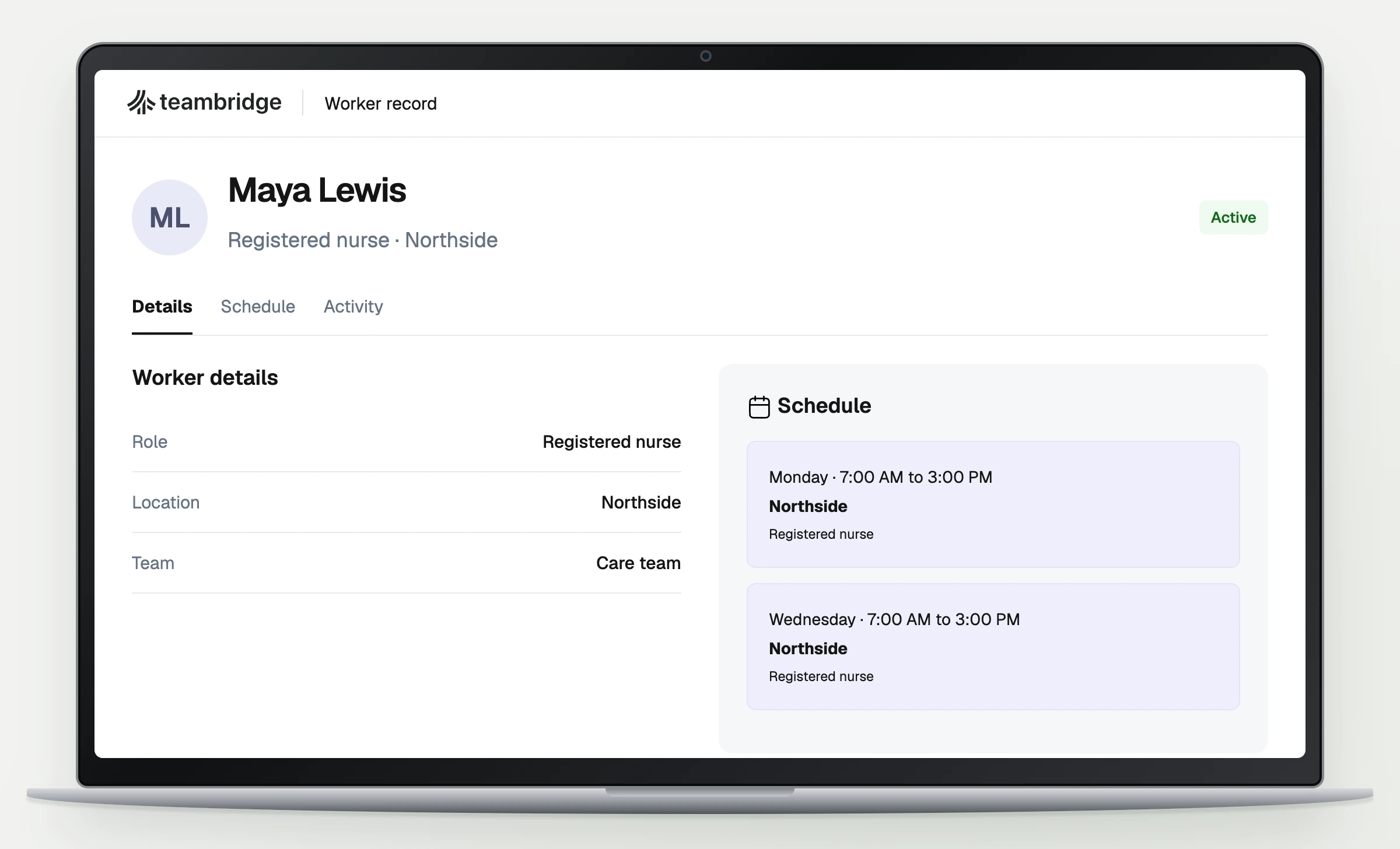
Profitable private duty agencies hit 85%+ caregiver utilization and minimize turnover, with profitability depending on those two factors. You don't get to 85% utilization with spreadsheets. You get there with a scheduling engine that knows your caregivers, your clients, and your constraints — and acts on them. Teambridge's Scheduling product was built for this kind of constraint-aware matching, including credential enforcement at the point of assignment.

Ready to move?
Ready to see Teambridge in action?
Credential Tracking and EVV Without the Compliance Theater
Credentials are a quiet killer. CPR cards expire. TB tests expire. State-specific certifications expire. Background checks need re-running. Every one of those is a shift you can't fill — or worse, a shift you filled with someone who shouldn't have been on it.
Most agencies handle this with a spreadsheet and a recurring calendar reminder. That works until it doesn't. The first time a coordinator pulls a caregiver mid-shift because someone discovered an expired credential, the cost of "good enough" becomes obvious: an angry client, a scrambling backup, a credential renewal that should have happened three weeks ago, and a caregiver questioning whether to stay.
Compliance shouldn't be a separate module
The right architecture treats credentials as a scheduling constraint, not an HR report. If a caregiver's CPR expires on the 15th, the system should refuse to assign them to a 16th shift — and should have started nudging them to renew 30 days out.
| Approach | What happens when a credential expires |
|---|---|
| Separate compliance module | Coordinator gets an email, may or may not see it, scheduler doesn't know |
| Spreadsheet tracking | Someone catches it on a quarterly review, often after a shift was already worked |
| Credentials as a scheduling constraint | Shift assignment is blocked at the source; caregiver gets automated renewal nudges starting 30, 14, and 7 days out |
EVV adds another layer, and it is not getting simpler. Once agencies do find their footing with EVV, they're not out of the woods just yet: requirements and enforcement vary by state and are in a constant state of flux, forcing organizations to regularly update workflows, retrain staff, and reconfigure systems around emerging regulations.
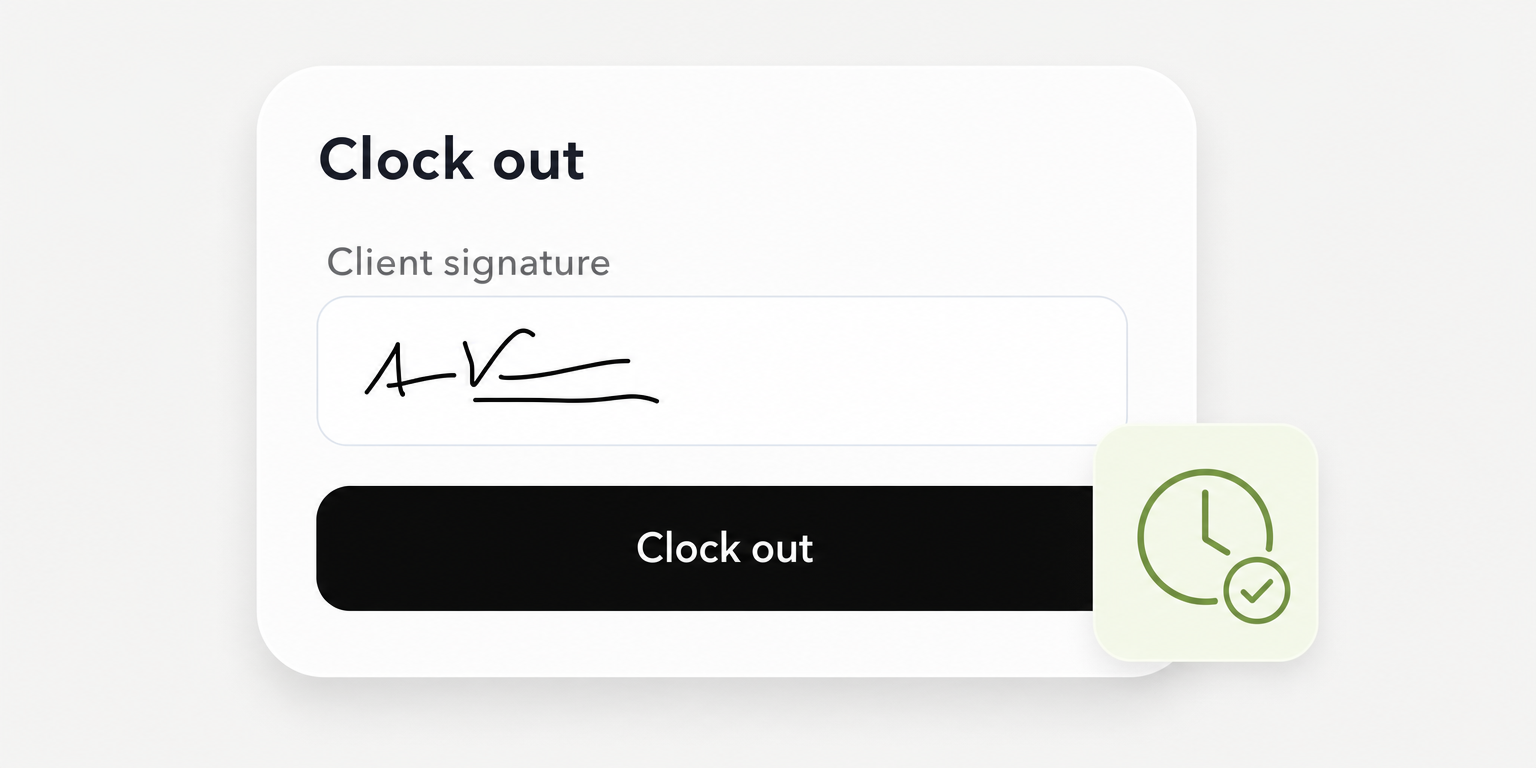
For private duty specifically, EVV is less about Medicaid reimbursement and more about visit verification, dispute prevention, and clean payroll data. You want the caregiver to clock in at the client's home, you want the timestamp and location captured, and you want exceptions routed to an admin queue — not buried in a report nobody reads. See how Teambridge handles this in the Home Care industry workflow.
Time Tracking, Visit Verification, and the Path From Clock-In to Payroll
This is where most agencies bleed margin. The visit happens. The caregiver clocks in and out. And then five different things need to happen with that data: EVV logging, timesheet approval, exception handling, client invoicing, caregiver payroll. In a typical agency, those five things happen in three to five different systems.
Each hand-off is a leak. A clock-out time gets re-keyed wrong. A mileage adjustment gets missed. A live-in rate gets billed as hourly. Multiply that across hundreds of visits a week and you have a margin problem that no amount of marketing can fix.
The connected flow
- Caregiver clocks in via mobile at the client's home, with GPS and timestamp verification
- Visit details — tasks completed, notes, exceptions — captured on the same device
- Anomalies (early-outs, missed clock-ins, unapproved overtime) route to an admin queue automatically
- Approved hours flow into client invoices at the correct rate, including shift differentials and packages
- The same approved hours flow into caregiver pay without a separate export and re-import
Tip
Before you sign a contract with any private duty software, ask the vendor to walk you through one full visit from clock-in to invoice to payroll, in their live product, with a live-in shift and a holiday differential. If they can't do it without an export, you'll be doing manual reconciliation for the next three years.
The duct-taped stack of 4-5 subscriptions — scheduling here, EVV there, payroll over there, messaging on a fourth app, credentials on a fifth — is not just expensive. It's the structural reason agencies can't see their own margin in real time. Each tool owns a slice of the data, none of them own the whole picture.
This matters even more in private duty because of the rate complexity. An overnight rate plus a holiday differential plus a 4-hour minimum plus a live-in stipend cannot survive five hand-offs without errors.
Caregiver Communication and Retention Built Into the Platform
Turnover is a software problem as much as an HR one. When a caregiver can't see next week's schedule on their phone, can't request a swap without texting a coordinator, and can't get a quick answer about their pay stub, they don't escalate — they leave.
The data backs this up. A 2026 staffing analysis found that agencies adopting AI scheduling and automated documentation tools report 20 to 30% lower caregiver turnover compared to agencies using manual scheduling and paper-based or disconnected documentation.
What retention-minded software does
- Mobile-first app caregivers actually open — not a portal they forget the password to
- Two-way messaging between caregivers, coordinators, and sometimes clients
- Shift swap requests handled in-app, with automatic credential and overtime checks
- Visibility into upcoming shifts, hours worked this pay period, and pay stubs
- Automated nudges for credential renewals and onboarding tasks, so the coordinator isn't chasing
The biggest cost in private duty care isn't client acquisition — it's caregiver turnover. When a caregiver leaves mid-way through a client relationship, you often lose the client too. Continuity is the product in private duty. Software that protects continuity is protecting revenue.
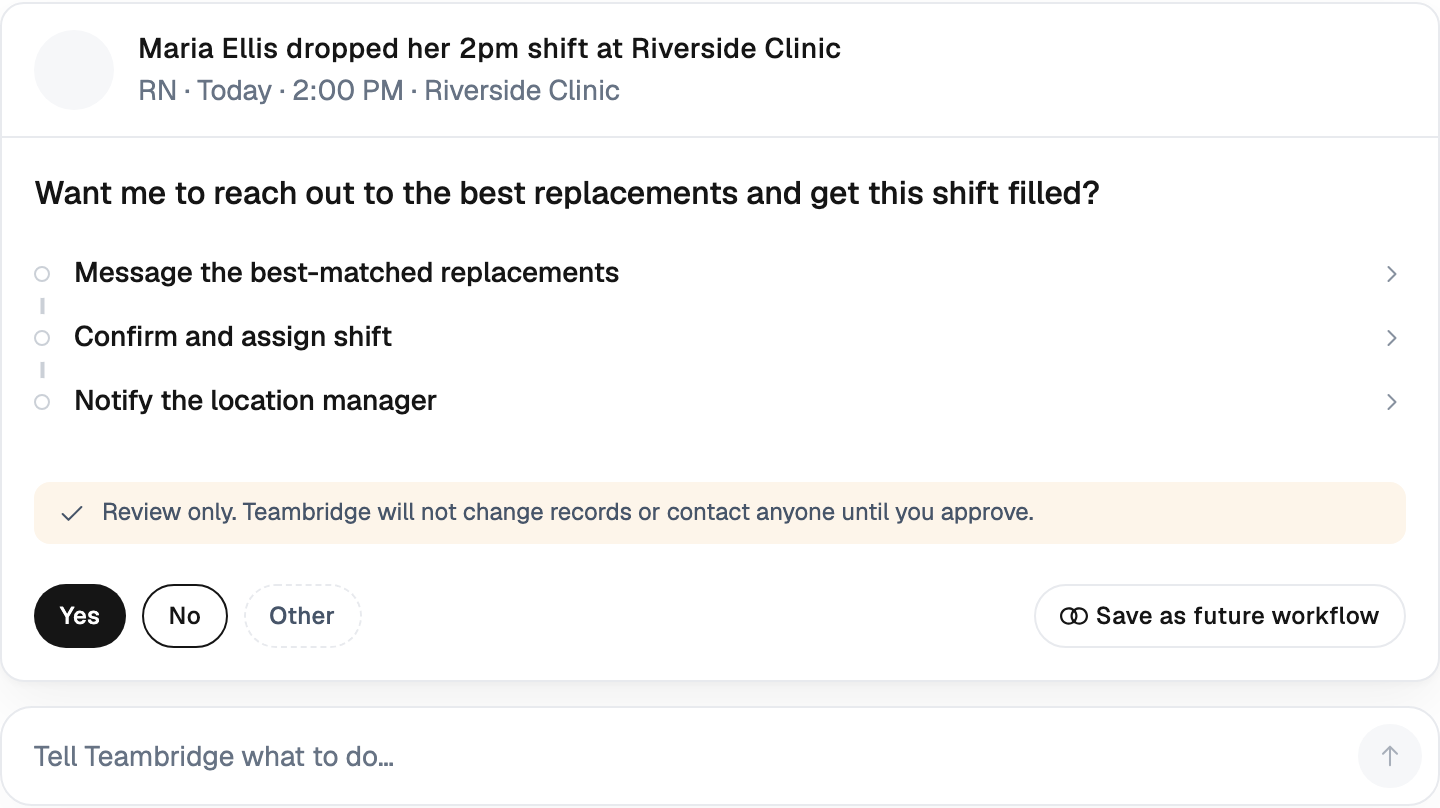
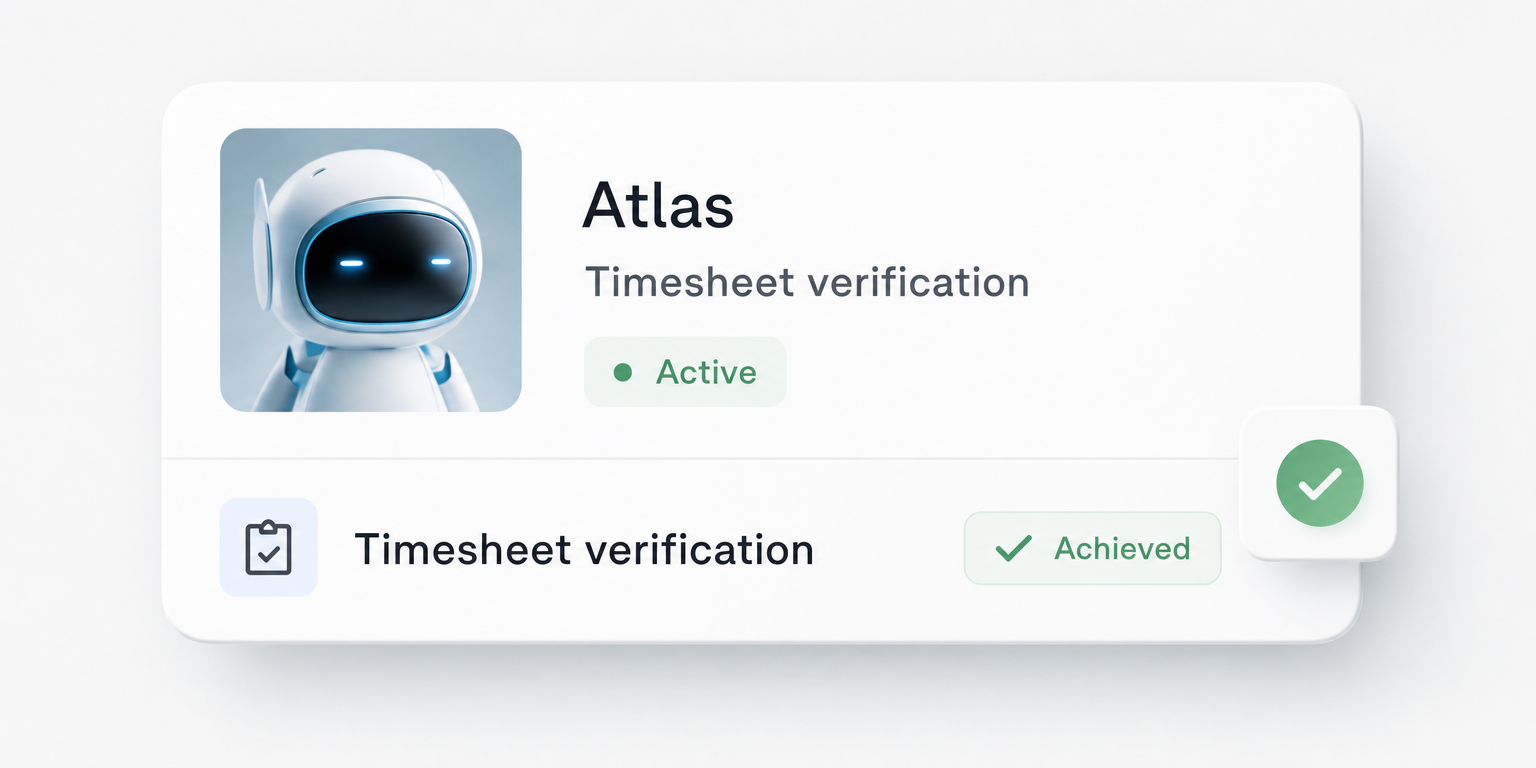
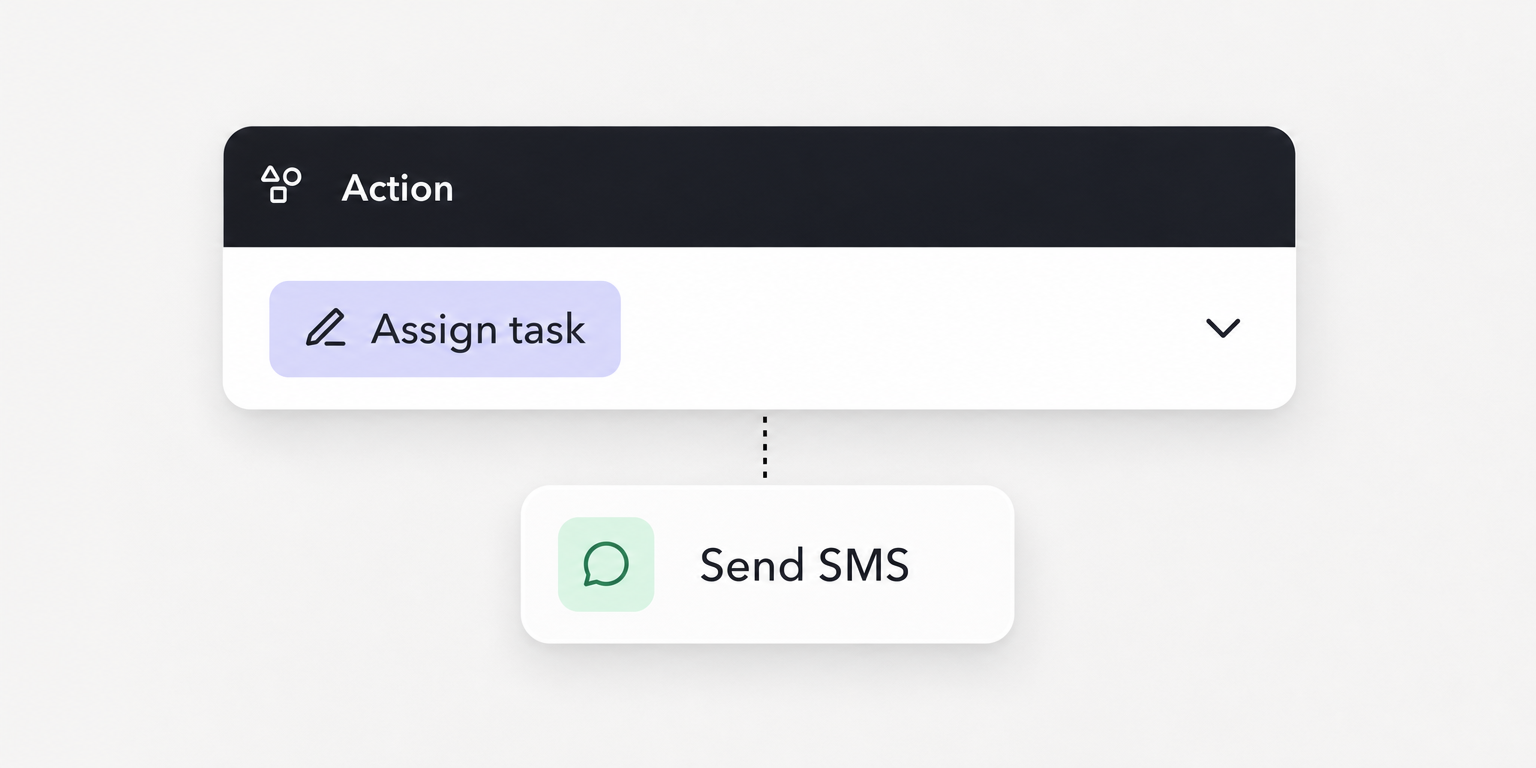
The automation layer matters specifically because coordinators are the bottleneck. Every no-show follow-up that has to be done manually, every credential renewal nudge that has to be remembered, every onboarding step that has to be triggered by hand — that's coordinator time that could go to filling open shifts or keeping a client happy. Teambridge's Automations handle the repetitive workflows so the human work — caregiver coaching, client relationships, exception handling — gets the attention it deserves.
Treat scheduling stability, mobile communication, and credential automation as a single retention strategy. They are not separate features. They are the operational version of "caregivers stay where life is predictable."
Buying Checklist: What to Actually Test Before Signing a Contract
Most software demos are choreographed. You see the pretty calendar, the AI scheduling demo, the dashboard that looks great on a 4K monitor. None of that tells you whether the tool will survive contact with your actual operation.
Here is the checklist to run against any private duty home care software you're evaluating. Bring real scenarios. Don't accept slide-deck answers.
The operator's test list
- Can it model a 24-hour live-in with a sleep period and an overnight differential, billing the client and paying the caregiver correctly, without a manual export?
- Can EVV and visit data flow directly into the invoice and the payroll run, with exceptions queued for a human only when needed?
- Can you build a new automation — say, a 30/14/7-day credential renewal nudge — without writing code or filing a ticket with the vendor's engineering team?
- What is the actual implementation timeline? Some legacy platforms run six-month deployments. That's six months of paying for two systems and getting full value from neither.
- What is the real caregiver mobile app adoption rate from existing customers? Not the install rate. The weekly active rate. Ask for references in your size range.
- Does the platform scale across multi-location growth without a separate instance per office? If you're planning to open a second location next year, this matters now.
- Does the credential engine block shift assignments at the source, or just send a report?
- What does the pricing look like at 2x your current caregiver count? Some vendors price aggressively at small size and punish growth.
| Capability | Legacy private duty tool | Modern workforce ops platform |
|---|---|---|
| Shift structures | Hourly grid with workarounds | Native live-in, overnight, package billing |
| Credentials | Separate module, report-based | Scheduling constraint, blocks assignment |
| EVV to payroll | Manual export and reconciliation | Connected flow, exceptions only |
| Caregiver app | Schedule view only | Schedule, swaps, pay, messaging |
| Automations | Vendor-built only | No-code, operator-built |
| Implementation | 4-6 months | Weeks |
For a broader view of caregiver shortage dynamics and what's driving the technology shift, the Home Care Association of America's Workforce Crisis Report is worth reading alongside any vendor evaluation.
The agencies that will outperform in 2026 are not the ones with the prettiest calendar. They are the ones whose software handles the entire workforce operation end-to-end: scheduling, credentials, EVV, time tracking, communication, pay, and the automations that tie them together. See how the Teambridge platform is built for that end-to-end private duty workflow.