

This is a documentation problem dressed up as a safety problem. And the cheapest place to fix it is the worker's phone.
Why Staffing Agency X-Mods Are Climbing Again in 2026
The soft market is over. For nearly a decade, workers' compensation insurance operated in what the industry calls a soft market. Rates declined year after year. Competition among carriers was fierce. Staffing agencies could expect predictable renewals, modest premiums, and multiple carrier options. That era is ending.
Start with California, the bellwether. The commissioner issued a decision on July 10, approving advisory pure premium rates for new and renewal policies effective on or after September 1, 2026. The approved advisory pure premium rates average $1.65 per $100 of payroll. That followed an 8.7% advisory pure premium rate increase for policies starting on or after September 1, 2025. This marks the first significant advisory rate hike in a decade. The underlying carrier math is worse than the headline: California's market-wide combined ratio is projected to hit 127% in 2024 — the highest it has been in over 20 years.
Carriers are responding the way carriers always respond. They're leaving. Carriers are exiting. Programs are restructuring. Non-renewal notices are landing in mailboxes. And the staffing agencies caught off guard are the ones facing coverage gaps, dramatic rate increases, and in some cases, scrambling to find any carrier willing to write their policy at all.
Staffing takes the hit first. Staffing firms are the legal employer of record for every placed worker, making them the primary responsible party on every workers' comp claim regardless of where the injury occurs. Agencies pushing renewal in this market are seeing rate increases of 10 to 25 percent or more on high-risk class codes including warehouse, light industrial, logistics, hospitality, and manufacturing placements.
And it's not just California. According to the Risk Placement Services 2026 U.S. Workers' Compensation Market Outlook, the industry is now experiencing a structural transformation driven by three converging forces: escalating medical costs, cumulative trauma litigation, and growing concerns about reserve adequacy.
Here's the operator's problem: the X-Mod is a three-year rolling window. A single workers' compensation claim will stick around and influence your Experience Modification Rate (X-Mod) for three consecutive years. The calculation uses a three-year window of your claims history, but it intentionally skips your most recently completed policy period to make sure all the data is fully developed. Here's a real-world example: the X-Mod for your 2026 policy will be based on your payroll and claims data from 2022, 2023, and 2024. This means a significant claim from 2023 will keep pushing your premium up all the way through your 2027 renewal.
A single inflated claim today is a premium tax through 2029. That is the structural pain. The leak, though, isn't safety. It's documentation.
The Documentation Gap That Inflates Every Claim
Walk through what actually happens on a typical staffing agency claim.
Tuesday afternoon: a warehouse worker tweaks a back lifting a case. Tells the on-site client supervisor, keeps working the shift. Wednesday: sore, works through it. Thursday: worse. Friday: calls the agency. Monday: sees a doctor. Doctor issues restrictions. By Wednesday, ten days after the incident, the adjuster opens a file.
By the time the agency's risk manager touches it, all the artifacts that would keep the reserve low are gone:
- No timestamped shift-level record of the mechanism of injury
- No witness statement from the two coworkers who saw it
- No photo of the pallet or the aisle
- No proof the agency offered a modified-duty shift the following Monday
- No documented refusal if the worker chose not to come back
Each missing artifact is a reserve increase. Adjusters set the initial reserve based on what they don't know as much as what they do. A vague, late-reported soft-tissue claim with no witnesses and no modified-duty offer gets reserved for surgery and litigation — because that's the worst case, and the worst case is what carriers price.
The leverage sits in one specific place: the refusal of light duty. Create a system where injured workers report incidents to both your agency and the client site supervisor immediately. Florida law requires workers to report injuries within 30 days, and agencies must notify their insurance carrier within seven days. Missing these deadlines can result in claim denials and penalties. If the agency can prove — with signed, timestamped documentation — that a bona fide modified-duty shift was offered and refused without justification, benefits terminate in most states. If it can't, the claim runs to full temporary total disability until the worker is released. That is the difference between a $4,000 medical-only file and a $60,000 indemnity file.
Important
Oral offers and email chains lose at hearing. Courts want a written job description, matched to written medical restrictions, delivered with proof of receipt, and a documented response. Anything less is not a "bona fide offer."
Capturing Injury Reports at the Shift, Not the Office
The fix is not another safety poster. It's structural: no worker ends a shift without answering a single question. Did anything happen today?
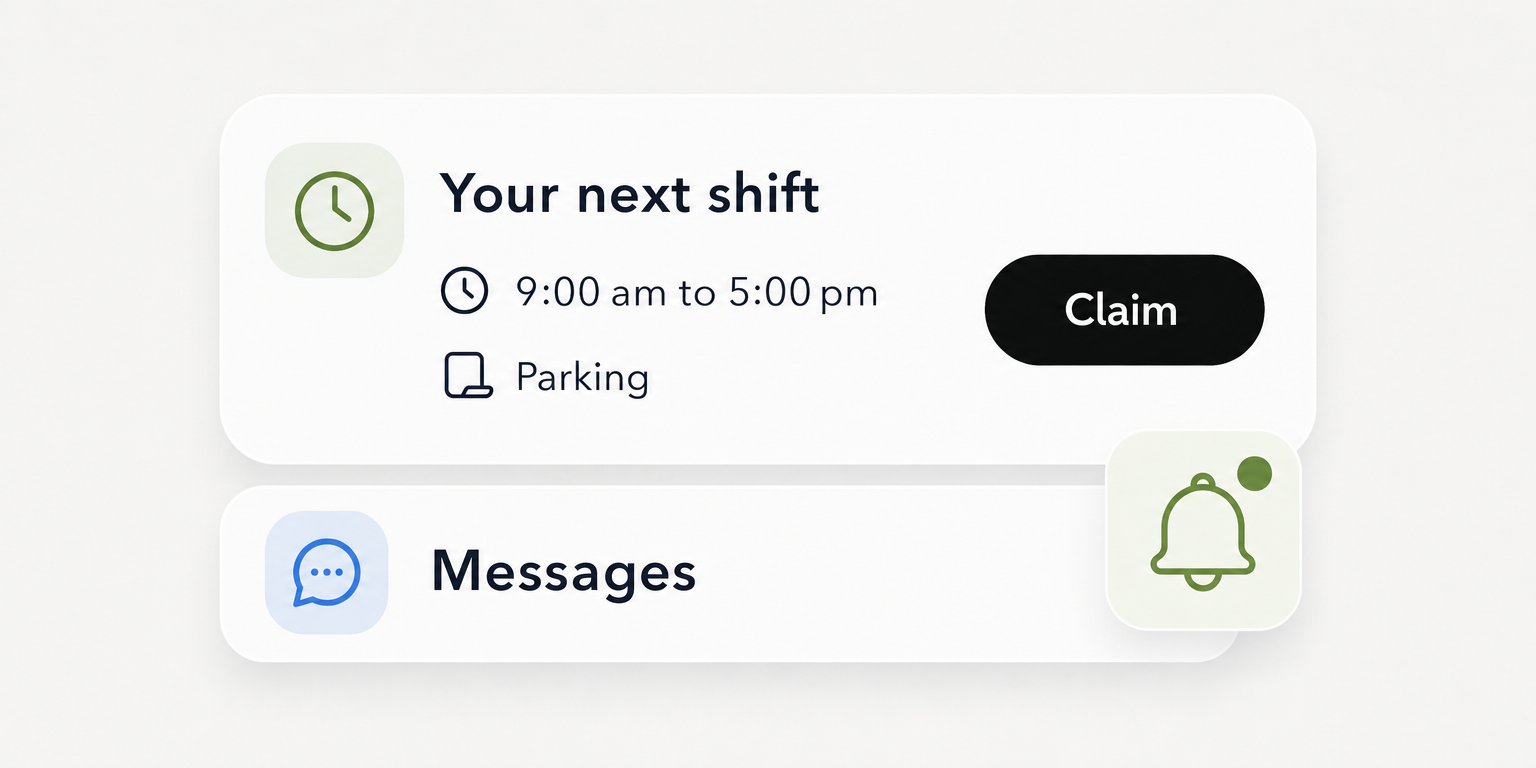
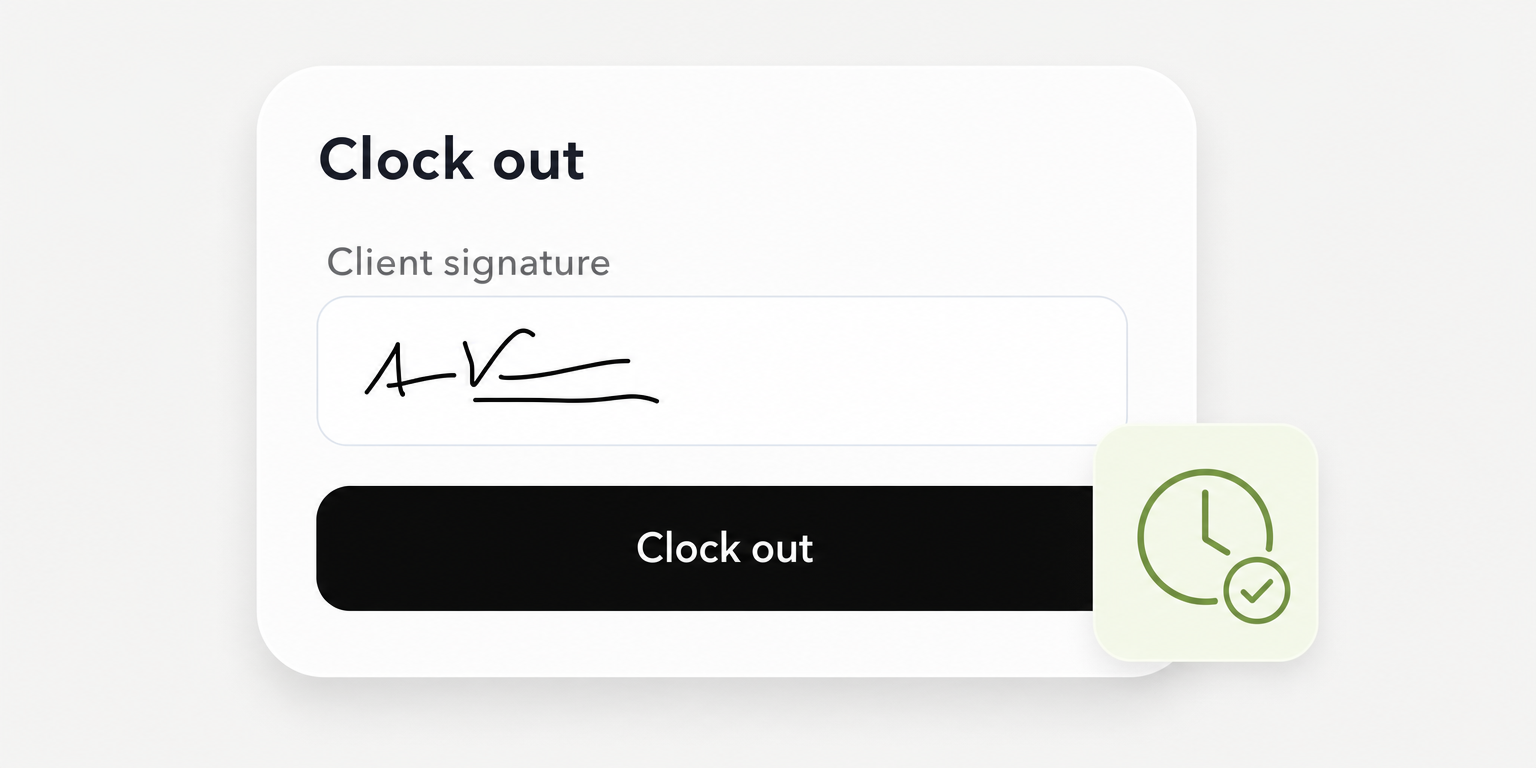
Built into the mobile clock-out flow, this takes eight seconds when the answer is no. When the answer is yes, it opens a structured intake:
- Body part and mechanism (dropdown, not free text)
- Timestamped narrative — worker's own words, captured at the moment, not reconstructed on Friday
- Photo capture of the location, equipment, or PPE involved
- Geo-stamp confirming the client worksite
- Witness tag pulled directly from the shift roster — the two other people clocked in on that line at that time
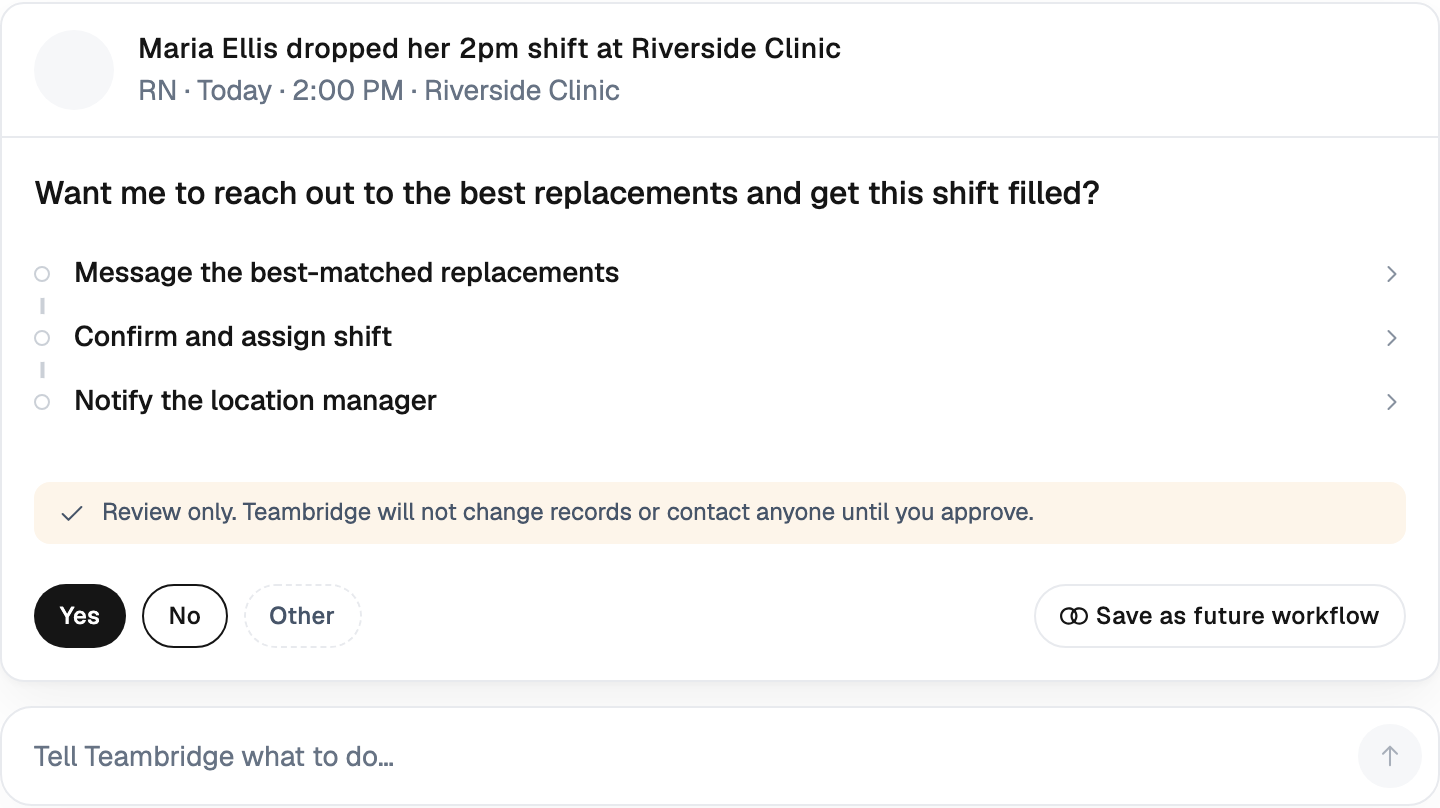
- Auto-route to the agency's risk manager within minutes
That last step matters. Florida law requires workers to report injuries within 30 days, and agencies must notify their insurance carrier within seven days. A same-shift intake plus auto-routing means the agency's 7-day carrier reporting clock starts on day zero, not day five.
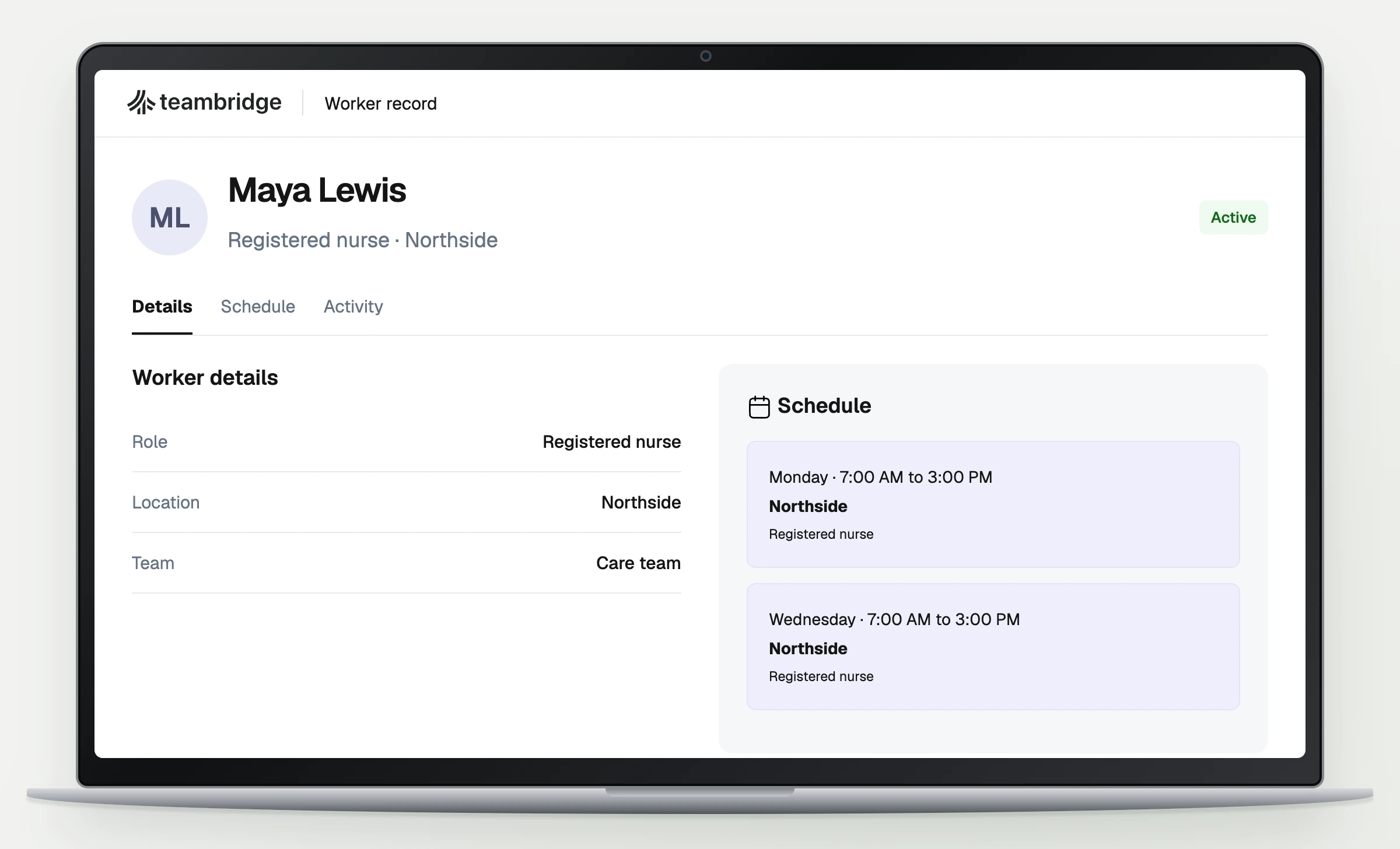
This is the work that Teambridge's Mobile App and Admin Tools do together — the intake lives in the worker's clock-out flow, and the exception lands on the risk manager's dashboard before the worker leaves the parking lot.

What ends up in the claim file
| Artifact | Traditional process | Shift-level capture |
|---|---|---|
| Time from incident to agency notice | 3–10 days | Minutes |
| Mechanism of injury description | Reconstructed from memory | Worker's own words, same shift |
| Witness statements | Rarely obtained | Auto-tagged from roster |
| Photos of scene | None | Attached at intake |
| Geo-verification of worksite | None | GPS-stamped |
| First report of injury to carrier | 7–14 days | Under 24 hours |
Ready to move?
Ready to see Teambridge in action?
The Light-Duty Offer: Make It a Real Shift, Not a Letter
Here's where most agencies bleed money without knowing it. They mail a light-duty offer letter, drop it in USPS certified, and wait. If the worker doesn't respond, the file drifts. If the worker verbally declines to a case manager, the adjuster gets a note. Neither creates the record a hearing officer needs.
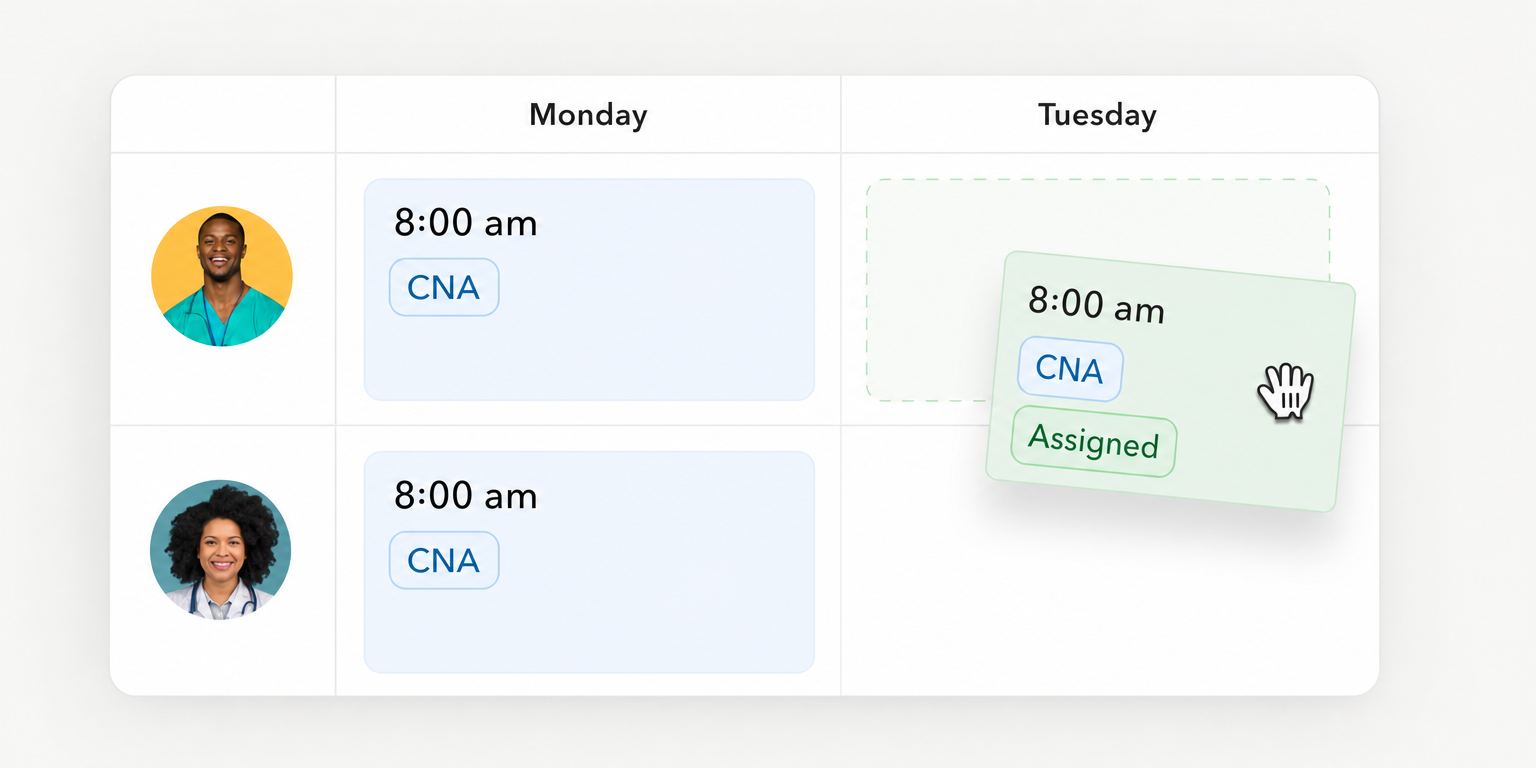
Treat modified duty as an actual assignable shift in the scheduler instead. That means:
- A defined light-duty shift template with duties, hours, pay rate, location, and start date
- Medical restrictions attached to the shift record (no lifting over 15 lbs, seated only, no repetitive reaching, etc.)
- Restrictions matched line-by-line to the treating physician's return-to-work note
- The shift assigned to the worker through the app, same way any other shift gets assigned
- Accept / decline captured in-app with a timestamp and digital signature
When the worker declines through the app, the agency has a timestamped, digitally signed refusal tied to a specific job description that matches specific medical restrictions. That is the "bona fide offer" standard.
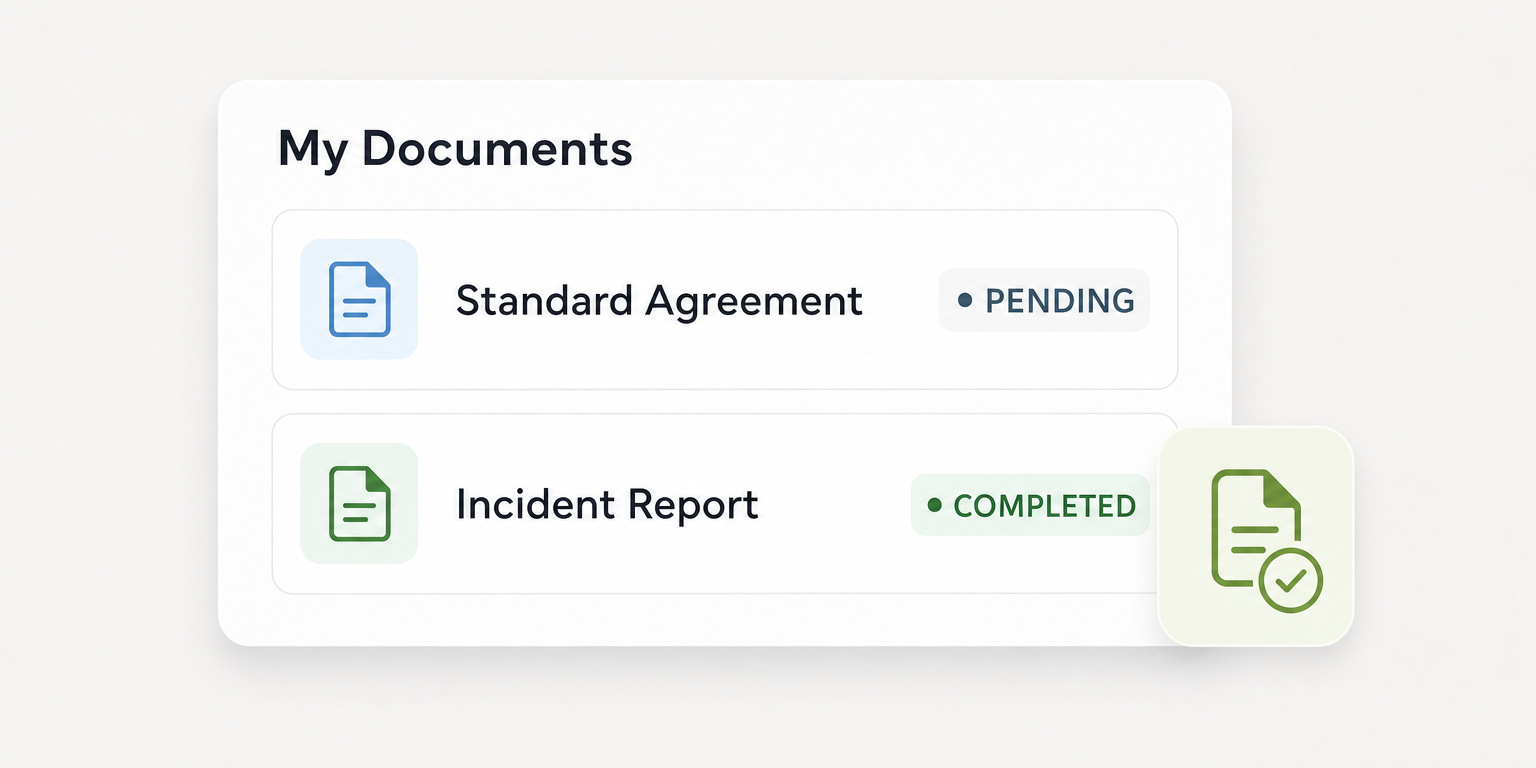
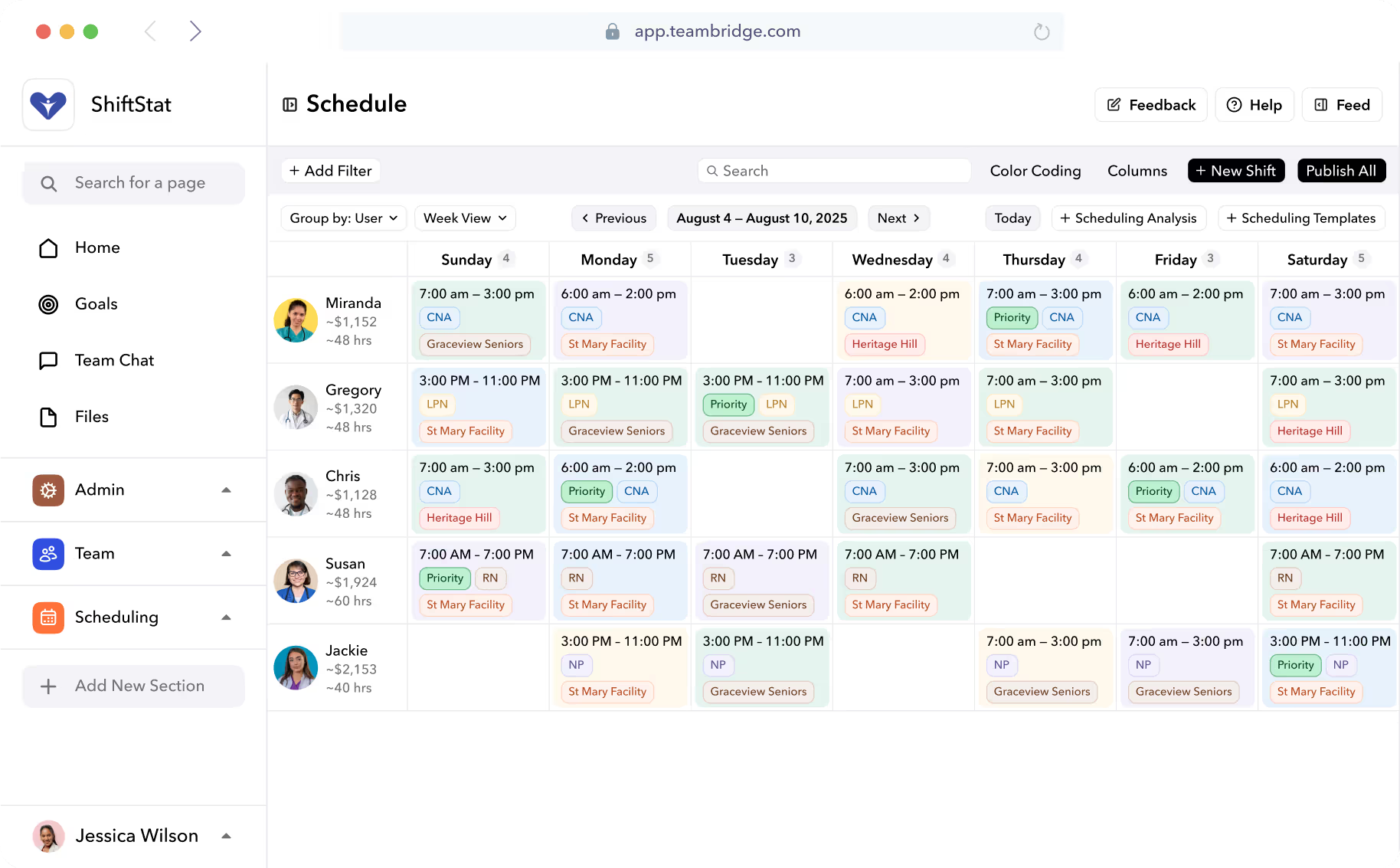
This is one of the reasons agencies with high-volume light-industrial and healthcare placements are moving light duty into their Scheduling system rather than treating it as HR paperwork. The offer becomes an operational object, not a letter.
A written job description matched to written medical restrictions, delivered with proof of receipt, and refused in writing — that is the record that terminates benefits at hearing. Everything else is theater.
Why case law keeps punishing sloppy offers
Courts across jurisdictions have hammered employers whose "light duty" was busywork or whose offer letters didn't match the actual restrictions on file. If the offer says "sedentary clerical" but the medical note restricts prolonged sitting, the offer isn't bona fide and the refusal doesn't stick. If the letter went to an old address and there's no proof of receipt, the refusal doesn't stick. If the duties don't exist as a real scheduled shift with a real supervisor and a real timecard, the refusal doesn't stick.
The scheduler is where this gets solved. If the shift is on the calendar, staffed with a supervisor, punched in and out through the same time-tracking system every other worker uses, it is a real job. The refusal record inherits that legitimacy automatically.
Refusal-to-Return Documentation That Actually Holds Up
What a defensible refusal packet looks like when it lands on the adjuster's desk:
- First report of injury filed within 24 hours, with shift-level intake attached
- Treating physician's work status report with specific restrictions
- Written modified-duty job description with each duty mapped to each restriction
- Proof of delivery — in-app receipt with timestamp, plus certified mail as backup
- Worker's response captured in-app, digitally signed, timestamped
- Clean PDF export routed to the adjuster with all six artifacts in one file
That packet does two things at once. It gives the adjuster grounds to terminate indemnity benefits if the refusal is unjustified. And it gives the agency's defense counsel a complete evidence file if the claim goes to hearing.
Structured return-to-work programs are one of the highest-ROI investments in claims management, with well-documented programs producing several dollars of claim savings for every dollar spent on administration. The savings come from reduced indemnity duration, not from reduced medical spend — and the reduction only happens when the refusal record holds up.
Tip
Audit five closed claims from the last twelve months. For each, ask: could our defense counsel prove a bona fide light-duty offer was made? If the answer is "maybe" on three of five, your reserves are structurally too high.
Feeding the Carrier: Faster Reporting, Lower Reserves
Adjusters set initial reserves in the first 72 hours based on what they know. What they know depends on what the agency sends them.
Same injury. Two documentation trajectories:
| Signal to adjuster | Late/undocumented file | Shift-level captured file |
|---|---|---|
| Notice to carrier | Day 10 | Day 1 |
| Mechanism clarity | Vague, reconstructed | Specific, contemporaneous |
| Witness statements | None | Two, timestamped |
| Photos | None | Attached |
| Modified-duty plan | "To be determined" | Shift already on calendar |
| Initial reserve set | Worst-case indemnity | Medical-only or minimal indemnity |
| 18-month claim cost trajectory | Full run-out | Early closure |
| X-Mod impact | Multi-year drag | Minimal or neutral |
The adjuster is not the enemy here. The adjuster is a risk-priced decision-maker who defaults to conservative reserves when information is thin. Feed them a complete file on day one and the reserves come in lower. Lower reserves flow into loss runs. Loss runs flow into the X-Mod calculation. The X-Mod flows into premium for three years.
That is the operational math. The agencies renewing well in 2026 aren't the ones with fewer injuries. They're the ones whose files look complete on day one.

What to Build Into Your Ops Stack This Quarter
A punch list for staffing operators. None of this is speculative — these are workflows any agency running a modern workforce platform can stand up in a quarter.
- Mandatory end-of-shift injury prompt in the mobile app. Not optional. Not a poster in the breakroom. A required question in the clock-out flow with structured intake if the answer is yes.
- Light-duty shift template in the scheduler with restriction fields. Standing template that risk managers can clone and assign. Restrictions as structured fields, not free text.
- Auto-generated refusal packet for the carrier. One-click export of the six-artifact packet described above, formatted for the adjuster's system.
- 24-hour SLA on first report of injury. Internal ops metric. Track it monthly. Any FROI over 24 hours from the shift-level intake is an ops failure, not a worker failure.
- Monthly X-Mod review tied to documentation completeness. Pull open claims. Score each on documentation quality. Fix the gaps before renewal, not during.
These workflows matter most in Light Industrial and Healthcare Staffing — the two verticals where class code rates, injury frequency, and modified-duty availability all collide. In warehouses, back and shoulder strains dominate. In healthcare, patient-handling injuries and needlesticks. Different mechanisms, same documentation math.
The common thread: the worker has a phone, the shift has a schedule, and every artifact that keeps reserves low can be captured before the worker clocks out. If your ops stack can't do that today, that's the gap. Teambridge's Platform is built to close it end to end — the mobile intake, the light-duty scheduling, the admin dashboards, and the carrier-ready export all live in one system so the artifacts don't get lost between tools.
The X-Mod is a lagging indicator. The documentation is the leading one. Fix the documentation this quarter and the renewal in 18 months takes care of itself.

About the author

Content Writer at Teambridge
Anis Nanai is a content writer at Teambridge, with a focus on workforce management and the realities of running hourly teams. He prioritizes conversations with customers, staying close to the market, and understanding how workforce needs are changing. His writing connects those concerns to practical decisions about scheduling, time tracking, staffing, and automation. He examines product developments through the questions that matter to operators: what does this solve, how would it work for my team, and what evidence supports it?
Company perspective: this author works at Teambridge. Customer outcomes are attributed to their published sources.
View LinkedIn profile