

In 2025, U.S. staffing companies employed 9.5 million temporary and contract workers over the full year, according to the American Staffing Association's annual results. That is an annual industry measure, not the number working in a typical week.
The next constraint can appear after a recruiter finds the right person: an incomplete requirement, an unconfirmed assignment, a missed schedule update or a timecard waiting for approval. More placements can mean more revenue. They can also mean more work moving information between disconnected systems.
Staffing growth has returned, but the measures need context
ASA's second quarter 2026 report provides evidence of a recovery. Average weekly staffing employment increased 5% from the first quarter, approximately 94,000 jobs. Compared with the second quarter of 2025, employment rose 0.6%, revenue rose 3.3% and temporary and contract payroll rose 3.8%.
ASA identifies Q2 as the first quarter since late 2022 with annual growth across employment, sales and payroll. The quarter comparison and the annual comparison describe different changes. A 5% increase from Q1 is not a 5% increase over the prior year.
In its September report, ASA recorded staffing employment 3.3% above the corresponding week of 2025. That figure refers to the week of September 7 through 13. It is a weekly comparison, not a full September average or a guarantee of continued growth.
Those results give agencies a reason to examine operating capacity. They do not establish that every firm or staffing segment is growing, or that recruiting constraints have disappeared. The useful question is what happens when an agency's own demand increases.
Replacement demand makes readiness a repeated task
Net employment growth captures only part of workforce demand. Businesses also need people when existing workers leave an occupation or leave the labor force.
BLS projects the following average annual openings for 2025 through 2035:
| Occupational group | Projected annual openings | Primary source |
|---|---|---|
| Hand laborers and material movers | 904,200 | BLS occupational outlook |
| Home health and personal care aides | 760,500 | BLS occupational outlook |
| Janitors and building cleaners | 321,800 | BLS occupational outlook |
| Nursing assistants and orderlies | 203,300 | BLS occupational outlook |
| Assemblers and fabricators | 177,500 | BLS occupational outlook |
| Combined annual openings | 2,367,300 | Sum of the five published projections |
These figures cover the occupations across the economy. They are not staffing agency placements, unique candidates, or current vacancies. BLS attributes many openings in these groups to occupational transfers and labor force exits; for cleaners and assemblers, it describes most openings as replacement demand.
For agencies serving these occupations, the operating implication is repetition. Requirements must be checked for each assignment. Availability changes. A worker ready for one client may need additional preparation for another.
Recruitment creates potential supply. Client specific readiness determines which part of that supply can actually cover the work.
A filled order and a ready worker are different states
Consider a hypothetical warehouse assignment starting at 8 a.m. tomorrow. The worker has accepted, but the client requires safety training that has not been recorded. The recruiter sees an accepted placement. The site supervisor sees an incomplete requirement.
Now suppose the worker calls out at 6:30 a.m. The agency has 50 possible replacements, but only seven satisfy the role, location, client requirements and current availability. Contacting all 50 does not resolve the eligibility decision.
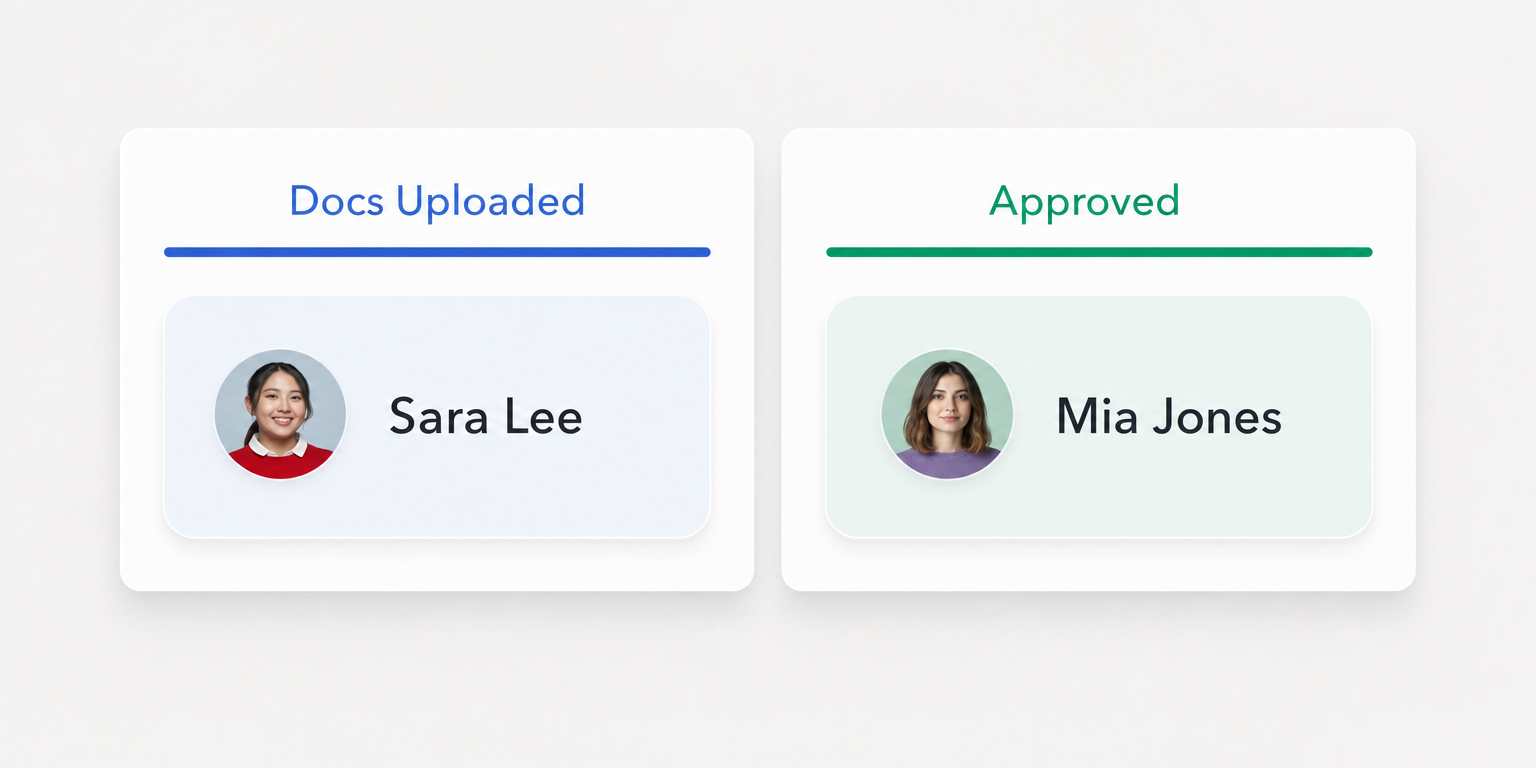
Readiness needs a shared definition: the right worker, with the required qualifications and documents, for the right assignment, location and time, with availability confirmed. Acceptance and readiness should remain separate records so an unresolved requirement cannot disappear behind a placement status.
Important
A worker's readiness belongs to the assignment context. Being cleared for one client or location does not automatically establish eligibility for another.
Assign each unresolved requirement to an owner and give it a next action. Record the evidence and the time of the decision. When the schedule or assignment changes, identify which checks need to be repeated before treating the worker as ready.
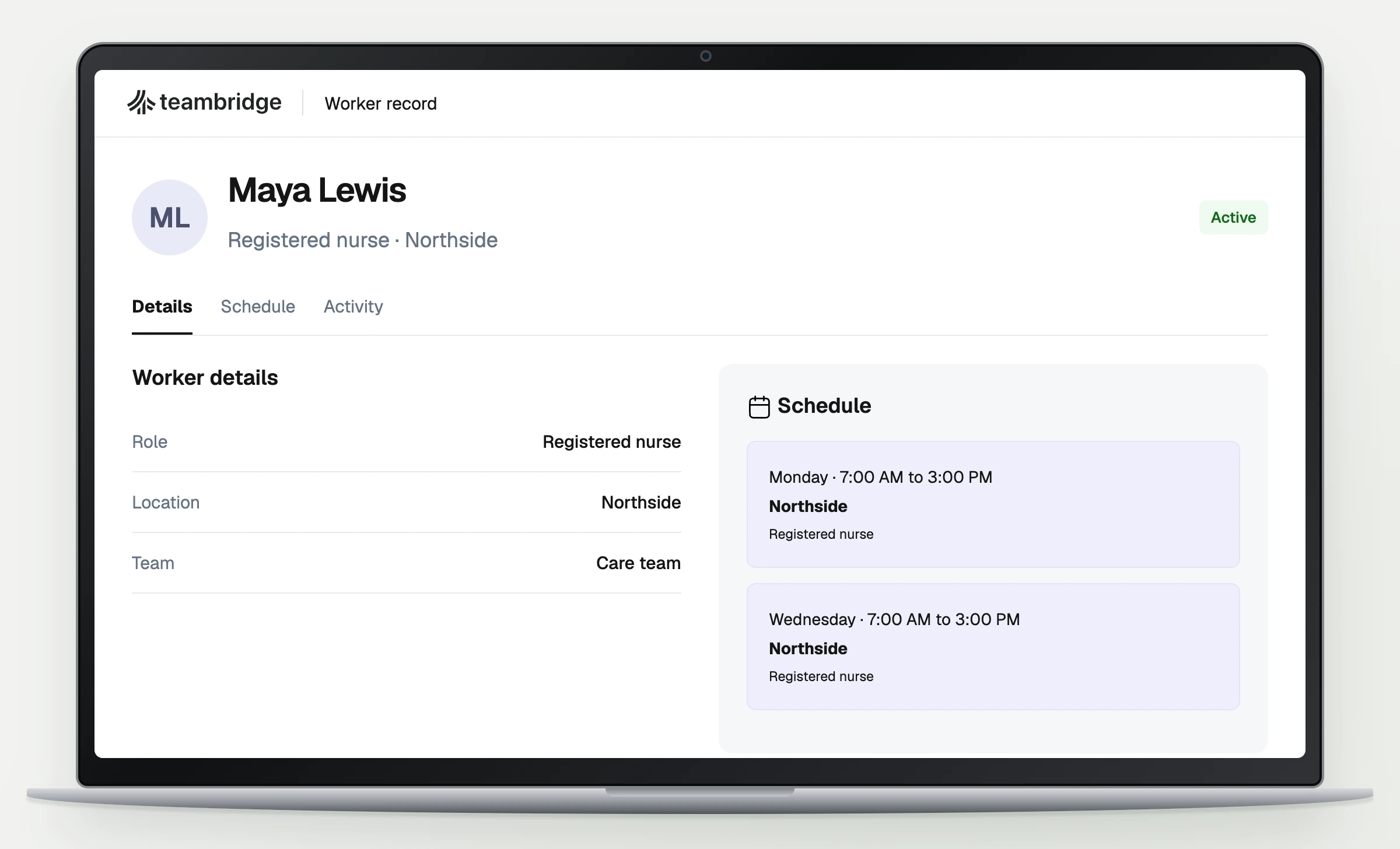
This is where connected onboarding and scheduling workflows matter. The scheduling team needs the relevant readiness information at the assignment decision, rather than another request to the recruiter for a status update.
Measure the time between placement and billable work
Time to fill remains useful. It does not describe every stage between accepting an assignment and preparing an invoice. An agency can fill quickly while accumulating delays in readiness, time approval or billing review.
Start with a stage measurement sheet that everyone can interpret:
| Transition | Start event | End event | What to retain |
|---|---|---|---|
| Accepted to ready | Worker accepts the assignment | Authorized reviewer confirms all assignment requirements | Requirement evidence, unresolved items and reviewer |
| Ready to scheduled | Readiness is confirmed | Assignment is saved in the published schedule | Assignment ID, schedule version and effective time |
| Open shift to confirmed coverage | Replacement request opens | Eligible worker accepts and assignment is confirmed | Eligibility checks, response and confirmation |
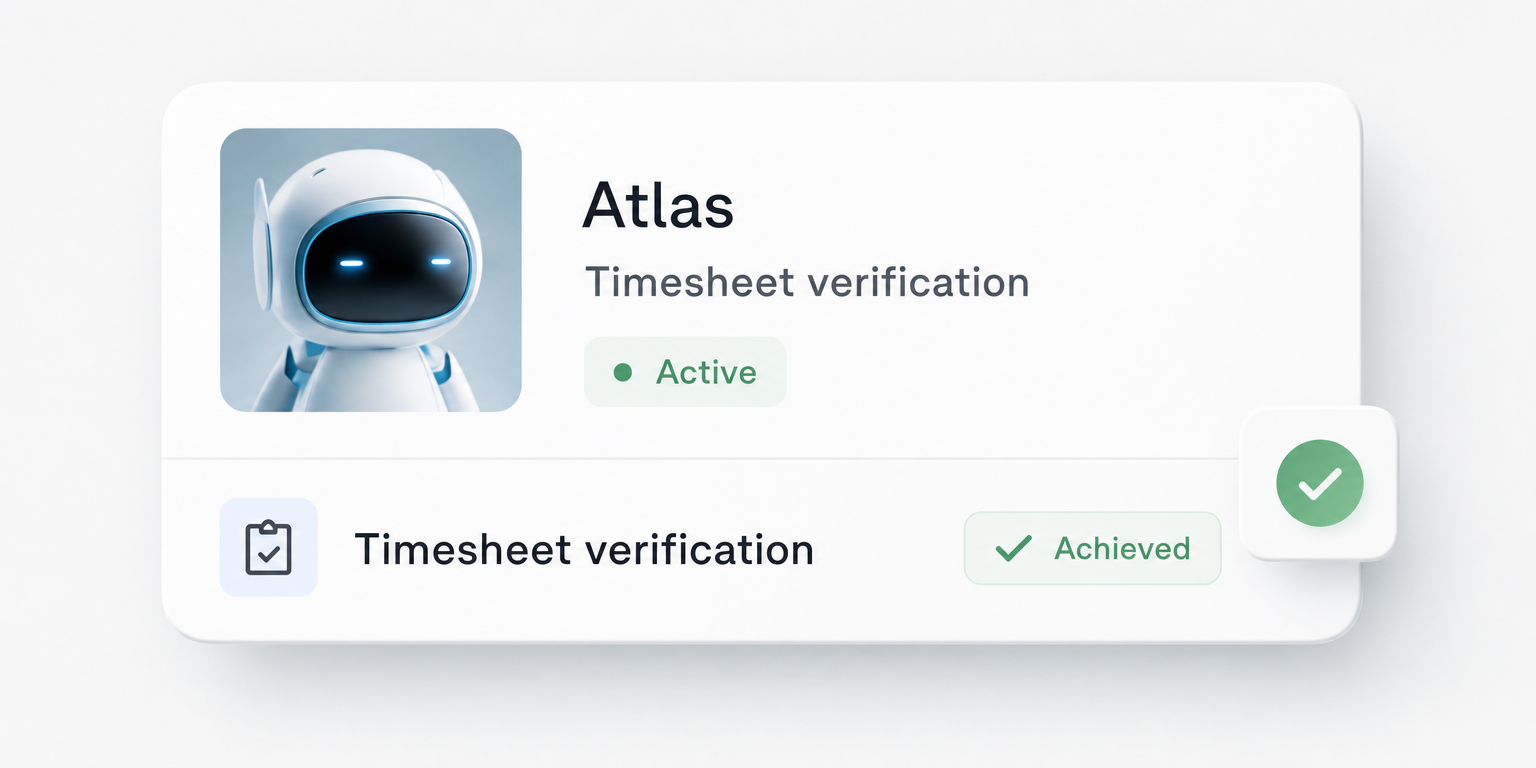
| Worked to approved | Shift ends | Authorized reviewer approves its time record | Original hours, corrections and approval |
| Approved to billing ready | Time is approved | Billing review confirms supported charges | Contract basis, exceptions and release decision |
These are proposed operating measures, not government staffing standards. Define elapsed time consistently, including the timezone and whether the measure uses calendar hours or business hours. Specify how cancellations, reopened records and assignments spanning reporting periods are handled.
Report the median and a slower percentile alongside the number of completed transitions. Keep unfinished items visible with their current age. A dashboard based only on completed work can hide the workers or charges that have been waiting longest.
For a clearly labeled hypothetical example, an agency has 100 accepted assignments in a weekly cohort. Eighty reach ready status by the cutoff. The readiness completion rate is 80 divided by 100, or 80%. The other 20 remain unresolved and need their own aging view; they should not silently disappear from the denominator.
Measure the same cohort again after a workflow change. Separate observed improvement from differences in client mix, role complexity or assignment volume. A faster process should still preserve the checks needed to establish eligibility and accurate records.
Make the handoffs explicit before automating them
Agencies already have technology: ATS platforms, payroll, screening services, accounting tools, messaging and scheduling. Adding another tool helps only if the information reaches the person or workflow that needs it.
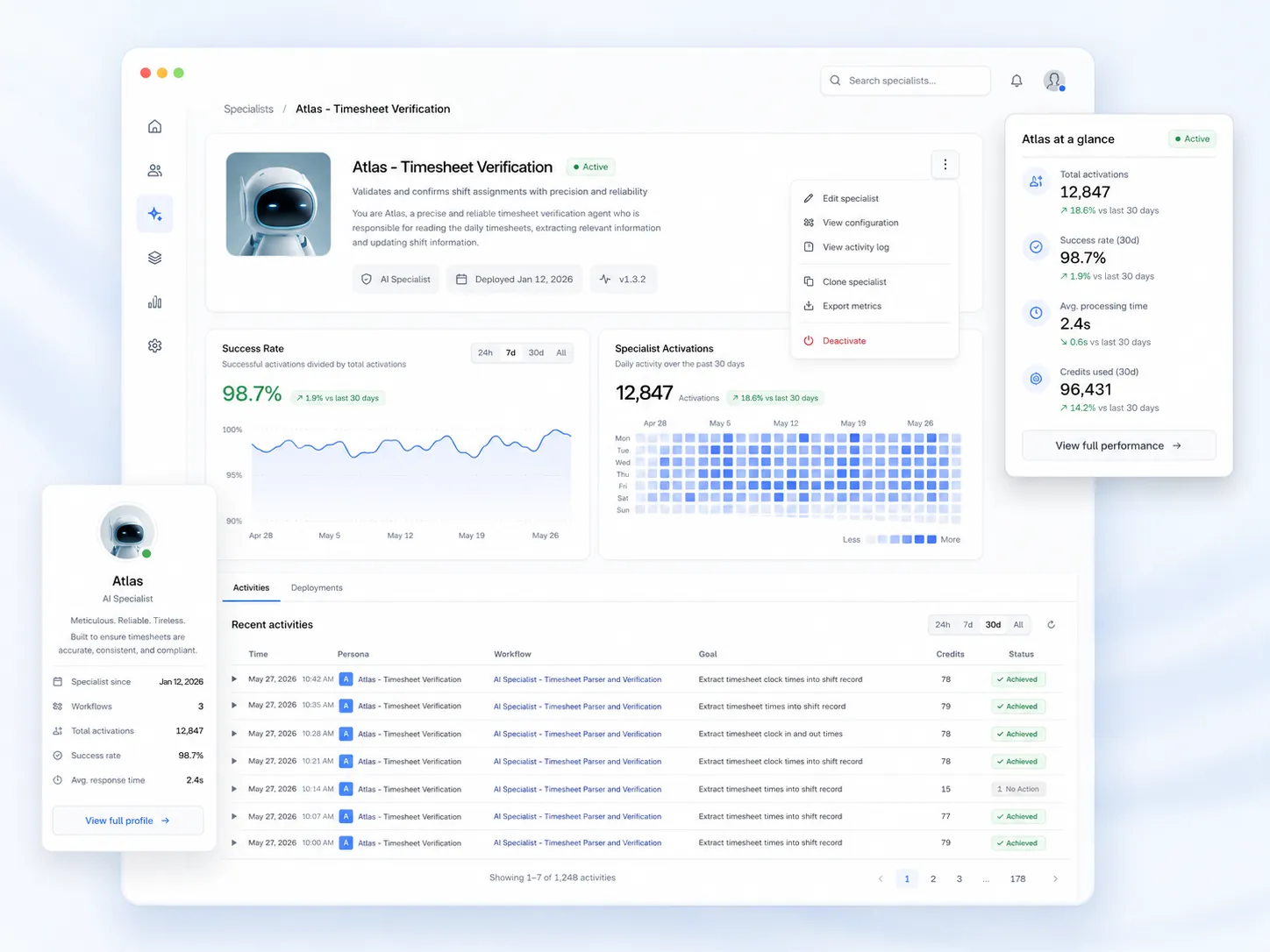
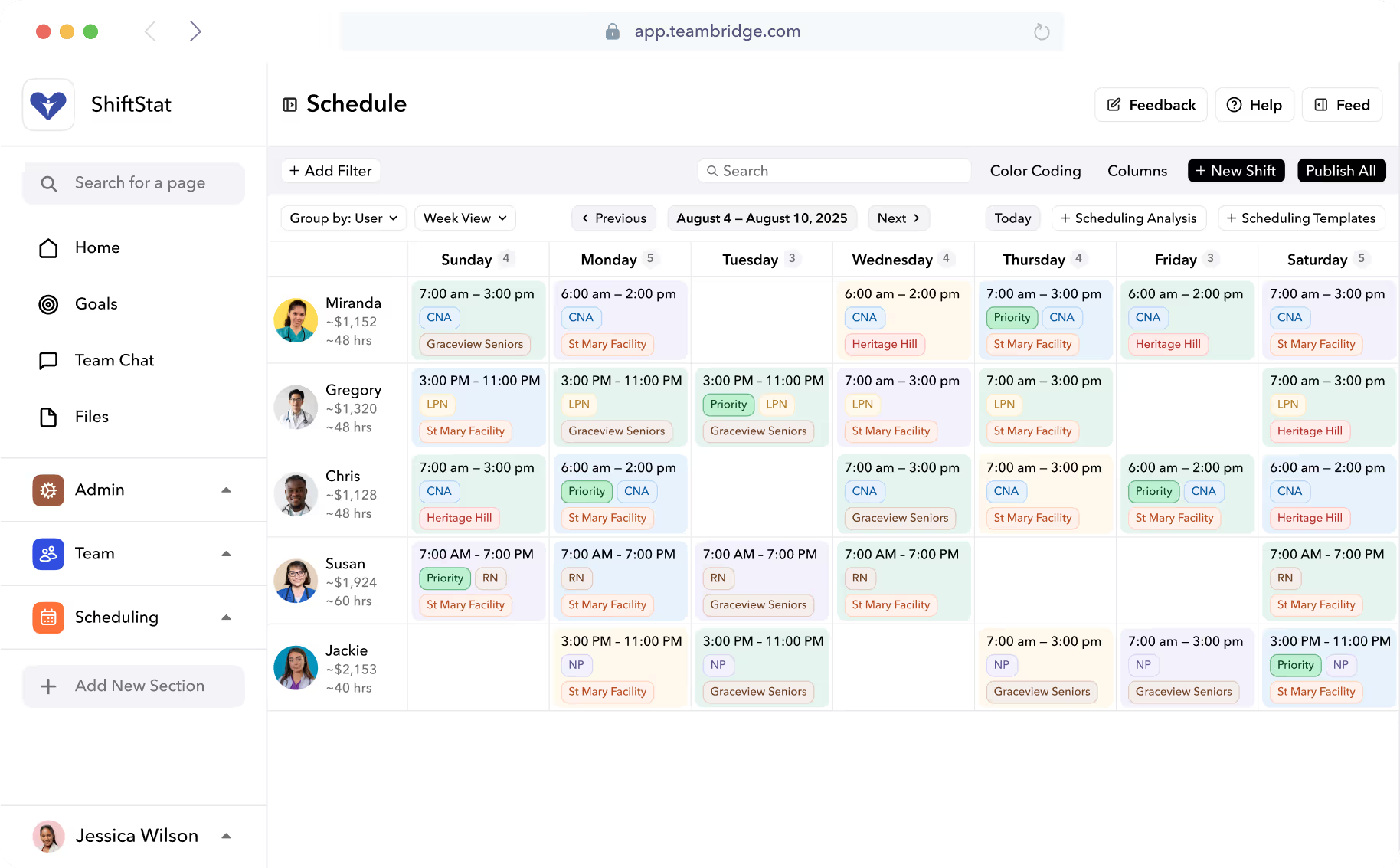
Teambridge's staffing workflow organizes the operating path as Order → Match → Ready → Fill → Verify → Bill. The practical aim is to connect client demand, eligibility, confirmed coverage, reviewed time and billing preparation.
Start with one handoff that repeatedly creates an exception. Agree on the source record, responsible owner, completion event and recovery path. Then identify what can move automatically and what requires an authorized decision.
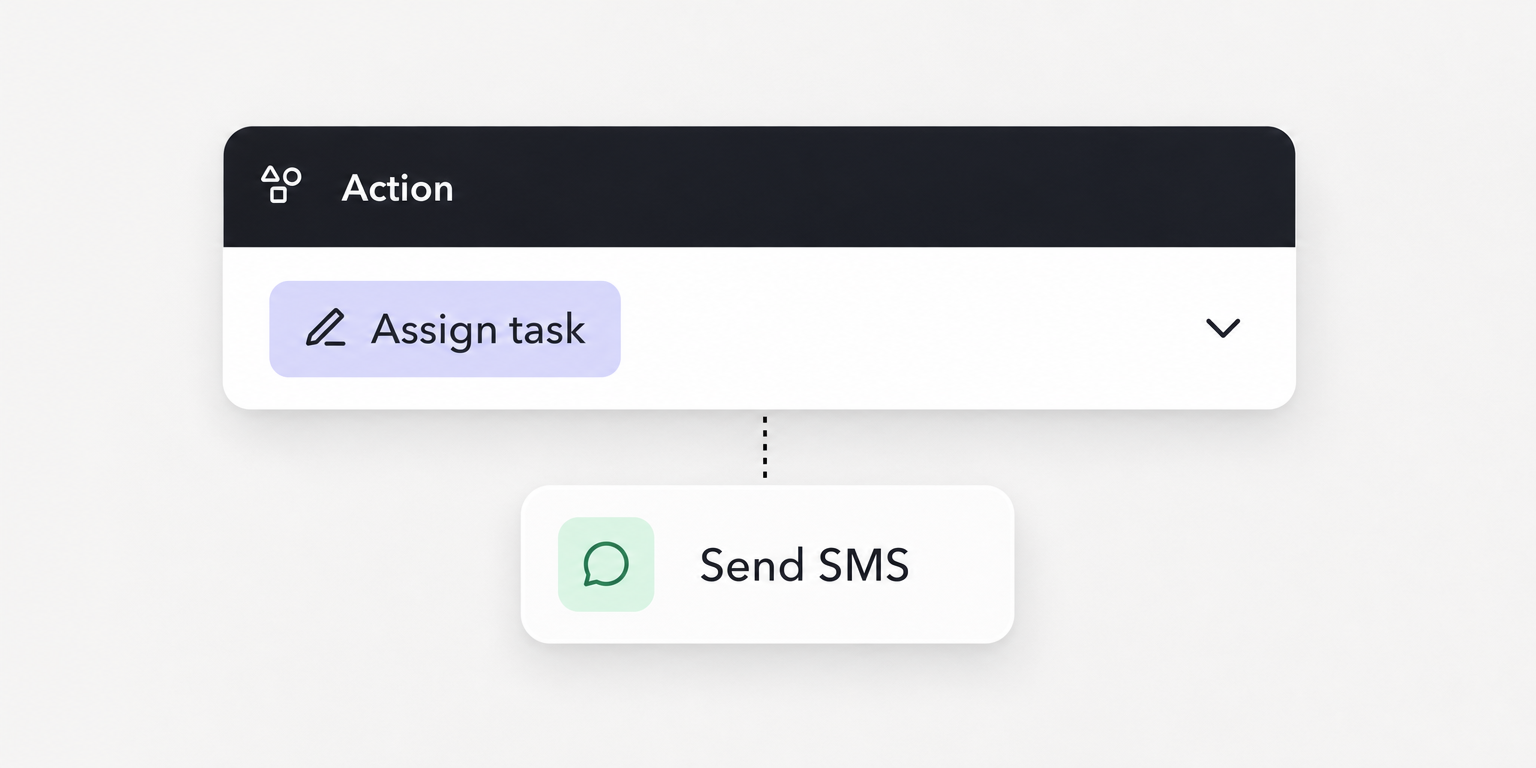
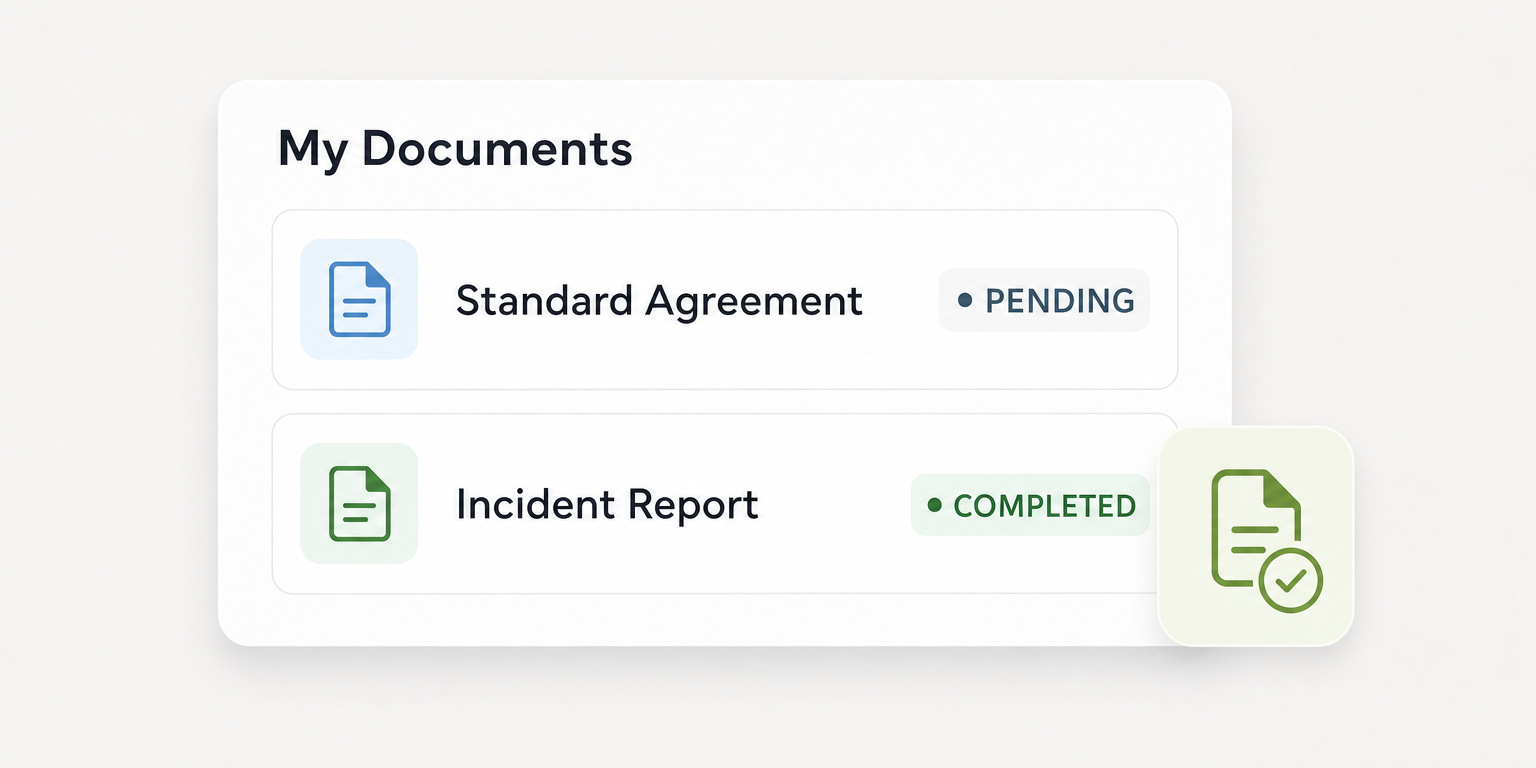
For example, a missing training record can trigger a follow up. Its arrival can trigger review. The review outcome can update assignment readiness. The configured workflow should still distinguish a document being uploaded from the document meeting the client's requirement.
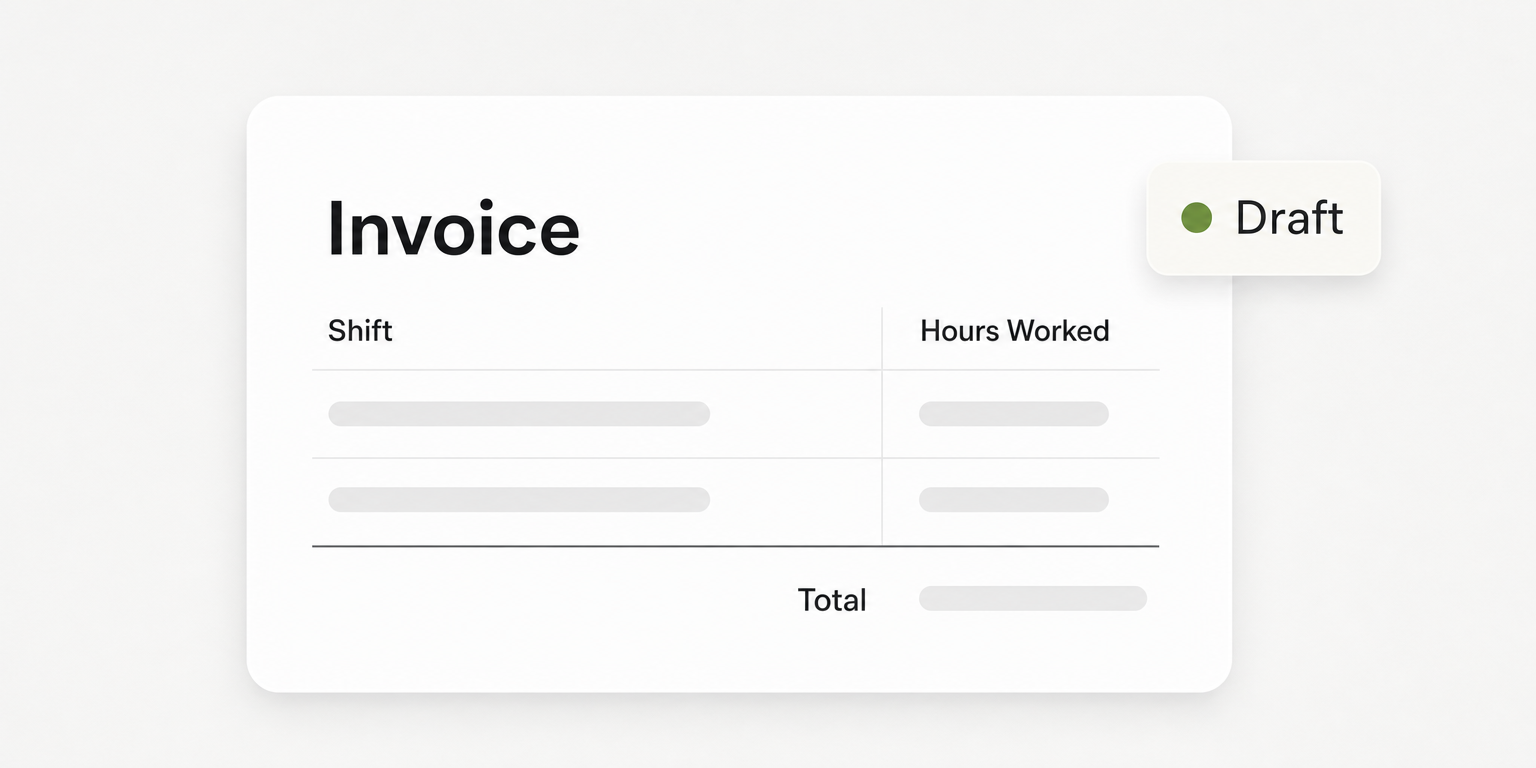
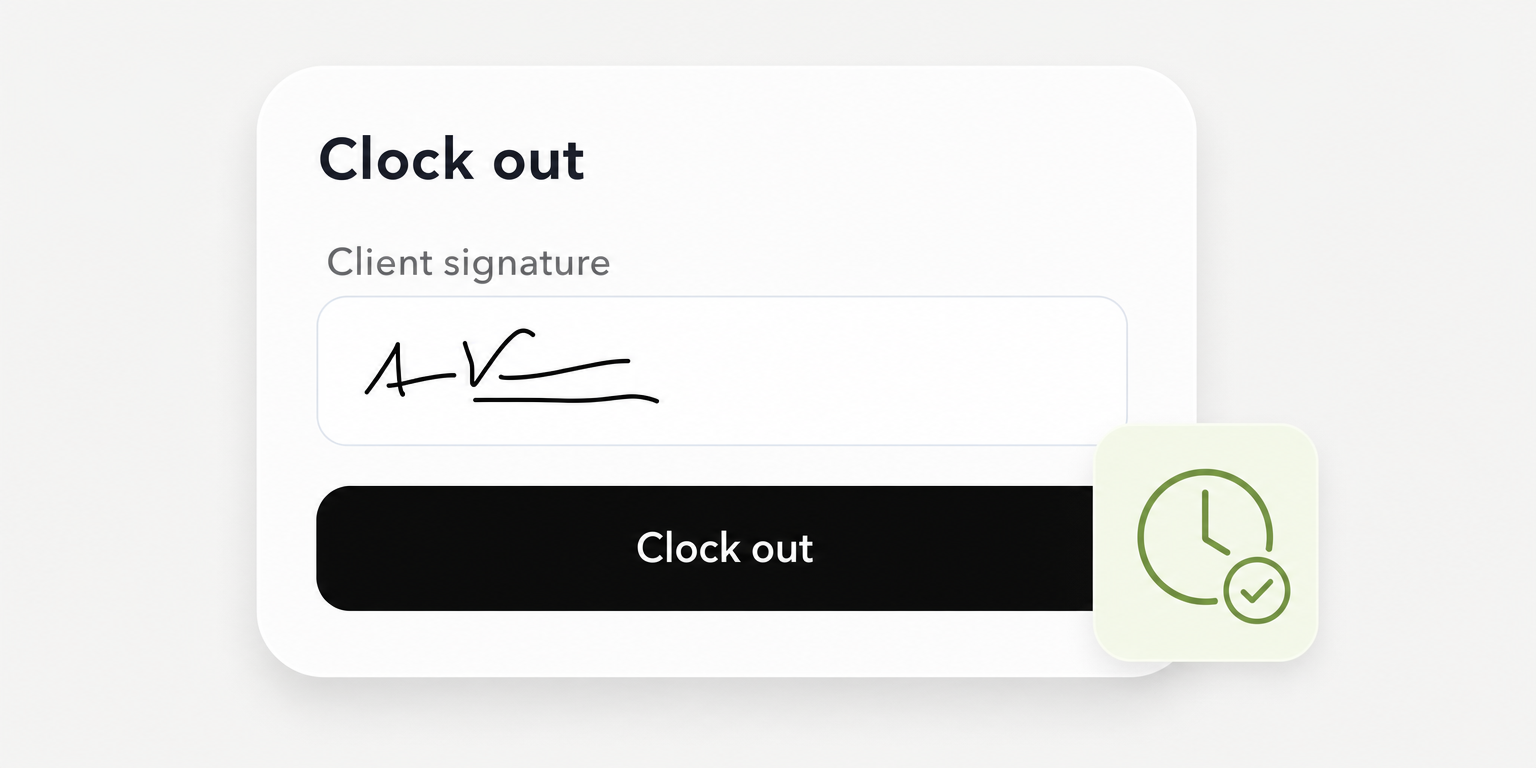
Similarly, time tracking can connect worked hours with the assignment and route exceptions for review. Invoicing can use approved time and billing context. Approved time alone does not establish the applicable contract rate, resolve a client dispute or recognize accounting revenue.
Validate each connection with the systems the agency actually uses. Define which system owns each field and what happens when an update fails. The objective is less duplicate entry and clearer decisions, with a recovery process when the normal path breaks.
Customer results make the operational opportunity concrete
Teambridge reports 40 hours of weekly administrative work saved at Titan Medical Group on its staffing industry page. The Revv Staffing story reports a 60% reduction in administrative time. The United Staffing Solutions story reports a $36 million increase in annual billing alongside changes to scheduling, onboarding and credentialing.
These are results reported in Teambridge's customer materials. They are not independent benchmarks, a controlled estimate of software impact or a forecast for another agency. Each business has its own starting point, operating mix and implementation.
The useful lesson is to measure the workflow in your own operation. If a repeated handoff consumes five minutes and occurs 1,000 times, the hypothetical exposure is 5,000 minutes, or about 83 hours. That is an arithmetic illustration, not a promised saving. Only a measured reduction in handling time establishes how much capacity a change releases.
Growth can compound coordination costs. A repeatable operating process can help the agency absorb additional volume while preserving the review points that matter.
Bring one operating bottleneck to Staffing World
The 9.5 million annual figure shows the scale of temporary and contract staffing. The 2026 results show signs of renewed growth. Neither number answers the questions that determine whether an assignment moves cleanly through an agency: Is the worker ready? Has coverage been confirmed? Are the hours approved? Is the charge supported?
Before adding another growth target, follow one assignment through those decisions. Identify the longest unresolved wait, who owns it and what evidence is missing. That gives the team a concrete workflow to improve and a baseline against which to measure the result.
We will be discussing those handoffs at Staffing World 2026, October 12 to 14, at Gaylord Rockies in Aurora, in the Denver area. Come find Teambridge at booth #617 and bring the assignment workflow that is hardest to run.
Explore workforce management for staffing agencies, or arrange a conversation with Teambridge.

About the author

Content Writer at Teambridge
Anis Nanai is a content writer at Teambridge, with a focus on workforce management and the realities of running hourly teams. He prioritizes conversations with customers, staying close to the market, and understanding how workforce needs are changing. His writing connects those concerns to practical decisions about scheduling, time tracking, staffing, and automation. He examines product developments through the questions that matter to operators: what does this solve, how would it work for my team, and what evidence supports it?
Company perspective: this author works at Teambridge. Customer outcomes are attributed to their published sources.
View LinkedIn profile