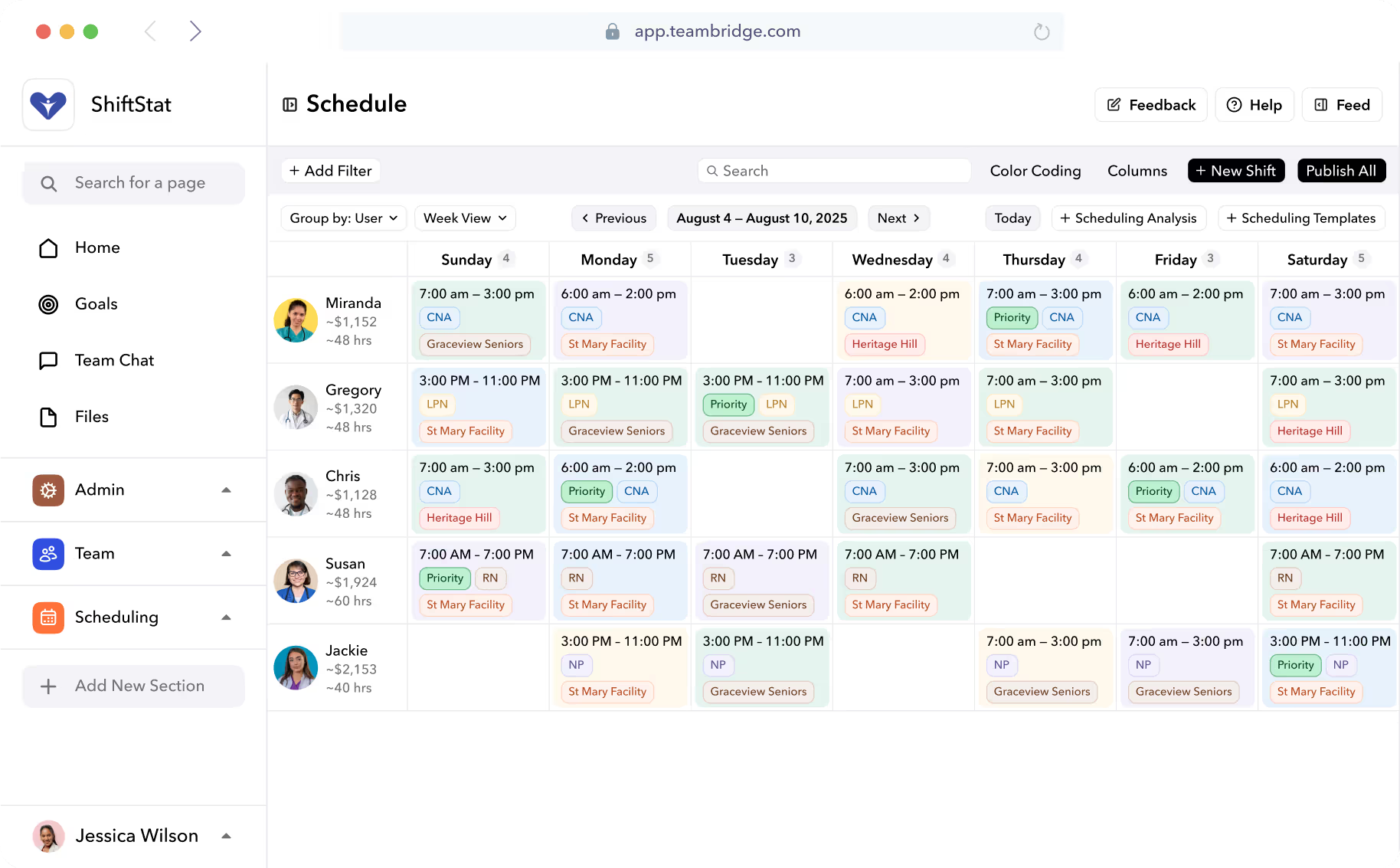


An open requisition and an empty shift are connected, but they are not the same problem. One asks whether the market has the people an employer needs. The other asks whether someone qualified, available and ready will actually arrive.
Ahead of Staffing World 2026, we are looking at the people and ideas that can help staffing leaders understand both. Our first spotlight is Lightcast, whose labor market research gives agencies a more precise starting point than “workers are hard to find.”
Teambridge will be attending Staffing World in Denver, October 12 to 14. Lightcast's Ron Hetrick is listed on the official program for the October 14 closing keynote, The Fault Lines Shaping the Workforce: What Comes Next for Staffing Leaders. His session is scheduled for 1 to 2 p.m. Mountain Daylight Time. The program remains subject to change. See the ASA speaker listing and session.
The numbers worth bringing to Denver
Lightcast's August 25, 2026 announcement of Defining the Skilled Trades describes a national shortage that recruiting teams cannot simply advertise away.
Lightcast research, August 2026
A constrained supply of new skilled trade workers
Roughly three openings for each person completing relevant training.
Estimated skilled trade job openings across the United States each year.
Roughly this share of annual openings comes from retirements.
These figures describe different parts of the problem. Training output concerns new entrants. Annual openings describe the flow of opportunities, not vacancies on a particular morning. Retirement demand means employers need replacements as well as people for growth.
The training ratio is not a count of all available candidates. Experienced workers changing employers or returning to work are not interchangeable with new training completers. Nor does a national figure establish the supply for a particular occupation, location or shift.

Why the definition matters before the forecast
Lightcast identifies 135 occupations using six digit Standard Occupational Classification codes. Its definition focuses on work performed in person that requires specialized preparation, such as an apprenticeship, certification or experience, without requiring a bachelor's degree. The accompanying occupation list gives teams a consistent reference for deciding which jobs belong in their analysis. Lightcast's framework and occupation list.
For a staffing agency, that is a practical discipline: define the role before discussing the shortage. Two clients can use the same job title while asking for different skills, credentials and responsibilities. Combining those requisitions can hide the very constraint a recruiter needs to explain.
Before comparing markets, write down the occupation, required qualifications, location, pay range and working hours. Check that the comparison describes the assignment you actually need to fill. A compelling national headline is a reason to investigate, not a substitute for that investigation.
The Lightcast perspective: understand the market first
Lightcast's staffing offering centers on evidence about talent supply, employer demand, compensation and competition. Its tools help agencies investigate which employers are hiring, which skills are available and what comparable work pays. That makes its perspective useful in the conversation with a client before an agency commits to a recruiting plan. Lightcast's staffing research tools.
Consider three questions to take into that conversation:
- Is the requested combination of skills realistic in the recruiting area?
- Does the offer reflect competing opportunities for comparable work?
- Which requirements are essential, and which could the client support through training?
These are our suggested applications of the market intelligence, not findings from a Lightcast study of Teambridge customers.
Ron Hetrick, identified as Principal Economist in Lightcast's report materials, puts the longer term challenge succinctly:
“They’re desperately needed now, but critically needed later.”
The comment refers to skilled trade workers. It comes from Lightcast's published research materials, not an interview conducted for this article. Read Hetrick's comments in context.
A realistic offer still needs a workable first shift
Here is an illustrative scenario, not a customer result.
A staffing team needs a maintenance technician at 6 a.m. A qualified applicant accepts the pay but can only start at 8 a.m. Another can work the hours but still needs a required credential verified. A third meets both requirements, but has not confirmed the assignment.
Calling all three people “available talent” conceals three different decisions.
| What the team knows | What still needs attention | The useful next action |
|---|---|---|
| The first applicant has the skills | The start time does not fit | Discuss another assignment or a client approved schedule change |
| The second applicant can work the hours | Required evidence has not been verified | Give the verification step an owner and a deadline |
| The third applicant appears ready | The worker has not confirmed | Send the assignment details and request a response |
More applications might help with a genuine supply shortage. They do not, by themselves, resolve these three issues. The team needs to identify which constraint it is dealing with before deciding what to do next.
That is where the market perspective connects with the operating perspective.
Teambridge perspective
From a realistic offer to a completed first shift
- 01Assess the market
Use relevant evidence to discuss skills, pay and recruiting geography.
- 02Check the assignment
Review readiness, qualifications and availability for the actual shift.
- 03Confirm and follow through
Get the worker's response and verify whether the first shift was completed.
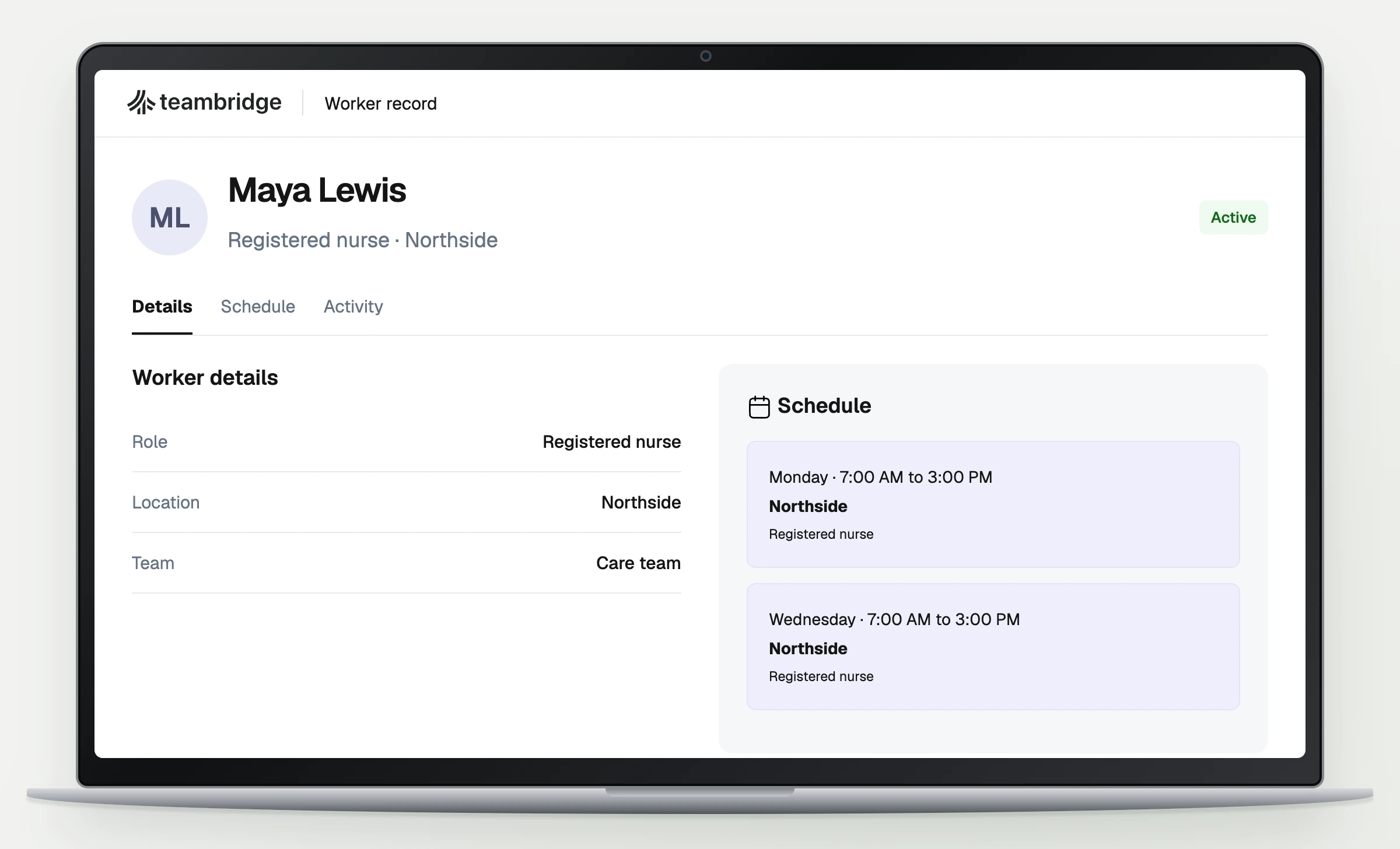
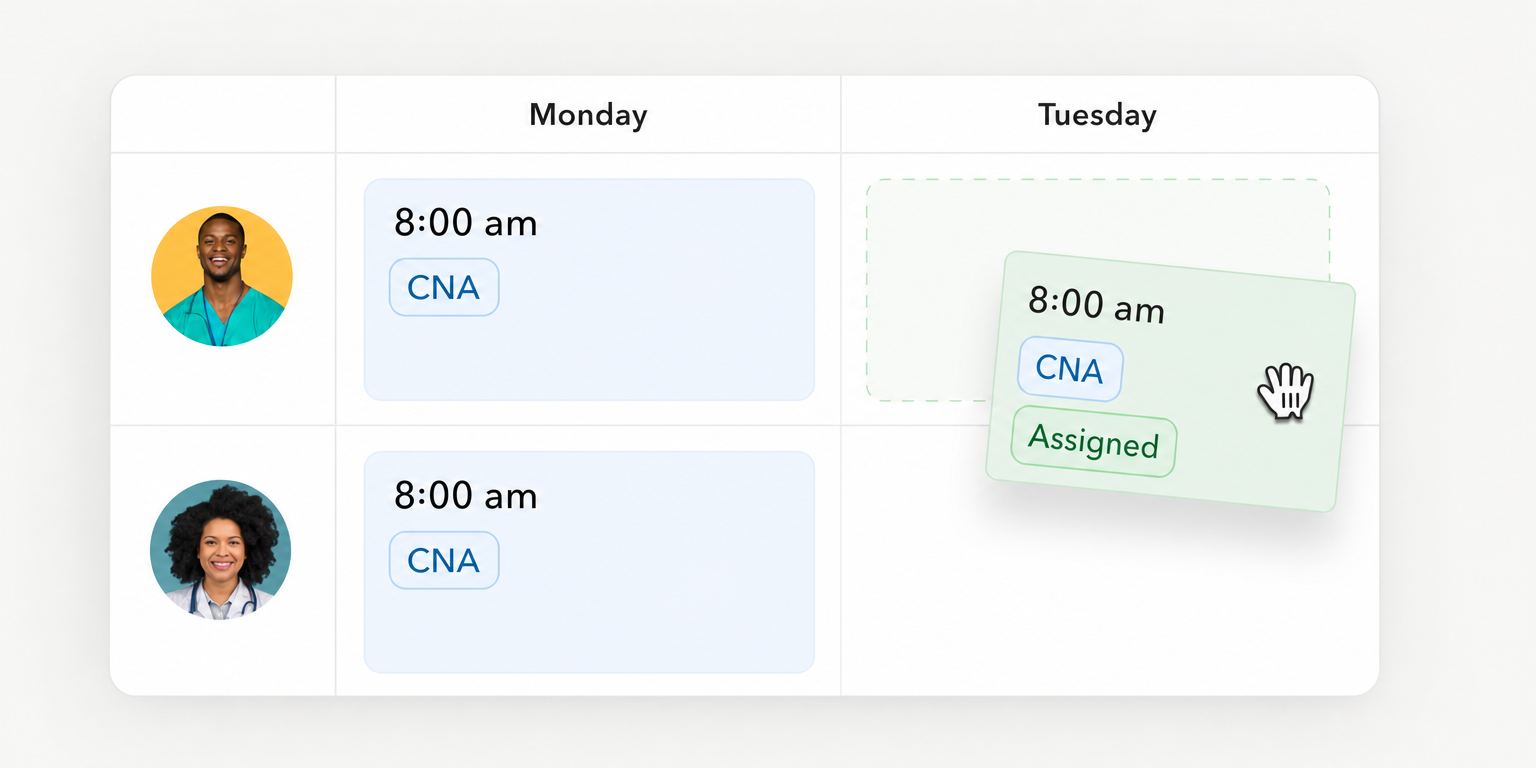
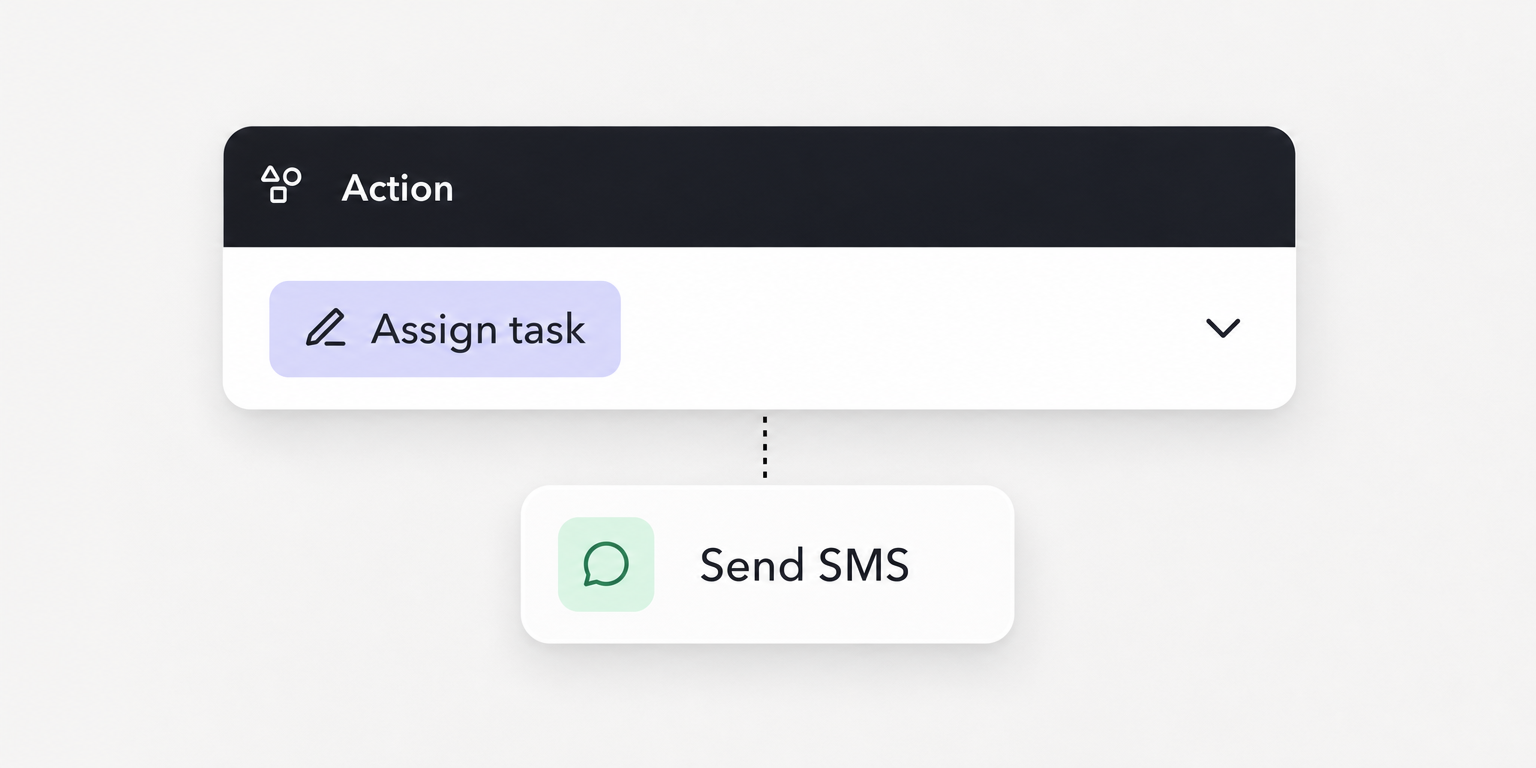
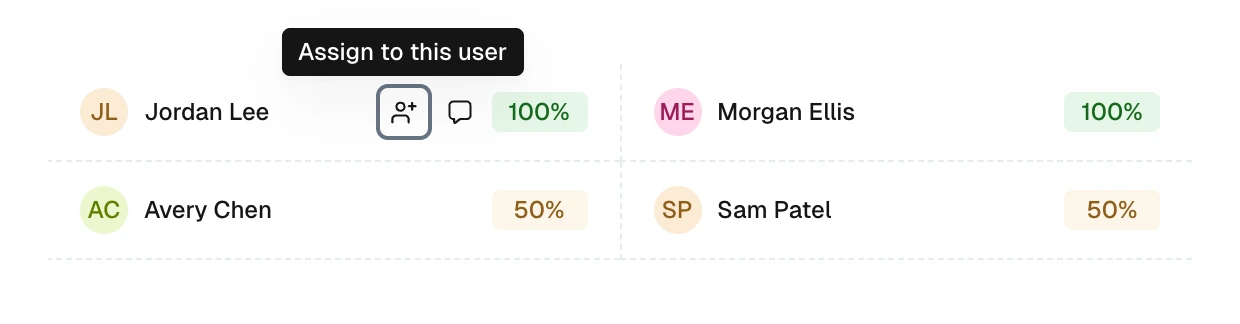
Teambridge's matching workflow lets an operator review suggested workers and take assignment or messaging actions from that context. It supports the operational part of the handoff; it does not create a missing labor supply or guarantee that a worker will attend. Matching also depends on the rules and information configured by the team. See the documented matching workflow.
Bring a better question to Staffing World
Before Denver, choose one recent group of applicants for comparable roles. Track offers accepted, workers ready, assignments confirmed and first shifts completed. Keep the same applicant group and observation window throughout, and record why people stop progressing. Distinguish a declined offer from an incomplete credential or a start date that has not arrived yet.
The objective is not to produce an impressive percentage. It is to separate a market constraint from a process that your team can improve.
For Lightcast, our question is: which local signals best distinguish a shortage of qualified workers from an offer that needs to change?
For staffing operators, it is: after someone accepts, what most often prevents the first completed shift?
Teambridge is heading to Staffing World to compare notes on that connection. We would welcome a conversation about where your handoff works, where it stalls and what evidence would help you make the next decision. Connect with Teambridge.
Sources and editorial notes
- American Staffing Association: Staffing World 2026. Event information for October 12 to 14 in Denver.
- ASA: Ron Hetrick's speaker profile. Scheduled appearance, session and time. Checked September 22, 2026.
- Lightcast: skilled trades research announcement. Published August 25, 2026. Source of the three headline estimates.
- Lightcast: Defining the Skilled Trades. Public research overview, occupation framework, report artwork and Hetrick quotation.
- Lightcast: staffing and recruiting. Source for the description of its staffing research offering.
- Teambridge: assign or message a suggested match. Product documentation and matching visual.
This article is Teambridge's independent perspective ahead of Staffing World. It does not announce a partnership, integration or endorsement by Lightcast or ASA. Research discussion is based on Lightcast's public overview and announcement, not access to the gated full report. The staffing scenario is illustrative. Conference listings should be checked again before travel.

About the author

Content Writer at Teambridge
Anis Nanai is a content writer at Teambridge, with a focus on workforce management and the realities of running hourly teams. He prioritizes conversations with customers, staying close to the market, and understanding how workforce needs are changing. His writing connects those concerns to practical decisions about scheduling, time tracking, staffing, and automation. He examines product developments through the questions that matter to operators: what does this solve, how would it work for my team, and what evidence supports it?
Company perspective: this author works at Teambridge. Customer outcomes are attributed to their published sources.
View LinkedIn profile