Home care agencies are buying software into the tightest operating environment the industry has seen in a decade. Margins are thinner, EVV enforcement is moving from soft launches to hard edits, and the workforce math is unforgiving. The platforms that hold up under that pressure are not the ones with the longest feature list — they are the ones where EVV capture, scheduling, billing, and the caregiver mobile experience actually share the same data.
This is a buyer's guide written for operators, not for procurement decks. If you are evaluating home care management software in 2026, the questions below are the ones that decide whether you collect on the visits you delivered.
The 2026 Squeeze: Why Software Decisions Now Drive Survival
The payment environment changed in November. CMS released its CY 2026 home health final payment rule on November 28, and the agency estimates the rule will decrease aggregate Medicare payments to home health agencies by 1.3%, or $220 million, compared to calendar year 2025. That headline number understates the operational pain — the underlying mechanics include a finalized -3.0% temporary adjustment applied to the CY 2026 payment rate on top of a permanent behavior-change cut.
It could have been worse. The proposed rule had included provisions that amounted to a 9% reduction in the 30-day base payment rate — the largest cut ever proposed. The rule marks the fourth straight year of permanent cuts to home health Medicare payments. Four straight years of permanent cuts is the structural story. Agencies are not getting a reprieve; they are getting a smaller cut than expected, layered on cuts that already happened.
Meanwhile demand is still climbing. By 2030, the U.S. will need more than 740,000 home health aides and personal caregivers per HRSA's baseline scenario. Referrals are not the constraint. Operational capacity is. And operational capacity in 2026 is gated by software.
Important
The agencies gaining ground in 2026 are not the ones with the most billable visits authorized. They are the ones who collect on the highest percentage of the visits they actually deliver.
Where disconnected systems cost real money
When EVV, scheduling, and billing live in separate tools, every handoff is a place where revenue leaks. A caregiver clocks in correctly on a mobile app, but the unit conversion to the billing system rounds wrong. A schedule change happens in one tool but never updates the aggregator transmission. A credential expires in the HR module but the scheduler does not see it until the visit is denied.
None of these are dramatic failures. They are small, daily, and they compound. The agencies that survive 2026 are the ones who treat their software stack as a revenue protection problem, not a feature-comparison problem.
What EVV Enforcement Actually Looks Like Now
The Cures Act deadlines are years behind us. The 21st Century Cures Act required states to adopt electronic visit verification systems for Medicaid-covered personal care services by January 1, 2020 and for home health care services by January 1, 2023. What is new in 2026 is enforcement intensity and the move toward hard claim edits.
The pattern across states is consistent. Pennsylvania, for example, set a clear threshold: the Pennsylvania Department of Human Services now mandates that at least 85% of all Personal Care Services and Home Health Care Services visits be automatically verified using approved EVV technology. The penalties for missing it are not theoretical — agencies that fall below the 85% threshold for three consecutive months may face corrective action plans or possible contract termination.
North Carolina moved further. From October 1, 2025, all Medicaid HHCS claims must include complete and validated EVV data — otherwise, claims will be denied. That is the hard-edit world. No more reconciling later. No more manual workaround at month-end. If the EVV record is missing or mismatched, the claim does not pay.
Federal attention is also rising. The federal government is also examining EVV compliance. CMS is in the process of evaluating the use of electronic visit verification data for PCS to assess the availability and completeness of EVV data and examine how State Medicaid agencies and others use the data for program integrity purposes.
Six data points, six places to fail
Every EVV transmission has to carry the same core elements. Each visit must capture six specific data points — service type, date, time in/out, caregiver identity, recipient identity, and service location. If your scheduling system holds the authorization but does not pass the service code into the visit record, your EVV transmission fails validation downstream.
Manual edits are now the red flag, not the workaround. Pennsylvania, for example, requires that no more than 15% of your EVV records involve manual edits. Exceed that threshold for two consecutive quarters, and your agency receives a formal notice of non-compliance and must submit a Corrective Action Plan. The lesson: your software has to capture the right data the first time. Cleaning it up after the fact is the audit trail you do not want.
For agencies evaluating systems, this is where the Teambridge home care platform approach matters — EVV capture, credential checks, and client-caregiver matching live in the same data model, so a schedule change updates the EVV transmission instead of breaking it.

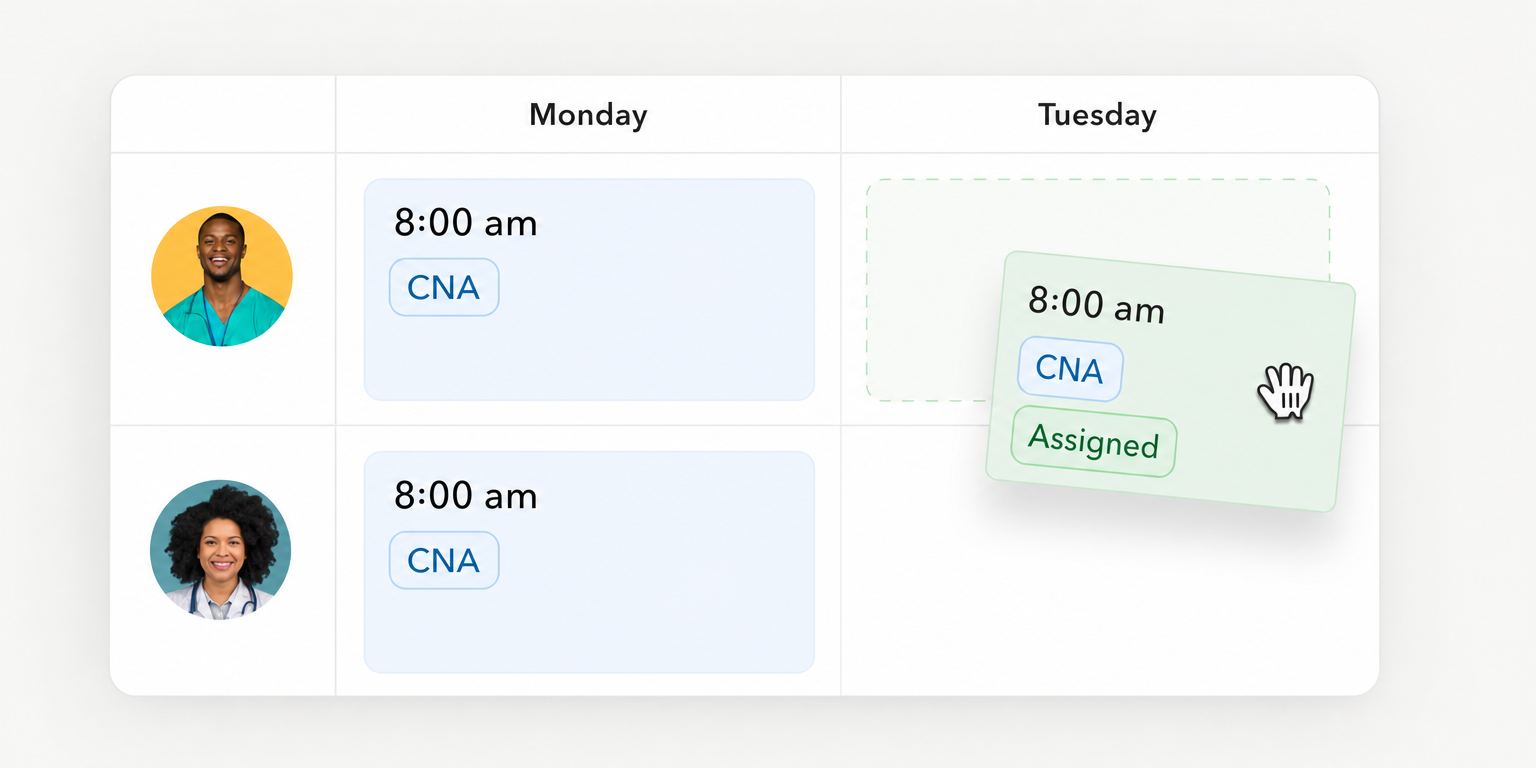
Scheduling and Shift-Matching: Where AI Earns Its Keep
Scheduling is the workflow that consumes the most coordinator time and produces the most retention damage when it goes wrong. It is also where AI investment is concentrating, and for once the survey data is unambiguous.
Sixty-four percent of respondents identified client and caregiver shift matching and automated scheduling as the top application, followed closely by workforce utilization (62%) and improvements in caregiver engagement and retention (56%). Operators are not predicting AI's eventual impact — they are reporting where it is already producing results.
The retention math is the part that should change buying behavior. A 2026 staffing analysis found that agencies adopting AI scheduling and automated documentation tools report 20 to 30% lower caregiver turnover compared to agencies using manual scheduling and paper-based or disconnected documentation.
Tip
If your scheduling tool cannot explain why it picked a specific caregiver for a specific client — drive time, credentials, history, language match — it is a filter, not a matching engine. A filled shift with a stranger is a complaint waiting to happen.
What good shift-matching actually does
AI scheduling earns its keep on five specific workflows:
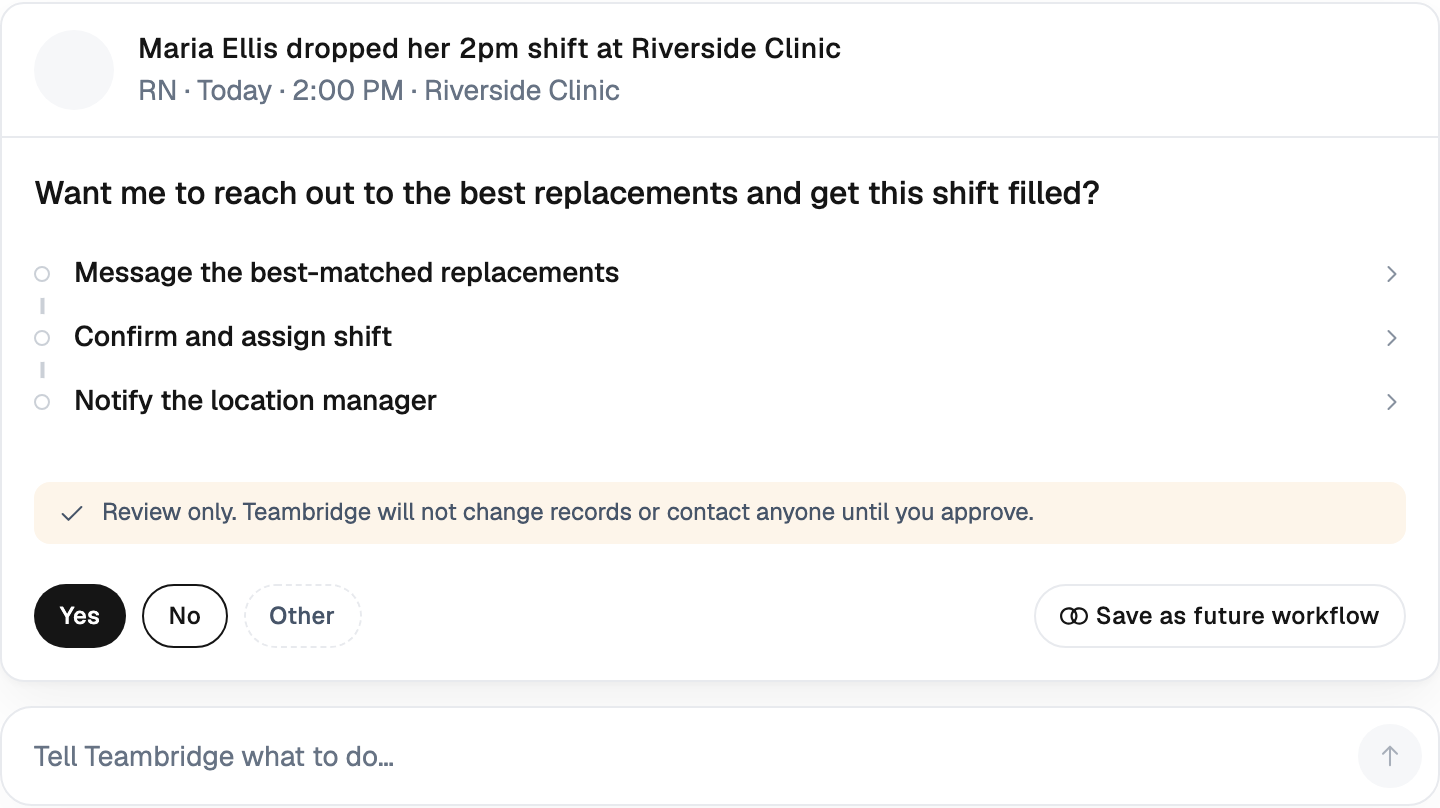
- Open shift filling — automatically surfacing the best available caregiver when someone calls out, weighted by drive time and client preference
- Credential and authorization enforcement — refusing to assign a caregiver whose CPR card lapses mid-shift or whose hours exceed the authorization
- Overtime prediction — flagging assignments that will push someone into OT before the schedule is finalized
- Continuity scoring — prioritizing the caregivers a client has seen before instead of treating every shift as a fresh puzzle
- Workload balancing — distributing hours fairly so the same five reliable aides do not absorb every gap
For a deeper look at how this works in practice, the Teambridge scheduling product is built around this matching logic specifically for healthcare and home care operations.
Ready to move?
Ready to see Teambridge in action?
The Integration Problem: Why Bolt-On Tools Cost More Than They Save
The most expensive line item in a home care software stack is rarely on an invoice. It is the coordinator hours spent reconciling data between tools that should be talking to each other. Manual entry into EVV portals. Aggregator transmission errors that nobody catches until the denial report. Schedule changes that update in the scheduler but not in the billing system.
This hidden coordinator tax is what kills agencies trying to scale. Adding clients does not just add visits — it adds reconciliation work that grows non-linearly with volume.
| Workflow | Disconnected Stack | Unified Platform |
|---|---|---|
| Schedule change | Update scheduler → re-enter in EVV → notify caregiver separately | Update once, EVV transmission and caregiver app sync automatically |
| Credential expiry | HR system flags it, scheduler finds out at visit time | Schedule engine refuses the assignment 30 days out |
| New authorization | Billing team enters it, scheduler asks for it next week | Available to schedule against immediately |
| Visit denial | Reconciled at month-end against bank deposits | Flagged at submission with the specific missing element |
| Caregiver no-show | Phone tree, then notes, then maybe an alert | Auto-detect missed clock-in, trigger replacement workflow |
The survey data tracks with what operators are saying. More than 77% of leaders agree that ease of use, consistency, and integration with existing software systems are the most important factors to successful EVV implementation. Integration is not a nice-to-have. It is what makes the rest of the platform usable.
Caregiver Retention Is a Software Feature Now
Retention used to be an HR problem. In 2026 it is an operations problem, and the operations layer is software. Schedule transparency, mobile experience quality, predictable hours, and friction-free clock-in are not soft benefits — they are direct inputs to whether a caregiver stays past 100 days.
The industry baseline is bad enough to focus the mind. Annual caregiver turnover reached 77% nationally in 2024, as noted by the Home Care Pulse Benchmarking Report. Nearly 80% of newly hired caregivers quit their roles within just 100 days on the job, keeping agencies on a hamster wheel of hiring, training, and starting over again.
Warning
If your retention strategy depends on the platform getting onboarding, credentialing, first-shift matching, and mobile pay right — and your platform does not — you do not have a retention strategy. You have a recruitment treadmill.
The schedule is the retention lever
Compensation matters, but most agencies cannot move wages enough to outrun churn. What they can move is schedule quality. Caregiver turnover has many causes, but a primary factor is schedule instability. Caregivers who never know their schedule in advance, work inconsistent hours, or feel their hours are being unfairly distributed will quit.
Predictable hours, consistent client assignments, and a mobile app that does not fight the caregiver are the controllable variables. Tools like Teambridge's Instant Pay attack the friction further — same-day pay removes one of the most common reasons caregivers take a second job, which in turn destabilizes the schedule you just built.
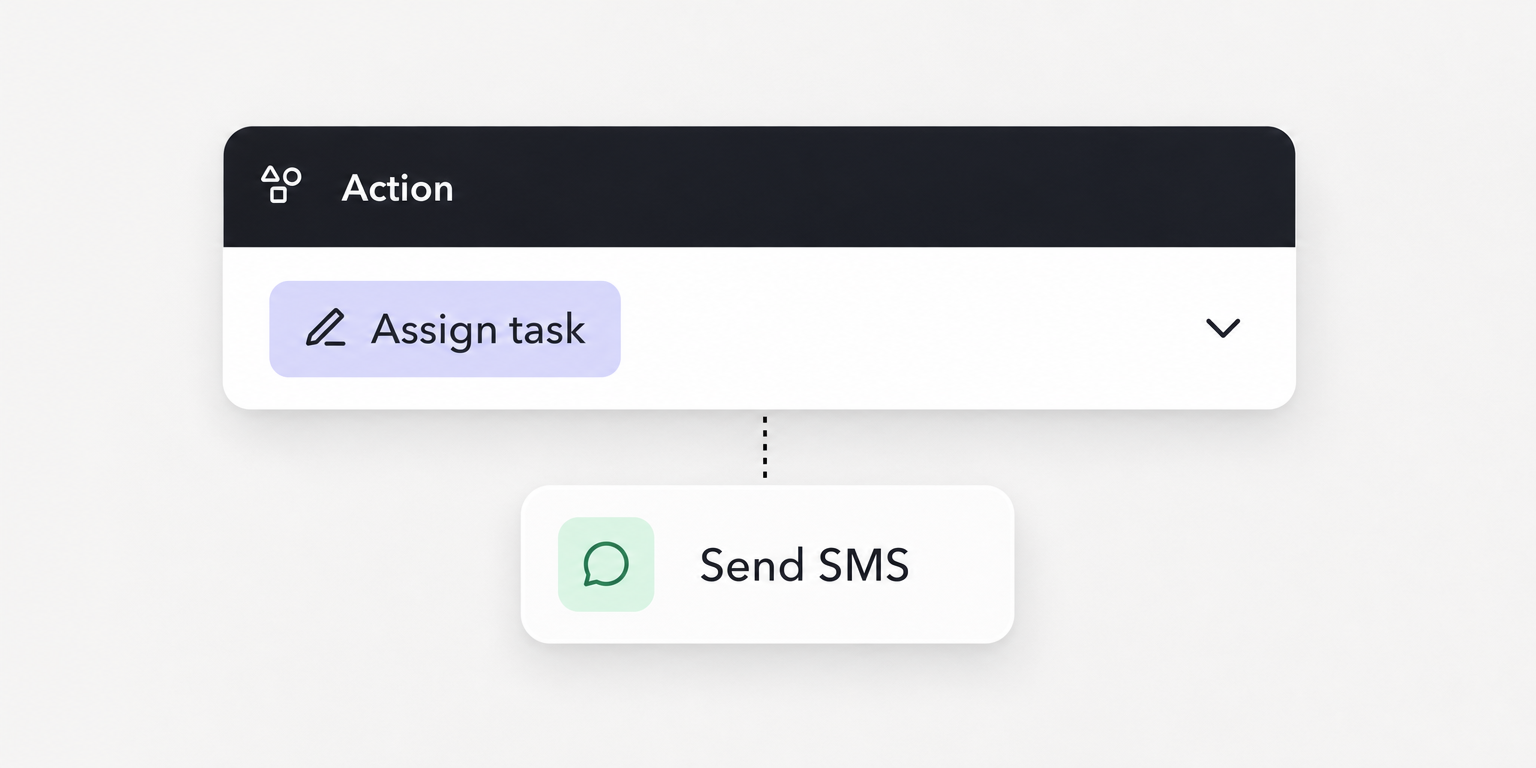
For agencies running heavy credential workflows, the cost of getting onboarding wrong shows up immediately in churn. Automating credential renewals through no-code workflow automations prevents the single most preventable retention failure: pulling a caregiver mid-shift because nobody told them their certification lapsed.
Multi-Payer, Multi-Branch, Multi-Waiver: Designing for the Scale You Don't Have Yet
A platform that works at 20 clients often breaks at 200. The breakpoint is not visit volume — it is the number of variables the system has to hold in memory simultaneously. Medicaid waivers with different unit definitions. VA authorizations with their own billing rules. Private pay with custom rate cards. Managed care organizations layered on top with their own EVV expectations.
A 2026-ready home care platform has to handle:
- Per-payer authorization tracking with unit-level visibility into what is remaining
- Payer-specific validation rules at the point of scheduling, not at the point of billing
- Branch-level operations under centralized leadership visibility
- Waiver-specific service codes that map cleanly to EVV transmissions
- MCO reporting for missed visits within required windows
Reimbursement risk is now a top-three concern. 75% of agencies are increasingly concerned about reimbursement delays and the validation of beneficiary eligibility. A platform that cannot validate eligibility against the right payer before the visit happens is one that will be chasing denials after it does.
The Evaluation Checklist: What to Actually Test in a Demo
Demos are theater. Vendors show you the happy path on clean data. Your job is to make them run their software against your actual operational mess. Here is the blunt version of what to test before signing anything.
Before the demo
- Map your current workflow end-to-end before you read a feature list. Referral in, authorization captured, schedule built, caregiver dispatched, visit verified, claim submitted, payment received. Mark every place where data leaves one system and enters another.
- List your three biggest bottlenecks in terms of coordinator hours. Not features you want — pain points you have.
- Pull three real denials from the last 90 days with the actual rejection codes.
During the demo
- Test offline mobile capture. Have the rep clock a caregiver in with airplane mode on. Watch what happens when the device reconnects.
- Run a real claim through pre-submission validation. Use one of your actual denials. Does the system catch the issue before it submits?
- Force a schedule change after EVV capture. Confirm the transmission updates correctly without manual intervention.
- Trigger a credential expiry. Show me the system refuses to schedule the caregiver, and show me what notification the caregiver receives.
- Pressure-test reporting on three metrics: referral-to-start-of-care conversion time, time-to-fill for open shifts, and billing cycle time from visit to payment.
After the demo
- Ask for two reference calls with agencies of similar size and payer mix
- Confirm integrations with your specific state aggregator and payroll provider
- Get implementation timeline in writing, with named milestones
Note
If a vendor cannot let you test pre-submission EVV validation against a real failed claim during the demo, that feature does not exist the way they described it.
Where Teambridge Fits for Home Care Operators
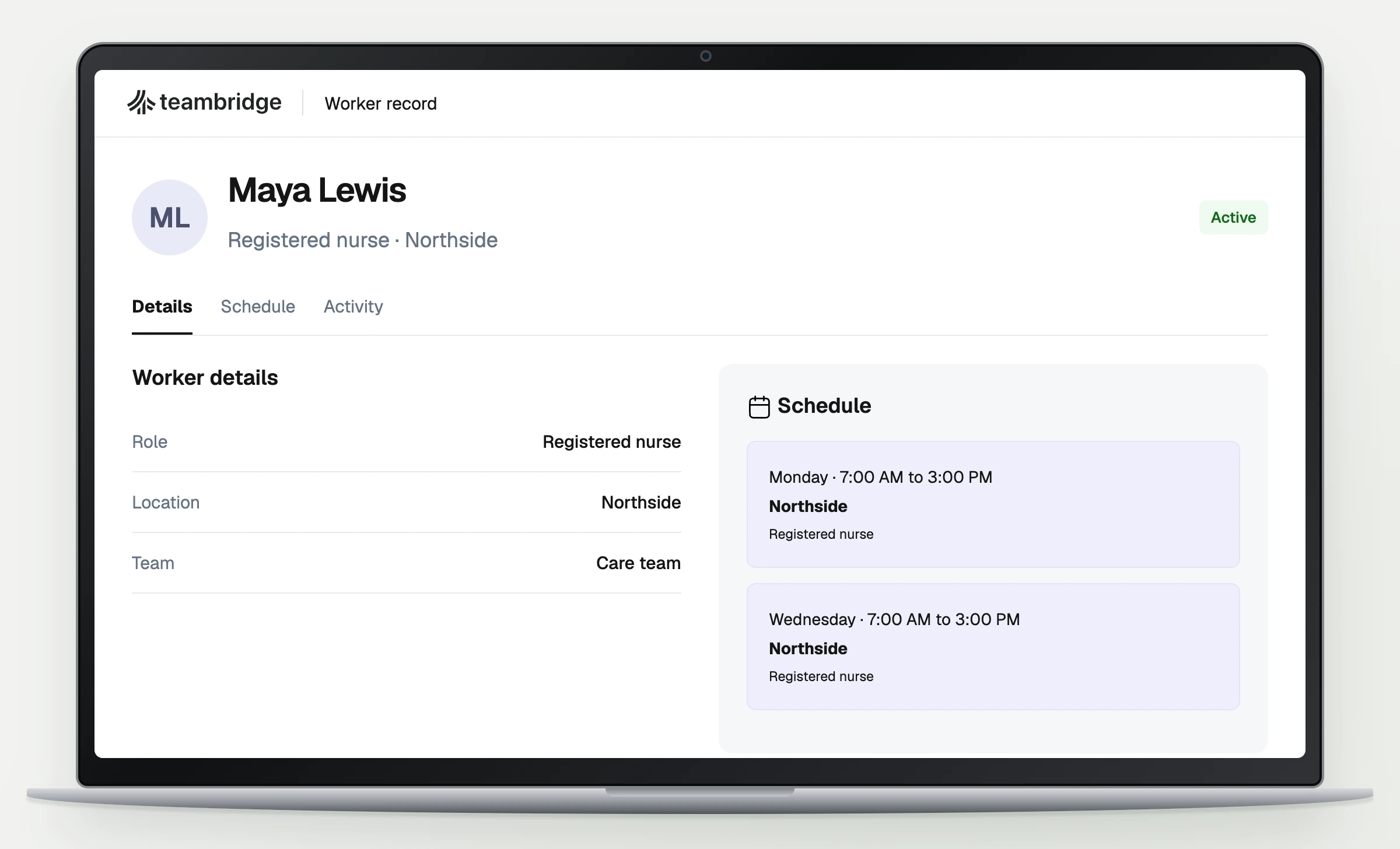
Teambridge approaches home care operations from the operator's side of the table. The platform unifies scheduling, credential enforcement, EVV capture, and the caregiver mobile experience in the same data model — so a schedule change updates the EVV transmission, a credential expiry blocks the assignment, and the caregiver sees the same source of truth the coordinator sees.
Branch-level operations roll up into centralized visibility without the data fragmentation that breaks reporting at scale. Credential and authorization workflows are automated, not appended. And the mobile experience for the caregiver is built to reduce friction at the points that drive churn — clock-in, schedule view, pay visibility, communication.
The specific home care workflows — EVV capture, client-caregiver matching, multi-payer authorization tracking — are covered on the home care industry page. For broader workforce operations context, the Teambridge platform overview lays out how scheduling, time tracking, compliance, pay, and communication share one architecture instead of being stitched together. Real-world implementations are documented in customer stories.
The right way to evaluate any home care platform — Teambridge included — is with a real agency workflow in hand, not a feature checklist. Bring your three biggest bottlenecks, your last 90 days of denials, and your actual payer mix. That is the only demo worth running.
Put this research into operation
Use the buyer guide for vendor evaluation while this article stays focused on EVV exceptions and caregiver retention. non medical home care software buyer guide.
Coordinate caregiver readiness, schedules, communication, time, and exception ownership across home care operations. home care workforce management software.