

Manual Dispatch Hit Its Ceiling — And Operators Feel It Every Morning
It's 6:47 AM. Two techs called out. A commercial job from yesterday ran four hours long and bled into this morning's route. A customer in the south zone just rescheduled their install for the second time. The dispatcher is hunched over a whiteboard, moving magnets, calling techs, redoing math.
By 10 AM, the schedule that was built last night doesn't exist anymore. By noon, half the day is improvisation.
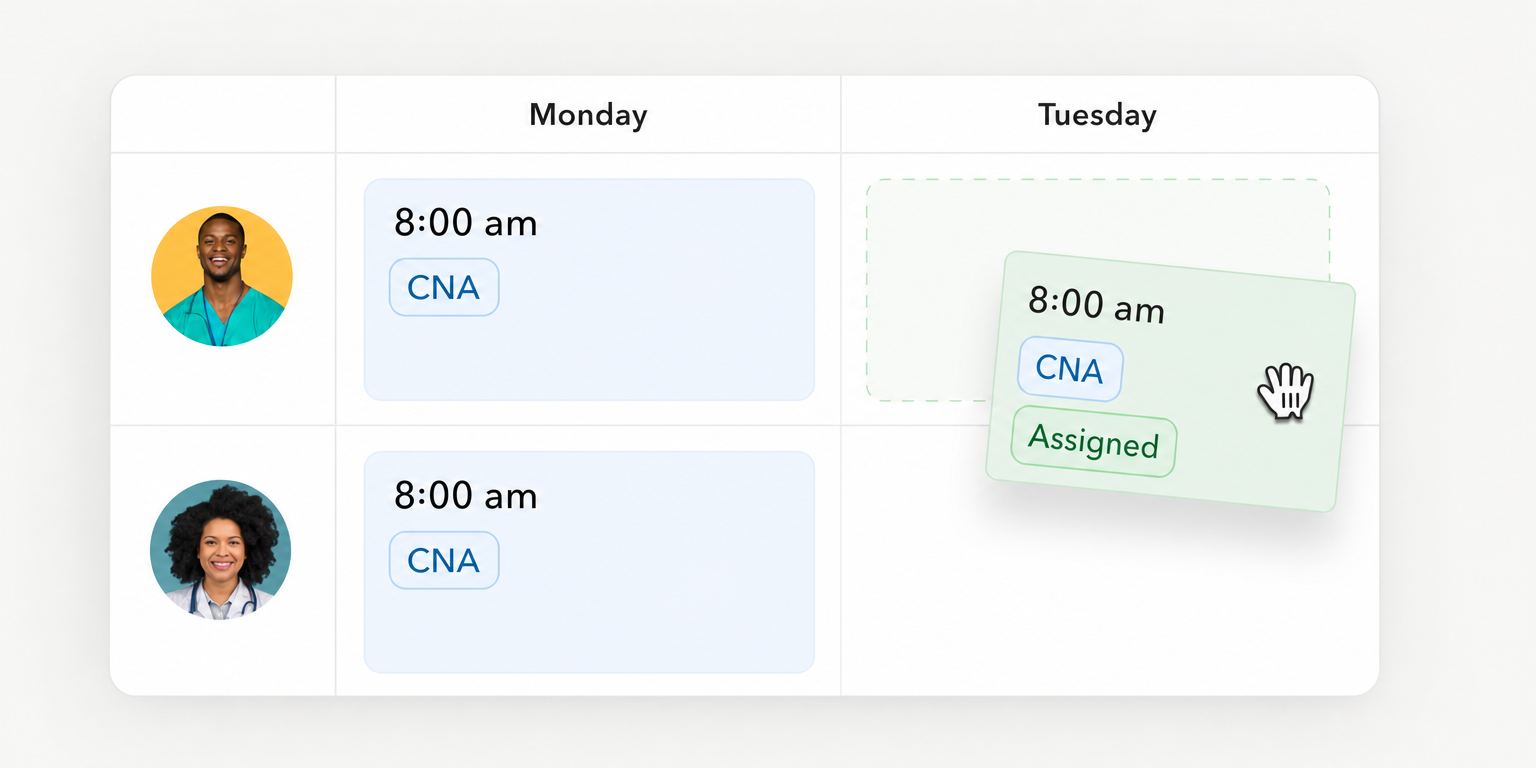
This is dispatching in 2026 for any operator still running it manually — and the math has gotten worse, not better. Modern field service dispatching is a constraint-satisfaction problem: certifications, GPS location, current workload, equipment in the van, customer time windows, traffic, drive time, license-by-jurisdiction, overtime caps. No human brain holds all of those simultaneously across a 40-tech roster. For decades, dispatching in the field service sector has depended on human coordinators manually assigning technicians to jobs based on availability, location, and skill set. The process, while functional at a small scale, is inherently limited by the number of variables a single person can evaluate simultaneously. As service companies grow and customer expectations rise, manual dispatching has become a significant operational bottleneck, one that artificial intelligence is now positioned to resolve.
The ceiling isn't theoretical. As a company grows to fifteen or twenty technicians spread across multiple service zones, each with different certifications, equipment inventories, and availability constraints, manual dispatching becomes unsustainable. Operators feel it as missed SLAs, repeat truck rolls, overtime creep, and the quiet attrition of dispatchers who burn out from running the day in their head.
The 2026 Adoption Curve: AI Dispatching Is Now Table Stakes
The gap between operators who've adopted AI dispatching and those who haven't is no longer marginal. It's widening fast, and it's showing up in contract bids.
Forty percent of enterprise applications will be integrated with task-specific AI agents by the end of 2026, up from less than 5% today, according to Gartner. Field service is one of the leading categories — because dispatching is exactly the kind of bounded, high-frequency, multi-variable problem that task-specific agents handle better than humans.
Layer in the broader market signal. According to the 2026 Gartner CIO and Technology Executive Survey, only 17% of organizations have deployed AI agents to date, yet more than 60% expect to do so within the next two years — the most aggressive adoption curve among all emerging technologies measured in the survey. Translation: if you haven't moved by mid-2026, you're not early, you're not on time — you're behind.
Important
The competitive question in 2026 isn't "should we use AI to dispatch?" It's "how do we adopt it without breaking trust with the dispatch team that runs our floor?"
The operators winning new contracts in HVAC, security, healthcare staffing, and commercial installation aren't winning on price. They're winning because their schedule absorbs disruption without office calls, their first-time fix rates are higher, and their customers get accurate ETAs instead of four-hour windows.
What AI Dispatching Actually Does That a Dispatcher Can't
Strip the hype. Here's the concrete mechanic.
An AI dispatch engine evaluates — in parallel, in seconds — every variable that bears on an assignment:
- Technician certifications and license-by-jurisdiction
- Real-time GPS location and live traffic
- Current workload, overtime exposure, and shift rules
- Required equipment and parts in the van
- Customer time windows and SLA commitments
- Historical job duration in that zip code, for that job type, by that tech
- Cancellation and emergency events as they happen
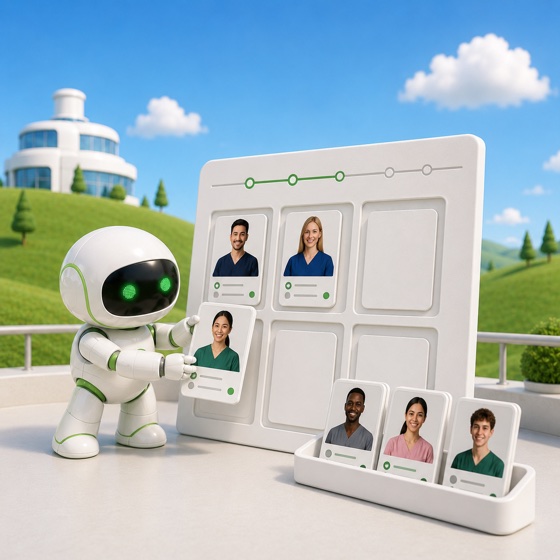
AI-powered dispatching instantly optimizes the board by routing the ideal technician for every call. By analyzing real-time technician skills, GPS location, and job priority, the system automates scheduling to maximize utilization and ensure high-stakes service windows are never missed.
The "wrong tech, wrong job" problem doesn't disappear because the AI is smarter than your dispatcher. It disappears because the system checks certified capabilities against job requirements before assignment, every time, without fatigue. Smart dispatching algorithms analyze thousands of variables instantly to assign the right technician to the right job. This prevents the common issue of sending a junior technician to a complex repair that requires a senior expert.
And when reality breaks the plan — a tech calls out, a job runs long, an emergency comes in — the system rebuilds the affected portion of the day instantly. When emergencies hit, the system dynamically reroutes nearby crews and updates customers instantly. This allows your office team to focus on resolving high-level customer issues instead of chasing technicians for status updates or manually moving magnets on a board.
That's the actual contrast. Not "AI vs. dispatcher." It's "continuous re-optimization vs. one shot at the morning board."
The Numbers: Drive Time, Overtime, and First-Time Fix Rates
The ROI is no longer speculative. It shows up in three places: drive time, technician utilization, and first-time fix rate.
Utilization
A 20-30% utilization improvement on a 10-person team is the equivalent of hiring 2-3 extra technicians, without a single new salary. That's the leverage. You don't add headcount — you recover the windshield time, the gaps between jobs, and the slack hours that manual scheduling can't squeeze out.
Drive Time
Businesses that adopted AI-driven scheduling tools reported a 50% reduction in technician travel time, translating to savings of approximately $200 per technician per week. On a 40-tech crew, that's roughly $416,000 per year in recovered productive hours, before you count fuel.
First-Time Fix
Every 1% improvement in first-time fix rate saves roughly $1,000 per technician per year. On a 15-person team, getting from 75% to 85% means $150,000 in annual savings from eliminated return visits alone. Repeat truck rolls are the silent margin killer in field service. AI dispatching attacks them at the assignment layer — the right tech with the right parts, the first time.
| Metric | Manual Dispatch Baseline | AI Dispatch Outcome | Source |
|---|---|---|---|
| Technician utilization | Baseline | +20–30% | Field Service Trends 2026 |
| Travel time | Baseline | −50% (~$200/tech/week) | Fieldproxy |
| Repeat dispatches (telecom) | Baseline | −38% | Fieldproxy Telecom |
| Job completion time (plumbing) | Baseline | −35% | Fieldproxy |
In telecom specifically, the numbers are even sharper: leading carriers deploying AI agents are reporting 45% faster fault resolution, 38% reduction in repeat dispatches, and a 52% improvement in first-contact resolution for network issues.
And none of this counts the dispatcher hours reclaimed. The 30 minutes a morning your senior dispatcher spends rebuilding the board becomes a single click, freeing them to handle the exceptions that actually need a human.
Credential-Aware Dispatching for Regulated Workforces
Here's where most generic field service AI falls short — and where the conversation matters most for operators in regulated industries.
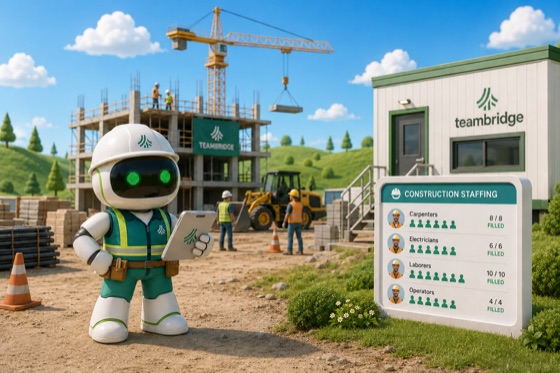
In HVAC, dispatching the wrong tech is inefficient. In healthcare, security, light industrial, and construction, dispatching the wrong person isn't just inefficient — it's a compliance violation that can void an invoice, trigger a client audit, or lose the contract.
Consider what credential-aware dispatching actually has to enforce:
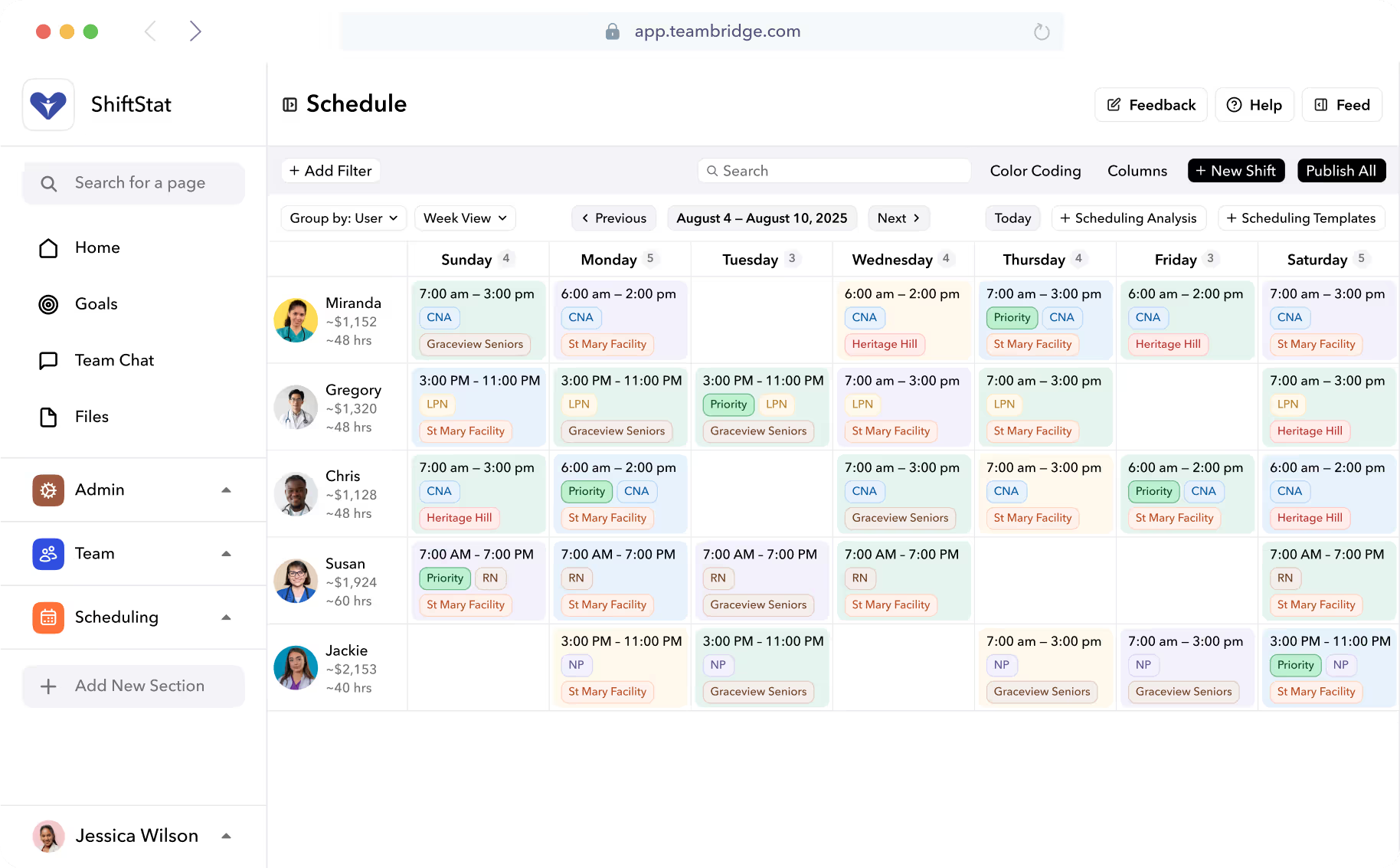
- Healthcare: RN vs. LPN scope of practice, state license validity, DEA registration, BLS/ACLS expiry, facility-specific orientation completion
- Security: State guard card, firearms endorsement by jurisdiction, post-specific training, client-mandated background check recency
- Light industrial: OSHA forklift certification, lockout/tagout, confined space, site-specific safety training
- Construction: OSHA 10/30, trade licenses by municipality, manufacturer certifications for specific equipment
Warning
Most field service AI optimizes for distance and skill match. If your AI assigns a guard without the right state license to a post — or a nurse without current ACLS to a critical care shift — you don't get an efficiency loss. You get a compliance failure that the platform should have prevented at the dispatch layer.
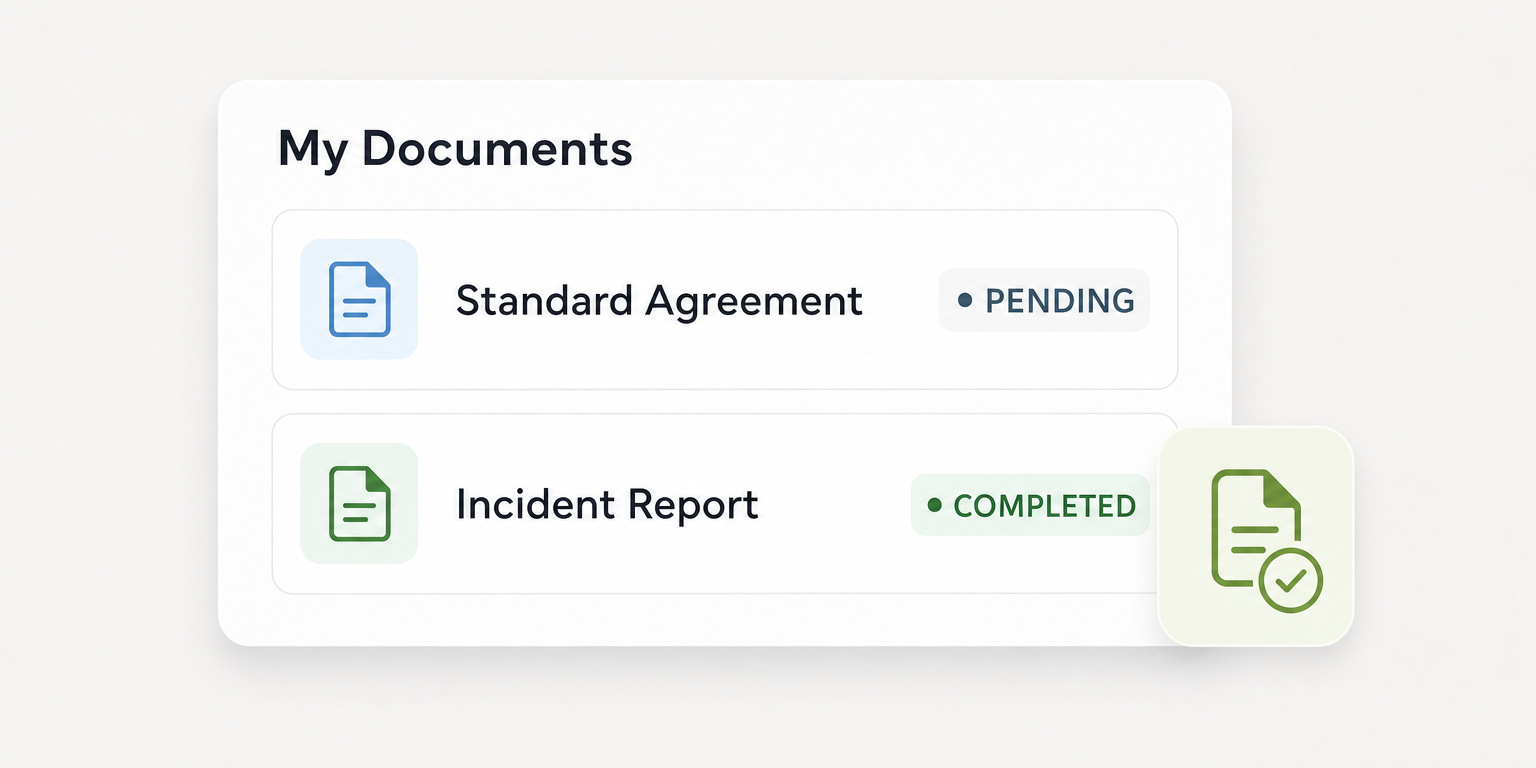
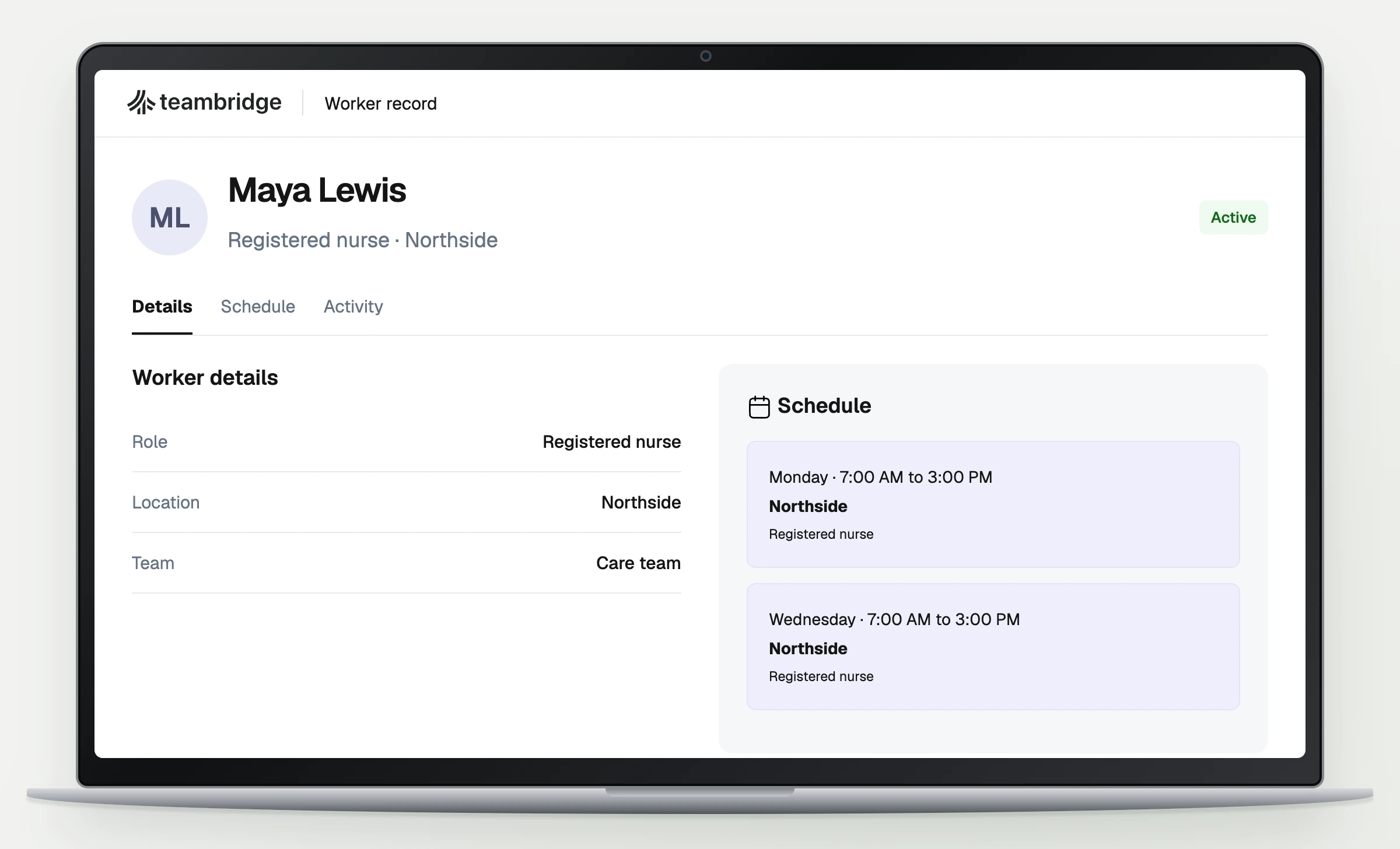
This is the layer where Teambridge Scheduling is built differently. Credential matching, expiry windows, and license-by-jurisdiction are enforced at assignment time — not surfaced after the fact in a compliance report nobody reads until audit. For operators running mixed-credential workforces, that distinction is the entire ballgame. See how this plays out in Healthcare Staffing and Security Staffing deployments.
Copilot, Not Autopilot: How to Roll Out AI Dispatching Without Breaking Trust
The fastest way to fail at AI dispatching is to flip a switch and tell the dispatch team the machine is in charge now. Trust collapses, dispatchers override every assignment, and within a quarter the platform is shelfware.
The operators who succeed go in the other direction: gradual trust, expanding autonomy.
Many organizations are experimenting with agents to automate discrete tasks, particularly in areas such as software engineering, customer support and operations. However, most deployments remain narrowly scoped, and fully autonomous agents are not ready for the majority of enterprise use cases. Field dispatching is no exception. Full autonomy is rarely the right starting point — and often unnecessary.
Here's the rollout that works:
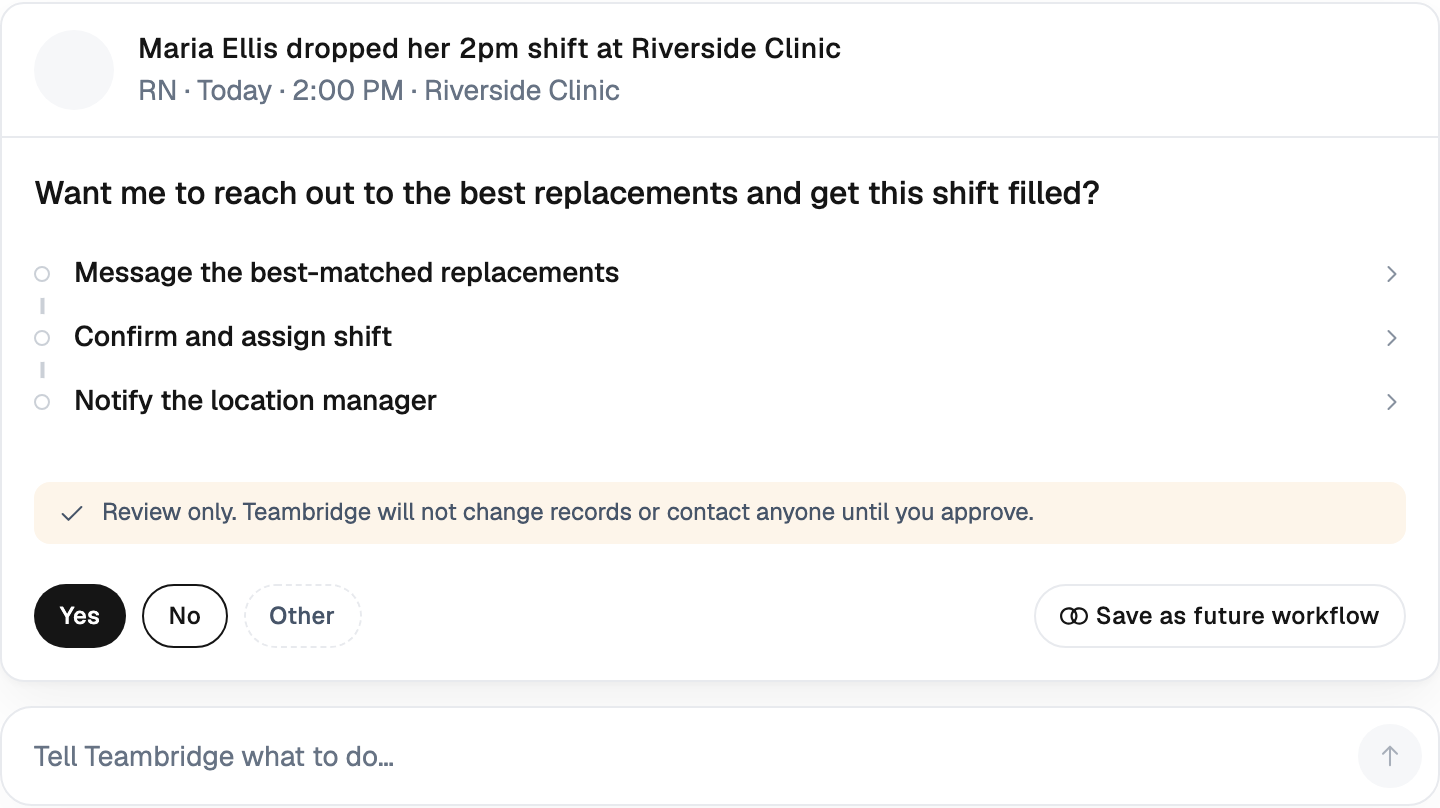
- Phase 1 — Suggest, don't assign. The AI proposes the optimal schedule each morning. Dispatchers review, adjust, approve. The system learns which overrides were rule-driven vs. preference-driven.
- Phase 2 — Auto-assign routine, escalate exceptions. Standard jobs with clean credential matches auto-dispatch. Anything with credential expiry within 14 days, overtime risk, or first-time customers routes to the dispatcher.
- Phase 3 — Exception-only review. The AI runs the day. Dispatchers manage the 5–10% of jobs that fall outside normal rules and own escalations.
- Phase 4 — Continuous learning. The system adjusts its predictions based on patterns — jobs in zip 90210 consistently run 30 minutes long, Tech A is 20% faster on heat pumps, Friday afternoon installs in the financial district need a 15-minute parking buffer.
The "AI replaces dispatchers" framing is wrong, and operators feel it as soon as they pilot. Agents augment human work rather than replace it. Both Gartner and Forrester emphasize that employees need training in how to design agent workflows, supervise their operation, and collaborate effectively with automated systems. Good dispatchers become exception managers and workflow designers — higher leverage, less repetitive scramble.
Tip
Measure trust the way you'd measure adoption. Track override rate per dispatcher per week. A healthy curve drops from 40%+ in week one to under 10% by month three. If it doesn't, your rules are wrong — not your team.
What to Look For in an AI Dispatch Platform in 2026
If you're evaluating platforms this quarter, here's the operator's checklist. Not IT's checklist. Not the vendor's slide deck. What actually matters when 6:47 AM hits.
Must-haves
- Real-time constraint optimization. Skills, location, workload, traffic, time windows, equipment — solved simultaneously, not sequentially.
- Credential and certification enforcement at assignment. Not a flag after the fact. A hard stop before the dispatch goes out.
- Dynamic re-routing. Cancellations, emergencies, jobs running long — the system rebuilds the affected portion of the day in seconds, not in a 30-minute manual reshuffle.
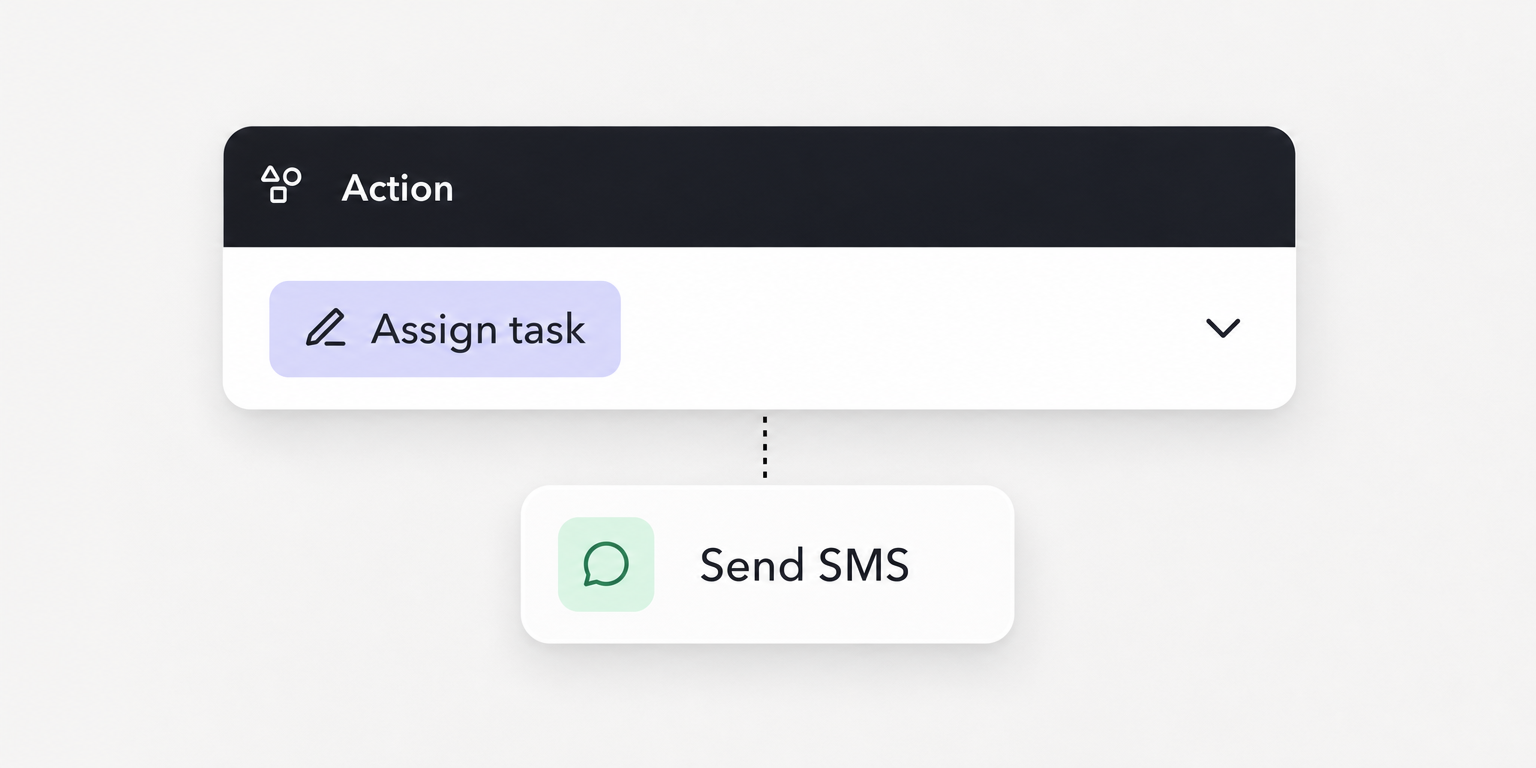
- Mobile push to technicians. Assignments, updates, customer notes hit the tech's phone without an office phone call.
- Learning from delay patterns. The AI should be adjusting its time estimates based on your historical data, not the vendor's national average.
- Natural-language operational queries. "Why did yesterday slip? Where are we overloaded next Tuesday? Which techs are within 30 days of credential expiry?" — answered against your live data, not a static report.
- API and integration depth. Your dispatch engine has to talk to your time tracking, payroll, customer portal, and CRM. Closed platforms create new manual work.
Watch out for
Generic AI built for "the average customer" can't model your operation. Over 40% of agentic AI projects will be canceled by 2027, and Gartner warns that only approximately 130 vendors offer legitimate agentic AI technology. If a platform can't explain how its model handles your specific credential rules, your specific jurisdiction mix, and your specific job-type variance — it's going to fail in production, no matter how good the demo looks.
For operators running mixed-workforce models, the integration with Teambridge's AI Platform matters because dispatching is one piece. Time tracking, credential renewal, instant pay, and exception handling have to live in the same system. Otherwise you're stitching AI dispatching onto a workforce stack that wasn't built for it — and the seams show up in your margin.
The Operator's Bottom Line
Manual dispatching isn't a tech problem disguised as a process problem. It's a capacity problem disguised as a tech problem.
The operator running a whiteboard in 2026 isn't competing with another operator's dispatcher. They're competing with software that builds the entire multi-day schedule in seconds, enforces every credential rule at assignment, re-routes around disruption without an office call, and learns from every delay. The dispatcher-vs-dispatcher fight is over. It's dispatcher-plus-AI vs. dispatcher-alone — and the second one is losing contracts.
The stakes aren't abstract. They're 2–3 unhired technicians of capacity sitting in your current team, recoverable without payroll. They're $200 per tech per week in travel you're paying for and not converting to revenue. They're the compliance violation that hasn't happened yet because no one's looked at credential expiry this month.
The operators retiring the board this year aren't doing it for the demo. They're doing it because the math, the market, and the customers stopped giving them a choice.
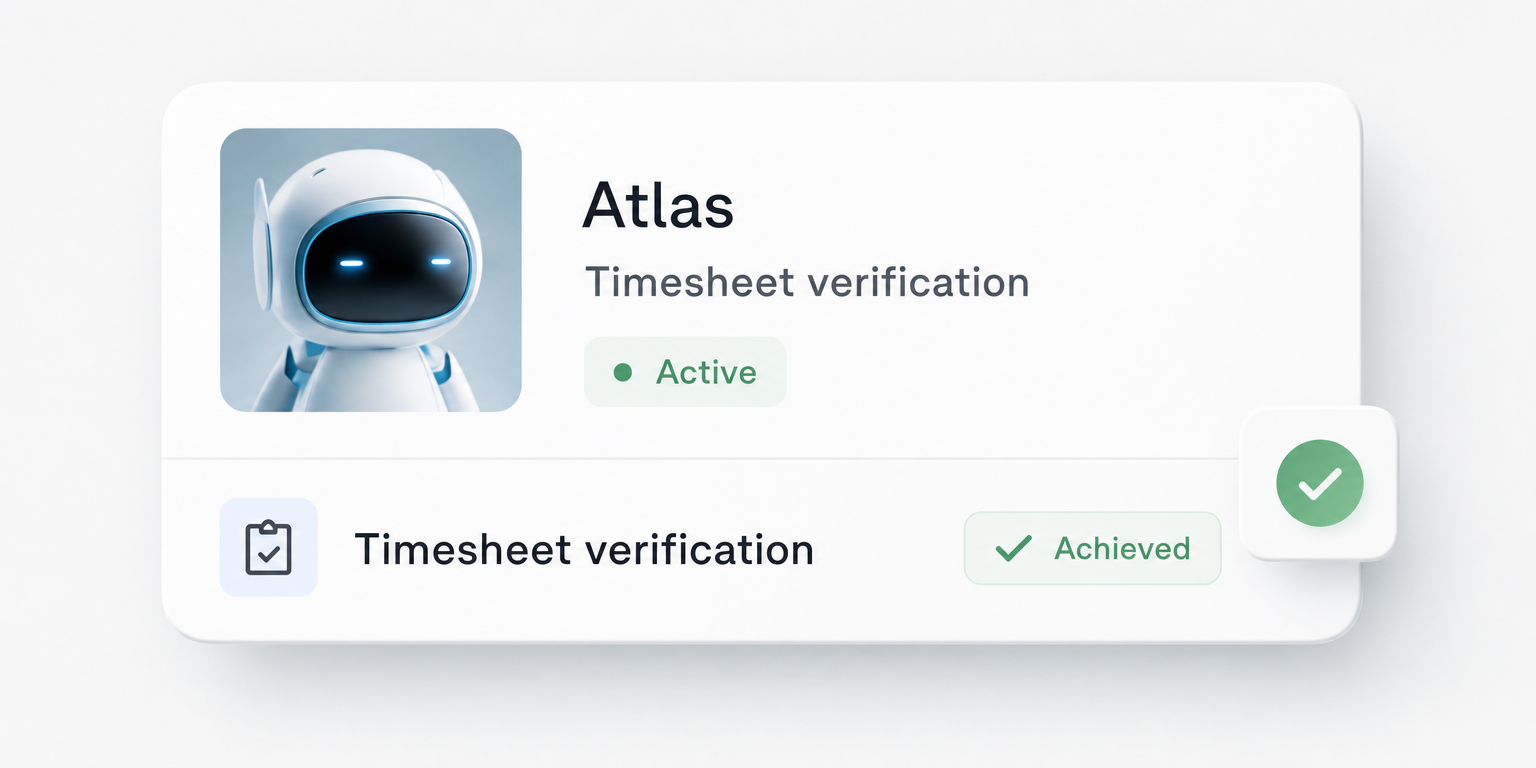
If you're ready to see what credential-aware AI dispatching looks like on your specific operation, start with Teambridge Scheduling and the AI Specialists that run the work continuously in the background. The board can come off the wall.

About the author

Content Writer at Teambridge
Anis Nanai is a content writer at Teambridge, with a focus on workforce management and the realities of running hourly teams. He prioritizes conversations with customers, staying close to the market, and understanding how workforce needs are changing. His writing connects those concerns to practical decisions about scheduling, time tracking, staffing, and automation. He examines product developments through the questions that matter to operators: what does this solve, how would it work for my team, and what evidence supports it?
Company perspective: this author works at Teambridge. Customer outcomes are attributed to their published sources.
View LinkedIn profile