Most leave management systems were designed for a world where everyone works 9-to-5, sits at a desk, and takes vacation in neat one-day blocks. That world has very little to do with how staffing agencies, hospitals, hotels, janitorial crews, and light industrial operators actually run.
When a single approved PTO request can leave a 12-hour night shift uncovered, a client SLA missed, an overtime threshold blown, or a state sick leave rule violated, the stakes shift. This guide is for the operators dealing with that reality — not the HR director picking software for a salaried headquarters.
Why Generic Leave Management Breaks for Shift-Based Workforces
The core problem is that leave management got built as an HR function, not an operations function. A request goes into a portal, sits in a manager's inbox, gets approved, and updates a balance somewhere. Nobody asked whether the shift was covered.
For frontline operators, that disconnect is expensive. HR professionals managing time-off manually report losing 11 or more hours per week to leave administration alone. For a dedicated HR person, that's nearly 30% of a full-time workweek spent on leave management tasks that software can automate. And that figure assumes a single salaried policy — the number climbs sharply when you layer on variable schedules, multiple pay rates, and client-specific PTO terms.
The damage doesn't stop at admin hours. Disconnected leave creates scheduling conflicts, last-minute coverage gaps, unnecessary overtime, and payroll errors that hit confidence on both sides of the timecard. A typical PTO request process involves 7-10 manual steps; automation cuts this down to 2-3 digital touchpoints — which sounds like a small thing until you multiply it across 800 active workers spread over six client sites.
If your workforce is rotating, deskless, or paid by the hour, the rest of this article is for you.
Stop Counting Days. Start Counting Hours.
The first and most fundamental break with desk-based tooling: shift workers don't take days off, they take hours off. A 12-hour overnight and an 8-hour day shift cannot both be "one day" of PTO without quietly cheating somebody.
Hour-based accounting isn't a nice-to-have. It's the only way to keep accruals fair when the same employee works a 36-hour week one stretch and a 48-hour week the next. Manually managing PTO for hourly employees can be quite a challenge. Unlike salaried employees who follow a predictable schedule, hourly workers often have shifting work hours from week to week. This variability turns PTO tracking into a puzzle. One of the trickiest parts for HR teams? Keeping those records accurate when work hours fluctuate up and down. One week, an employee works overtime, while the next, they clock in for fewer hours. Their PTO accruals follow suit, and managing it manually can quickly become tricky, resulting in PTO balance discrepancies and frustrated employees.
Pro-rata is the baseline, not the exception
Part-time, per diem, 1099, and zero-hour workers all need entitlement calculations based on hours actually worked over a rolling window. Even if legal guidelines exist, calculating annual leave for part-time staff can feel challenging, especially if they work varying days, shifts, or hours. The right model usually looks like this:
| Worker type | Accrual basis | Common pitfall |
|---|---|---|
| Full-time W-2 | Hours worked per pay period | Overtime inflating accrual rate |
| Part-time W-2 | Pro-rata against full-time baseline | Treating every "day" as 8 hours |
| Per diem / PRN | Rolling 90-day average hours | Accrual stops when worker goes quiet |
| 1099 / contract | Usually none, but client-mandated sick leave may apply | Missing state sick leave for contractors |
| Zero-hour | Hours worked, often with weekly minimum | No floor on accrual = no leave earned |
This is where a time tracking system wired to leave accruals stops being optional. If the source of truth for hours worked doesn't feed the source of truth for hours accrued, you're recalculating manually — which is exactly where the 11+ hours a week go.
Note
Hour-based accounting also exposes a quiet finance win: workers who took "a day off" against an 8-hour balance for a 12-hour shift were effectively getting four free hours every time. At scale, that's real money.
Integration Is the Whole Game: Leave Has to Talk to the Schedule
A leave management system that isn't wired directly into scheduling, time tracking, and payroll is a fancier inbox. That's it. The approval lives in one system, the schedule lives in another, the timecard lives in a third, and a human is responsible for keeping them in sync.
What integration actually means in practice:
- A worker requests Thursday off from their phone.
- The system checks their balance, the shift coverage on Thursday, and any blackout windows.
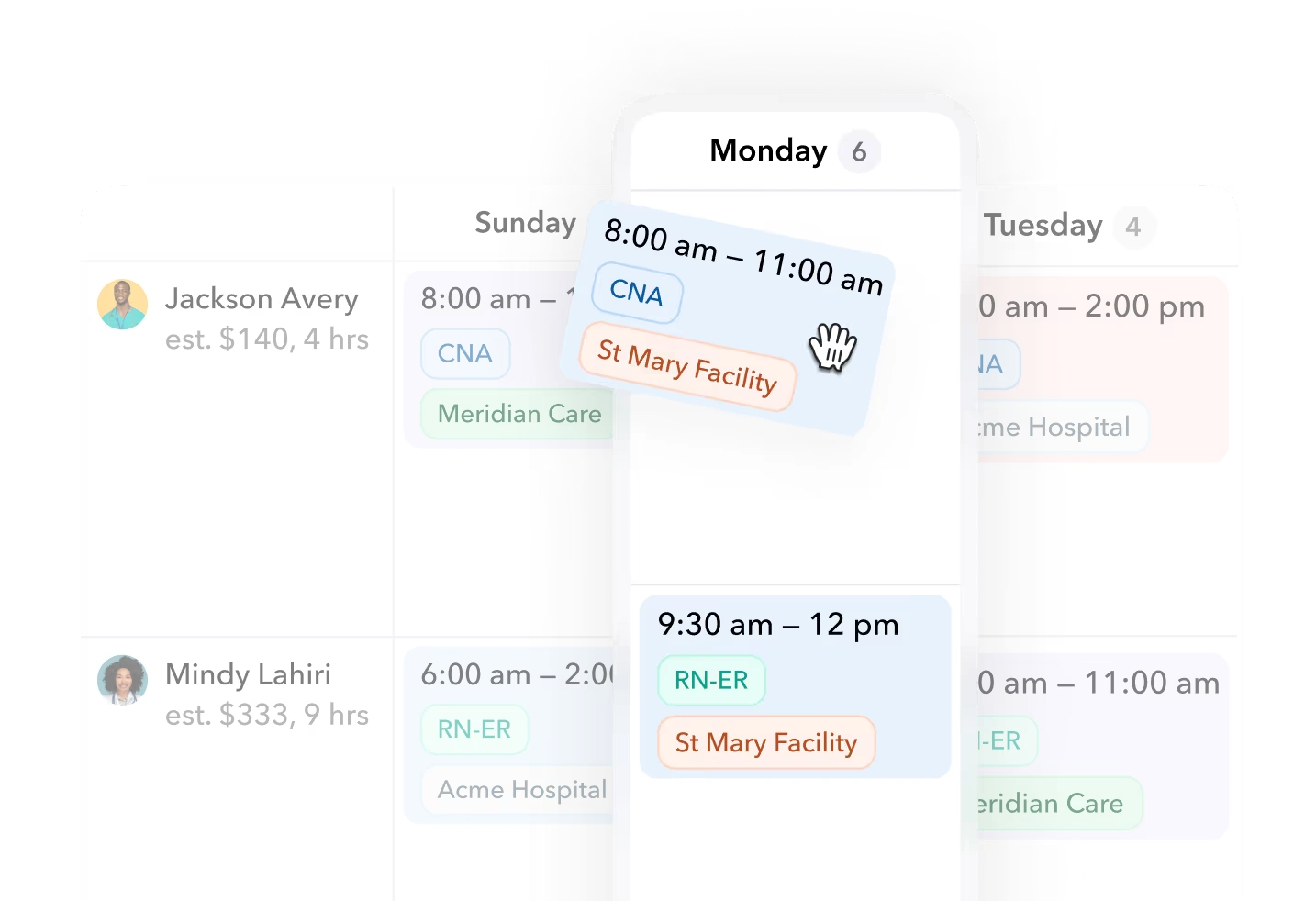
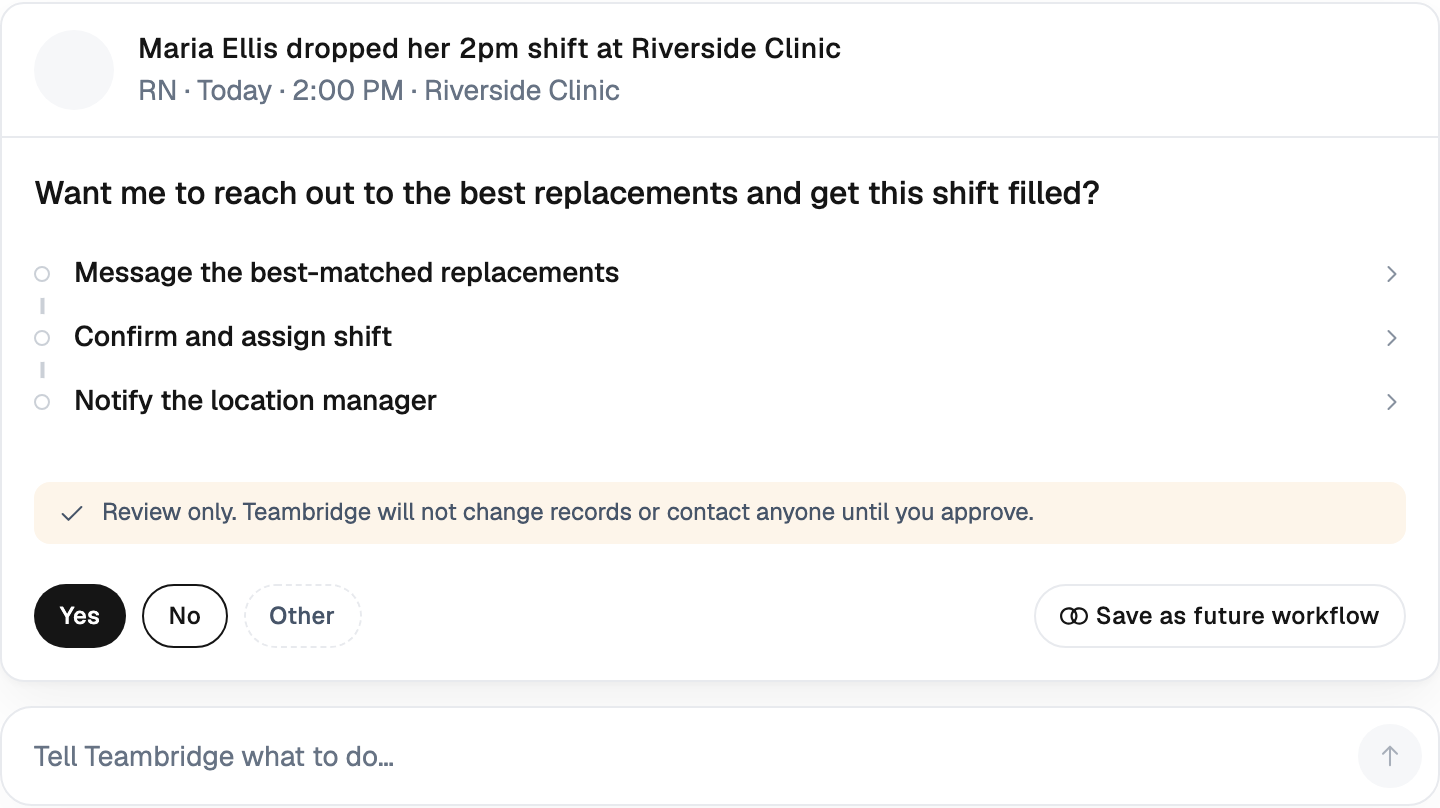
- If approved, the shift is automatically released to the open-shift pool or routed to a qualified backfill candidate.
- The timecard for Thursday is pre-populated with PTO hours.
- Payroll picks up the PTO hours at the correct rate for that worker's classification.
- The accrual balance updates in real time, visible to the worker.
None of those steps should involve a human re-keying data. The single biggest benefit of an integrated HR system is the elimination of data silos. Leave approvals should automatically update the employee's timecard, which then seamlessly flows to the payroll module. This eliminates the 8-10 hours per month spent by HR on manual reconciliation.
The operational payoff is bigger than the admin savings. When scheduling sees approved leave the moment it's granted, you can backfill in hours instead of discovering the gap at shift start. That's the difference between a covered shift and an angry client call.

Policy Complexity: Multi-State, Multi-Client, Multi-Classification
For a desk-based HR team running one corporate PTO policy, leave compliance is annoying but bounded. For a shift-based operator, it's a matrix.
A staffing agency might have:
- Workers on FMLA-eligible W-2 status across 14 states, each with its own sick leave accrual rule.
- Client A requiring 40 hours of paid sick leave per year for assigned contractors.
- Client B requiring zero, because their site is in a state without mandated sick leave.
- A union MSA at Client C dictating accrual at a different rate.
- Per-diem nurses on a different policy entirely.
- 1099 contractors with no entitlement except in jurisdictions that don't care about classification.
The regulatory floor keeps rising too. 13 states plus D.C. have implemented paid family leave programs as of 2025, layering on top of federal FMLA requirements. Multiply by client-specific contractual obligations and you have a policy engine, not a checkbox.
The systems that handle this well share three traits:
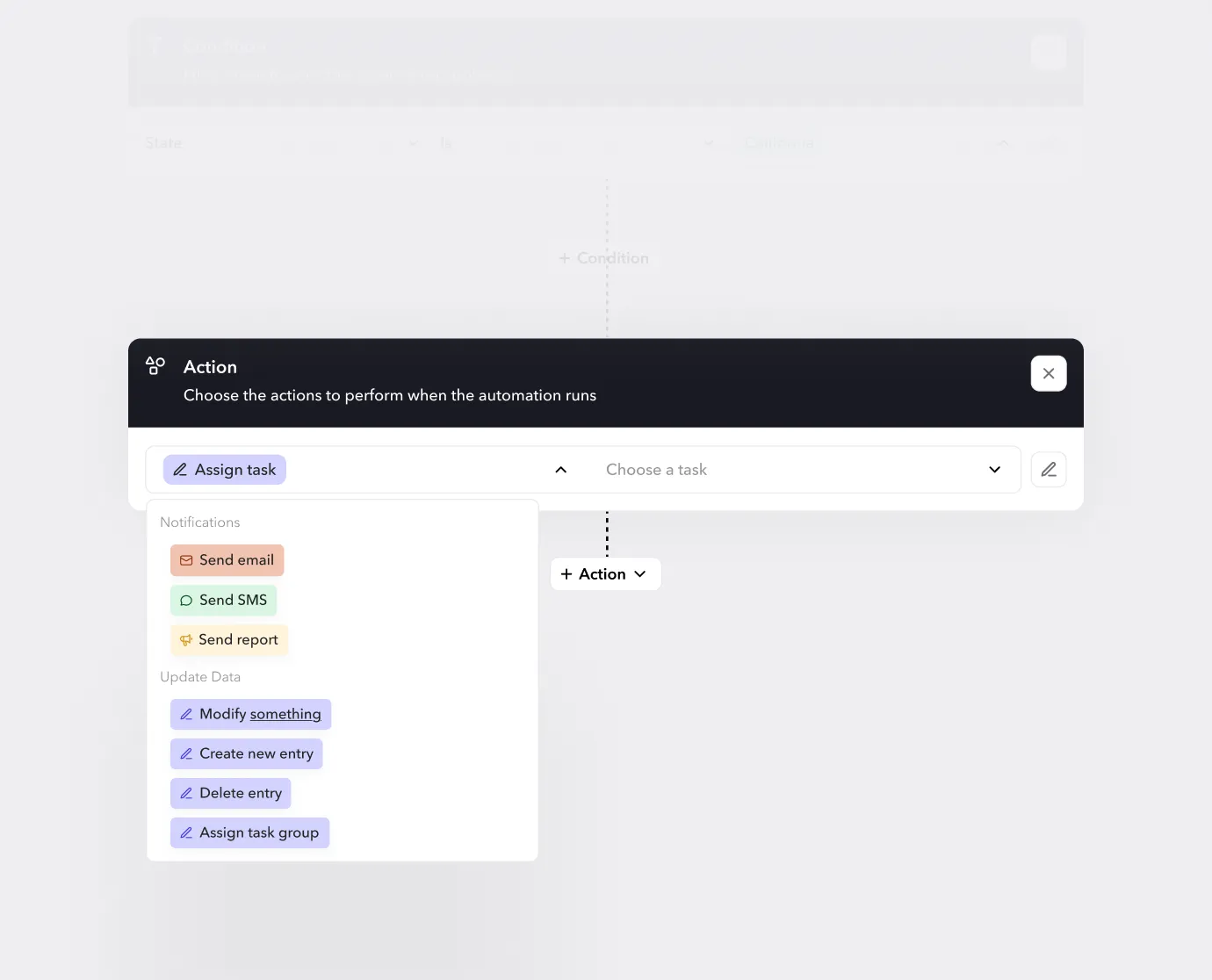
- Policy templates by jurisdiction, client, and classification — applied automatically based on worker attributes, not assigned manually.
- Blackout windows tied to demand — so peak weeks at a fulfillment client don't get gutted by approved PTO that nobody screened for coverage impact.
- Audit trails that survive a labor board inquiry — every accrual, request, approval, denial, and balance change timestamped and attributable.
Warning
Manual policy administration is where compliance violations breed. The cost of being out of compliance is estimated to be 2.71 times higher than the investment required to remain compliant. A single missed state sick leave accrual across a few hundred workers compounds fast.
Ready to move?
Ready to see Teambridge in action?
Approval Workflows That Don't Bottleneck on One Manager
Frontline workers don't sit at desktops. They clock in, work, clock out. If your leave request process requires them to log into a portal on a laptop they don't own, you've already lost.
Good approval workflow for shift-based operations has four properties:
- Mobile-first request submission. Worker opens an app, sees their balance, picks a date, hits submit. Thirty seconds.
- Multi-tier routing. First-line supervisor approves operationally; HR auto-reviews for compliance; payroll never has to touch it.
- Automatic escalation. If a request sits more than 48 hours, it escalates to the next manager. Nobody waits a week to find out if their kid's birthday is approved.
- Real-time balance and conflict visibility for the manager. The approver sees coverage impact, current balance, blackout flags, and overtime risk in the same view as the request.
The alternative — manual queues with one manager as the bottleneck — generates a quiet but consistent stream of resentment. When submitting leave requests, employees want some reliability around whether or not their time off will be approved — and they expect confirmation or denial in a reasonable amount of time. That's not a perk. That's table stakes.
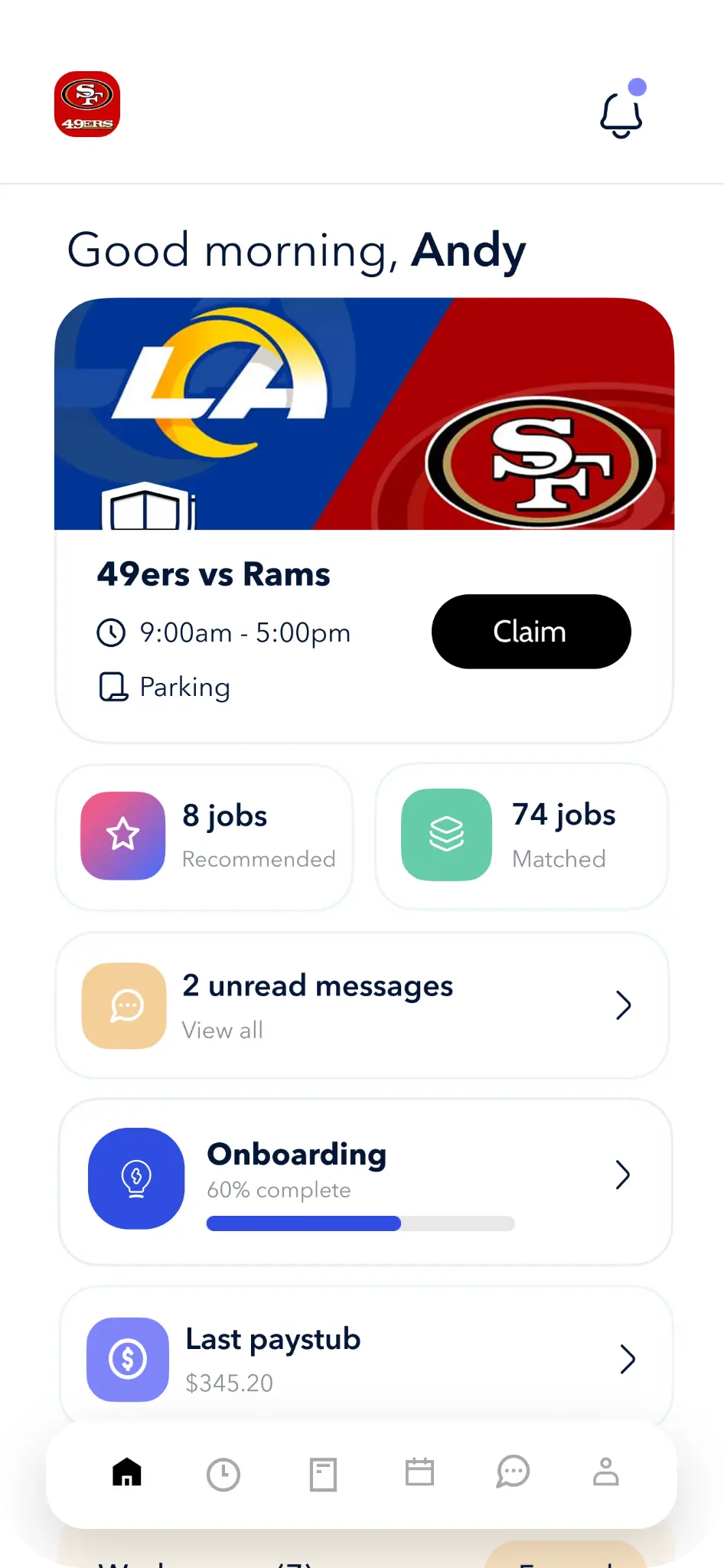
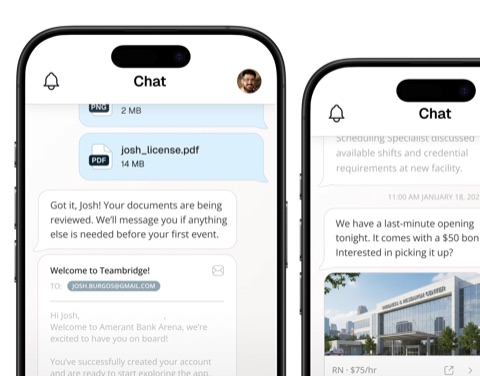
A mobile app that handles requests, balance checks, and approvals in the same place workers already pick up shifts and view their schedule eliminates the friction. Workers stop calling the office to ask "did you get my request?" Supervisors stop digging through email.
Leave Liability Is a Finance Problem, Not Just an HR Problem
Here's the part operators tend to underweight: unused leave is a liability on the balance sheet, and it grows every time you give somebody a raise.
Employees accumulate significant leave hours over the years, creating an unfunded liability for departmental budgets. The value of this liability increases for each employee with each salary increase. Leave balances exceeding established limits need to be consistently addressed. A result of excess leave accumulation occurs when employees separate from service and the organization is obligated to cash out accrued leave credits at the employee's current salary rates, which in most cases is higher than when the leave credits were earned. These payouts amount to millions of dollars each year and represent an unfunded liability that must be paid from current-year funds.
For shift operators with high turnover, this hits hardest at termination. Every separation triggers a payout calculation. If your accrual records are wrong, you're either overpaying or underpaying — both are bad. Research from Ernst & Young suggests that companies lose over $30,000 per year for every 1,000 employees due to errors in PTO tracking.
What finance actually needs from a leave system:
- A current dollar-value liability report, refreshed automatically, broken down by worker class, location, and client contract.
- Trend analysis showing whether balances are rising or falling quarter over quarter.
- Forecasting tools that flag workers approaching cap and prompt usage before payout.
- Clean separation of accrued-but-unused, accrued-and-used, and projected year-end carryover.
This is the kind of view that lives naturally in admin tools — not buried five tabs deep in an HRIS.
Using Leave Data to Predict (and Prevent) Coverage Gaps
Leave data isn't just a payroll deduction. It's one of the most reliable predictors you have for next month's coverage problems.
The metrics that matter for shift operators:
- Planned vs. unplanned absence ratio, by team and by manager. A team running 70% unplanned is signaling something — usually burnout, often a scheduling issue.
- Bradford Factor or equivalent, to catch patterns of short, frequent absences before they become turnover. Use system analytics to track Bradford Factor — to identify patterns of short, frequent, unplanned leave — and departmental absence rates — to spot teams at risk of burnout or low morale.
- Absence rate by shift type. Night shift absence rates above the day shift rate are a fatigue signal, not a discipline problem.
- Coverage exposure on approved leave. For every approved day in the future, how many open shifts are still unfilled?
That last metric is the operational gold. It turns leave from a reactive payroll line into a proactive coverage forecast.
Fatigue is the underlying story here. Fatigue is one of the biggest contributors to workplace injuries among shift workers. During evening shifts, accident rates increase by 18%, which jumps to 30% more injuries during night shifts. Longer shifts, such as 12 hours daily, increase the injury risk by 37%. If your leave data shows a team consistently denied time off during peak weeks, you're not just risking turnover — you're risking incidents. According to the Occupational Safety and Health Administration via Hofmann & Schweitzer, the night-shift injury premium is well documented.
Tip
Build a monthly review where ops, HR, and finance look at three numbers together: unplanned absence rate by team, accrual balance growth, and coverage exposure on upcoming approved leave. If those three are trending the wrong way at once, you have 30-45 days before it shows up in turnover.
What to Look for in a Leave Management System Built for Operators
If you're evaluating tools, here's the checklist that separates leave software built for shift work from leave software built for cubicles:
- Hour-based accrual and accounting. Days are a lie for variable schedules.
- Native scheduling integration. Approved leave releases the shift, triggers backfill, and updates the roster in one motion — not a nightly batch job.
- Mobile-first self-service. Workers request, check balances, and get notified on the device they actually use.
- Multi-policy support by jurisdiction, client, and classification. Applied automatically based on worker attributes.
- Automated approval routing with escalation. No request rots in an inbox.
- Accrual liability reporting at dollar value. Finance can see the balance sheet impact in real time.
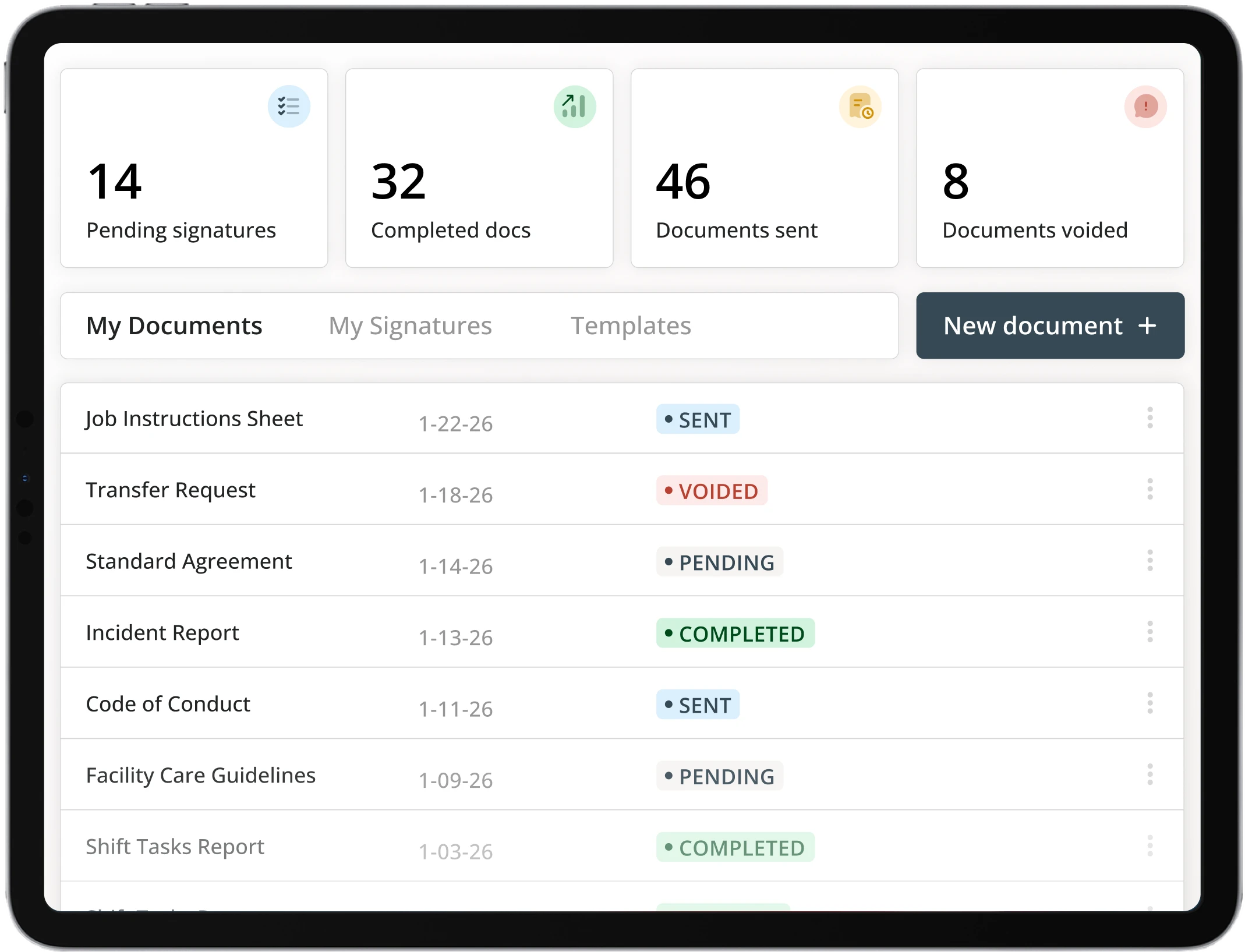
- Compliance audit trails. Every action timestamped, attributable, and exportable.
- Coverage forecasting. Future approved leave visible against future scheduling demand.
That's the bar. Tools built for salaried desk workers hit maybe three of those out of the box. Tools built for shift-based operations should hit all of them — and the Teambridge platform is built around exactly that operational model, with industry-specific configurations for staffing agencies, healthcare, hotels, and light industrial.
Leave management for shift work isn't a software category. It's a coverage discipline. The right system makes that discipline operational instead of heroic.