

The reflex is to blame the lab. It's almost never the lab. The delay is the orchestration gap between the collection site, the Medical Review Officer, your recruiter, and whoever is trying to fill Monday's roster at 5 a.m. This piece breaks down where those hours actually go and what to build so a non-negative on Thursday doesn't cost you a shift on Monday.
The Monday 6 a.m. Math: Why One MRO Callback Blows Up a 40-Person Start
A typical light industrial branch orders drug screens Thursday and Friday for a Monday start. Negatives clear fast — negative results are typically reported within 1 to 2 business days from the time the laboratory receives the specimen. That's the happy path, and it accounts for the vast majority of your candidates.
The problem is the tail. Any non-negative flips the candidate into MRO review, which runs on its own clock. Non-negative results go through confirmation testing, which takes an additional 3 to 5 business days and includes a full MRO drug screening review. If the donor is hard to reach or a prescription needs to be verified, it stretches further. The entire MRO process can take up to two weeks as every part of the process has a required timeline involved.
Do the math on a 40-person start. If 10% of your pipeline hits a non-negative — which is not unusual for pre-employment screening in this segment — you're looking at four candidates whose status won't resolve before Monday morning unless someone actively works the process. One stalled candidate equals one uncovered shift. Uncovered shifts equal margin erosion, client escalations, and the kind of Monday call that ends a preferred-vendor relationship.
The delay isn't the lab. It's the four-hour gap between when the MRO tries to call the donor and when your recruiter finds out the donor didn't answer.
What Actually Happens Between Friday Collection and Monday Shift
Here's the chain of custody in real time. A candidate collects Friday morning. The specimen ships to a SAMHSA-certified lab. If the initial screen is clean, the lab clears it through automated review and the result lands with the employer inside two business days.
If the screen is non-negative, the process changes shape entirely. A non-negative result requires that a Medical Review Officer (MRO) must interview the donor and make a test result determination before reporting a result to the employer. That interview is governed by 49 CFR Part 40 for DOT-regulated placements, and most non-DOT programs follow the same playbook by convention.
The MRO doesn't email. They call. Reasonable efforts include, as a minimum, three attempts, spaced reasonably over a 24-hour period, to reach the employee at the day and evening telephone numbers listed on the CCF. Miss those calls and the consequences are hard. If the MRO is unable to reach Donor after two call attempts and waits 24 hours till after the initial call, they can close it as a nonContact Positive.
Read that again. A candidate who ignores a blocked-number call on Saturday morning is functionally disqualified by Monday — not because they used, but because they didn't answer the phone. Most agencies find out at 5 a.m. Monday, when the branch manager is already on the way to the client site.

The Three Failure Points Agencies Keep Ignoring
Every Monday miss traces back to one of three preventable states. None of them are lab problems. All of them are workflow problems.
1. The Donor Never Picks Up the Blocked Number
This is the single biggest source of avoidable non-contact positives. Nobody told the candidate the MRO would be calling. Nobody told them the number would show up as blocked or unknown. Nobody told them that not answering carries the same weight as testing positive. So they let it ring.
2. Chain of Custody Form Fatal Flaws
The MRO has to review the CCF before releasing any result. The MRO must review Copy 2 of the CCF to determine if there are any fatal or correctable errors that may require you to cancel the test. A missing signature, a mismatched specimen ID, or an unchecked box can pause the entire chain until an affidavit comes back from the collector. That affidavit lives in someone's inbox all weekend.
3. The Recruiter Finds Out Too Late
By the time the branch manager pulls the pending report Monday morning, the window to activate a backup candidate is gone. Onboarding paperwork, I-9 verification, and orientation windows for the client site are already closed. The shift goes uncovered.
| Failure Point | Where It Happens | Realistic Recovery Window |
|---|---|---|
| Non-contact positive | Saturday to Sunday morning | Hours after first missed call |
| CCF fatal flaw | Lab intake, Friday to Monday | 1 to 3 business days |
| Late backup activation | Monday 4 a.m. to 6 a.m. | Zero |
Each of these is a workflow state that should trigger an automation, not a Slack scramble.
Ready to move?
Ready to see Teambridge in action?
Pre-Brief the Donor: The Cheapest Fix Nobody Runs Consistently
The highest-ROI play in this entire chain costs you one automated message. At the moment the drug screen is ordered, push a text to the candidate that says three things in plain language:
- A doctor from the testing service may call you from a blocked or unknown number within the next 24 to 72 hours.
- If you miss that call, your test can be recorded as a positive even if you did not use anything.
- Here is the callback number. Save it. Answer any call from it.
That's it. This one step recovers the majority of your non-contact positives, because those cases are almost never people trying to hide something. They're people who screen unknown numbers, which is now most of the workforce.
The reason it doesn't happen consistently is that pre-briefing is somebody's job in theory and nobody's job in practice. Recruiters assume the collection site does it. Collection sites assume the agency does it. The MRO assumes the employer's designated representative does it. Meanwhile the candidate learns nothing and lets the call go to voicemail.
Tip
Fire the pre-brief text off the same status change that orders the screen — not off a manual checklist. If it depends on a human remembering, it will fail on Friday afternoon when your recruiter is running six placements at once.
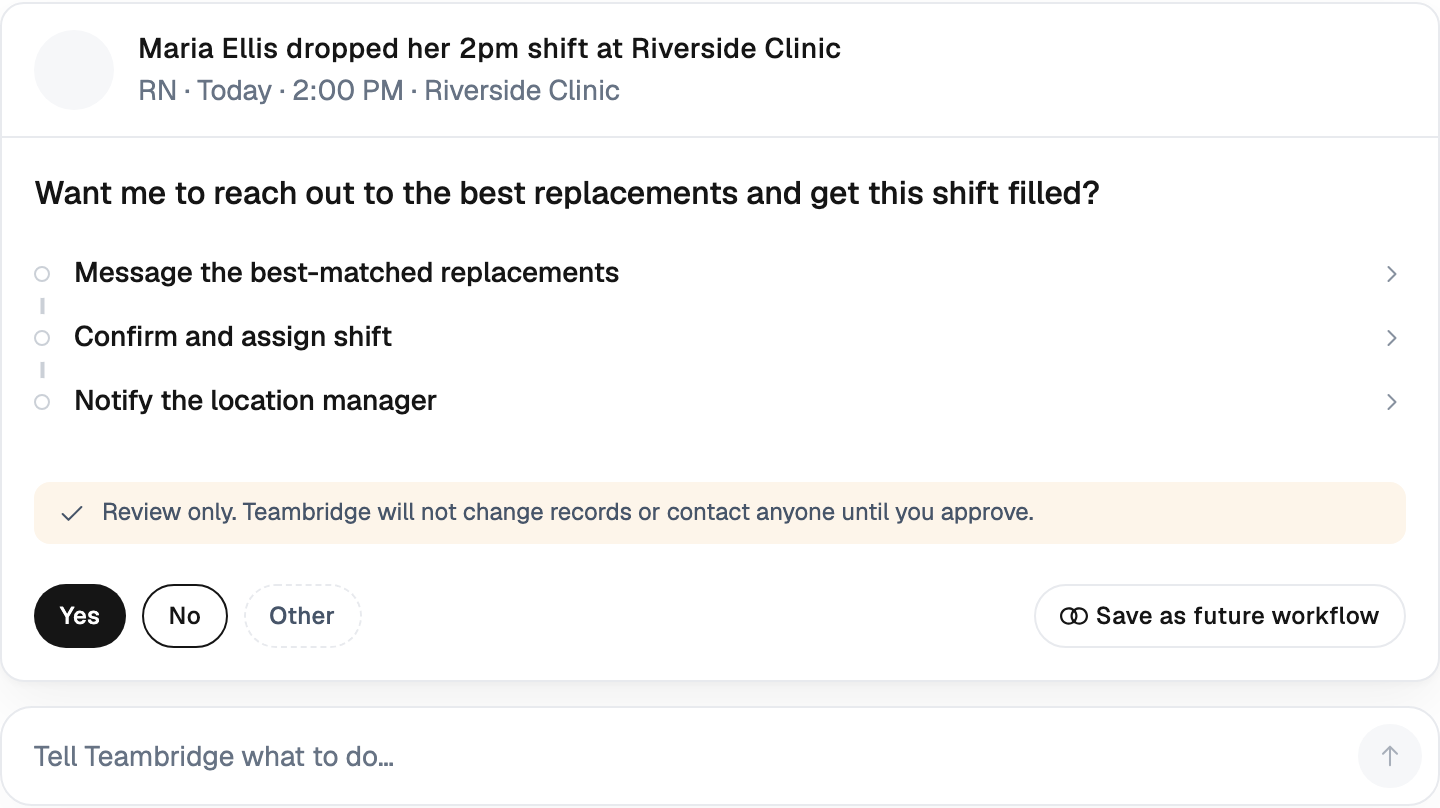
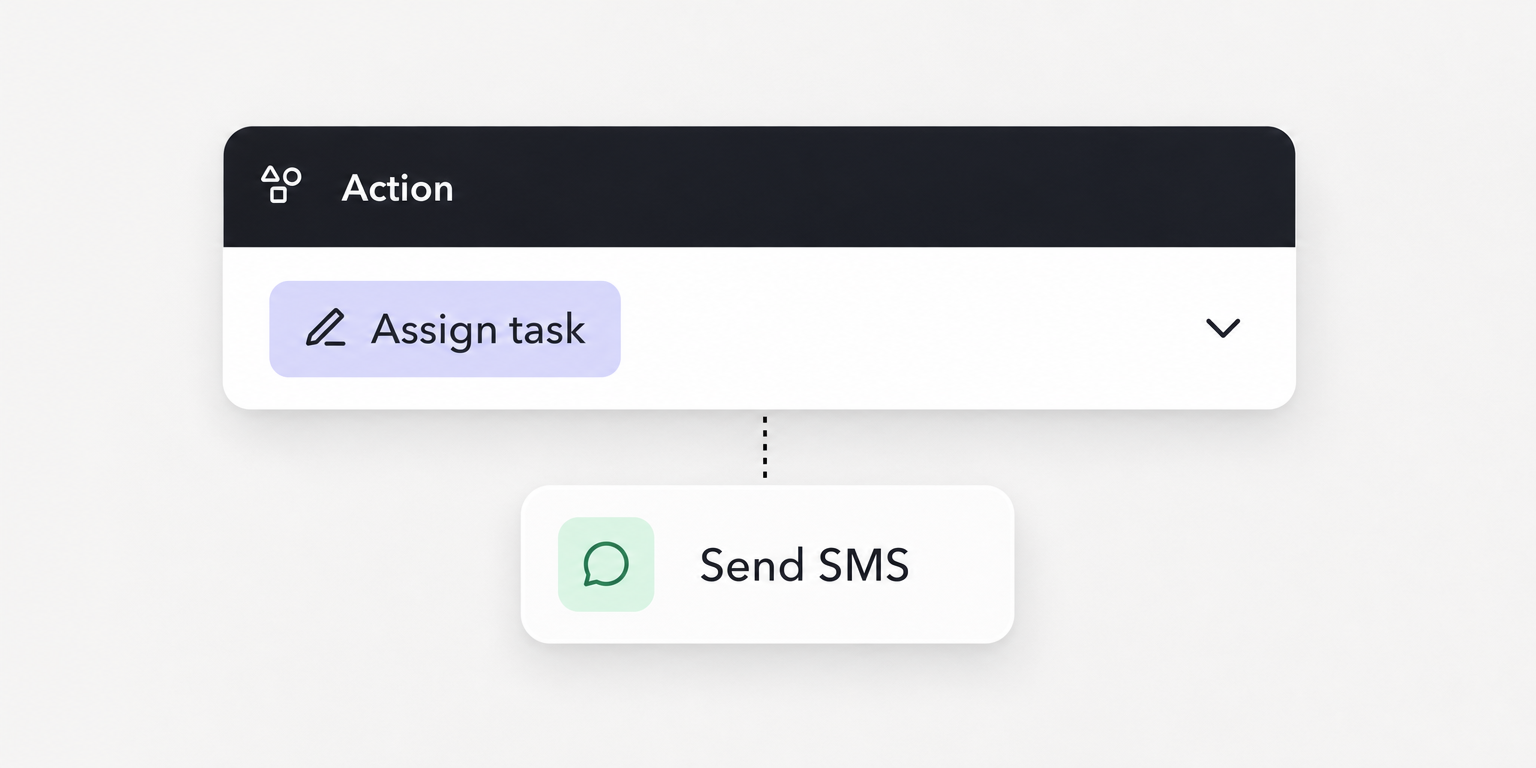
Build it as a single automation on your onboarding workflow: trigger "drug screen ordered," action "send SMS template DRUG-BRIEF-01," log to candidate record. Ship it once, run it forever.
Build a Backup Bench Before You Need It, Not at 5 a.m. Monday
The second play is treating a pending drug screen as a scheduling risk state — the same way you treat an expiring credential. Any candidate whose screen is still pending 24 hours before shift start should automatically flag as at-risk and trigger a backup to be short-listed and pre-notified.
This is not radical. It's the same logic you already run for credentials. If a forklift certification expires the day before a shift, your scheduler blocks the assignment and pulls a replacement. Pending drug screens deserve the same treatment because they carry the same operational risk.
The implementation looks like this:
- Every shift can hold two candidates in parallel: one in "confirmed" and one in "standby."
- Standby candidates receive a soft pre-brief — the shift exists, they may be activated, please hold availability.
- When the MRO releases the primary candidate's result as verified negative, standby auto-releases with a thank-you and stays warm for the next opening.
- If the primary result comes back verified positive or non-contact positive, standby auto-promotes to confirmed and receives the full onboarding sequence.
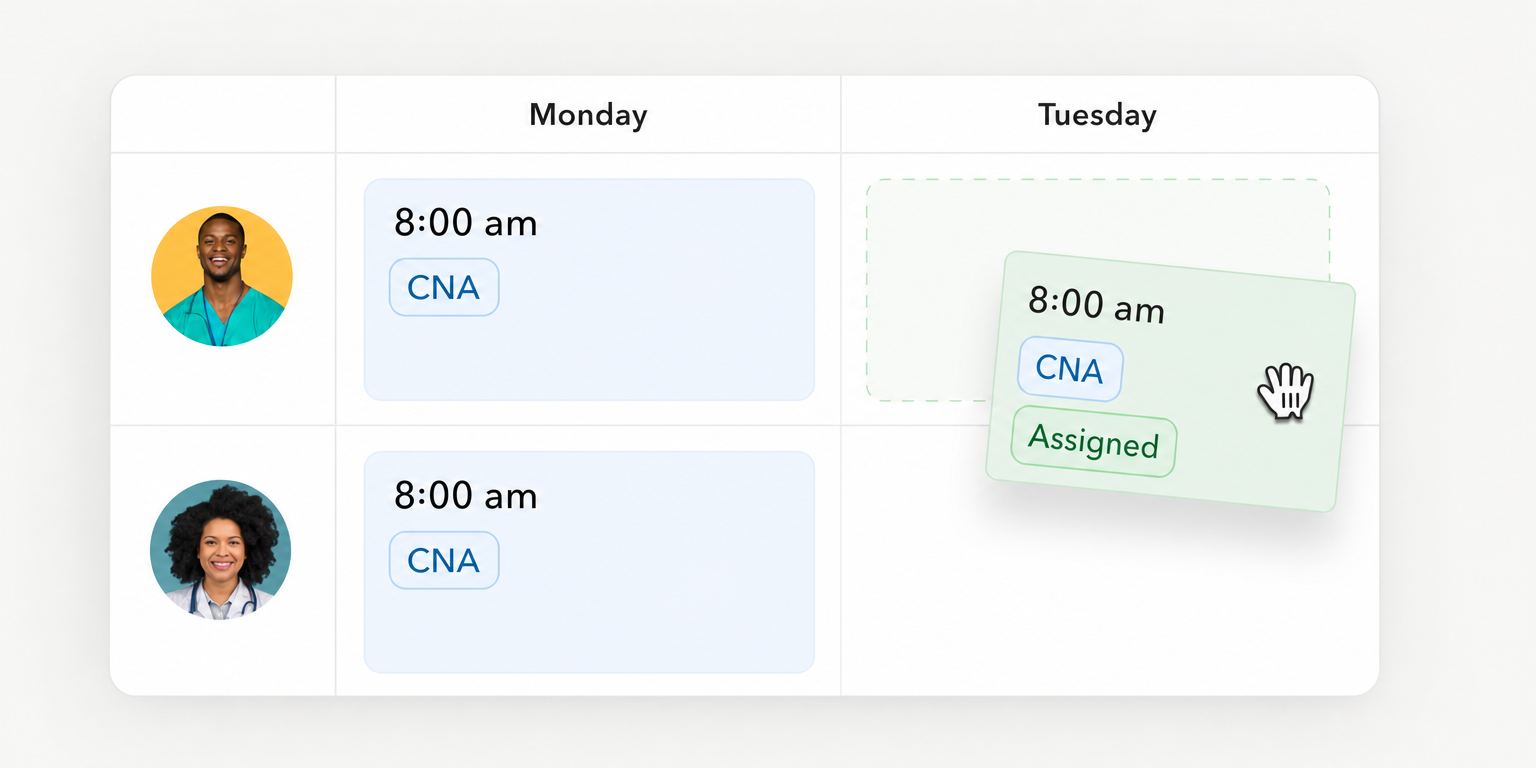
This is exactly the kind of orchestration our scheduling product is built to handle. Treat the screen status as a first-class field on the shift record, not a note in a spreadsheet.
Instant Testing vs. Lab + MRO: When to Use Which
For non-DOT light industrial roles — which is most warehouse, fulfillment, and manufacturing placements — there's a second lever worth pulling. CLIA-waived instant cups produce on-site negative results in minutes. Positives still route to lab confirmation and MRO review, but you clear the clean 90% of your pipeline before the weekend even starts.

Instant testing does not replace the MRO process for non-negatives. Some providers still layer MRO review on top of rapid screens for legal defensibility — unlike many companies that skip MRO review for instant drug tests, our technology allows us to include it for non-negative rapid screens is a common posture from testing vendors. Whether you need that depends on your client contracts and state law.
| Scenario | Instant Cup on Site | Lab + MRO Only |
|---|---|---|
| Non-DOT warehouse, high volume | Strong fit — clears clean candidates same day | Adds 1 to 5 days of unnecessary delay for negatives |
| DOT-regulated placement | Not sufficient on its own | Required |
| State restricts rapid testing | Not viable | Required |
| Client requires SAMHSA-certified lab | Not sufficient on its own | Required |
The honest tradeoff: instant testing costs more per unit but recovers cycle time on the front end. For agencies running weekly first-shift starts at scale, the arithmetic usually favors instant on non-DOT and lab on DOT. Confirm state law before rolling it out — a handful of states have specific rules on rapid workplace testing.
Tracking Screen Status as a First-Class Workflow State
Here's the core argument. Every one of the plays above requires that drug screen status be a tracked, structured field on the candidate record — not a note in a spreadsheet, not a thread in a shared inbox, not something the recruiter remembers.
At a minimum, the states you need are:
- Ordered — screen requested, candidate notified, pre-brief sent
- Collected — specimen at lab, pending initial result
- Negative — cleared, candidate schedulable
- Non-negative pending MRO — at-risk, backup activated
- MRO callback pending — donor being contacted, SLA clock running
- Verified negative — MRO cleared with legitimate medical explanation
- Verified positive — disqualified per client policy
- Cancelled — CCF flaw, invalid specimen, or re-collection required
Each state gets its own SLA and its own escalation path. Non-negative pending MRO at hour 48 pings the recruiter. MRO callback pending at hour 24 triggers the DER outreach — which is how the process is designed to work anyway. If the MRO cannot reach the driver directly, they contact the employer's DER and ask the DER to have the driver contact the MRO within 72 hours. The driver has 72 hours from the DER notification to contact the MRO with a legitimate medical explanation. Your agency is the DER for most non-DOT placements. That 72-hour window is the difference between a saved shift and a lost one.
Once screen status is a real field, it plugs into everything else. Scheduling blocks unverified candidates from shift assignment. Onboarding gates I-9 and orientation steps. Compliance reporting exports clean audit trails for client reviews. This is exactly the composability our automations product exists for — you build the state machine once and it runs across scheduling, onboarding, and reporting.
Important
If a candidate can be assigned to a shift while their screen status is still pending, your system is set up to lose Monday shifts. The block should be structural, not procedural.
What Monday Should Actually Look Like
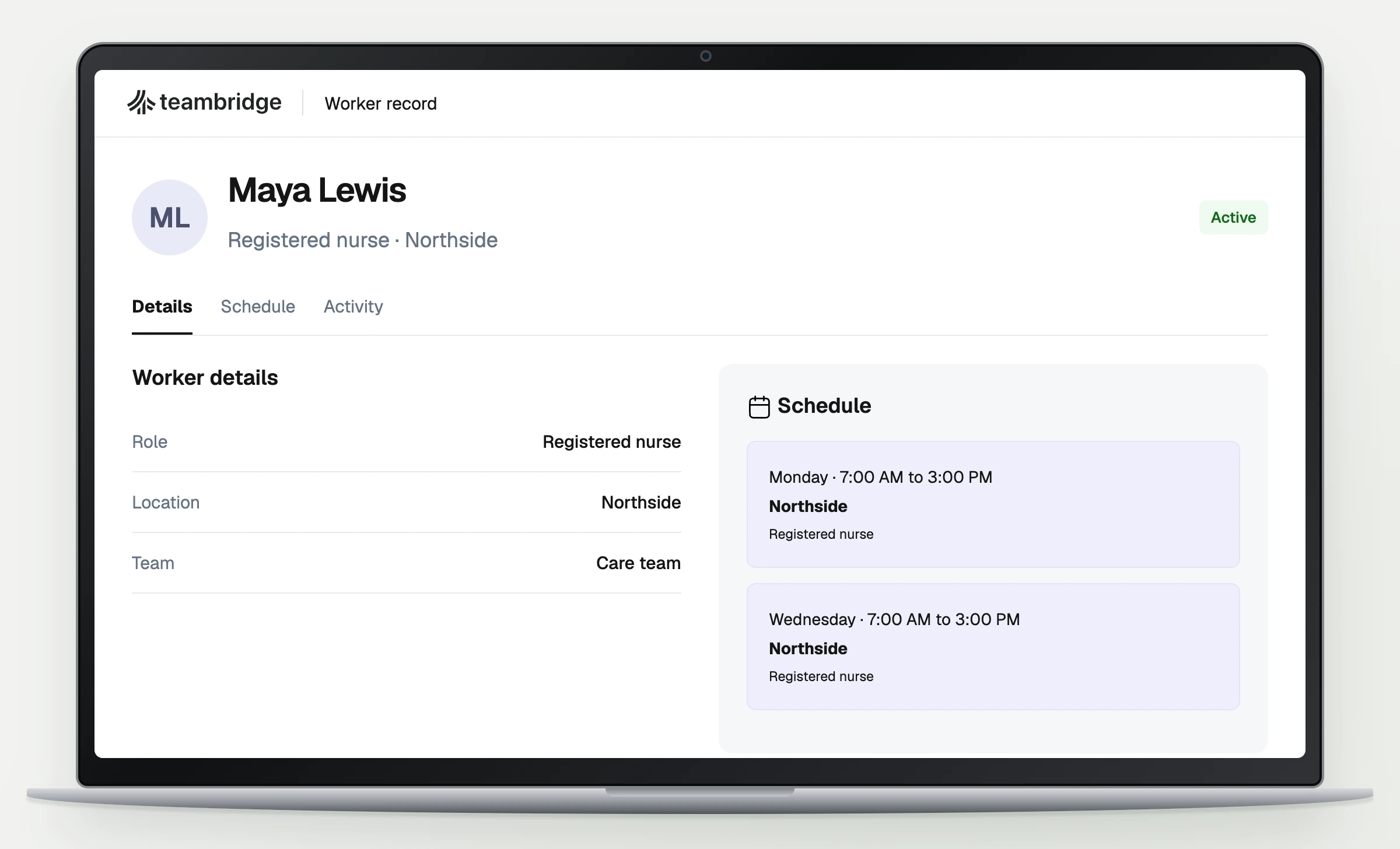
Here is the target state. Friday at 3 p.m., your branch manager opens one dashboard. Every Monday shift is listed. Every shift has a confirmed candidate and a standby candidate. Every candidate has a screen status color-coded green, yellow, or red.
Yellow means pending MRO. Yellow shifts already have the standby pre-briefed and warm. Red means verified disqualification — standby has already been promoted to confirmed and is in the onboarding sequence. Green means cleared. The branch manager spends fifteen minutes on the yellow list, not four hours on the Monday morning fire.
Saturday morning, the MRO calls a candidate. The candidate picks up — because they got the pre-brief text on Thursday and knew to expect it. They explain their prescription. Result verified negative by Saturday afternoon. Yellow flips to green. Standby releases. Nobody at your agency touched the process.
Monday 6 a.m., you have 42 bodies on the line for a 40-person start. The client texts a thank-you. Your margin holds.
That's not a hypothetical. That's what happens when you stop treating drug screening as a paperwork step and start treating it as a scheduling risk state. The tooling to do it is the same tooling you already use for credentials, no-shows, and shift confirmations — you just have to point it at the right workflow.
See how staffing operators are building this on Teambridge on our staffing agencies and light industrial pages, or dig into customer stories from branches that stopped losing Monday starts to weekend MRO stalls.

About the author
Content Writer at Teambridge
Anis Nanai is a content writer at Teambridge, with a focus on workforce management and the realities of running hourly teams. He prioritizes conversations with customers, staying close to the market, and understanding how workforce needs are changing. His writing connects those concerns to practical decisions about scheduling, time tracking, staffing, and automation. He examines product developments through the questions that matter to operators: what does this solve, how would it work for my team, and what evidence supports it?
Company perspective: this author works at Teambridge. Customer outcomes are attributed to their published sources.
View LinkedIn profile