

Employee availability form template you can copy
Copy the tables and confirmation statement below into your collection document. Repeat window rows when someone has multiple available periods on the same day. Collect availability details only, not medical information or private reasons.
EMPLOYEE AVAILABILITY FORM
| Field | Entry |
|---|---|
| Employee identifier | [Enter identifier] |
| Team or location | [Enter team or location] |
| Timezone | [Enter named timezone, such as America/Chicago] |
| Effective date | [Enter date] |
| End date | [Enter date or ongoing] |
| Submitted at | [Enter date, time and timezone] |
RECURRING WEEKLY AVAILABILITY
For every day, enter available windows or explicitly mark unavailable. A blank means incomplete, not unrestricted availability. Only the listed windows are available.
| Day | Status | Window start | Window end |
|---|---|---|---|
| Monday | [Available or unavailable] | [Day and time] | [Day and time] |
| Tuesday | [Available or unavailable] | [Day and time] | [Day and time] |
| Wednesday | [Available or unavailable] | [Day and time] | [Day and time] |
| Thursday | [Available or unavailable] | [Day and time] | [Day and time] |
| Friday | [Available or unavailable] | [Day and time] | [Day and time] |
| Saturday | [Available or unavailable] | [Day and time] | [Day and time] |
| Sunday | [Available or unavailable] | [Day and time] | [Day and time] |
For unavailable days, enter “Not applicable” in the window fields. Where a window continues from the previous day, identify it as a continuation rather than a second window.
DATED EXCEPTIONS
| Field | Entry |
|---|---|
| Exception scope | [Whole calendar day or specified interval] |
| Start date and time | [Enter date, time and timezone] |
| End date and time | [Enter date, time and timezone] |
| Replacement availability | [Unavailable or complete available windows within this scope] |
Repeat this exception table for additional exceptions. Each entry replaces recurring availability only within its stated scope. End boundaries are exclusive, as explained below.
EMPLOYEE CONFIRMATION
I confirm these availability details are accurate as of the date shown. I understand that availability does not guarantee an assignment.
| Field | Entry |
|---|---|
| Employee confirmation | [Enter acknowledgment] |
| Confirmed at | [Enter date, time and timezone] |
SCHEDULER REVIEW
| Field | Entry |
|---|---|
| Reviewer | [Enter reviewer identifier or role] |
| Review status | [Pending, clarification needed or reviewed] |
| Reviewed at | [Enter date, time and timezone] |
| Entered in scheduling system at | [Enter date, time and timezone] |
| Next confirmation due | [Enter date] |
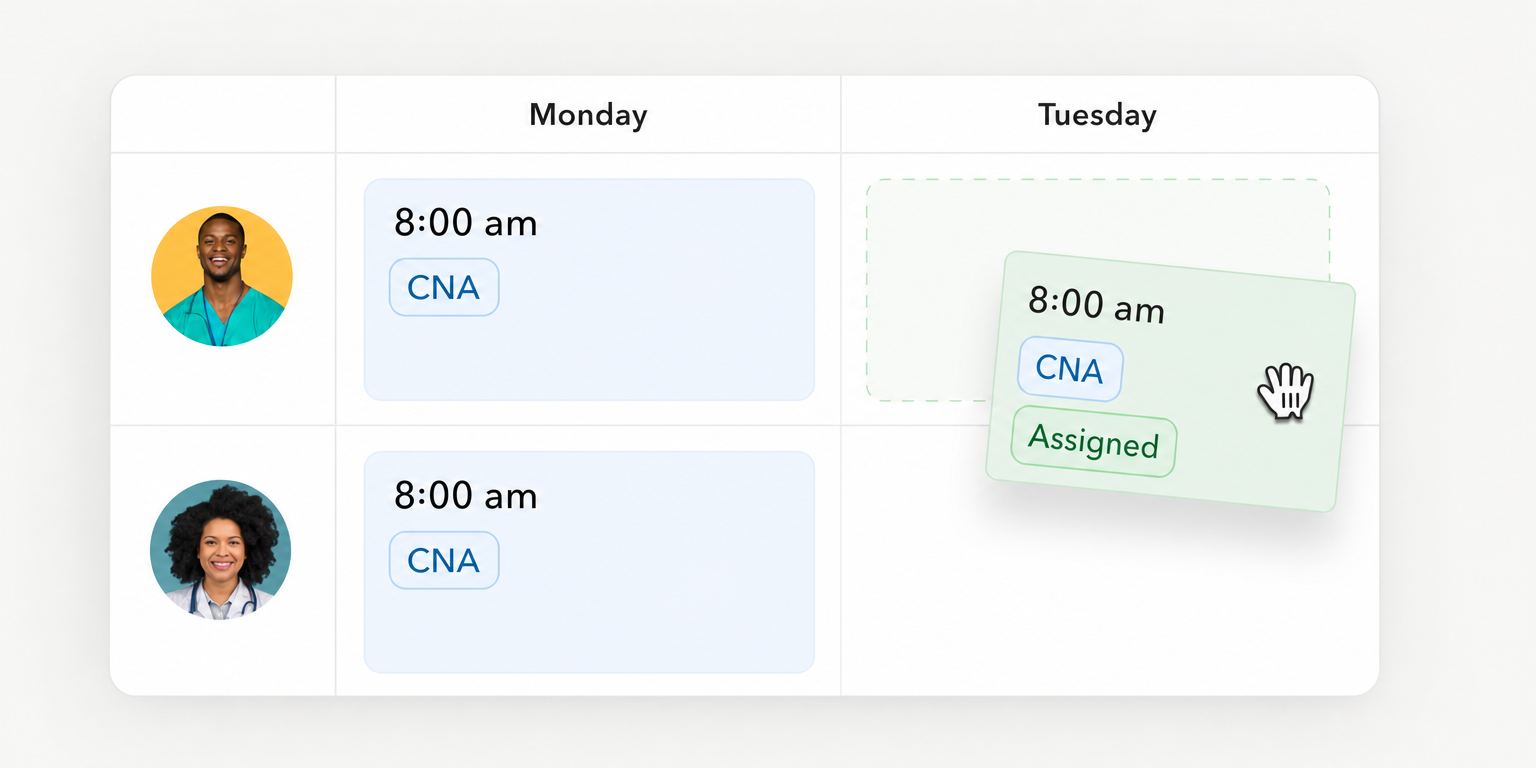
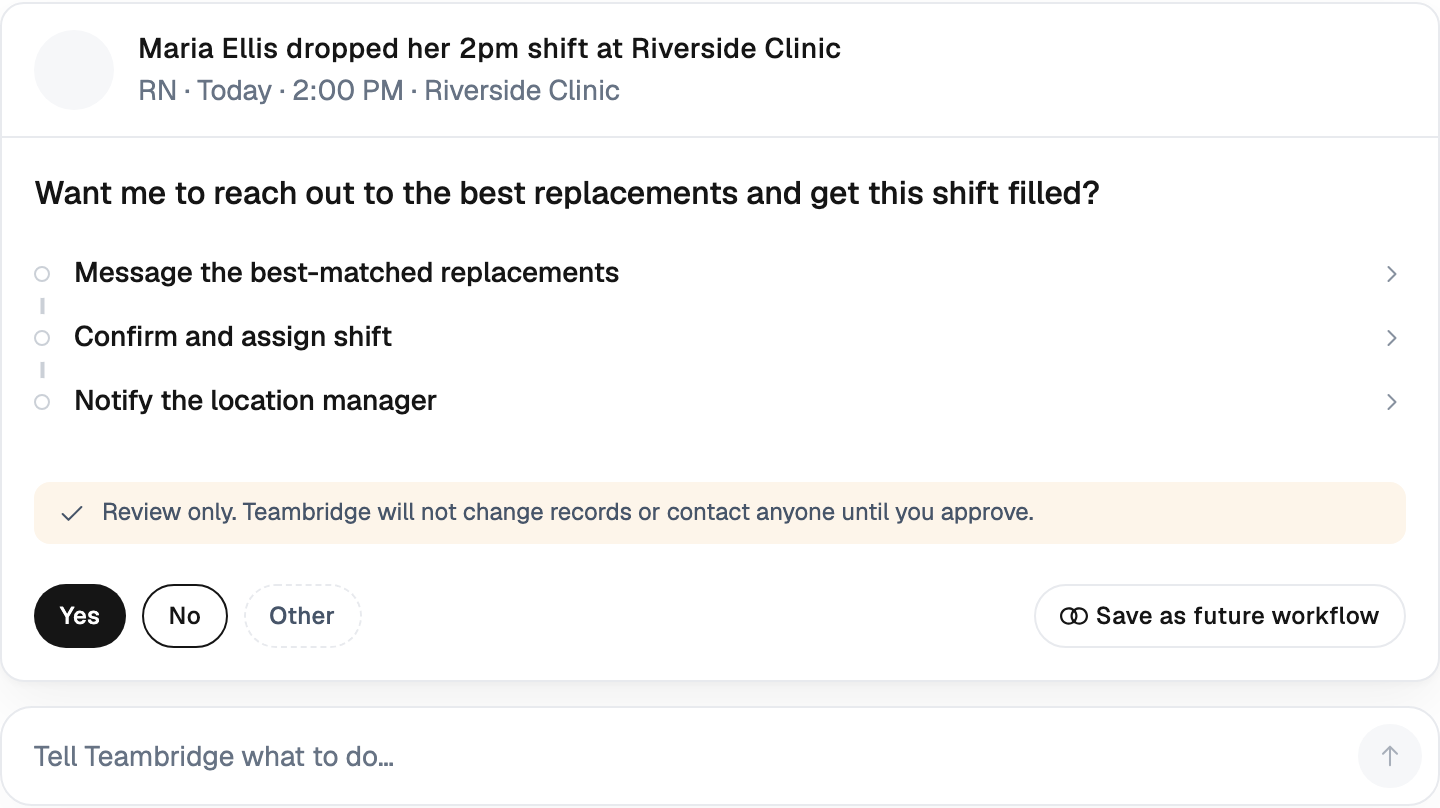
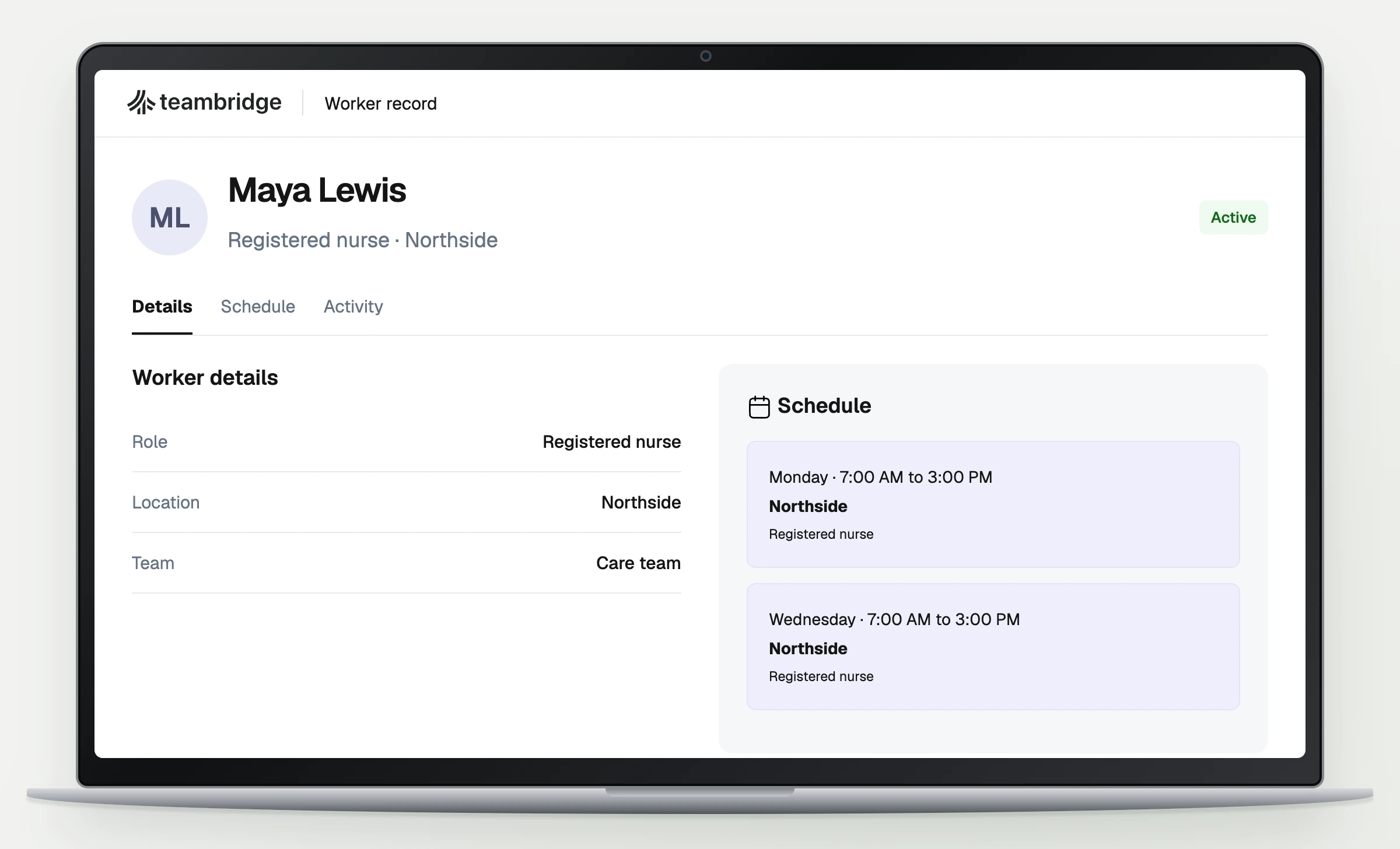
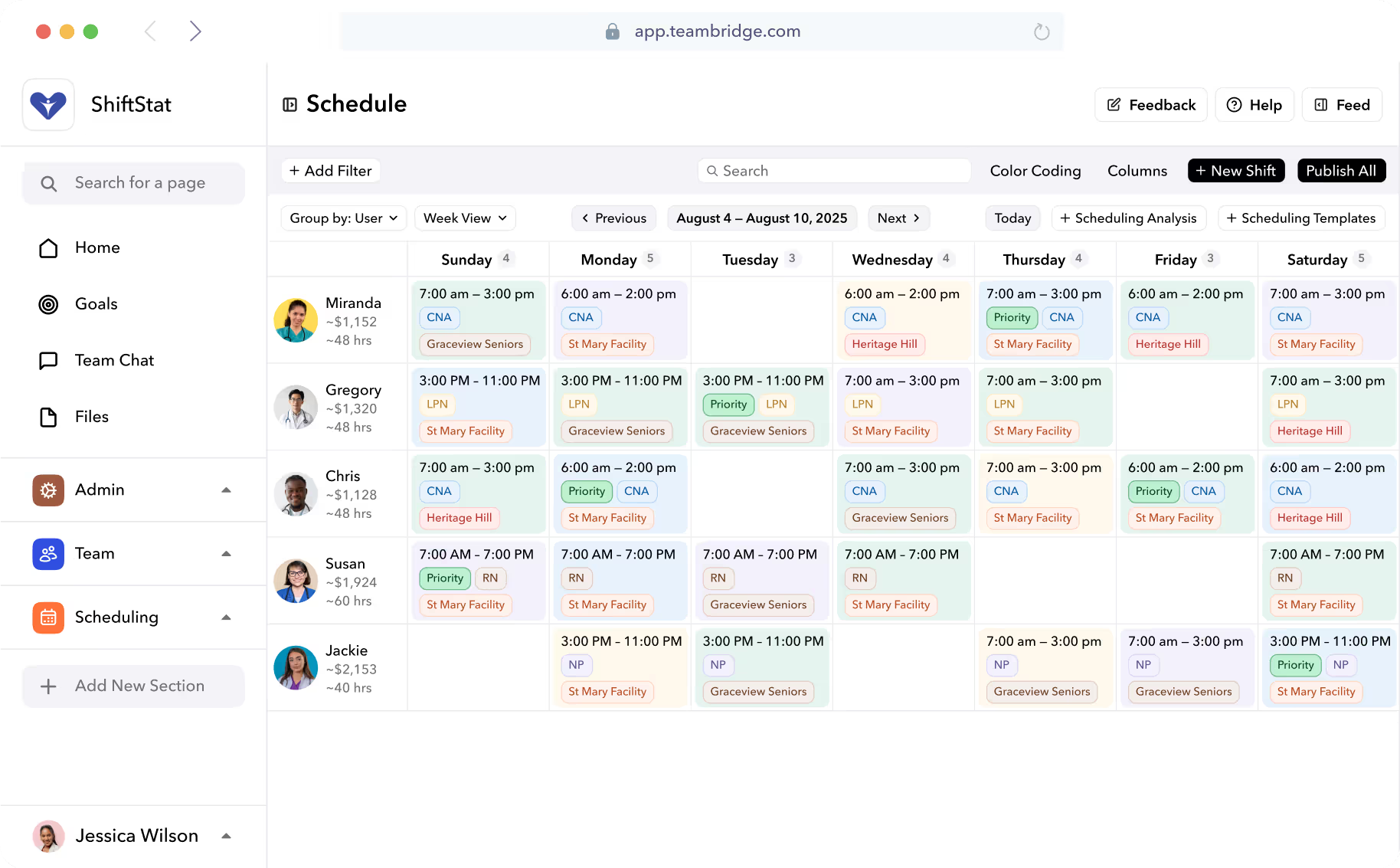
Illustrative product concept using example data. This shows availability as one assignment input, not an implementation of the form above.
A completed example with a Friday overnight window
This is a hypothetical completed form, not a customer record. All times are local to America/Chicago, the record is ongoing, and only the listed windows are available. Submission and review timestamps illustrate the fields, not a recommended turnaround benchmark.
HYPOTHETICAL COMPLETED FORM
| Field | Entry |
|---|---|
| Employee identifier | Example hourly worker |
| Team or location | Example site |
| Timezone | America/Chicago |
| Effective date | October 5, 2026 |
| End date | Ongoing |
| Submitted at | October 2, 2026, 10:00 America/Chicago |
RECURRING WEEKLY AVAILABILITY
| Day | Completed availability |
|---|---|
| Monday | Available Monday 09:00 until Monday 17:00 |
| Tuesday | Unavailable |
| Wednesday | Unavailable |
| Thursday | Unavailable |
| Friday | Available Friday 22:00 until Saturday 06:00 |
| Saturday | Available Saturday 00:00 until Saturday 06:00 as the continuation of Friday's window; unavailable afterward |
| Sunday | Unavailable |
| All other times | Unavailable |
DATED EXCEPTION
| Field | Entry |
|---|---|
| Exception scope | Whole calendar day |
| Start | October 12, 2026, 00:00 America/Chicago |
| End | October 13, 2026, 00:00 America/Chicago |
| Replacement availability | Unavailable |
EMPLOYEE CONFIRMATION
I confirm these availability details are accurate as of the date shown. I understand that availability does not guarantee an assignment.
| Field | Entry |
|---|---|
| Employee confirmation | Acknowledged by example hourly worker |
| Confirmed at | October 2, 2026, 10:00 America/Chicago |
SCHEDULER REVIEW
| Field | Entry |
|---|---|
| Reviewer | Scheduling lead |
| Review status | Reviewed |
| Reviewed at | October 2, 2026, 11:00 America/Chicago |
| Entered in scheduling system at | October 2, 2026, 11:15 America/Chicago |
| Next confirmation due | November 2, 2026 |
The recurring pattern begins on October 5, not when the form is submitted or reviewed. The October 12 exception removes that Monday's availability without changing later Mondays. The scheduling lead should not read either date as permission to change an already assigned shift without the separate process used for schedule changes.
Put the workflow into practice
See how your team could use this workflow

Record overnight hours and exceptions without ambiguity
“Friday, 22:00 to 06:00” leaves the end day unstated. Write Friday 22:00 until Saturday 06:00 instead. That is one continuous window crossing midnight, not an end time earlier on Friday.
The Saturday entry in the completed example references the same window. It does not add another period of availability or allow the scheduler to count the hours twice. If your scheduling system requires separate calendar day entries, check that the resulting record preserves the continuous window without duplication.
Use one timezone and explicit end boundaries
Use a named timezone such as America/Chicago throughout the record. If a worker covers locations in different timezones, confirm which timezone governs the form before entering any hours. Do not silently interpret the entries using the reviewer's computer settings.
For this template, the start boundary is included and the end boundary is excluded. A window ending Saturday at 06:00 permits work up to that boundary; it does not establish availability for work beginning at 06:00. A whole calendar day runs from 00:00 on that date until 00:00 on the following date.
On nights when clocks change, clarify any ambiguous local times before assigning work. A named timezone identifies the relevant clock rules, but the scheduler still needs an unambiguous intended interval when a local time repeats or is skipped.
Replace only the exception's stated scope
A dated exception is a temporary replacement, not an extra note for the scheduler to interpret. Use either of these scopes:
- Whole calendar day: Replace all recurring availability inside that local calendar day.
- Specified interval: Replace recurring availability only between the stated start and end boundaries.
A whole Saturday exception marked unavailable therefore removes the Saturday portion of a Friday overnight window. Friday 22:00 until Saturday 00:00 remains available, but Saturday 00:00 until 06:00 does not. Do not assign the complete overnight shift based only on its Friday start date.
When an exception allows some work, record every available window within its scope. For example, a whole Monday exception listing 13:00 until 17:00 replaces the usual Monday pattern with that window only. Writing “afternoon preferred” does not provide a usable replacement.
Warning
Resolve overlapping exceptions before using the record. This template does not apply a “latest submission wins” rule, and it does not establish how any scheduling product handles conflicting entries.
The effective date starts the recurring pattern. A dated exception changes a bounded period within that pattern. If the worker's regular Monday hours change going forward, revise the recurring record and its effective date rather than stacking temporary exceptions indefinitely.
Confirm the record before using it to assign shifts
Employee confirmation and scheduler review answer different questions. The employee confirms that the hours reflect their availability. The reviewer checks whether those details are complete enough to enter and use without guessing.
Use this sequence for the form:
- Check completeness. Require a status for every weekday, a timezone, an effective date and employee acknowledgment. Return missing or contradictory entries with the status “clarification needed.”
- Resolve conflicts. Check overnight continuations, exception scopes and overlapping intervals. Ask the employee to clarify the intended availability rather than choosing the interpretation that fills a gap.
- Confirm revisions. If any availability details change during review, obtain renewed employee confirmation. Record the reviewer and review timestamp only after the revised record is clear.
- Record the system update. Have an authorized scheduler enter the reviewed windows using the system's documented workflow. Check the saved record against the form before completing the system entry timestamp.
If access is missing or the system cannot represent an interval clearly, leave the entry timestamp blank and route the issue to the scheduling owner. A reviewed document is not evidence that the scheduling system has been updated. Retain the confirmed version so the next scheduler can see what was actually approved for entry.
The confirmation, reviewer, effective date and review status fields are original editorial controls for this template. They are not features established by the Microsoft documentation below. The overnight and exception interpretation rules are also proposed operating rules, not claims about software behavior.
Operator view
Supporting evidence
A reviewed availability record is not a promise of work or proof that a particular shift is suitable.
Keep medical details and private explanations out of this form. If a worker needs to raise a sensitive request, direct them to the appropriate separate process. The scheduler needs the usable time boundary here, not the personal story behind it.
Track confirmation age and records awaiting review
Assign a reviewer and choose a local confirmation period before collecting forms. “Ongoing” describes the pattern's end date; it does not mean the worker will never need to confirm it again. Request fresh confirmation when recurring hours change or the next confirmation date arrives.
These three measures keep attention on whether the records are current and usable. They are proposed operating measures, not industry benchmarks.
| Measure | Definition | What the reviewer should inspect |
|---|---|---|
| Current confirmation share | Active records confirmed within the locally chosen review period divided by all active records, multiplied by 100 | Records outside the review period and records with no confirmation |
| Records awaiting resolution | Count of submitted records still pending review or needing clarification | Assigned reviewer, unresolved question and submission age |
| Submission to system entry time | Elapsed time from submission until entry in the scheduling system | Delays between collection, clarification, review and actual entry |
Define active records consistently, such as the current availability records for workers included in the upcoming scheduling cycle. Count an unconfirmed active record in the denominator, not as a current confirmation. If there are no active records, report the share as not applicable rather than implying complete coverage.
For records not yet entered, track their age from submission separately from completed entry times. Otherwise, the oldest unresolved forms disappear from the turnaround measure. Set review targets locally based on when schedulers need reliable inputs, without treating the example's timestamps as a service standard.
For the broader maintenance process, see Stale Availability Data Is Breaking Your Staffing Schedule. This form addresses the collection and confirmation step; that guide covers the surrounding availability maintenance problem.
Put reviewed availability into the scheduling record
The collection document is useful only if the scheduler can rely on the resulting record. Before assignment, compare the saved weekly windows, effective date and exceptions with the confirmed form. If they differ, resolve the mismatch rather than treating the form as an informal override.
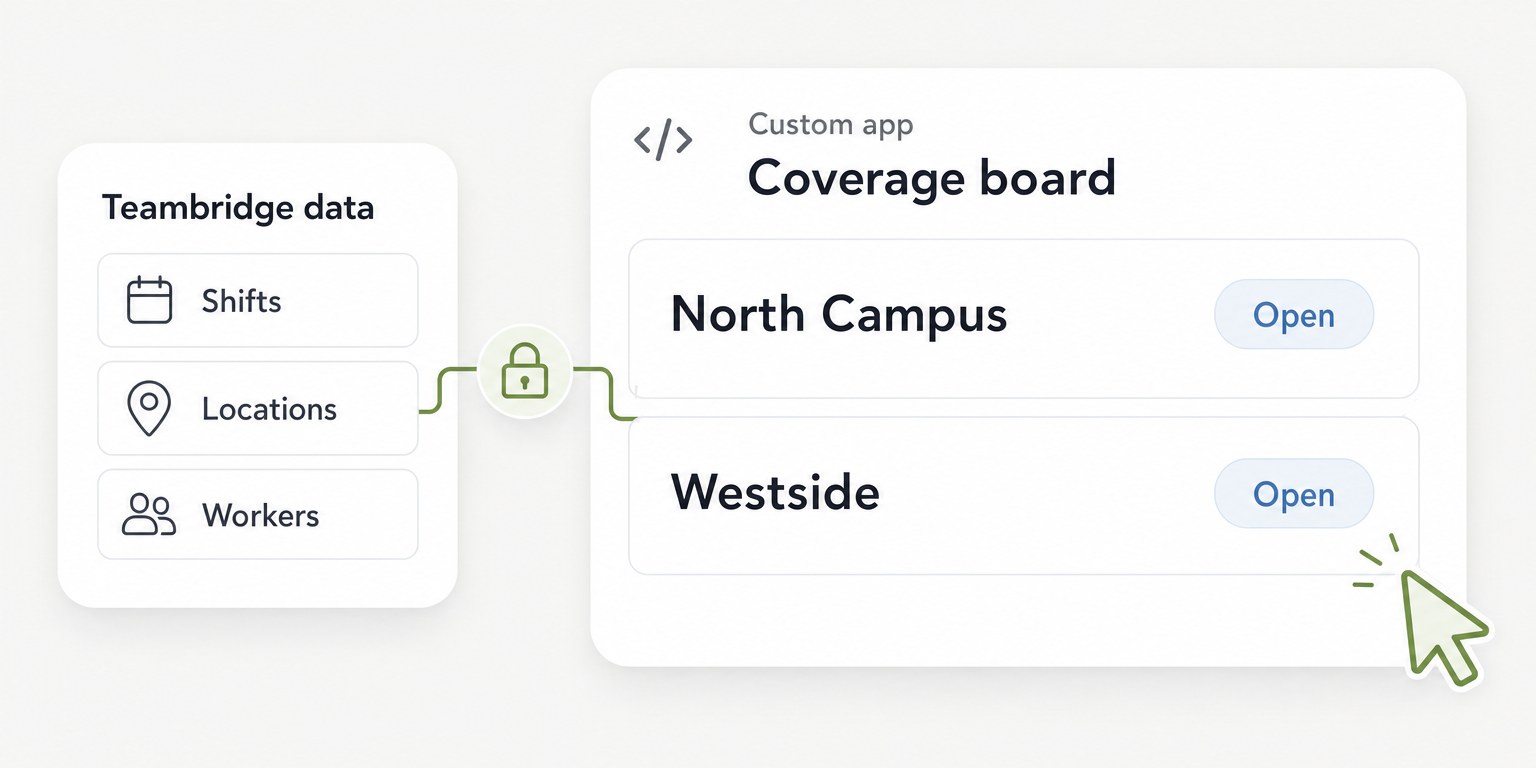
Teambridge scheduling describes availability as one input alongside role, credentials, location, preferences and hours. Its exact setup is defined during implementation. That makes it an operational option for using reviewed availability in scheduling, not evidence that this particular form can be imported automatically.
The product page does not establish automatic import of this template, its exception precedence, enforced employee confirmation, or the permissions and saved states for entering these fields. Confirm those details in product documentation and with the implementation owner before relying on them.
Copy the form, collect employee confirmation and assign a reviewer. Enter the reviewed windows through the documented scheduling workflow, verify what was saved and record the entry timestamp. If any part remains unresolved, keep it visible as an open item rather than converting uncertainty into an assignment.

About the author

Content Writer at Teambridge
Anis Nanai is a content writer at Teambridge, with a focus on workforce management and the realities of running hourly teams. He prioritizes conversations with customers, staying close to the market, and understanding how workforce needs are changing. His writing connects those concerns to practical decisions about scheduling, time tracking, staffing, and automation. He examines product developments through the questions that matter to operators: what does this solve, how would it work for my team, and what evidence supports it?
Company perspective: this author works at Teambridge. Customer outcomes are attributed to their published sources.
View LinkedIn profile