

Most workforce planning advice was written for a finance team building a 5-year headcount model in a stable, salaried org. None of that helps when your largest healthcare client doubles its census on Thursday, two CNAs let their BLS lapse, and your overnight forklift coverage just no-showed at a distribution center 90 miles away.
Shift-based operators need a different toolkit. Demand isn't "how many engineers do we hire next year" — it's "can we fill 1,400 shifts this week across 22 sites with credentialed people who will actually show up." Below are six workforce planning techniques rebuilt for that reality.
Why Reactive Staffing Keeps Costing You More Every Quarter
Reactive staffing has a price tag, and it's climbing. The Society for Human Resource Management (SHRM) reports that average cost per hire has jumped from $4,129 in 2019 to $4,700 in 2023 — a 14% increase. For shift-based ops, the real cost isn't in the SHRM benchmark. It's the agency premium, the overtime, the missed-shift penalty in your client SLA, and the credentialed worker you should have already onboarded but didn't.
Urgency makes everything more expensive. As one cost-per-hire breakdown puts it, urgent roles push teams toward agencies or premium channels, which increases cost — rushed timelines force teams to lean on more expensive channels and increase stakeholder time. A nurse you scramble to source on Friday at 4 p.m. costs you margin. A nurse you planned for in your 90-day bench costs you a normal bill rate.
The inverse is also documented. McKinsey's 2023 research on organizational health found companies with strong talent planning were 2.2 times more likely to outperform peers on total shareholder returns. The operators making margin in 2026 aren't lucky — they planned.
Note
Reactive hiring is a tax. Every shift you fill on emergency premium pricing is margin you've already given back to the client.
Technique 1: Build a Demand Model at the Role-Family Level, Not Headcount
Total-headcount forecasts hide the problem. "We need 480 people next quarter" tells your scheduler nothing. What matters is: 120 RNs cleared for med-surg at three hospital systems, 60 CNAs with current TB clearance, 80 forklift-certified warehouse staff, 40 unarmed guards with state licenses, and 180 general-labor flex pool.
The shift away from job titles is already happening at the strategy layer. One of the most impactful evolutions in workforce planning strategies is the shift from rigid, role-based models to agile, skills-focused planning — success increasingly depends on the ability to identify, deploy, and develop specific capabilities, regardless of formal job titles. For operators, that means modeling demand by role family, skill, credential, location, and shift type.
A simple demand template
Work on an 18–36 month horizon, refreshed quarterly, broken out by client contract and site. For each role family, capture:
- Forecasted weekly shift volume by site
- Credential requirements (and which ones expire inside the planning window)
- Shift type mix: day, evening, overnight, weekend, holiday
- Client SLA fill-rate targets and penalty thresholds
- Seasonal modifiers (flu season, peak retail, summer construction)
The payoff: when a client asks if you can take on a new 50-bed unit, you don't guess. You pull the role-family forecast and tell them which skills you can cover from current bench, which you'll need to recruit, and how long the credential pipeline will take.
Technique 2: Map Internal Supply Honestly — Attrition, Mobility, and Credential Decay
Demand is half the equation. Supply is where most operator plans fall apart, because the inputs are messier than corporate HR will ever deal with.
Three numbers belong in every supply model:
- Rolling 12-month attrition by role family. Aggregate company-wide attrition is useless. CNAs churn differently than RNs. Per-diem security guards churn differently than full-time. Roll it by role family or you're modeling fiction.
- Internal mobility and cross-credentialing rate. How many of your CNAs are working on RN credentials? How many warehouse generalists are pipelined for forklift certification? Internal pipeline is supply you don't have to recruit.
- Credential decay. This is the one corporate planners miss entirely. A nurse with an expired BLS is functionally unavailable. A guard with a lapsed state license cannot legally take a post. A driver with a CDL medical card that expires Tuesday is a no-show on Wednesday.
Credential decay needs to be modeled as attrition. If 40 of your 200 active medics have credentials expiring in the next 90 days and you don't have a renewal workflow, you don't have 200 medics — you have 160, eventually.
This is where the system layer matters. Teambridge's Document Studio generates, signs, and tracks credentials across the workforce, and Automations trigger renewal outreach before expiry — turning a quiet supply problem into a worked queue.

Technique 3: Run Three Scenarios — Base, Surge, and Contract Loss
Scenario planning is standard at the corporate level and almost nonexistent at the operator level. In 2026, resilience will be defined by an organization's capacity to absorb change and adapt — a robust workforce plan enables businesses to model scenarios, such as rapid growth, contraction, or digital disruption, and prepare talent solutions that sustain performance through uncertainty.
For shift operators, three scenarios are non-negotiable:
| Scenario | Trigger | What to Model |
|---|---|---|
| Base | Current client mix, normal seasonality | Bench depth by role family, credential pipeline, expected attrition |
| Surge | Major client doubles orders, flu season, peak retail | Overflow pool, OT capacity ceiling, rapid-credential workflow, agency partners |
| Contract Loss | Your largest client walks or cuts hours | Redeployment plan by site, retention of cleared workers, severance exposure |
For each scenario, you need three answers ready: what's the bench look like, what's the credential pipeline producing, and where does the redeployment go.
Signals to watch between refreshes
A quarterly plan refresh isn't enough if reality is moving. Watch these weekly:
- Fill rate trending down by site — early signal of supply weakening
- Overtime as a percentage of total hours creeping up — you're running on fumes, not bench
- No-show rate by site and shift type — reliability decay before churn shows up
- Credential pipeline throughput — how many cleared workers you produced this week vs. expired
If two of those four turn red, refresh the plan early. Don't wait for the calendar.
Ready to move?
Ready to see Teambridge in action?
Technique 4: Embed Planning Where Decisions Get Made, Not in a Quarterly Deck
The biggest planning failure in 2026 isn't bad forecasting — it's good forecasting that lives in a slide deck nobody opens. Schedulers schedule from the queue. Recruiters work from the ATS. Operations leans on the dashboard they already trust. If your workforce plan isn't feeding those tools, it isn't a plan.
The corporate version of this gap is documented. McKinsey's 2025 HR Monitor found seventy-seven percent of organizations have skills taxonomies and ninety-three percent document employee skills in their HR systems. But only 3 in 10 connect that skills data to workforce planning. Operators don't have a data problem. They have an embedding problem.
What embedded planning looks like for shift operators:
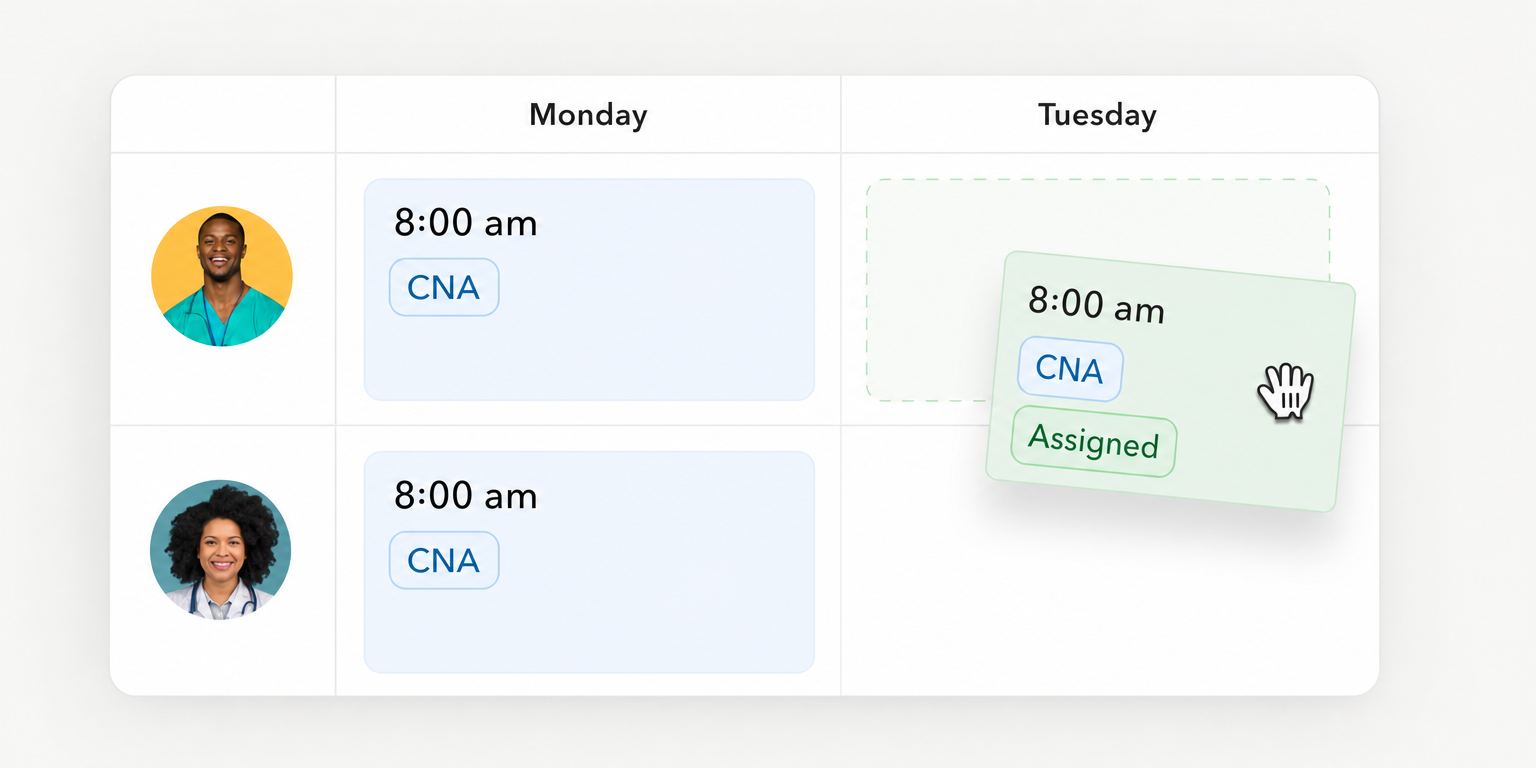
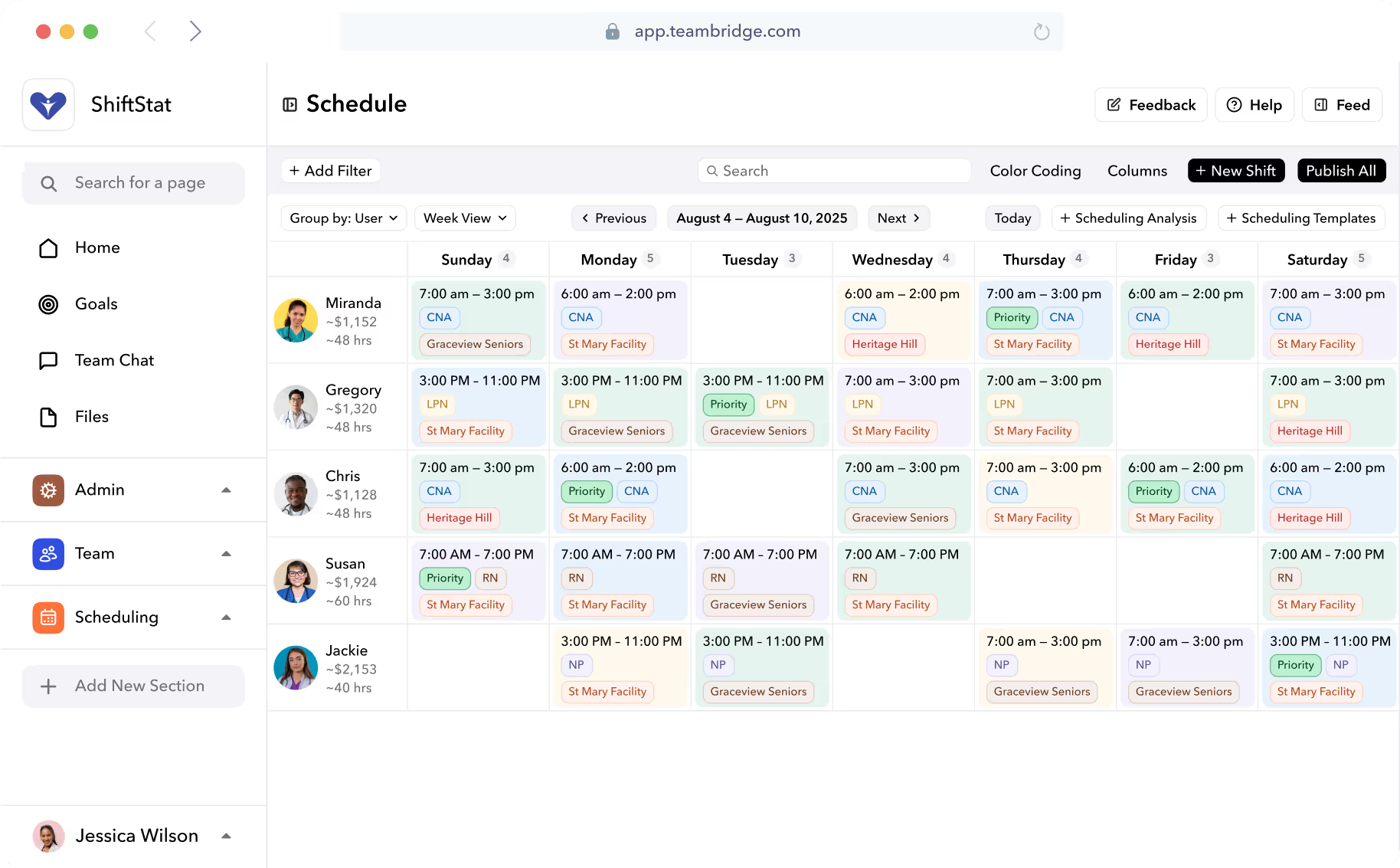
- Demand forecasts feed the scheduling engine directly. Next week's projected shift volume is already loaded when the scheduler logs in.
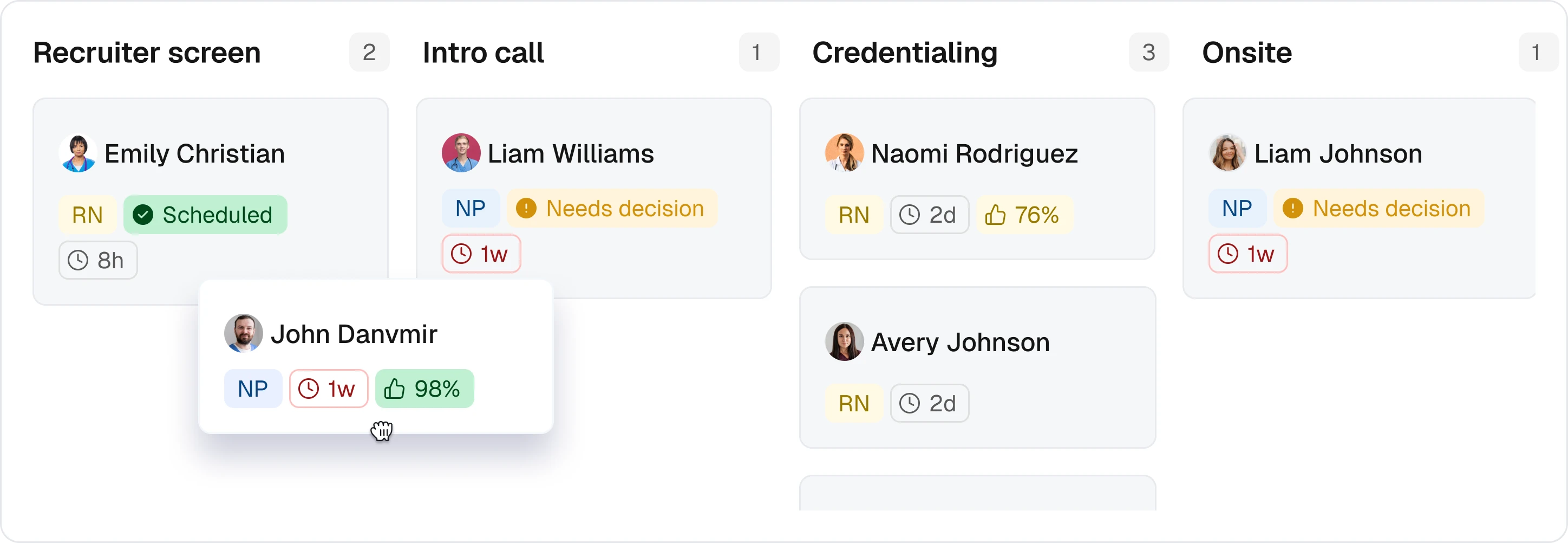
- Attrition risk is flagged inside the recruiter's queue. When a role family hits projected shortfall, requisitions auto-prioritize.
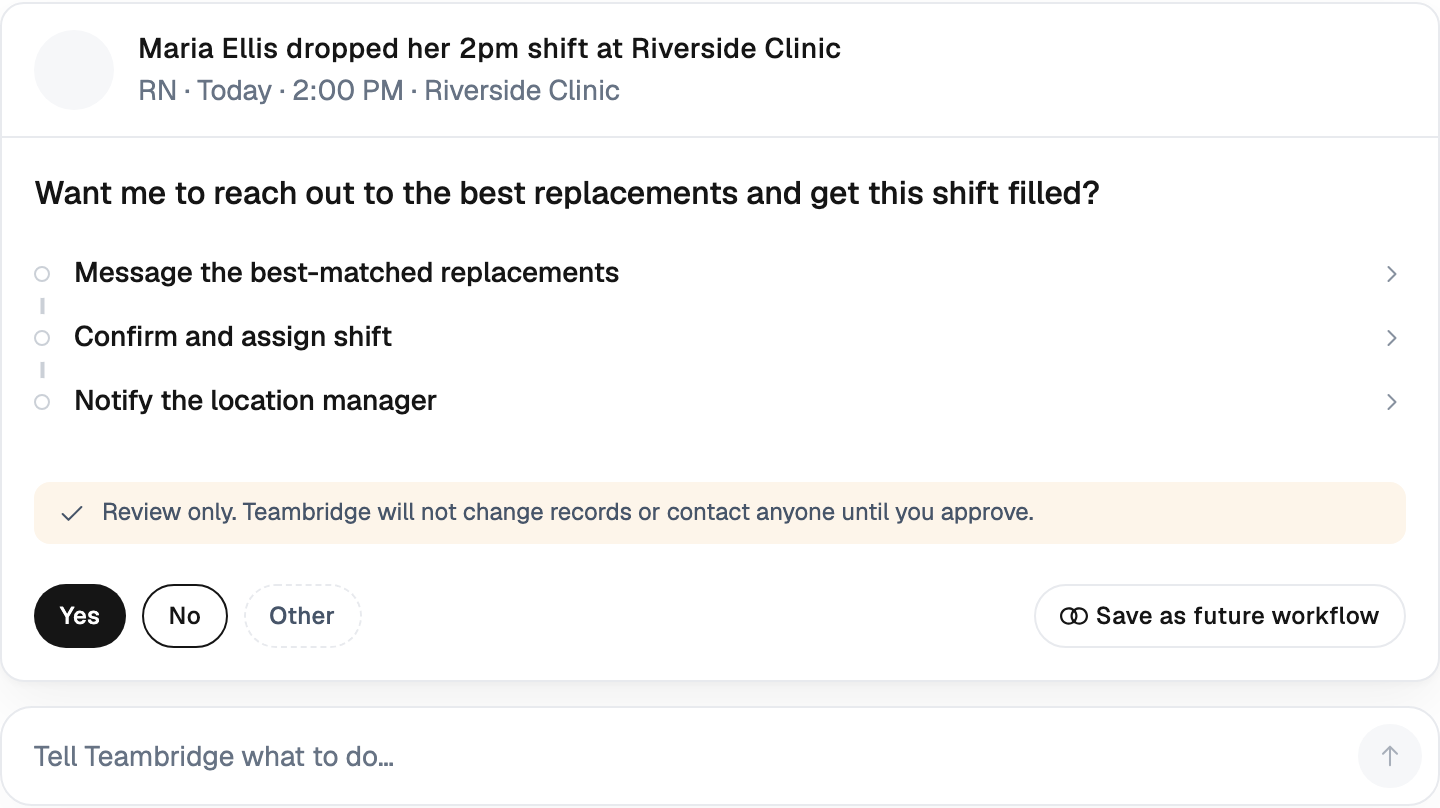
- Credential expiry triggers automated outreach. Workers get renewal reminders 60, 30, and 7 days out — without a coordinator doing it manually.
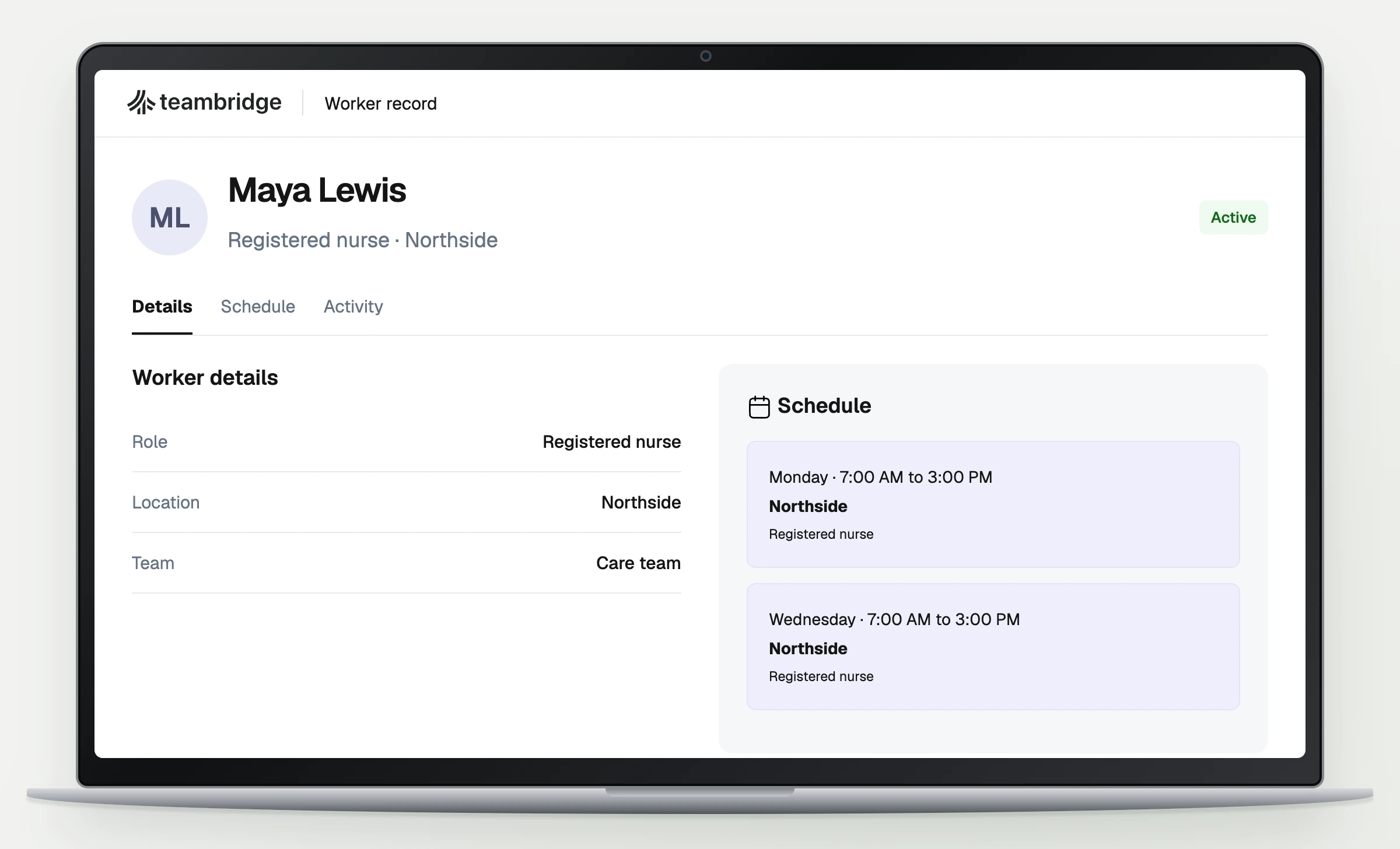
- Bench depth shows up in the daily op view. The COO sees yesterday's fill rate, today's open shifts, and the 30-day credential pipeline on one screen.
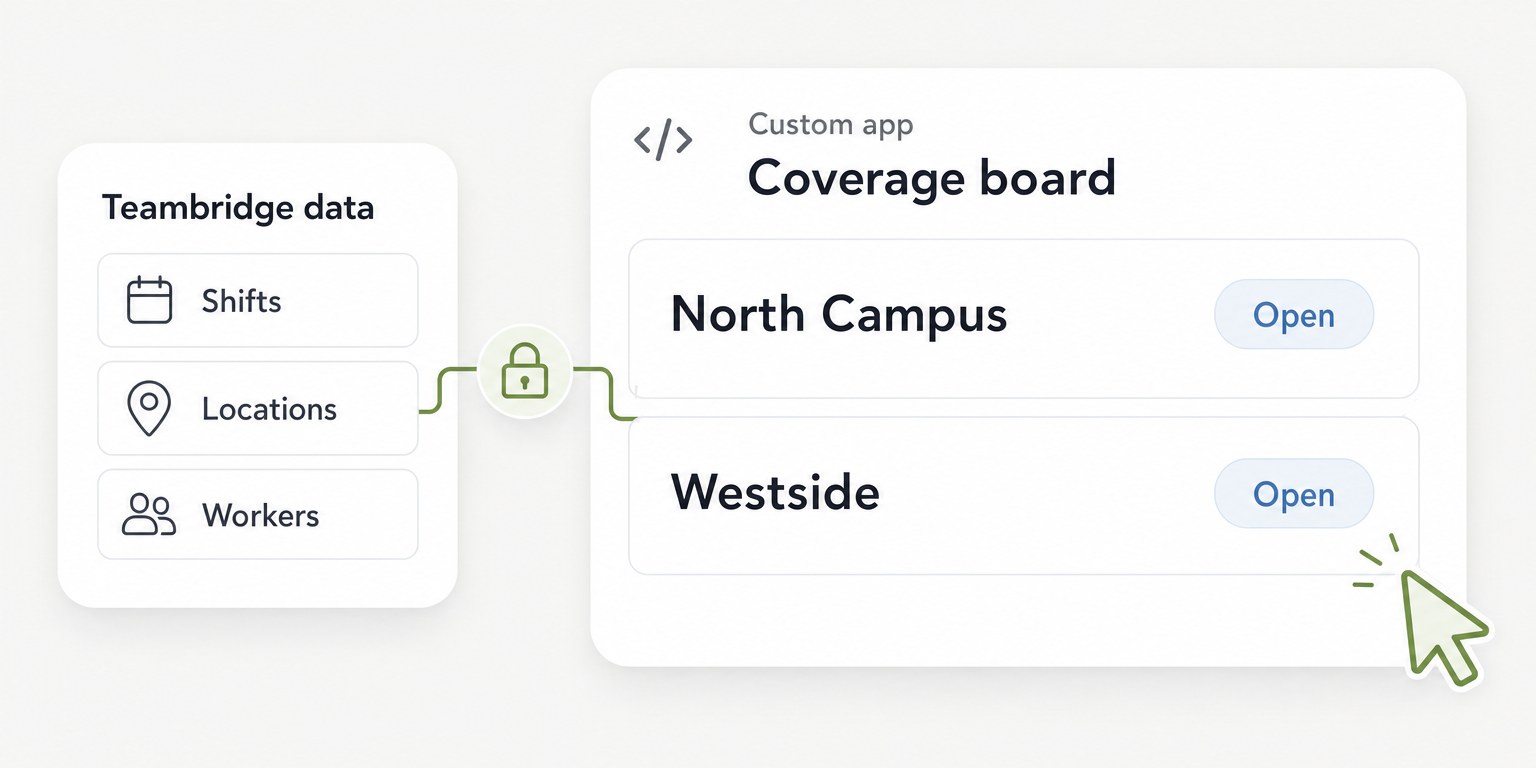
This is the operating model behind Teambridge's AI Platform and Scheduling — planning intelligence wired into the same surface where the work actually gets done.
Technique 5: Skills-Based and Blended Workforce Planning
Two trends are converging fast. The first is the move from job titles to skills as the unit of planning. The second is the blended workforce — W-2, 1099, per-diem, agency overflow, and now AI agents handling rote ops work.
Shift operators already run blended workforces. The technique is formalizing it. For each role family, document:
- Which talent pools can fill that shift (W-2 core, per-diem flex, 1099 contractor, agency partner)
- The cost differential between pools at base and surge
- The reliability differential — no-show rate, average tenure, credential maintenance
- The compliance constraints — classification, overtime, state-by-state rules
A bench isn't one pool. It's four pools, each with a cost, a reliability score, and a fill-time. Plan all four or you're flying half-blind.
The operator who knows that her per-diem RN pool fills overnight ICU shifts at a 92% rate within 4 hours but costs 18% more than the W-2 core can make a real margin decision. The one running a single "bench" spreadsheet cannot.
This is also where industry-specific planning matters. The dynamics of healthcare staffing are different from staffing agencies running light-industrial or security accounts — pool composition, credential rules, and surge patterns all change.
Technique 6: Measure What Actually Predicts Operational Health
Vanity metrics will let you feel good while margin bleeds. Headcount growth doesn't tell you whether you can fill shifts. Time-to-fill alone doesn't tell you whether the hires you made stay past 90 days.
The operator scorecard looks different:
| Metric | Why It Matters | Cadence |
|---|---|---|
| Fill rate by client and shift type | Direct revenue and SLA exposure | Weekly |
| Credential readiness % | Workers actually deployable today | Weekly |
| No-show rate by site | Reliability decay and client risk | Weekly |
| Overtime as % of total hours | Bench thinness and burnout risk | Weekly |
| First-year retention by role family | Hiring quality and onboarding ROI | Quarterly |
| Bench depth by role family | Forward fill capacity | Monthly |
| Cost per credentialed hire | True acquisition economics | Quarterly |
Tip
If your weekly scorecard has more than ten metrics, your COO is going to ignore it. Pick the seven above, color-code the trend, and review it every Monday. Save the deep cuts for the quarterly refresh.
The metrics that belong in the quarterly plan refresh are different from the weekly scorecard. Quarterly: refresh attrition by role family, refresh credential decay forecast, restate the three scenarios, re-baseline pool composition and cost. Weekly: just watch the gauges.
Turning Planning Techniques Into a Running System
Workforce planning techniques only pay off if the system underneath them is connected. A demand model in a Google Sheet, a credential tracker in Excel, a scheduling tool that doesn't know about either, and a recruiter ATS that lives in its own world — that's not a plan. That's four spreadsheets that disagree with each other by Wednesday.
The operators who hold up when demand swings have one thing in common: scheduling, credentialing, time tracking, and pay run off the same data. When a worker's BLS expires, the scheduling engine knows immediately and stops offering them shifts that require it. When a client doubles its order, the surge scenario is already modeled and the bench is already pipelined. When a recruiter opens her queue, the role families projected to fall short are already at the top.
That's the difference between planning as an HR exercise and planning as an operating discipline. It's also the design intent behind Teambridge's platform — demand forecasts, credential tracking, scheduling, and shift fulfillment running in one place, not stitched together after the fact.
A plan in a spreadsheet dies the first week reality moves. A plan wired into the system you already use to run shifts holds up — even when Friday night gets weird.

Put this research into operation
Move from planning techniques to a structured comparison of workforce planning tools and operating fit. workforce planning tools buyer guide.
Test a capacity assumption with visible productive hours, shrinkage, and reserve coverage inputs. free FTE calculator.
Connect planning assumptions to the worker data and daily workflows that reveal plan versus actual results. AI workforce management platform.
About the author

Content Writer at Teambridge
Anis Nanai is a content writer at Teambridge, with a focus on workforce management and the realities of running hourly teams. He prioritizes conversations with customers, staying close to the market, and understanding how workforce needs are changing. His writing connects those concerns to practical decisions about scheduling, time tracking, staffing, and automation. He examines product developments through the questions that matter to operators: what does this solve, how would it work for my team, and what evidence supports it?
Company perspective: this author works at Teambridge. Customer outcomes are attributed to their published sources.
View LinkedIn profile