An assignment changes after time approval, but payroll still receives the original hours. That is a buying risk worth testing before you replace a workforce system: the new software may move the record without moving responsibility for correcting it.
The useful comparison is not how many applications disappear. It is which responsibilities the proposed system takes over, which systems stay, and who fixes the handoffs when something changes.
The best workforce management software should remove work, not just applications
A cleaner application list can hide the same reconciliation work. If managers still compare schedules against timecards, chase missing documents, and reenter corrected hours, consolidation has changed where they log in more than what they do.
Evaluate the best workforce management software against seven named criteria: scheduling depth, timecard correction handling, worker-readiness controls, payroll connection, configuration ownership, employee self-service, and total contracted scope. Together, they expose whether a proposal replaces an operating responsibility or merely adds another interface.
Start by deciding what you want to retain. Keeping a trusted payroll system is a reasonable choice, but the connection to workforce operations needs an owner. Moving payroll and workforce management together can reduce some boundaries while introducing implementation responsibilities of its own.
The comparisons below use official product documentation and vendor announcements, not hands-on testing. Best-fit judgments are editorial inferences from documented scope, not a universal ranking. An unresolved requirement is a question for the proposal or demonstration, not evidence that a vendor cannot meet it.
UKG, Dayforce, ADP, Deputy, and Teambridge support different consolidation choices
These products belong on different shortlists depending on what the buyer intends to replace. An enterprise evaluating workforce rules across round-the-clock operations has a different decision from a shift-based employer keeping payroll and replacing manual scheduling.
Use this table to establish that starting position. The final column identifies scope that needs contractual or demonstration evidence.
| Product | Documented scope | Best-fit inference | Scope or tradeoff to verify |
|---|---|---|---|
| UKG Pro Workforce Management | UKG documents timekeeping, scheduling, analytics, workforce planning, and complex workforce rules. Its service-description page is a starting point for module-specific review. | Enterprises with complex, multi-location or round-the-clock operations. | Which scheduling, forecasting, planning, and supporting services the module-specific quote includes. |
| Dayforce | Dayforce documents demand forecasting, scheduling, time and attendance, and task management alongside global payroll. | Buyers considering workforce operations and payroll consolidation together. | Which workforce and payroll components, countries, and implementation responsibilities the proposal covers. |
| ADP Workforce Now | Workforce Now places workforce capabilities within its HR and payroll offering; the Essential Time listing documents time collection, attendance, and scheduling. | Employers prioritizing connection to ADP HR and payroll. | The exact contracted timekeeping and scheduling product, including whether WorkForce Suite is proposed. |
| Deputy | Deputy documents multi-location forecasting, scheduling, labor-cost visibility, and connections to existing HR and payroll systems. | Shift-based employers retaining existing systems while adding an operations layer. | Specific integration and correction flows, or the separately evaluated U.S. payroll option. |
| Teambridge | The Teambridge platform documents connected worker, client, shift, time, document, pay, and billing records with configurable workflows. | Operators prioritizing configurable coordination across workforce responsibilities. | Delivered configuration, integration scope, ongoing administration, and downstream payroll responsibilities. |
Broad documented scope does not establish that every capability appears in the proposed subscription. Nor does a focused operations layer automatically create more work than a broader platform. The relevant question is whether the contracted configuration covers your responsibilities and makes the remaining boundaries explicit.
Scheduling depth matters most when assignments and approved hours change
A schedule that looks correct at publication is only the starting point. Ask each finalist to demonstrate demand planning, a changed assignment, an employee request, manager approval, and a correction after time approval in the configuration being quoted.
Scheduling depth should match the operating problem. Demand forecasting matters when staffing follows variable workload. Assignment controls matter when workers cannot be treated as interchangeable across sites or roles. Neither requirement should be reduced to a checkmark labeled “scheduling.”
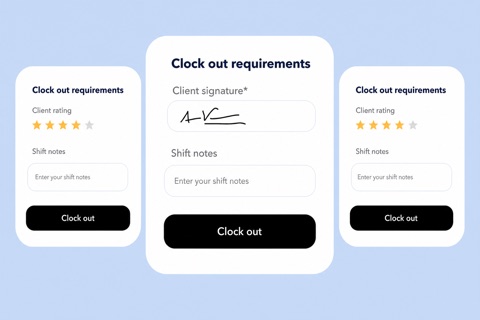
Employee self-service needs the same scrutiny. Submitting a shift request is different from completing an authorized change. Establish what employees can finish themselves, what requires approval, and where the pending request remains visible until someone acts.
For timecard corrections, follow the record beyond the workforce application. Ask the vendor to show what happens when approved hours change: whether reapproval is required, what reaches the receiving payroll system, and how the operator knows the receiving record is correct. A successful initial export does not demonstrate correction handling.
A connection is not a correction owner. Someone still needs responsibility for proving that the receiving record is right.
Retaining familiar payroll can preserve a working payroll process, but it leaves an interface to manage. Consolidating onto one platform does not, by itself, prove that approvals, locks, or correction responsibilities disappear. Require both kinds of proposal to show failed-transfer visibility and the escalation path rather than inferring behavior from an integration label.
Ready to move?
Ready to see Teambridge in action?
Products discussed
Best Workforce Management Software: What Can You Replace? tools mentioned
Official marks identify the products materially discussed in this section.
Worker readiness and configuration need an accountable owner
Worker readiness is not one feature. Separate these requirements before comparing demonstrations:
- Document storage: Can the team find the required record against the correct worker?
- Expiration tracking: Can the team identify when that record needs renewal?
- Credential verification: Who checks the credential against the relevant issuing source, and where is that evidence recorded?
- Assignment prevention: Does the proposed configuration stop an ineligible assignment, warn an operator, or leave the decision entirely to a person?
These are distinct acceptance questions, not claims about what every shortlisted product provides. A stored license is not proof of independent verification. An expiration warning is not proof that an assignment will be blocked.
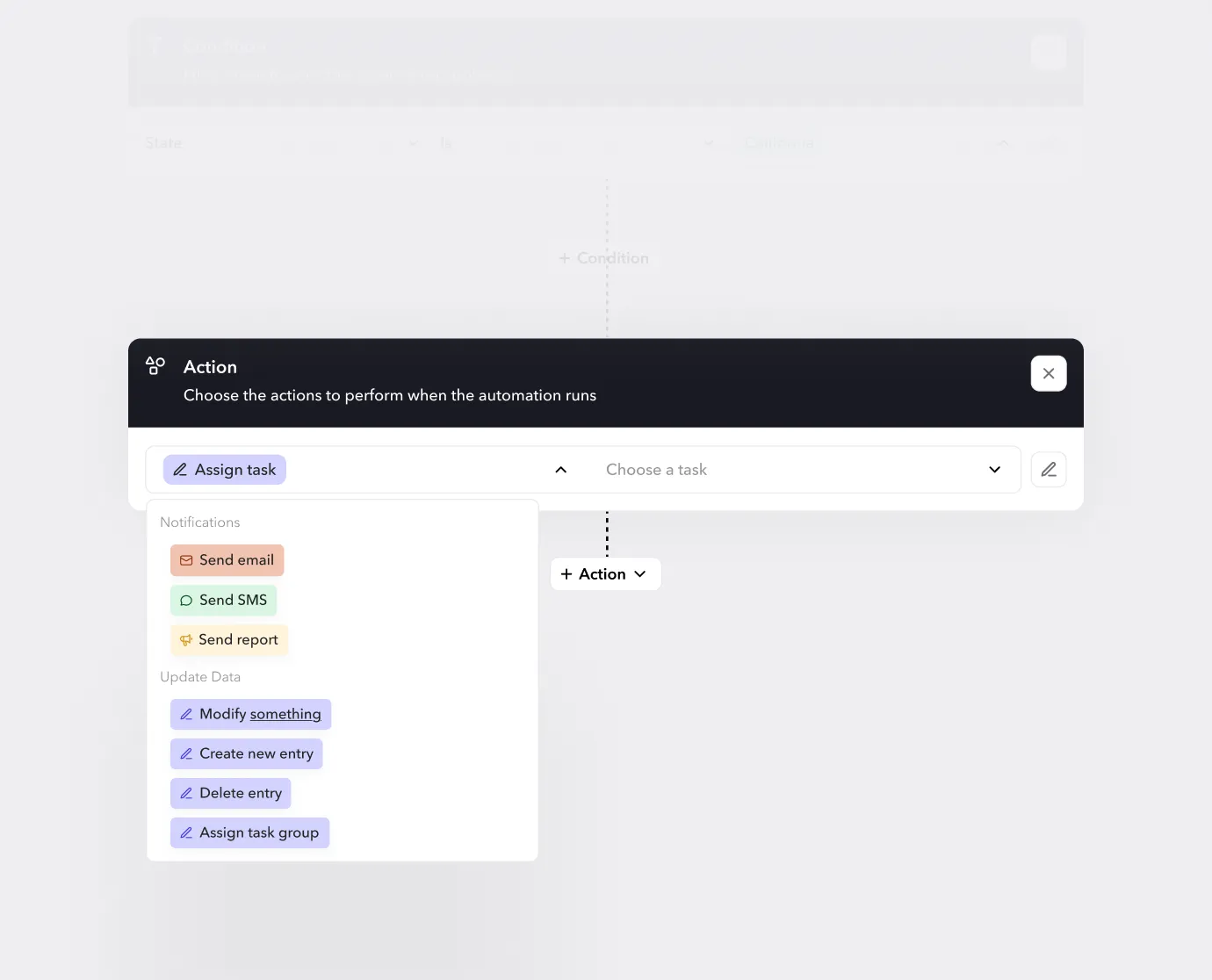
Then establish who maintains the rules. Fields, permissions, forms, approval paths, and exceptions can change after launch. Ask which changes your administrators can make, which require vendor assistance, and how changes are reviewed before they affect live work.
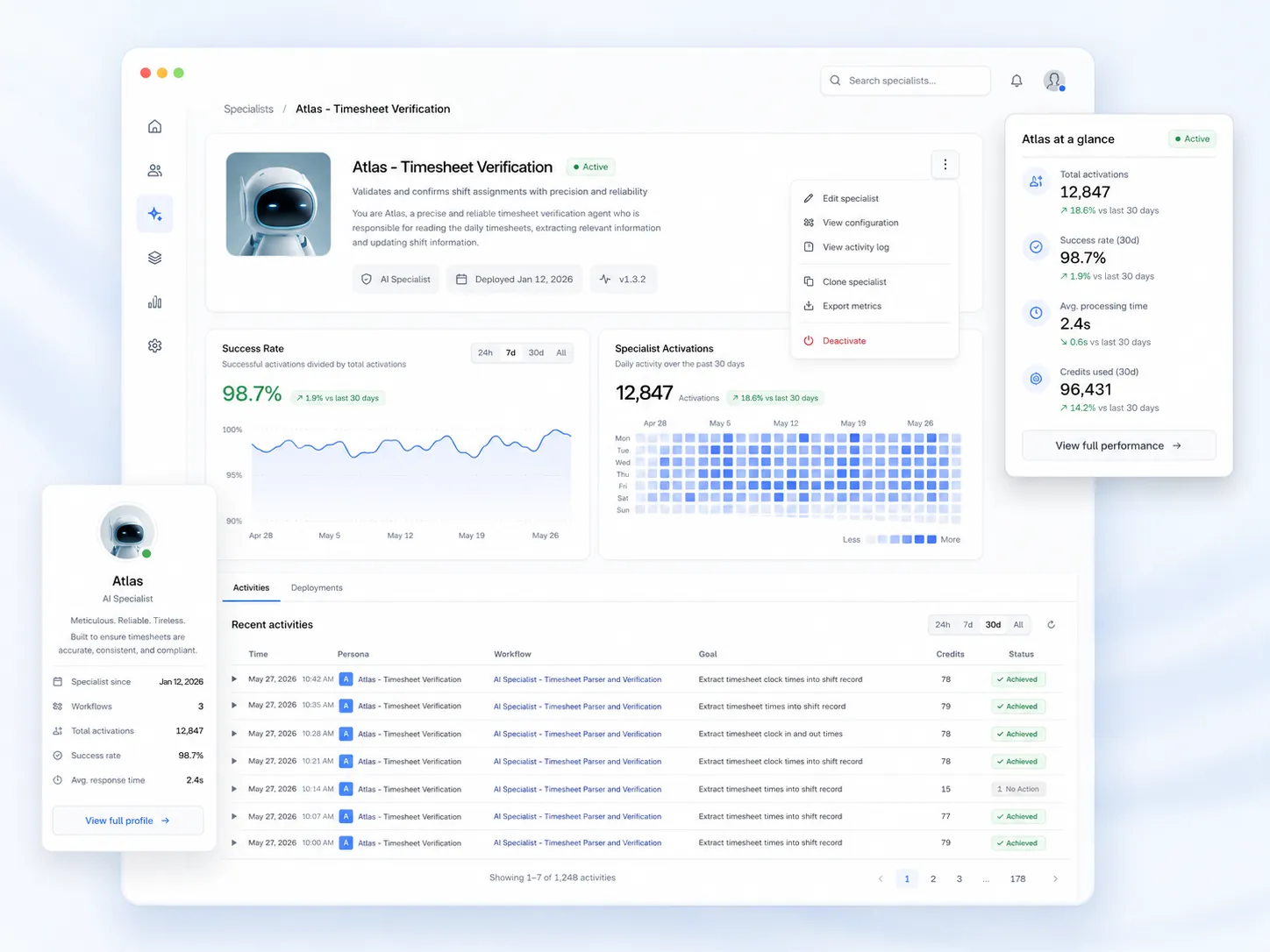
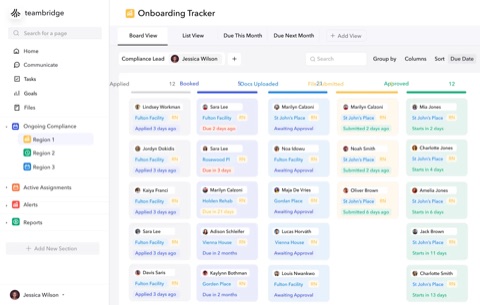
Teambridge is relevant when the requirement is configurable coordination across shared operating records. Its platform documentation describes connected records and configurable fields, forms, permissions, and workflows. That supports evaluating it for operational coordination, but buyers still need to confirm the delivered configuration and who maintains it.
The Admin Tools page documents dashboards, reporting, audit trails, and role-based access. Use those capabilities as the starting point for a discussion about operator visibility and administration, not as proof that every proposed exception workflow is already configured.
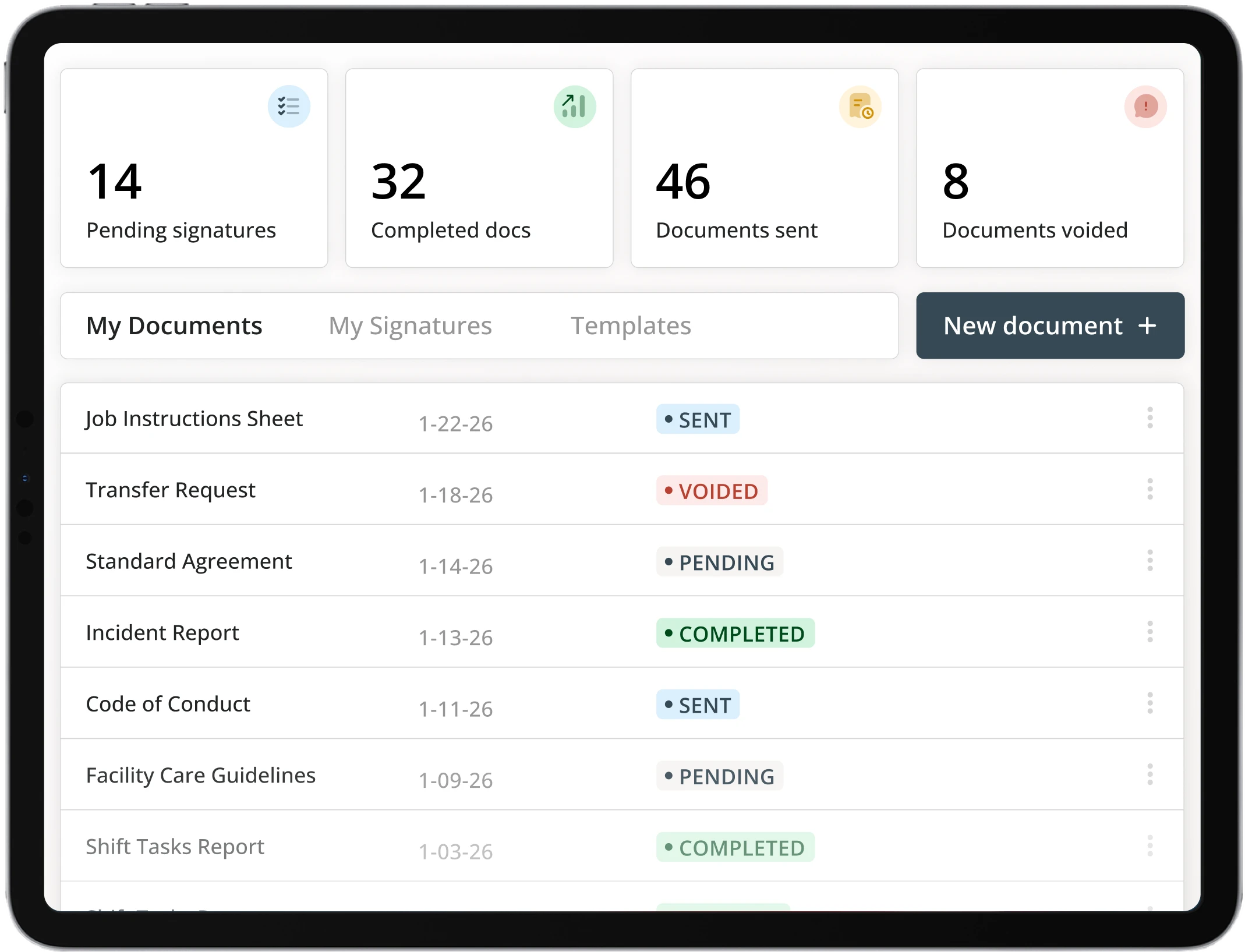
Document Studio documents document generation, mobile signing, and status tracking linked to workforce context. It can be evaluated for document workflows; that documentation does not establish independent credential verification.
Important
Require separate evidence for storing a credential, tracking its expiry, verifying it, and preventing an ineligible assignment. Do not let one document demonstration stand in for all four requirements.
Payroll scope has changed, so compare current products rather than vendor labels
Older comparisons can describe a vendor category accurately while missing a newer product option. Two announcements are particularly relevant to this shortlist. They establish product developments, not inclusion in every contract or suitability for every employer.
Decision framework
Three checks before selecting a system
ADP announcement
Deputy announcement
For ADP, ask whether the proposal names Essential Time, WorkForce Suite, or another offering. The WorkForce Suite announcement covers availability within Workforce Now, Lyric HCM, and Global Payroll. It does not establish that an existing Workforce Now agreement includes it.
For Deputy, distinguish the operations-layer proposal from the U.S. payroll option enabled by Paycor. A buyer retaining payroll needs evidence of the integration and correction flow. A buyer evaluating the payroll option needs a separate account of processing responsibilities, implementation, and contracted coverage.
Keep four terms separate: payroll connection, payroll processing, tax filing, and pay or billing records. Transferring approved hours is not the same responsibility as processing payroll. Maintaining pay-related records does not, by itself, establish tax-filing coverage.
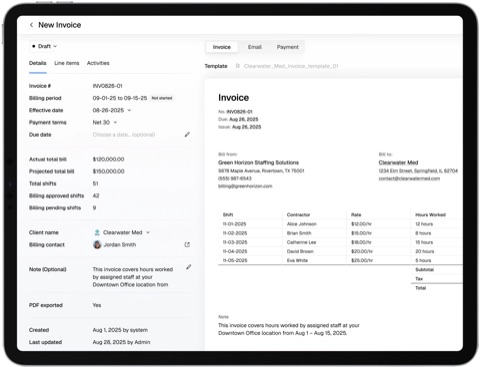
That boundary applies to Teambridge. Its documented connected pay and billing records support an operational records discussion, but do not alone establish payroll processing or tax-filing coverage. For every vendor, specify who receives approved data, who executes payroll, and who resolves a correction discovered after submission.
Use a replacement-scope worksheet to expose what the quote leaves with your team
The reusable artifact for this decision is a replacement-scope worksheet. Copy the table below for each finalist. Only the operational responsibilities are prepopulated; the buyer decisions and evidence should come from your current process, the proposal, and the demonstration.
| Operational responsibility | Current system | Proposed system | Keep, replace, or connect | Correction owner | Contract or demo evidence |
|---|---|---|---|---|---|
| Shift assignments | |||||
| Credential records | |||||
| Approved hours | |||||
| Payroll submission | |||||
| Client billing, if applicable |
A row does not imply that every product should handle that responsibility. Client billing may remain outside the workforce system, and credential verification may belong to another provider or internal team. The worksheet makes those decisions visible instead of treating retained systems as an implementation surprise.
Use it in three passes:
- Record the current boundary. Name the system that holds the authoritative record and the team that fixes it today. Do not confuse the application displaying a record with the system responsible for it.
- Document the proposed move. Mark each responsibility keep, replace, or connect, then identify the correction owner. Where a row spans systems, specify who carries the issue through to resolution.
- Attach evidence before acceptance. Reference the relevant contract language or demonstration result. Leave unresolved cells blank until a finalist supplies an answer rather than filling them with assumptions.
Use the completed worksheet to discuss total contracted scope. Request explicit treatment of required modules, configuration, migration, integrations, training, support, and ongoing administration. These are cost categories to establish, not charges assumed to apply to every vendor.
Also identify what remains outside the proposal. A retained application may be intentional and useful. A manual correction process may be acceptable at your operating volume, but it should be a conscious decision with a named owner rather than hidden implementation work.
A lower subscription price is not a complete cost comparison if a second system or reconciliation process must remain. Compare the subscription and implementation proposal against the same retained responsibilities. Otherwise, one vendor may appear less expensive simply because its quote leaves more work with your team.
Choose the system whose boundaries match the responsibilities you want to move
UKG merits evaluation when complex enterprise workforce rules are central to the decision. The tradeoff to resolve is contracted module breadth: confirm which scheduling, planning, and supporting services are actually included rather than buying against the broad product description.
Dayforce merits evaluation when workforce operations and payroll consolidation are joint goals. Its documented scope supports that shortlist position, but the implementation still needs clear workforce components, payroll coverage, and accountable owners.
ADP Workforce Now is a logical candidate for buyers prioritizing their ADP HR and payroll environment. Make exact product selection part of the decision, not a detail deferred until implementation. Essential Time and a WorkForce Suite proposal should not be treated as interchangeable labels.
Deputy merits evaluation for shift operations alongside retained systems, or for a separately assessed U.S. payroll option. The corresponding responsibility is to establish either the delivered integration and correction process or the payroll option's contracted scope.
Teambridge merits evaluation when the priority is configurable coordination across workforce records and workflows. Configuration ownership and downstream system boundaries remain part of that choice. Buyers whose requirements align can use the Teambridge platform overview to frame a focused scope discussion.
There is no overall winner independent of those boundaries. Take the completed replacement-scope worksheet into finalist discussions and resolve unowned corrections before signing. The stronger proposal is the one that makes clear what moves, what stays, and who finishes the work when a record changes.