

This isn't an HR problem. It's a revenue problem.
The Real Math: What Manual Onboarding Costs You Per Hire
Start with direct admin cost. Ernst & Young's research puts manual onboarding at $58.79 per new hire just for the basic forms — including I-9 processing, contact updates, and employee agreements. Layer in benefits enrollment and time management setup and the per-hire figure climbs fast. Benefits enrollment runs $89.00 per employee, and time management proves the most expensive category at $113.40 per employee.
That's the floor. Add manager time, IT provisioning, and the hours your coordinators spend chasing missing signatures, and per-hire admin cost lands in the $180–$250 range for any operator running paper-based intake. For a mid-sized organization of 500 employees, the combined cost of manual onboarding, time management, data updates, and compliance documentation commonly exceeds $100,000 annually in direct labor alone — before accounting for payroll error correction, I-9 compliance penalties, or strategic work HR teams never get to.
Now the part operators usually miss: turnover. Retail turnover is at 60 percent annually right now — you're basically replacing your entire workforce every 18 months. But here's the part that really stands out: 43 percent of workers are gone within 90 days. They leave before they've gotten good at the job, before they've really contributed anything meaningful. According to Fountain's frontline workforce research, each person who walks out costs about $7,000 to replace once you add up recruiting, training, and lost output.
Some of that 43% is bad fit. A larger chunk is bad onboarding — and that's the part you control.
Note
Onboarding isn't an HR ceremony. It's the difference between a hire who's billable in week one and a hire you're replacing in week ten.
Where the Days Disappear: Missing Signatures, Lost Docs, Credential Gaps
Ask any ops manager what kills onboarding speed and you'll get the same list:
- I-9s that come back unsigned or with the wrong section completed
- W-4s emailed to a personal account and never returned
- Background checks ordered late because someone forgot to submit the consent form
- Certifications that expired two weeks ago and nobody caught it until day one
- Policy acknowledgments collected on paper and filed in three different binders
- Direct deposit forms with a transposed routing number that doesn't surface until the first failed payroll run
Every one of these is a paper-based failure mode. Each new hire requires 3 to 4 hours of administrative work from your HR team — between preparing paperwork packets, chasing incomplete forms, manually entering data into multiple systems, and coordinating with IT for access provisioning. For organizations hiring 20 people monthly, that's 60 to 80 hours of manual onboarding work per month. Your team spends more time on paperwork than actually connecting with new employees during their most critical first weeks.
And then there's the error rate. Manual data entry compounds: HR teams dedicate nearly four full weeks per year to manual tasks, with each manual data entry costing businesses an average of $4.78. Across hundreds of hires, that's a serious tax — and that's before any error correction.
The Version-Control Nightmare
Compliance rules change. A state updates its background check requirements. A client adds a new safety acknowledgment. Your insurance carrier wants a fresh waiver. If your onboarding lives in a shared drive of PDFs and a Word doc checklist, three things happen:
- Half your coordinators are still using last quarter's version
- Workers sign the wrong form and you don't catch it until renewal
- Auditors find the gap before you do

Why Frontline Onboarding Breaks Where Office Onboarding Doesn't
Most onboarding software was built for a knowledge worker with a desk, a laptop, and a corporate email address. Frontline operations don't look like that.
Over 80% of the global workforce is considered "frontline," according to Broadleaf Results. These are warehouse pickers, security guards, home health aides, hospital techs, event staff, light industrial workers. They don't have a desktop. They're spread across job sites, client locations, and shifts that don't overlap with the back office. Their manager might oversee five locations.
A traditional HRIS asks them to log into a portal on a computer they don't have, during business hours they're not at a desk. So they don't. The forms sit half-finished. The manager chases. The start date slips.
Frontline onboarding has to be:
- Mobile-first — completable on the phone they already carry, in five-minute windows between tasks
- Async — no "come into the office Tuesday at 9" requirement
- Role and location specific — a security guard in California needs different documents than one in Texas; a home care aide needs EVV consent that a warehouse worker doesn't
- Visible to the manager — so they know who's actually ready to work before the schedule goes out
Miss any of those and you're back to chasing.
What Automated Onboarding Actually Does (Beyond e-Signing PDFs)
Let's be specific about the scope. Automated onboarding isn't "send the W-4 as a fillable PDF." That's 2015 thinking. Real automated onboarding covers:
| Capability | Manual reality | Automated reality |
|---|---|---|
| Document collection | Email, scan, refile | Worker completes on mobile, status visible to ops in real time |
| Credential verification | Coordinator calls the licensing board | Auto-checks against state/federal sources, flags expirations |
| Training assignment | Generic packet, same for everyone | Role and location specific, assigned on offer acceptance |
| Reminders | Manager chases on Slack | Automated nudges via text until task is complete |
| Manager visibility | "I'll check the binder" | Dashboard shows every hire's completion status |
| Day-one readiness | Half done on day one | 100% done before day one |
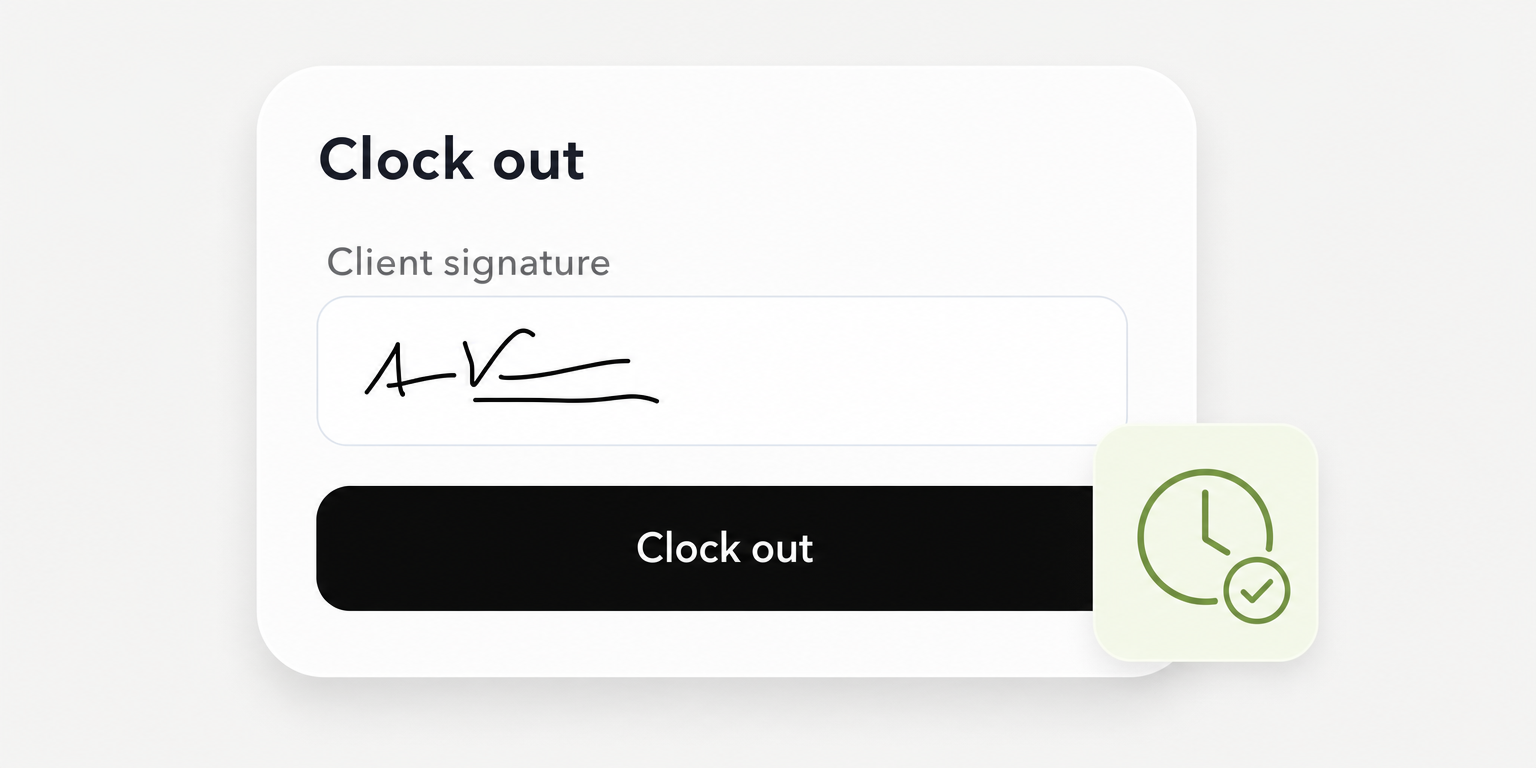
That last row is the one that matters. With Document Studio handling contracts, policies, and credential paperwork, and onboarding workflows running in parallel rather than sequentially, the worker walks in on day one already credentialed, signed, trained, and scheduled.
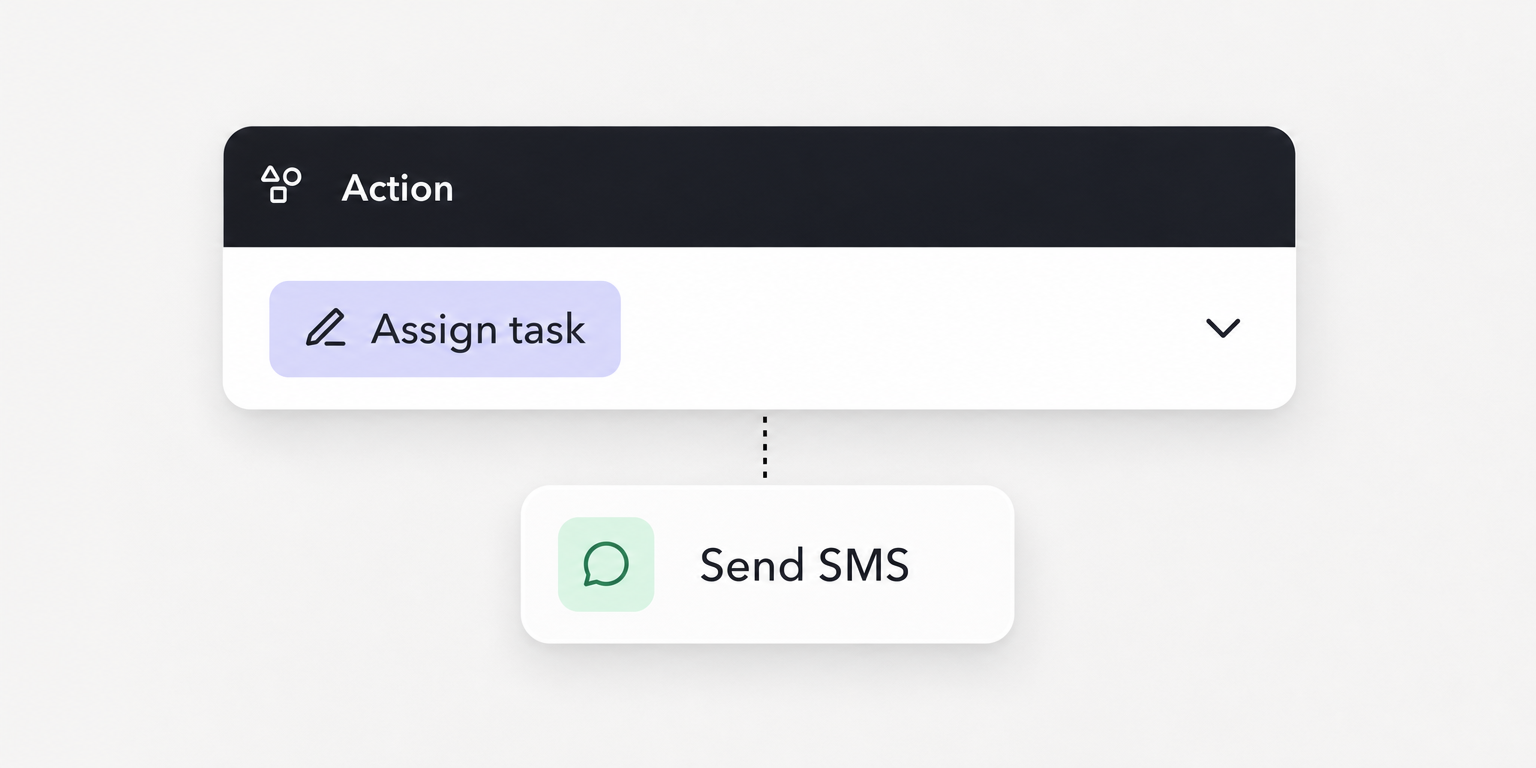
Simple automation like task reminders, email sequences, and digital document signing can eliminate most manual work while ensuring nothing falls through the cracks. The point isn't fancy AI — the point is that nothing waits on a human to remember.
Credential Verification: The Compliance Trap Manual Onboarding Always Springs
This is where manual onboarding stops being expensive and starts being dangerous.
In security staffing, an unlicensed guard working a shift isn't an HR problem — it's a contract violation, a liability claim, and potentially a license suspension for the agency. In home care, a caregiver without current TB clearance or a state-required background check working a visit means the Medicaid claim gets denied, the EVV record gets flagged, and your operator absorbs the loss.
The failure mode is always the same: somebody's certification expired, nobody caught it, the scheduler assigned them anyway because the schedule was the schedule.
Warning
If credential status lives in a spreadsheet, it's already out of date. The only system that works is one where the schedule itself refuses to assign a non-compliant worker.
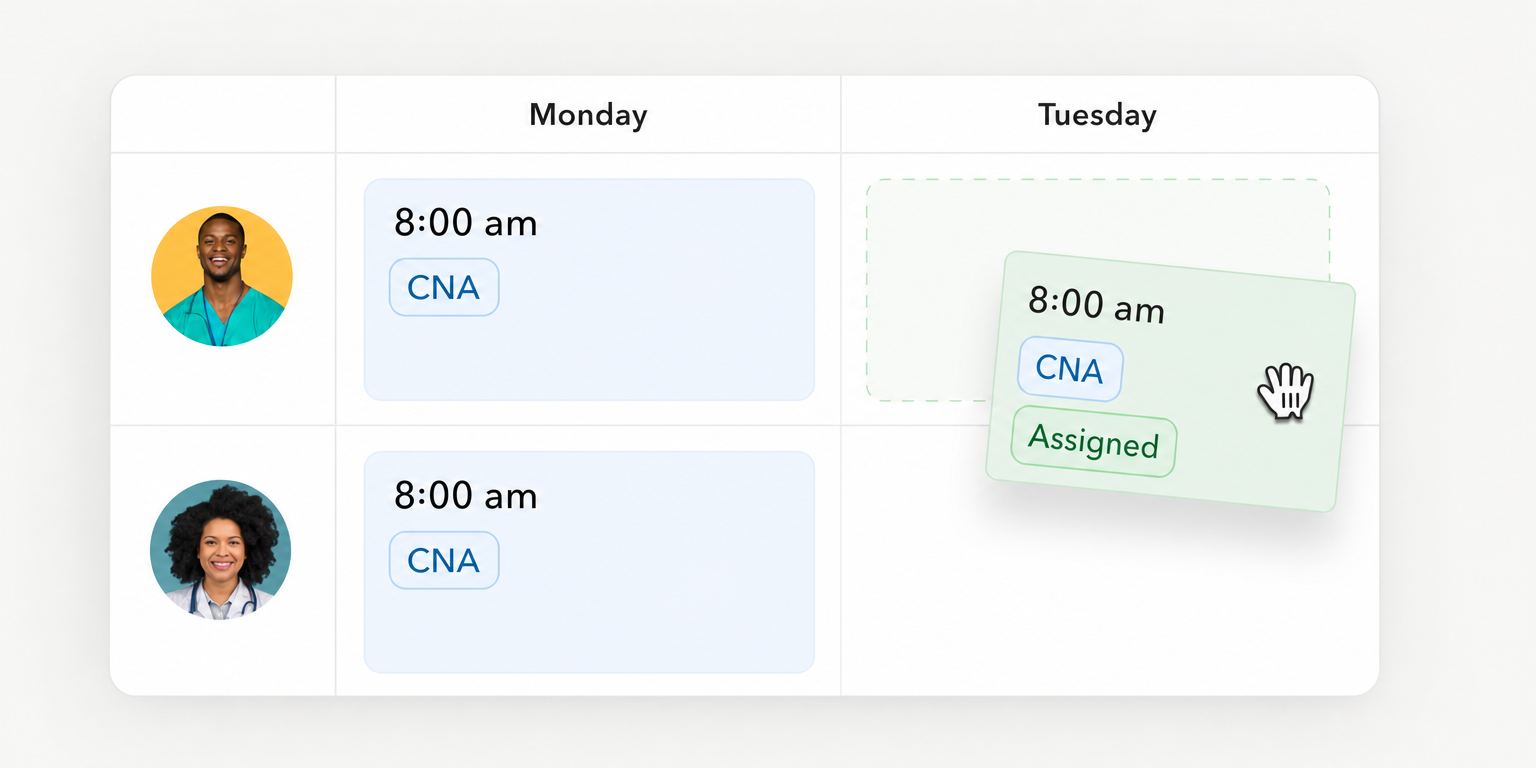
This is where onboarding stops being a one-time event and becomes a continuous compliance layer. When credentials are tracked in the same system as your scheduling, an expired license doesn't just trigger an email reminder — it blocks the worker from being assigned to a shift that requires it. The compliance enforcement happens at the moment of scheduling, not at the moment of audit.
That's the difference between automated onboarding done right and a glorified PDF signer.
The 50% Time-to-Productivity Improvement: How the Numbers Actually Work
Industry research consistently points to roughly 50% improvement in time-to-productivity when onboarding is automated, plus a 70% reduction in admin time. Where does that math actually come from?
Four mechanics:
1. Parallel completion instead of sequential paperwork. On paper, Task B waits on Task A. The worker can't start training until the I-9 is back. In an automated flow, document collection, credential checks, training modules, and policy acknowledgments all run in parallel from the moment the offer is signed.
2. Automated reminders close gaps without manager chasing. A worker who hasn't completed a form gets a nudge in two hours, not when their manager remembers to check on Friday. Coordinators stop being a human queue.
3. Pre-boarding starts the clock before day one. The most expensive day is the day a worker shows up unable to be productive. Person-hours spent on paperwork and administrative costs run about $400 per employee, and new employees function at about 25% productivity during their first 4 weeks. Move the paperwork to pre-day-one and day one becomes a productive shift, not a filing exercise.
4. AI-assisted validation catches errors at entry, not at payroll. A bad routing number flagged at submission costs nothing. The same number caught after the first payroll run costs a correction cycle, a frustrated worker, and a higher chance of a 90-day quit.
The practical outcome: a worker who's shift-ready in three days instead of three weeks. For staffing agencies billing by the hour, that's two and a half weeks of recoverable revenue per hire.

What to Look For in a Workforce Management Platform That Handles Onboarding Right
If you're evaluating platforms, here's the operator checklist. Don't accept a demo that can't show you every one of these:
- Mobile-first completion — every form, every signature, every training module completable on a phone, with no app install required for paperwork stages
- Automated credential expiry tracking — system flags expiring credentials 30/60/90 days out, automatically triggers renewal workflows
- No-code workflow customization — different onboarding flows per role, location, client, or state, configurable by ops without involving engineering (this is where Automations earn their keep)
- Schedule-level credential enforcement — non-compliant workers cannot be assigned to shifts requiring credentials they don't have
- Pre-boarding pipeline — onboarding starts the moment the offer is signed, not the moment the worker arrives
- Audit-ready reporting — every signature timestamped, every policy version logged, exportable for state surveys, client audits, and insurance reviews
- Unified platform — onboarding talks to scheduling talks to time tracking talks to pay (this is why the full Teambridge platform matters more than a point solution)
Tip
When a vendor demos onboarding in isolation from scheduling and compliance, you're looking at a glorified e-signature tool. Ask to see what happens when a credential expires. If the answer is "an email gets sent," keep shopping.
The Stat That Should End the Debate
Strong onboarding improves new hire retention by 82% according to Brandon Hall Group research. Additionally, employees who experience great onboarding are 69% more likely to stay with a company for at least 3 years.
Applied to a 500-hire operation with $7,000 replacement cost per departure and a 43% 90-day quit rate, even modest improvements in onboarding quality return six figures in avoided turnover. The math isn't subtle.
Stop Onboarding Like It's 2015
The operators still running paper onboarding aren't doing it because they think it's better. They're doing it because changing the process feels like a project, and the cost is invisible enough that nobody escalates it.
Here's the reframe: every week you keep onboarding on paper, you're paying for fewer billable hours, more turnover you blame on "bad hires," and compliance risk that's one audit away from a fine. The cost isn't invisible. It's just buried in line items that don't connect — admin hours, replacement recruiting, denied claims, fill-rate misses.
Connect those line items and the picture is clear. Automated onboarding isn't a back-office upgrade. It's a revenue lever, a retention lever, and a compliance lever in one workflow.
The operators who figure this out first are the ones whose fill rates climb while their competitors' coordinators are still chasing signatures.

About the author

Content Writer at Teambridge
Anis Nanai is a content writer at Teambridge, with a focus on workforce management and the realities of running hourly teams. He prioritizes conversations with customers, staying close to the market, and understanding how workforce needs are changing. His writing connects those concerns to practical decisions about scheduling, time tracking, staffing, and automation. He examines product developments through the questions that matter to operators: what does this solve, how would it work for my team, and what evidence supports it?
Company perspective: this author works at Teambridge. Customer outcomes are attributed to their published sources.
View LinkedIn profile