

That decision, made in under ninety seconds, is where most multi-site janitorial contracts quietly start to fracture.
The replacement supervisor walks in with the wrong SOP binder, or none at all. They don't know that this client's medical office wing requires bloodborne pathogens sign-off before entering after-hours. They don't know that the law firm on floor 3 contracted hard-floor buffing as quarterly, not weekly. They sign off on tasks the SOW excludes. The next morning, the client emails a chargeback notice and a quality complaint, and your account manager spends the rest of the week explaining why a routine call-out turned into a contract review.
This is the janitorial supervisor reassignment problem, and it's structurally different from a frontline cleaner call-out. A cleaner with the wrong technique gets corrected on the next walk-through. A supervisor with the wrong context produces signed documentation that a client treats as the source of truth.
The 6 PM Call-Out: Why Supervisor Reassignments Are the Hidden Failure Point
Frontline cleaner coverage is a solved problem at most well-run contractors. You have a bench, you have geofenced shifts, you have a phone tree. Time-to-fill on a vacant cleaning shift is the metric every operations director tracks.
Supervisor reassignment is the metric nobody tracks, and it's the one driving the most expensive disputes.
Three failure modes show up almost every time:
- Missed SOP steps — the replacement runs their default checklist instead of the client-specific one.
- Scope-of-work disputes — the replacement performs or signs off on work that falls outside what the contract actually requires.
- Client-visible quality drops — the client's point of contact notices the substitution before your account manager does, usually because the new face can't answer a basic question about last month's inspection.
The difference between this and a cleaner swap is the paper trail. A supervisor is the contractor's signature on a building. When that signature is wrong, the contract is what gets disputed — not the cleaning.
What Client SOPs Actually Require From a Supervisor
If you've never read a commercial janitorial statement of work end-to-end, the supervisor obligations are buried about two-thirds of the way in, and they're specific.
A typical municipal SOW puts it plainly: the contractor shall provide documentation that the supervisor has the necessary skills and is paid at a higher rate than the custodians, the supervisor must be on-site during the shift, and in the event of any absence the contractor shall provide a substitute of equal or greater skills, with the name and position provided to the County. That last clause — name and position provided in writing — is the one that converts a casual reassignment into a documentation event.
Another state SOW spells out the ongoing supervisor obligations: provide adequate supervision and information on how the supervisor can be contacted during regular business hours, and once a month contact the agency's point of contact to go over any issues. Reassign without forwarding that contact obligation and you've already failed an audit clause.
For public-bid and large commercial work, the bar climbs again. Facility managers issuing janitorial bids frequently require CIMS certification or equivalent documentation as a threshold qualification, which filters for organizational maturity without requiring individual facility assessment. And in regulated environments, healthcare facilities subject to infection control requirements often specify ISSA CIMS-GB or require that supervisors hold documented training from an accredited program, with credentialed training directly affecting compliance posture.
The ISSA CIMS framework isn't abstract. It defines cleaning service requirements such as the scope of work and a quality plan including performance measurement through surveys and inspections, and covers business operations including service delivery planning, workloading, and purchasing procedures. A reassigned supervisor who hasn't seen the building's CIMS-aligned quality plan isn't just less effective — they're operating outside the system the contract was sold on.
The Quiet Obligations That Get Skipped
| Obligation | Where it's documented | What breaks on reassignment |
|---|---|---|
| On-site presence during the shift | SOW staffing clause | Substitute may not stay full shift |
| Named, reachable supervisor | SOW contact clause | Client calls go to wrong person |
| Monthly client check-in | Quality plan | Skipped during transition month |
| Documented inspections | QC plan / CIMS quality section | New supervisor signs unfamiliar form |
| Frequency matrix adherence | SOW task tables | Replacement runs default frequency |
| Chemical and equipment list | SDS / equipment schedule | Wrong product applied |
| Site-specific credentials | Background, OSHA, client orientation | Replacement may be ineligible |
The Three Disputes That Get Triggered When the Wrong Supervisor Shows Up
1. Frequency Disputes
A replacement supervisor signs off on "daily restroom deep clean" because that's how their primary account runs. The contract specifies 3x/week. The client now has signed documentation that you committed to daily — and uses it as a baseline going forward. You either eat the labor or trigger a difficult re-negotiation.
2. Scope-Creep Tickets
The replacement, trying to be helpful, performs a task on the exclusions list — say, interior window cleaning that the SOW explicitly carved out as a separate billable. Many janitorial companies offer supplemental services that aren't automatically included in basic contracts: carpet cleaning, window cleaning, and similar tasks at varying frequencies. The client gets the service for free this time and expects it next time. Your margin shrinks for the rest of the contract.
3. Credential and Access Disputes
This is the dispute that ends contracts. A court SOW requires a one-hour confidentiality training before any contractor can work in the building: contractor employees performing work within any court or county office must take an approximately one-hour training session on the liabilities involved in working within a workplace that handles confidential criminal justice data, and janitorial staff is to wear company uniform or identification always while on court property. Reassign an untrained supervisor into that building and you're not arguing about cleanliness — you're arguing about whether the contractor is in breach.
A reassigned supervisor without the right context isn't a coverage win. They're a contract liability the client gets to document.

Building a Site Profile That Travels With the Reassignment
The fix isn't more training. You can't train a floater on twelve buildings deeply enough to handle a 6 PM swap. The fix is making the SOP travel with the shift, not the person.
A portable site profile, accessible from the supervisor's phone the moment they accept the reassignment, needs to contain:
- Client SOP version and effective date — so the supervisor knows they're looking at the current document
- Frequency matrix — every task with its contracted cadence, not the supervisor's habit
- Exclusions list — what the SOW specifically carves out
- Key contacts and escalation tree — who to call, in what order, for what kind of issue
- Chemical and equipment list with SDS access — what's on-site, what's approved, what's prohibited
- Access procedures — keys, codes, alarm systems, after-hours protocols
- Last three inspection results — so the new supervisor knows what the client has been flagging
- Photo references for finished-state quality — what "clean" looks like at this specific account
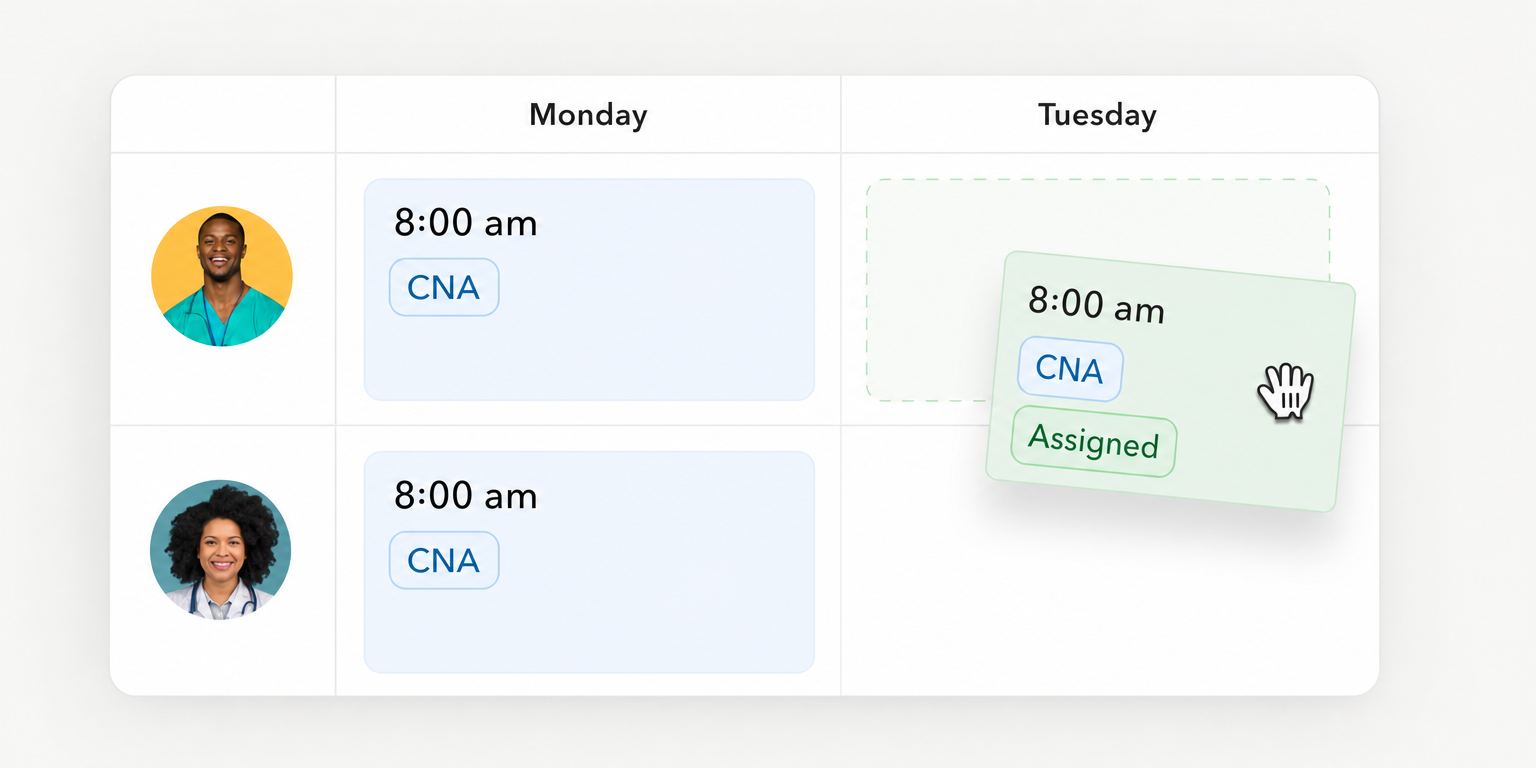
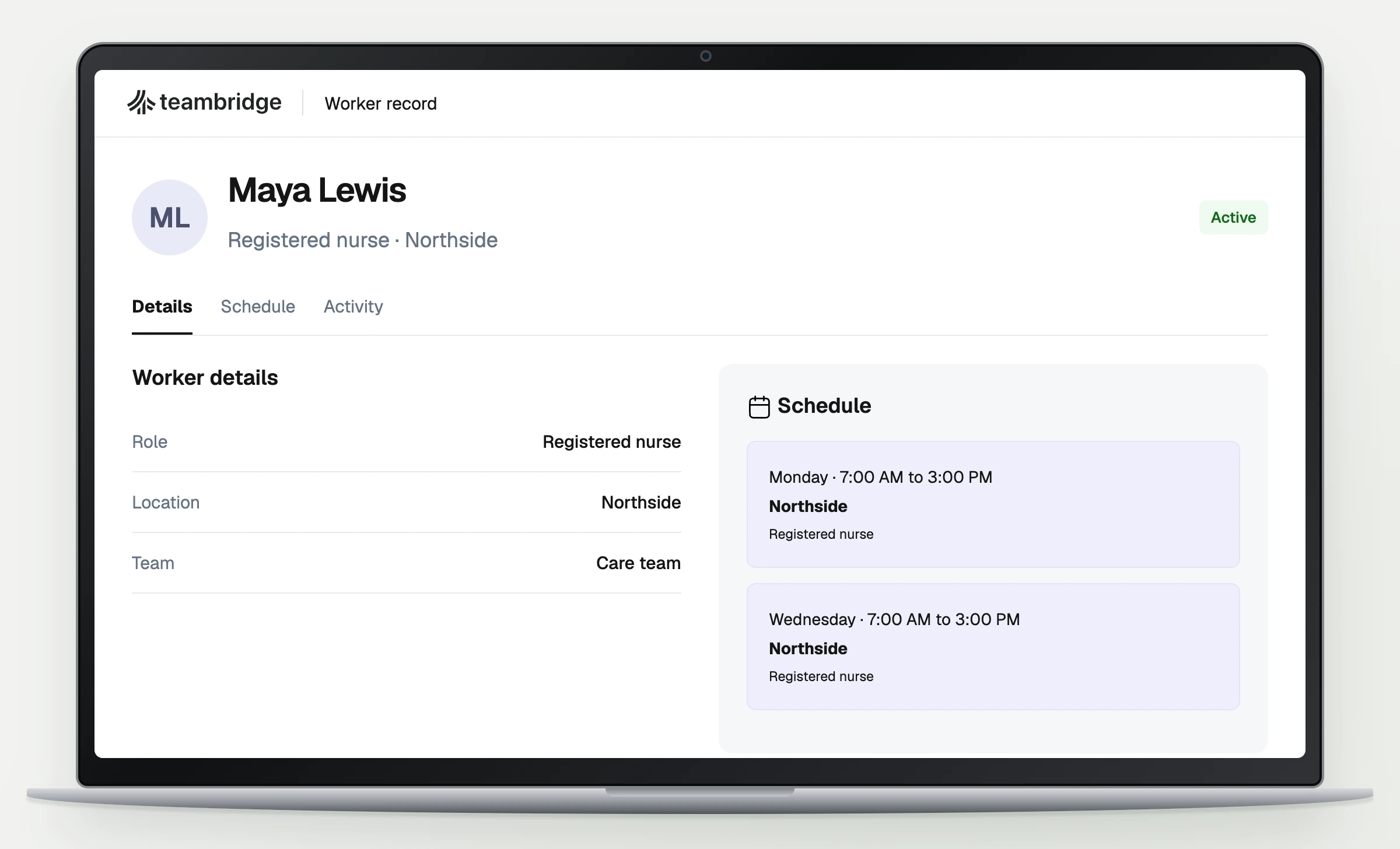
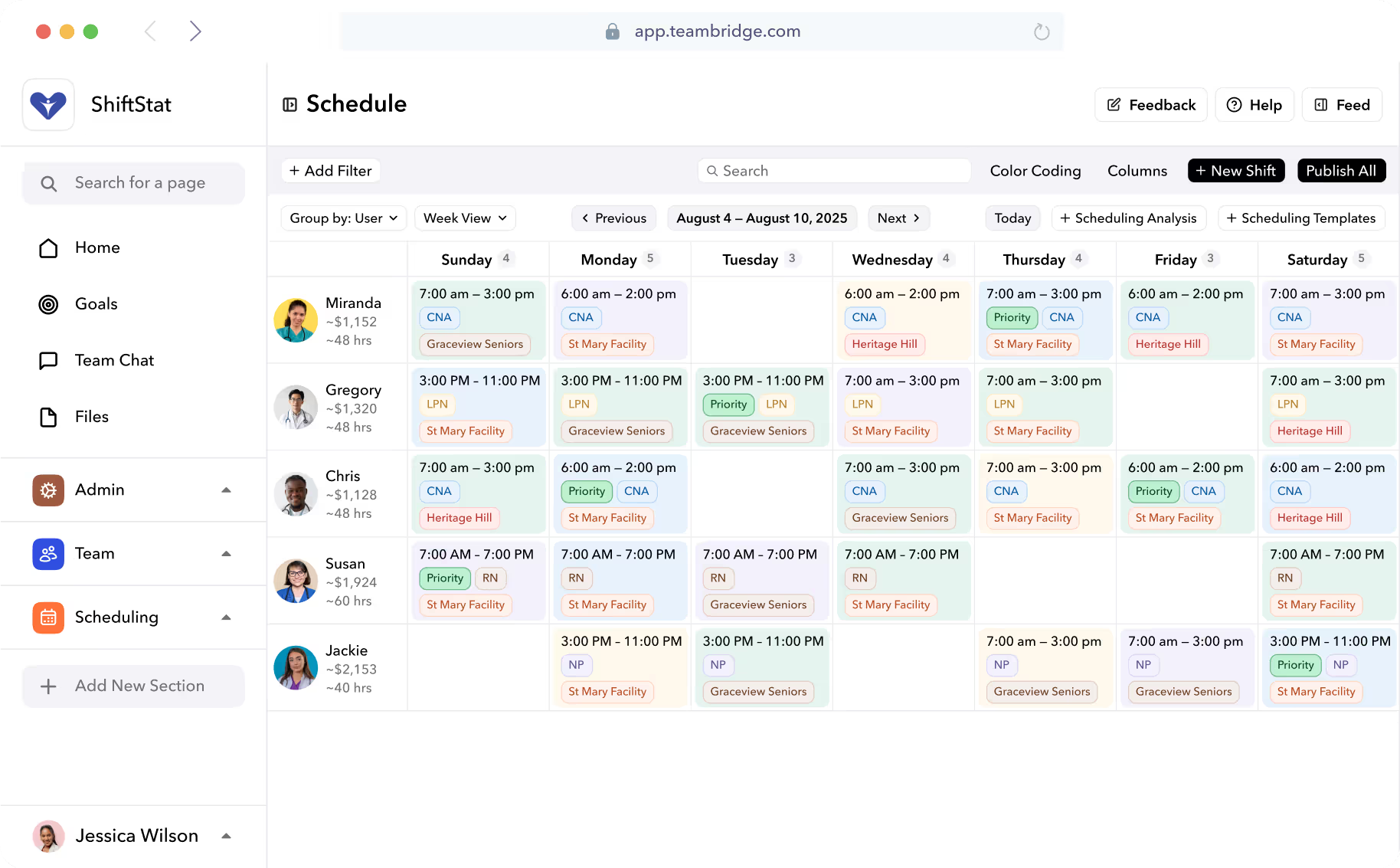
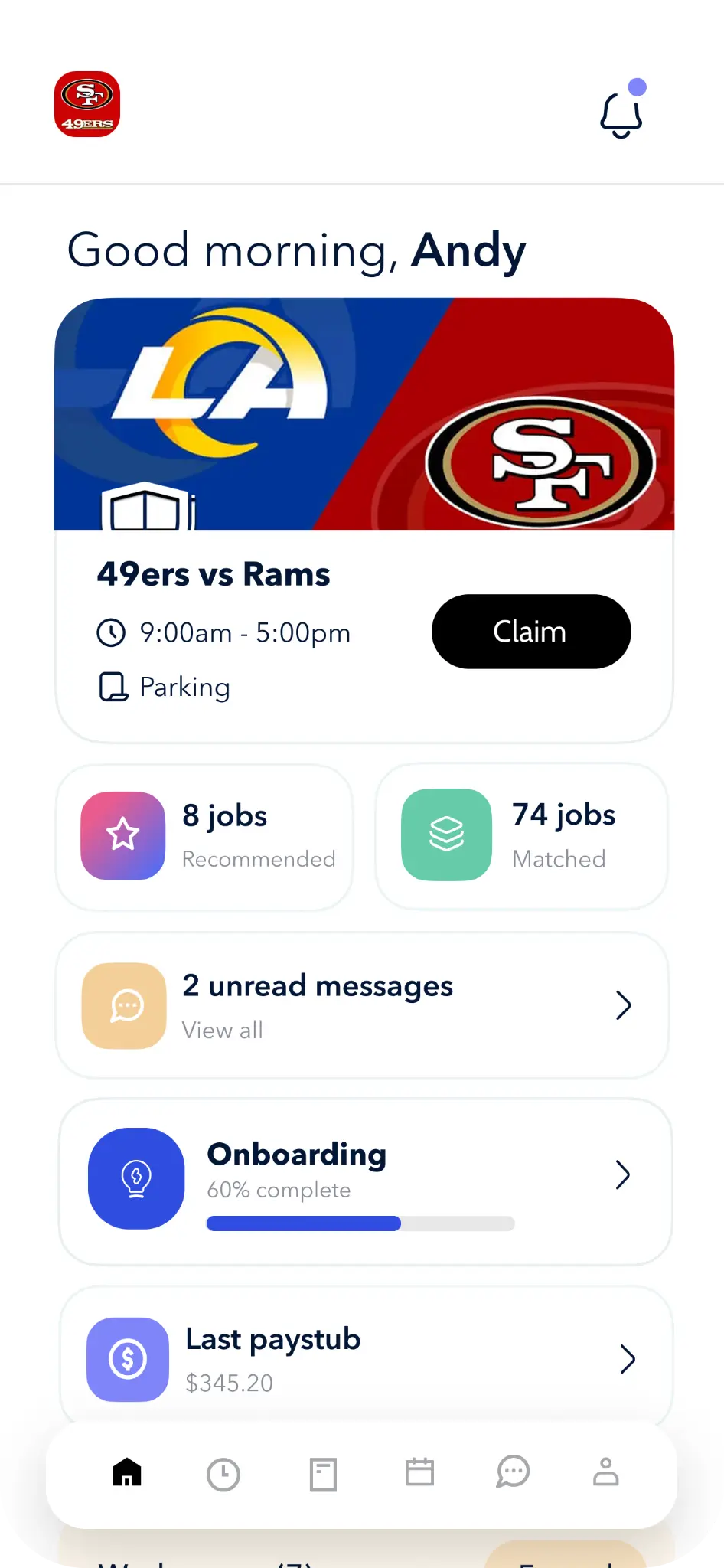
This isn't a binder. A binder doesn't get to second shift on a Tuesday night. It's a digital profile attached to the building, surfaced automatically the moment a reassignment is accepted. Operators serving multi-site portfolios increasingly run this through their janitorial workforce platform so the profile is always one tap from the shift card.
Tip
The right test for your site profile: hand your phone to a supervisor who has never worked the building. Can they complete the shift, sign the inspection, and answer the client's three most likely questions using only what's on the screen? If not, the profile is incomplete.
Credential and Clearance Gating: Stop the Reassignment Before It Becomes a Breach
Most reassignment disputes are preventable at the dispatch step, not at the cleaning step.
Think about what "qualified to cover this building" actually means. It's not just "is a supervisor." It's:
- Background check current, at the level the client requires (standard, healthcare, schools, government)
- Bloodborne pathogens training for medical accounts
- OSHA HazCom certification for chemical-heavy sites
- Client-specific orientation completed (the court training, the school district onboarding, the hospital infection control module)
- Site-specific badging or access credential issued
- Chemical handling sign-off on the products used at this account
The SOWs make this explicit. Scope of work language details the training and qualifications staff possess: whether all cleaners receive OSHA safety training, whether they are trained on proper chemical handling and dilution, and whether supervisors complete leadership development or specialized technical training.
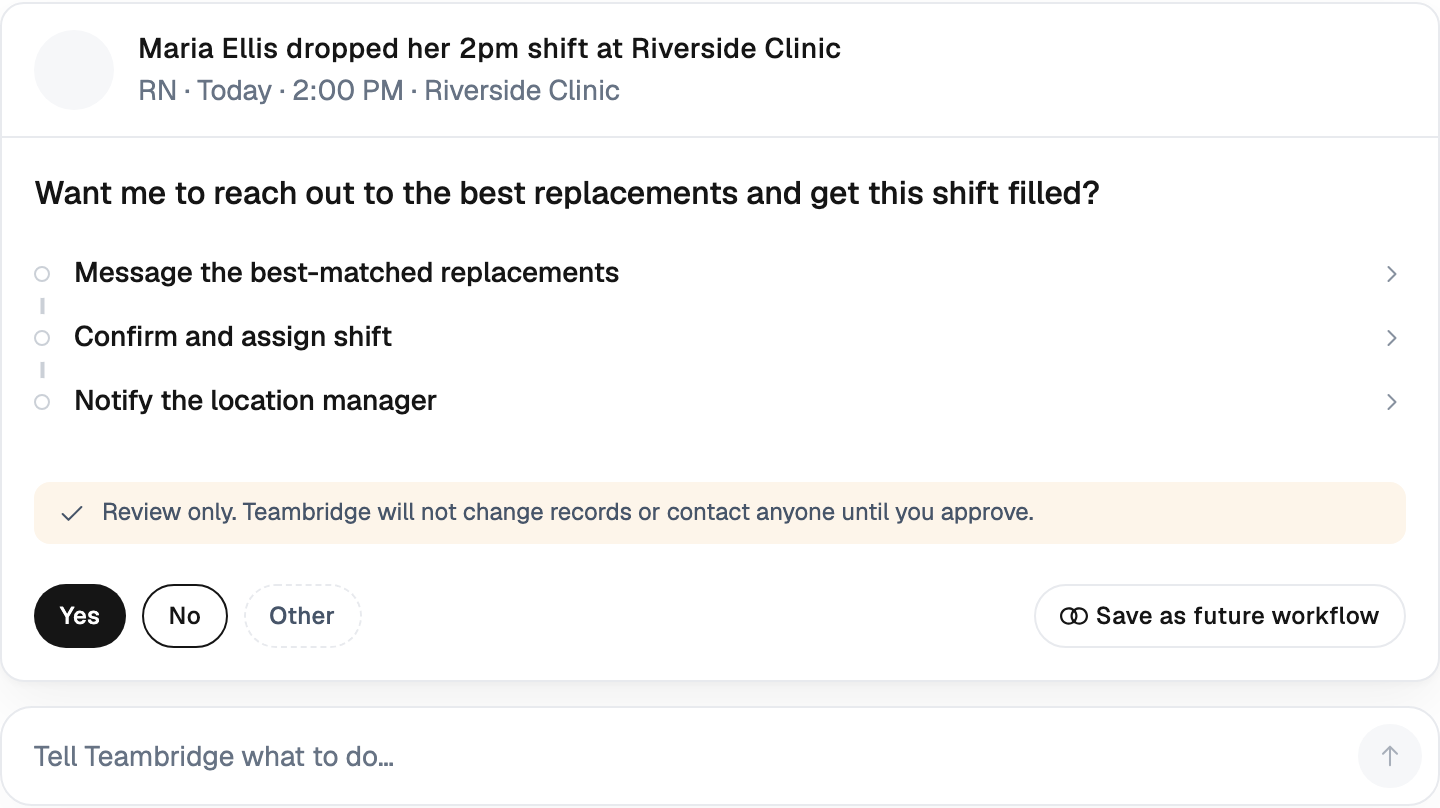
The scheduling system has to refuse the assignment if the supervisor doesn't carry the required credentials for that specific building — and surface the next eligible candidate sorted by drive time. Manual dispatch on a Tuesday night will not catch this. Exception handling needs to live in the admin tools, where the dispatcher sees both the gap and the eligible bench in the same view.
Credential Gates by Account Type
| Account type | Minimum supervisor gates |
|---|---|
| General commercial office | Background check, OSHA HazCom, client orientation |
| Medical / clinical | + Bloodborne pathogens, infection control training, healthcare background |
| K-12 schools | + State school background clearance, mandated reporter training |
| Government / court | + Confidentiality training, security clearance level |
| Manufacturing / industrial | + Site-specific PPE training, lockout/tagout awareness |
| LEED / CIMS-GB accounts | + Green cleaning protocol sign-off |
Real-Time Verification: The Audit Trail Clients Actually Ask For
Once the reassigned supervisor is on-site, the client wants proof that the SOP was followed. Not a phone call the next morning. Not a paper inspection sheet faxed in three days later.
The verification stack that actually closes the dispute loop:
- Geofenced check-in at each building — proves the supervisor was physically present for the contracted hours
- SOP checklist completion with photo evidence — every required task, time-stamped, with before/after photos at critical areas
- Inspection logs tied to the client's QC form — not your generic form, theirs
- Automated client-facing report — sent the same night, not the next week
This is what the contracts are asking for in writing. The state SOW we cited requires monthly client point-of-contact meetings; the municipal SOW requires inspection copies provided to the contract administrator. A reassignment that doesn't produce the same paper trail as a regular shift is the dispute, because the client now has a documentation gap to point at.
Important
If your reassignment workflow produces a different audit trail than your standard workflow, you've built a tell. Clients learn to spot it, and they use it as leverage at renewal.
The Coverage Playbook: How High-Performing Janitorial Contractors Pre-Stage Reassignments
The best operators stop treating reassignment as an emergency response and start treating it as a staged capability.
Five practices that separate the contractors who hold portfolios from the ones who lose them:
- Named second supervisor per account — every building has a primary and a designated backup who runs at least one walk-through per month, so they're never cold on the SOP.
- Cross-train by client tier, not geography — group your supervisors by the kind of account they can cover (medical, education, Class A commercial) rather than by the route they happen to drive.
- Digital SOP packets on the supervisor's phone — the binder is dead. The profile lives in the app, gets pushed when the reassignment is accepted, and updates automatically when the client revises a requirement.
- Quarterly reassignment drills — pick a random building, pull the primary supervisor for a shift, run the coverage flow end-to-end. Measure where it broke.
- Track time-to-SOP-compliance, not just time-to-warm-body — the real metric isn't how fast you filled the shift. It's how fast the replacement was operating to the client's spec.
Scheduling software that enforces credentials and surfaces the named backup automatically is what makes this playbook executable on a Tuesday night, when the operations director isn't in the room.
Warning
A "time to coverage" metric measured in minutes can hide a "time to SOP compliance" measured in days. If you're only tracking the former, you're optimizing the thing the client doesn't care about.
And the standards back this up. Consistency is key — without standardized processes, chaos can quickly disrupt operations, and SOPs create a framework for communication, allowing improvements to be implemented and training updates delivered efficiently to all employees. The contractors who treat SOPs as living, distributable artifacts — not static binders — are the ones whose reassignments don't trigger client calls.
Reassignments Shouldn't Be the Riskiest Part of Your Operation
The contractors winning multi-building portfolios aren't the ones avoiding call-outs. Call-outs are not avoidable. They're the ones whose reassignment process is invisible to the client.
That invisibility comes from three things stacked together: credential-gated dispatch that refuses an ineligible assignment, a portable site profile that travels with the shift, and real-time verification that produces the same audit trail no matter who's on the building.
Get those three working in one workflow and the 6 PM call-out stops being the moment your account is at risk. It becomes the moment your operations team proves the contract is worth what the client is paying.
Teambridge's janitorial workforce platform handles credential-gated dispatch, portable site profiles, and on-site verification in a single system, with the scheduling layer doing the eligibility check before the assignment ever reaches a phone. That's the bar to clear if you're operating across more buildings than any one supervisor can hold in their head.

About the author

Content Writer at Teambridge
Anis Nanai is a content writer at Teambridge, with a focus on workforce management and the realities of running hourly teams. He prioritizes conversations with customers, staying close to the market, and understanding how workforce needs are changing. His writing connects those concerns to practical decisions about scheduling, time tracking, staffing, and automation. He examines product developments through the questions that matter to operators: what does this solve, how would it work for my team, and what evidence supports it?
Company perspective: this author works at Teambridge. Customer outcomes are attributed to their published sources.
View LinkedIn profile