

What doesn't happen — at most agencies — is a clean, simultaneous update across pay rates, overtime multipliers, split-shift premium logic, burden tables, and the timekeeping system. The new rate lives in one place. The old rate keeps running everywhere else. And the spread you priced at deal time quietly bleeds out, one timecard at a time, until somebody notices at invoicing reconciliation three weeks later.
This is the mid-assignment rate sync problem. It's not exotic. It's not edge-case. It's the single most common margin leak in temporary staffing, and almost nobody models it at deal time.
The mid-assignment rate change problem nobody models at deal time
Most staffing leaders price assignments on the assumption that rates hold for the duration. They don't. Long-term contracts get renegotiated mid-flight all the time — sometimes upward to retain talent in a tight market, sometimes downward when an MSP or VMS pushes a rate card refresh, sometimes laterally as the role drifts and a new skill premium gets layered in.
The spread you have to defend is thinner than most operators realize. Markup rates for temporary roles can be anywhere from 20% to 75%, and average markup on W-2 employee assignments runs 50 to 60%. That sounds healthy until you remember markup is not margin.
Direct costs associated with being a W2 employer can represent anywhere from 60-85% of your staffing bill rate. These are the same costs you would be incurring if you hired the employee directly, leaving somewhere between 15% and 30% of your bill rate allocated to the actual services your staffing agency delivers.
That 15-30% slice is what funds your recruiters, your back office, your insurance, and any profit you take home. After all expenses, agencies typically aim for a 3%-8% profit margin. A few cents of un-synced rate across split shifts and OT hours quietly compounds into thousands lost per assignment — and on a 12-week contract with three workers at 40 hours a week, the difference between a 60% markup and a 20% markup is the difference between roughly $9,700 and $1,600 in gross profit, per Lone Oak Payroll's worked examples showing the 60% markup yielding a $9,676.80 gross profit while the 20% markup equates to $1,612.80.
Miss the sync on rates, and you're not eroding margin — you're moving between those two outcomes without ever knowing it.
Where the spread actually leaks: split shifts, OT, and burden multipliers
There are four predictable failure points where un-synced rate changes erode margin. Each one looks small in isolation. Stacked across a contract, they're how a profitable assignment becomes a break-even one.
1. Overtime
Federal law requires non-exempt workers be paid 1.5× their regular rate over 40 hours in a workweek. When pay rates change mid-week and the OT multiplier doesn't recompute against the new blended rate, you either underpay the worker (a wage claim waiting to happen) or you absorb the gap because your bill rate didn't move in lockstep.
In California, this gets worse. Overtime is generally paid at 1.5 times the employee's regular rate for hours worked over eight in a day or 40 in a week, and at double the regular rate for hours worked over 12 in a day. Daily OT means a single rate-change Monday can ripple through five separate calculations that week.
2. Split-shift premiums
California employment law requires employers that have scheduled a split shift to pay you at least the minimum wage, plus an additional hour at the applicable minimum wage. This is the "split shift premium." The premium math is sensitive to the worker's hourly rate, the local minimum wage, and the total hours worked that day.
When pay rates shift mid-assignment, the offset calculation changes. If the employee's total daily pay already equals or exceeds what they would have earned at minimum wage for all hours worked plus the split shift premium, then no additional split shift premium is required. Wages earned above minimum wage can "offset" or reduce the split shift premium owed. A 30-cent pay bump can flip a worker from "premium owed" to "no premium owed" — and if your system is still computing against the old rate, you're paying premiums you don't owe or skipping ones you do.
3. Burden recalculation lag
Burden — all the payroll taxes and insurance a staffing agency must pay by law, including FICA, SUTA, FUTA, and workers' compensation insurance — scales with the pay rate. When pay goes up and burden tables don't re-anchor to the new pay basis, your costed margin in the system looks healthier than it actually is. Finance figures it out at month-end close. Sales already booked the deal.
4. Shift differentials
Night shift, weekend, holiday, hazard premiums — these are all multipliers on top of base pay. If the base moves and the differential rule still references a stale rate, every premium hour on the timecard is wrong by a small amount that nobody flags until a worker complains.

Why your ATS, payroll, and timekeeping systems disagree on rate-effective dates
The root cause is system fragmentation. In most agencies, rate data lives in four to six different systems, each with its own effective-date logic and approval chain.
| System | What it stores | Who updates it | Effective-date logic |
|---|---|---|---|
| CRM / contract record | Bill rate | Account manager | Contract amendment date |
| Payroll | Pay rate | Payroll clerk | Next pay period |
| Timekeeping | Hours + rate snapshot | Worker / supervisor | Punch timestamp |
| Finance / GL | Burden tables | Controller | Quarterly review |
| ATS | Original offer rate | Recruiter | Rarely updated |
Each system thinks it owns the truth. None of them talk to each other in real time. When a rate changes mid-assignment, the account manager updates the CRM, fires off a Slack message to payroll, and trusts the rest will sort itself out.
It doesn't. Workers get paid the old rate. Clients get billed the new one — or vice versa. The timekeeping system stamps every punch with whatever rate was cached when the worker clocked in. And burden? Two deals with the same markup can yield very different margins if burden, fees, or terms differ. Burden rates vary not just by company but by role within a company, so re-syncing them retroactively is a controller-level project, not a five-minute fix.
Reconciliation happens at invoice. By then you're 14 to 21 days downstream of the leak.
The reconciliation tax: what manual rate audits actually cost
Account managers and payroll clerks chase rate discrepancies across spreadsheets. They re-run two to four weeks of timecards by hand. They call the client to apologize for a stale invoice. They issue retro pay corrections that hit the worker's check three pay periods after the fact.
Warning
Mispricing on a long-term contract can run into tens of thousands in lost revenue before anyone notices. The bigger the assignment, the longer the leak runs undetected.
The hard cost is the spread you never recover. The soft costs compound:
- Worker trust erosion. Pay corrections that arrive weeks late feel like the agency is sloppy with money — because it is.
- Client disputes. When invoices show stale rates, procurement uses it as leverage on the next renewal.
- Recruiter drag. Senior recruiters get pulled off new placements to triage old timecards. The opportunity cost is real and rarely measured.
- Compliance exposure. Under-paid OT or missed split-shift premiums turn into wage claims. If you work split shifts regularly and do not receive the premium payment, you may be entitled to thousands of dollars under California law, with claims that must be filed within 3 years of the most recent failure to pay.
None of this shows up on the deal P&L. All of it shows up on the company P&L.
Rate effective-dating done right: the operational rules that protect spread
A workforce operations platform that actually protects spread has to enforce a small set of non-negotiable rules. Most agencies don't have any of them today.
- Every rate is versioned with an effective date tied to the assignment, not the worker. Bill rate, pay rate, OT multiplier, shift differential, and burden — each one has a from-date and a to-date. The same worker on two assignments can carry two different rates simultaneously without collision.
- Split shifts pull rate from the shift's start timestamp, not the day. If a rate change goes live at midnight Monday and a worker started a shift Sunday at 10pm that runs until Monday at 6am, the system has to know which hours fall on which side of the boundary.
- Approval workflows require dual confirmation for any mid-assignment change. Account manager proposes, ops or finance approves. No solo updates to live rates.
- Existing punches are flagged, not silently overwritten. When a rate updates retroactively, the system should surface every affected timecard for review — not quietly recompute history.
- Pay and bill reconcile weekly, not at invoice. A nightly job that compares what was paid against what was billed catches drift inside 24 hours.
Even a 1% sync error on a contract where direct costs are 60-85% of bill rate wipes a meaningful chunk of the 15-30% slice that actually funds your business.
What "synced" looks like inside Teambridge
The reason rate sync breaks is that scheduling, time tracking, and invoicing typically run on separate systems with separate rate engines. The fix is structural: one rate engine, one source of truth, every downstream module reading from it.
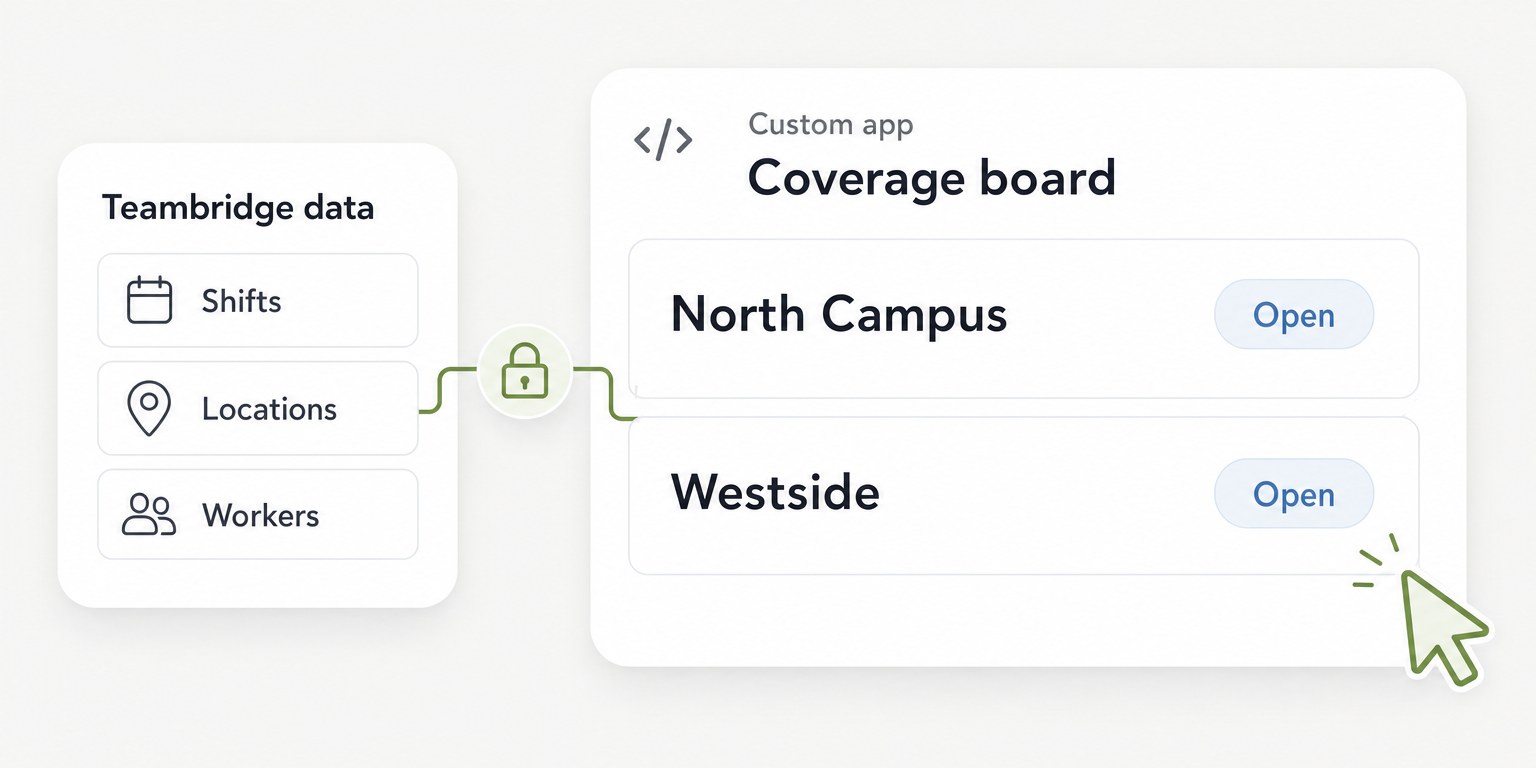
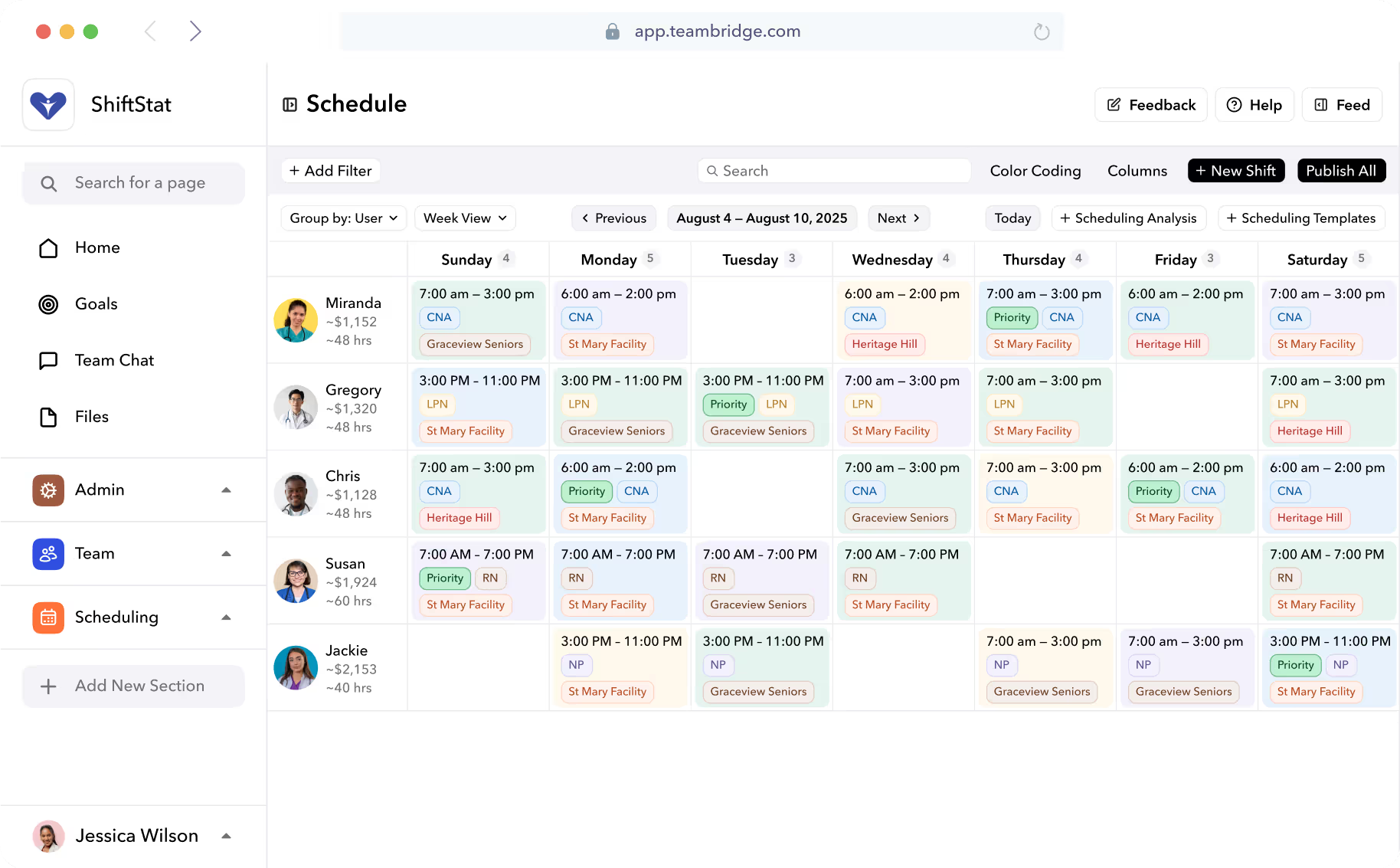
Inside Teambridge's platform, scheduling, time tracking, and invoicing share a single rate model. When a bill rate updates mid-assignment with an effective date, the new rate propagates to every shift starting after that timestamp. Every existing punch that overlaps the boundary is flagged for review — not silently overwritten — so a human signs off before history changes.
Overtime calculation lives in time tracking, which means OT multipliers always read from the rate that was effective at the punch's start time, not whatever's cached in payroll. Split-shift premium logic runs against the same source. Burden tables tie to the assignment record, so when a pay rate moves, the costed margin reflects the new burden basis immediately — not at quarterly close.
For agencies running staffing operations at scale, this is the difference between defending margin in real time and chasing it after the fact.

A 30-day playbook for closing the rate-sync gap
You don't have to replatform to start closing the leak. Here's a concrete sequence operations leaders can run in the next 30 days.
Week 1: Audit
- Pull every assignment from the last 90 days that had a mid-term rate change.
- Cross-reference the contract amendment date against the first paycheck and first invoice that should have reflected the new rate.
- Flag every gap longer than one pay period.
- For each flagged assignment, identify which split-shift hours and OT hours billed at stale rates.
Week 2: Quantify
- Compute the dollar leak per assignment. Be honest — include both directions (you over-billed and under-billed).
- Roll it up to a quarterly run-rate. This is the number that gets your CFO's attention.
- Bucket leaks by failure point: OT, split-shift, burden, differential, base rate. The bucket with the biggest dollar impact is where you start.
Week 3: Build the source of truth
- Pick one system to own rate effective dates. Most agencies should pick the platform closest to invoicing, since that's where the spread is realized.
- Migrate every active assignment's rate history into that system with proper from-date and to-date stamps.
- Set up a dual-approval workflow for any mid-assignment rate change. No solo updates.
Week 4: Reconcile weekly
- Stand up a weekly reconciliation job: paid vs. billed, by assignment, by week.
- Route exceptions to a named owner — usually a payroll lead or controller.
- Set a 72-hour SLA on resolution. Anything older than that gets escalated.
Tip
The fastest win is usually weekly pay/bill reconciliation. Most agencies do this monthly or at invoice. Moving to weekly catches 80% of the leak before it compounds.
The agencies that close this gap don't do it by hiring more payroll clerks. They do it by collapsing the systems that disagree about rates into one system that doesn't. The reconciliation tax goes away because there's nothing left to reconcile — the schedule, the timecard, the paycheck, and the invoice all read from the same rate, effective at the same timestamp, approved by the same workflow.
That's what synced actually means. Everything else is spreadsheet archaeology.

About the author

Content Writer at Teambridge
Anis Nanai is a content writer at Teambridge, with a focus on workforce management and the realities of running hourly teams. He prioritizes conversations with customers, staying close to the market, and understanding how workforce needs are changing. His writing connects those concerns to practical decisions about scheduling, time tracking, staffing, and automation. He examines product developments through the questions that matter to operators: what does this solve, how would it work for my team, and what evidence supports it?
Company perspective: this author works at Teambridge. Customer outcomes are attributed to their published sources.
View LinkedIn profile