Most leave systems were designed for salaried desk workers who can pick up where they left off when they return. For shift-based operators — staffing agencies, healthcare networks, security firms, janitorial contractors, event venues — every approved day off is a coverage gap that has to be backfilled before the next shift starts. If your leave system can't see the schedule, you're trading PTO compliance for missed shifts, overtime burn, and angry clients.
This is the core mismatch nobody talks about. The HRIS approves the time off. The schedule finds out days later. The scheduler scrambles, pays overtime, or eats the gap.
Why Leave Management Breaks Down in Shift-Based Workforces
Leave admin is quietly eating your operations team. According to EPIC's 2025 State of Leave Management Report, 26% of HR time is consumed by leave management activities, and over 90% of organizations report at least one pain point in their leave management process. That's a quarter of your HR capacity going into a workflow that — for most shift operators — still runs on spreadsheets, email threads, and a standalone HRIS module that doesn't talk to the roster.
The pain is growing, not shrinking. Leave requests continued to climb in 2024, with 57% of HR managers reporting an increase — the third consecutive year of growth — and among those seeing a rise, more than half experienced an increase of 21% or more.
For desk-based companies, more requests means more admin. For shift operators, it means something worse: every approval is an operational decision that affects coverage, client SLAs, and labor cost. And the systems weren't built for that. Traditional leave management systems, designed for centralised workforces, often fall apart when dealing with the complexity of modern working arrangements — you need to consider not just how many days someone is taking, but when, where they'll be working from, and how their absence affects team dynamics.
Now apply that to a staffing agency running 400 W2 field workers across 30 client sites, or a janitorial operation with overnight crews on rotating routes. A PTO approval isn't a calendar event. It's a backfill ticket with a deadline measured in hours.
The Hidden Cost: Leave Approvals Made Without Coverage Visibility
Here's the failure mode every shift operator has lived through:
- Worker submits a PTO request in the HR system on Monday.
- Their manager approves it Tuesday without checking the schedule.
- The scheduler discovers the gap Friday — for shifts starting Saturday.
- Coverage is filled with overtime, an agency loaner, or it isn't filled at all.
The approval was "compliant." The operation took the hit. Manual leave processes make it harder to forecast staffing levels, particularly across large, multi-site organisations, and unplanned absences can have a ripple effect on compliance, service delivery, and team morale.
The downstream costs aren't theoretical:
- Staffing agencies miss client headcount commitments and watch margin collapse on backfill overtime.
- Healthcare operators risk ratio violations and per-diem premium rates when a credentialed nurse's PTO leaves a unit short.
- Event venues absorb no-show penalties or undercut guest experience when leave approvals stack with peak demand.
- Janitorial contractors lose route coverage and trigger client complaints that take weeks to recover from.
And the financial drag adds up. Stress and burnout levels remain high across all industries, contributing to increased absenteeism that can cost employers up to 8% of total payroll annually. That's not just sick days — that's the cascading cost of approvals made without operational context.

What a Modern Leave System Actually Has to Do
If you operate a shift-based workforce, a leave system isn't an HR tool. It's an operations tool that happens to handle policy. The non-negotiables look different from the desk-worker checklist.
| Capability | Desk-Worker HRIS | Shift Operator Reality |
|---|---|---|
| Request intake | Email or web form | Mobile-first, available on-shift |
| Balance tracking | Updated in payroll cycle | Real-time, visible to worker and scheduler |
| Accrual rules | One policy per company | Multiple policies by class: W2, 1099, part-time, per-diem |
| Approval logic | Manager discretion | Coverage + credential check before approval |
| Schedule integration | None or batch sync | Live, two-way with the active roster |
| Payroll flow | Manual export | Auto-flow to time tracking and pay run |
The baseline a modern system has to clear:
- Mobile-first request intake. Field workers don't sit at a desk. If they can't request leave from their phone in 30 seconds, you're back to texts and missed messages.
- Real-time accrual visibility. Workers should see their balance the moment they open the app. Managers should see it before they approve.
- Multi-policy support. A staffing agency might run six accrual policies — W2 full-time, W2 part-time, 1099 contractors with no accrual, state-mandated sick leave layered on top, plus client-specific carve-outs.
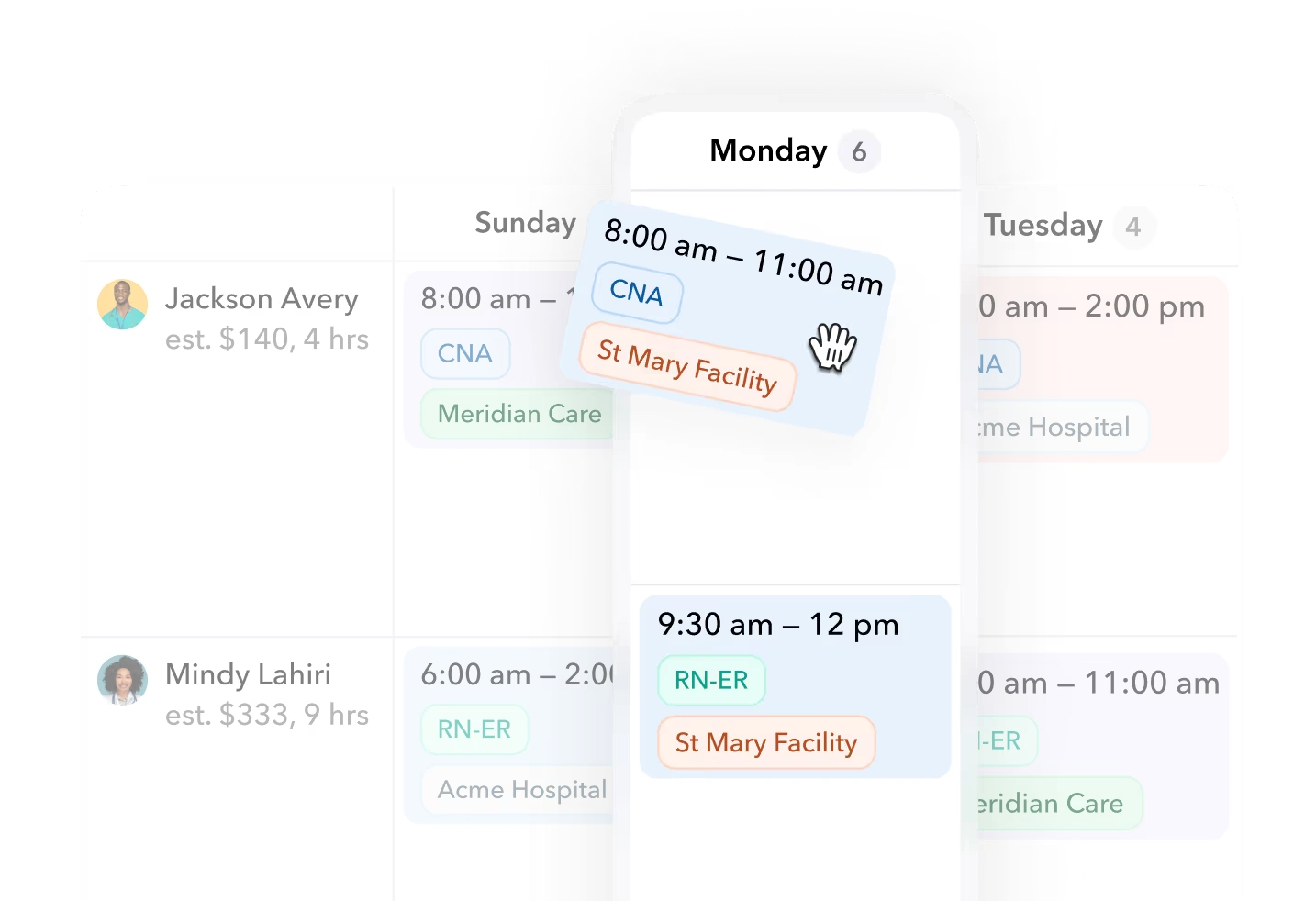
- Coverage-aware approval. The approval screen has to show what shifts the request affects and whether the qualified pool can cover.
- Schedule and payroll integration. Approved leave updates the roster automatically and flows into payroll without re-entry.
By integrating with HR records, payroll, time and attendance, and scheduling systems, modern leave management systems reduce human error and busywork — approvals are routed automatically, and accrual balances update in real time. That's the bar. Anything less and you're still patching gaps after the fact.
Warning
If your leave system can't tell a manager which shifts an approval will leave uncovered, it isn't a leave system. It's a spreadsheet with a login.
Compliance: The Pain Point Operators Underestimate
The regulatory layer is where unsophisticated leave processes turn into lawsuits. As caseloads grow, HR teams continue to face administrative hurdles — the biggest challenges reported were compliance with the Family and Medical Leave Act (FMLA) and managing intermittent leave.
It's not just FMLA. Operators with workers in multiple states are managing a patchwork: state sick leave laws, predictive scheduling rules in cities like Seattle, New York, and Philadelphia, paid family leave programs that differ by jurisdiction, and audit trails for everything. HR departments today must navigate an increasingly complex landscape of employee leave and accommodation requests — between overlapping federal requirements, new expectations around pregnancy-related accommodations, and a growing patchwork of state laws, even well-intentioned employers can stumble into compliance risks that lead to litigation, costly disputes, and employee relations challenges.
Manual tracking creates three predictable failures:
- Payroll errors. Leave hours coded wrong, accruals miscalculated, sick pay applied to the wrong class. Each one is a wage-and-hour exposure.
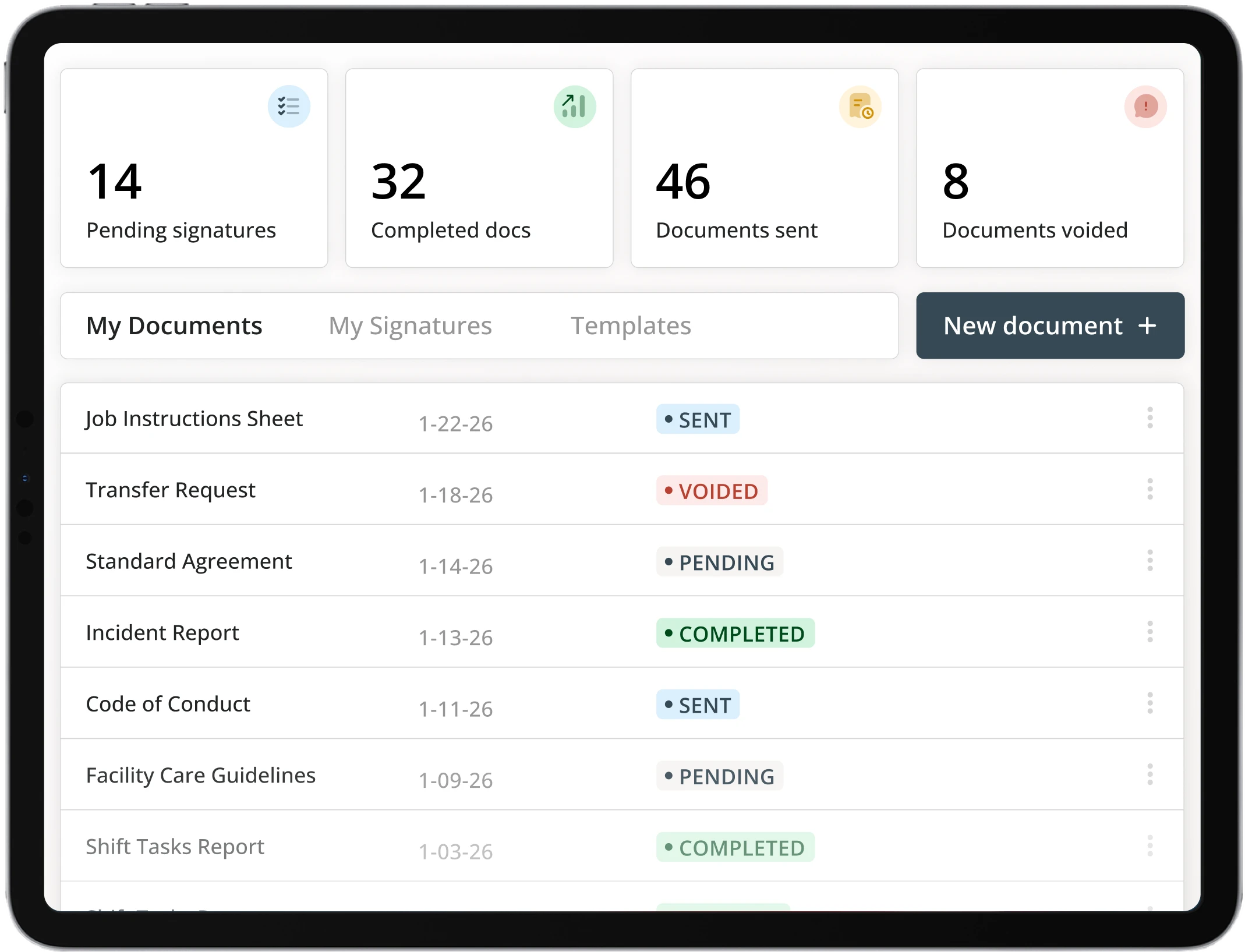
- Documentation gaps. When the DOL or a plaintiff's attorney asks for the leave trail, "it's in my email" is not an answer.
- Turnover. Workers who can't trust their balances or get timely approvals leave. The HR friction becomes a retention problem.
For staffing operators specifically, layered client requirements make this worse. A nurse placed at a hospital might be subject to that hospital's leave reporting standards on top of your own policies. A janitorial worker on a federal contract may trigger SCA notice requirements when leave intersects with prevailing wage rules.
Ready to move?
Ready to see Teambridge in action?
Tying Leave to the Schedule: The Operational Unlock
The argument worth making to your leadership team: leave management is a scheduling feature, not an HR feature. Treat it that way and the whole workflow changes.
Here's what coverage-aware leave approval actually looks like in practice:
- Request submitted in the mobile app, specifying dates or specific shifts.
- System checks coverage minimums for the affected sites and roles during the requested window.
- Credential and certification check runs automatically — does the qualified backfill pool exist for those shifts?
- Conflicts surfaced to the approver before they click yes: which shifts are affected, who's available to cover, what the OT impact looks like.
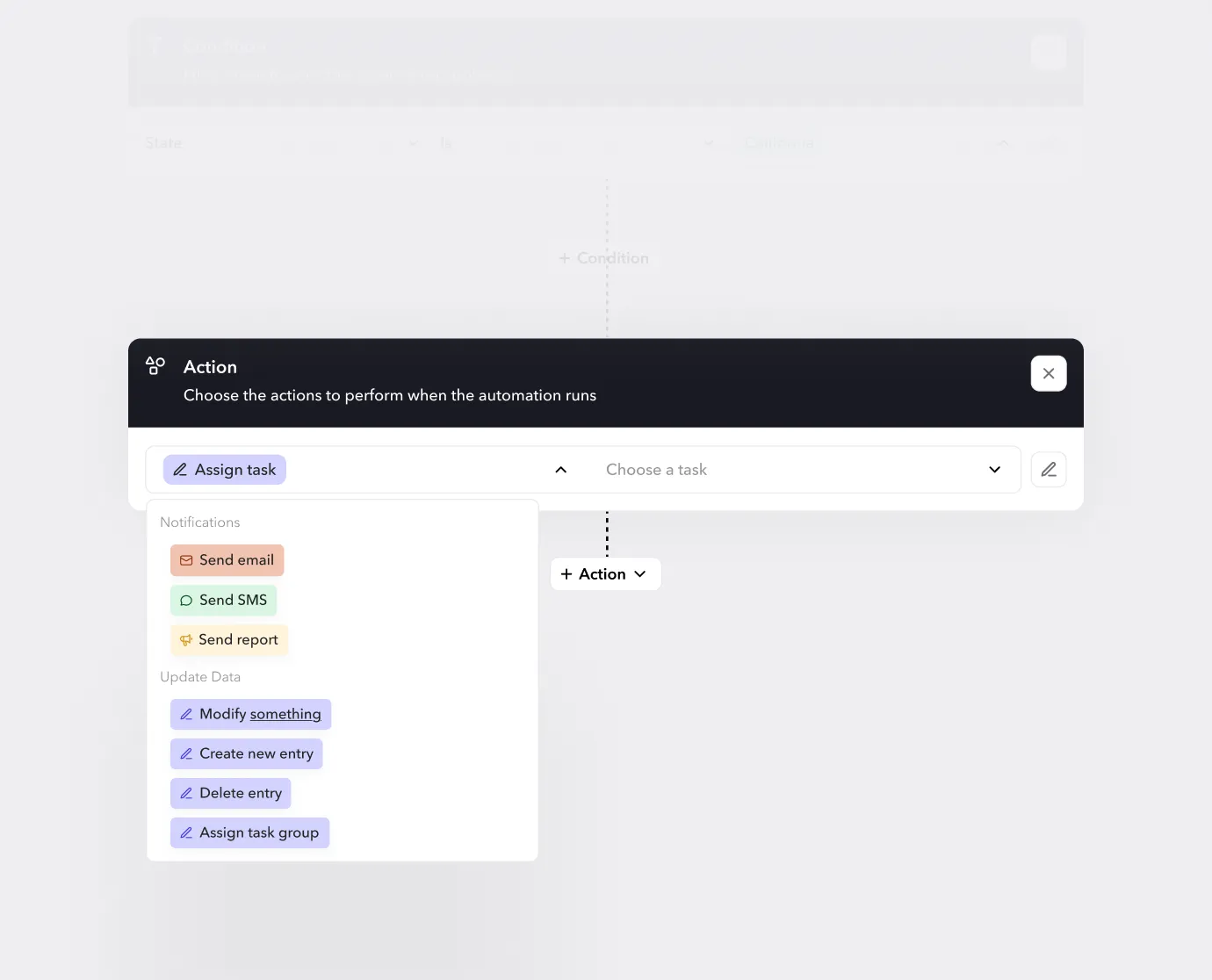
- On approval, the roster updates automatically, open shifts post to the qualified pool, and accrual balances adjust.
- Payroll flows downstream with leave hours coded correctly against the right policy.
This is the difference between leave admin and workforce operations. It's also the difference between a manager who approves PTO and finds out about the consequences later, and one who makes a coverage decision in context.
Teambridge built scheduling and the underlying platform on the principle that leave, time tracking, and pay can't sit in separate systems for shift operators. The data has to be one record, not three handoffs.

Data You Should Be Pulling from Your Leave System
Once leave runs on the same data layer as scheduling, you stop thinking about it as a transactional process and start using it strategically. The metrics that matter for shift operators:
- Absence rate by site, client, and shift type. Which contracts are losing the most hours? Which shifts are chronically short?
- Bradford Factor. A simple score that surfaces chronic short-absence patterns — the worker who calls out for one day eight times in a quarter is a different problem than the one who takes a planned week.
- Accrual liability on the balance sheet. Beyond operational risks, high annual leave balances also carry financial implications — large accruals sit on the balance sheet as liabilities, and when left unmanaged, they can create unexpected cost spikes, particularly when employees exit the business and must be paid out at their current salary rate.
- Approval cycle time. How long between request and decision? Long cycles mean coverage scrambles.
- Seasonality and shift patterns. When does leave demand spike? How does it overlap with your client demand curve?
This data feeds into hiring plans (how much bench do you need for predictable summer leave demand?), client commitments (can you guarantee coverage for a 24/7 contract with current staffing?), and pricing (are your bill rates absorbing the true cost of paid leave on each account?).
Treating leave as a balance-sheet line and a forecasting input — not just an HR ticket — is what separates operators who scale from operators who keep getting surprised.
How Teambridge Handles Leave for Shift-Based Operators
The Teambridge approach is simple in concept and rare in practice: leave lives inside the same system as scheduling, time tracking, and pay.
Here's how it runs:
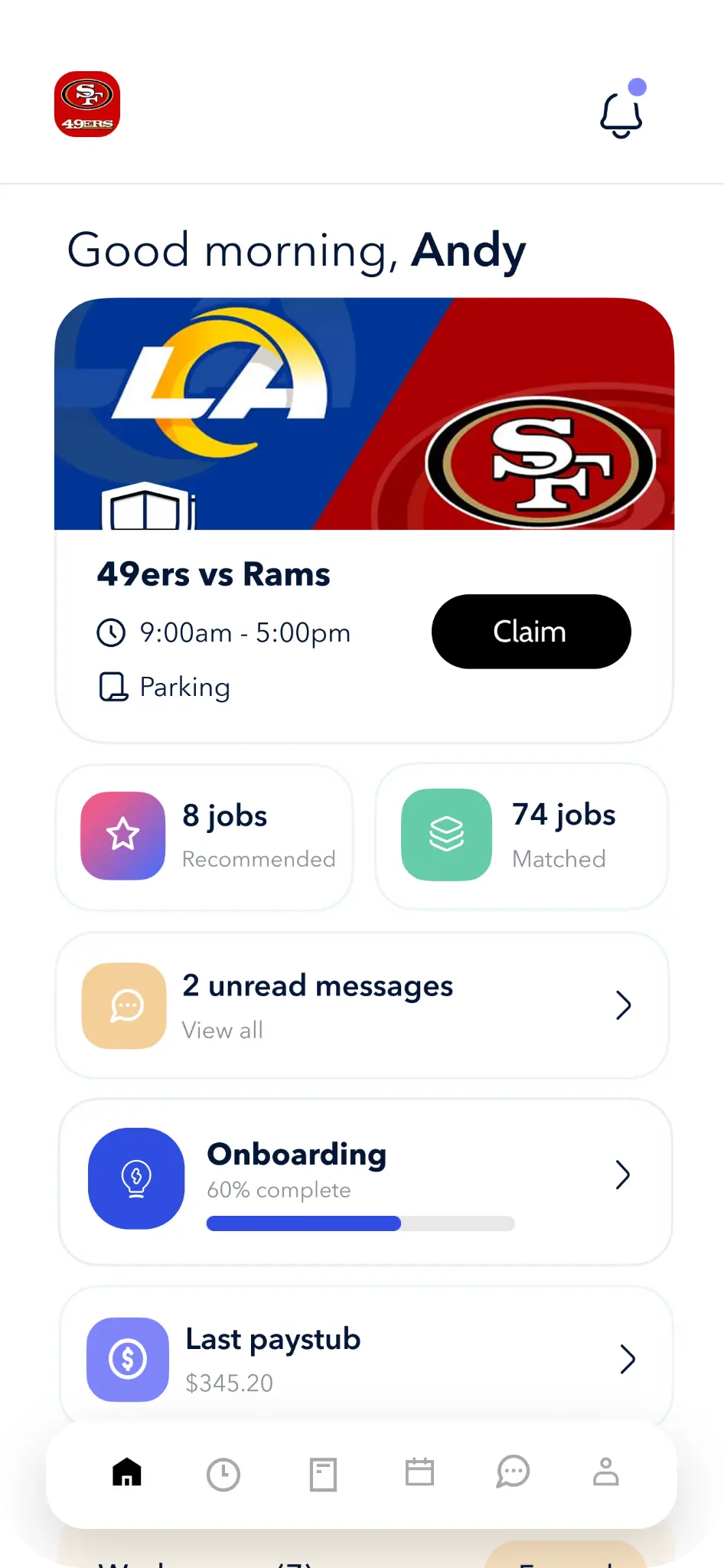
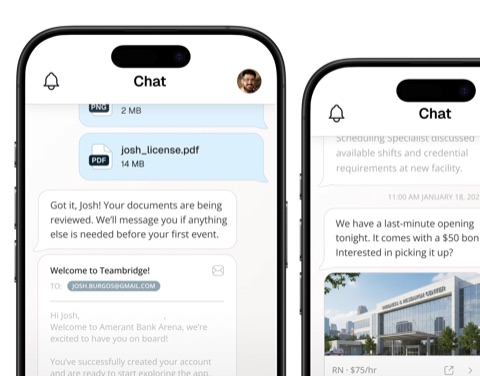
- Workers submit leave from the mobile app in seconds, see their real-time balance before they request, and get notified the moment a decision is made.
- Requests route against the live schedule. Managers see exactly which shifts are affected, who in the qualified pool can cover, and what the overtime exposure looks like before approving.
- Accrual rules run by employee class. W2, 1099, part-time, per-diem, state-mandated sick leave — each governed by its own policy, applied automatically.
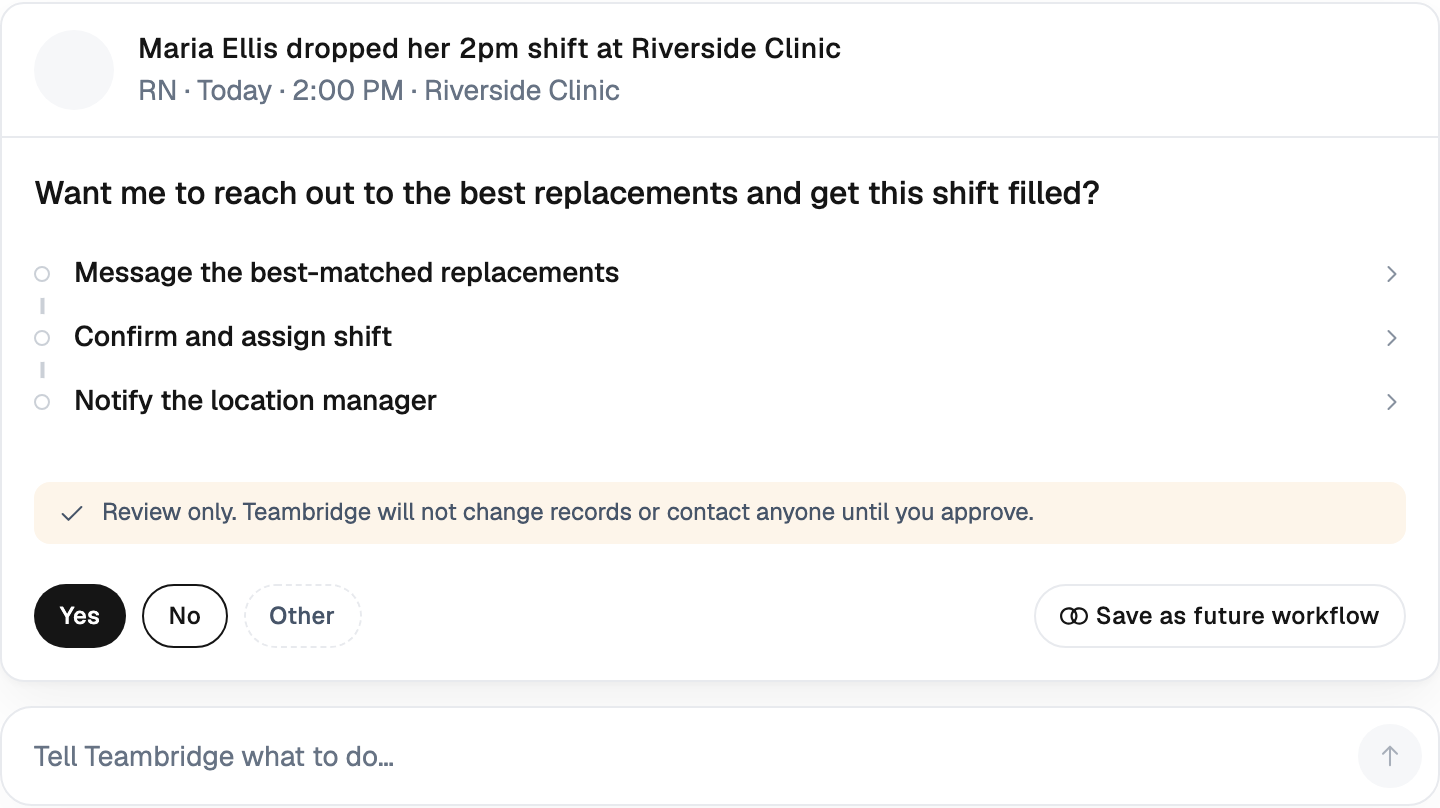
- Credential checks fire on approval. If the approved worker's absence would leave a credentialed shift uncovered, the system flags it and surfaces qualified replacements.
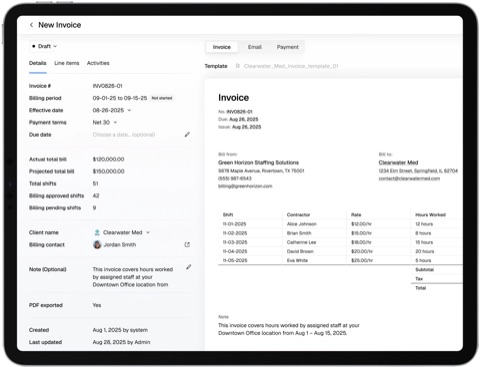
- Approved leave flows into time tracking and payroll without re-entry. No spreadsheet exports, no coding errors.
For staffing agencies, this means leave decisions get made with client coverage in view — not in a parallel HR workflow that comes back to bite operations on Friday afternoon. For janitorial and facilities operators running multi-site routes, it means a route lead's PTO request triggers an immediate coverage check across the team that actually works that location.
The broader point: leave management has evolved from a simple administrative task to a critical strategic imperative — as employee expectations rapidly evolve and compliance requirements grow more complex, the old playbook no longer works. For shift operators, the new playbook is a single system where leave, scheduling, time, and pay share one source of truth.
Approving time off blind isn't a policy problem. It's an architecture problem. Fix the architecture and the policy runs itself.