

The operators who have moved to flexible shift scheduling — structured input, rules-based swaps, open shift marketplaces — are not running looser operations. They are running tighter ones. This post lays out why, where the line sits, and how to make the move without losing control.
The Hidden Cost of the Fixed Weekly Schedule
The fixed weekly schedule survives because it looks like control. One manager owns the grid, one template repeats, and the assumption is that predictability for the business equals predictability for the worker. For hourly teams, that math rarely holds.
Real schedules drift. A callout on Tuesday turns into a mandatory double on Wednesday. A demand spike on Friday turns into a 9 p.m. text begging someone to come in. The grid is fixed in name only — and every deviation lands on the worker without warning.
That instability has a price tag. The average cost of turnover increased to $45,236 per employee in 2026, up from $36,723 in 2025, a figure that includes recruiting, onboarding, training, lost productivity, and management time. For broader benchmarks, Gallup has reported that replacement cost can range from one-half to two times annual salary depending on the role, with Wellhub pegging hourly/service/production roles at 40–70% of annual salary.
Important
"Traditional" scheduling is not safe. It is familiar. Those are different things, and only one of them shows up on the P&L.
Traditional Scheduling vs. Flexible Shift Scheduling: What's Actually Different
Both models use shifts, headcount, and demand forecasts. The difference is who has input and how change is handled.
Traditional scheduling is built around fixed weekly templates. A manager assigns shifts, posts the schedule one to two weeks out, and routes every swap request through a supervisor. Coverage gaps get filled by phone calls and group texts.
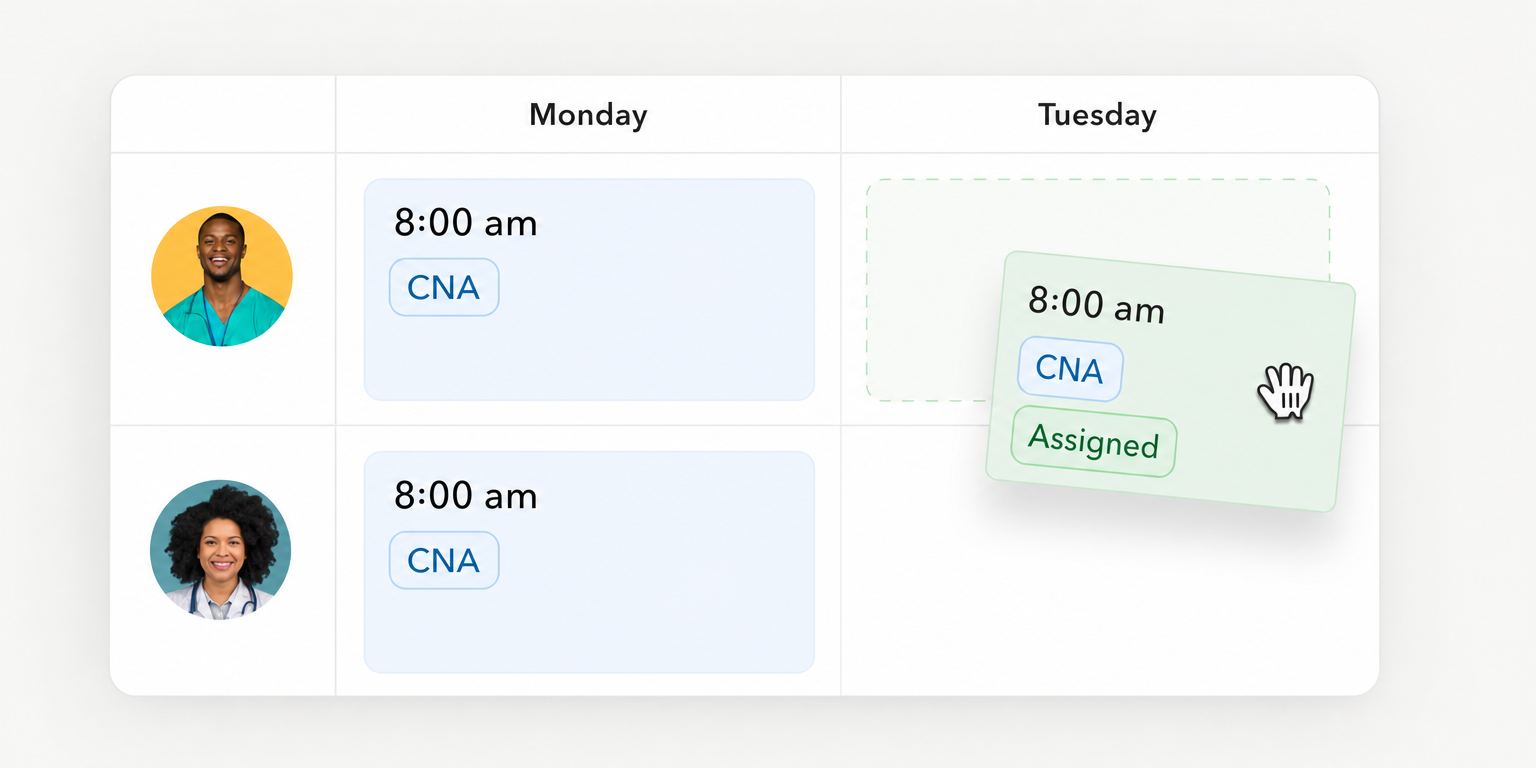
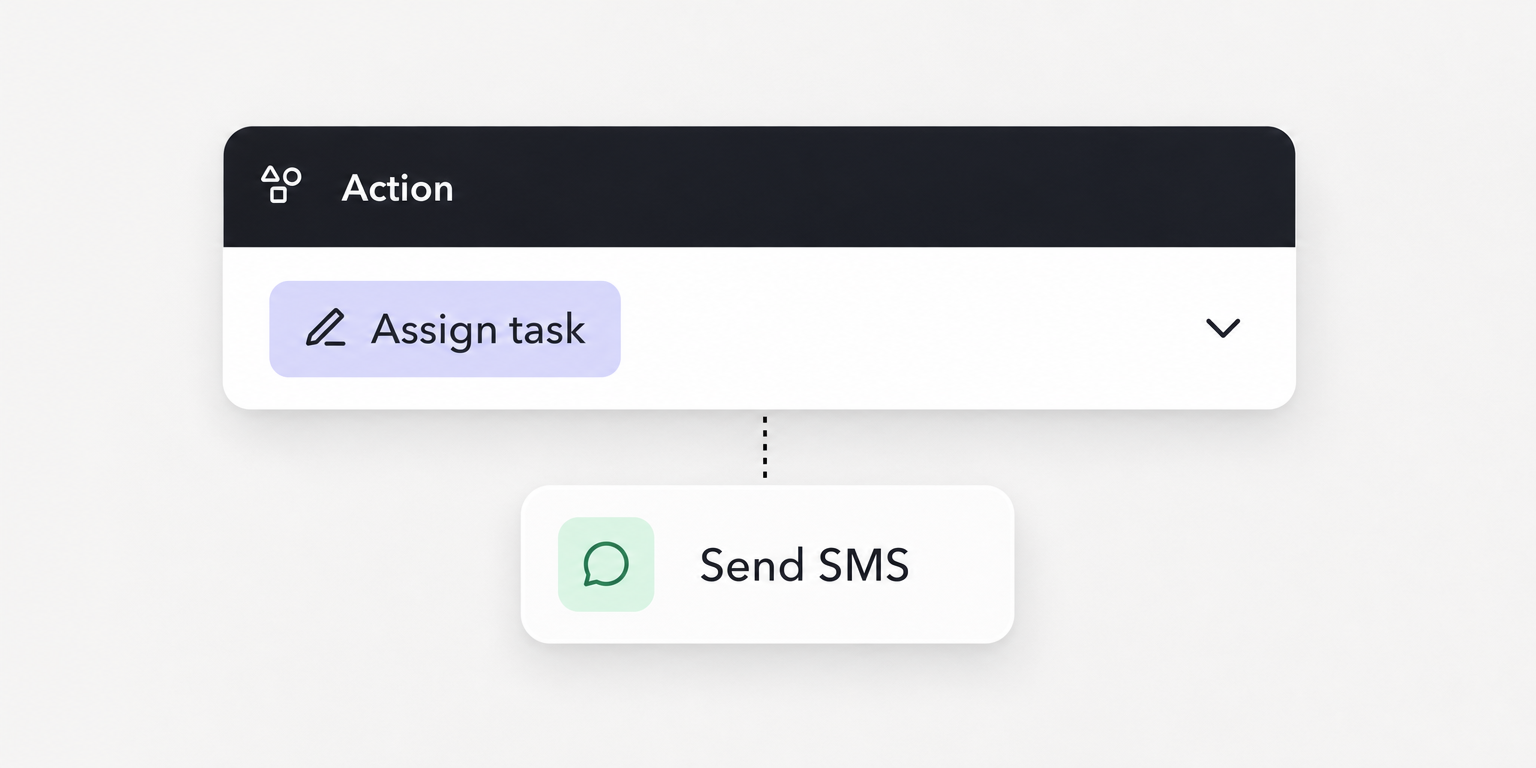
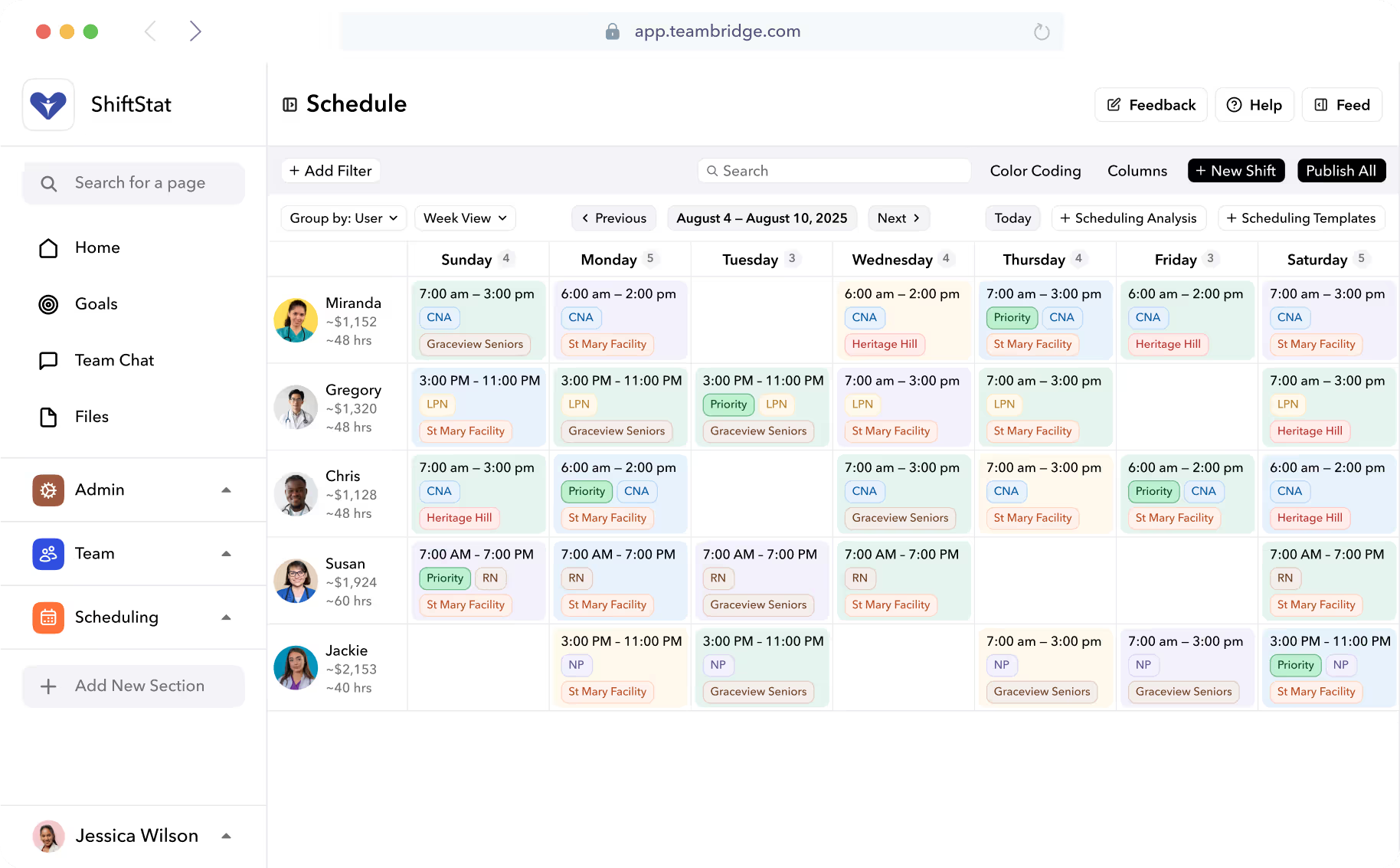
Flexible shift scheduling uses structured input from workers — shift bidding, preference profiles, qualified open shift marketplaces — combined with rules-based approval. Workers initiate swaps; the system checks credentials, overtime thresholds, and fatigue rules; the manager sees the exceptions instead of every transaction.
The common misread is that flexibility means "work whenever." It does not. Flexibility means structured input plus predictability. The schedule is still published, still bounded, still compliant. What changes is who fills the gaps and how fast.
| Dimension | Traditional Scheduling | Flexible Shift Scheduling |
|---|---|---|
| Schedule construction | Manager-built from a template | Demand-driven with worker preferences as inputs |
| Worker input | Time-off requests only | Bidding, self-scheduling, preference profiles |
| Swap process | Routed through supervisor, manual approval | Worker-initiated, rules-based approval |
| Callout response | Manager calls down a list | Open shift posted to qualified pool |
| Posting horizon | 1–2 weeks | 3–4 weeks plus a frozen predictability window |
| Manager role | Builder and dispatcher | Exception handler |
How Rigid Schedules Drive Turnover, Absenteeism, and Coverage Gaps
Rigidity does not fail in one big moment. It fails in a chain reaction.
A last-minute change lands in someone's inbox at 6 p.m. Childcare breaks. The worker either calls out or shows up resentful. A callout triggers a manager scramble. The scramble ends in mandatory overtime for whoever picks up. That worker burns out and either disengages or quits. The replacement costs $45,236 and takes three months to get to full productivity.
The workforce data backs this up. A 2024 State of the Hourly Workforce Report commissioned by Legion Technologies found that nearly half (47.5%) of managers surveyed pinpointed inflexible scheduling as the primary obstacle to retaining hourly employees in 2023. A separate WorkWhile survey found 77% of workers place flexible schedules at the top of their list of priorities. And per SHRM, hourly workers regularly face last-minute schedule changes, seasonal fluctuations, and employers cutting hours to manage costs, leading to unpredictable income and difficulties balancing personal life with work obligations.
Map each symptom back to a specific rigidity:
- Absenteeism traces to the inability to swap a shift without a supervisor in the loop.
- Lateness and disengagement trace to schedules published with no input and changed without notice.
- Coverage gaps trace to a callout response that depends on one manager dialing a list.
- Voluntary turnover traces to all three, compounded over months.

What Flexibility Looks Like in Five Industries
Flexibility is not one product. It is a shape that bends to each operation's constraints. Here is what it looks like on the ground.
Healthcare
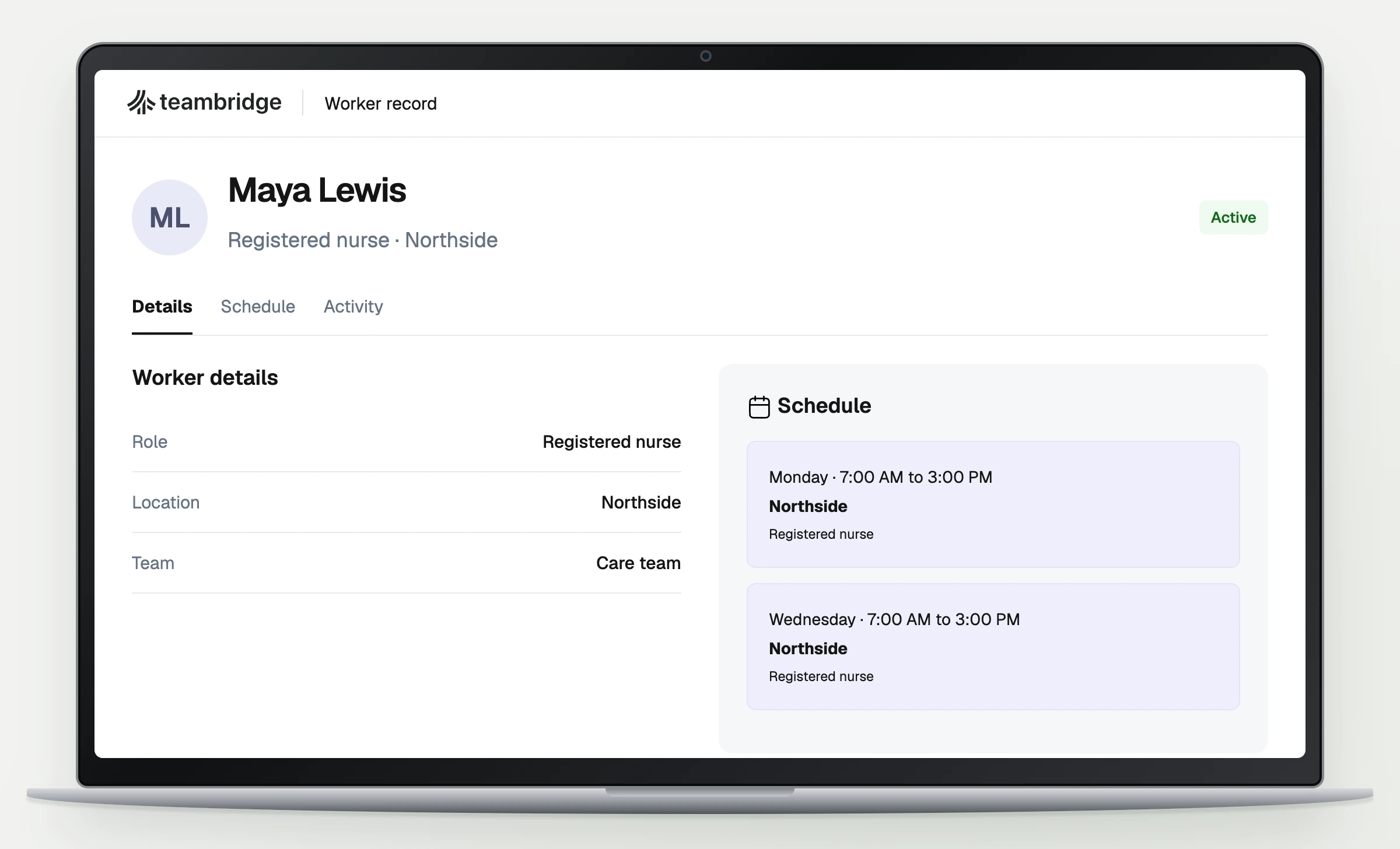
Nurse scheduling has the highest stakes and the tightest credential rules. Self-scheduling and rules-based shift trades extend tenure by letting clinicians build a week around their lives without exposing the unit to unsafe coverage. Credential-aware assignment blocks any swap that would put an unlicensed or expired-credential worker on the floor. Teambridge's healthcare staffing workflows handle that check automatically — DEA licenses, certifications, and shift differentials evaluated at the moment of pickup.
Hospitality
Demand swings by the hour, not the week. Variable-hours models matched to forecast — paired with worker preference for early/late/weekend — let hotels staff banquets, F&B, and housekeeping without parking warm bodies on a fixed grid. The result is fewer underutilized shifts and fewer scrambles during peak weekends.
Security
A no-show is a contract breach. License-aware open shift pickup is the difference between covering a venue at 6 p.m. and refunding a client at 7 p.m. Guards see only the posts they are licensed and trained for; the system enforces post orders and guard tour requirements. See how security staffing operators run this in practice.
Retail
Clopens — closing one night, opening the next — are a top driver of part-time attrition. Predictability windows plus shift bidding let part-time workers stabilize their income and lock in school or second-job constraints. Stores keep coverage; workers stop quitting in week three.
Field service
Route- and skill-based dispatch with worker preference inputs (region, vehicle, certifications) cuts windshield time and missed SLAs. The dispatcher stops playing tetris with a whiteboard. The technician stops driving across the metro to a job another tech could have covered in twenty minutes.
The Resilience Argument: Flexible Schedules Absorb Shocks Rigid Ones Can't
Operators sometimes hear "flexibility" and think "morale program." That undersells it. The real argument is resilience.
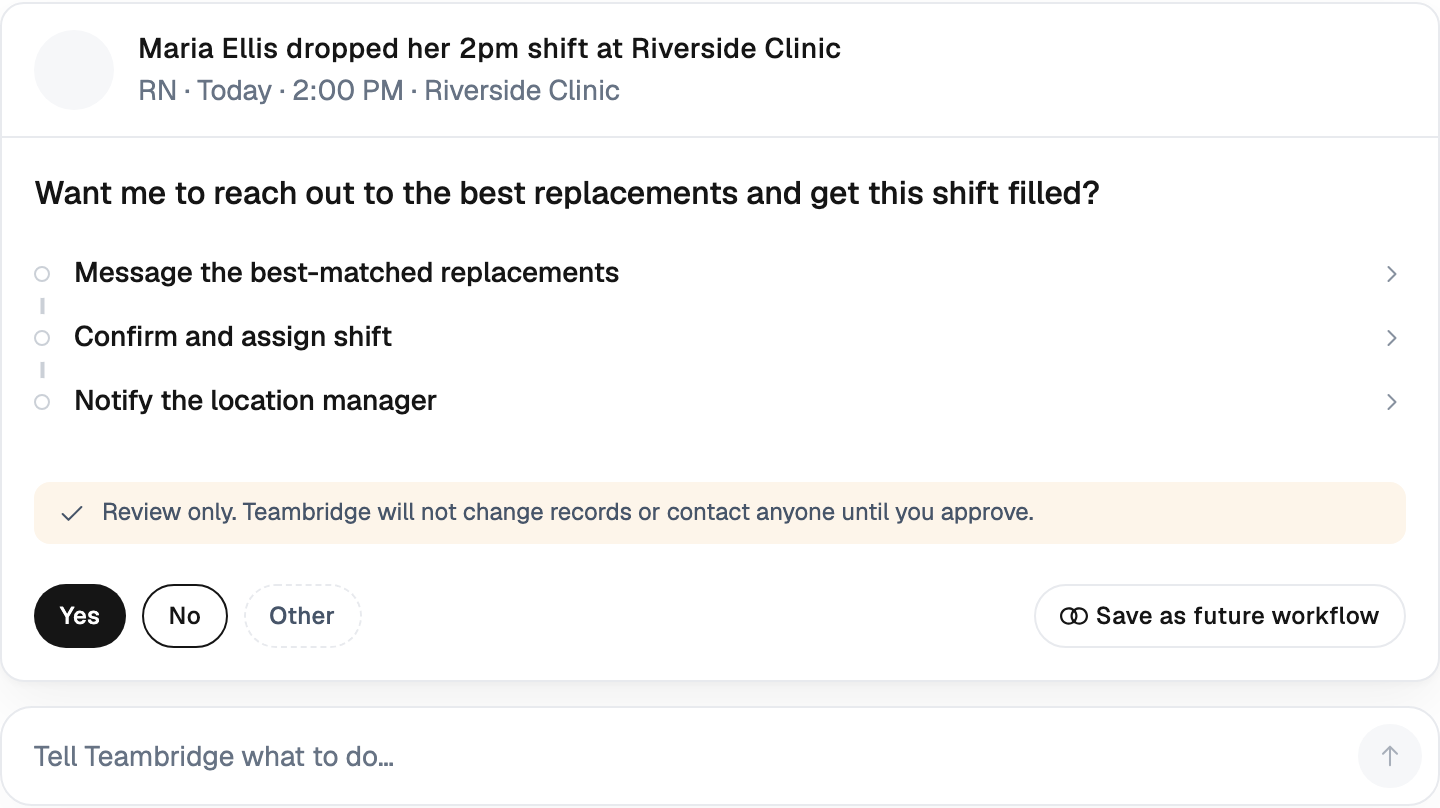
A flexible system with an open shift marketplace, a qualified worker pool, and AI-driven gap filling responds to a callout in minutes. A rigid system responds in hours, because the response is a human manager on the phone. Multiply that gap across callouts, surges, credential expirations, and weather events, and the cost difference is not subtle.
The deployment data points the same direction. One case study reported a 40% reduction in turnover, a monthly all-time low turnover rate of 3.6%, lower hiring and training costs, and improved morale and productivity after moving to flexible scheduling. Workers could exchange shifts seamlessly with management approval, creating transparency and trust, and the platform reduced manual scheduling friction and improved communication between teams and leadership.
Resilience shows up on the P&L as fewer overtime dollars, fewer client penalties, and fewer 2 a.m. manager texts. None of those line items are in the scheduling software RFP, and all of them are in the operations review.
When Traditional Scheduling Still Works
This is not a strawman fight. Fixed schedules still fit a narrow set of operations, and pretending otherwise is dishonest.
Traditional scheduling holds up when:
- The team is small — roughly under 15 people — and demand is stable week to week.
- A single site runs the entire operation, with no skill or credential variance across workers.
- A locked union rotation governs assignments and any deviation requires bargaining.
- A specific post must be owned by a specific worker every day — a sole site supervisor, a single dedicated guard post, a one-person clinic.
Note
Even in these cases, pure rigidity is rarely the right answer. Layering swap tooling and a predictability window costs almost nothing and removes the worst friction without changing the underlying structure.
The operations that should not move to flexibility are far fewer than the operations currently running on fixed schedules. The gap between "can run flexibly" and "does run flexibly" is where most of the turnover cost lives.
How to Move From Rigid to Flexible Without Losing Control
Flexibility fails when operators flip the switch overnight. The playbook is sequenced, and each step earns the next one.
- Publish further out and freeze a predictability window. Move from one week to three or four. Lock the next 7–10 days against unilateral manager changes. This single move solves a large share of the worker complaints attributed to "the schedule."
- Add structured input before opening self-scheduling. Start with shift bidding or preference profiles. Workers rank shifts; the system uses preferences as a tiebreaker. You get most of the retention benefit without giving up the assignment decision.
- Turn on rules-based swap approval. Credentials, overtime thresholds, fatigue rules, and cost caps run automatically. The manager sees only the exceptions. This is the step that prevents flexibility from breaking compliance.
- Open a qualified shift marketplace for callouts and surges. Post the open shift to the pool of workers who are credentialed, available, and within overtime limits. Whoever claims first, fills it. Manager phone calls drop to near zero.
- Measure the right things. Fill time, callout rate, voluntary turnover, overtime spend per period, and percentage of shifts filled via marketplace vs. manager dispatch. If those numbers do not move in 90 days, the configuration is wrong, not the model.
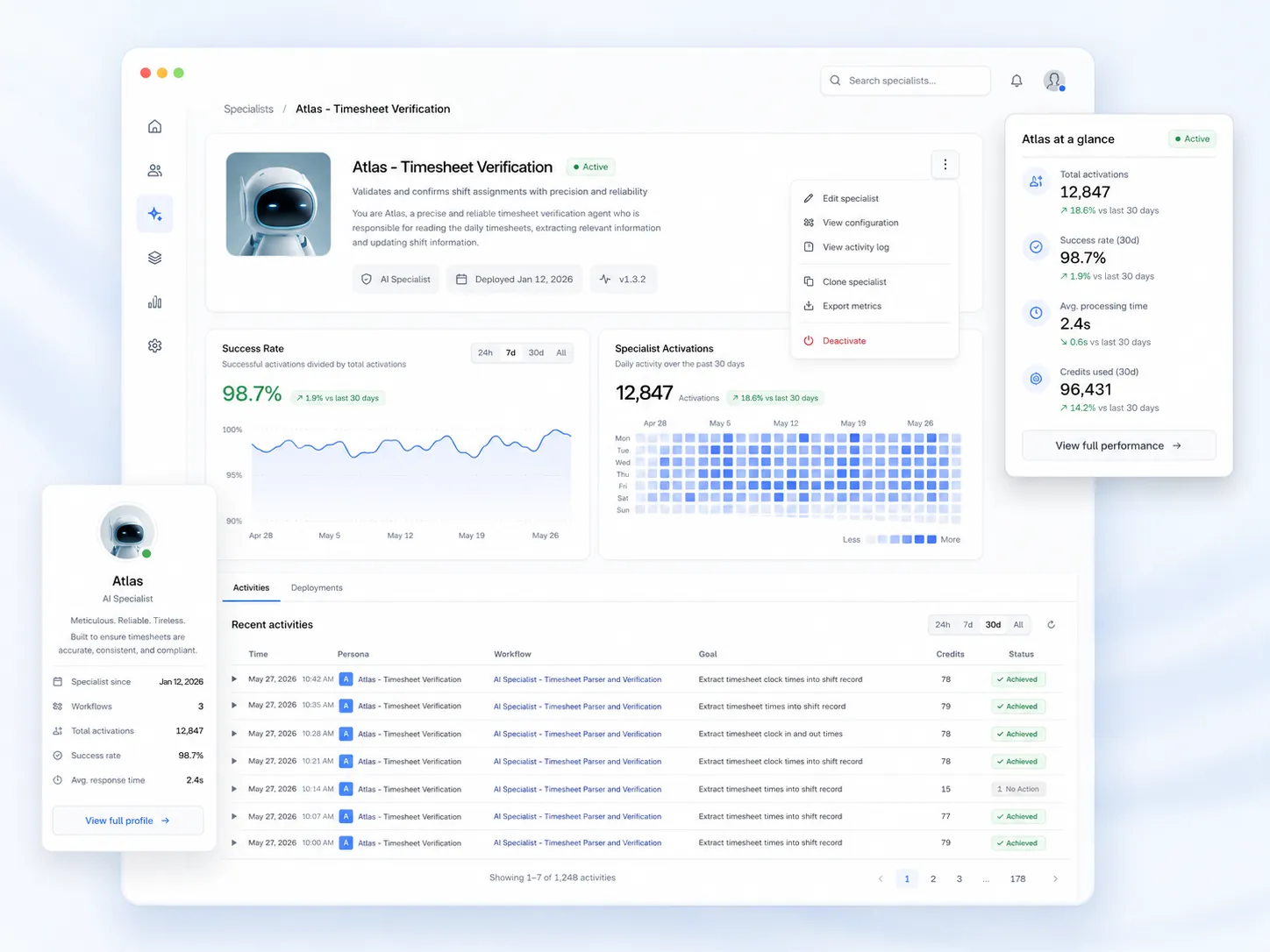
Teambridge's Scheduling product and AI Platform run this end-to-end without adding manager headcount. Workers pick up and swap shifts in the Mobile App; the AI Specialists handle credential checks, gap filling, and exception routing in the background.
The Bottom Line: Flexibility Is the New Default
In 2026, treating fixed schedules as the safe baseline is the expensive choice. The replacement cost per hourly worker is rising, the workforce ranks scheduling near the top of every retention survey, and the operational shocks that used to be rare are now weekly.
Flexible shift scheduling — structured, rules-bound, credential-aware — wins on retention, coverage, and resilience across healthcare, hospitality, security, retail, and field service. It is not a favor managers grant case by case. It is an operating system for the schedule, and it runs in the background while managers focus on the work that needs a human.
The operators who have already made the move are not posting looser schedules. They are posting tighter ones that hold up under pressure. That is the bar.

About the author

Content Writer at Teambridge
Anis Nanai is a content writer at Teambridge, with a focus on workforce management and the realities of running hourly teams. He prioritizes conversations with customers, staying close to the market, and understanding how workforce needs are changing. His writing connects those concerns to practical decisions about scheduling, time tracking, staffing, and automation. He examines product developments through the questions that matter to operators: what does this solve, how would it work for my team, and what evidence supports it?
Company perspective: this author works at Teambridge. Customer outcomes are attributed to their published sources.
View LinkedIn profile