

The 3 a.m. Load-In Call That Exposes the Whole System
A call steward in Market A confirms a rigger for a 6 a.m. arena load-in. The same rigger is already on a Market B hiring-hall sheet for an overnight strike that won't release until 5 a.m. Both calls are real. Both stewards followed their referral rules. Neither knew about the other.
That is not a typo. That is a structural visibility gap.
IATSE hiring halls run independently by design. Local 15 in Seattle, Local 101 in New York/New Jersey, Local 122 in San Diego — each operates its own referral list with its own rules, dispatchers, and call stewards. IATSE Local 15 maintains a worker referral service through a Hiring Hall where employers reach out with a job, the local posts it, workers pick the jobs they want, and the local sends them out to the job site — workers access work from any number of employers through one place. At Local 101, a Call Steward or a designee assigned by the Executive Board makes all work referral calls, informing the worker of the date, time, venue, and any special instructions such as tools, gear, clothing requirements, parking, or other venue-specific requirements.
The problem: freelancers legitimately work across multiple locals. A rigger in the Northeast might be on referral lists in three adjacent jurisdictions. A worker who has logged 500 hours in a calendar year, 750 hours across two consecutive years, or 160 hours at a represented employer may be eligible for membership, and members in good standing of another IATSE Local can also contact the local. That mobility is a feature for the worker. It is a coordination nightmare for the coordinator.
And it is getting worse. Even as COVID eased and demand for live events rose again, freelancers who left the production industry never returned, causing a massive labor shortage, and although the freelance pool has regained strength, the available quantity of technicians has caused strife within the industry. Fewer hands, more shows, same names.
Why Adjacent-Market Load-Ins Collide More Than Ever
Three forces are compounding to drive double-books.
First, the freelance pool shrank and never fully rebuilt. Freelancers have the ability to be more selective about events they work, they require more advanced notice, and where pre-COVID you could secure a freelancer within a month of an event, post-pandemic freelancers have more options and are demanding more.
Second, event volume is back. According to the Las Vegas Convention and Visitors Authority, more than 5.2 million people attended trade shows and conventions in Las Vegas in 2024, putting intense pressure on staffing resources across hotels, venues, and service providers. Convention cycles run back-to-back in Vegas, Orlando, and Chicago. Touring concerts overlap. Arena bookings stack.
Third, crews travel. The same names are appearing on call sheets in two cities the same week — sometimes the same day. Coordinators are no longer scheduling a local roster. They are scheduling a regional pool they don't fully own.
When the steward only sees their own list, every confirmation is a guess about the other 90% of the worker's calendar.
The Math of an Overlapping Week
Consider a typical mid-tier rigger working a 7-day window across two adjacent markets:
| Day | Market A Call | Market B Call | Conflict Risk |
|---|---|---|---|
| Mon | Arena load-in, 8a–4p | — | Low |
| Tue | Show call, 5p–11p | Convention pre-rig, 6a–2p | Same-day overlap |
| Wed | — | Show call, 4p–12a | Low |
| Thu | Strike, 11p–5a | Load-in, 6a same day | Turnaround violation |
| Fri | — | Show call, 5p–11p | Low |
| Sat | Load-in, 6a–2p | Strike, 11p–5a | Stacked OT |
| Sun | Show call, 4p–10p | — | Low |
Without a shared availability view, the Thursday strike-to-load-in slip is invisible to both stewards until the worker no-shows.
The Visibility Gap Between Hiring Halls, House Crews, and Call Sheets
Four scheduling surfaces rarely talk to each other.
- The union hiring hall referral list. Maintained by the Call Steward or Business Agent, ordered by seniority and rules specific to that local.
- The house crew at the venue. A small, fixed group with priority on calls at that building. At the Fox Theatre, the venue in its sole discretion designates six individuals to be the House Crew — the Head Carpenter, Head Electrician, Assistant Electrician, Head Prop Person, Head Sound Person, and Head Flyman — with one designated as the lead person.
- The touring production's advance call sheet. Built by the production manager weeks ahead, often shared by email or PDF.
- The labor provider's internal roster. A staffing company's own database of freelancers, frequently overlapping with the union pool.
Each holds a partial truth about who is available. The coordinator reconciling them is reading spreadsheets, group texts, and phone notes. That is exactly the environment where a double-book slips through.
Building a Cross-Market Availability Layer Before You Confirm a Call
The operational fix is not another spreadsheet. It is a shared availability layer that sits above local rosters and exposes the same worker's status across markets in real time.
Concrete requirements:
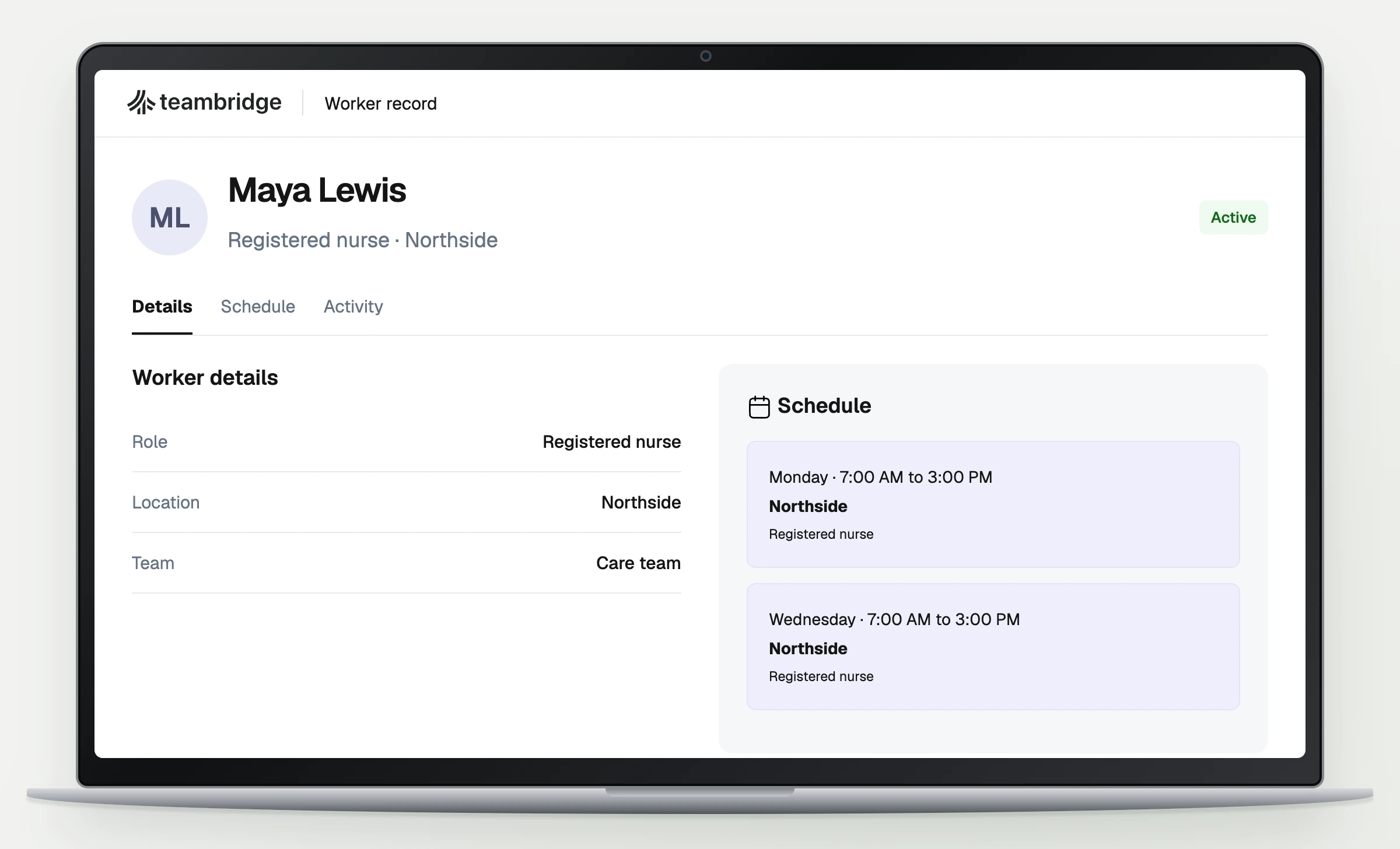
- Single worker profile across markets. One identity, one credential record, one source of truth for availability — even when the worker is dispatched by three different locals.
- Real-time hold and confirm status. A pending offer in Market B is visible to the steward in Market A before the second call is confirmed.
- Turnaround rules baked in. Minimum hours between a strike call and the next load-in are enforced at schedule time, not discovered at clock-in.
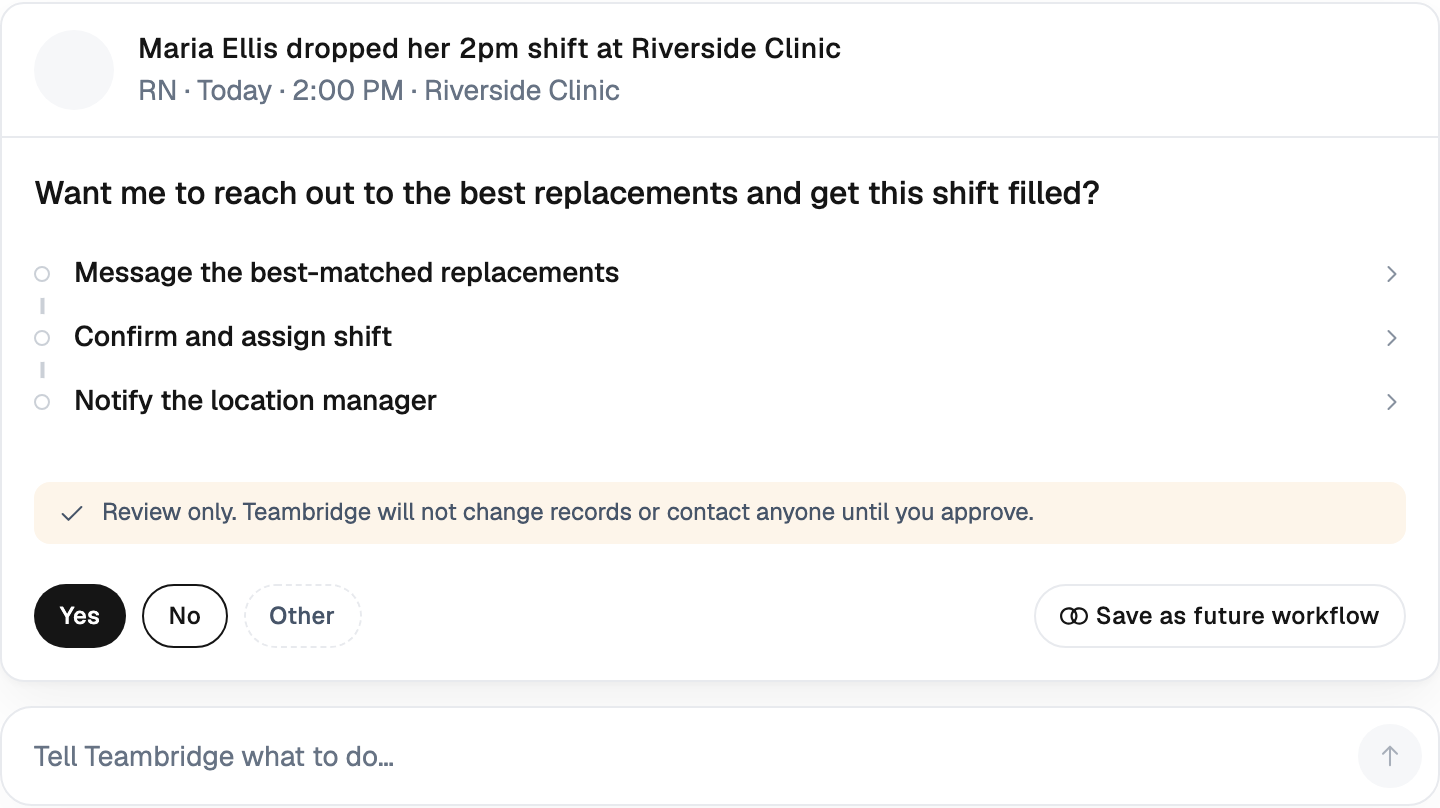
- Conflict detection at assignment. AI flags the overlap the moment the call sheet is built — not after the worker no-shows at 5:45 a.m.
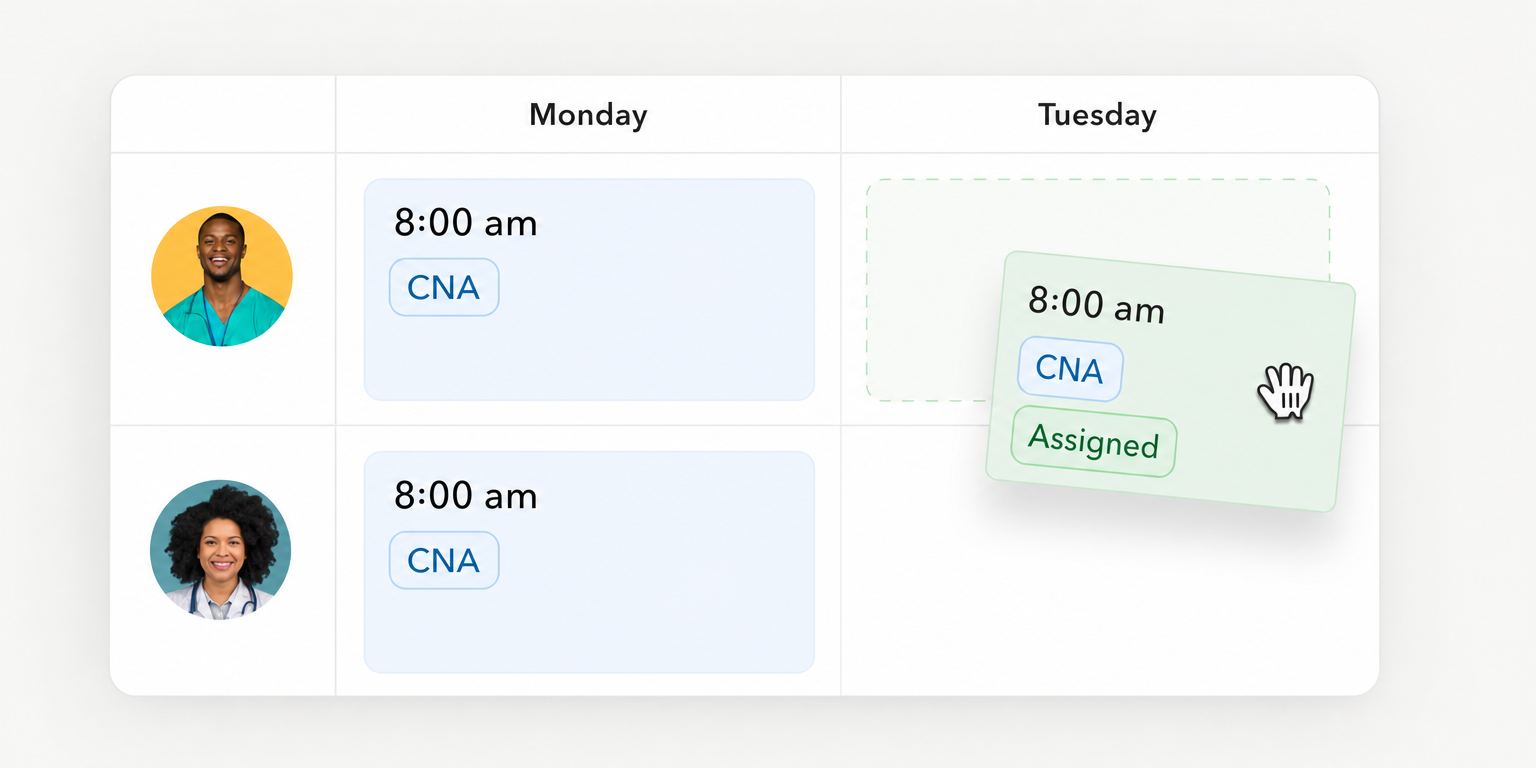
This is the operational layer Teambridge's scheduling product is built for: AI-driven shift scheduling that auto-fills gaps, enforces credentials, and flags conflicts before they become no-shows.
Enforcing Turnaround Rules and Show-Call Minimums Automatically
The contract math is already written. The problem is enforcement at schedule time.
Take a typical Fox Theatre IATSE Local 927 agreement. All stagehands reporting for any work call shall be paid a minimum of four hours reporting pay, except under taping rate conditions and load-in of commercial rate events. Overtime — a wage equal to one and one-half times the applicable base hourly rate — is paid for all hours worked in excess of eight during any single weekday on Work Calls and Continuity Calls, all hours worked between 12:00 midnight and 8:00 AM on Work Calls and Continuity Calls, and the first ten hours worked during a Saturday or Sunday on Work Calls and Continuity Calls.
Rigging adds another layer. When a show or event requires more than 6 motors hung, the stagehands who perform such work are guaranteed a minimum of a four-hour work call at the Rigging rate of pay, and when 6 or fewer motors are hung, stagehands performing such work are paid the Rigging rate in one-half hour increments only for the time actually engaged in such work.
And turnaround is now front-and-center in IATSE bargaining. IATSE members want a 12-hour turnaround time, want to double the current penalties for an invasion of turnaround, and want an increased overnight premium between the hours of 12 AM and 6 AM in addition to regular wages and irrespective of call time.
Warning
A coordinator who unknowingly books a stagehand into a strike-to-load-in window inside a 12-hour turnaround isn't just risking a no-show. They're triggering penalty math, OT stacking, and a steward grievance — all before the truck arrives.
Rule-based scheduling prevents the conflict at the moment of assignment. The coordinator sees the violation before the call sheet goes out. Certified payroll downstream stays clean because the underlying schedule was clean to begin with.
Credentials, Skill Tags, and Why the Wrong Replacement Is Worse Than No Replacement
When a double-book surfaces 12 hours before load-in, the scramble pulls in whoever is free. That is how a non-rigging-certified hand ends up on a chain hoist.
The contract already pays a premium for the right cert. At the Fox Theatre, all stagehands who are certified electricians or riggers as a consequence of passing the ETCP test receive, in addition to the prevailing hourly rate, an additional $1.50 per hour for all hours in which they perform work as such. ETCP (Entertainment Technician Certification Program) isn't a nice-to-have — it is the line between a legal hang and a liability event.
A real replacement engine needs three layers:
- Credential expiry tracking. OSHA-10, ETCP rigging, fall-protection/harness training, forklift cert — all with expiration dates that block assignment when lapsed.
- Skill tags that match the call. "Rigger" is not one thing. Up-rigger, down-rigger, automation tech, ground rigger, truss flier — these are distinct.
- Credential gating at assignment, not at clock-in. If the credential isn't current, the schedule won't let the assignment happen.
Discovering a missing cert at the time clock is too late. The crew is already on the floor. The Teambridge scheduling layer enforces credential currency before the assignment is offered, not after.
Communication Discipline: Confirmations, Holds, and the End of "I Thought You Knew"
Most double-bookings trace back to ambiguous status. A "soft hold" the worker treated as available. A confirmation by text that never made it into the schedule of record. A producer's PA who pencilled a name in a Google Doc.
There is often no central way of communicating with the team — it's common to use email, WhatsApp, calling, and texting to communicate with different team members, and if there's a last-minute change, the coordinator has to remember each team member's preferred communication method, which quickly gets chaotic and messy across different platforms.
The discipline that closes the gap:
- Explicit hold vs. confirm states. A hold is not a confirmation. The system should display them differently and require an explicit transition.
- Mobile push confirmations with timestamps. The worker taps accept or decline. The timestamp lives in the audit trail.
- Automatic release of holds after a deadline. If a hold isn't converted to confirm within X hours, it releases the worker back to the pool — automatically.
- A single thread per call. Steward, producer, and worker see the same status object. No more parallel text chains telling different stories.
Tip
Replace the soft hold. If your scheduling tool can't show the difference between "penciled" and "locked," your coordinators are gambling every week. A timestamped accept/decline beats a 12-message group text every time.
This is also where audit trail matters. Once a referral has accepted a work call, should they need a replacement for whatever legitimate reason before or during the call cycle, the union must be notified at least twenty-four hours prior to the relevant report time, and under no circumstance will anyone be allowed to replace themselves. Enforcement of that 24-hour rule depends on a timestamped record of when the original confirmation occurred. Group texts don't qualify.
What Coordinators Should Demand From Their Scheduling Stack
A buyer's checklist for live-event labor coordinators running across multiple locals and markets:
- Cross-market worker identity. One profile, multiple locals, one availability view.
- Real-time conflict detection at assignment. Not a post-mortem report — a hard stop at the moment of the offer.
- Union-rule enforcement. Turnaround minimums, daily and weekly OT triggers, rigging premiums, show-call minimums all encoded.
- Credential gating. Expired ETCP, OSHA, or harness training blocks assignment.
- Mobile confirm/decline with audit trail. Timestamped acceptance, automatic hold release, single thread per call.
- Clean handoff to certified payroll. The same schedule that built the call sheet feeds the payroll register.
For coordinators who run live events and venue staffing, this isn't a wish list. It is the operating minimum.
The industry already knows the technology exists. AI-powered scheduling tools and automated platforms streamline operations, and according to the State of Staffing report, 61% of staffing firms already use AI, up from just 48% the previous year, with 74% of agencies not yet using AI planning to adopt it soon, positioning AI as a near-universal staffing tool. The question is whether your stack actually closes the cross-market gap or just digitizes the spreadsheet.
A Final Check Before Next Week's Load-In
Look at your upcoming 7-day window. Three questions:
- If a rigger on tomorrow's call is also on a hiring-hall list in the adjacent local, does your system know?
- If a strike call ends at 5 a.m. and a load-in starts at 6 a.m., does your system block the assignment or just record the violation later?
- If the ETCP cert expires the day before show day, does your system flag it when the assignment is offered — or when the rigger steps onto the chain motor?
If any answer is "no," the next double-book is already on the schedule. You just haven't seen it yet.
Walk through your next overlapping load-in week with the Teambridge team. We'll map the conflicts your current stack is hiding before the steward calls you at 3 a.m.

About the author

Content Writer at Teambridge
Anis Nanai is a content writer at Teambridge, with a focus on workforce management and the realities of running hourly teams. He prioritizes conversations with customers, staying close to the market, and understanding how workforce needs are changing. His writing connects those concerns to practical decisions about scheduling, time tracking, staffing, and automation. He examines product developments through the questions that matter to operators: what does this solve, how would it work for my team, and what evidence supports it?
Company perspective: this author works at Teambridge. Customer outcomes are attributed to their published sources.
View LinkedIn profile