

The pour starts at 1:00. The crane sits. The ground crew sits. The pump truck meter runs.
This is not a credential problem. It is a credential data problem — one that costs general contractors hours of crane time every week, and one that's about to get a lot more expensive.
Why a Tower Crane Goes Idle at 10:47 AM
The scenario above is not hypothetical. It's the operating reality on any GC project that runs two or more active sites with a shared subcontractor crew. The credential exists. The worker is qualified. The system that should have caught the lapse is a printed weekly roster from Monday, a subcontractor HR email thread, and a site super's memory.
The stakes are not theoretical either. OSHA announced its most frequently cited workplace safety standards for fiscal year 2025, with Fall Protection – General Requirements topping the list for the 15th straight year. Fall Protection – General Requirements (1926.501) drew 5,914 violations in FY 2025.
The financial exposure has climbed in parallel. The maximum penalty for willful or repeated violations increased from $161,323 to $165,514 per violation in 2025. Beyond physical safeguards, employers are failing to provide adequate fall protection training to workers, a critical part of compliance and prevention — fall protection training requirements drew another 1,907 citations on their own.
A single mid-shift rotation where a lapsed fall-protection cert slips through can cost the pour window, the crane day, and — if OSHA happens to walk the gate — six figures per violation.
The gap between "the worker is certified" and "the GC can prove the worker is certified at this site, right now, under this hazard profile" is where money disappears.
The Two Credentials That Have to Match the Worker, Not the Site
Tower crane work pivots on two distinct credential streams that operate on different clocks and answer to different rules. Most GCs track them per project. That breaks the moment a worker crosses a property line.
NCCCO Tower Crane Operator certification (29 CFR 1926 Subpart CC)
Federal OSHA 29 CFR 1926 Subpart CC requires tower crane operators involved with construction work to be certified. The initial certification period is for five years. To maintain their certification, certificants are required to recertify prior to their expiration date.
That five-year window sounds generous until you remember it's not the only clock. The cert is tied to crane type. An operator certified on a hammerhead tower is not automatically certified on a luffing jib. Move the worker to Site B with a different machine and the qualification question reopens.
1926.503 fall protection training
This is the credential that fails most often, because it's not a one-time card. The standard requires retraining whenever workplace changes render previous training obsolete, when equipment changes, or when a competent person observes deficiencies. Each training event must carry the worker's name, the training date, and the competent-person signature.
The credential lives with the worker. The hazard profile lives with the site. The retraining trigger lives with whichever event happened most recently — and on a rotating crew, that event might have happened on a site the destination super has never seen.
Where the Gaps Actually Open: Subcontractor Handoffs
Walk the failure modes in order:
- The cert PDF lives in the sub's HR drive. Site super never had a copy. Sub HR is off Friday afternoon.
- The printed roster is Monday's. Today is Thursday. Two crew swaps happened in between.
- Retraining was triggered at Site A. An anchor-point change required task-specific retraining under 1926.503(a)(2). The sub's safety lead logged it on Site A's binder. Site B has no record.
- The supervisor inherits the liability. Under current enforcement posture, the foreman on shift owns the credential check at the point of work. If an operator climbs an unqualified setup, the supervisor's name is on the citation.
- OSHA arrives. The steepest fines apply to willful and repeat violations, which rose from $161,323 in 2024 to $165,514 in 2025, an increase of $4,191. A willful violation reflects a knowing disregard of OSHA standards or plain indifference to worker safety.
"We didn't know" stopped being a defense the moment digital recordkeeping became standard. If the data was available to the sub but not surfaced to the GC's gate-in process, that gap reads as plain indifference.

The Gate-In Test: Can You Block an Untrained Worker Before They Touch the Hoist?
Here is the operational question every GC should be able to answer with a yes or no: when a rotating sub crew badges into Site B at 12:40, does the gate system know — in that moment — whether each worker's fall protection retraining is current for the hazards present on Site B today?
If the answer is "the super will check the binder," the answer is no.
"Live" means three things:
- Expiry-aware. The system holds the cert expiration date and the next retraining trigger date, not just the issue date.
- Trigger-aware. Equipment changes, site changes, and observed-deficiency events propagate to the worker's profile within minutes, not at the next safety meeting.
- Block-capable. A missing or stale credential produces a hard stop at clock-in. Not a yellow warning the super can wave through.
The McInnis-style outcome — where an incident occurs but the GC can produce a complete digital audit trail showing training was current, competent-person signed, and content-itemized per 1926.503(a)(2) — is what separates a closed file from a willful citation.
Building One Credential Ledger Across GC, Sub, and Staffing Agency
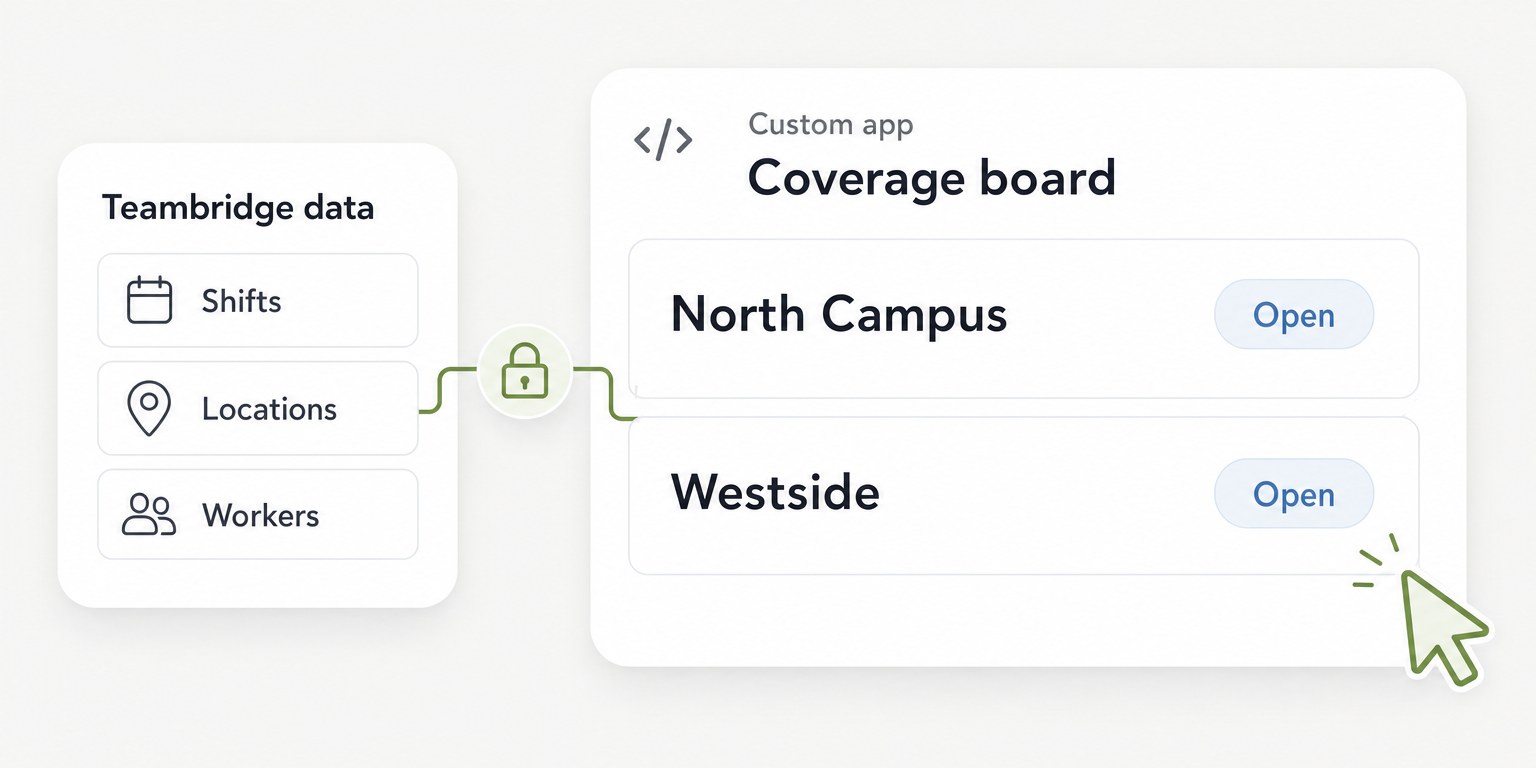
The fix is structural. Stop treating each subcontractor's credential list as a separate document. Build one ledger, owned by the GC, fed by every sub and staffing partner, attached to the worker — not the project.
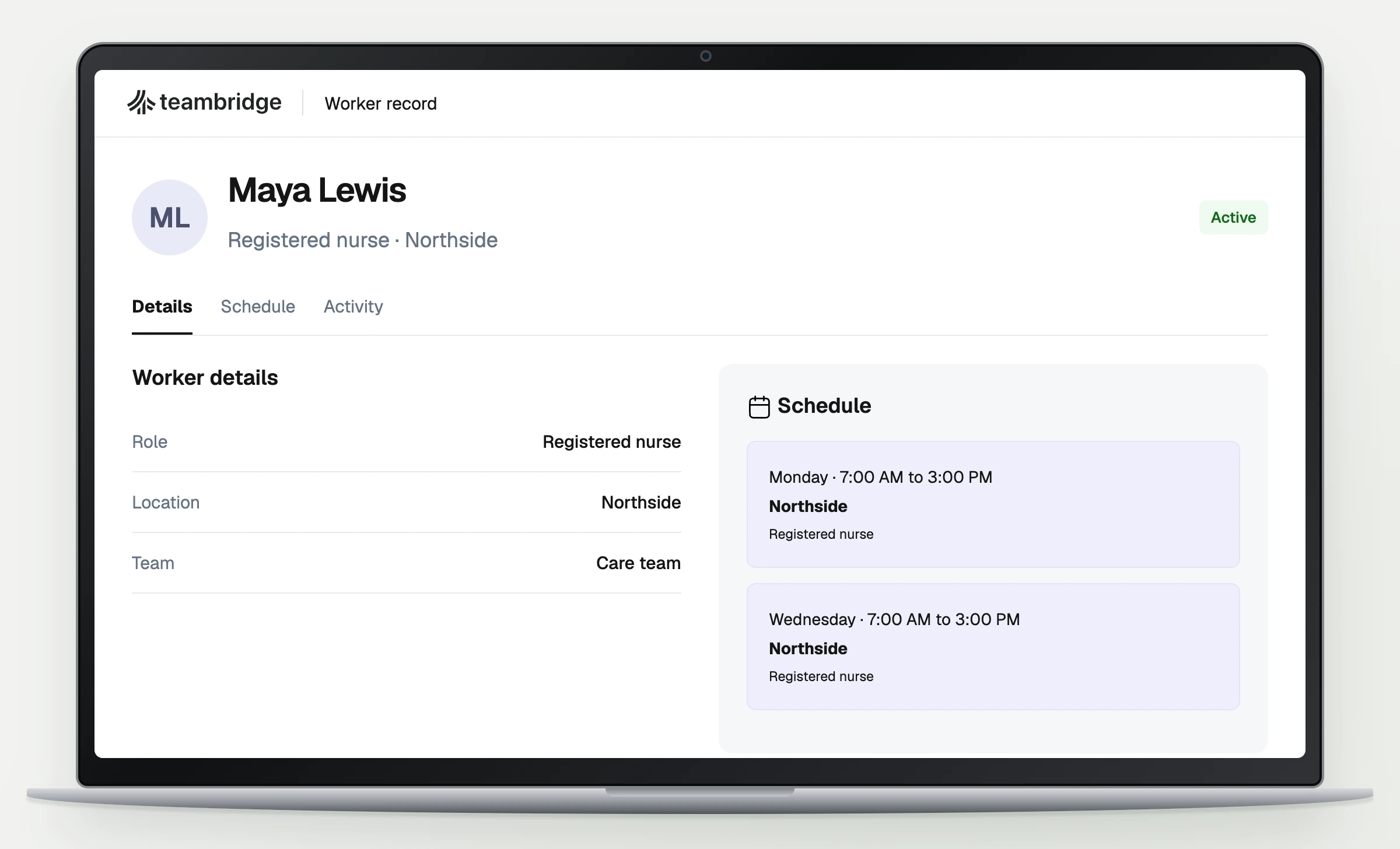
This is the model Teambridge's construction workforce platform is built around: every worker carries their cert package across sites, and gate-in checks query the live ledger before the crane is energized.
What the ledger has to hold per worker
| Credential Element | Source | Refresh Trigger | Block on Missing? |
|---|---|---|---|
| NCCCO Tower Crane Operator cert | Sub HR upload | 5-year expiry, crane-type change | Yes — hard stop |
| 1926.503 fall protection training record | Competent-person signed | Equipment change, site change, observed deficiency | Yes — hard stop |
| Site-specific orientation | GC site safety | New site assignment | Yes — hard stop |
| Rescue plan acknowledgment | GC site safety | Plan revision | Yes — soft warn, supervisor override logged |
| Medical clearance (where required) | Sub HR | Annual or condition-triggered | Yes — hard stop |
Document standards that survive an audit
- Trainer name and signature on every fall-protection record.
- Itemized content matching 1926.503(a)(2): nature of fall hazards, correct procedures for erecting/inspecting/disassembling fall protection systems, use and operation of guardrail/PFAS/safety nets, role of each employee in the fall protection plan.
- Date of training and date of any retraining event.
- Worker acknowledgment.
Expiry alerting that actually moves people
- 60 days out: notify worker, sub HR, and assigned GC safety lead.
- 30 days out: schedule retraining, hold a seat.
- 7 days out: flag for hard block; assignment scheduler stops including the worker on tower crane shifts beyond the expiry date.
Important
State plans often impose tighter retraining triggers than federal OSHA. California, Michigan, and Washington each have variations on training documentation and competent-person requirements. The ledger has to apply the strictest applicable rule, not the federal floor, automatically.
Mid-Shift Rotation Playbook: What Has to Happen in the 20 Minutes Before Site B Starts
This is the operational moment where most GCs lose the thread. The crew is in motion. The receiving super is preoccupied with the pour. Nobody is reading PDFs.
Here is what has to fire in the background before the first worker badges in at Site B:
- Pull destination hazard profile. What's the leading-edge work? Are there skylight openings? Is the anchor system different from Site A? The system holds this per site.
- Re-verify each worker's fall-protection scope. If Site B has hazards not covered by the worker's most recent 1926.503 training, flag for task-specific retraining before clock-in.
- Confirm rescue plan coverage. Different sites have different rescue plans. The worker has to be on the active plan for Site B, not Site A.
- Log the handoff. Timestamp, originating site, destination site, credential check result, supervisor of record on each side.
- Gate-in or block. Pass = badge active, crane authorization green. Fail = hard block at the gate, automatic alert to both subs and GC safety lead.
Tip
The 20-minute window is a feature, not a bug. The credential check happens between the truck leaving Site A and the worker reaching the Site B gate. Done in the background, it never adds friction to the rotation. Done manually, it gets skipped every time.
The automation pattern here is the same one Teambridge's AI Specialists run for credential-heavy industries — continuously checking the worker-to-site fit instead of waiting for a human to remember to look.

What This Looks Like When It Works
A GC running three concurrent towers in a downtown core had been losing roughly 4-6 crane hours per week to credential-related delays. The pattern was consistent: a rotating operator showed up at Site C, the super couldn't find current proof of fall-protection retraining on the binder, the sub's office took 30-90 minutes to email a PDF, and meanwhile the crane sat.
After consolidating credential records into a single live ledger fed by every sub:
- Gate-in checks ran in under 30 seconds per worker.
- Retraining flags fired 60 days out, not on the day of the rotation.
- The site super stopped being the system of record. The system was the system of record.
- Crane-hour losses tied to credential gaps dropped to near zero, with the residual coming from equipment-change retraining triggers that legitimately required pulling the worker.
The interesting number isn't the recovered crane hours. It's the audit posture. When a regional inspector walked one of the sites, the GC produced timestamped credential records for every worker on-site within the inspector's first hour. No binder hunting. No sub HR phone tag.
What to Stop Doing Tomorrow
A short list:
- Stop tracking certs in subcontractor spreadsheets. They are out of date the moment a worker rotates.
- Stop relying on printed weekly rosters. Monday's roster is a fiction by Thursday.
- Stop treating 1926.503 fall protection training as a one-time onboarding box. It's a continuous obligation tied to equipment, site, and observed-deficiency events.
- Stop trusting that the sub's safety lead will propagate retraining events across all the sites the worker rotates to. They will not. Not because they're negligent — because the data structure doesn't let them.
- Stop letting the gate-in be the place where the credential question gets asked for the first time. By gate-in, the answer has to already exist.
The underlying shift is small but absolute: the credential belongs to the worker, the hazard profile belongs to the site, and the system has to match them in real time at every transition. Anything less is a citation waiting for the wrong inspection day.
For GCs running multiple active sites with shared sub and staffing-agency crews, this is no longer a nice-to-have. Despite years of emphasis, falls remain the leading cause of death in construction. Enforcement is climbing, penalties are climbing, and the operators who lose hours to credential confusion are not going to recover that time on the back end of the project.
Fix the ledger. The crane stops sitting.
Sources: OSHA Top 10 FY2025 (NSC), OSHA 2025 penalty adjustments, NCCCO Tower Crane Operator certification.

About the author

Content Writer at Teambridge
Anis Nanai is a content writer at Teambridge, with a focus on workforce management and the realities of running hourly teams. He prioritizes conversations with customers, staying close to the market, and understanding how workforce needs are changing. His writing connects those concerns to practical decisions about scheduling, time tracking, staffing, and automation. He examines product developments through the questions that matter to operators: what does this solve, how would it work for my team, and what evidence supports it?
Company perspective: this author works at Teambridge. Customer outcomes are attributed to their published sources.
View LinkedIn profile