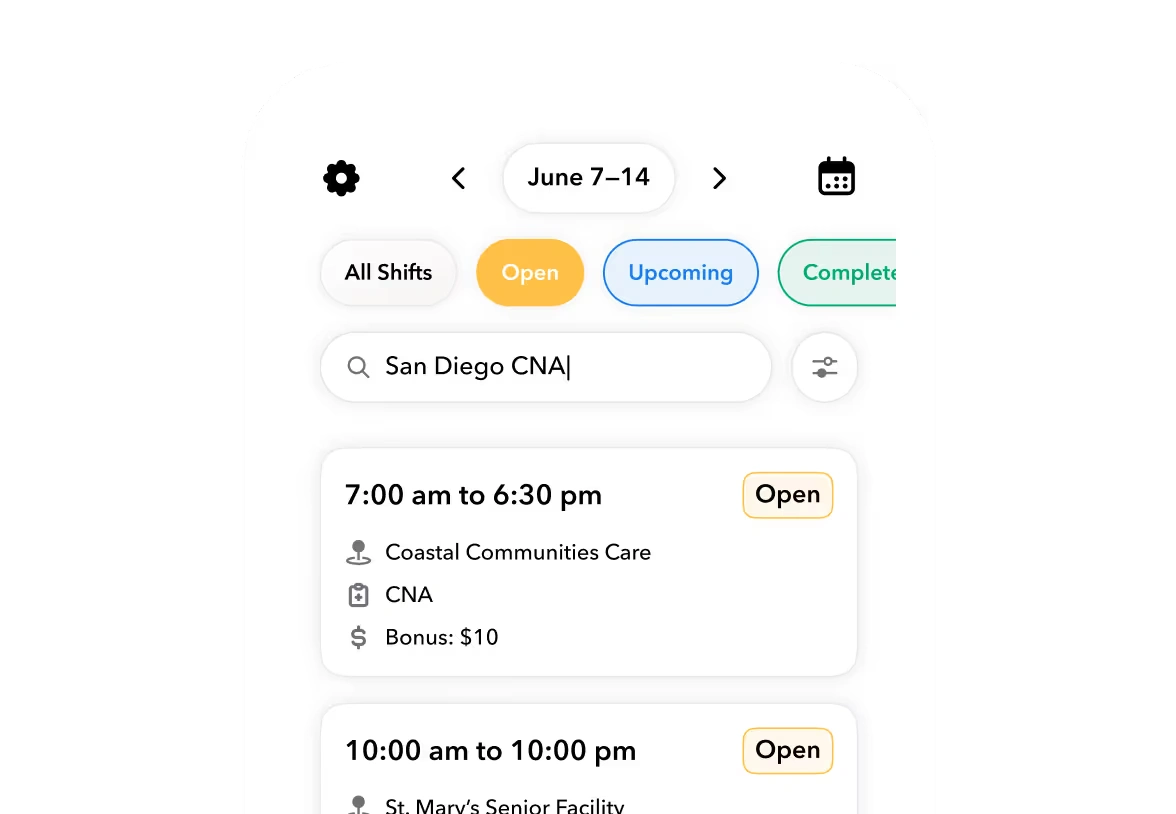


That gap is the story of 2026. Workforce operations is splitting into two camps — operators who run a system of AI specialists doing the repetitive work in the background, and operators still hand-jamming the same tasks they did in 2022. The gap is no longer a tech preference. It's a competitive moat.
The Manager's Day Is 80% Repetitive Admin — That's the Problem Worth Solving
Walk into any staffing agency or healthcare operator at 7 a.m. and watch what the scheduler actually does. Chase a CNA's expiring license. Call seven nurses to cover a 3-11 shift. Reconcile a timecard with a missed punch. Find the I-9 for a new hire starting Wednesday. Repeat for nine hours.
This is not strategic work. It's high-volume, rule-based work that fits a pattern: clear inputs, clear outputs, clear policies. Which is exactly the kind of work AI is now demonstrably good at.
The productivity data has caught up to the anecdote. 27% of AI users save over 9 hours per week, with some power users reclaiming 20+ hours weekly by automating research, drafting, and administrative tasks. McKinsey itself is the loudest case study — last year alone, McKinsey saved 1.5 million hours by using AI for search and synthesis. The firm now operates 25,000 AI agents, which have generated 2.5 million charts in the past six months.
The lesson for workforce ops isn't "buy a chatbot." It's that the repetitive, rules-based portion of a manager's day is the most automatable work in the modern economy. And in workforce operations, that's roughly 80% of the shift.
The future of work isn't a manager with a smarter dashboard. It's a manager directing a team of AI specialists.
AI-Native Operations, Defined: A System of Specialists, Not a Smarter Chatbot
Most "AI in workforce software" today is a chat box bolted onto last year's product. You ask it a question. It answers. Nothing has actually moved.
An AI specialist is different. It is scoped, accountable for a specific operational outcome — fill this shift, verify this credential, flag this timecard — and it runs continuously in the background. No prompt required. The work is the trigger.
Gartner's maturity path makes the shift explicit. Stage 1 (2025) was AI assistants embedded in nearly every enterprise application — systems that simplify tasks but still depend on human input. Stage 2 (2026) is task-specific agents that act independently, automating development, managing incidents, or resolving support cases. Stage 3 (2027) brings collaborative agents working together inside applications. Stage 4 (2028) is ecosystems across apps. Stage 5 (2029) is the new normal, where at least half of knowledge workers will create, govern, and deploy agents on demand.
The jump from Stage 1 to Stage 2 is the one that matters this year. Forty percent of enterprise applications will be integrated with task-specific AI agents by the end of 2026, up from less than 5% today, according to Gartner. An eightfold increase in twelve months. The operators who treat AI as a chat feature will lose to the operators who treat it as a workforce.
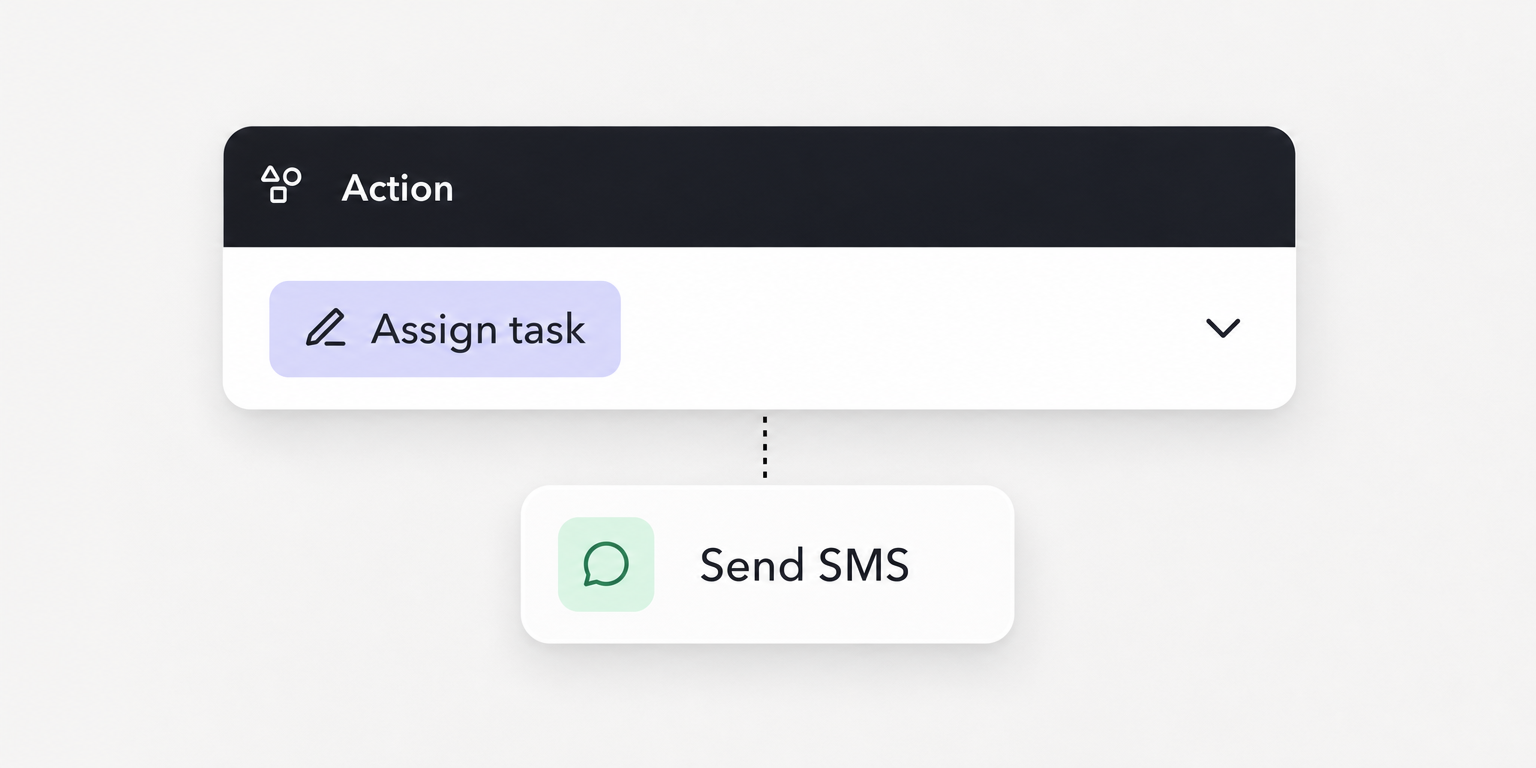
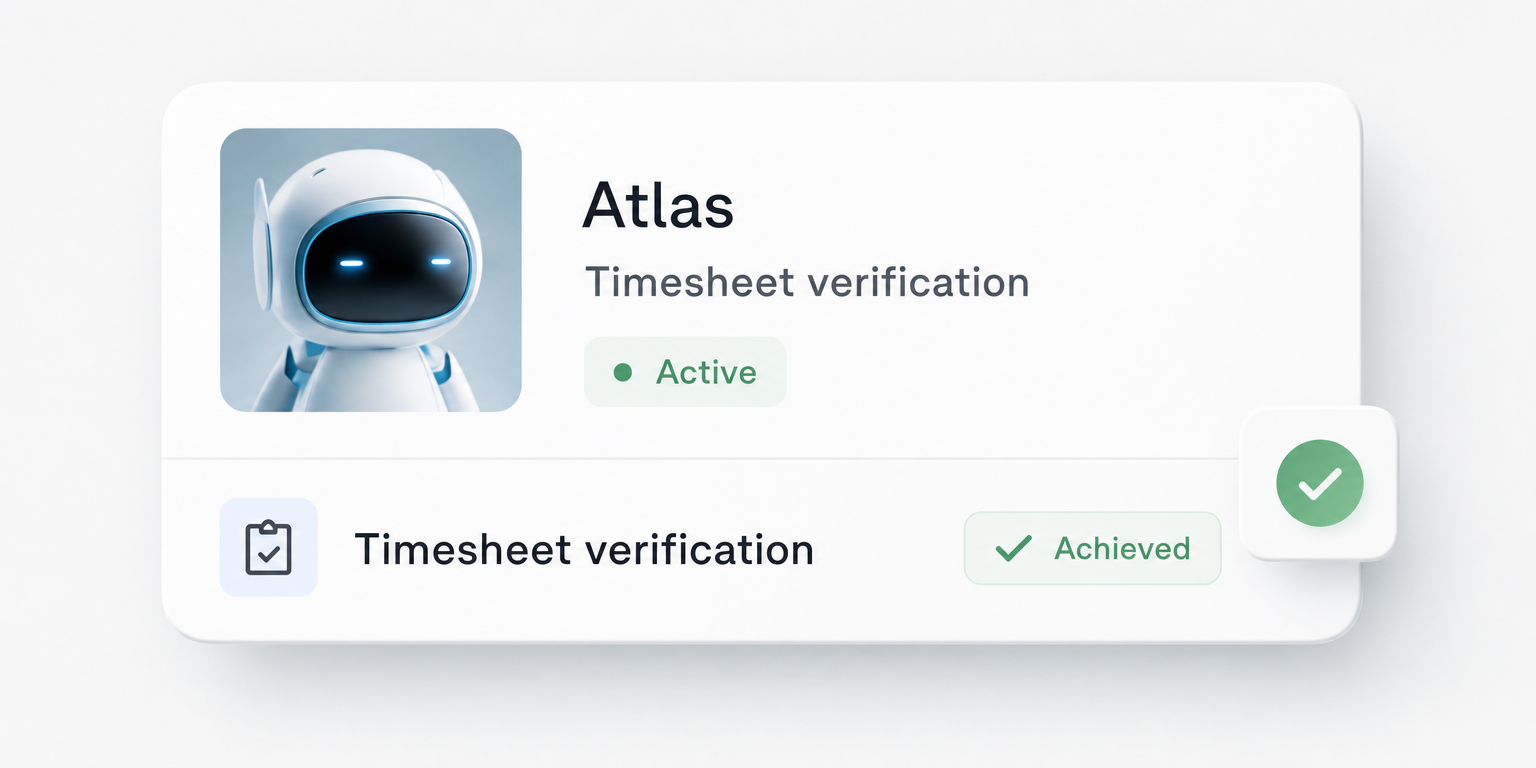
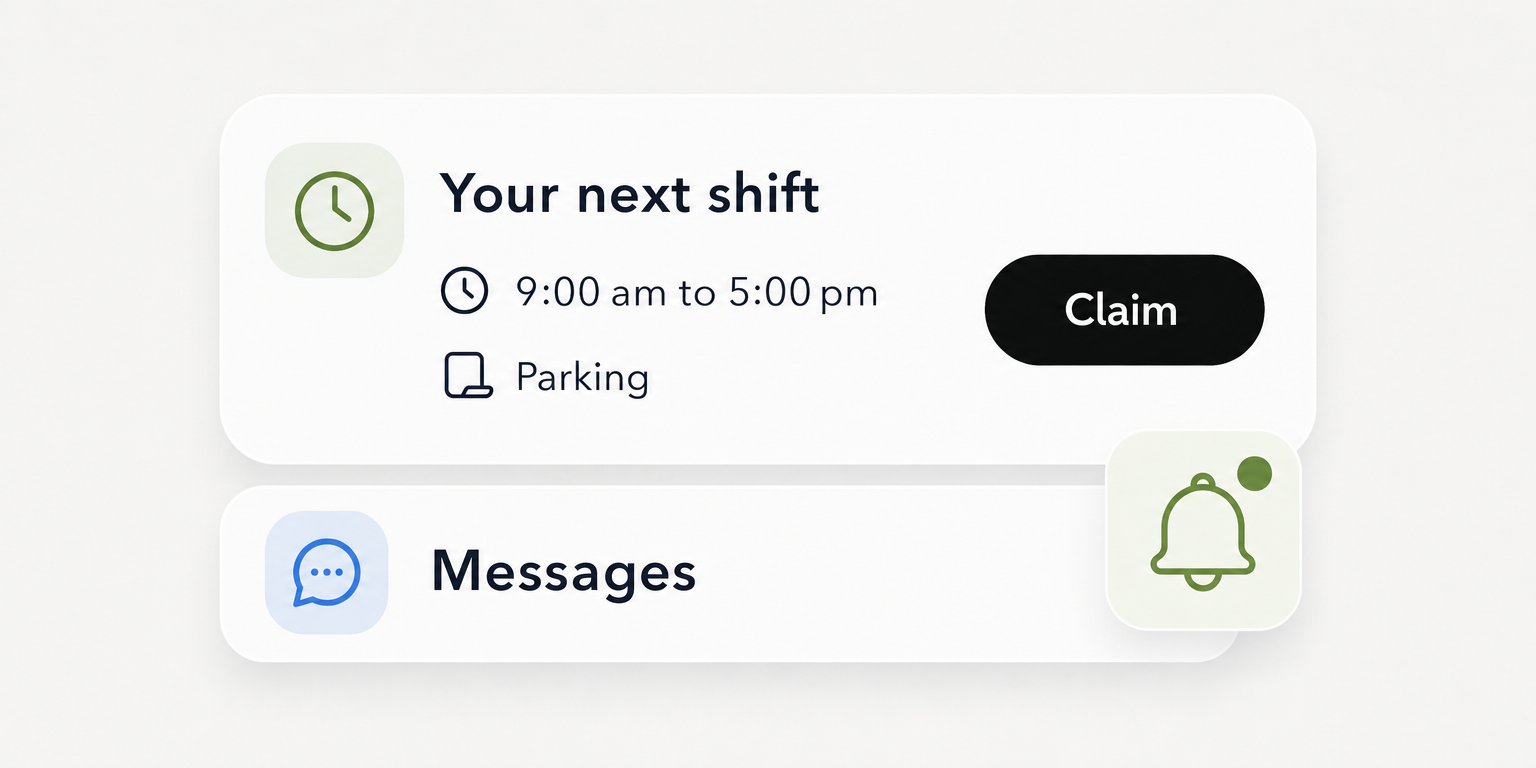
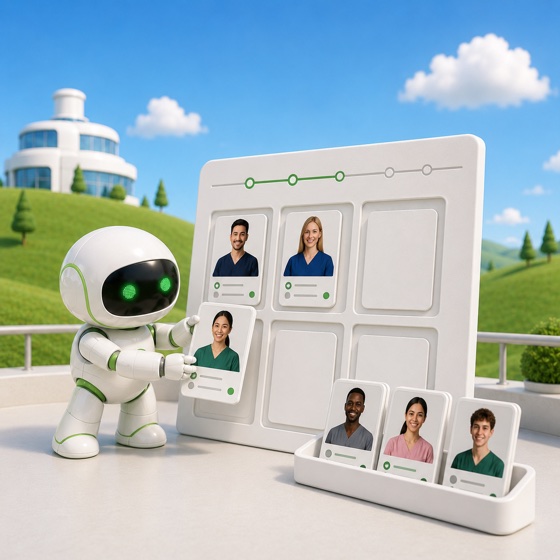
At Teambridge, we build this as a bench of specialists: a compliance specialist, a shift-fill specialist, a payroll specialist, an onboarding specialist. Each one owns an outcome. Each one has a defined human-in-the-loop checkpoint. Our broader point of view on this is in our AI Strategy.
The Compliance Specialist: Credentials and Audit Trails That Never Sleep
Credentials are the silent operational risk in every regulated workforce. A nurse's BLS expires on the 14th. The scheduler doesn't catch it. The nurse works the 16th. The state surveyor visits the 21st. That's a citation, a clawback, and a client phone call you don't want.
A compliance-focused AI specialist does four things, continuously:
- Monitors license and credential expirations across the entire roster — not just the ones on this week's schedule.
- Blocks non-compliant workers from being scheduled or offered shifts they aren't qualified for.
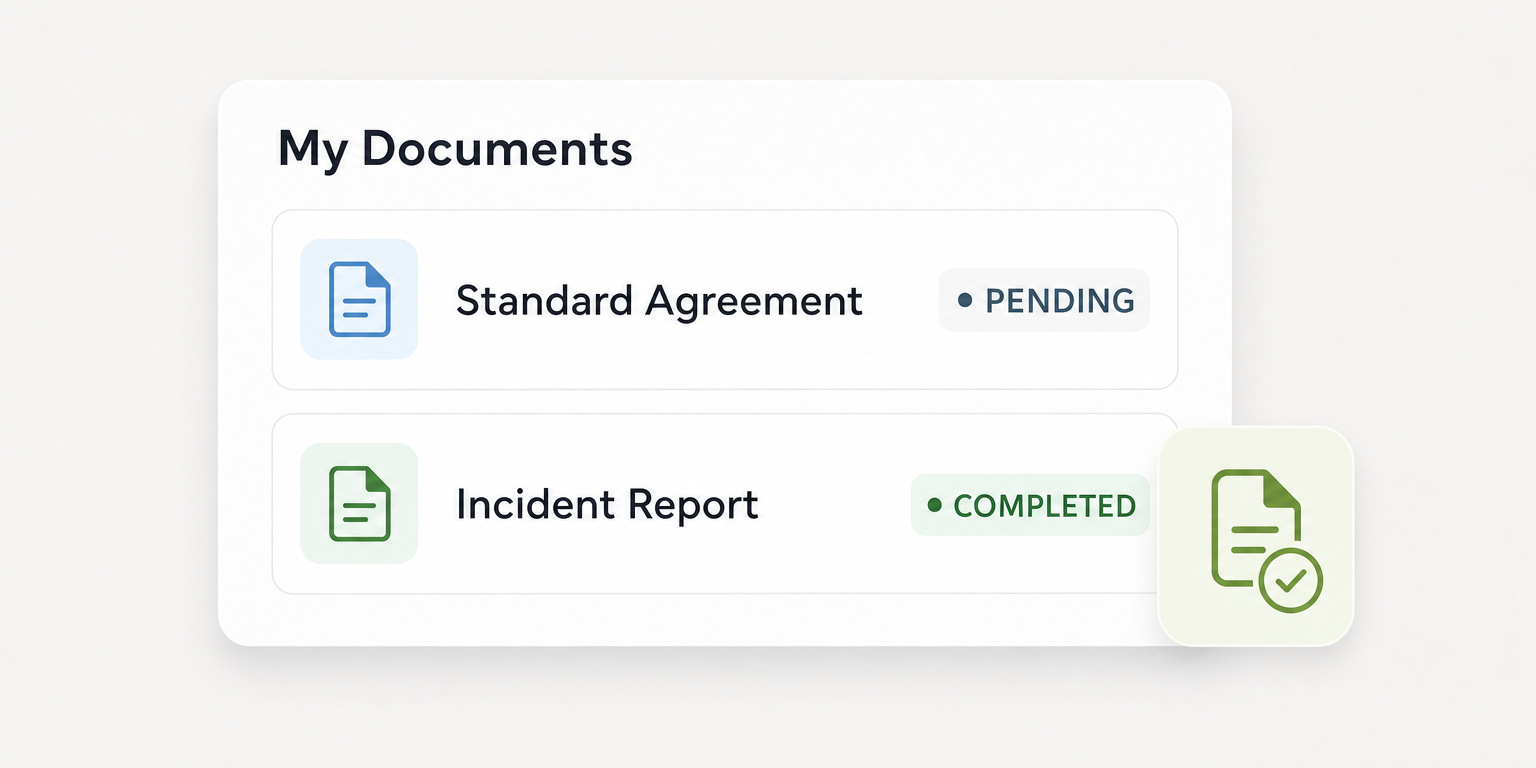
- Auto-generates renewal document packets and routes them to the worker through their mobile app.
- Keeps a timestamped audit trail ready for state surveyors, MSP clients, or internal QA.
This is not a quarterly compliance report. It's a process that runs every hour, against every credential, for every worker on the roster. The closest non-AI equivalent is a full-time compliance coordinator who never sleeps, never forgets, and never misfiles a PDF.
Important
Compliance is now the dominant driver of AI strategy at the leadership level. Frost & Sullivan warns that poorly governed agentic systems increase risk and cost. At 25% adoption, app dev costs could rise ~16% and governance costs over 34%. It recommends dual authorisation and full auditability. A scoped specialist with a clear audit log is the inverse of that risk profile — and the reason we built Document Studio the way we did.
The payoff is sharpest in regulated verticals. For an example of how this plays out in nursing, allied health, and per-diem operators, see Healthcare Staffing.
The Shift-Fill Specialist: Replacing the 2 a.m. Group Text
Here is the current state of the art for most operators filling an open shift: blast a text to 200 workers, take the first "yes," hope they're credentialed, hope they're not in overtime, hope they actually show.
That is not a process. That is a coin flip with a phone bill.
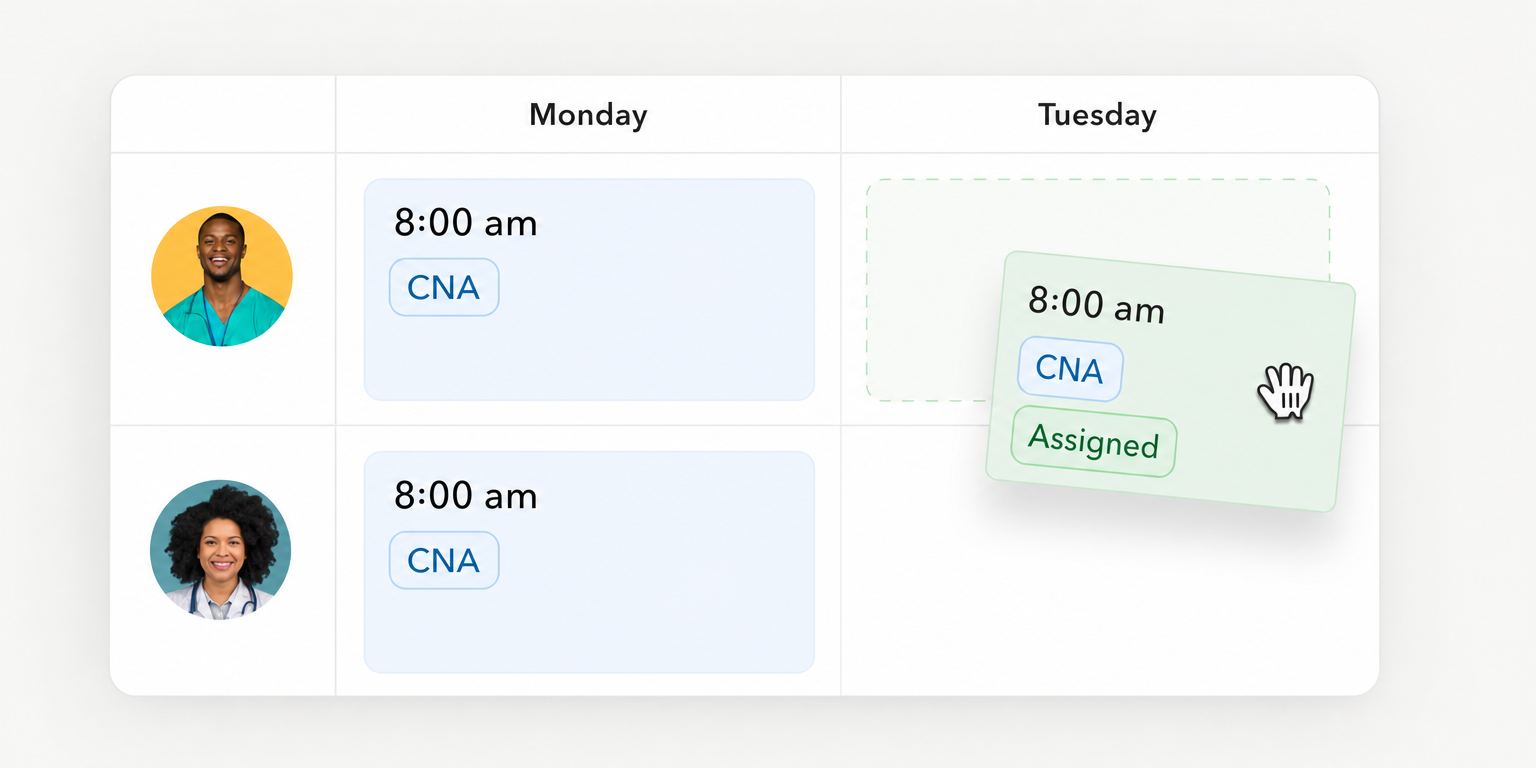
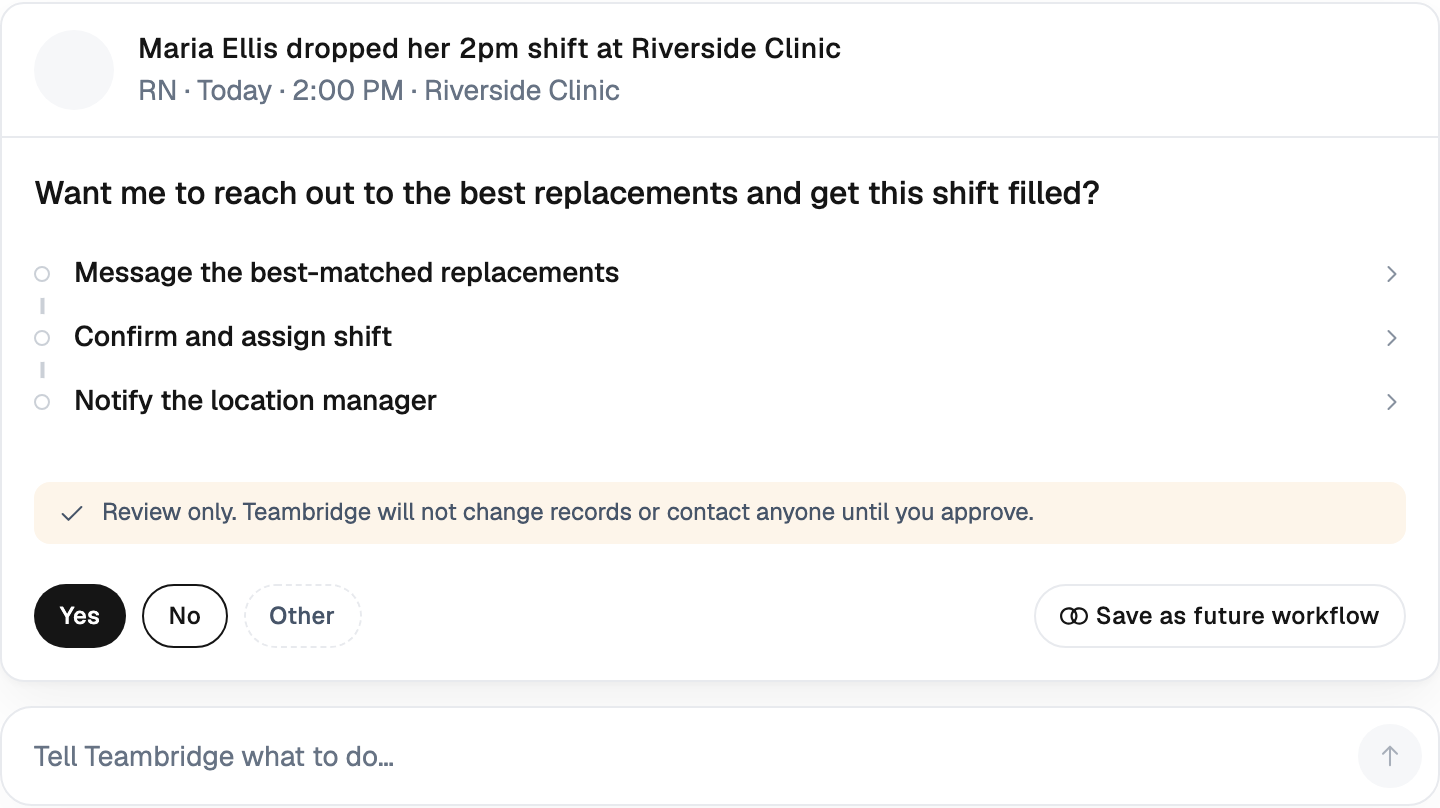
An AI shift-fill specialist replaces the blast with a ranked decision. For each open shift, it scores qualified workers on a small number of variables that actually matter:
- Credential match (licenses, certifications, client-specific requirements)
- Distance to the site
- Overtime status and weekly hours
- Reliability score (history of no-shows and late cancels)
- Stated preferences (shifts, locations, clients they've worked before)
- Bill-rate and pay-rate fit
It sends targeted offers in waves, handles confirmations, escalates if no one bites, and updates the schedule. No mass text. No 2 a.m. phone tree. No one gets offered a shift they're not credentialed for, because the compliance specialist already blocked that path upstream.
Before and after, by the numbers
| Workflow step | Manual shift fill | AI shift-fill specialist |
|---|---|---|
| Time to first qualified offer | 15-45 min | Under 2 min |
| Workers contacted per fill | 50-200 (blast) | 5-15 (ranked) |
| Credential leaks (offers to ineligible workers) | Common | Zero by design |
| Overtime exposure surfaced before offer | Rare | Always |
| Manager touches per fill | 4-8 | 0-1 (exception only) |
| Audit trail | Text screenshots | Structured log |
The productivity ceiling here is not hypothetical. Organizations implementing AI agents report 74% achieving ROI within the first year. In workforce ops, fill rate is the most direct path to that ROI — every unfilled shift is unbilled revenue.
This specialist sits inside Scheduling, and the rules behind it are configured through Automations.
The Payroll & Timecard Specialist: Catching Exceptions Before Pay Day
Timecard exceptions are the silent margin killer. A missed punch here, an unapproved overtime hour there, a wrong pay rate on a 40-shift client, a differential that didn't apply. By Friday afternoon, the payroll team is in a fire drill, and by Monday, half of those errors have already gone out the door.
A payroll-focused AI specialist works on the cycle, not at the end of it:
- Reconciles every punch against the schedule in real time, not at week's end.
- Surfaces exceptions to the right approver — the scheduler for a missed punch, the account manager for a bill-rate mismatch.
- Validates differentials, holiday rates, and client-specific bill rates before the timecard locks.
- Catches overlapping shifts and double-booked workers before they become a clawback.
- Delivers a clean file to payroll without the Friday afternoon scramble.
The broader finance benchmark holds here. AI-powered automation routinely cuts reporting cycle times by roughly a third, and timecard exception handling is the most direct application in a workforce ops context — it's reconciliation work with clear rules and a clear right answer.
Tip
The specialist isn't replacing the payroll team. It's eliminating the part of their week they hate — the exception hunt — so they spend Friday closing the period instead of chasing missed punches. The interface for this work lives in Admin Tools.
Why Specialists Beat a Single "Do-Everything" AI
There is a tempting alternative: one big AI that runs the whole operation. Ask it anything. Tell it anything. Trust it with everything.
That is also the pattern that fails most often. Industry research consistently shows that roughly a third of enterprise AI projects stall after pilot and never reach production, and a significant share miss year-one ROI. The pattern behind the deployments that do work is the opposite of "one big model": scoped, task-specific agents with clear accountability and a clear human-in-the-loop checkpoint.
Gartner's own analysts make the point directly. Modular, specialized agents can boost efficiency, speed up delivery, and reduce risk by reusing proven solutions across workflows. And on the context side: CIOs and CEOs are demanding more business value from AI, but generic large language models often fall short for specialized tasks. Domain-specific language models fill this gap with higher accuracy, lower costs, and better compliance. DSLMs are language models trained or fine-tuned on specialized data for a particular industry, function, or process. Unlike general-purpose models, DSLMs deliver higher accuracy, reliability, and compliance for targeted business needs.
Workforce ops is unusually well-suited to a specialist architecture because the work is already siloed in practice:
- Compliance has its own data (credentials, licenses, policies) and its own stakeholders (state regulators, MSP clients, internal QA).
- Scheduling and fill has its own data (availability, preferences, distance, overtime) and its own stakeholders (workers, schedulers, account managers).
- Pay has its own data (punches, rates, differentials, burden) and its own stakeholders (workers, payroll, finance).
- Onboarding has its own data (documents, training, I-9s) and its own stakeholders (HR, new hires, client requirements).
Give each silo its own specialist with its own accountability, and oversight becomes tractable. Try to do it with one model, and you lose the audit trail the second something goes wrong.
Warning
A specialist with no human-in-the-loop checkpoint is not a specialist — it's a liability. Every specialist should expose a clear exception path to a named human role. That's what makes governance and audit defensible at scale.
What Operators Should Do in the Next 90 Days
The gap between AI-native operators and the rest is not going to close on its own. It compounds. The agency that automates credential renewals this quarter is the same agency that automates timecards next quarter, and shift fills the quarter after — each one freeing up manager capacity to take on the next.
A concrete 90-day plan:
- Inventory the top five repetitive tasks eating your scheduling and account-management teams' time. Stack-rank by hours per week. Don't guess — shadow a scheduler for a day.
- Pick one specialist to deploy first. For most operators, that's either credential renewals or shift fills. Both have clear ROI and a measurable baseline.
- Define the human-in-the-loop checkpoint. What does the specialist do autonomously? Where does it escalate to a human? Who is that human? Write it down before you turn it on.
- Measure three numbers over 60 days: hours returned to the manager, fill rate (or compliance incidents avoided), and exceptions handled correctly. Baseline first, then measure.
- Expand to the next specialist. Compound the gains. The second specialist is easier than the first because the data plumbing is already there.
The competitive framing is simple. In 2026, the staffing agency or healthcare operator running a bench of AI specialists isn't 10% more efficient than the operator hand-jamming the same work. They're operating a fundamentally different cost structure — same headcount, more shifts filled, fewer compliance incidents, cleaner payroll, lower turnover.
That is the moat. It is being built right now, and it is being built one specialist at a time. The natural starting point is the Teambridge Platform, and the specialists themselves live on the AI Platform.
About the author
Content Writer at Teambridge
Anis Nanai is a content writer at Teambridge, with a focus on workforce management and the realities of running hourly teams. He prioritizes conversations with customers, staying close to the market, and understanding how workforce needs are changing. His writing connects those concerns to practical decisions about scheduling, time tracking, staffing, and automation. He examines product developments through the questions that matter to operators: what does this solve, how would it work for my team, and what evidence supports it?
Company perspective: this author works at Teambridge. Customer outcomes are attributed to their published sources.
View LinkedIn profile