Spotting an uncovered shift does not require permission to change anyone’s assignment. Filling it does. If a buying team evaluates both as the same AI capability, it can approve software without deciding who controls the operational consequences.
The useful question is not simply whether a system uses AI. It is what the system can predict, what it can recommend, and what it is authorized to change when a worker’s assignment or pay is involved.
AI workforce management software does not always have permission to act
AI workforce management software can combine demand forecasts, recommendations, language based assistance, and actions inside workforce systems. Those functions need different permissions. A tool that forecasts tomorrow’s staffing demand does not necessarily have access to publish tomorrow’s schedule.
For evaluation purposes, separate three capabilities:
- Prediction: Estimating a future condition, such as labor demand or an overtime risk.
- Assistance: Interpreting information or proposing a response for someone to review.
- Execution: Changing an authorized record or completing an allowed action.
These are separate functions, not a universal maturity ladder. A useful forecast can remain advisory. An organization can also authorize a narrow action while keeping broader scheduling decisions with managers.
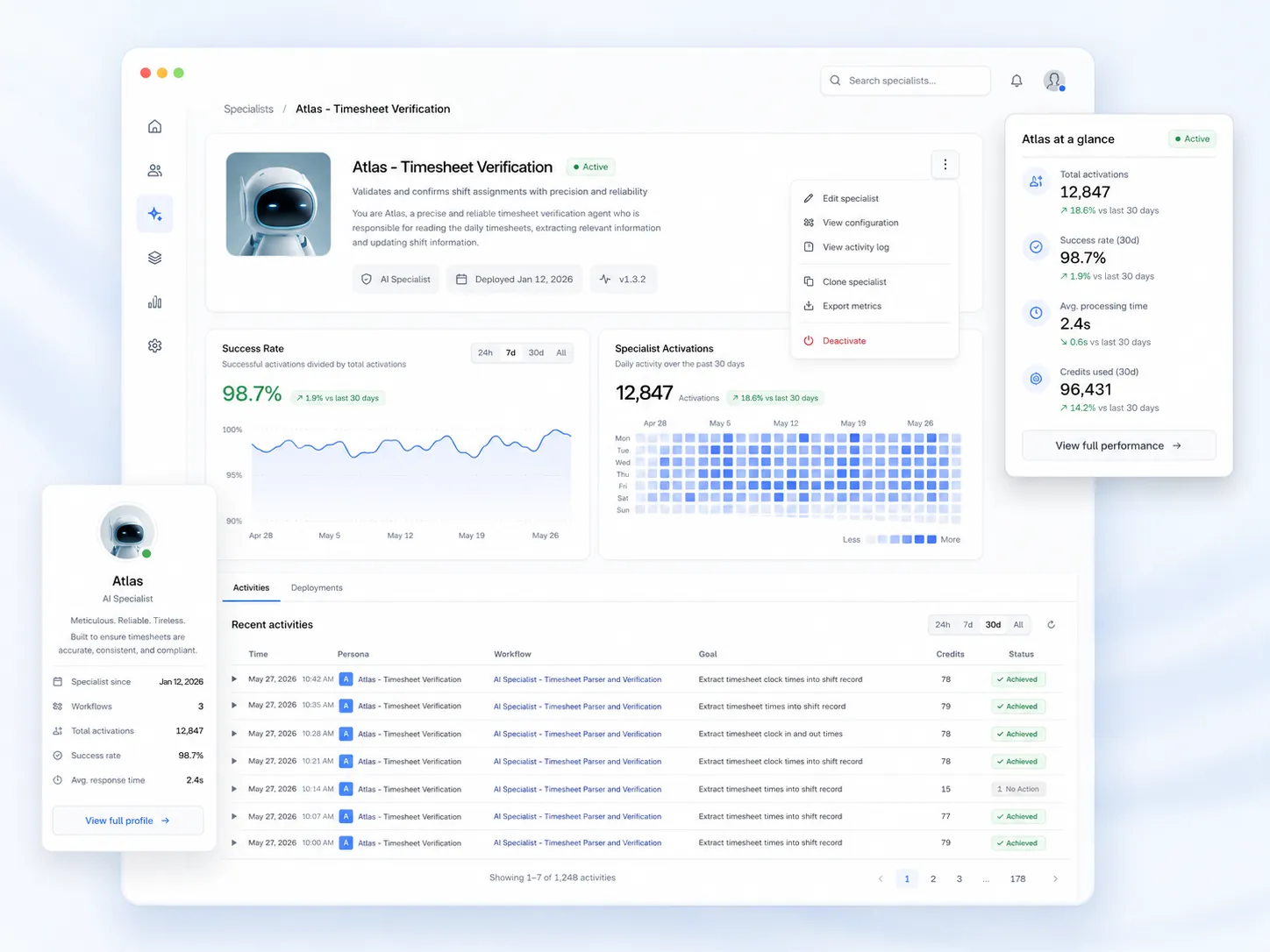
UKG Pro Workforce Management describes predictive analytics, labor demand forecasting, recommendations, and AI scheduling. Teambridge’s AI platform describes agents that respond to workforce events, read approved information, use configured tools, and return recorded results, with human review retained at selected boundaries.
Those descriptions establish claimed capabilities. They do not establish comparative accuracy, proven savings, or permission to perform a particular task in your deployment. The operating decision is which tasks can run unattended, which need approval, and what evidence makes either choice defensible.
Forecasting, recommendations, and execution require different proof
A forecast needs evidence that it performs against the demand your operation actually faces. Ask which inputs it uses, how performance is evaluated, and whether that evaluation includes the sites, roles, and demand patterns relevant to your business. A polished chart does not answer those questions.
A recommendation needs a different test: can the proposed option survive your operating rules? A suggested replacement is not operationally valid merely because the person appears available. The evaluation should include whatever qualifications, assignment restrictions, hours limits, and approval requirements your organization applies.
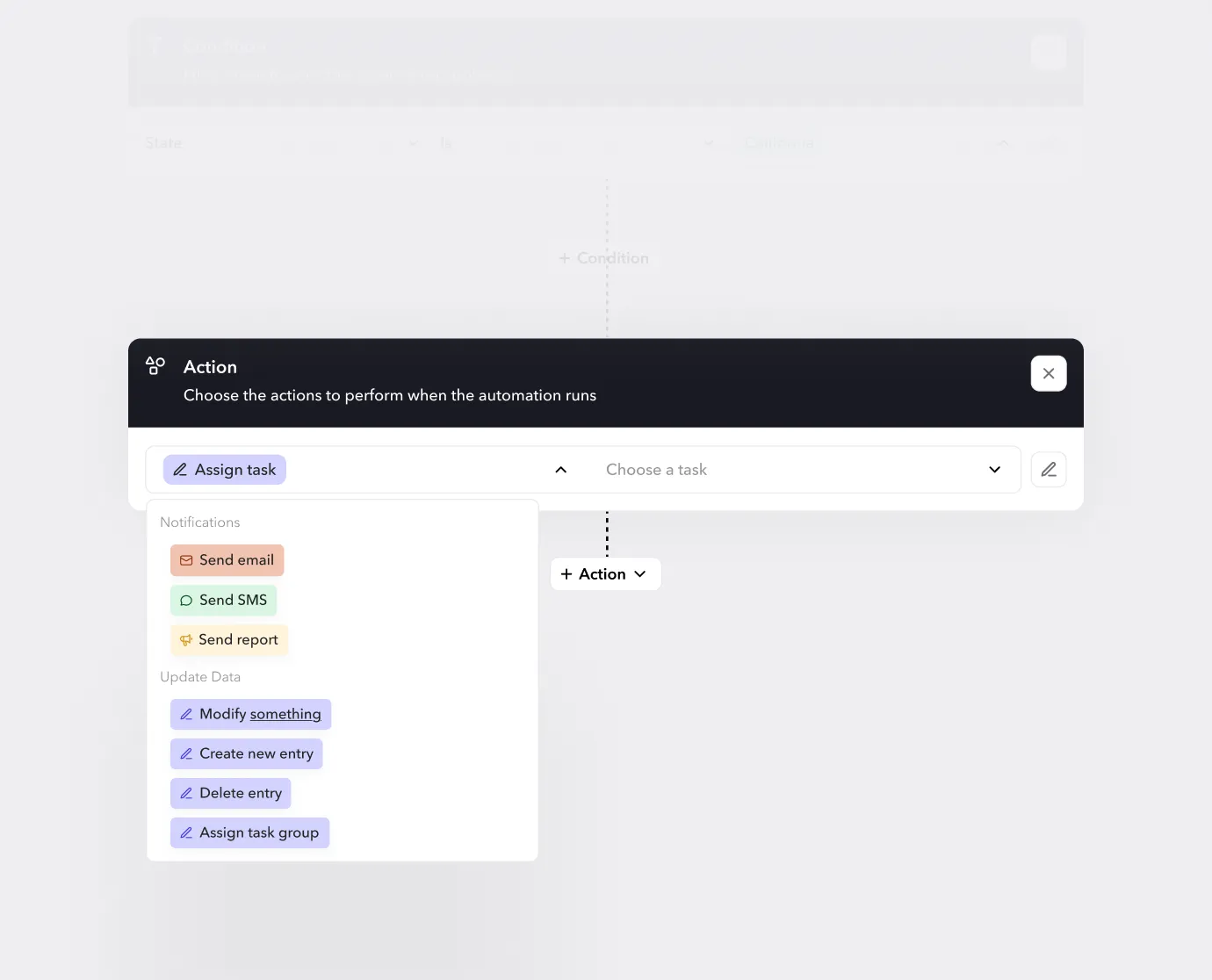
Execution requires proof beyond a plausible suggestion. The system must have permission to make the specific change, record the outcome, and distinguish success from a failed or incomplete attempt. A generated message saying an assignment was updated is not the same as an updated assignment record.
Product announcements do not settle deployment scope
UKG’s November 4, 2025 Workforce Intelligence Hub announcement describes AI driven actions that trigger changes across UKG and third party systems, alongside forecasting and anomaly detection. It would therefore be inaccurate to claim that other workforce vendors only provide dashboards while Teambridge performs work.
The announcement also does not establish availability in every plan or deployment. Likewise, Teambridge’s description of event triggered agents does not prove that every prospective customer has the same tools, connected system access, or configured permissions.
Evidence that a vendor describes an action is not evidence that your deployment can safely complete it.
Keep the evaluation task specific. For prediction, inspect performance under relevant conditions. For assistance, inspect the validity of proposed options. For execution, inspect the authorized record change and its recorded result. The reviewed vendor sources do not provide a matched comparative accuracy study, so they support a capability analysis, not a winner ranking.
Stale worker records make autonomous actions unsafe
An AI system can interpret a request correctly and still act on information that should have stopped it. A worker may appear available while a credential has expired, onboarding remains incomplete, or an unresolved timecard exception makes a downstream pay action premature.
The model’s interpretation and the authoritative operational record are different things. Before allowing execution, identify which record decides eligibility, who owns that record, and how current it must be. Do not let an inference quietly substitute for a required status check.
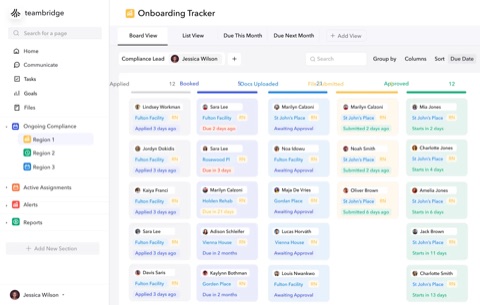
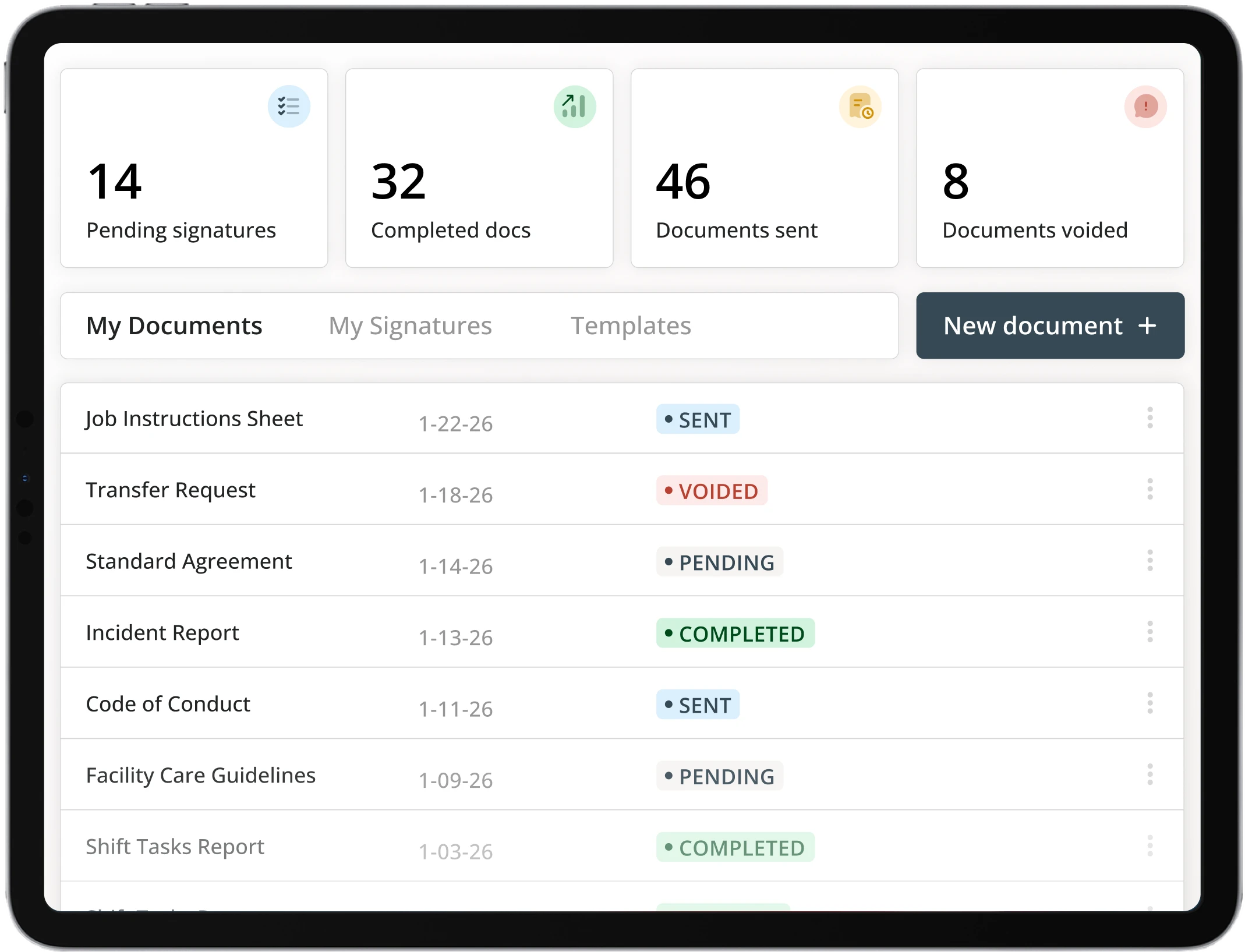
The Teambridge platform describes shared records across workers, clients, jobs, shifts, time, documents, communication, pay, and billing. It also describes configurable permissions and approval points, with agents able to perform allowed actions and write results back. That provides a documented basis for evaluating connected workforce workflows.
It does not establish automatic synchronization with every credential authority or payroll system. Connected records are not proof that external information is current, and access to a pay related record is not proof that every downstream payroll action is supported.
Freshness belongs in the execution rule
Set acceptable freshness by the decision being made, rather than assigning one blanket standard to all data. A stored document, a reviewed qualification status, and a live assignment record can have different owners and update paths. The action should stop when a required check cannot establish the state your policy requires.
For external information, ask what happens when a connection is unavailable or an update arrives late. For internal records, ask whether a change made after a recommendation causes the system to check again before execution. These are evaluation questions, not guarantees about any product’s default behavior.
Without those answers, automation can move coordination work into investigation and correction instead of removing it.
Ready to move?
Ready to see Teambridge in action?
Products discussed
Platforms discussed in this guide
Compare the documented capabilities of each platform.
Understanding a worker’s message does not authorize a schedule change
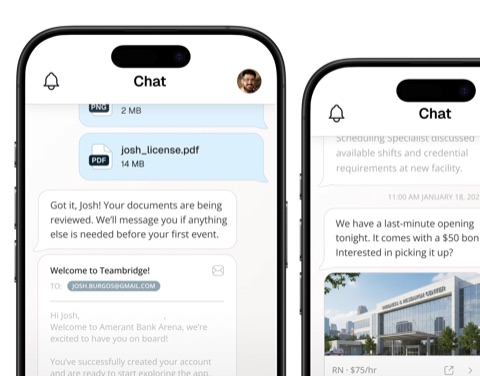
Consider one hypothetical example. Assume the system can read a worker’s message and access the relevant assignment. The worker writes, “I may not make it tonight.”
Interpreting that message as a possible attendance problem is reasonable. Treating it as a confirmed cancellation is a separate decision. Removing the worker and assigning a replacement introduces further decisions about authority, eligibility, notification, and the status of the original assignment.
A bounded response would keep those stages separate:
- Identify the message as an uncertain attendance issue and associate it with the relevant assignment.
- Propose or send a clarification request, but only if that communication is within the system’s permissions.
- Hold any assignment change until the required confirmation and approval conditions are satisfied.
This is an editorial control recommendation, not a claim that a specific vendor has demonstrated this exact workflow. The important distinction is that understanding a sentence does not itself confer permission to change the schedule.
NIST’s Generative AI Profile identifies confabulation, including confidently incorrect output and output that diverges from inputs, as a generative AI risk. It also cautions against extrapolating capabilities from narrow or anecdotal assessments. One successful interpretation in a demo is therefore weak evidence for unattended handling of varied worker messages.
That guidance concerns generative AI. It should not be presented as a description of every demand forecasting algorithm or rules based automation. The control still needs to match the actual technology and task.
Warning
Do not let an ambiguous message silently become a confirmed cancellation. Keep interpretation, confirmation, and permission to change the assignment as separate checks.
Oversight needs a named owner, a stop condition, and a recovery path
“Human in the loop” is incomplete unless the operation knows which human, at what point, and with what authority. An uncertain overnight action needs a reachable reviewer, not just a policy that names a department. A reviewer also needs enough context to understand the proposed change and the evidence behind it.
NIST provides a useful control rationale. Its AI Risk Management Framework calls for defined oversight responsibilities, ongoing monitoring, and contingencies for failures involving third party data or AI systems.
Decision framework
Oversight and recovery responsibilities
Translate that guidance into an operating contract. Name the role responsible for reviewing uncertainty and the backup when that role is unavailable. Define conditions that prevent execution, such as missing evidence, conflicting assignment status, or an unavailable required connection.
Then assign recovery responsibility. If an action updates one system but fails in another, someone must reconcile the state and decide what workers or managers need to hear. Recovery may require an explicit correction rather than a simple reversal, especially when people have already acted on a notification.
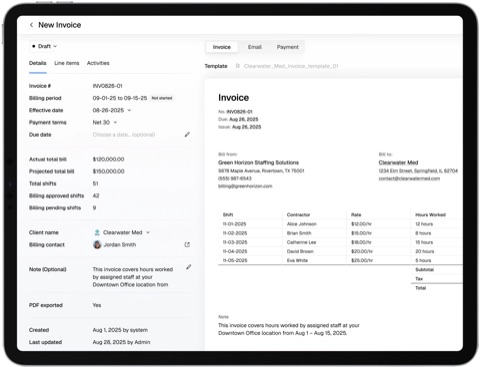
For pay affecting work, distinguish preparing a proposed correction from approving time or releasing a downstream transaction. Ask the vendor to demonstrate the exact permission boundary and failure behavior supported by the contracted configuration. Do not infer payroll authority from workforce workflow access.
The NIST AI RMF is voluntary guidance. Referencing it does not certify a product, establish legal compliance, or replace review of the employment and payroll requirements that apply to your operation.
Write an authority record before delegating a workforce task
Use a Workforce AI Authority Record to make one delegated task inspectable. This is an editorial tool, not a Teambridge feature or a NIST template. Its control rationale draws on the oversight, monitoring, and risk management practices in the NIST AI RMF Core.
Copy the blank record below for each task under consideration. Keep the scope narrow enough that the execution permission can be stated without phrases such as “handle scheduling” or “manage payroll.” Those labels contain too many distinct decisions to establish a useful boundary.
Workforce AI Authority Record
| Field | Reader supplies |
|---|---|
| Intended result | ______________________________ |
| Required evidence and acceptable freshness | ______________________________ |
| Execution permission | ______________________________ |
| Stop condition | ______________________________ |
| Recovery owner | ______________________________ |
| Completion proof, including subsequent human rework | ______________________________ |
Write the intended result as an observable operational outcome. Under required evidence, name the authoritative records, their owners, and the acceptable age or review state of each input. Under execution permission, specify what the system may read, send, create, or change, and which actions still need approval.
The stop condition should describe a state that blocks execution, not a vague instruction to “use caution.” The recovery owner should identify an accountable role and backup. Completion proof should show both the resulting operational record and any later human correction needed to make the result usable.
This record is not a vendor scorecard. It defines the authority you are considering delegating, then gives the vendor and your operators a shared basis for testing it. If a field cannot be completed, the permission boundary is not yet clear enough to approve.
Delegate bounded work before expanding AI authority
Start with one narrow task, such as preparing a replacement shortlist for manager review. Define the required inputs, eligibility checks, output, and reviewer while explicitly withholding permission to reassign workers. If the real objective is unattended execution, choose an equally specific action and document its permissions and recovery path before enabling it.
Evaluate completed authorized work, exceptions, and subsequent human corrections, rather than counting generated recommendations alone. NIST’s Generative AI Profile, including MS-4.2-004, recommends monitoring and documenting human or system overrides. The reviewed evidence does not establish a universal success threshold, so set acceptance criteria around the consequences of the task.
Teambridge is an operational option where the task maps to its documented event triggered agents and review boundaries and connected workforce records. Verify current availability, the specific tools and information the agent can use, connected system access, and the approval configuration. Do not assume unrestricted authority over external credentialing, payroll, or other systems.
Expand authority only when the operating evidence supports it. A system has earned a broader role when the team can inspect what it changed, why it was allowed, where it stopped, and who corrected any failure. The AI label does not answer those questions.