

Here's the part most operators miss: under the federal rules, you weren't supposed to bench those workers in the first place. A Tentative Nonconfirmation is not a basis to pull anyone off a shift. The lost start wasn't caused by E-Verify. It was caused by I-9 data, referral dates, and TNC follow-ups living in three different inboxes — none of which talk to your dispatch board.
This is the operational fix.
The Monday Morning Math: Why a Friday TNC Becomes a Lost Federal Start
Walk the timeline. Friday 2 p.m., HR runs E-Verify on three new framers hired Wednesday. Friday 4:45 p.m., two come back SSA mismatch, one comes back DHS mismatch. The HR generalist who owns the queue has already left for the weekend. The staffing coordinator who owns the dispatch board sees the email Monday at 5:30 a.m. and panics.
The coordinator assumes the workers are uncleared and pulls them from the assignment. That decision — made under pressure, with no playbook — is itself a compliance violation. The employee must be allowed to continue working while they resolve the mismatch, and an employer may not take any adverse actions, such as delaying training or reducing work hours, against an employee because of the DHS TNC or SSA TNC while their case is in an Employee Referred to DHS or SSA status.
It gets sharper. The employer cannot take adverse action against the employee — including terminating employment, suspending employment, withholding pay or training, delaying a start date, or otherwise limiting employment — because of the decision to take action to resolve a mismatch case result. Delaying the Monday start because of a Friday TNC is exactly the kind of adverse action that gets staffing firms sued and prime contractors audited.
So two failures stack: (1) the worker who was eligible to keep working got pulled, and (2) the worker who actually had a fixable data error never got the Further Action Notice in time to call DHS. By Wednesday, the prime is asking why the crew is short. By Friday, you're losing the re-bid.
Important
A TNC is not a finding of ineligibility. It is a flag that data didn't match — usually because of a typo, a name change, or an unupdated SSA record. Treat it that way operationally, or your coordinators will turn fixable mismatches into lost contracts.
What FAR 52.222-54 Actually Requires of Staffing Subcontractors
If you're feeding workers to a federal general contractor, you're almost certainly bound by FAR 52.222-54 — even if no one handed you the clause directly. Prime contractors must flow down FAR 52.222-54 to certain service and construction subcontractors where the subcontract value exceeds $3,500.
The applicability test is straightforward. The requirements must be included in all subcontracts for non-COTS services or construction that have a value of more than $3,500 and include work performed in the United States. Most jobsite labor agreements clear that bar in a single day of dispatched headcount.
Once you're in, the clock starts. You must enroll in E-Verify within 30 days of the contract award date and use E-Verify to verify that all your new hires and existing employees working directly on federal contracts are authorized to work in the United States. For employees already on your books who you're now assigning to a covered contract, all employees assigned to the contract working in the United States, even if not new hires, must be verified within 30 days of assignment.
The oversight piece is what catches staffing firms off guard. The prime contractor should provide general oversight to subcontractors to ensure they meet the E-Verify requirement, and a prime contractor may be subject to fines and penalties if it knowingly continues to work with a subcontractor who is in violation of the E-Verify requirement. Translation: your prime is going to audit you. Increasingly, they audit pre-emptively, because the False Claims Act exposure is real.
How real? On September 18, 2025, the Department of Justice announced that Bayonne Drydock and Repair Corporation agreed to pay $4,043,810.56 to resolve allegations that unauthorized workers worked on Bayonne's Navy contracts over multiple years. That settlement and a January 2025 shipyard settlement are why your prime's compliance team is suddenly asking for E-Verify audit packets Inside Government Contracts.
The numbers you have to remember
| Requirement | Trigger | Deadline |
|---|---|---|
| Enroll in E-Verify as Federal Contractor | Contract award (if not already enrolled) | 30 calendar days |
| Run E-Verify on new hires | Date of hire | 3 business days |
| Run E-Verify on existing employees assigned to covered contract | Assignment date | 30 calendar days |
| Subcontract flow-down threshold | Services/construction work in U.S. | >$3,500 |
| Employer notifies worker of TNC and refers case | Mismatch issued | 10 federal working days |
| Worker contacts DHS/SSA after referral | Referral Date Confirmation | 8 federal working days |

Where Resubmission Delays Actually Originate (It's Not E-Verify)
The E-Verify system itself is fast. DHS will respond to most cases within 24 hours. When you hear "E-Verify is slow," what's actually slow is the loop between your I-9 process, your case creation, your worker, and your mismatch follow-up. Five places where staffing firms bleed days:
- I-9 data entered into an HR system that doesn't match the actual Form I-9. A recruiter types "Jose Martinez-Lopez" into the ATS but the I-9 says "José Martínez López." The accent disappears in the system, the hyphen vanishes, and E-Verify can't find the record.
- Name/SSN transcription errors at intake. Someone reads a 9 as a 4. The SSA mismatch is born.
- Missed Referral Date Confirmation handoffs. The coordinator refers the case but never gets the signed Further Action Notice back to the worker with the date by which they have to call DHS or visit SSA.
- No tracking of the 8-day worker clock. Once the employer refers the case in E-Verify, the employee has 8 federal government working days to call DHS or visit an SSA field office. If nobody is checking in, the worker forgets. The case auto-converts to Final Nonconfirmation.
- Closing cases late. Open TNC cases sitting in someone's inbox for a week.
The system fragility is real, too. During the 2022 SSA outage, contractors had to retroactively create cases and document a reason for delay E-Verify SSA Operations. If you don't have your own audit trail of when cases were initiated, referred, and closed — independent of E-Verify itself — you can't reconstruct what happened when DHS asks.
The Pre-Dispatch Checklist: Verify Eligibility Before You Promise a Body
The sales side of a staffing firm sells what's on the bench. The ops side has to know which workers on the bench are actually dispatchable to a federal jobsite. These are not the same list.
Before a recruiter commits a worker to a federal assignment, four gates have to be green:
- I-9 Section 1 and 2 complete and matched to source documents exactly. Accents, hyphens, suffixes, middle initials — character-for-character.
- E-Verify case created within 3 business days of hire. Not "queued," not "in process." Created.
- Case status is Employment Authorized. Not "Tentative Nonconfirmation Referred," not "Case in Continuance," not "Photo Matching Pending." Authorized.
- For existing employees, the worker is tagged as assigned to the covered contract in your system and verified within 30 days of that assignment.
If any one of those gates is yellow, the worker is not dispatchable to federal work. They can still work non-federal jobs — and if they have an open TNC, per the rules above, they have to keep working. They just can't be on the covered contract until the case is closed as Employment Authorized.
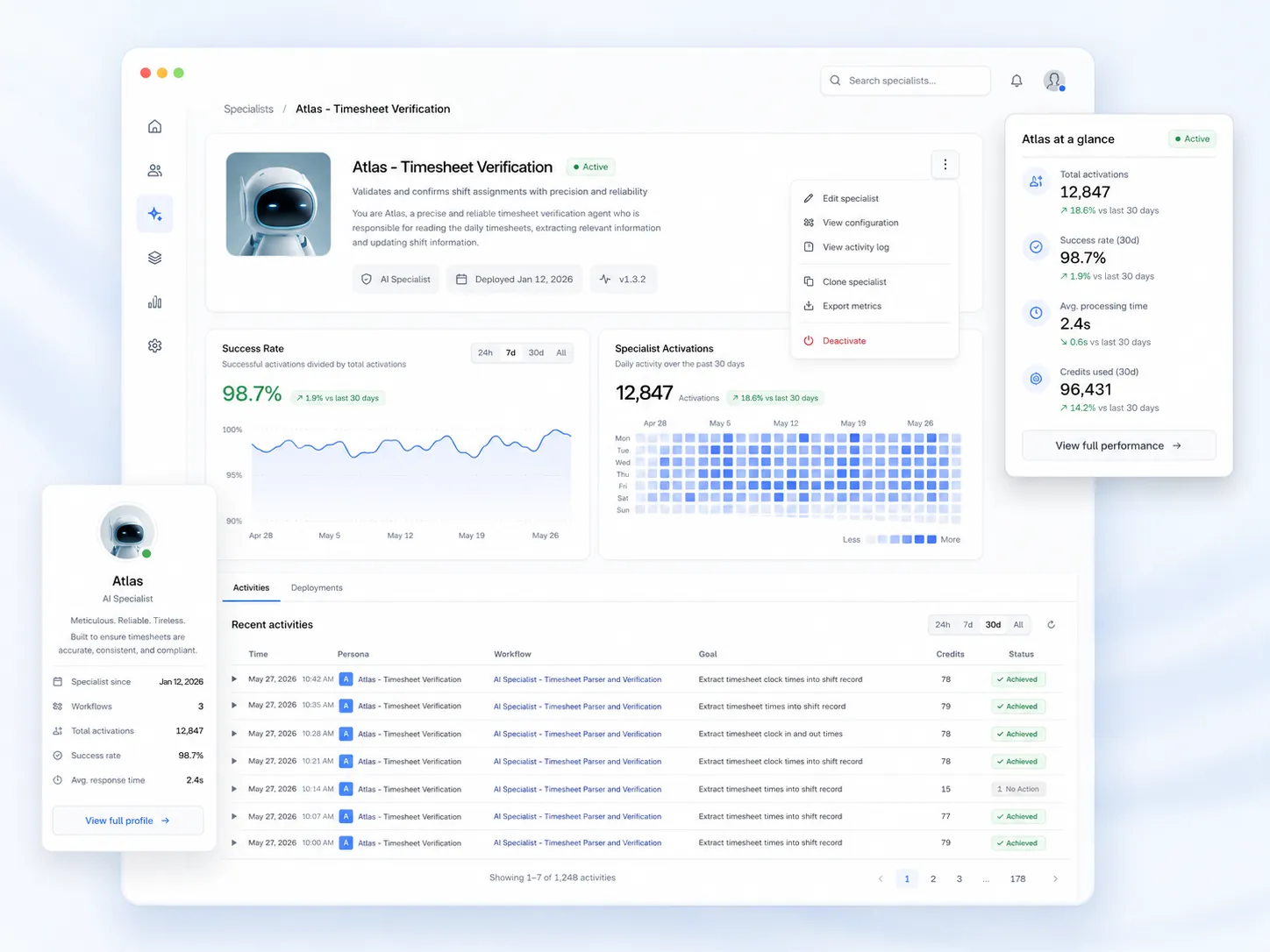
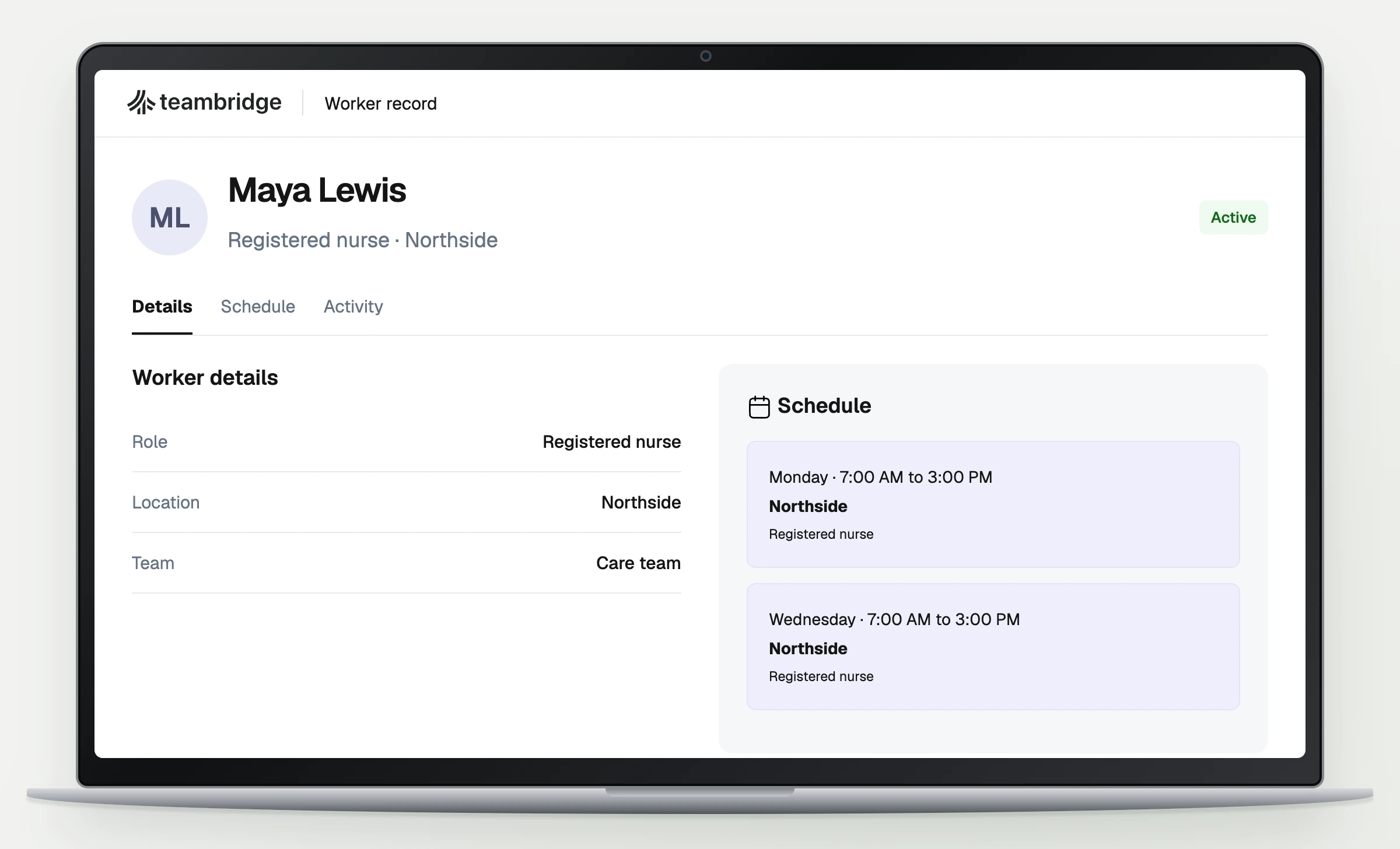
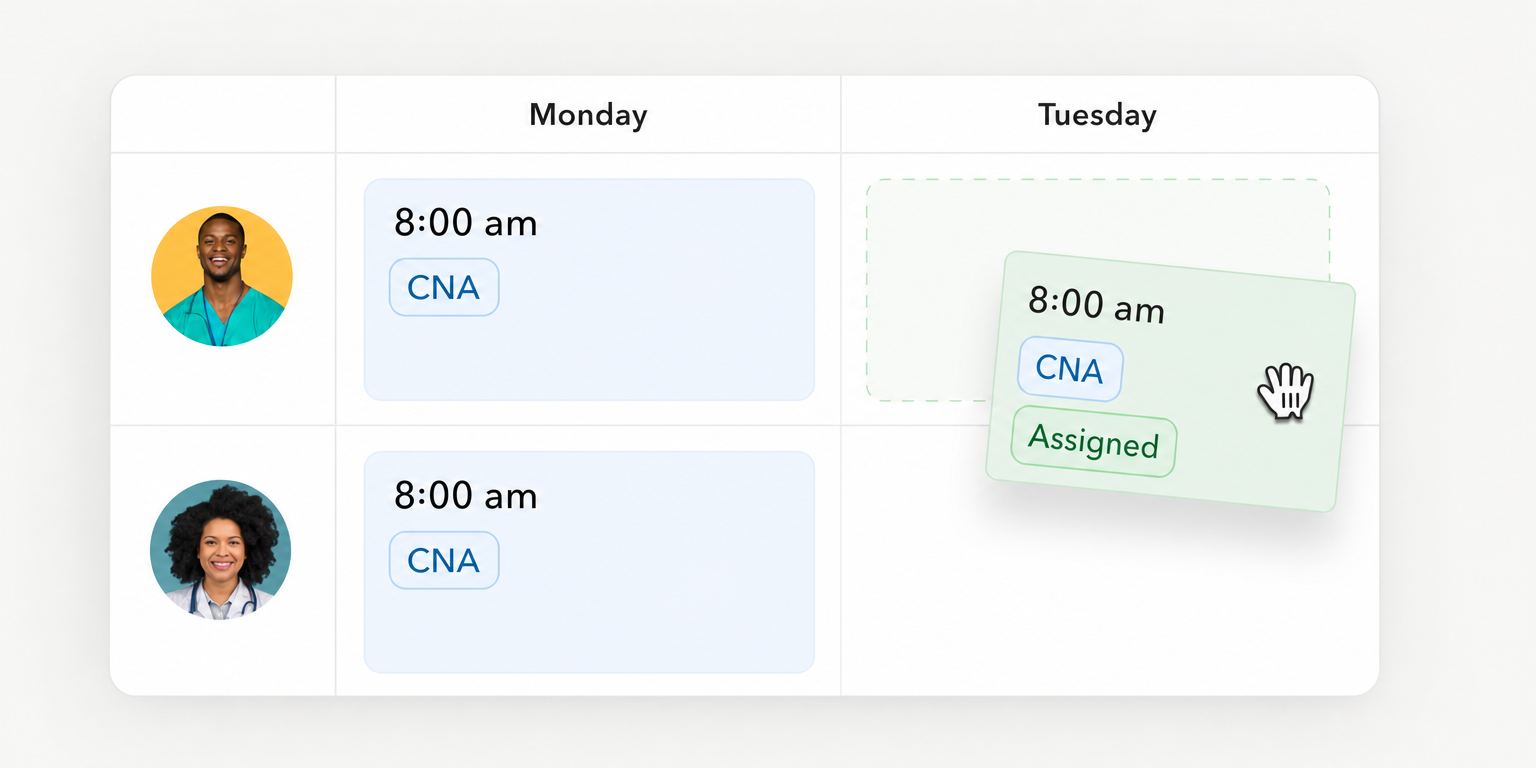
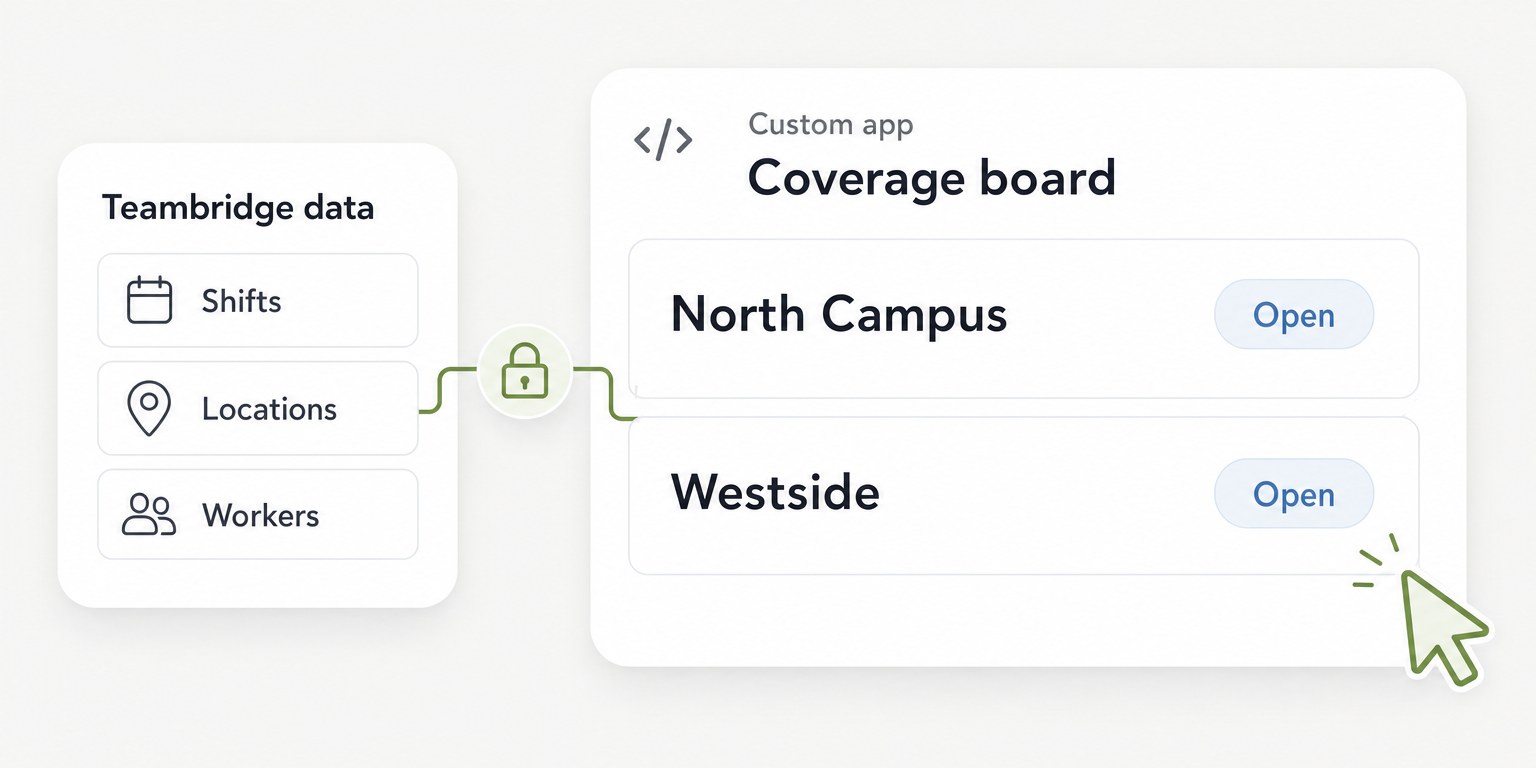
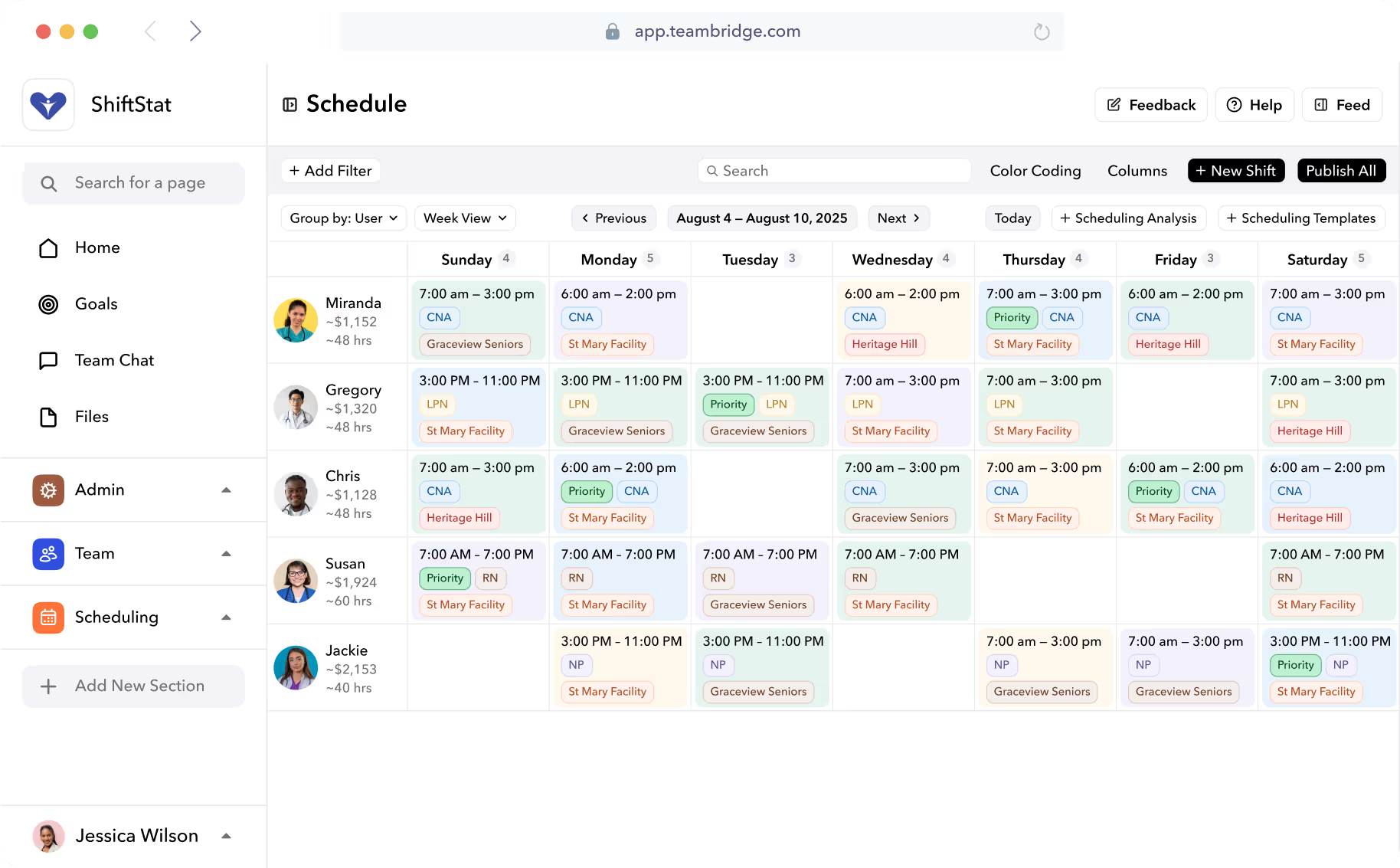
This is the part that breaks when eligibility lives in HR's inbox and dispatch lives on a whiteboard. The whiteboard doesn't know about the TNC. The HR inbox doesn't know about Monday morning. You need both in the same system. Teambridge's Onboarding product and Scheduling product are designed exactly so that eligibility status is a dispatch attribute, not a side document.
Building a Mismatch Resolution SLA Your Coordinators Can Actually Run
Here is the resolution workflow that holds up under pressure. Print it. Tape it to the coordinator's monitor. Better, build it into your platform so the steps happen automatically.
Day 0 — TNC issued
- Coordinator gets an alert the moment the case status changes.
- Coordinator prints the Further Action Notice and reviews it with the worker in private, same shift.
- Worker decides on the spot whether to contest. Instruct the employee to tell you their decision no later than the 10th federal government working day after E-Verify issued the mismatch result or you will close the case in E-Verify.
- If contested, the case is referred in E-Verify and the Referral Date Confirmation is generated.
Day 1 — Referral confirmed
- Worker gets the Referral Date Confirmation in writing, with the deadline date highlighted.
- Coordinator logs the 8-business-day deadline as a hard task with daily reminders.
- Worker continues working — on non-federal assignments if available, on the federal contract if the prime accepts a Referred status (most don't, but the worker cannot be removed from the contract solely because of the TNC).
Days 2 through 8 — Active follow-up
- Automated check-ins to the worker: have you called DHS? Have you visited SSA? Do you have the appointment scheduled?
- If the worker is struggling to get an SSA appointment, the coordinator helps — not as a favor, as compliance hygiene.
Day of resolution
- Case status updates to Employment Authorized. It may take up to two federal government working days after a mismatch is resolved for the employer to see the updated case status in E-Verify.
- Worker cleared for federal dispatch. Audit trail logged.
Warning
If the worker doesn't act within 8 federal working days, the case auto-converts. A case receives a Final Nonconfirmation when the employee failed to call DHS and/or visit an SSA field office within 8 federal government working days, or the employee did not give the employer their decision whether or not to take action by the end of the 10th federal government working day after E-Verify issued the mismatch result. That's a terminable event, but only after you've done the procedural work cleanly.
What to Automate vs. What to Keep Human
Not every step in this workflow should be a person doing manual entry. Not every step should be a bot, either. The split:
Automate:
- E-Verify case creation triggered the moment I-9 Section 2 is signed off
- 3-business-day countdown alerts for case creation
- 8-federal-working-day countdowns for worker action after referral
- Document expiry alerts for work authorization renewals (EADs, I-94s)
- Dispatch blocks: a worker without Employment Authorized status cannot be assigned to a job tagged "federal contract"
- Daily worker check-ins during the contest window
Keep human:
- The first conversation explaining what a TNC is. Workers panic. They ghost. They tell their cousin they got "failed" by the government. A coordinator who can sit down for ten minutes and explain that this is a paperwork mismatch, not a deportation event, will save you most of your Final Nonconfirmations.
- Prime contractor communication when a verified worker hits a mid-assignment snag.
- Documenting Reason for Delay when E-Verify itself is down or when there's a genuine administrative blocker.
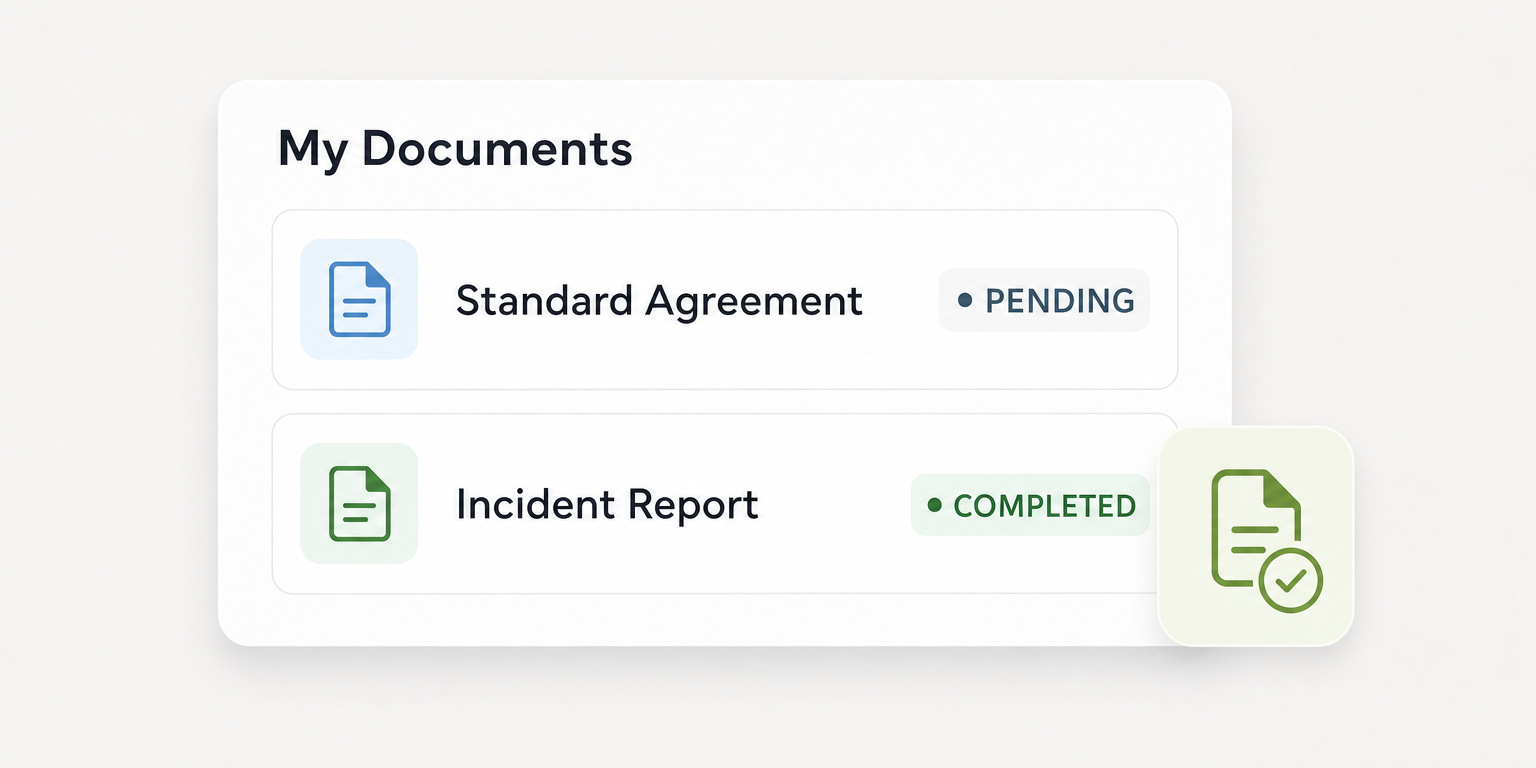
Teambridge's Automations and Document Studio are the mechanical layer underneath this — case-status triggers, countdown timers, generated Further Action Notices and Referral Date Confirmations with delivery proof, all wired into the same workforce platform that runs your dispatch board.

Audit Trail: What Prime Contractors and DHS Will Ask For
When the prime's compliance team shows up — or worse, when DHS does — the question is the same: show me the packet. Per-worker, per-contract, the packet you need on file:
- E-Verify case verification number, tied to the specific federal contract ID
- Timestamps proving the 3-business-day rule was met for new hires (or the 30-day rule for existing employees newly assigned to the covered contract)
- Signed Further Action Notice for every TNC
- Referral Date Confirmation with delivery proof to the worker
- Documentation of any delays, with reason codes
- Final case closure status
Implement a robust tentative non-confirmation process for workers who do not clear E-Verify at first pass, clearly document all resolutions, and terminate employment when issues remain unresolved within required timelines. The documentation piece is what wins re-bids. Primes are not just looking at whether you ran E-Verify — they're looking at whether you can prove it cleanly, fast, when their own auditor knocks.
A staffing firm that can produce a clean E-Verify audit packet in 24 hours wins re-bids. A staffing firm that takes a week to pull records loses them — even if every record is technically clean.
The second-order risk is False Claims Act exposure flowing back to you through the prime. Even if a contractor does not have specific knowledge of a worker's authorization status, invoices could be said to impliedly certify the contractor's compliance with its obligations under FAR 52.222-54 to confirm employment eligibility through E-Verify. Every invoice you send the prime is, in effect, a certification that the labor it paid for was properly verified. If it wasn't, that's not a paperwork problem. That's a fraud problem.
The Operator's Bottom Line: Eligibility Is a Dispatch Gate, Not a Back-Office Task
The firms that lose Monday morning starts are the firms that treat E-Verify as an HR paperwork item. The firms that hold federal contracts year after year treat it the same way they treat OSHA 10, the trade certification, and the drug screen: a hard dispatch attribute, visible on the same screen the coordinator uses to fill shifts.
When eligibility status is wired into the scheduling system, three things change:
- Mismatches surface Thursday afternoon, not Monday at 5:55 a.m. There's still time to walk the worker through the Further Action Notice and refer the case before the weekend.
- Coordinators stop making compliance violations under pressure. They can't accidentally remove a referred worker from the federal contract, because the system enforces the rule.
- Audit packets generate themselves. When the prime asks, you don't go searching three inboxes. You export the packet.
That's the operational fix. The rule isn't going to get easier — if anything, the FCA exposure is rising and primes are auditing harder. But the work itself is finite, knowable, and automatable. The only reason it eats your Monday is because it lives in the wrong place in your stack.
Teambridge builds workforce ops for construction staffing firms and staffing agencies that run federal work. Eligibility status, credential tracking, dispatch gating, and audit-ready documentation in one system — so the next Friday TNC is a Thursday alert, and the Monday start happens.

About the author
Content Writer at Teambridge
Anis Nanai is a content writer at Teambridge, with a focus on workforce management and the realities of running hourly teams. He prioritizes conversations with customers, staying close to the market, and understanding how workforce needs are changing. His writing connects those concerns to practical decisions about scheduling, time tracking, staffing, and automation. He examines product developments through the questions that matter to operators: what does this solve, how would it work for my team, and what evidence supports it?
Company perspective: this author works at Teambridge. Customer outcomes are attributed to their published sources.
View LinkedIn profile