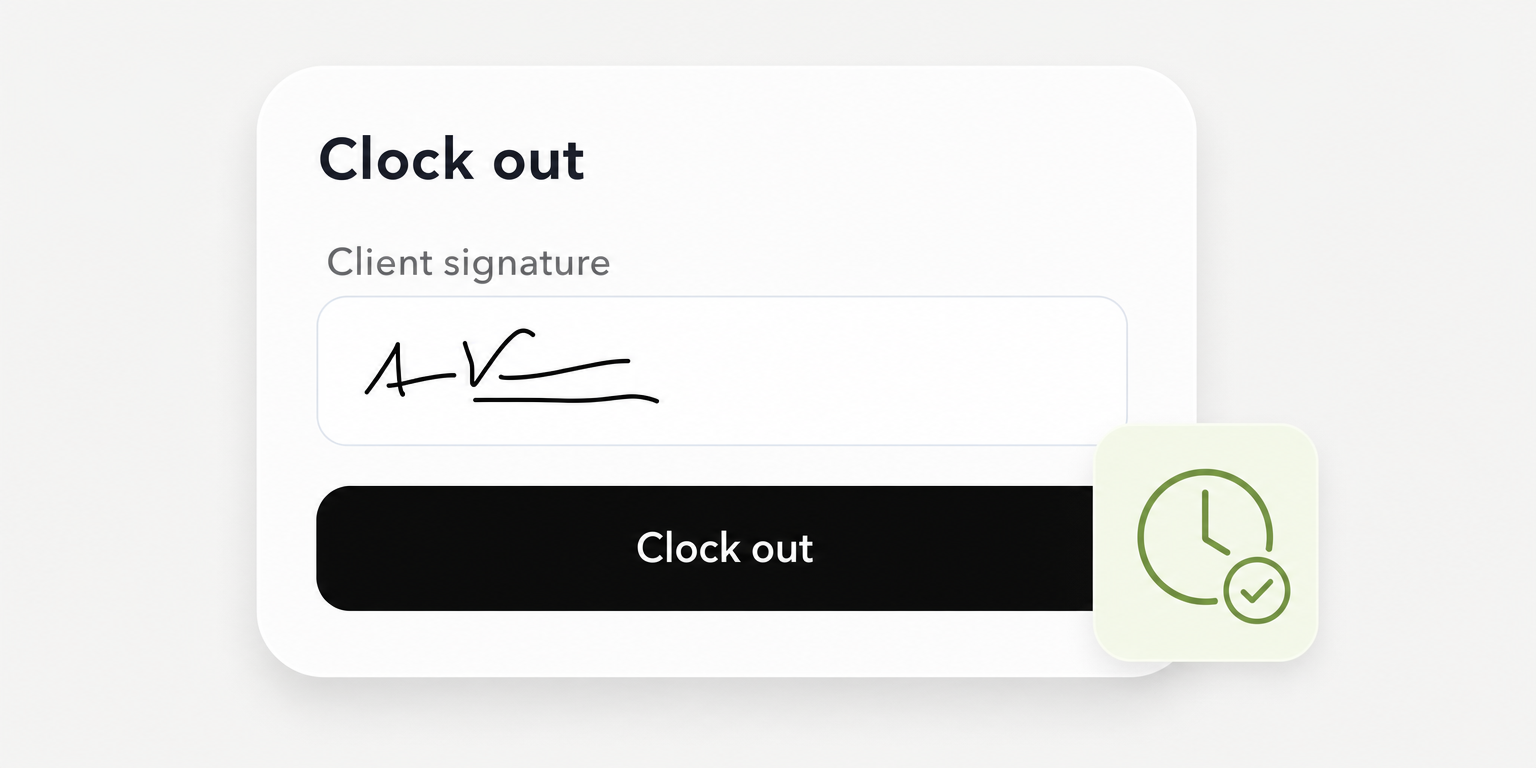
A worker can finish the job and still leave the office with unfinished work: a missing punch, an unsent photo, or an assignment change that never reached the phone. The buying question is not whether a platform has an app. It is whether the field action becomes a usable operating record without someone rebuilding it later.
This comparison of mobile workforce management software vendors focuses on that handoff. Teambridge, Skedulo, Connecteam, and Salesforce Field Service deserve consideration for different workloads, not a shared first-place trophy.
A shift assignment and a customer visit need different mobile systems
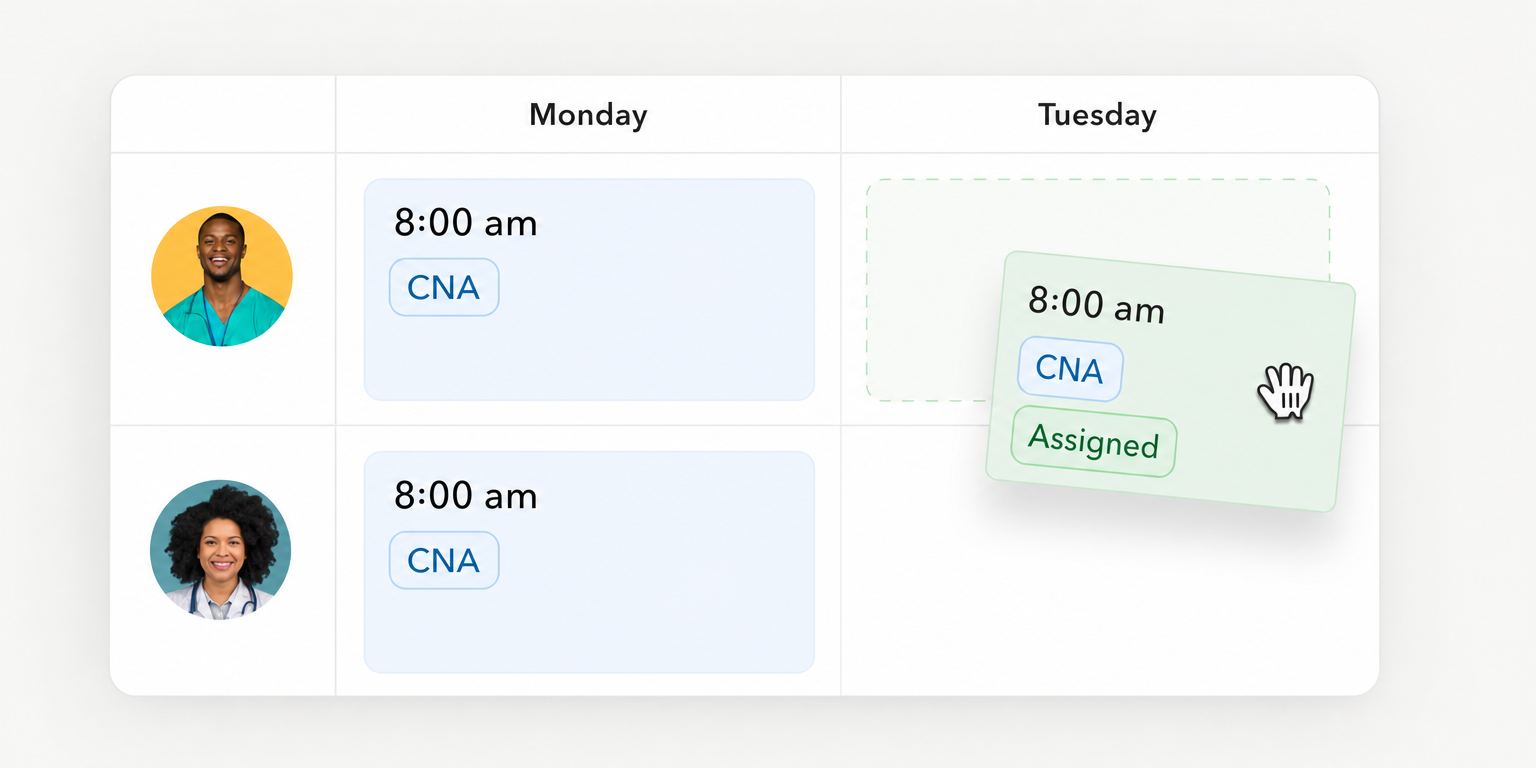
A staffing coordinator needs an eligible worker assigned to a shift. A field-service dispatcher may need a technician to arrive with customer history, record parts used, and complete a work order. Both people dispatch mobile workers, but the records required to finish their jobs are different.
Buying around the phrase “mobile workforce” hides that distinction. A strong employee time clock does not establish inventory support. A detailed service record does not establish that your shift-replacement process fits the system.
Use eight decision criteria to organize the comparison:
- Assignment type: shifts, appointments, recurring visits, or work orders.
- Worker actions: what employees can complete without calling the office.
- Offline writes and synchronization: what survives a connection loss and returns correctly.
- Qualification rules: how eligibility affects assignment and replacement.
- Office-side reconciliation: who resolves differences between submitted, approved, and transferred records.
- AI task scope: the specific work automation performs and leaves behind.
- Implementation dependencies: configuration, data preparation, integrations, and ownership.
- Contracted cost: the quoted setup and access needed to run the operation.
The best-fit judgments below are editorial inferences from primary vendor documentation, not hands-on rankings. Use them to decide which vendors deserve a demonstration. Then require those vendors to prove the transactions your operation cannot afford to lose.
Teambridge, Skedulo, Connecteam, and Salesforce serve different field workloads
The documented scopes point toward different starting shortlists. The boundaries matter just as much: a missing detail in a product page is a verification question, not proof that a capability is absent.
| Vendor | Documented operating scope | Best-fit inference | Boundary to verify |
|---|---|---|---|
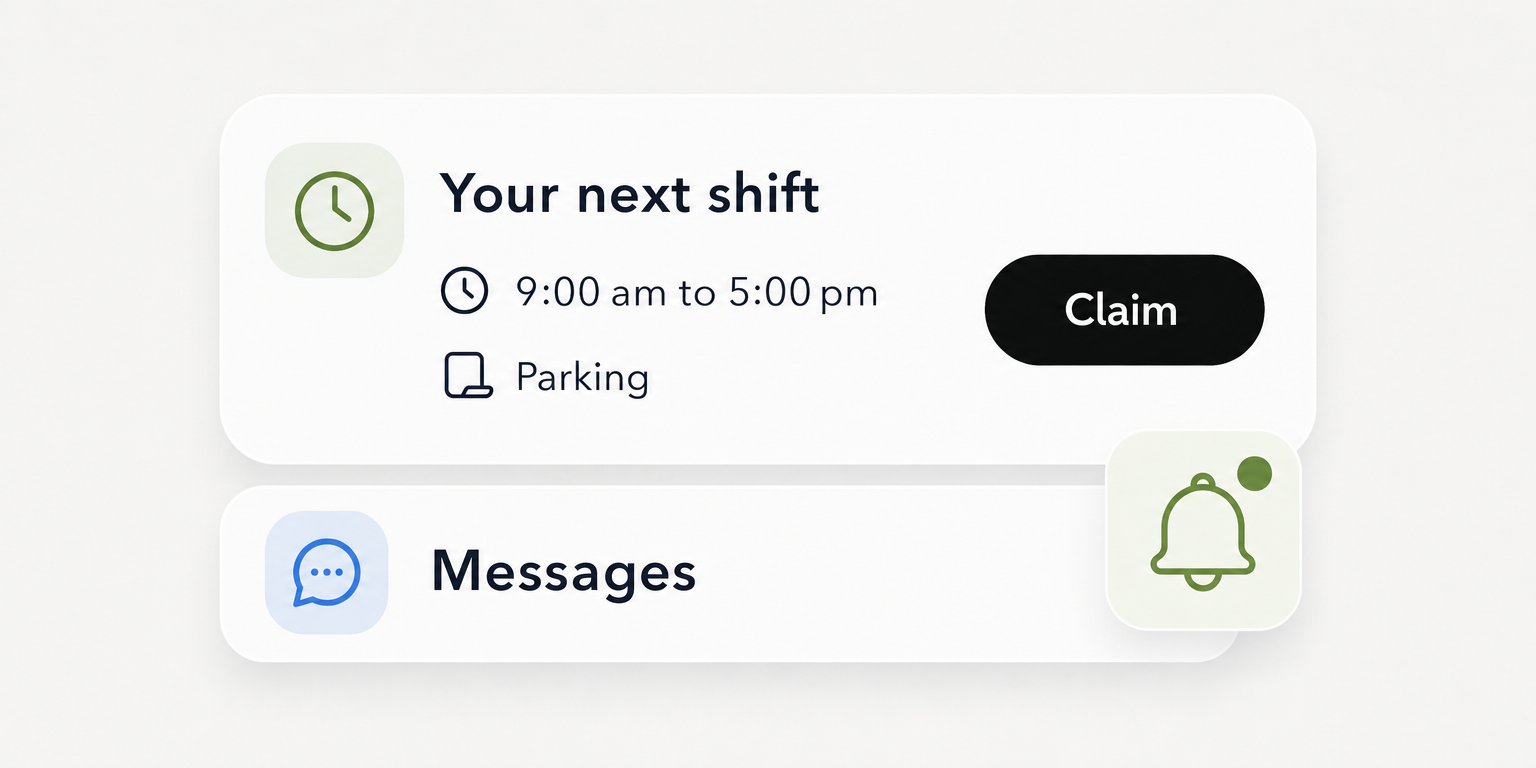
| Teambridge | Branded worker app for schedules, open work, onboarding, time, messages, and earnings; leave requests and status tracking. | Shift-based organizations seeking connected worker operations. | The reviewed mobile page does not establish offline transactions. Require vendor verification. |
| Skedulo | Scheduling by role, client, skillset, and location; recurring appointments; mobile time, forms, photos, offline functionality, and HR/payroll integrations. | Distributed appointments and recurring assignments. | Confirm exact offline actions and connector reconciliation. Integration does not establish native payroll. |
| Connecteam | Employee clocking, breaks, time-off and shift-edit requests, and timesheet review/export, with some actions controlled by administrator configuration. | Teams prioritizing time capture and employee self-service. | Standard clocking requires connectivity. Custom physical-clock API queuing is separate from standard mobile functionality. |
| Salesforce Field Service | Offline-first mobile workflows, configurable actions, inventory, geolocation, work-order information, service reports, and record assistance. | Customer-service visits requiring service records and inventory. | Confirm Field Service Mobile licensing, configuration, permissions, and advance record downloads. |
Connecteam's connectivity boundary is explicit in its offline-mode documentation: standard mobile, kiosk, desktop, and in-product NFC clocking need an active internet connection. Its separately documented custom physical-clock integration can queue punches through an API-based implementation. Do not treat that exception as offline support in the employee app.
Salesforce's broader service-record scope may be relevant when a visit requires inventory and work-order data. That breadth also brings setup questions that a shift-only buyer may not need to take on. Conversely, a narrower time-capture workflow may be sufficient if another system already owns the customer visit.
The table narrows the field, but it does not establish operational reliability. A vendor can document offline functionality without documenting every action, attachment, or conflict your workers will encounter.
Ready to move?
Ready to see Teambridge in action?
Offline claims need an outage test, not a feature checkbox
“Works offline” can mean several things. Cached reading lets a worker see previously downloaded information. Offline writing lets the worker create or change a record. Attachment uploads, synchronization, and recovery from conflicting edits are further questions, not automatic consequences of either capability.
Skedulo documents offline mobile functionality alongside time capture and forms, but the cited page does not specify every transaction or conflict outcome. Teambridge's reviewed mobile page leaves offline transactions unverified, not disproven. Connecteam expressly excludes standard offline clocking.
For Salesforce, the mobile-worker setup lesson explains downloading service appointments and configuring the date range. That preparation does not prove every related record or attachment will be available. Its service-report documentation makes the distinction concrete: workers can preview a report offline, but the final PDF is generated online, and preview data can be stale.
Offline acceptance means knowing what happens before, during, and after the connection fails. Seeing yesterday's assignment on a phone is only the first part.
Reusable artifact: mobile outage acceptance-test record
Use this blank record in finalist demonstrations. These are proposed tests, not supported-feature claims. The assumptions are a vendor-approved sandbox, a supported device, a signed-in worker, and deliberately interrupted connectivity.
| Worker action | Preloaded data | Behavior without signal | Queued change | Reconnect result | Conflicting office edit | Recovery owner | Observed evidence |
|---|---|---|---|---|---|---|---|
| Open an assignment | |||||||
| Record time | |||||||
| Upload proof of work | |||||||
| Receive a changed assignment |
Run the test as a sequence rather than asking the salesperson to describe the outcome:
- Load the intended assignments and record what was downloaded before disconnecting.
- Attempt each worker action without signal. Record unsupported actions explicitly instead of leaving them ambiguous.
- Make a conflicting office edit while the device remains disconnected. For assignment changes, observe both the disconnected state and what arrives after reconnection.
- Reconnect and inspect the worker view and office record. Capture missing data, duplicate entries, warnings, and who must recover the transaction.
Warning
A queued change is not a reconciled record. Require evidence of the final stored result, not just a successful-sync notification.
Set acceptance conditions before the demonstration. If a required action cannot happen offline, decide whether a documented fallback is operationally acceptable. Do not quietly convert a mandatory requirement into a future configuration promise.
Products discussed
Mobile Workforce Management Software Vendors Compared tools mentioned
Official marks identify the products materially discussed in this section.
The mobile record must remain usable when it reaches the office
Follow one record beyond the phone: the worker submits time, a manager corrects an exception, and the approved entry reaches the receiving system. The important question is whether each version remains understandable. A mobile submission that requires manual reconstruction has only moved the data-entry problem.
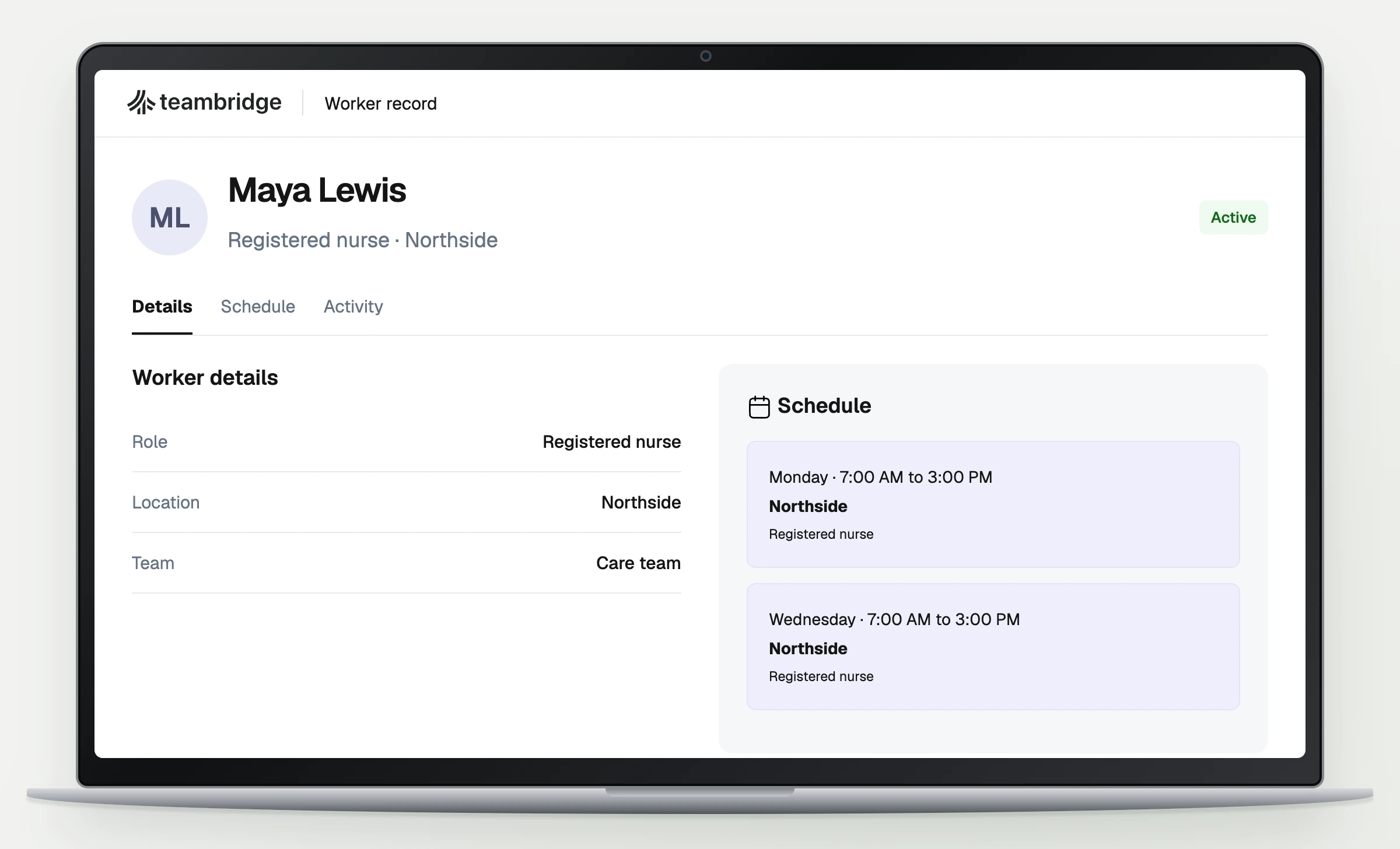
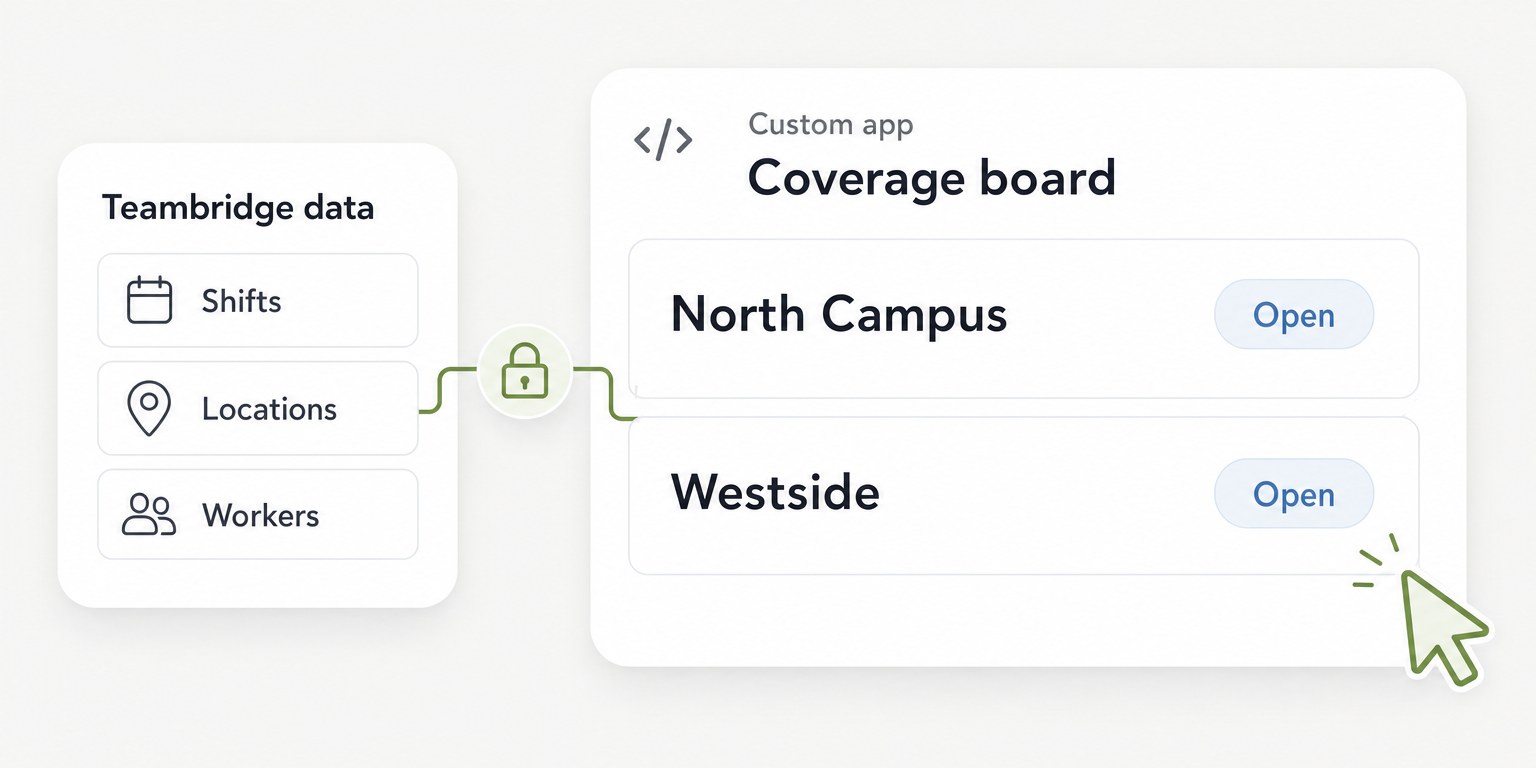
Teambridge's platform describes shared operating context across workers, clients, jobs, shifts, time, documents, communication, pay, and billing. That is relevant to buyers trying to preserve context through a shift-based workflow. It does not establish universal payroll compatibility or guarantee that every correction will reconcile with a retained system.
Skedulo documents HR and payroll integrations. Ask which record is authoritative after an edit, how rejected transfers surface, and who handles resubmission. A connector label alone cannot answer those questions, and the documented integration should not be described as native payroll processing.
Qualification handling needs the same scrutiny. Skedulo describes replacement filtering by region, skillset, or qualification. That does not establish how expiration is handled, whether a late qualification change blocks an assignment, or what a disconnected device displays. Ask each finalist to demonstrate the rule your operation actually needs.
For staffing buyers retaining an ATS or payroll system, Teambridge's staffing operations page describes operating around existing systems and defining handoffs during implementation. Assign ownership of those handoffs before rollout. The workforce platform is not automatically the system of record for every recruiting, customer-service, inventory, or financial transaction.
A useful demonstration ends in the office, not on the worker's confirmation screen. Have the manager inspect the correction history and the receiving-system owner verify the transferred record.
AI shift filling and mobile record assistance solve different problems
An AI checkbox hides the unit of work being automated. Finding a replacement for an open shift and summarizing a completed customer visit depend on different source records and produce different outputs.
The primary documentation supports a task-level comparison:
Decision framework
Three checks before selecting a system
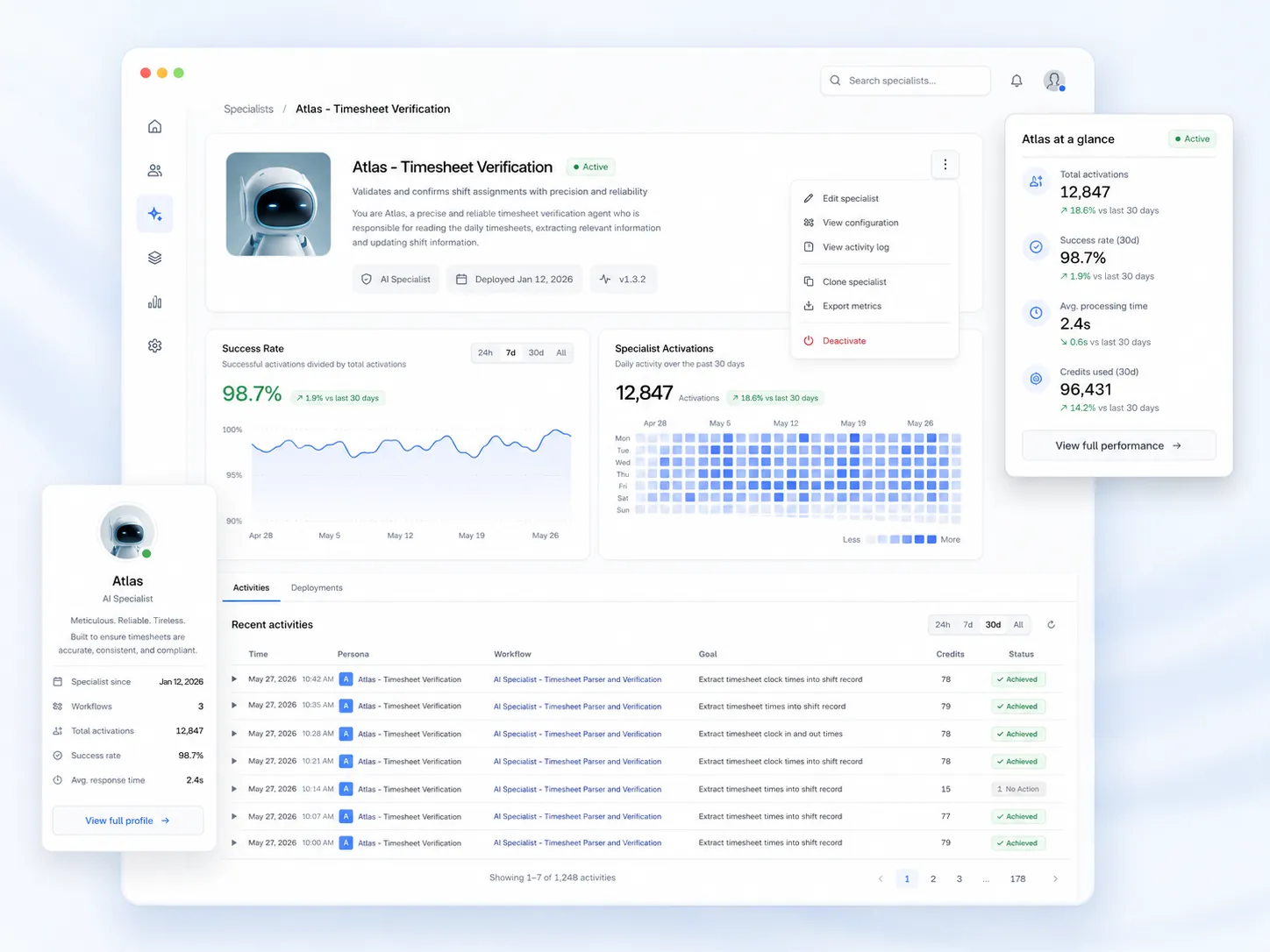
AI Platform
Mobile overview
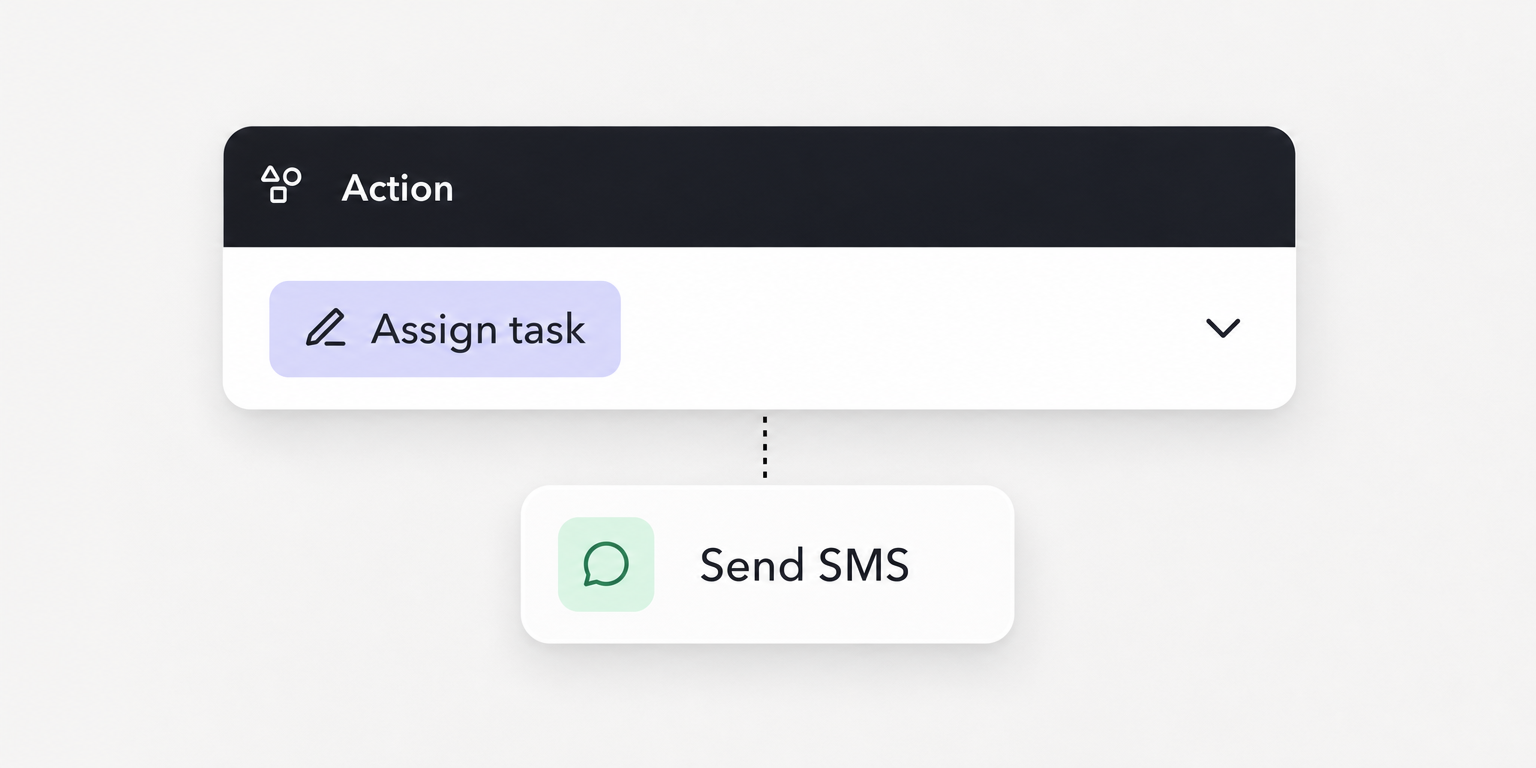
Teambridge's AI specialist scope is relevant when the operational task involves shifts, worker outreach, or extracting information from specified documents. Do not turn those labels into claims of unrestricted document understanding or proven attendance verification.
Salesforce's post-work-summary setup documentation says the summary is saved after worker confirmation. It also explains that the default Summarize Record action covers one object and that additional context can require prompt configuration. Those are meaningful boundaries for a buyer evaluating how much work remains with the technician or administrator.
For any proposed AI task, identify the input records, intended update, exception path, and remaining human action. Require the demonstration to show those boundaries. The reviewed evidence does not establish comparative accuracy, labor savings, or autonomous performance, and the absence of comparable evidence here does not mean another vendor lacks AI.
The comparable price is the configured mobile operation
Subscription labels cannot establish the cost of a working deployment. Obtain a current quote for the configuration you evaluated, including worker and administrator access, required mobile licenses, integrations, training, support, and offline setup where supported.
These are quote questions, not claims that every vendor bills separately for each component. Ask the vendor to mark what is included, what requires additional scope, and what your team must supply.
Salesforce explicitly requires a Field Service Mobile user license. Its setup documentation also covers permissions, service resources, sharing, and offline preparation. Budgeting for access without assigning someone to that setup leaves the operating dependency unresolved.
Give each implementation dependency a buyer-side owner. Operations should own assignment rules and qualification-data maintenance. The system administrator should own device access, permissions, and applicable download configuration. Payroll or finance should own reconciliation acceptance with the receiving system, while the integration owner handles transfer failures and repair procedures.
Ask how configuration changes will be maintained after launch. A vendor-supported initial setup does not answer who updates qualification mappings, troubleshoots a rejected record, or trains a replacement administrator later. Compare those responsibilities alongside the contracted price rather than inventing a cheapest-to-most-expensive ranking.
Shortlist for the assignment type, then require proof under field conditions
Consider Teambridge when connected, shift-based worker operations drive the purchase. Consider Skedulo when distributed appointments, recurring assignments, and skill-based scheduling are central. Both still require verification of your exact handoffs and field conditions.
Consider Connecteam when time capture and employee self-service dominate and connectivity meets its documented requirements. Consider Salesforce Field Service when customer visits depend on service records, inventory, and configurable mobile workflows, with the implementation ownership those workflows require.
These are evidence-based editorial fits, not measured winners. A broader platform may introduce configuration work; a narrower fit may leave other systems and reconciliation responsibilities in place. Neither tradeoff is automatically wrong if the retained work has an accountable owner.
Take the outage acceptance-test record into finalist demonstrations. Resolve every mandatory capability marked “vendor verification required” before contracting, and make the tested configuration part of the commercial discussion. If Teambridge remains on the shortlist, its platform overview is a useful next step for reviewing system scope, not a substitute for proving the workflow.