

You already paid the worker. You already paid the taxes. You already paid the MSP. The client wants a credit memo. Guess who eats the delta.
This is the clawback trap, and it's one of the most under-discussed margin killers in contingent staffing. It doesn't show up in your pricing model. It doesn't show up in your KPI dashboard until the quarter closes. And by the time you spot it, the shifts in question are months old and the evidence you needed to push back has been overwritten by the current rate card.
This piece breaks down where the delta actually comes from, what it costs in real dollars, and the data model plus contract language you need to make retroactive corrections defensible — or kill them at the source.
The Clawback Trap: Why Retroactive Rate Corrections Land on the Agency, Not the MSP
The economics of an MSP program are stacked against the supplier when anything goes wrong retroactively. MSPs act as intermediaries between hospitals and agencies, charging a fee to the agencies to participate. This service often appears "free" to the client, funded instead by the fee charged to the agencies — often called a VMS Fee or Technology Fee.
That structure matters because when the client demands a credit, the MSP doesn't absorb it. The MSP passes it through to you, keeps its cut of the reduced bill rate, and calls it done. You're the one who cut the paycheck at the old rate. You can't retroactively lower what you paid the worker without triggering wage claims.
Discounts, rebates, guaranteed fill rates, and penalties can significantly impact margin and should be modeled before you sign. Longer payment terms (Net 45–90) increase your working capital needs and cash risk. When a clawback hits, both of those levers pile on at once: the cash you already paid out is gone, and the credit memo hits an invoice that hasn't cleared yet.
Warning
If your pay-bill system stores only the current bill rate against each client-worker pairing — not the rate that was in effect on the shift date — you have no defensible evidence when an MSP pushes a retroactive correction. You will lose the dispute by default.
Where the Delta Actually Comes From: Rate Card Drift, Rebate Tiers, and VMS Data Gaps
Retroactive corrections almost always trace back to one of three sources. Understanding which one you're dealing with determines whether you can fight it.
1. Rate Card Version Drift
The MSP updates the rate card mid-quarter — a new skill tier, a shift differential change, a market adjustment — and your internal system is still billing off the previous version. Nobody notifies your finance team. Weeks later, reconciliation surfaces the gap and the MSP applies it backward.
2. Volume Rebate Thresholds Triggered Late
Your contract includes a rebate schedule tied to quarterly spend. The client hits a tier in week 11 of the quarter. The MSP retroactively applies the higher rebate to every hour billed that quarter — including the eight weeks of assignments where you already paid the worker at pay rates calibrated to the lower rebate.
3. VMS Data Gaps on Pay Rate
This one is structural. Some VMS platforms never captured pay rate cleanly at the requisition stage. The bill rate lives in the system, but the pay rate — the number you actually paid the worker — is stored only in your back office. When the MSP asks to reconcile whether the markup honored the contract, you're both reconstructing from partial data. Whoever has the cleaner audit trail wins.
The common thread: none of this is a technology problem in isolation. It's a data-model problem. If pay rate, bill rate, markup, MSP fee percentage, and rebate tier aren't all captured per shift with the values that were in force on the shift date, you're negotiating from a position of guesswork.

The Real Dollar Impact: Modeling a Clawback Against a 45–55% Light Industrial Markup
Let's put numbers on this. Light industrial is a useful base case because the markup range is well-documented and the margin cushion is thin.
Light industrial work typically involves 35-60% markups. Once you stack burden, MSP fees (typically 3% on the low-end and 6% on the higher end), rebates, and overhead, the effective margin the agency keeps is a fraction of that headline number.
Here's a concrete scenario: 20 light industrial workers, 40 hours a week, 4-week assignment, $18/hr pay rate at a 50% markup ($27/hr bill rate). The MSP issues a retroactive $2/hr bill rate reduction citing a rate card version mismatch.
| Line item | Original | After clawback | Delta |
|---|---|---|---|
| Bill rate | $27.00 | $25.00 | -$2.00/hr |
| Total billed hours | 3,200 | 3,200 | — |
| Gross revenue | $86,400 | $80,000 | -$6,400 |
| Pay rate (locked, already paid) | $18.00 | $18.00 | $0 |
| Statutory burden (~15%) | $8,640 | $8,640 | $0 |
| MSP fee (4%) | $3,456 | $3,200 | -$256 |
| Gross margin | $16,704 | $10,560 | -$6,144 |
That single correction wipes out roughly 37% of the assignment's gross margin. And that's before you factor in the AM time spent disputing it, the AR team's rework, or the working capital cost of holding an invoice open past terms.
Now scale to healthcare. Healthcare markups are the highest among major categories, reaching 100% or more. Elevated workers' compensation costs and licensing verification requirements both drive healthcare markups higher. The percentage looks safer, but the absolute dollars are larger — a $4/hr clawback on a $70/hr nursing bill rate across a 13-week travel contract is a five-figure hit per traveler.
It is generally advised to stay in the 45-75% range to reach a typical revenue and net profit goal for a staffing agency. That range assumes clean billing. Once retroactive corrections start compounding, effective margin drops well below the sustainable floor.
Important
The blast radius of a clawback isn't the disputed line item. It's every downstream financial artifact: payroll already funded, employer taxes already remitted, factored invoices already advanced, and margin already reported to leadership. Reversing any of those retroactively is more expensive than the correction itself.
Ready to move?
Ready to see Teambridge in action?
Lock the Rate Card to the Timecard: The Data Model That Makes Clawbacks Defensible
The operational fix is a data model, not a policy. Every timecard your system produces needs to carry — as immutable metadata — the exact commercial terms that were in force when the work was performed.
At minimum, each shift record should store:
- Bill rate in effect on the shift date (not the current bill rate)
- Pay rate actually paid to the worker for that shift
- Markup percentage derived from the two above
- MSP fee percentage applicable to that client on that date
- Rebate tier the client was in as of that date
- Rate card version ID — a pointer to the specific version of the contracted rate card
- VMS record ID — the source-of-truth foreign key back to the MSP's system
This is versioned rate card architecture with effective-date logic. When the MSP publishes a new rate card, your system doesn't overwrite the old one — it stores both and stamps every new shift with the version applicable to its date.
Immutable Timecard Snapshots
Once a timecard is approved and billed, the commercial metadata is frozen. Corrections happen through adjustment records, not by editing the original. Your audit trail preserves what was billed, when, and against which rate card version.
Reconciling Against the VMS
The VMS record ID is what makes disputes winnable. When the MSP says "this shift should have billed at $25," you respond with the shift-level snapshot: rate card version 4.2, effective 3/15 through 5/20, bill rate $27, VMS ticket 88291, approved by [MSP AM] on [date]. That's not an argument. That's evidence.
This matters even more where a VMS makes tracking and reporting transparent for both you and your client, which protects your margin without adding manual reconciliation work. The point is not to distrust the VMS — it's to have your own parallel record that agrees with it at the shift level, so you can catch drift before it compounds.
The 72-Hour Dispute Window: Catching Corrections Before Payroll Closes
Data model is the foundation. Operational cadence is what turns it into recovered margin. Here's the playbook.
- Daily VMS reconciliation. Every morning, pull approved hours from the VMS and diff against your internal timecards. Any mismatch — hours, rate, worker ID — goes to an exception queue before the day ends.
- Exception alerts on rate card changes. When the MSP publishes a new rate card, the system flags every open assignment against the changed lines. Finance and account management review before the next billing cycle closes.
- 72-hour dispute rule. Any MSP-issued correction on a timecard that has already been billed gets a response within 72 hours, backed by the shift-level snapshot. Silence is treated as acceptance in most VMS platforms, so the clock matters.
- Escalate inside the VMS ticketing system. Don't dispute over email. File the ticket in the VMS with the shift-level evidence attached. If it becomes a credit memo dispute, you want the paper trail inside the client's system of record.
- Weekly clawback review. Finance, account management, and ops meet weekly to review all retroactive adjustments in the previous seven days, dollar-weighted. Patterns — same MSP program manager, same client, same skill tier — get escalated.
Tip
Negotiate a contractual cap on how far back retroactive corrections can reach. A 30-day window with joint review required for anything older is a reasonable ask. Most MSPs will agree to it; they just won't offer it.
Contract Language That Kills Clawbacks Before They Start
The cleanest place to fight clawbacks is in the MSA, before the first shift is filled. Redline-level asks that materially change your exposure:
- Rate card change notice periods. Minimum 14 days, ideally 30. New rates apply effective-date-forward only, never retroactively.
- Effective-date-forward-only clauses for all bill rate changes. Any correction older than the notice window requires written joint review.
- Rebate calculation transparency. Tier data delivered monthly, not at quarterly true-up. Rebates on hours already billed at a lower tier are capped or excluded.
- Dispute resolution SLA. MSP must respond to a supplier dispute within a defined window (5-10 business days) or the disputed line item stands as originally billed.
- Data access rights. The agency has read access to its own shift, timecard, and rate history in the VMS, exportable in a machine-readable format.
These aren't exotic terms. They're standard in mature enterprise procurement contracts. Suppliers just rarely ask for them because they treat the MSP MSA as a take-it-or-leave-it template.
Program and contract costs — MSP/VMS fees, rebates/discounts, required guarantees, and any penalties or service credits — plus client contract terms like MSP/VMS fees and longer payment terms directly affect profitability and cash needs. The contract is where clawback exposure is either capped or left open-ended. You don't get a second bite at that apple.
For a broader breakdown of how these fee structures shape the market, Staffing Industry Analysts publishes benchmark data on VMS and MSP fees drawn from a survey of North American staffing firms.

How Teambridge Ties Pay, Bill, and VMS Data Together in One System
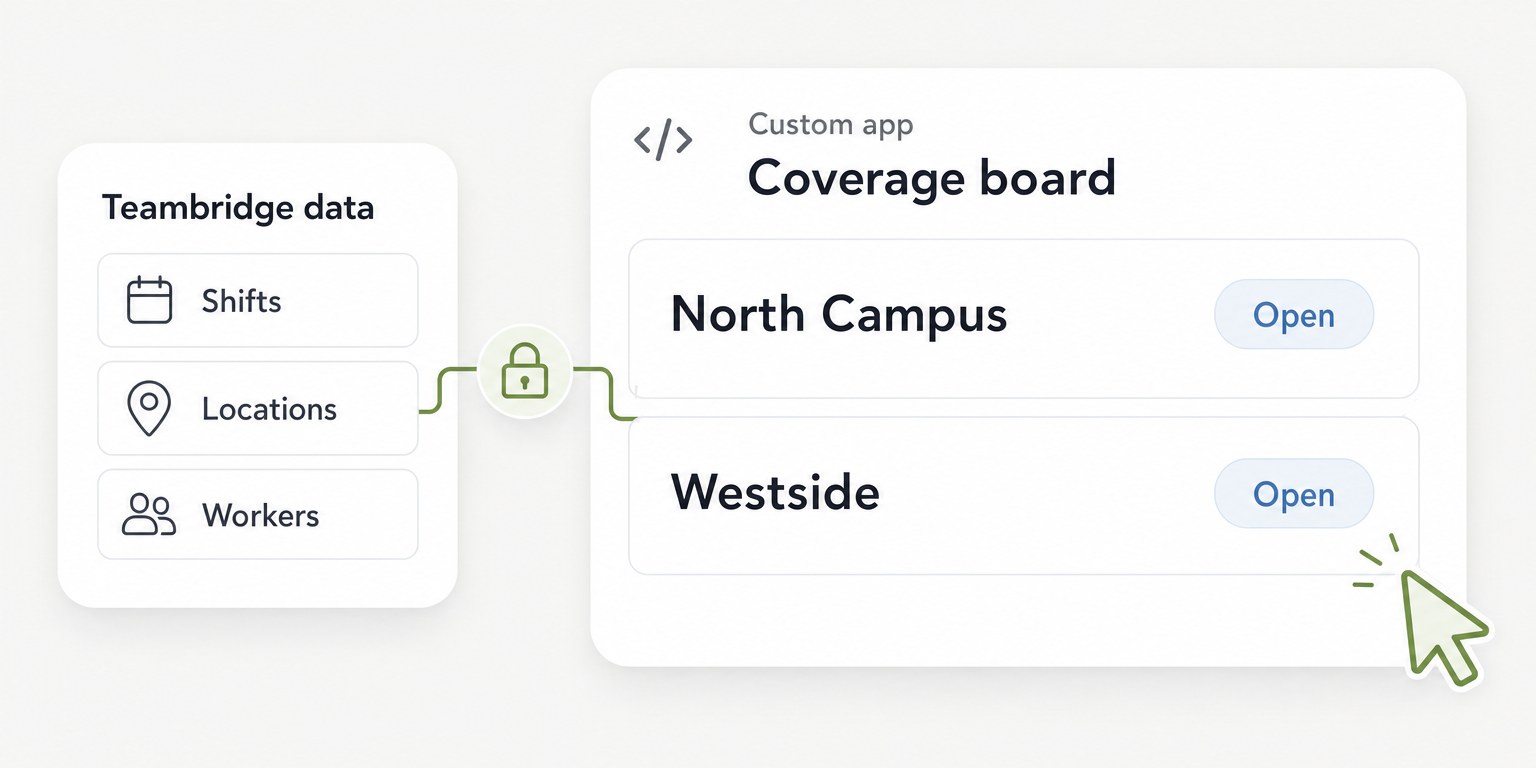
This is the operational thesis Teambridge is built around: pay data, bill data, timecards, and rate cards belong in one system with shared source-of-truth records. Split them across a scheduling tool, a payroll platform, and a spreadsheet reconciled monthly, and clawback exposure is guaranteed.
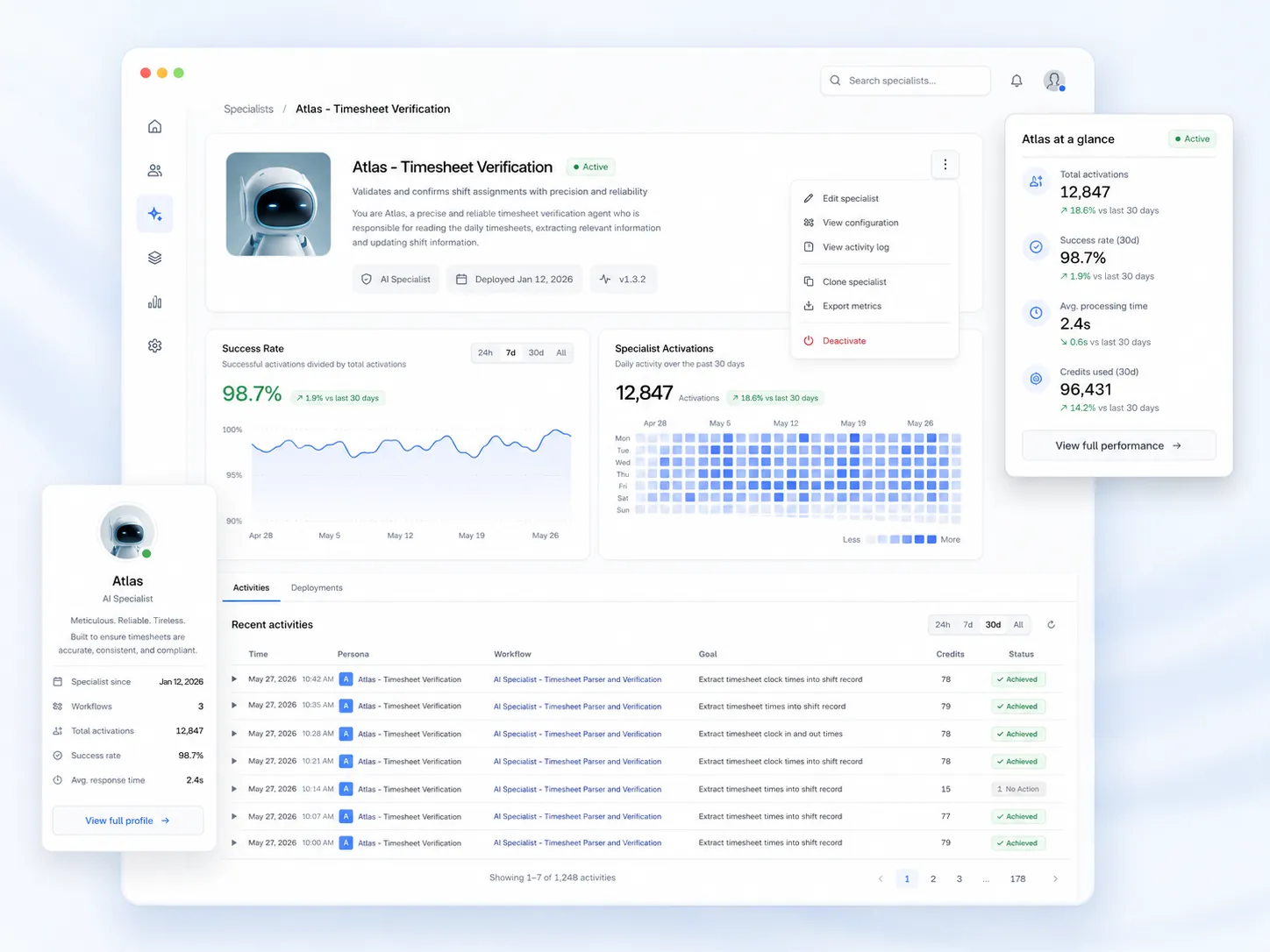
Teambridge's invoicing engine ties client billing directly to timecards, with bill rates, burden, and spread captured per shift and exported to QuickBooks or NetSuite. Every invoice line is traceable back to a specific shift, a specific rate card version, and a specific approval event.
Combined with GPS-verified time tracking, agencies get the shift-level evidence needed to push back on retroactive MSP corrections: worker on-site, hours worked, rate in force, MSP approval — all captured in one immutable record. When a rate card version changes, prior shifts hold their original terms.
For high-volume staffing agencies running across MSP programs and direct clients, the reconciliation speed matters as much as the audit trail. Daily variance reports catch corrections inside the dispute window instead of surfacing them at quarter-end. And clean integrations with QuickBooks, NetSuite, and payroll providers mean the accounting system carries the same shift-level detail your ops team is working from.
Clawbacks won't disappear entirely — MSPs will always issue corrections, and some of them will be legitimate. The goal isn't zero disputes. The goal is making every dispute defensible, catching them fast enough to matter, and pricing the residual exposure into the deal before you sign it.
The agencies that get eaten by clawbacks are the ones treating pay and bill as separate systems held together by human reconciliation. The ones that hold their margin are the ones where the rate card, the timecard, and the invoice are locked to the same shift record — and the audit trail is one query away.

About the author

Content Writer at Teambridge
Anis Nanai is a content writer at Teambridge, with a focus on workforce management and the realities of running hourly teams. He prioritizes conversations with customers, staying close to the market, and understanding how workforce needs are changing. His writing connects those concerns to practical decisions about scheduling, time tracking, staffing, and automation. He examines product developments through the questions that matter to operators: what does this solve, how would it work for my team, and what evidence supports it?
Company perspective: this author works at Teambridge. Customer outcomes are attributed to their published sources.
View LinkedIn profile