

This is not a policy problem. It is a rules-engine problem. And treating a mixed-jurisdiction workweek as anything other than a shift-by-shift compliance question is the single most expensive habit in California-adjacent staffing operations.
The mid-week border-crossing problem staffing agencies keep losing money on
The scenario is boringly common. One traveler, per diem, or light-industrial worker. Two or three client sites in a single workweek. At least one of them sits inside California. The dispatcher assigns the shifts based on client demand, not compliance geography. Payroll receives a timecard at week's end with punches from multiple sites and no jurisdictional tagging.
From there, two failure modes:
- Over-apply California rules. Every shift gets meal and rest premium checks against California's Labor Code Section 512 standard. Nevada and Arizona shifts get charged premium math they never owed. Bill rates hold, but pay costs quietly rise. On a 40-person rotating deployment, the leakage is real money.
- Under-apply California rules. Payroll defaults to the home state or the agency's HQ state. California shifts get no premium check at all. Missed and short meals never surface. The wage statement is silent on premiums that were owed.
The second failure mode is worse, because missed or late breaks almost never surface in real time. Supervisors on a client site are not counting minutes for a temp. The evidence lives in the punch record, and the punch record only gets audited when a timecard hits payroll — after the shift, after the pay period, after the reasonable-steps window has started to close.
Warning
Meal and rest period claims remain one of the most frequently litigated categories in California wage and hour law. If your rules engine cannot answer "was this specific shift California-jurisdiction, and did the punch pattern comply?" — you are already exposed.
What actually triggers a premium: rules per shift, not per employee
California's meal and rest rules are not complicated in isolation. They become complicated when you try to apply them selectively across a single workweek.
The mechanics agencies routinely get wrong:
- A 30-minute off-duty meal period is required before the end of the fifth hour of work.
- A second 30-minute meal period is required when a shift exceeds ten hours.
- A 10-minute paid rest period is required for every four hours worked or major fraction thereof.
- Failure to provide any of the above owes one additional hour of pay at the regular rate, capped at one meal premium and one rest premium per workday.
California law requires employers to provide a 30-minute, off-duty and unpaid meal period for employees who work more than five hours in a day and a second 30-minute off-duty and unpaid meal period when they work more than 10 hours. Employers owe an extra hour of pay at the employee's regular rate for any day the employer does not provide all required meal periods.
The minimum wage floor moved on January 1, 2026. The state minimum wage increased from $16.50 to $16.90 per hour on January 1, 2026. That $16.90 is the statewide floor, but many California cities enforce higher local rates based on where work is physically performed — a detail that matters for staffing agencies whose workers rotate between, say, Fresno (at the state floor) and Los Angeles or a Bay Area municipality (well above it). More than 40 California cities and counties have set their own minimum wage above the state rate. Your city wage applies based on where you physically perform the work — not where your employer is headquartered, and not where you live.
The point is that eligibility is determined by the site's jurisdiction on the specific shift. Not the worker's home state. Not the agency's HQ. Not the client's corporate address. The physical work location on that day, on that punch record.

Regular rate of pay: where the math quietly breaks
The meal premium is not "hourly wage times one." It is one hour at the regular rate of pay, and the regular rate pulls in non-discretionary bonuses, shift differentials, and other qualifying compensation from the workweek.
That means when a worker earns a $2/hour night differential on a Tuesday California shift and a $75 completion bonus on a Thursday Nevada shift, the regular rate for the workweek is not the base hourly rate. It is the base plus the weighted contribution of the differential and the bonus, calculated across the full workweek's straight-time hours. That blended regular rate is then the correct multiplier for any premium owed on any qualifying California shift.
Most payroll systems either:
- Drop the Nevada bonus entirely from the California regular rate calculation (under-payment).
- Apply the Nevada bonus to the California regular rate calculation as if it were California-earned (arguably correct under FLSA workweek logic, but the system usually gets it wrong anyway).
- Blend the rate incorrectly by dividing total earnings by total hours across all sites without accounting for premium eligibility.
Worked example
| Element | Value |
|---|---|
| California base rate | $22.00/hr |
| Nevada base rate | $22.00/hr |
| California hours (with $2 shift differential) | 16 |
| Nevada hours (with $75 completion bonus) | 24 |
| Total straight-time earnings | $22 × 40 + $2 × 16 + $75 = $1,027 |
| Regular rate (workweek) | $1,027 / 40 = $25.68/hr |
| Missed meal premium owed (1 hour at regular rate) | $25.68 |
| Premium if paid at base rate only (wrong) | $22.00 |
| Per-shift under-payment | $3.68 |
On one worker, one missed meal, $3.68 does not feel like a discovery event. Across a 40-person deployment with two mixed-jurisdiction weeks per person per month, over a one-year reach-back, that under-calculation is the difference between a clean audit and a settlement conversation.
Ready to move?
Ready to see Teambridge in action?
PAGA exposure math: one missed premium becomes a pay-period problem
The 2024 PAGA reforms — AB 2288 and SB 92, signed July 1, 2024 — reshaped the penalty math in ways that reward proactive compliance and punish systematic errors.
Where PAGA previously provided a default penalty of $100 per aggrieved employee per pay period for an initial violation, and $200 per aggrieved employee per pay period for a subsequent violation, the PAGA reforms impose a standard $100 penalty for each aggrieved employee per pay period. The $200 subsequent-violation tier still exists, but with tighter conditions: the default $100 penalty applies to all violations, unless a court or the Labor Commissioner finds that the employer's practice or policy violated the law within the last five years, or a court determines that the employer acted "maliciously, fraudulently, or oppressively."
More importantly for staffing operators: the reforms created explicit caps for employers who take reasonable steps. The new PAGA statute provides for a 15% cap on penalties where reasonable steps were taken by the employer before receiving a PAGA notice, and a 30% cap on penalties where reasonable steps were taken within 60 days of receiving a PAGA notice. Reasonable steps may include actions such as conducting regular payroll audits and taking responsive action, disseminating lawful written policies, training supervisors.
Run the math. A staffing agency running 200 W-2s through California clients on a biweekly cycle has 26 pay periods per year. A systematic under-calculation of meal premiums across a 12-month reach-back, on a $100 default, produces:
200 employees × 26 pay periods × $100 = $520,000
That is the default exposure. Before attorney's fees. Before the derivative wage statement claims that used to stack on top (now more limited, but still live for knowing and intentional violations). The reasonable-steps defense is not a nice-to-have. It is the difference between a six-figure resolution and a seven-figure discovery event.
And the cleanest reasonable-steps evidence is a rules engine that pays the premium proactively, records it as a distinct line item on the wage statement, and produces an audit trail showing the exception was caught and remediated. For deeper coverage of how this shows up in day-to-day operations, see the Teambridge staffing agency page.
The rules-engine build: what your scheduling and time system has to do
The policy is not the hard part. Any competent employment attorney can write the meal-and-rest policy in a paragraph. The hard part is running it automatically off the shift record for every shift, every day, across a rotating workforce.
Concrete requirements for the underlying system:
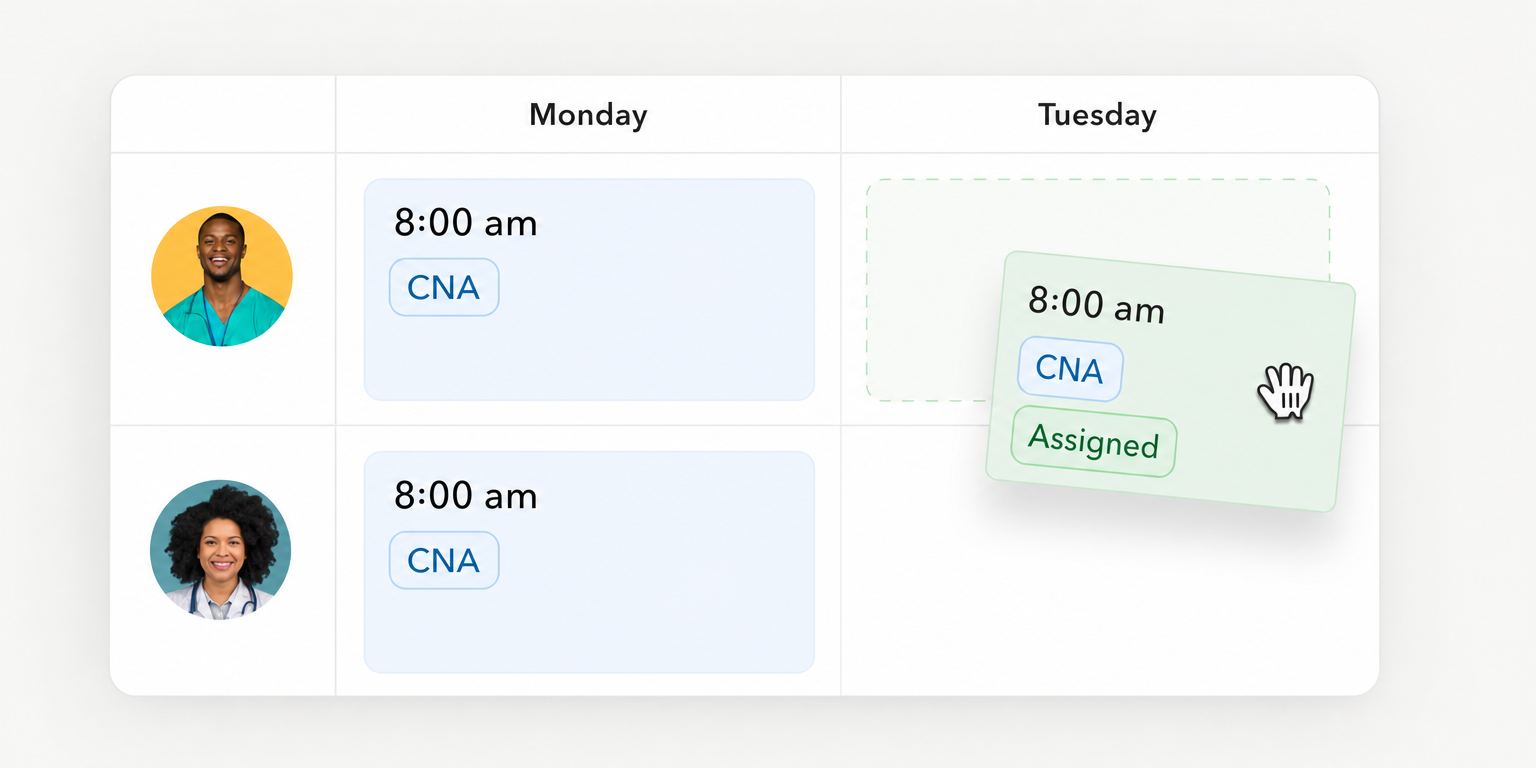
- Every shift is tagged with a jurisdiction at assignment creation. Not at payroll close. Not at week's end. At the moment the recruiter or dispatcher confirms the shift, the physical work address drives an automatic jurisdiction tag — state, county, and city if a local wage ordinance applies.
- Break rules attach to the jurisdiction, not the worker profile. A California-tagged shift enforces the Section 512 meal cadence and the applicable Wage Order rest cadence. A Nevada-tagged shift enforces Nevada rules. Same worker, same week, different rule sets by shift.
- Punch patterns are auto-flagged in real time when they violate the site's rules. Late meal (started after the end of the fifth hour). Short meal (less than 30 minutes). Missed meal on a shift over five hours. No second meal on a shift over ten hours. Missed rest based on hour totals.
- Regular rate is calculated on the workweek across all sites, then applied backward to the premium-triggering shift. Non-discretionary bonuses and shift differentials from any site in the workweek roll into the regular rate calculation used for California premium payment.
- Paystub line items surface the premium clearly. "Meal Period Premium — California," with the date and hours. Not buried in a lump. Visible during any reasonable-steps review.
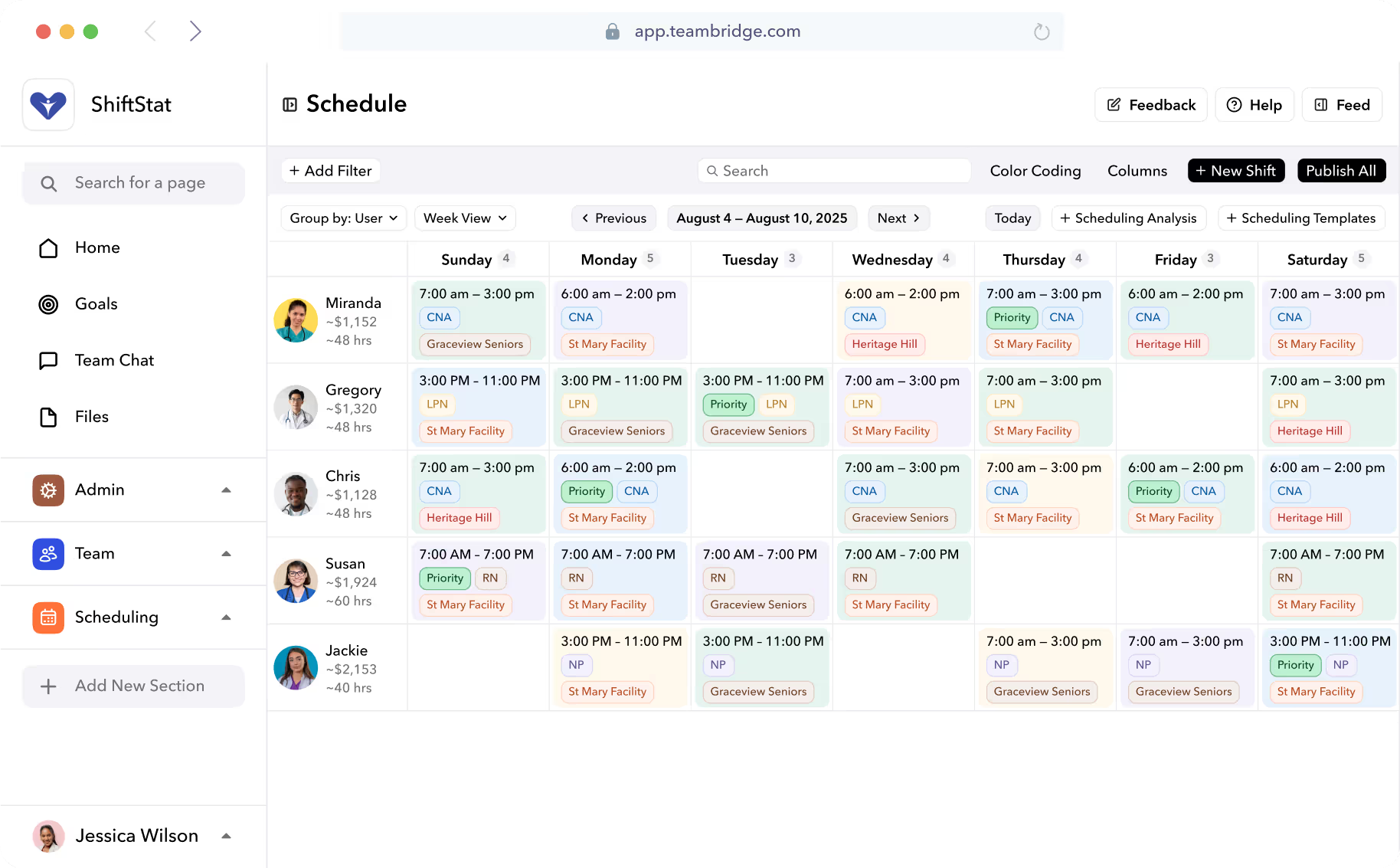
This is where Teambridge's time tracking and admin tools do the operational work. Scheduling assigns the jurisdiction. Time tracking enforces the rules against the punch record. Admin tools surface the exceptions to a compliance operator before payroll close, not after.

Client-site handoff: capture the compliance data before the first punch
The leak often starts before scheduling. If the client order doesn't specify the physical work address, the recruiter guesses — sometimes correctly, sometimes not. If the order doesn't specify meal-period waiver status for six-hour-or-less shifts, the default is unclear. If the order doesn't flag collective bargaining coverage or on-duty meal agreements, the downstream rules engine has no basis to apply the right logic.
Mandatory intake fields for any California-touching order:
- Physical work address (street, city, county — not the client's corporate HQ).
- Expected shift lengths and any anticipated shifts of six hours or less that might trigger a meal waiver.
- Collective bargaining coverage that could modify meal and rest rules.
- On-duty meal agreement status (only permitted where the nature of the work prevents an off-duty meal, in writing, with revocation rights).
- Second-meal waiver status for shifts between ten and twelve hours where applicable.
On the meal waiver side, the Bradsbery decision changed the calculus for standalone waivers. In a significant win for employers, the California Court of Appeal recently affirmed that prospective, revocable meal period waivers for shifts between five and six hours are lawful under both the Labor Code and applicable Wage Orders. The decision in Bradsbery v. Vicar Operating, Inc. clarifies that employers may obtain – in advance – written waivers from employees who voluntarily choose to skip a meal break on short shifts.
This ruling confirms that California employers may utilize advance written waivers for meal periods in shifts of five to six hours as long as the waivers are mutual, voluntary, and revocable at the employee's discretion. For staffing agencies running short-shift assignments, that means the waiver can live in the onboarding packet as a standalone document — not buried in a handbook, always revocable in writing, and recorded in the worker file where the rules engine can reference it.
Tip
Standalone written waivers are more defensible than handbook clauses. The Bradsbery court did not rule on oral waivers or handbook language. If you use meal waivers for short shifts, use a separate signed document per worker, retained with the assignment record.
Auditing what already shipped: the retro review most agencies skip
Before an attorney finds it, run the look-back yourself. Three to four pay periods is the minimum useful window. Twelve months matches the PAGA reach-back.
Queries to run against your timecard data:
- Shifts longer than five hours at California-tagged sites with no recorded 30-minute meal punch.
- Shifts longer than ten hours at California-tagged sites with only one recorded meal punch.
- Any premium payment where the regular rate used does not match the workweek's calculated regular rate (i.e., the system paid at base rate instead of blended rate).
- Shifts where the jurisdiction tag is missing entirely.
- Wage statements missing a distinct line item for any premium paid.
Before / after: what the retro review typically finds
| Finding | Typical cause | Correction |
|---|---|---|
| 8-12% of long CA shifts missing meal punch | Supervisor never enforced; punch device offline | Pay premium, document, add exception rule |
| Regular rate paid at base | Payroll system did not blend workweek earnings | Recalculate, back-pay difference, adjust settings |
| Missing jurisdiction tag | Order intake did not capture work address | Fix intake fields, retag historical shifts |
| No paystub line item | Wage statement template lacks premium field | Update template, reissue statements if needed |
On record retention: California requires payroll records for at least three years, but most operators retain four-plus years because of the interplay between the wage statement statute of limitations, the PAGA one-year reach-back, and derivative claims that can extend the window.
What good looks like: every shift as its own jurisdiction
The operating principle is simple. Jurisdiction lives on the shift, not on the worker. Break rules, premium math, and paystub disclosure fire automatically off that shift tag. Premiums are paid proactively when the exception is caught, not disputed later at close.
In practice, that looks like this:
- The dispatcher creates a shift. The physical work address auto-populates jurisdiction (state, county, city).
- The rules engine attaches the correct meal and rest cadence for that jurisdiction. Waiver status is pulled from the worker's onboarding record.
- The worker punches in and out at the site. Exceptions — late meal, short meal, missed rest, no second meal — are flagged in real time and again at payroll close.
- The regular rate is calculated on the workweek across all sites. Any premium owed is paid at the correct rate, on a distinct line item on the paystub.
- The audit trail — assignment, punch, exception, premium paid, wage statement — lives in one system.
The result: no surprise premium pay at close. A clean paystub record. A reasonable-steps defense already built into the operating model, not bolted on after a PAGA notice arrives.
This is the operating model Teambridge builds toward on the platform — one shift record that drives scheduling, time tracking, and compliance off the same jurisdiction tag. For agencies running rotational assignments across California and neighboring states, that single shift-of-record approach is the difference between paying $520,000 in default PAGA exposure and paying zero because the premiums were already recorded, on the paystub, at the correct regular rate, before anyone thought to look.
The worker crossing the state line mid-week is not the exception any more. It is the operating condition. Build the rules engine to match it.

About the author

Content Writer at Teambridge
Anis Nanai is a content writer at Teambridge, with a focus on workforce management and the realities of running hourly teams. He prioritizes conversations with customers, staying close to the market, and understanding how workforce needs are changing. His writing connects those concerns to practical decisions about scheduling, time tracking, staffing, and automation. He examines product developments through the questions that matter to operators: what does this solve, how would it work for my team, and what evidence supports it?
Company perspective: this author works at Teambridge. Customer outcomes are attributed to their published sources.
View LinkedIn profile