A retro pay entry looks like a payroll problem. It isn't. For a staffing agency, every backdated hour or rate change is a compliance event that touches at least three regulated systems at once — and the errors don't surface until an audit letter arrives.
This is the operator pain nobody warns you about when you buy a scheduling tool and a payroll processor and assume they'll talk to each other. They don't. And the gap between them is where retro pay quietly turns into six-figure liability.
Why one retro pay entry becomes four compliance problems
Start with the mechanics. Retro pay is additional compensation given to correct underpaid wages from previous pay periods, usually caused by payroll errors ranging from missed overtime hours to incorrect or outdated pay rates. On the surface, it's a second check. Under the surface, it's a rewrite of history.
When you post a retro correction two weeks after the fact, four things move simultaneously. The hours change. The wages change. The pay period the wages land in may not match the period the work was performed in. And the classification tied to that work — comp class code, ACA measurement bucket, SUI state and quarter — has to be reconciled against the new numbers.
The DOL doesn't give you room to sit on this. The Fair Labor Standards Act requires that back wages resulting from payroll errors be paid promptly, and the Department of Labor generally expects payment no later than the next regular payday after the error is discovered. So the pressure is to cut the check fast. The problem is that fast payroll and correct reporting are often opposites.
Retro pay should appear as a distinct line item on the pay stub, clearly labeled (e.g., "RETRO" or "Retroactive Pay"). That's the visible half. The invisible half is what happens to your compliance reporting when the retro entry backdates into a closed period.
Important
Agencies rarely lose money on the correction itself. They lose money on the downstream reporting drift — ACA re-classifications, comp audit true-ups, and amended SUI returns — that the correction triggers weeks or months later.
The multi-week temp assignment problem: why staffing gets hit hardest
A single-employer W-2 shop with stable schedules can absorb a retro edit with minimal collateral damage. Staffing agencies cannot. The workforce profile makes the exposure structural.
Staffing agencies have been one of the industries that have found ACA compliance especially challenging. Agencies have a high turnover rate, mostly part-time employees, and unusual pay rates. Add multi-state placements, weekly pay, and client-driven schedule volatility, and you have a compliance surface area that changes every Friday.
Workers' comp makes it worse. Placed workers are classified by the work they perform at the client, not by the staffing firm's own industry. An agency placing warehouse workers pays warehouse rates for those workers, even though the agency itself is an office business. One retro rate bump on a four-week warehouse assignment touches multiple weekly timecards, potentially two SUI quarters, and a class code that has nothing to do with your office overhead.
Here's the compounding pattern in one table:
| Retro event | Payroll impact | Hidden compliance impact |
|---|---|---|
| Timecard edit adds 6 hours to week 3 of a 4-week assignment | Extra hours × rate on next paycheck | ACA measurement bucket for that employee shifts; comp class code payroll grows |
| Rate bump backdated 3 weeks | Retro dollars owed × hours | OT premium recomputed; SUI wages may cross wage base |
| Client site change discovered late | None visible | Wrong comp class code applied to prior weeks; audit exposure |
| Correction posted in Q2 for Q1 work | Current-quarter payroll grows | SUI wage base attributed to wrong quarter and possibly wrong state |

ACA: how retro hours quietly flip an employee into full-time status
This is the mechanism that catches operators off guard. ACA full-time status for variable-hour workers isn't measured week to week. It's measured across a long look-back window.
Look-back provisions allow staffing agencies to use a measurement period of up to 12 months to track employee hours and determine whether they qualify as full-time. Suppose an employee is determined to be full-time after the measurement period, meaning they work more than 130 hours a month on average. In that case, the agency must offer coverage during a stability period, regardless of any employee hours changes.
Now drop a retro timecard edit into that window. The added hours don't just show up on this week's check — they backdate into the measurement calculation. A variable-hour temp who was averaging 28 hours can retroactively cross the 30-hour threshold. And once they cross it, the agency was supposed to offer coverage during the stability period that already started.
The penalties for missing this are not theoretical. For 2026, the penalty for failing to offer coverage to your full-time employees jumped to $3,340 per person – a 15.2% increase from 2025 and the sharpest single-year spike in nearly a decade. For a staffing agency with 300 full-time workers on payroll, a compliance miss could cost over $900,000 in a single year.
And the risk isn't hypothetical either. Bridgeline Staffing, a US light industrial agency with 1,400 active contractors, implemented an ACA tracking system after receiving an IRS Letter 226J in 2022 proposing an ESRP of $1.2 million for tax year 2020. The agency had not been tracking hours for variable-hour workers systematically; it assumed that most workers would not average 30 hours per week over the measurement period. The IRS calculation showed otherwise: 340 workers met the full-time threshold and were not offered compliant coverage.
Warning
If your ACA eligibility only re-runs at month-end or quarter-end, every retro edit posted between runs is a silent classification change waiting for an IRS letter. The system needs to re-evaluate on every timecard change inside the measurement window — not on a schedule.
The fix is structural. Hour totals for the measurement period must be recomputed whenever an in-window timecard is edited, and the eligibility flag on the worker's record must update in the same transaction. Anything less leaves you reporting on stale data.
Workers' comp: retro rate changes and the audit premium trap
Comp premium math is simple, and that's what makes the audit exposure painful. Workers' compensation premiums follow a straightforward calculation: your payroll for each job classification, divided by 100, multiplied by the rate assigned to that classification, then multiplied by your experience modification factor.
Every dollar you retro-add to a placement grows the payroll under that placement's class code. If the original coding was optimistic — or wrong — the audit unwinds it. What happens if workers are misclassified in an audit? The insurer reclassifies the payroll and bills the premium difference retroactively for the audited period, which can span policy years. Repeated misclassification also damages your experience modifier, raising every future premium.
How big does this get? Firms have seen five-figure retro bills from a single misclassified crew. And it's escalating fast. A recent California enforcement action shows just how far the exposure runs when misclassification and comp coding fail together: Akker Insurance reported that in one California case, the agency faced $4.4 million in labor violations. The comp piece runs alongside it: workers' comp policies are audited annually based on actual payroll, and unlike a labor citation — which you can sometimes negotiate or appeal — a retroactive audit premium is owed immediately.
The retro pay connection is direct. Every backdated hour on a placement adds to that class code's payroll base. If you don't tag each timecard line to the client-site class code at the moment of capture, you're guessing at the audit — and carriers don't accept guesses.
Ready to move?
Ready to see Teambridge in action?
SUI: cross-quarter and cross-state wage base leakage
State unemployment reporting is where retro pay quietly manufactures amended returns. SUI is per-state, per-employee, per-quarter — and the wage base resets at each employee's crossing point.
Every state has a different annual SUI tax rate, a different tax rate range, and a different wage base for unemployment tax. The wage base means you only contribute unemployment tax until the employee earns above that specific amount. And the jurisdiction rule is unforgiving: SUI follows the employee's work location, not your business address. A worker based remotely in another state means you owe SUI there, regardless of where your business is incorporated.
Apply that to a temp who worked two weeks in Nevada, then two weeks in California, then received a retro rate bump in the following quarter for the Nevada work. If the retro dollars post to the current quarter's California payroll, you've just:
- Reported wages in the wrong state.
- Reported wages in the wrong quarter.
- Applied the wrong wage base to the employee's YTD total.
- Made your 941 and state UI return inconsistent.
The cleanup is amended 941s, amended state returns, and — if the state notices before you do — interest and penalty assessments. Payroll processors handle the current-quarter case reasonably well; Intuit's own documentation notes that when you change your unemployment rate in QuickBooks, future paychecks use the new rate. Previous paychecks in the same quarter are recalculated for accurate quarter-end payments. But that's rate changes, not wage-period assignment. Cross-quarter and cross-state corrections are still manual for most agencies.
Tip
Retro corrections need to post to the pay period the work was performed, not the pay period the correction was cut. If your payroll system can't do this natively, your quarterly returns are always slightly wrong.
The reconciliation gap: why disconnected time, pay, and compliance systems fail here
Here's the root cause. Most agencies run scheduling in one tool, time tracking in another, payroll in a third, and ACA and comp reporting in a fourth and fifth. A retro edit made in the time tracking system rarely propagates back through ACA hour counts or forward into re-audited class code payroll.
The symptoms are the ones every ops manager knows: spreadsheets emailed between payroll and compliance, month-end reconciliations that never fully close, audit responses that require someone to rebuild the workforce history from raw exports. The cause is architectural — not human.
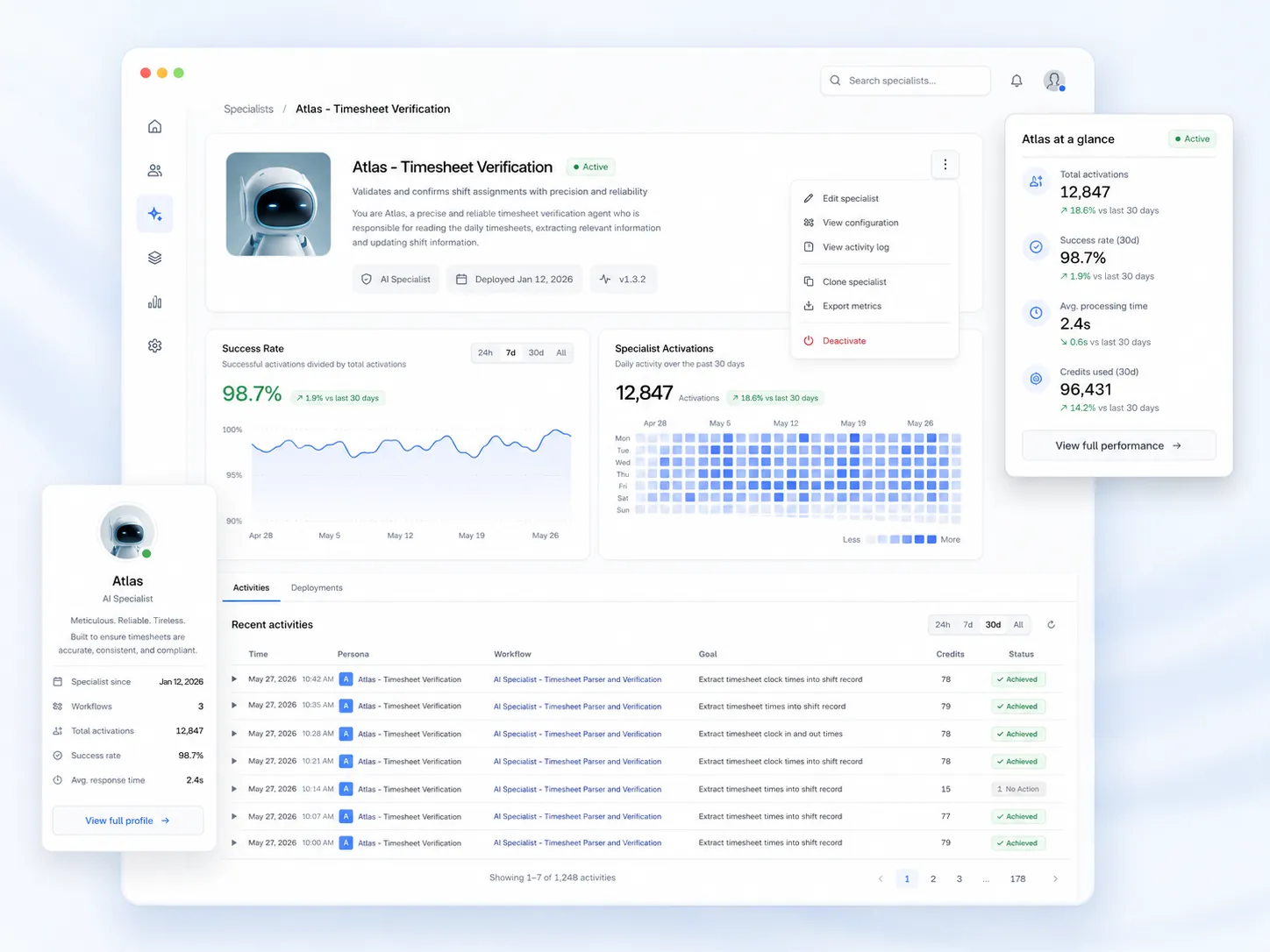
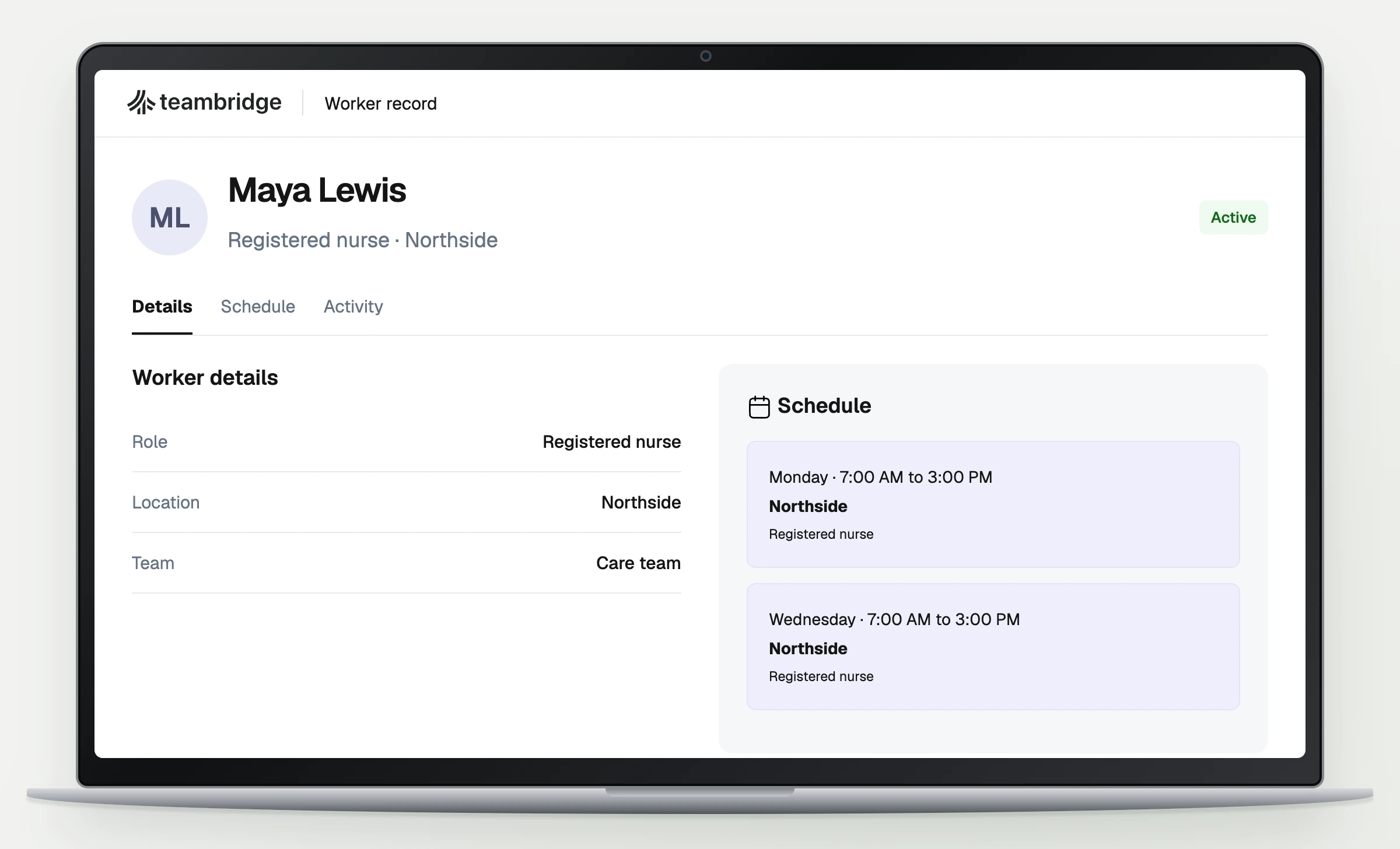
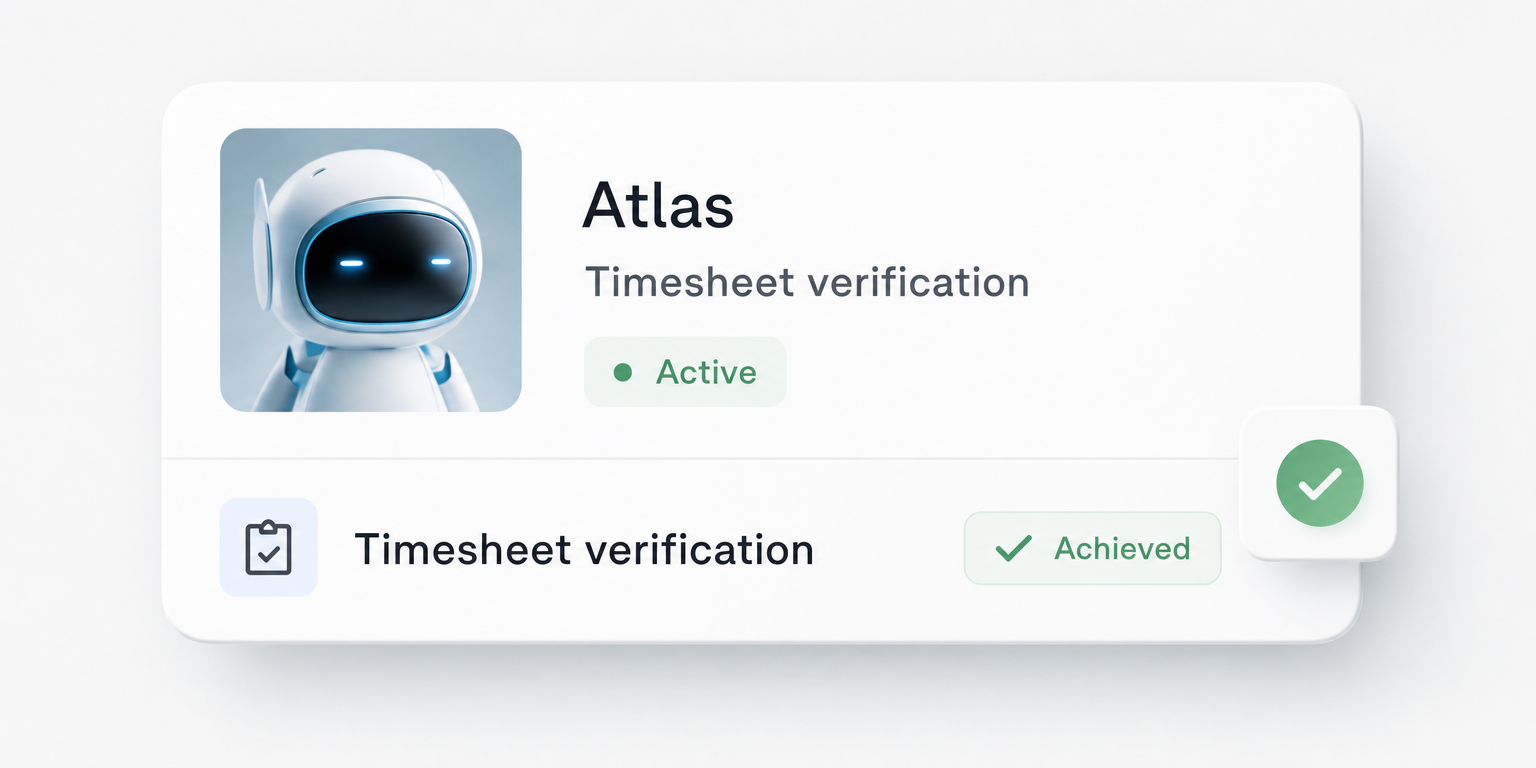
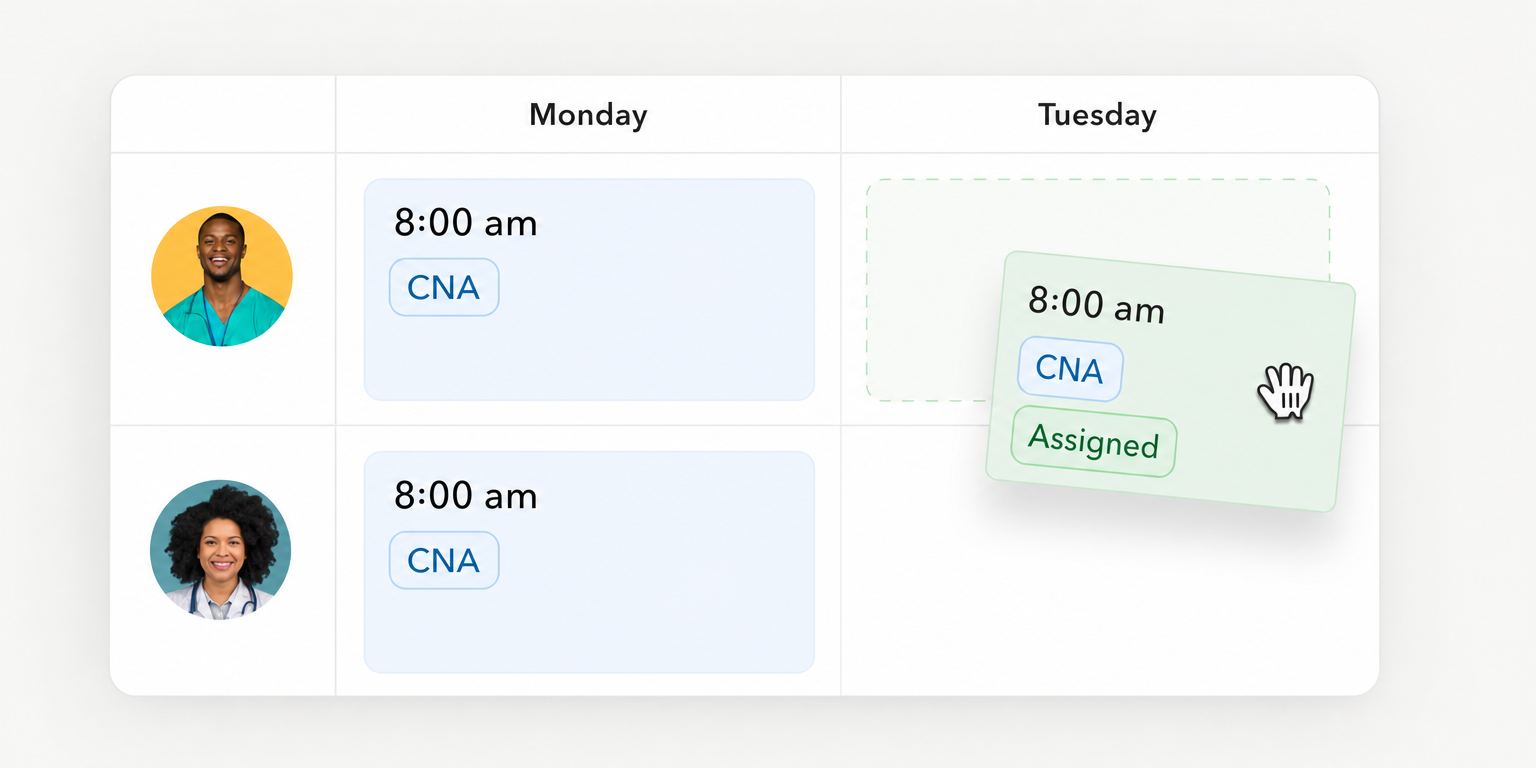
This is why Teambridge treats scheduling, time tracking, and compliance reporting as one system rather than four. When a timecard exception is corrected in time tracking, the ACA hour totals for that employee's measurement period recalculate in the same transaction, the comp class code payroll for that client site updates, and the SUI wage assignment stays anchored to the actual work week. The admin tools surface these downstream changes as exceptions, so an operator sees the compliance impact before payroll closes — not after the audit letter.
That's the structural fix. Not a better spreadsheet. Not a smarter integration. One record of truth for hours, wages, and classifications, so retro edits don't create reconciliation drift.
An operator's checklist for retro-safe payroll on temp assignments
Here's the blunt playbook. If you can't do all seven, you have exposure.
- Label retro pay clearly on paystubs. Distinct line item, not bundled into regular wages, not mislabeled as a bonus. This protects you on wage claims and on tax classification.
- Post corrections to the original work period, not the current one. This is the single biggest driver of SUI cross-quarter and cross-state errors.
- Re-run ACA eligibility on any edit inside the measurement window. Not at month-end. At the moment the edit posts. If the worker crosses the 30-hour threshold, you need to know before the stability period is already violated.
- Tag every hour with the client-site comp class code at clock-in. Not at payroll close, and not by manual assignment. The class code follows the placement, and it must be captured with the timecard line.
- Reconcile SUI wage bases per employee, per state, per quarter after every off-cycle run. Especially for multi-state temps. The reconciliation should be automatic; if it's manual, it won't happen.
- Document the error, the effective date, and the corrected amount. Employers should also maintain internal records showing the nature of the error, the effective date, the corrected amount, and when payment wa[s made]. This is your defense on wage claims and audit disputes.
- Audit proactively. Discovering an error yourself and fixing it is an administrative matter. Having an auditor discover it is a penalty-plus-interest matter. The difference is entirely in your systems.
For agencies running high-volume placements in light industrial, healthcare, or security, the retro pay problem isn't going away. Client-driven schedule changes, backdated rate approvals, and timecard exceptions are the normal operating environment. What has to change is the assumption that payroll, comp, and ACA reporting can run on separate rails.
Retro pay is a solved problem when your time tracking, scheduling, and compliance reporting share one record. It's an audit trigger when they don't.