A client calls your on-call line at 9:47 PM Sunday. They're cutting the overnight for their Monday census, and your per-diem nurse — the one who was sitting at 132 hours for the month — just lost twelve hours. She doesn't know it yet. Your recruiter doesn't know it yet. And your ACA reporting system won't know it until January, when the 1095-Cs run and the aggregation math finally reconciles.
By then, she's a part-time employee on paper. And you're the one holding the bill.
The Cancelled Shift That Costs You $417 a Month Per Worker
This is not a hypothetical. Staffing agencies are treated as the common-law employer for ACA purposes even when the client controls the worksite, the schedule, and the cancellation. The exposure lives with you.
The 2026 penalty amounts make this an operationally expensive problem to ignore. For 2026, the §4980H(a) penalty is $3,340 ($278.33/month) and the §4980H(b) penalty is $5,010 ($417.50/month). That $5,010 is per full-time employee who ends up on the Marketplace with a premium tax credit — not a pool, not a cap, per person.
A single cancelled twelve-hour shift, if it flips a worker's classification, is worth roughly a month of 4980H(b) exposure. Do that to ten nurses across a quarter and you've turned a slow Sunday into a five-figure penalty conversation.
Warning
The 4980H(b) penalty applies per employee, per month who receives a subsidy — not to your total workforce. One misclassified full-timer who buys marketplace coverage in March, April, and May is worth $1,252.50 in exposure before you've even noticed.
Why the Look-Back Method Doesn't Save You From Mid-Period Drops
Most staffing agencies use the look-back measurement method for variable-hour workers. The mechanic is well understood on paper: a 3-to-12 month measurement period, an administrative period of up to 90 days, and a stability period of at least six months (and never shorter than the measurement period).
The trap is what happens between cycles.
When a worker locks in full-time status from a prior measurement, you owe them an offer of coverage through the entire stability period — regardless of what their hours look like today. That feels like protection. It isn't. It's a delay.
Because while you're honoring last cycle's classification, the current measurement period is running in the background. Every cancelled shift this quarter is a data point in next cycle's classification. Agencies think look-back protects them; it actually just kicks the pain into the next stability period.
The invisible reset
Here's the pattern we see repeatedly:
- Worker averages 132 hours/month during the measurement period ending September 30
- Locks in full-time status for the stability period starting January 1
- Client cuts 15% of shifts starting in February
- Worker averages 118 hours/month through the new measurement period
- Loses full-time classification for the next stability period
- But you already offered coverage, they already enrolled, and you already reported them as FT
When a mid-year audit or a Letter 226-J arrives, the IRS is reconciling W-2 wages, offered coverage codes, and marketplace subsidy claims. If your scheduling system and your ACA aggregation don't share a single hour-of-service record in real time, you're going to find the gap the hard way.
The Hours of Service Definition Nobody Reads Carefully
The IRS counts any hour an employee is paid or entitled to be paid — not just hours actually worked at a job site. That includes PTO, holiday, jury duty, and, critically for staffing, reporting-time pay and guaranteed-minimum pay for cancelled shifts.
This cuts both ways.
If your MSP contract or state law requires reporting-time pay for a cancelled shift (California, Massachusetts, New York, Oregon, and D.C. all have some form of it), those hours count toward the 130/month threshold. If it doesn't, the worker just lost ACA hours they were scheduled to earn — with no offset.
Most agencies aren't coding cancellation pay consistently. It shows up as a manual adjustment in payroll, a memo line on a paystub, sometimes not at all. Which means at year-end, when someone tries to reconcile hours of service against payroll records, half the cancellation events don't have an ACA-hour code on them.
Important
Reporting-time pay only helps you if it's recorded as hours of service, not as a flat cash adjustment. Code it correctly at the moment of cancellation or it disappears from your ACA math.

Where Cancellations Actually Break the Math: Three Scenarios
Abstractions don't help operators. Numbers do.
Scenario 1: Per-diem healthcare nurse, no reporting pay
A per-diem RN is scheduled for eleven twelve-hour shifts in a month. Two are cancelled by the facility more than four hours out — no reporting pay owed under her state.
| Line item | Hours |
|---|---|
| Scheduled | 132 |
| Worked | 108 |
| Cancellation pay (ACA hours) | 0 |
| Total hours of service | 108 |
| 130-hour threshold | 130 |
| Result | Part-time month |
She was tracking at 132. She lands at 108. One month like this in a measurement period is a data point. Three months like this is a classification change.
Scenario 2: Light industrial, six weeks of Friday cuts
A warehouse client cuts Fridays for six weeks straight to manage inventory. The worker averaged 34 hours/week before the cut. After: 26 hours/week. Rolling six-month average drops from 147 hours/month to 121 hours/month. On the current measurement period, she's now below threshold.
Nothing dramatic happened. No termination. No formal reassignment. Just a slow bleed the recruiter didn't flag because the worker never complained.
Scenario 3: Split-site security guard
A guard is pulled off a downtown post (32 hours/week) and rebooked to a suburban site (22 hours/week). Same agency, same employee, different client. If your aggregation logic isn't rolling up hours across all client sites — and many staffing systems still track hours per client account — the IRS sees a 22-hour part-timer. You see a full-time employee. The 1095-C reflects whichever one your reporting vendor pulled from.
That mismatch is exactly the kind of thing that shows up in a 226-J letter.
Ready to move?
Ready to see Teambridge in action?
The Affordability Trap: 9.96% of What, Exactly?
Here's where cancellations get truly dangerous: they don't just move eligibility, they move affordability.
In 2026, the ACA affordability percentage will increase to 9.96 percent, up from 9.02 percent in 2025. The new 2026 affordability percentage of 9.96% is the highest it has ever been. On paper, this gives employers more room to shift premium costs. In practice, for staffing agencies using the rate-of-pay or W-2 safe harbor, it introduces a new failure mode.
The employee's hourly rate of pay x 130 hours (or the actual hours worked, whichever is lower), as of the first day of the plan year, regardless of how many hours the employee actually worked. That "whichever is lower" clause is what bites. If a worker's hours crash mid-year because of client cancellations, the W-2 safe harbor recalculates against actual wages. The premium contribution that was affordable in January becomes unaffordable by Q3.
And once it's unaffordable, the worker becomes eligible for a premium tax credit on the marketplace. The moment they claim one, you're on the hook for a 4980H(b) penalty — retroactively, for every month the offer was in place but unaffordable.
Cancellations don't just affect eligibility. They retroactively break your affordability safe harbor.
This is the failure mode most agencies don't model. They set the employee contribution against a projected annual wage. They don't stress-test it against a 20% hour reduction. Then the client trims a schedule for two quarters, and the safe harbor collapses.
What a Real-Time Hours Guardrail Looks Like in the Schedule
The operational fix is not a better spreadsheet. It's a scheduling system that treats ACA hours as a first-class attribute on every shift.
Here's what should happen the moment a cancellation lands:
- Attribute check. Is this worker in an active stability period? If yes, the cancellation has no immediate classification impact but may erode next-cycle status.
- Rolling projection. Does this cancellation drop the worker's rolling measurement-period average below the 130-hour monthly threshold?
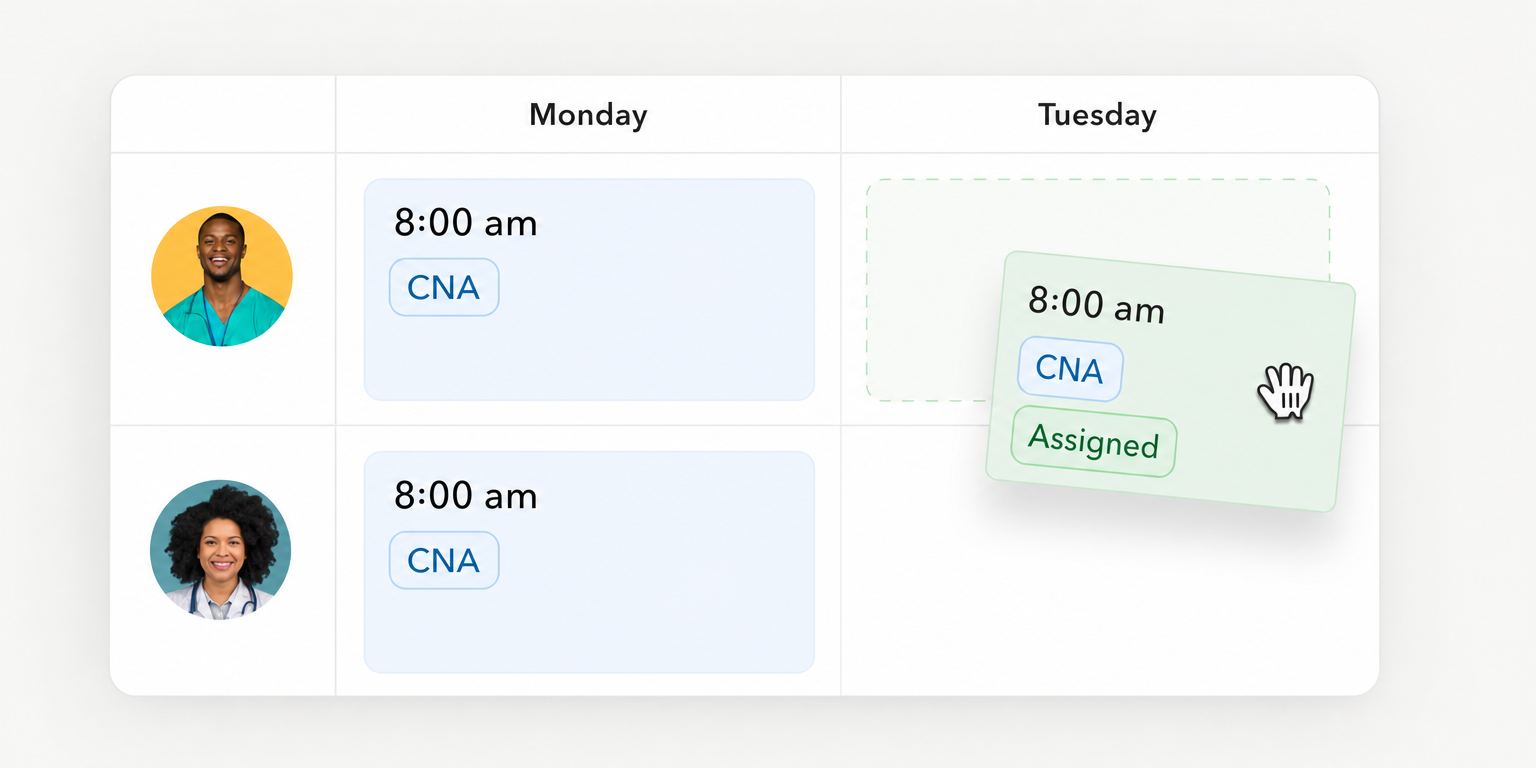
- Backfill routing. Is there an open shift at another client site — same day, same week — that keeps her whole?
- Pay-code decision. Does state law or contract require reporting-time pay? If yes, code it as ACA hours automatically.
- Operator alert. If projection now shows classification risk, flag it to the account manager while there's still time to backfill.
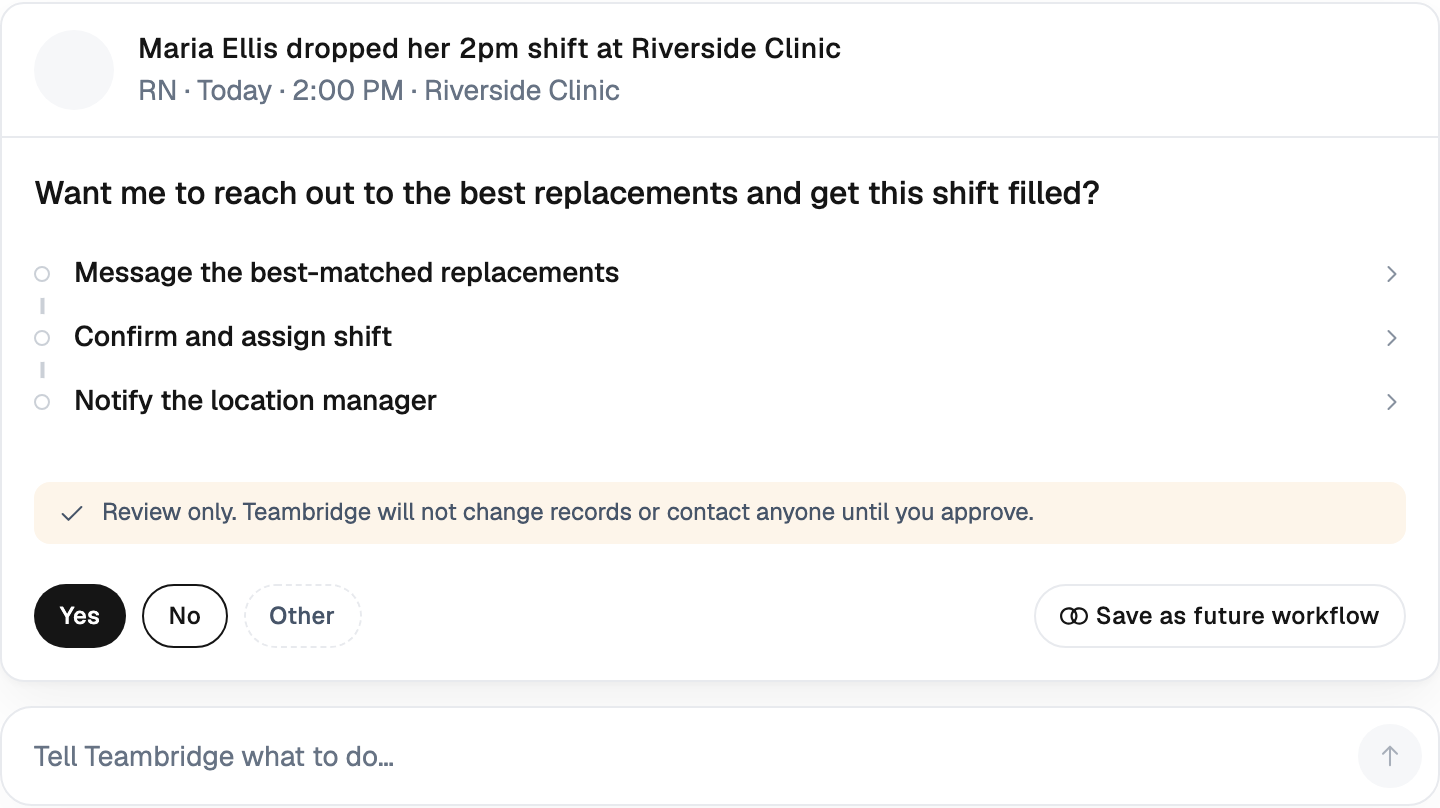
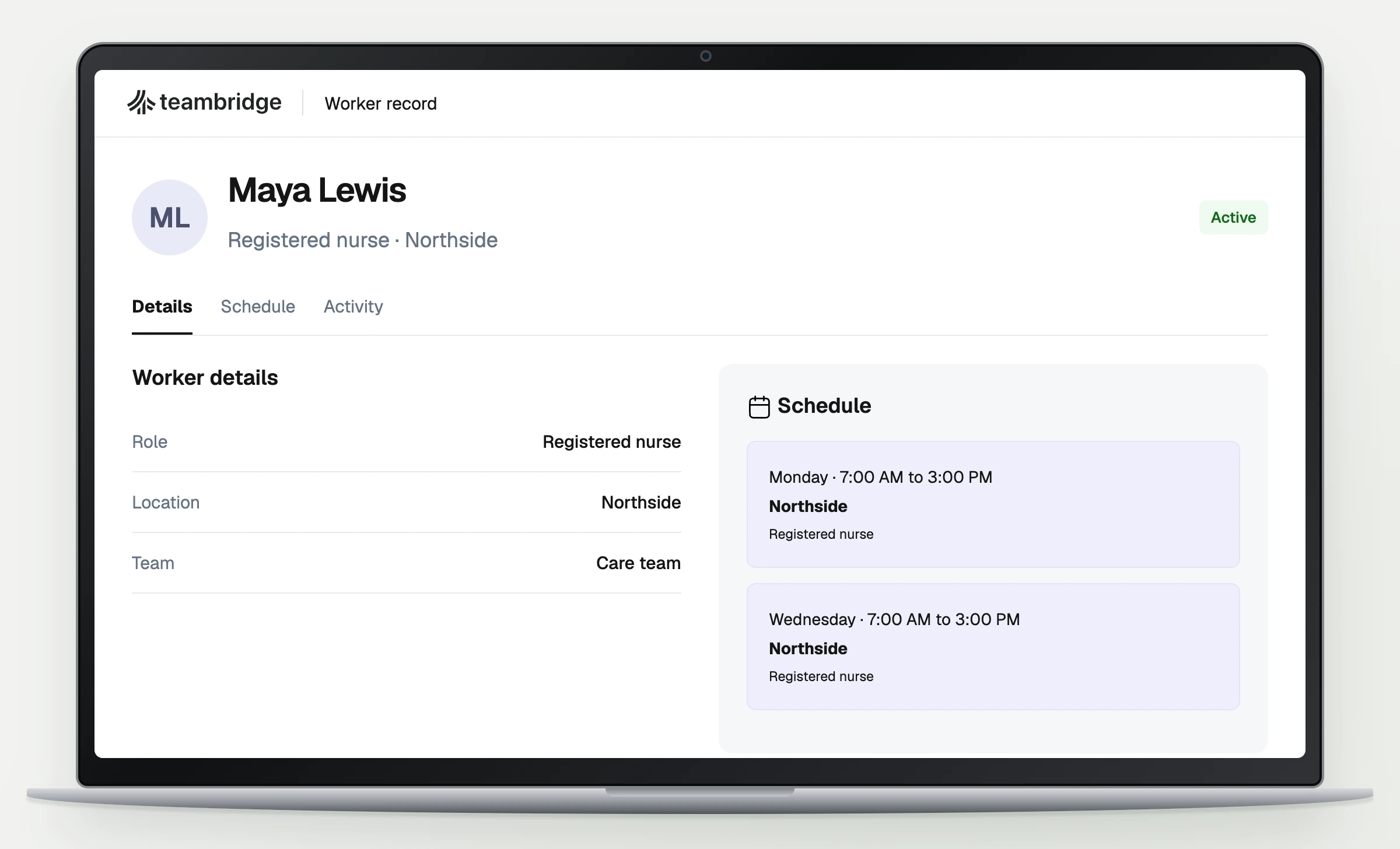
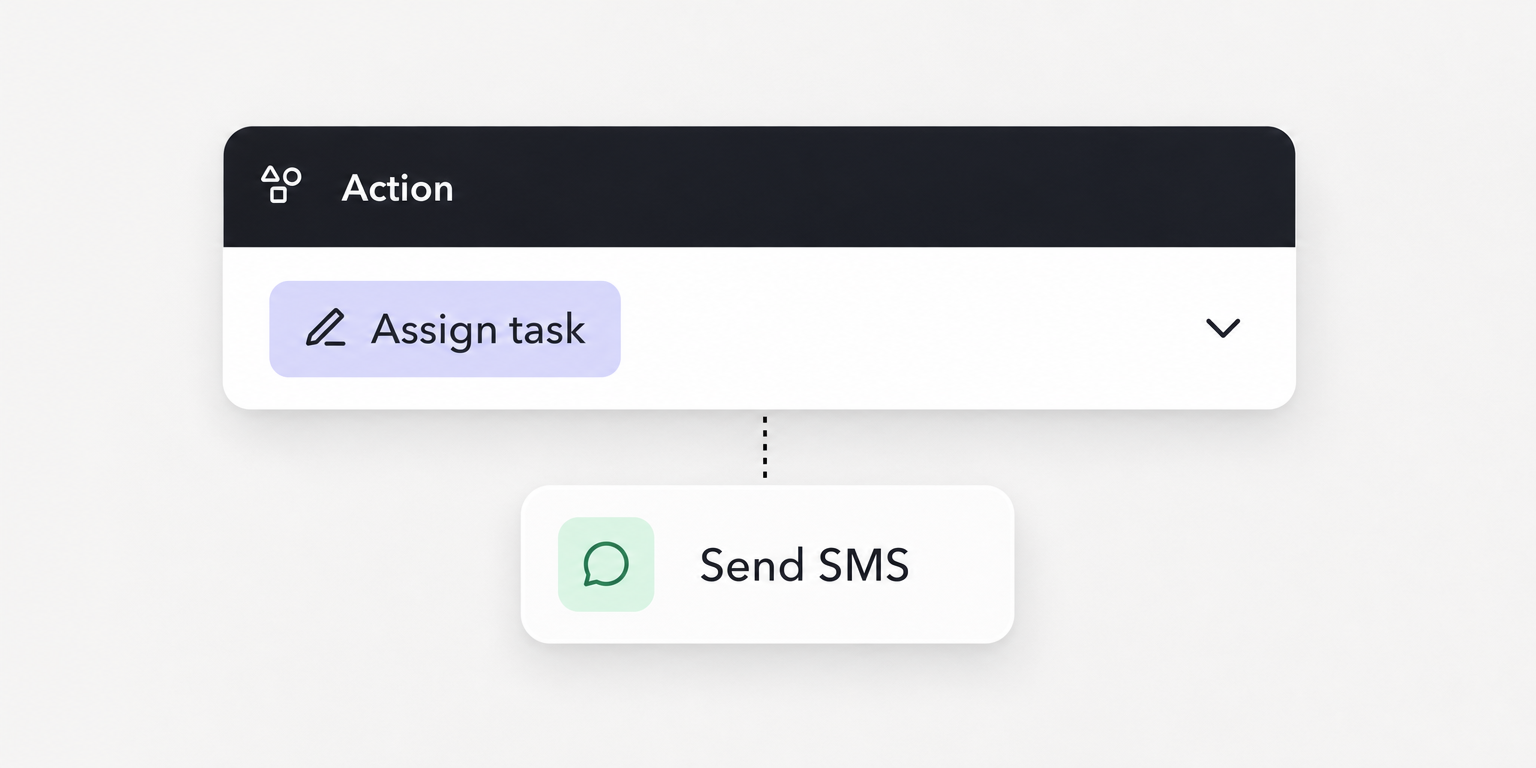
Our Scheduling product enforces this at the moment of cancellation, not at year-end during 1095-C prep. And our Automations engine lets ops teams build the trigger logic — "if worker is in FT-locked or at-risk status and shift cancels, route to ACA-aware backfill queue" — without writing code.
The point is timing. Cancellations happen. What separates the agencies eating 226-J letters from the ones who don't is whether their system reacts in the hour, not in the year.
The Cancellation-to-Backfill Playbook for ACA-Sensitive Workers
A tactical playbook, in order of implementation difficulty:
1. Tag every worker with current classification status
Every contingent worker should carry one of five tags:
- Variable — new hire in initial measurement period
- Part-time — measured under threshold, no stability commitment
- FT-locked — earned FT status, must be offered coverage through stability period
- At-risk — currently trending toward FT classification (110-130 hour range)
- At-risk-down — currently FT but trending below threshold in current measurement
Without these tags, every cancellation is a coin flip.
2. Route cancellations through an ACA-aware backfill queue
When an FT-locked or at-risk-down worker loses a shift, the backfill queue should surface open shifts at other client sites first, prioritized to that worker before broadcasting to the general pool. If they don't want it, they decline explicitly — and the decline is logged.
3. Code reporting-time and guarantee pay with an ACA-hours flag
Every pay item in your system should carry a Boolean: counts toward ACA hours of service, yes/no. Cancellation pay, PTO, holiday, jury duty, bereavement — all yes. A one-time bonus? No. This should be a scheduled dropdown, not a manual comment field.
4. Build 30-day trending alerts
Operators need to see classification risk 30 days before a measurement period closes, not after. An automation that scans every worker's rolling projection weekly and pings the account manager when trend crosses a threshold turns ACA compliance from a January panic into a weekly ops meeting.
5. Aggregate across all client sites, always
This is table stakes. If your platform tracks hours per client account without a common-employee aggregation layer, split-site workers will be misclassified. This is a data model problem, not a reporting problem — fix it at the schema, not with a spreadsheet.
Agencies running high-volume healthcare staffing or across staffing verticals more broadly hit this hardest, because per-diem and multi-client dispatch is where split-site aggregation actually matters. If you're placing the same nurse at three facilities in a month, your ACA math either aggregates cleanly or it doesn't.
Stop Discovering ACA Penalties in a 226-J Letter
The IRS uses Letter 226-J to inform ALEs of their potential liability under Code § 4980H. A response form (Form 14764) is included with Letter 226-J so that an ALE can inform the IRS whether it agrees with the proposed penalty. A response is generally due within 30 days.
Thirty days to reconstruct a year of scheduling decisions, cancellation events, backfill attempts, safe harbor calculations, and offer-of-coverage codes. If your scheduling system and your ACA aggregation don't share a common hour-of-service record, that thirty days is going to be brutal.
The staffing agencies getting hit hardest in 2026 aren't the ones with the most contingent workers. They're the ones whose scheduling system and ACA aggregation don't talk to each other. Cancellations happen — they will always happen. What matters is whether your system flags the exposure in the hour, backfills within the day, and closes the measurement period with clean data.
ACA-grade hour aggregation should be a scheduling feature, not a year-end reporting scramble. If yours isn't, the $417.50/month meter is running, and you won't hear it until the letter arrives.
Sources: IRS Rev. Proc. 2025-25 / 2025-26 via IMA, SHRM 2026 Affordability, Thomson Reuters ACA Employer Penalties.