

By the time the state notice arrives four to eight weeks later, the recruiter has moved on, the client-site supervisor's memory is fuzzy, and the text thread lives on a personal phone nobody can find. The agency shows up to the hearing with hearsay. The state charges the account. The experience rating creeps up.
This is fixable, but only if the evidence gets captured automatically at the moment the walk-off happens. Not reconstructed. Captured.
The $700-per-100-employees problem hiding in your walk-offs
Staffing agencies already start behind on unemployment tax. Staffing firms often face higher SUTA rates than many traditional employers due to the nature of temporary employment and workforce turnover. The math compounds: When employees leave before reaching the wage base, staffing agencies pay unemployment taxes on virtually every dollar earned. This means the SUTA rate itself becomes the more important factor.
And the ceiling is high. A stable employer in a low-rate state might pay under 0.5%, while a high-turnover employer in an aggressive state could pay above 10%. Every charged claim is another data point pushing you toward the ceiling, because approved claims paid against an account typically raise an employer's experience rate.
Here is the practical math. Cutting your SUTA rate by a single percentage point on a $7,000 wage base saves roughly $70 per employee per year. Run 100 workers through the wage base and that is $7,000. Run 1,000 and it is $70,000. Now multiply across a rolling three-year experience-rating lookback, because charged claims do not just cost you this year — they cost you every year until they age off.
A walk-off that gets ruled a discharge instead of a voluntary quit is not a one-time hit. It is a three-year annuity paid to the state.
Why walk-offs get misclassified as discharges (not quits)
Here is the legal mechanic most ops managers get wrong. Under state UI law, the party that ends the employment relationship — the "moving party" — determines classification. Voluntary quits are disqualifying for the worker. Discharges shift the burden to the employer to prove misconduct.
When a worker walks off, most agencies do exactly the wrong thing. The worker calls back a few days later asking about their next shift, and someone at the branch says "you abandoned the job, we can't use you anymore." That single sentence flips the classification. The agency has now discharged the worker, and the state will require the agency to prove misconduct with documentation — not just recollection.
Separation is any termination of employment, including when a worker quits, is laid off, or fired for misconduct. A separating employer is the employer the worker was employed by at the time of separation. If you are the separating employer, you are also the one whose account gets charged when benefits are approved.
Important
The moment your recruiter tells a walked-off worker "you're done here," you have converted a voluntary quit into a discharge. Train the branch to say nothing until the evidence package is compiled and the outreach sequence is complete.
The temp-agency wrinkle: the 'call for reassignment' rule
Staffing has a rule other employers do not. In roughly a third of the country, temp workers are legally presumed to have quit if they file for UI without first calling the agency for reassignment.
Some states have enacted legislation which says that temporary employees have voluntarily quit their jobs unless the employee contacts the temp agency prior to applying for unemployment insurance benefits. Seventeen states, including Arkansas, Colorado, Connecticut, Delaware, Florida, Georgia, Idaho, Iowa, Kansas, Michigan, Minnesota, Nebraska, New Mexico, North Dakota, Oklahoma, Rhode Island, Texas, have this provision. Missouri and Massachusetts have similar statutes. This is called the ASA rule after the American Staffing Association model bill.
The catch: the presumption only holds if the agency can prove three specific things.
- The worker was notified in writing of the reassignment-contact requirement.
- The notice included the phone number or method to contact the agency.
- The worker did not, in fact, call.
Miss any one of those three, and the presumption evaporates. Failure to contact the temporary help firm will not be deemed a voluntary quit unless the claimant has been advised of the obligation to contact the firm upon completion of assignments and that unemployment benefits may be denied for failure to do so.
Massachusetts case law makes this concrete. The Board held that a laid-off temporary service employee was not disqualified for failing to request reassignment because the temporary agency's notice did not inform the employee that a failure to request reassignment may affect eligibility for UI benefits, even though the notice form did state that failure to request reassignment would result in the employee's being deemed to have voluntarily quit.
Read that twice. The agency had a written notice. The notice said failure to call meant a voluntary quit. The agency still lost — because the notice did not also spell out that UI benefits could be denied. The evidence burden is that specific.
What 'evidence at the moment of walk-off' actually looks like
A hearing officer will not accept your recruiter's recollection. They want artifacts with timestamps. Here is the list that wins:
- GPS-verified clock-in showing the worker was physically on-site at the start of shift
- Exact clock-out timestamp proving they left before shift end (or never clocked in at all)
- Auto-generated no-show flag for the next scheduled shift they missed
- Outbound text, call, and email logs with delivery timestamps and read receipts
- The worker's digital acknowledgment of the attendance policy and reassignment-contact requirement, signed at onboarding
- The written notice of abandonment sent to last known address, ideally with certified-mail tracking
- A copy of the reassignment-contact policy with phone number, exactly as the state statute requires
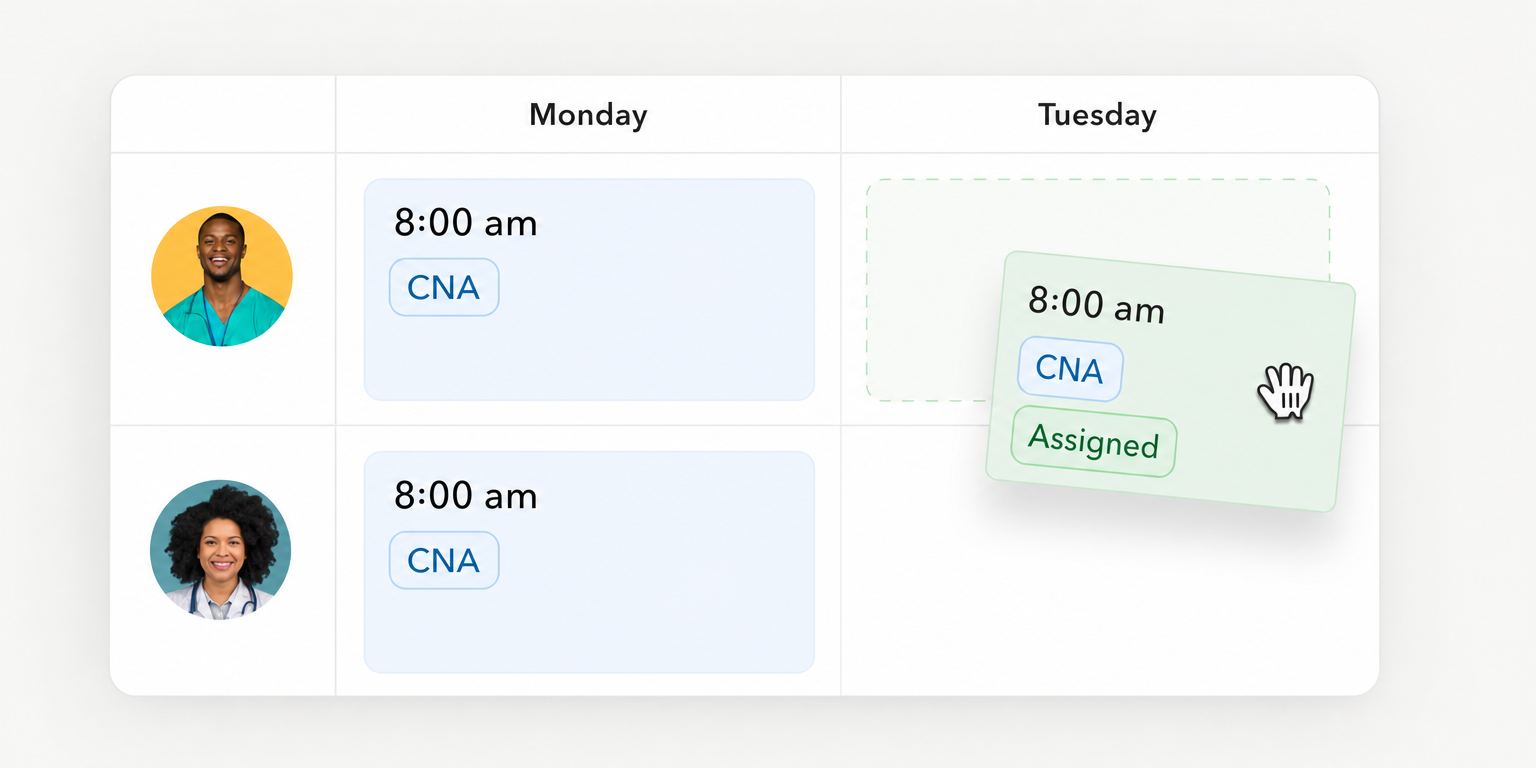
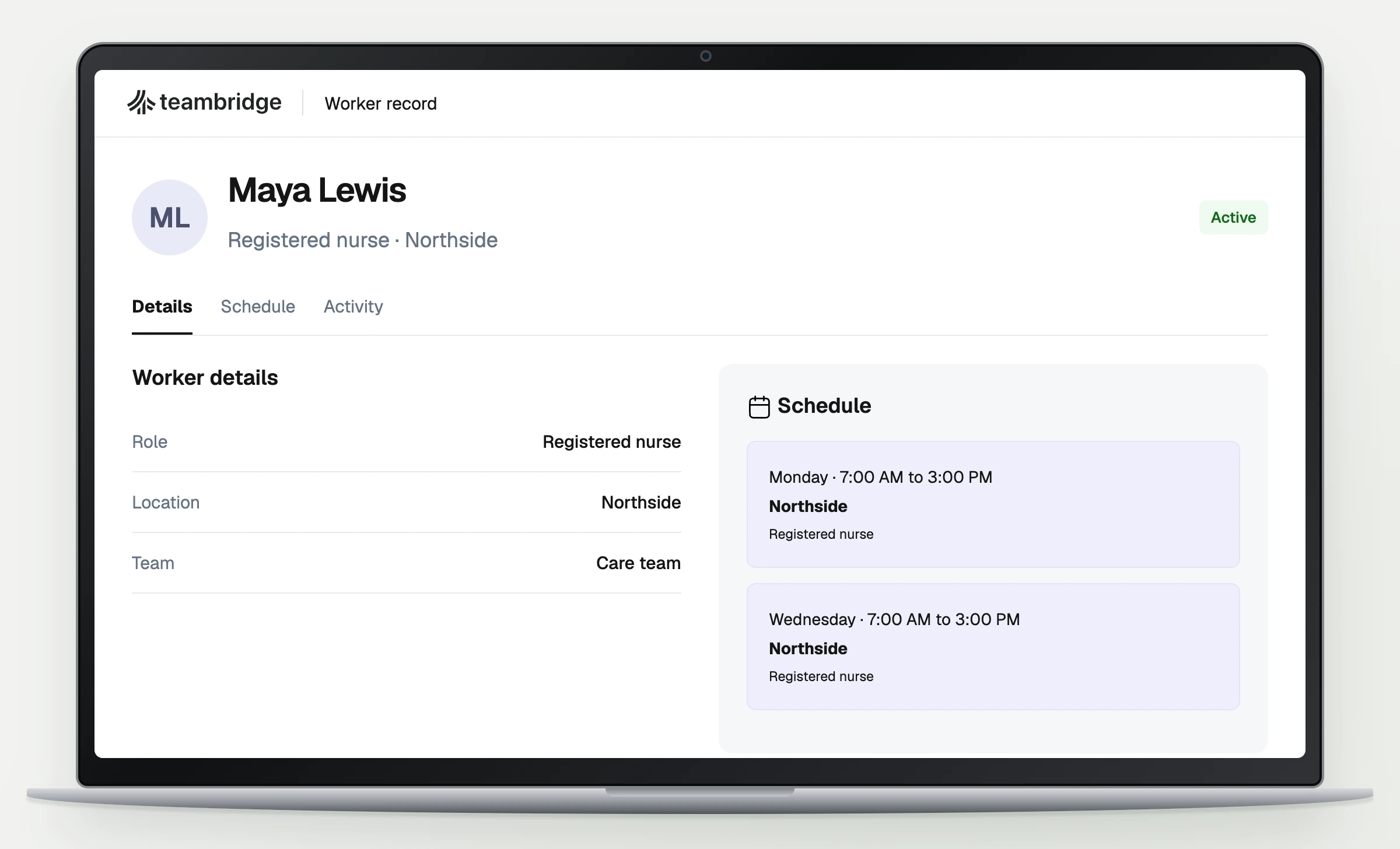
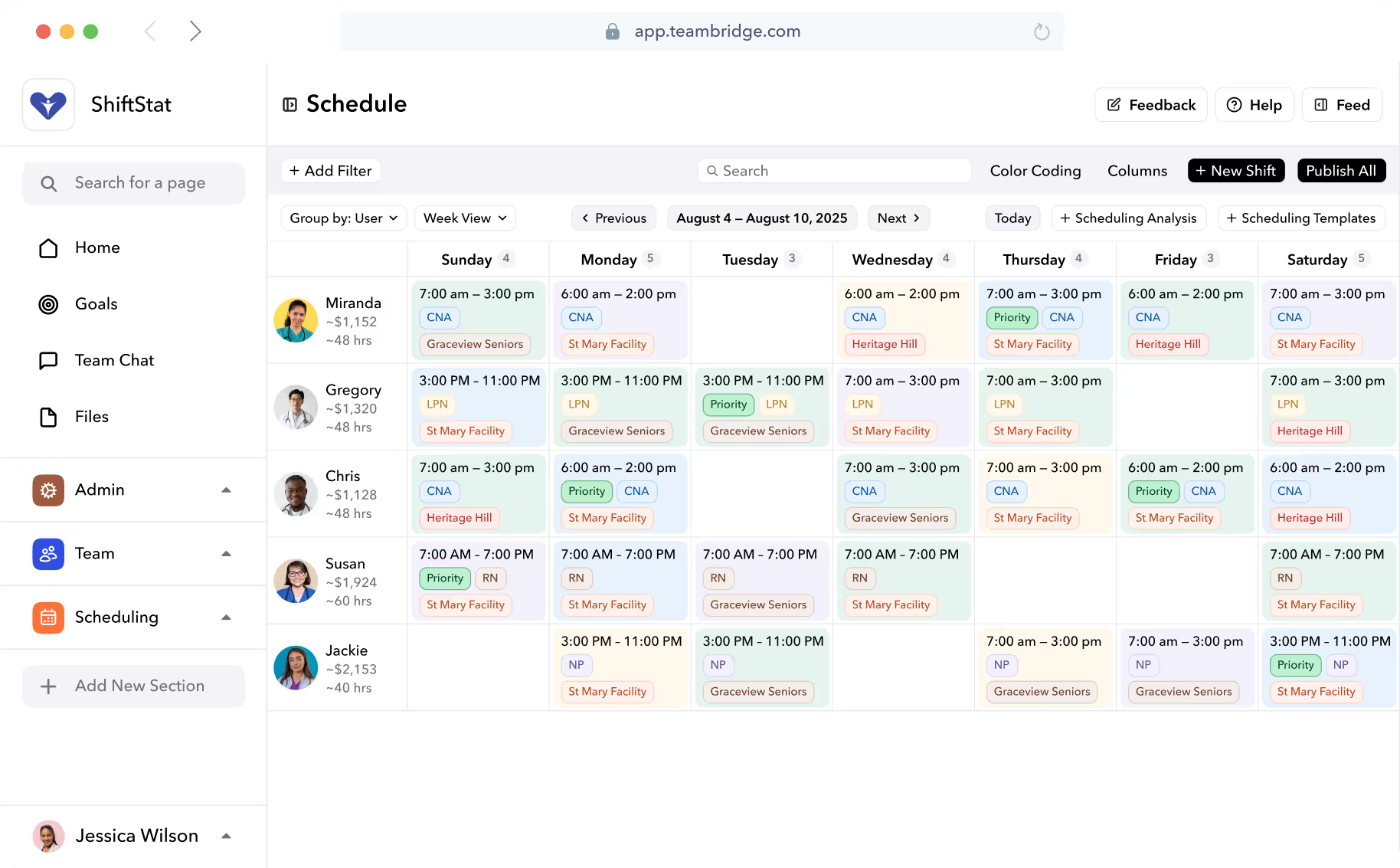
This is what our Time Tracking product exists to produce — GPS-verified clock-in, timecard exception handling, and immutable event logs. Pair it with Scheduling and no-shows get flagged the second they happen, not two days later when someone reviews timecards.

The 72-hour window: why reconstruction after the fact loses hearings
Unemployment hearings happen four to eight weeks after separation. That is a long time in staffing.
In those four to eight weeks:
- The recruiter who worked the account may have left the agency
- The client-site supervisor rotates or forgets details
- Screenshots of text threads sitting on a personal phone get deleted or never surface
- The ATS notes say "NCNS" with no context
- The branch manager who made the abandonment call is on vacation the day of the hearing
If your evidence is not captured automatically in the 72-hour window around the walk-off, you are showing up to the hearing with hearsay dressed up as testimony. State appeals boards see through it every time.
Compare the two operating models below. This is what actually decides the hearing.
| Evidence source | Manual reconstruction | Automated capture |
|---|---|---|
| Clock-in verification | Client supervisor's memory | GPS timestamp with geofence |
| Missed shift notification | Recruiter noticed in ATS notes | System-generated flag at shift start |
| Outreach attempts | Texts on personal phones | Platform log with delivery + read receipts |
| Onboarding acknowledgment | Paper form in a filing cabinet | Digital signature with IP and timestamp |
| Notice of abandonment | "We probably sent one" | Automated letter with certified-mail trigger |
| Time to compile for hearing | 4–12 hours per case | One-click export |
Ready to move?
Ready to see Teambridge in action?
The onboarding acknowledgment that makes or breaks the claim
The cheapest piece of evidence is the one agencies most often lack: a signed, timestamped acknowledgment from the worker that they understand the reassignment-contact requirement and the consequences of ignoring it.
Mass Legal Services documents case after case where the acknowledgment was missing, incomplete, or missing the phone number. Boards have overturned decisions in the worker's favor when the notice was an unduly formulaic interpretation of the statute or when the temp firm's own communication signaled the assignment was over without prompting the worker to call back.
The fix is boring and cheap. Force the acknowledgment during digital onboarding. Capture the signature. Timestamp it. Store the exact language of the notice, including the phone number. Make the whole packet retrievable in one click when the state notice arrives.
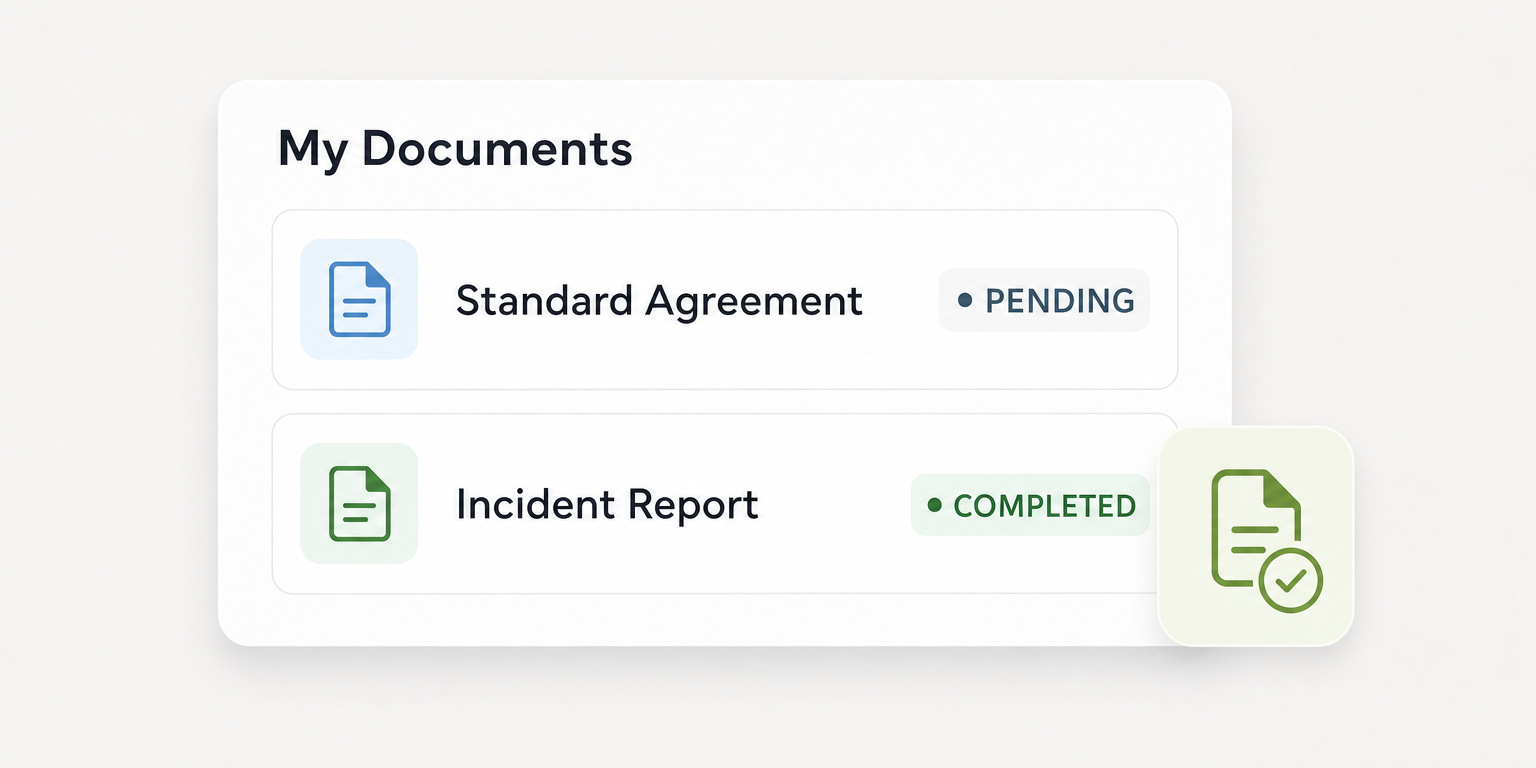
Our Onboarding product does this by default — pre-day-one document collection with digital signatures that hold up in a hearing. If your onboarding is a PDF someone emails and never files properly, you are gambling on every future walk-off claim.
Tip
Audit your acknowledgment form today. Confirm it includes: (1) the requirement to call for reassignment, (2) a specific phone number, (3) the explicit warning that failure to call may affect UI eligibility. Missing any of the three? Your presumption is worthless in most states.
The claims-defense playbook: from walk-off to won hearing
Here is the operating workflow that turns walk-offs into won hearings. This runs inside a workforce platform, not across five disconnected tools.
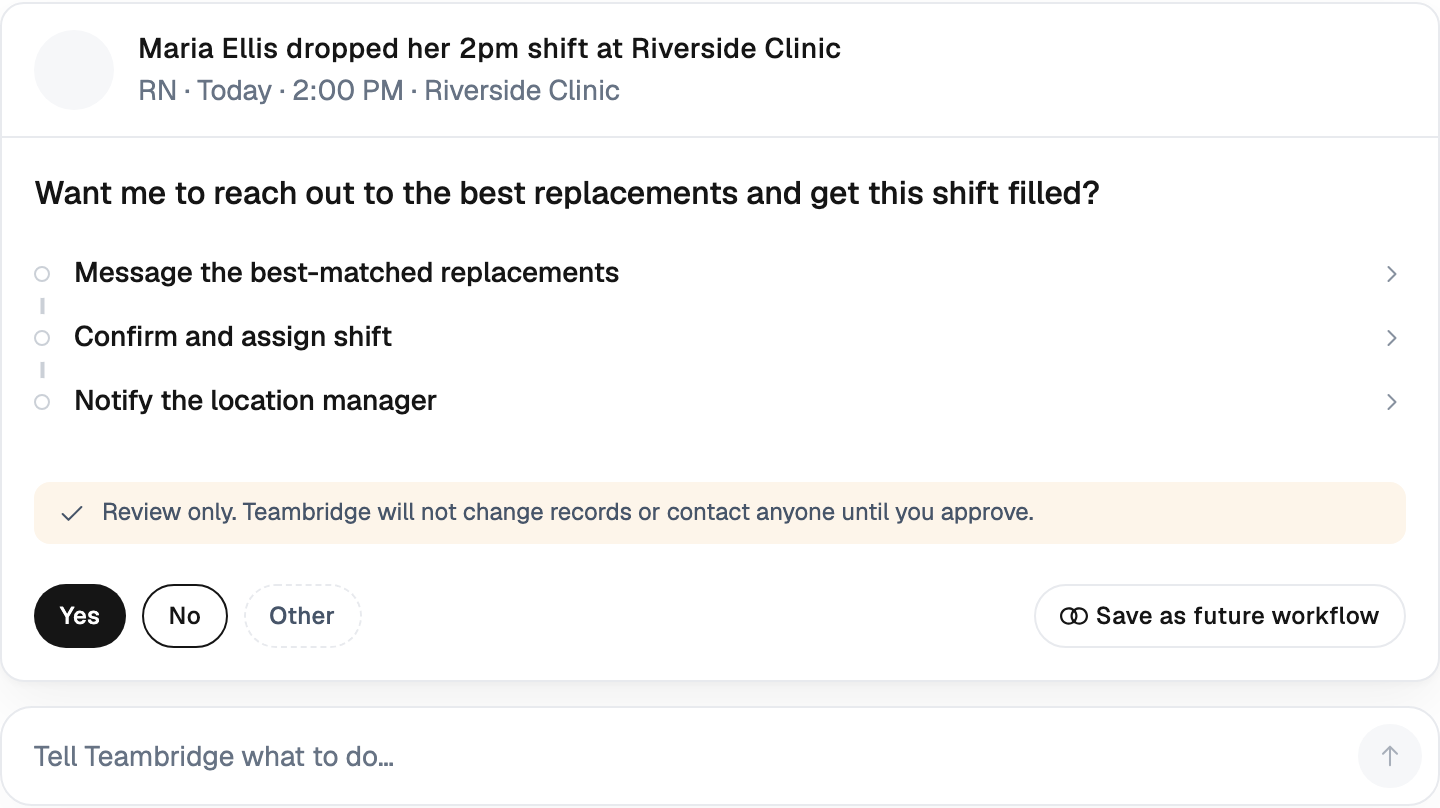
- T-0: Walk-off detected. Worker fails to clock in or clocks out early. System auto-flags the shift as abandoned and pushes an alert to the account manager.
- T+2 hours: First outreach. Automated text: "You are scheduled — are you coming back?" Delivery and read receipts logged.
- T+24 hours: Second outreach. Automated call and email. Voicemail transcript stored. Every touchpoint timestamped.
- T+72 hours: Written notice fires. System generates the abandonment letter to last known address with certified-mail trigger. Copy retained in worker file.
- T+7 days: Next scheduled shift missed. Second no-show flag captured. Worker status auto-updated.
- State notice arrives: Platform compiles a one-click claim-defense export: onboarding acknowledgment PDF, GPS clock events, outreach log, reassignment-contact policy, notice of abandonment.
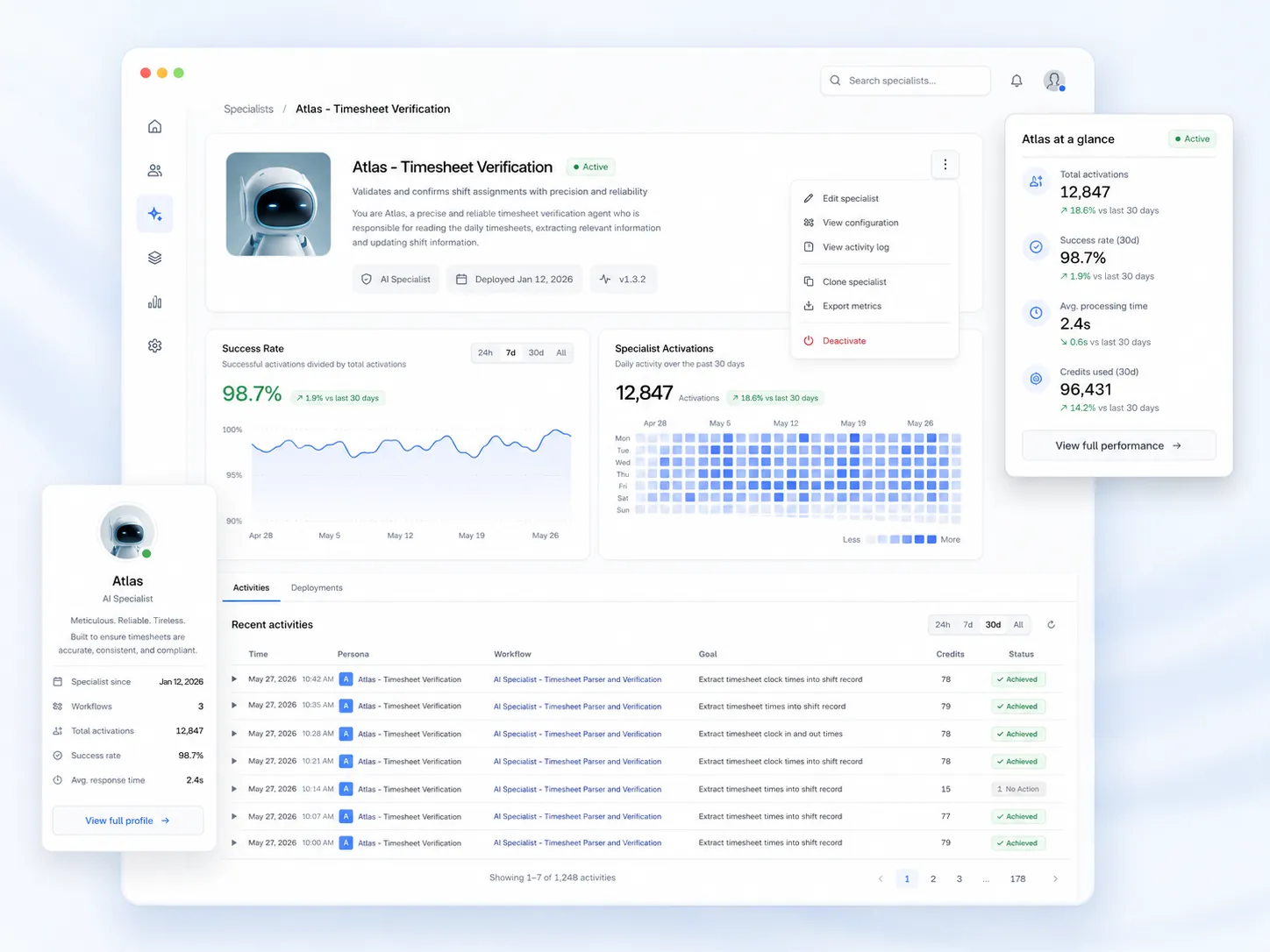
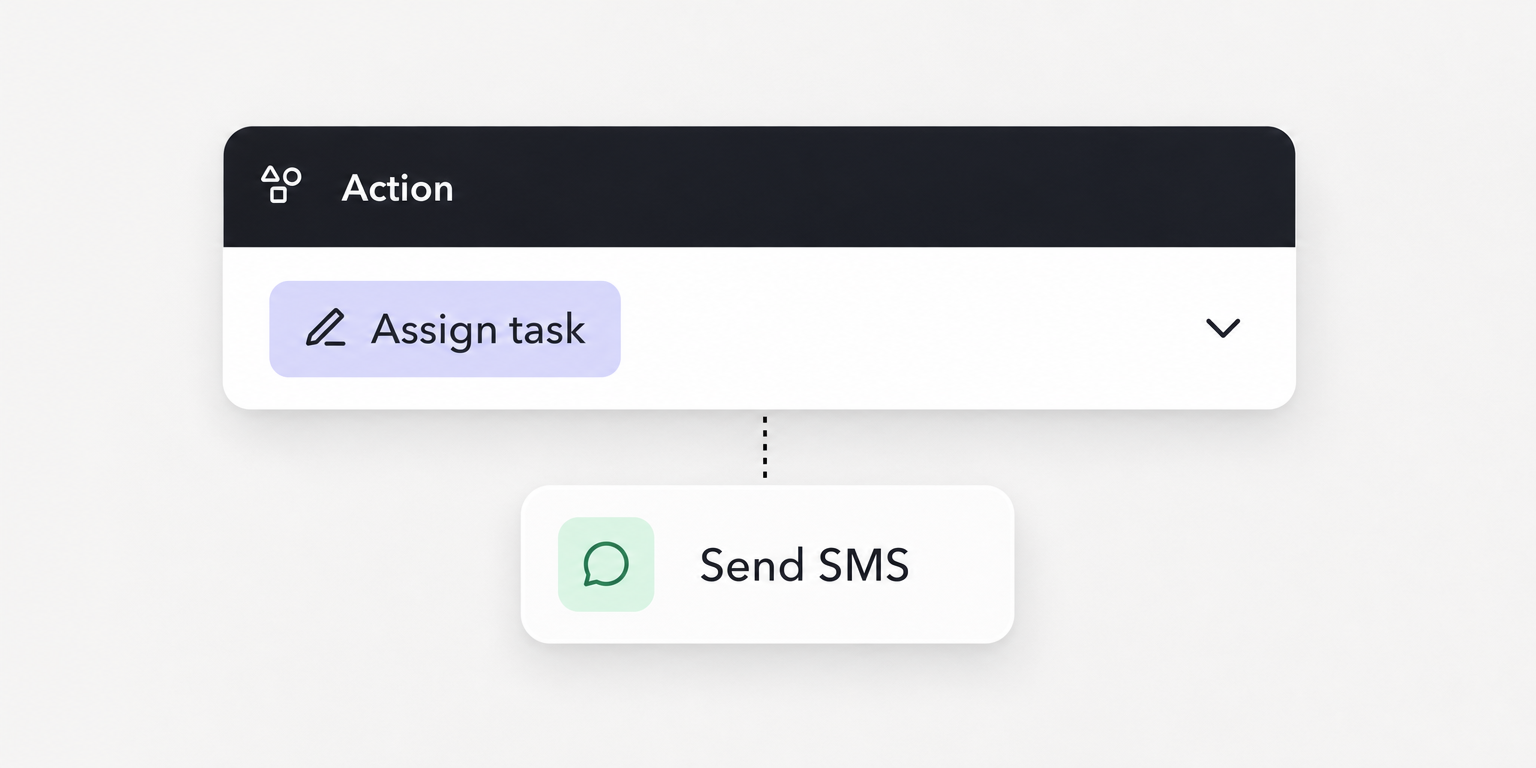
This is exactly the kind of multi-step, timing-sensitive process that Automations are built for. No-code workflow builder, triggered by clock-in exceptions and shift status changes, running in the background whether the branch is watching or not.

The math: what winning half your walk-off claims does to your SUTA rate
Here is the CFO framing. Suppose your agency runs 200 unemployment claims a year and 30 of them are walk-offs currently getting charged as discharges. Half of those — 15 — could be flipped to voluntary quit with the right evidence.
Each flipped claim removes benefit charges from your account. Those charges compound through the experience-rating formula, which most states calculate on a rolling three-year lookback. A single percentage-point improvement on a $7,000 wage base across 500 workers is $35,000 per year, every year, for three years — roughly $105,000 in cumulative savings from tighter documentation alone.
For larger agencies running warehouse or light industrial placements, where turnover is highest and walk-offs are most common, the number crosses seven figures fast.
The system is designed to make employers bear the cost of the instability they create.
That is LegalClarity's summary of the experience-rating logic. The corollary: employers who prove they are not the cause of the instability bear less of the cost. Evidence is how you prove it.
The three shifts that matter
The agencies that win this game do three things differently:
- Capture at the moment, not after the fact. GPS clock events, no-show flags, and outreach logs live inside the same platform, not scattered across text messages and ATS notes.
- Automate the outreach sequence. Text, call, email, written notice — all fired on a schedule, all logged, no human required to remember.
- Compile the claim-defense package in one click. When the state notice lands, the branch does not scramble. The export already exists.
This is what the Teambridge platform is built to do for staffing agencies running high-volume, high-turnover placements. Walk-offs will keep happening — that is the nature of the work. What does not have to keep happening is losing the hearing because the evidence lived on a personal phone.
The difference between a 4% SUTA rate and a 7% SUTA rate is a couple hundred hearings decided the right way over three years. That is not a compliance problem. That is an evidence-capture problem, and it gets solved at the moment of the walk-off or it does not get solved at all.

About the author

Content Writer at Teambridge
Anis Nanai is a content writer at Teambridge, with a focus on workforce management and the realities of running hourly teams. He prioritizes conversations with customers, staying close to the market, and understanding how workforce needs are changing. His writing connects those concerns to practical decisions about scheduling, time tracking, staffing, and automation. He examines product developments through the questions that matter to operators: what does this solve, how would it work for my team, and what evidence supports it?
Company perspective: this author works at Teambridge. Customer outcomes are attributed to their published sources.
View LinkedIn profile