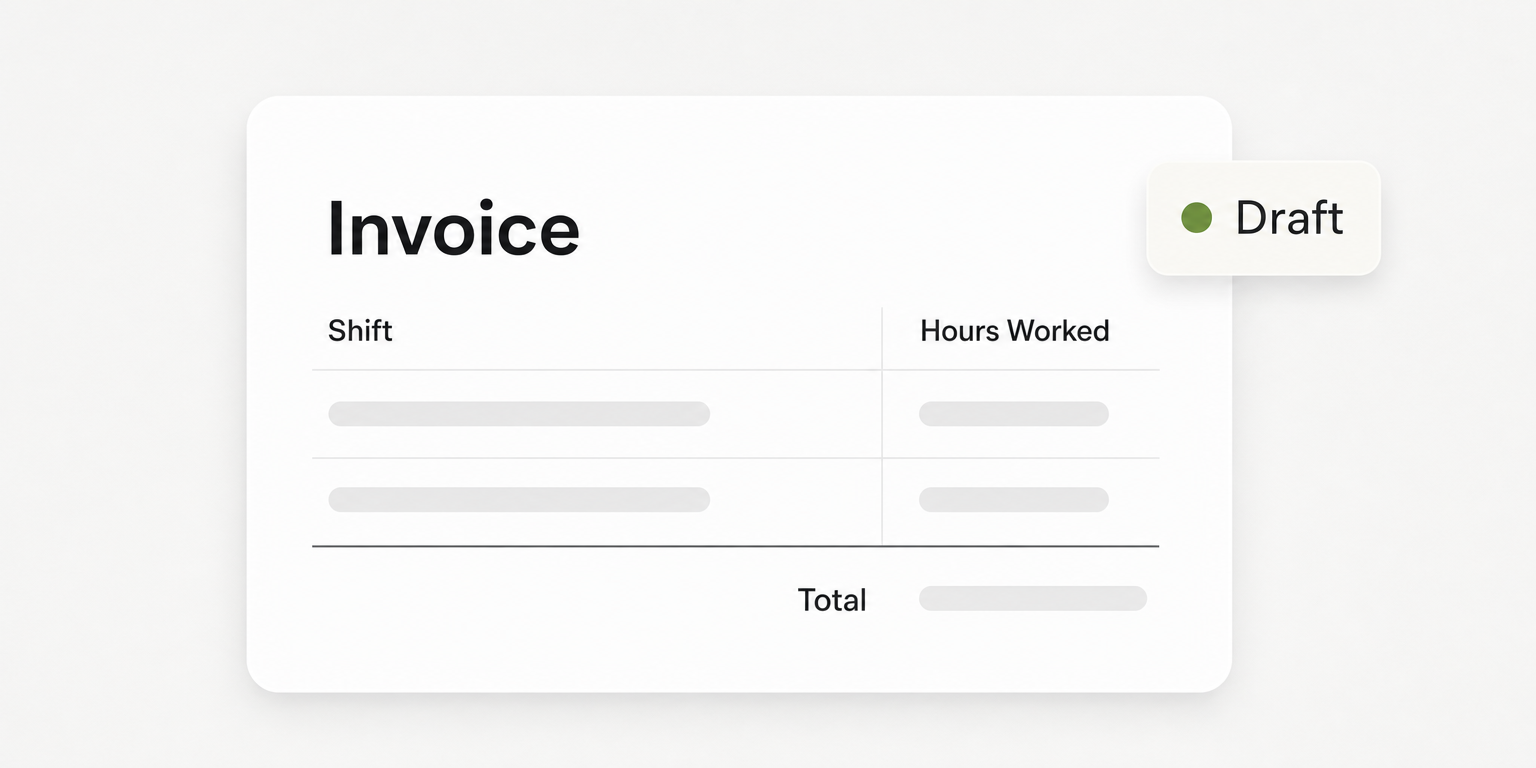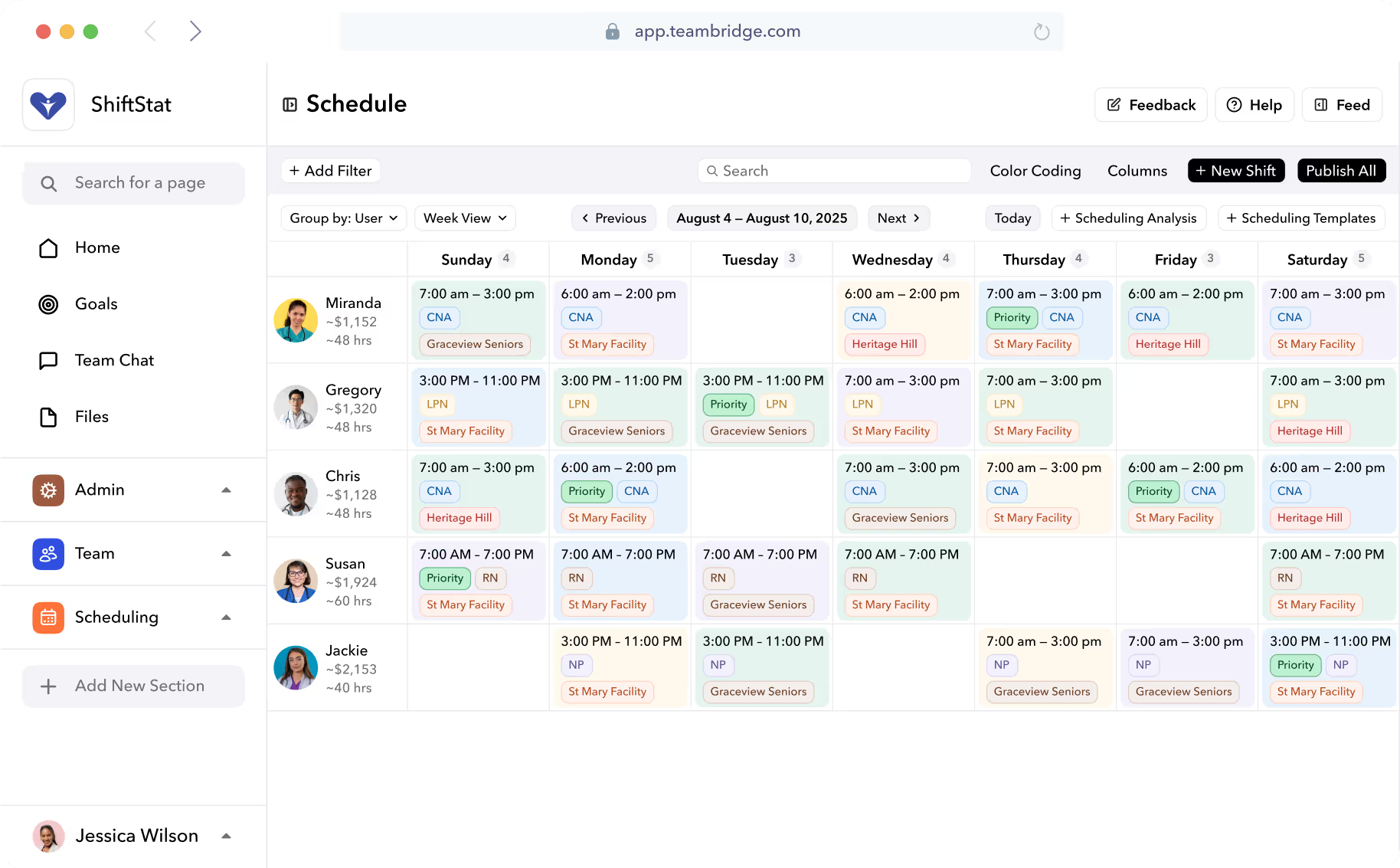


This is the operational reality staffing agencies are walking into in 2026. Reverification obligations trigger every time a worker's temporary employment authorization expires, and staffing sits at the intersection of every risk factor ICE cares about: high hire volume, decentralized onboarding across client sites, remote verification patterns, and long tails of contingent workers whose documents were fine on day one and quietly aren't fine two years later.
Below, we break down what actually changed in March 2026, why staffing is disproportionately exposed, the four operational failure modes that sideline good workers mid-assignment, and why the durable fix has to live inside the scheduling and credential system — not on an HR spreadsheet.
Why a Long-Tenured Contractor Suddenly Can't Clock In
The reverification problem doesn't announce itself. It compounds silently in the background of an otherwise clean placement.
Here's the pattern. A worker is onboarded correctly. Section 1 is complete, Section 2 documents were examined within three business days of hire, E-Verify came back authorized. The I-9 goes into the file. The recruiter closes the ticket. The worker gets assigned, performs well, and stays on assignment for two, three, sometimes four years across multiple client sites.
Then the work authorization document — an EAD, an I-94 admission expiration, a TPS designation — hits its expiration date. Under federal law, the employer has to reverify no later than the date work authorization expires, using Supplement B of the current Form I-9. If the worker can't produce evidence of continued authorization by that date, employment has to stop.
The operational problem isn't the rule. The rule has existed since 1986. The problem is that in a staffing agency running thousands of contingent workers, the expiration date lives in a PDF in a folder tied to a hire event that happened years ago, while the shift assignment that triggers the enforcement moment lives in an entirely different system. Nothing connects the two until a badge fails at a client timeclock.
What Changed in March 2026: Late Reverification Is Now a Substantive Violation
The stakes on getting this wrong just went up. On March 16, 2026, ICE quietly updated its Form I-9 Inspection fact sheet — with no Federal Register notice and no rulemaking — reclassifying more than ten categories of common errors from technical to substantive violations.
ICE updated its Form I-9 Inspection fact sheet, effectively superseding key provisions of the 1997 Virtue Memorandum that had governed I-9 enforcement for nearly three decades. More than 10 error categories previously treated as correctable technical violations—eligible for the statutory 10-day cure period—are now reclassified as substantive violations subject to immediate fines of $288 to $2,861 per form.
That 10-business-day cure window has been the safety net for staffing agencies for 29 years. It's gone for a large swath of errors that show up routinely on Supplement B.
The reverification-specific reclassifications matter. Under the new fact sheet, previously routine Supplement B errors — missing rehire dates, late or incomplete reverifications, missing signatures, incorrect document information, and failure to mark the alternative procedure box — now carry mandatory fines. That means the four scenarios that most commonly trip up staffing operators — a missed expiration date, a Supplement B completed without a signature, a remote verification without the alternative procedure box checked, and a reverification completed after the authorization expired — are all now fineable on their face.
The Financial Exposure Scales Per Form
Warning
Substantive violations are assessed per form, not per audit. For a staffing agency with thousands of active I-9s and even a small percentage of Supplement B errors, exposure compounds fast.
As Morgan Lewis notes, an employer with 200 Forms I-9 containing errors previously flagged as technical—and therefore not necessarily remediated after a prior audit—could now face paperwork penalties of approximately $57,600 to $572,200 if those forms are reviewed under the new framework. Scale that math to a mid-size staffing book of 5,000 to 20,000 active workers and the exposure becomes existential.
| Error type | Pre–March 2026 treatment | Post–March 2026 treatment |
|---|---|---|
| Late Supplement B reverification | Technical, 10-day cure | Substantive, per-form fine |
| Missing signature on Supplement B | Technical, 10-day cure | Substantive, per-form fine |
| Failure to check alternative procedure box | Technical, 10-day cure | Substantive, per-form fine |
| Remote verification without active E-Verify | Ambiguous | Substantive, per-form fine |
| Missing new legal name in Supplement B | Technical, 10-day cure | Substantive, per-form fine |
Morgan Lewis and Ogletree Deakins both confirm the per-form penalty range of $288 to $2,861, adjusted for inflation under the January 2025 DHS rule.
Why Staffing Agencies Are the #1 Target Right Now
The reclassification landed on top of an already sharp enforcement ramp. On January 3, 2026, ICE announced a 120% increase in its workforce, adding more than 12,000 officers and agents through an unprecedented nationwide recruitment campaign. That capacity is being deployed at scale — ICE is conducting I-9 audits at ten times the rate of 2024, and staffing is squarely in the crosshairs.
The reclassification arrives against a backdrop of sharply elevated worksite enforcement activity. The rate of Notices of Inspection in 2025 was reported to be substantially higher than in prior years, and ICE has levied significant penalties across construction, staffing, hospitality, manufacturing, and retail.
Staffing agencies are structurally exposed for four reasons the ICE audit selection process happens to reward:
- High hire volume. Thousands of I-9s created per year means thousands of chances for a Supplement B date to slip.
- Decentralized onboarding. Workers are often onboarded remotely or at satellite offices, with authorized representatives who see one I-9 a month, not one a day.
- Multi-site placements. A single worker may rotate across three client sites in eighteen months, and the reverification owner becomes ambiguous.
- Vendor-of-vendor arrangements. MSPs, VMS platforms, and sub-vendor relationships fragment recordkeeping across systems no single party fully controls.

For operators running high-volume contingent books, this isn't a legal-department concern that lives quarterly. It's a daily scheduling problem. Teambridge built Staffing Agency workforce operations around exactly this reality — the credential, the shift, and the client all have to live in the same record.
The Four Failure Modes That Sideline Tenured Workers Mid-Assignment
Every reverification lapse we've seen in the field maps to one of four operational patterns. Recognize these before ICE does.
1. EAD Expiration Buried in the Original I-9
The reverification date is captured on the original I-9 at hire, but nothing in the recruiter's workflow surfaces it as a forward-looking obligation. Two years later, the worker's still on assignment, still performing, and the expiration silently arrives. This is the most common failure mode and the easiest to prevent — if the credential expiration lives in the same system that assigns shifts.
2. Assignment Change Orphans the Reverification Owner
The worker was placed by Recruiter A at Client X in 2023. Recruiter A left. The worker moved to Client Y in 2024 under a different account manager. When the EAD expires in 2026, nobody owns the follow-up. The account manager assumes onboarding compliance is HR's job. HR assumes the account manager is watching the worker's status. Nobody's watching.
3. Missed 90-Day Receipt Windows
A worker presents a receipt for a lost, stolen, or damaged document at hire or reverification. The receipt is valid for 90 days, at which point the actual document has to be produced. In a busy staffing operation, the receipt clock is almost never on someone's calendar.
4. Supplement B Completed but Incomplete
The reverification actually happens — but the authorized representative forgets to sign, forgets to date, forgets to record the correct document number, or forgets to check the alternative procedure box for a remote verification. Under prior guidance these were technical errors with a cure window. Under the March 2026 fact sheet, they're each a fineable substantive violation.
Note
Failure mode #4 is the one most operators underestimate. The reverification looked like it happened. The form got filed. But the missing signature or unchecked box is now a per-form fine, not a paperwork correction.
Ready to move?
Ready to see Teambridge in action?
Building a Reverification Tripwire Into Scheduling, Not HR
Here's the operator's reframe: the enforcement moment for a reverification failure isn't the audit. It's the clock-in. That's why reverification tracking has to live in the same system that assigns shifts.
A credential-aware scheduling system does three things a spreadsheet can't:
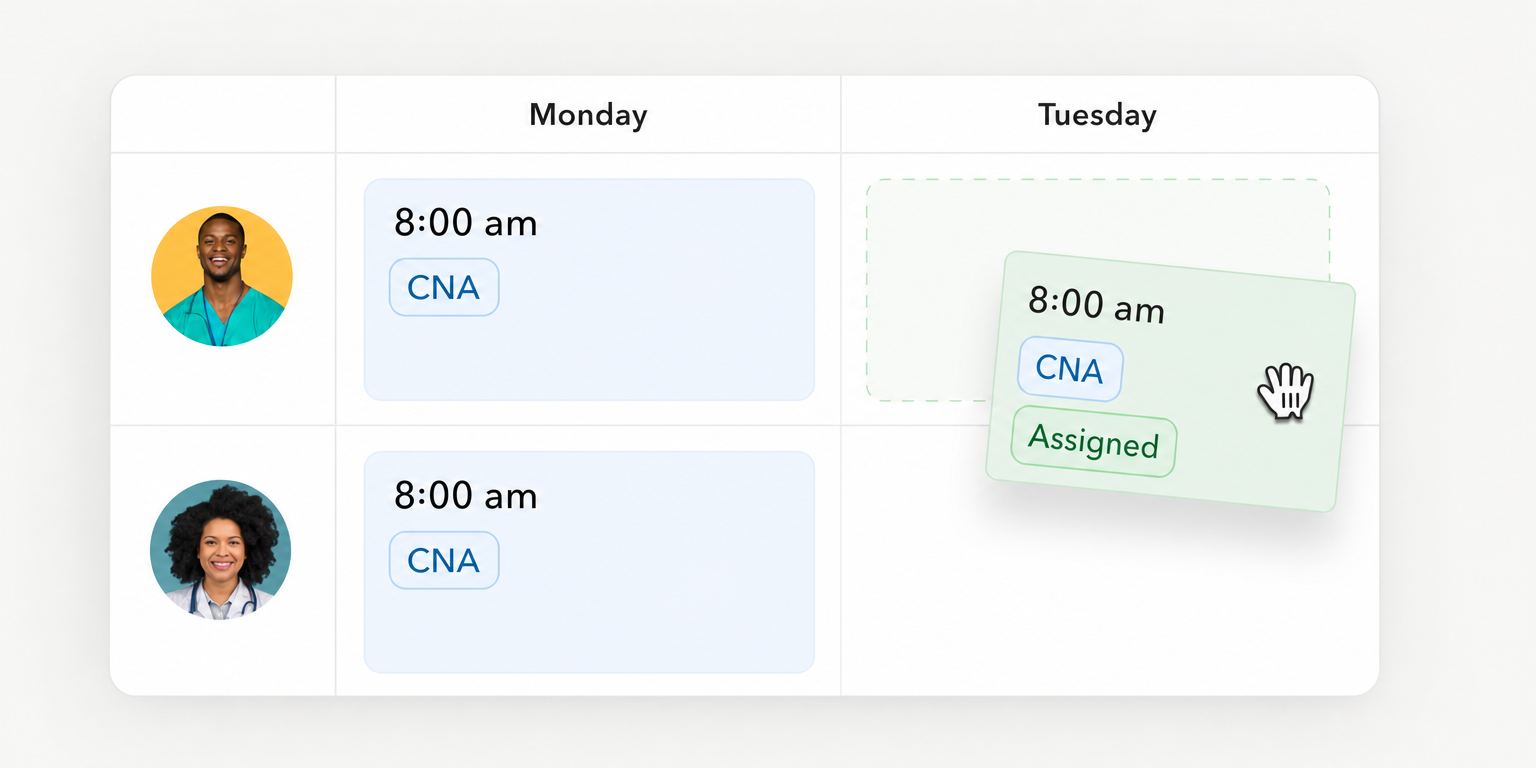
- Block auto-fill for expiring credentials. When the shift end date is later than the worker's work authorization expiration, the assignment engine refuses to place the worker on that shift and routes to the next eligible candidate.
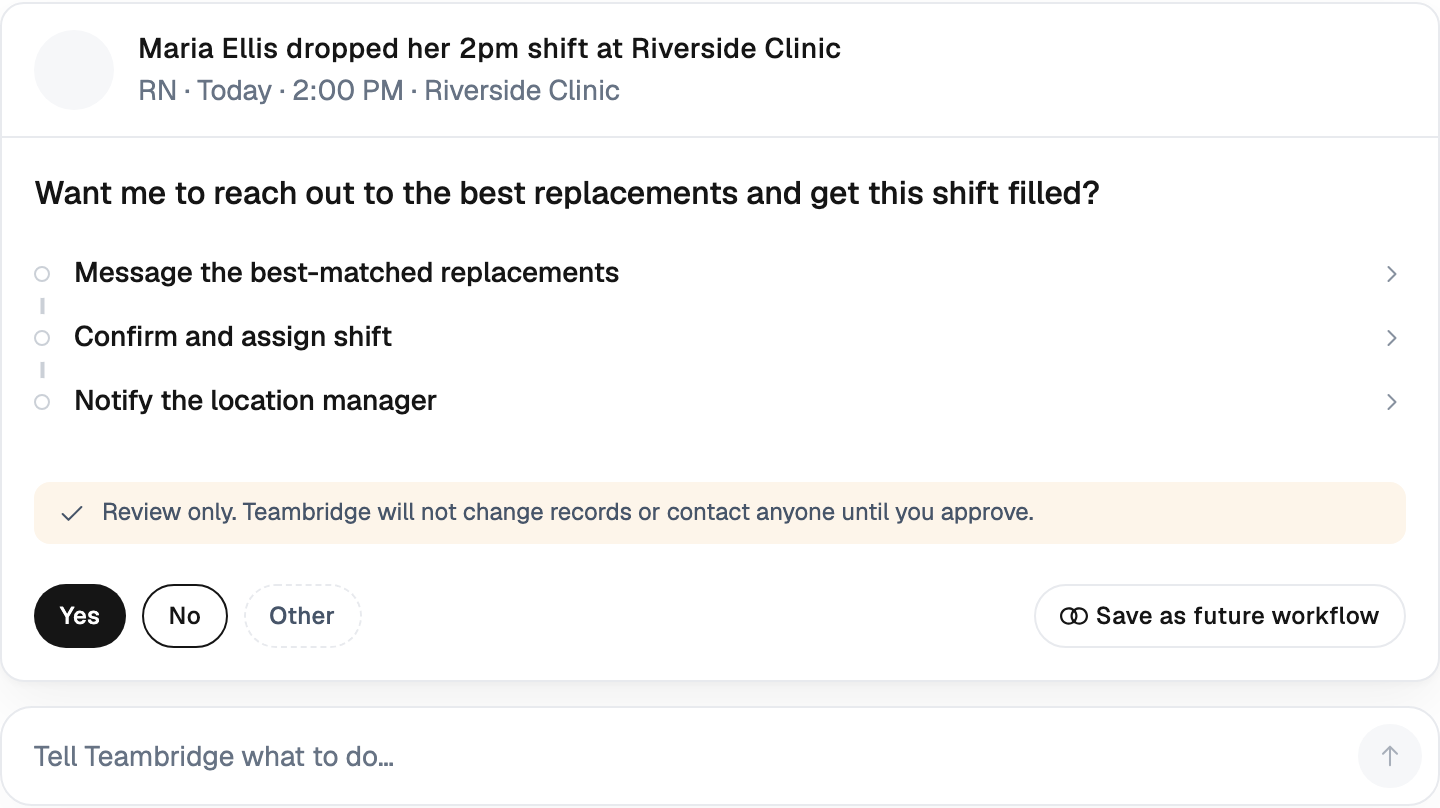
- Escalate reverification obligations 60, 30, and 7 days out. A designated owner — recruiter, account manager, or compliance lead — gets a task with the worker's name, the document type, the expiration date, and the correct Supplement B workflow attached.
- Generate the correct Supplement B form with pre-populated fields. Including the alternative procedure checkbox when the reverification is being conducted remotely under E-Verify.
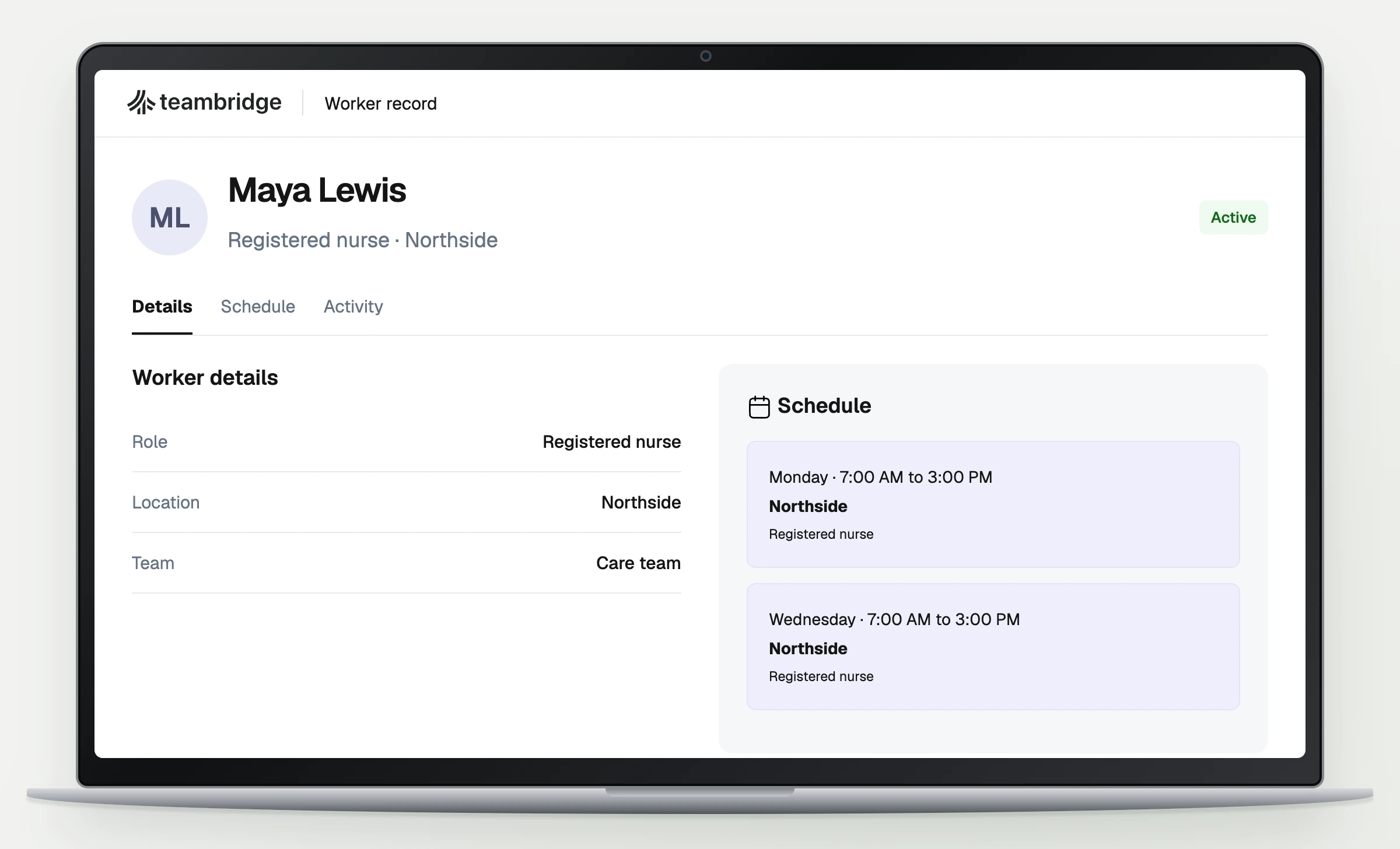
This is what Teambridge Scheduling and Document Studio do together — the shift, the credential, and the deadline are the same record. When an EAD is set to expire, the scheduling engine already knows, and the assignment either gets rerouted or triggers a reverification task before the expiration date arrives.
For operators still running credential tracking in a spreadsheet, the operational cost of the March 2026 change is that a spreadsheet doesn't know when the next shift is. The scheduling system does.
The Internal Audit Trap: Finding Errors Without Fixing Them Is Worse
A warning worth reading twice. Multiple immigration compliance firms have flagged the same trap.
One caution warrants particular emphasis. An employer that conducts an internal audit, identifies violations, and then fails to remediate them may be worse off than an employer that never audited at all. Documentation of known, uncorrected deficiencies—particularly errors that have since been reclassified as substantive under the March 2026 Fact Sheet—could support an inference that the employer was aware of the problems and chose not to address them. That inference could carry weight in the good faith penalty analysis and, in more serious cases, could bear on constructive knowledge arguments regarding unauthorized workers.
Translation for the operator: if your compliance team runs an audit, surfaces 200 Supplement B gaps, and those gaps aren't cured before the next Notice of Inspection lands, ICE now has documented evidence that you knew and didn't fix it.
Any internal audit program needs a closed-loop remediation workflow with:
- Named owners for each identified gap
- Deadlines tied to the specific reverification date, not a generic "soon"
- Completion evidence (Supplement B with signatures, timestamps, alternative procedure box status)
- Escalation triggers when a cure isn't completed on time
- Legal counsel oversight, especially for anything approaching constructive knowledge territory
This is why the audit and the fix need to happen in the same system. A findings report handed to HR that turns into a spreadsheet of tasks is exactly the documentation ICE will use against you. A workflow-driven remediation loop with dated completion evidence is the rebuttal.
What Good Faith Looks Like on Paper When ICE Shows Up
When a Notice of Inspection arrives, an employer has three business days to produce the requested records. Good faith is one of the five statutory factors ICE weighs when calculating penalties within the $288 to $2,861 range, and it's the one factor most within the operator's control — business size, good faith, the seriousness of each violation, whether unauthorized aliens are employed by the company and the employer's history of previous violations. Each of these factors can lead to a 5% increase or decrease in the amount of the fine issued.
Across all five factors, that's up to a 25% swing on the base fine. On a book of thousands of I-9s, 25% is not a rounding error.

Here's what an agency should be able to produce on demand:
- Pre-expiration alert logs. Timestamped evidence that the system flagged the reverification obligation 60, 30, and 7 days before the expiration.
- Supplement B completion timestamps. Server-side records showing when the reverification was completed relative to the expiration date.
- Alternative procedure box audit trail. For remote verifications, evidence that E-Verify enrollment was active on the reverification date and the checkbox was marked.
- E-Verify case records tied to each I-9 by worker ID, hire date, and reverification event.
- Ongoing training records for authorized representatives who complete I-9s and Supplement Bs across client sites.
- Electronic I-9 system compliance documentation — deficiencies in an employer's electronic I-9 system—including failures related to audit trails, electronic signature protocols, and security documentation under DHS standards—are now classified as substantive violations.
A documented history of proactive internal auditing and remediation is the most effective rebuttal to ICE using a high violation rate as an aggravating factor in penalty calculations.
The Operator Takeaway: Reverification Is a Scheduling Problem Now
In 2026, treating I-9 reverification as an HR back-office task is how staffing agencies lose good workers mid-assignment and open themselves to per-form fines that compound across a book of thousands. The March 2026 fact sheet closed the cure window for the exact categories of error that used to be forgivable. The 10x increase in inspection rate means more agencies will find out the hard way.
The durable fix is credential-aware workforce operations where the shift, the document, and the deadline are the same record. When a worker's EAD expires next Tuesday, the scheduling engine knows on Monday and the reverification task fires 60 days before that. When Supplement B gets completed, the signature and the alternative procedure box are enforced fields, not optional ones. When ICE shows up, the audit trail is one export, not a scavenger hunt.
See how Teambridge handles this on our Platform overview and Onboarding pages.
At an operational level, the question in front of every staffing operator right now isn't whether I-9 reverification matters — it always did. It's whether the system that assigns your workers to shifts can also block the wrong assignment before the timeclock does it for you.

About the author

Content Writer at Teambridge
Anis Nanai is a content writer at Teambridge, with a focus on workforce management and the realities of running hourly teams. He prioritizes conversations with customers, staying close to the market, and understanding how workforce needs are changing. His writing connects those concerns to practical decisions about scheduling, time tracking, staffing, and automation. He examines product developments through the questions that matter to operators: what does this solve, how would it work for my team, and what evidence supports it?
Company perspective: this author works at Teambridge. Customer outcomes are attributed to their published sources.
View LinkedIn profile