

Most staffing agencies don't lose unemployment disputes because their ex-temps deserved benefits. They lose because when the state asks for proof of offered shifts, refusals, and availability windows, the agency can't produce it inside the response window. Texts, spreadsheets, and recruiter memory don't survive contact with a hearing officer.
This is a workforce data problem, not a legal one. And it's fixable.
Why One Approved SUI Claim Quietly Raises Your Rate on Every Invoice
Staffing agencies are unusual employers. State UI laws treat the temp agency as the "employer" of the employee for purposes of paying UI taxes, workers' compensation premiums, and other payroll taxes, and like all private employers, temp agencies have their UI tax rate set according to whether or not their employees file valid UI claims and receive UI benefits. That's experience rating, and it works against staffing more than any other industry.
The math is brutal. Temp agencies sell their services to third party employers by offering savings on the third party employer's payroll costs. To offer these savings, temp agencies must keep their UI experience rated taxes low. This gives them a particular incentive to keep employees off UI benefits between temporary job assignments.
A higher SUI rate doesn't hit a single P&L line. It loads onto the burden calculation behind every bill rate across your entire book. Lose enough claims in a year and you've quietly repriced your margin — worse, you've done it to clients who now see you as more expensive than the agency down the street who kept their rate flat.
Staffing firms, unlike traditional businesses, see higher volumes of unemployment claims due to short-term assignments, frequent client-controlled terminations, and the transitional nature of temp work. Once an assignment ends without immediate reassignment, or a client releases a worker for attendance or poor performance, staffing agencies are often the "employer of record" attached to the claim. Each SUI claim filed and approved can influence your agency's SUI tax rates — more claims typically equal higher future rates.
The dominant filing pattern is end-of-assignment. Client releases the worker Friday, no reassignment lined up by Monday, claim filed by Tuesday. Multiply that across a book of 800 active temps and the volume is the entire game.
The 10-Day Response Window Is Where Most Agencies Lose
When a claim hits, the state doesn't wait. Most states allow 10–14 days to respond to unemployment claims. A late or incomplete response can lead to automatic approval, costing your agency both money and your right to contest.
This window used to be soft. It isn't anymore. Since 2011, the Unemployment Insurance Integrity Act has forced states to punish employers who blow the response. The UI Integrity Act aims to restrict overpayments, facilitate accurate and informed state decision-making regarding eligibility for UI benefits and shift the responsibility for UI Integrity compliance to employers. It requires employers and their agents to timely and adequately respond to a state UI agency's request for information regarding the claimant, regardless of whether the employer believes the individual is entitled to benefits. It also prohibits states from relieving employers of charges to their unemployment tax account when a payment was made because the employer or an agent failed to respond timely or adequately.
Some states are even tighter. Under Kansas law, an employer must respond to a request for information from the Unemployment Insurance Office of the Department of Labor within ten days of the mailing date. If the information is not submitted or postmarked within the ten-day period, the employer will be deemed to have waived its standing as a party to the proceedings and will be barred from protesting any subsequent decisions about the claim.
Warning
A missed or inadequate response doesn't just cost you this claim. Under a documented pattern of failures, your account gets charged even when the claimant is later found ineligible. Ineligible workers cost you money because your paperwork was late.
Here's the ugly picture inside most staffing offices when a notice lands: the assigned recruiter opens Slack, digs through two months of texts with the worker, checks the old scheduling spreadsheet, calls the client contact who placed the order, and tries to assemble a story. Three days later they have half a story and no timestamps. That's not a dispute packet. That's a concession.
Experian summarizes the stakes bluntly: employers' first protest or response is usually their best opportunity to win, so they need to make sure to include all available evidence to support the protest. If your first response is thin, appeals rarely rescue you.
The Two Facts That Win Disputes: Offered Work and Worker Availability
Cut through the paperwork and every temp-worker unemployment dispute hinges on one of two factual claims by the agency:
- The claimant refused suitable work — you offered a comparable assignment and they said no, or didn't answer.
- The claimant wasn't able and available — they blocked out their calendar, narrowed their availability to shifts that don't exist, or failed to request reassignment where state law requires it.
Both are winnable. Both require evidence you can produce quickly.
"Suitable work" isn't a vibe. It's a legal standard tied to duties, wages, and shift practices. If it is the practice in the industry to work three shifts, an employee could be denied unemployment benefits for failure to accept work on any shift. If however, the prevailing practice is to work two shifts, an employee would not be denied for failure to accept work on the third, or night, shift. Translation: to prove refusal of suitable work, you need to show what you offered — pay, duties, shift, location — and that it matched the worker's prior placements.
"Able and available" cuts the other way. In roughly a third of states, temp workers have an affirmative duty to call in for reassignment before filing. Seventeen states, including Arkansas, Colorado, Connecticut, Delaware, Florida, Georgia, Idaho, Iowa, Kansas, Michigan, Minnesota, Nebraska, New Mexico, North Dakota, Oklahoma, Rhode Island, and Texas, require that the temp worker contact the temp agency prior to applying for unemployment insurance benefits.

In those states, silence from the worker is your case. But only if you can prove your reassignment procedure existed, was communicated, and wasn't followed.
What Shift-Level Assignment Refusal Data Actually Looks Like
Here is the difference between a losing packet and a winning one.
| Data point | Losing packet (text/spreadsheet) | Winning packet (system of record) |
|---|---|---|
| Offer sent | "I think I texted her Tuesday" | Push notification logged 10/14 at 9:02 AM; SMS fallback 10/14 at 9:07 AM |
| Shift details | Vague | Client, pay rate, duties, location, start/end time attached to offer |
| Response | Recruiter's memory | Accepted / Declined / No response, with timestamp |
| Reason for decline | Missing | Structured reason code captured in-app |
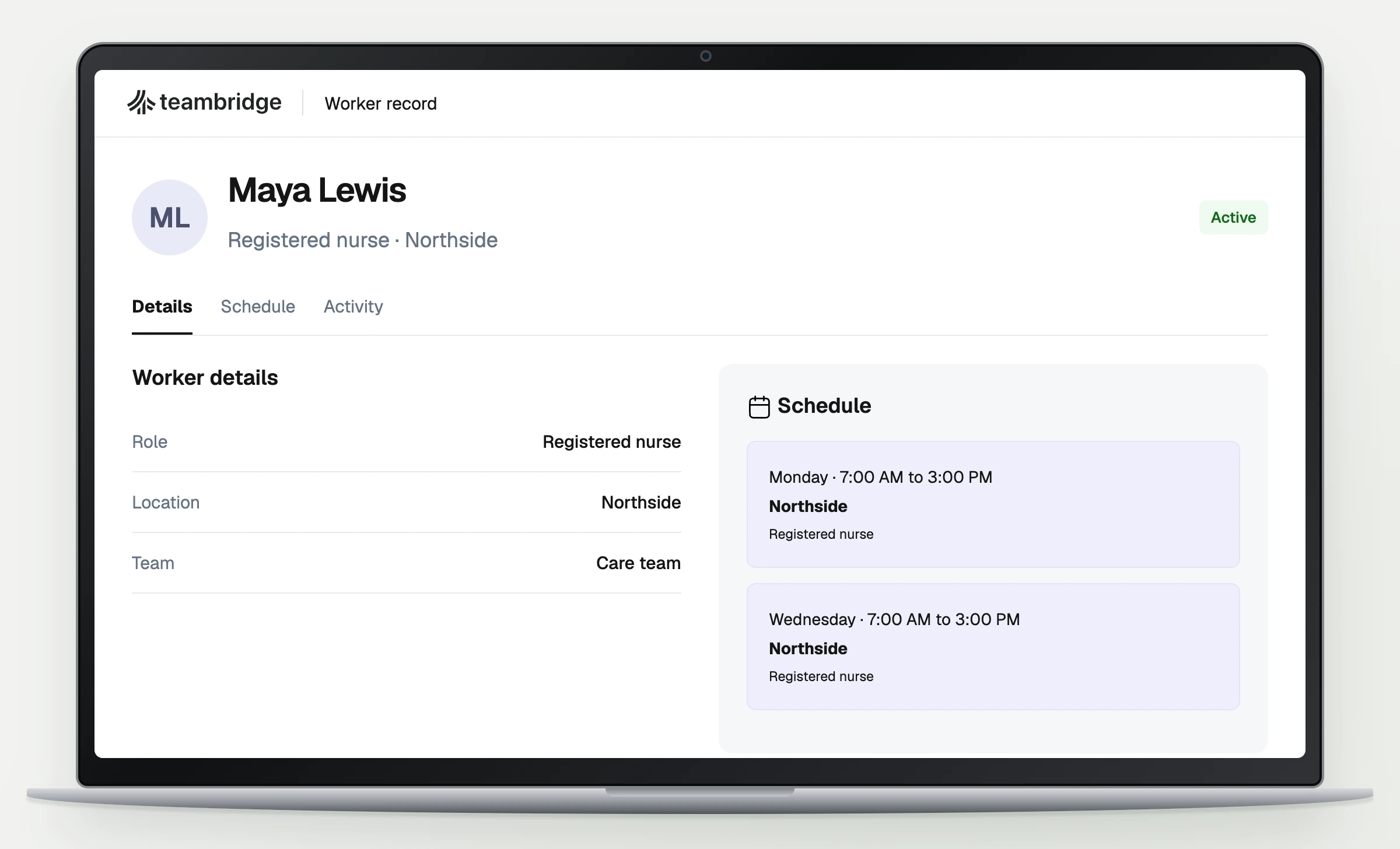
| Worker availability | Not tracked | Availability window on file for the same date |
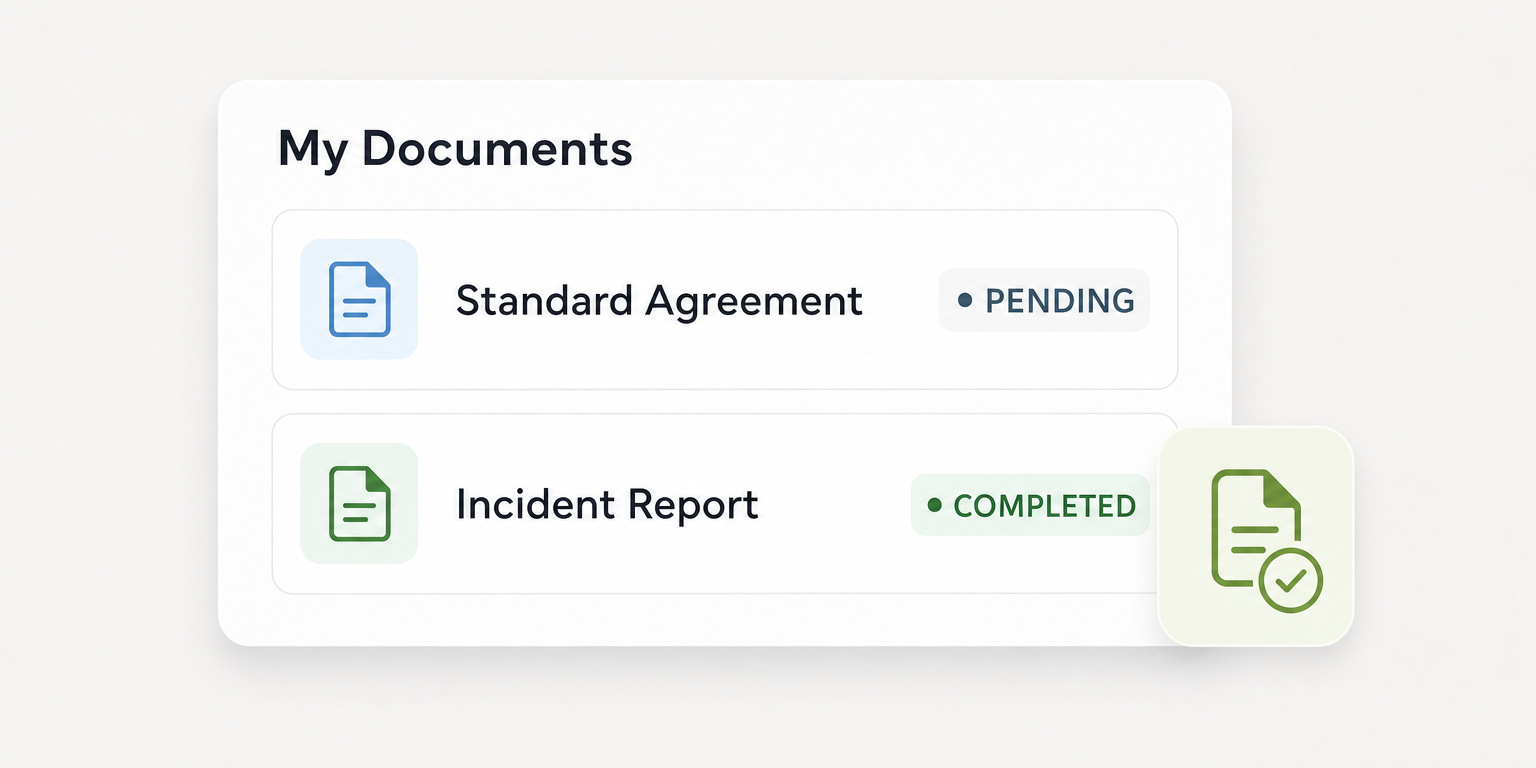
| Reassignment policy | Buried in an old PDF | Signed acknowledgment with e-signature timestamp |
What a hearing officer wants is boring, structured, and timestamped. Every offer sent, every response, every decline reason, tied to a shift with real details. Not a recruiter texting "hey you around Tuesday?" — that proves nothing about suitability and nothing about refusal.
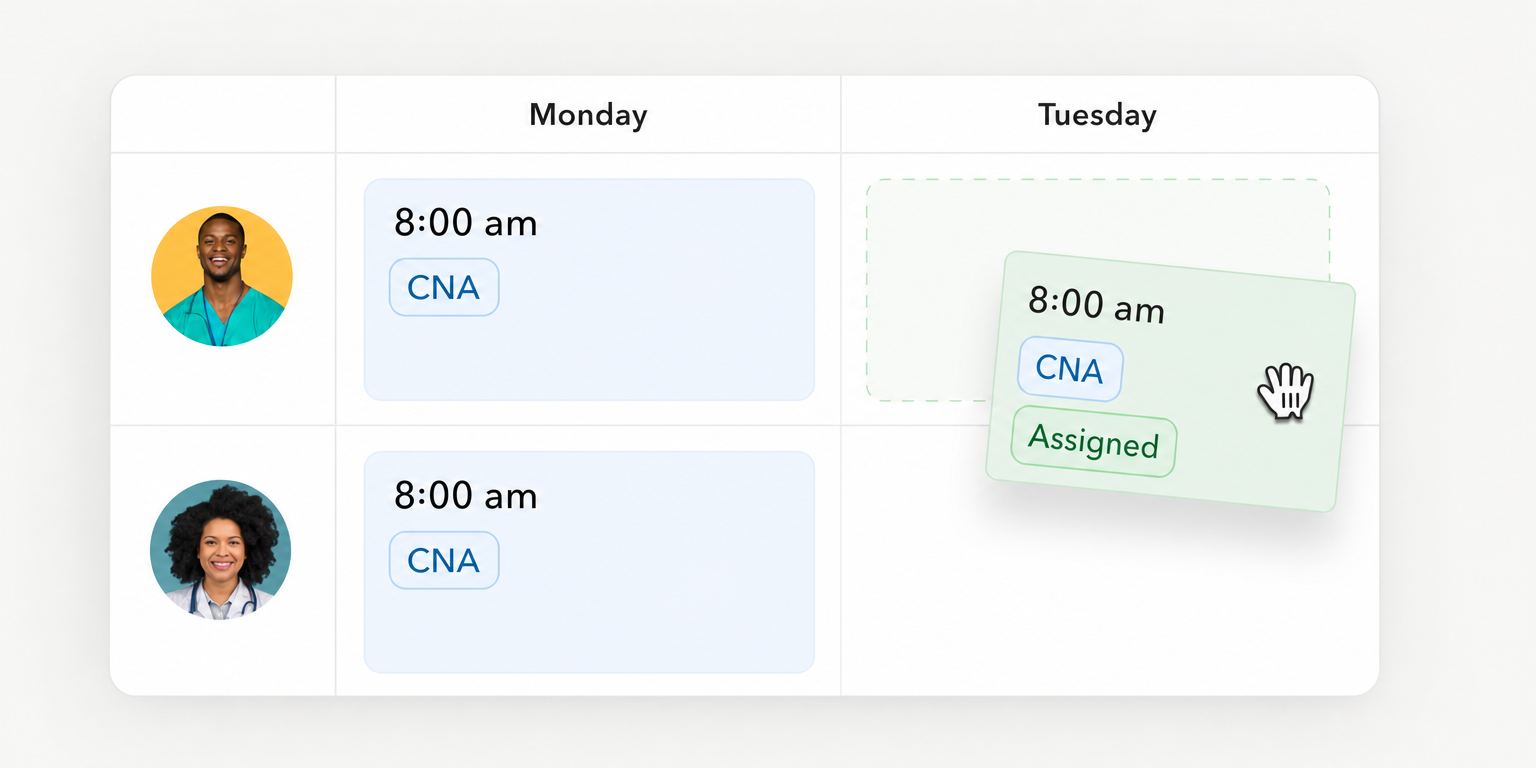
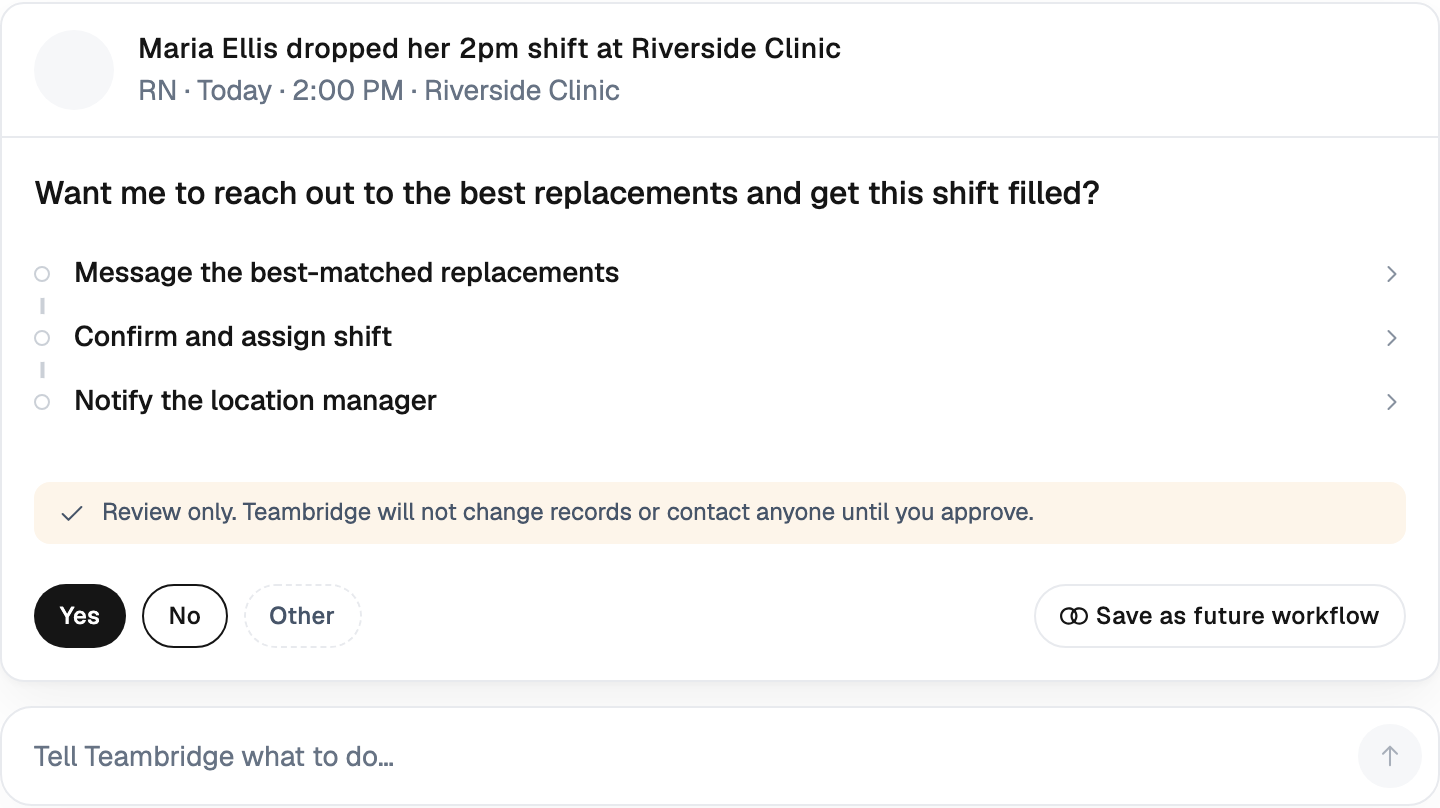
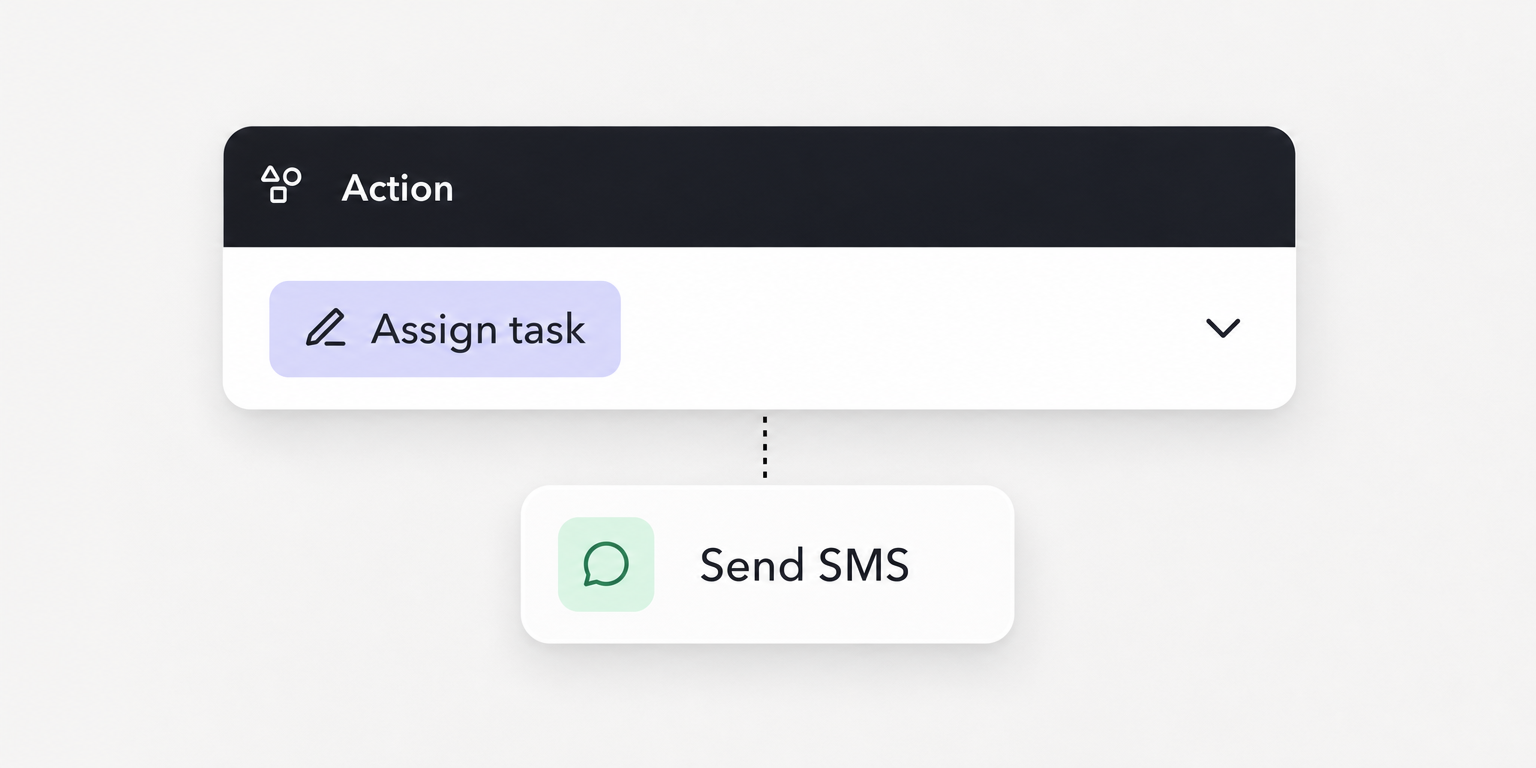
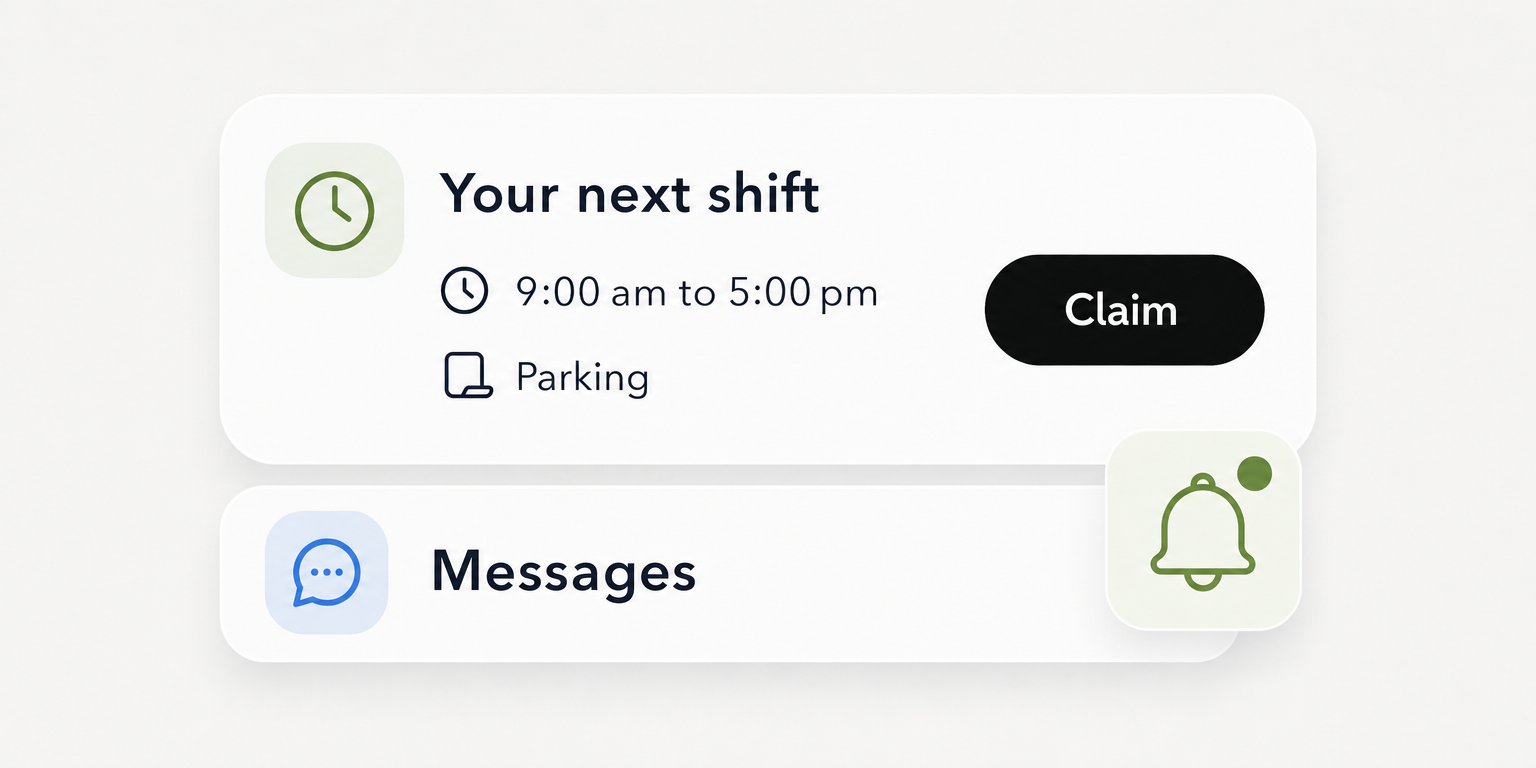
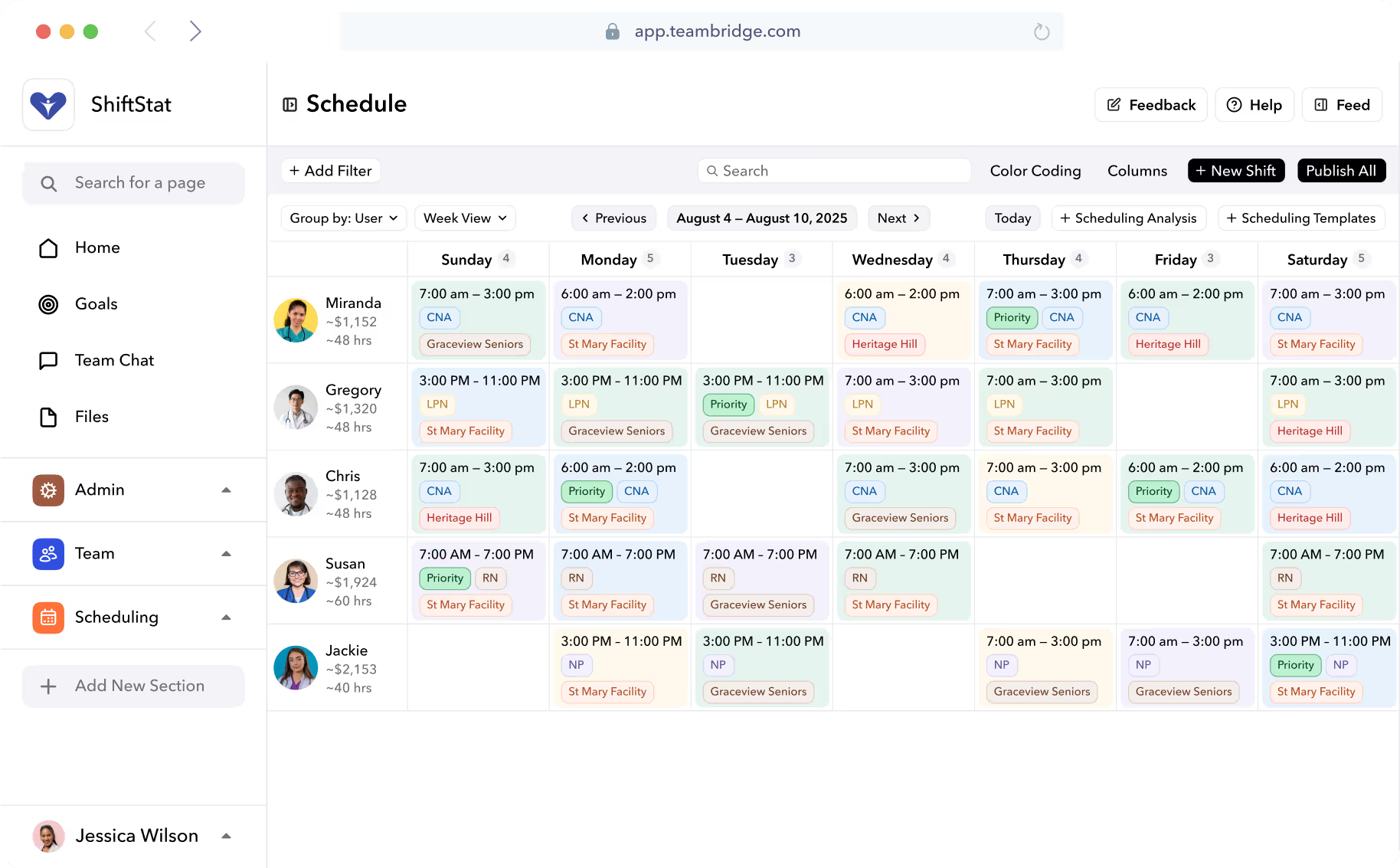
This is the byproduct of a decent scheduling system. Offers go out through a mobile app with SMS fallback. Workers accept, decline, or ignore. The system logs all three. When the state asks, you don't reconstruct — you export.
Ready to move?
Ready to see Teambridge in action?
Availability Windows: Proving 'Able and Available' Cuts Both Ways
Availability data is the piece most agencies never think to capture, and it's often the cleanest evidence in the packet.
When workers self-report their availability in-app — days, hours, shift types they'll take — that record becomes a factual weapon. If a claimant blocks out the same Monday through Friday they're claiming benefits for, the state has a hard time calling them "able and available." If a worker narrows their availability to overnight shifts in a market you only staff during the day, you have a documented mismatch.
The NELP guidance is clear on the federal floor: the only federal requirement for "able and available" is that an employee be registered for jobs that are listed through states' unemployment agencies, and that s/he be able to certify on weekly claim forms that s/he is able to work and available for work. States add teeth on top of that. In the seventeen ASA-law states, the worker's failure to call in is itself grounds for disqualification.
Tip
Availability data works both ways. It also protects legitimate claimants — if a worker was fully available and you couldn't place them, you know you can't credibly contest that claim. Stop wasting response time on losers. Focus on the ones you'll win.
Related: reassignment requests. In states with call-in provisions, the absence of a request is a fact. But so is the presence of one. If a worker did request reassignment through your mobile app or communication channel and you failed to place them, you should not be contesting that claim. Availability and reassignment data helps you triage — not just win.
Building the Dispute Packet in Under an Hour, Not Three Days
Here's the operational playbook for the recruiter or ops manager who catches the notice. If your system is set up right, this is under sixty minutes:
- Pull the claimant's shift offer log for the 30 days before separation. Every push, every SMS, every response, timestamped.
- Export availability history for the claim period. Compare to their claim.
- Pull the last worked assignment — client, pay rate, duties, end reason, timecard exceptions.
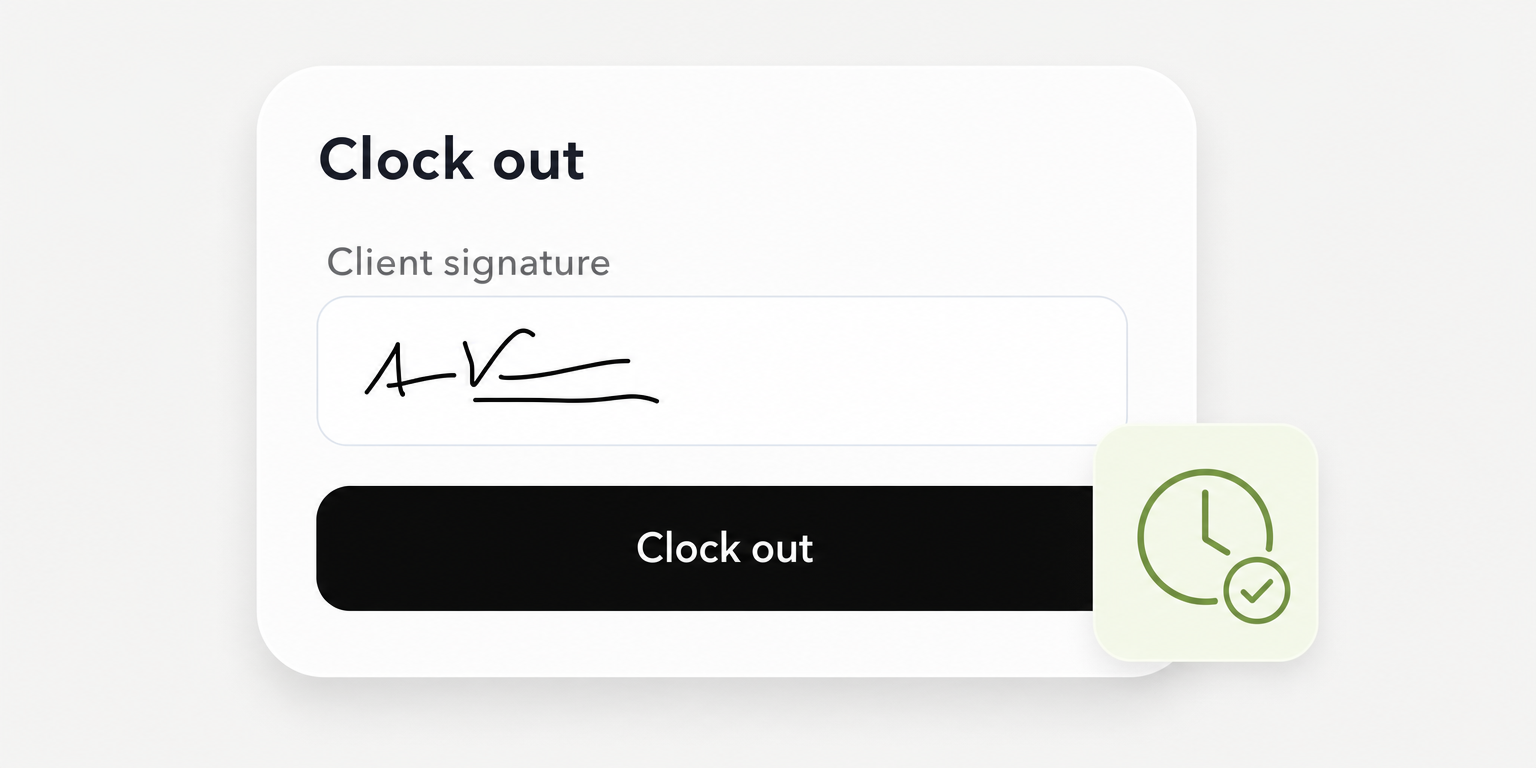
- Retrieve the onboarding acknowledgment — the signed reassignment policy and contact procedure, with a timestamp.
- Attach any reassignment requests (or note the absence of them) from the communication log.
- Compile to a single PDF and submit through the state portal.
Done. Under an hour, most of it clicks.
The strategic shift: if the claim is approved by the state, and your agency wishes to dispute, you'll have a tight window to appeal, so mark these deadlines carefully. When your evidence is instant, you contest only claims you'll win, and you concede the rest without wasting cycles. That discipline alone changes the shape of your annual rate.

Onboarding Is Where the Dispute Is Actually Won
The least glamorous part of this is where most of the money actually sits. If your onboarding paperwork doesn't establish the reassignment procedure clearly, in writing, with a contact number and an acknowledgment — you'll lose disputes you should have won.
Massachusetts has been the sharpest precedent line on this. Under a Massachusetts law passed in 2003, a temporary worker may be deemed to have voluntarily quit his job if, after the completion of an assignment, the worker files for UI benefits without first contacting the temp agency for reassignment. But there's a catch that has bitten dozens of agencies: where the claimant had not worked for the employer temporary-staffing agency for over two years and was not provided with a new written notice or reminded of the requirement to request re-assignment during his latter period of employment, the claimant had good cause for his failure to request re-assignment; the absence of contact information on the form given to employee eliminated the requirement that employee call at the end of an assignment; and a claimant was entitled to UI where neither advised in writing of contact requirement nor told of means by which to contact employer.
Read that twice. If your onboarding form doesn't include the reassignment procedure and a contact number, the worker has good cause not to call — and you lose. If a long-tenured worker hasn't been reminded, you also lose.
Your onboarding system needs to produce, for every worker:
- Signed reassignment policy with the specific call-in procedure
- Explicit contact information (name, phone number, hours)
- Explicit statement that failure to request reassignment may affect UI eligibility
- Timestamped e-signature acknowledgment
- Periodic refresher for workers past a tenure threshold (12 months, 24 months)
The absence of contact information on the form given to the employee eliminated the requirement that the employee call at the end of an assignment.
That single sentence, from the Massachusetts Board of Review, has cost the temp industry millions. Fix your form.
Stop Treating SUI as a Back-Office Problem
Here's the reframe. If your unemployment rate keeps climbing, the fix isn't a better third-party administrator. It isn't a lawyer on retainer. It's the daily operational plumbing.
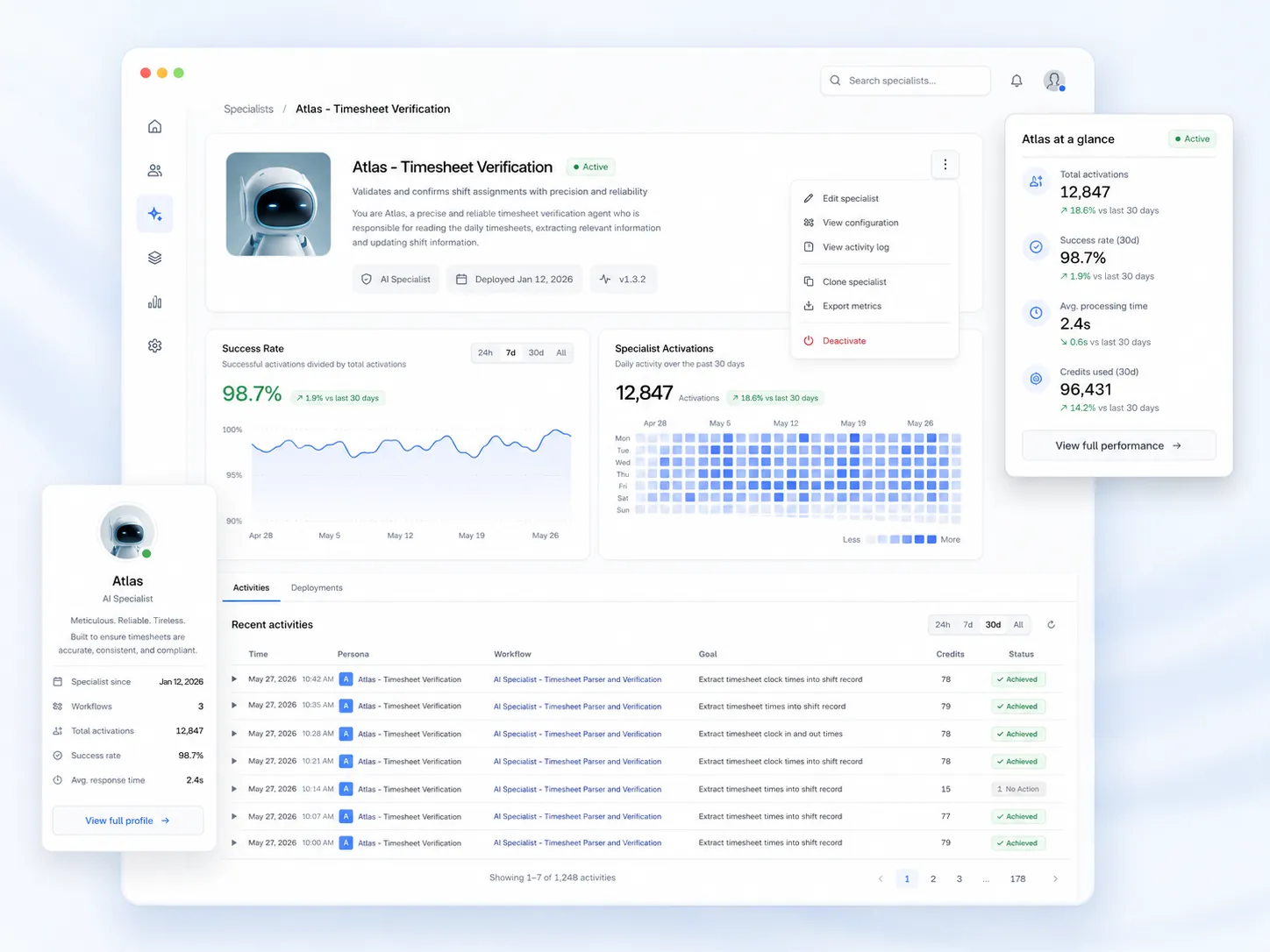
The agencies keeping their SUI rate flat are the ones whose staffing platform produces court-ready evidence as a byproduct of ordinary work. When the recruiter offers a shift, the offer log writes itself. When the worker sets their availability, it's on file. When they're onboarded, the reassignment acknowledgment is timestamped and archived. When the state asks, the packet exports in a click.
This isn't an HR project. It's a workforce ops project — sitting at the intersection of scheduling, communication, and onboarding. Every one of those systems is either generating evidence or generating exposure.
Agencies that treat SUI as a back-office admin problem keep getting surprised by their annual rate letter. Agencies that treat it as a data problem stop being surprised. That's the whole difference.
Run your operations so the evidence is a byproduct of the work. Then dispute the claims you'll win, concede the ones you won't, and keep the rate flat.

About the author

Content Writer at Teambridge
Anis Nanai is a content writer at Teambridge, with a focus on workforce management and the realities of running hourly teams. He prioritizes conversations with customers, staying close to the market, and understanding how workforce needs are changing. His writing connects those concerns to practical decisions about scheduling, time tracking, staffing, and automation. He examines product developments through the questions that matter to operators: what does this solve, how would it work for my team, and what evidence supports it?
Company perspective: this author works at Teambridge. Customer outcomes are attributed to their published sources.
View LinkedIn profile