

This playbook is the documentation stack that actually holds up in a hearing — how offers should be captured, what onboarding paperwork forecloses the "I didn't know" defense, and what the hearing packet should look like when the state calls.
Why Staffing Agencies Bleed SUI Dollars on "Refused Assignment" Claims
Temp agencies sit in a structurally worse position on unemployment than traditional employers. Assignments end constantly. Workers cycle between clients. And in most cases, state unemployment insurance laws treat the temp agency as the "employer" of the employee for purposes of paying UI taxes, workers' compensation premiums, and other payroll taxes. Like all private employers, temp agencies have their UI tax rate set according to whether or not their employees file valid UI claims and receive UI benefits. This is called "experience rating" and is similar to what happens to your auto insurance premiums if you get a ticket or have an accident.
Every lost claim ripples into next year's SUTA rate. On high-volume books of business, a handful of unnecessary charges can move the needle by a full rate percentage.
Here's the twist that catches operators off guard: federal law explicitly protects workers who refuse "new work" that's substantially worse than what they had before. Federal law says that states may not deny unemployment benefits to eligible employees for refusing to accept "new work," if the "wages, hours, or other conditions of the work offered are substantially less favorable to the individual" than what's normal in the area.
That means the agency doesn't just have to prove the worker refused. The agency has to prove the offer was suitable in the first place, and that the refusal actually happened in a way that can be reconstructed for an adjudicator. Recruiter texts a shift. Worker ghosts. Nobody logs it. Thirty days later, there's no defensible record — and the claim gets approved by default.
What State Adjudicators Actually Look For in a Refusal-of-Work Case
When a state workforce agency gets a job refusal report, the burden of proof shifts. Reporting job refusals is a key component to managing your unemployment costs. When a state workforce agency receives a report of a job refusal, the burden of proof for refusing that offer is placed on the employee.
But that shift only happens if the employer submits the right evidence up front. Miss a data point and the adjudicator can't move the burden — because there's nothing concrete for the worker to rebut.
The federal adjudication framework starts with a threshold question. Before a disqualification is considered, the adjudicator must first establish that there was an actual refusal of a bona fide offer of a job or referral to a job. If it cannot be established that there was a bona fide offer or referral to a job, there is no need to investigate further.
"Bona fide" isn't a vibe. It's a documentary standard. The offer of work must be for a specific job. The details of the job, i.e., duties, starting pay, hours of work, etc., must be documented.
The suitable-work factors adjudicators weigh
Even if the offer was bona fide, the adjudicator then checks whether the work was suitable for the specific worker. States' definitions of suitable work vary, but they generally consider factors such as the risk to a worker's health, safety, and morals; physical fitness; prior training, experience, and earnings; skills; length of unemployment; potential for obtaining work in one's trade or occupation; and the commuting distance from home to work.
The practical implication for staffing operators: if the last assignment paid $28/hour as a machine operator and the next offer is $17/hour warehouse selection an hour further from the worker's home, that refusal is going to be found reasonable in most states unless the record shows the worker's prior wage history and commute pattern in context.
The 10-to-21-Day Response Window That Kills Most Agency Appeals
The moment a claim gets filed, the clock starts. And it's tighter than most operators realize.
In almost all cases, existing UI state laws provide a very short statutory period (typically under 10 days from the mailing date) to respond to all Notices. Some states are even shorter — employers are given a set deadline of seven (7) days to respond to the Division's initial request in Colorado.
Miss the window and it's not just this claim you lose. Under the Unemployment Insurance Integrity Act, it requires employers and their agents to timely and adequately respond to a state UI agency's request for information regarding the claimant, regardless of whether the employer believes the individual is entitled to benefits. It also prohibits states from relieving employers of charges to their unemployment tax account: When a payment was made because the employer or an agent failed to respond timely or adequately to the request from the unemployment insurance division for information relating to the claim, and if the employer or agent has established a pattern of failing to respond timely or adequately to such requests, even if it is later decided that the claimant is disqualified for benefits.
Read that again. Even if you later win on the merits, if you were late responding and you have a "pattern," your account still gets charged.
Warning
A "pattern" can be established quickly. In California, under AB 1845, the EDD will determine that an employer has developed a pattern of not responding to requests for information if the employer fails to respond in two instances relating to the individual claim for UI benefits.
Response-window comparison across common staffing states
| State | Initial response window | Measured from |
|---|---|---|
| Colorado | 7 days | Date of Division request |
| California | 10 days | Mail date |
| Washington | 10 days | Mail date |
| Federal floor (most states) | ~10 days | Mail date |
Sources: Colorado CDLE, Littler, MRSC.
Operationally, the failure mode is predictable: notice arrives by mail, gets routed to accounting because it looks like a tax document, sits for four days, finally lands with the account manager who made the offer — who is out on PTO. By the time anyone opens the fact-finding questionnaire, the window is gone.
The fix isn't heroic. It's an SLA. One named owner receives every claim notice within 24 hours of arrival, one named backup covers PTO, and the response has to be drafted in five business days regardless of how much research it takes. A dedicated unemployment claims czar with access to personnel files and the authority to coordinate responses is what actually gets it done.
Building a Shift-Offer Audit Trail That Timestamps Itself
This is the core of the whole system. If the offer isn't captured with machine-generated timestamps, you're going to lose the hearing on facts you can't reconstruct.
A defensible offer record has to include, at minimum:
- Worker ID and legal name on file
- Shift ID, client name, role, and required credentials
- Pay rate, start/end time, total scheduled hours
- Worksite address, and distance from the worker's registered home address
- Method of delivery (in-app push, SMS, email — with the exact channel logged)
- Delivery timestamp and read/acknowledge timestamp
- Response: accept, decline, or no response by deadline
- Reason code if declined, in the worker's own words if provided
- Deadline given for response, and any follow-up contact attempts
Contrast this with the typical failure state: a recruiter sends a shift from a personal cell phone, gets a thumbs-down emoji back, and moves on. No timestamp. No location. No wage record. No delivery confirmation.

This is exactly the trap that shows up in appeals case law. In one Massachusetts Board of Review decision, the Board ruled that claimant and employer merely engaged in a discussion of job possibilities and no direct job offer was made to claimant; "furthermore, even if we were to conclude that a job offer was made, the job may not have been suitable employment for the claimant... where her income would have been reduced and her commute increased."
Two losses in one ruling: no bona fide offer, and even if there had been, it wasn't suitable.
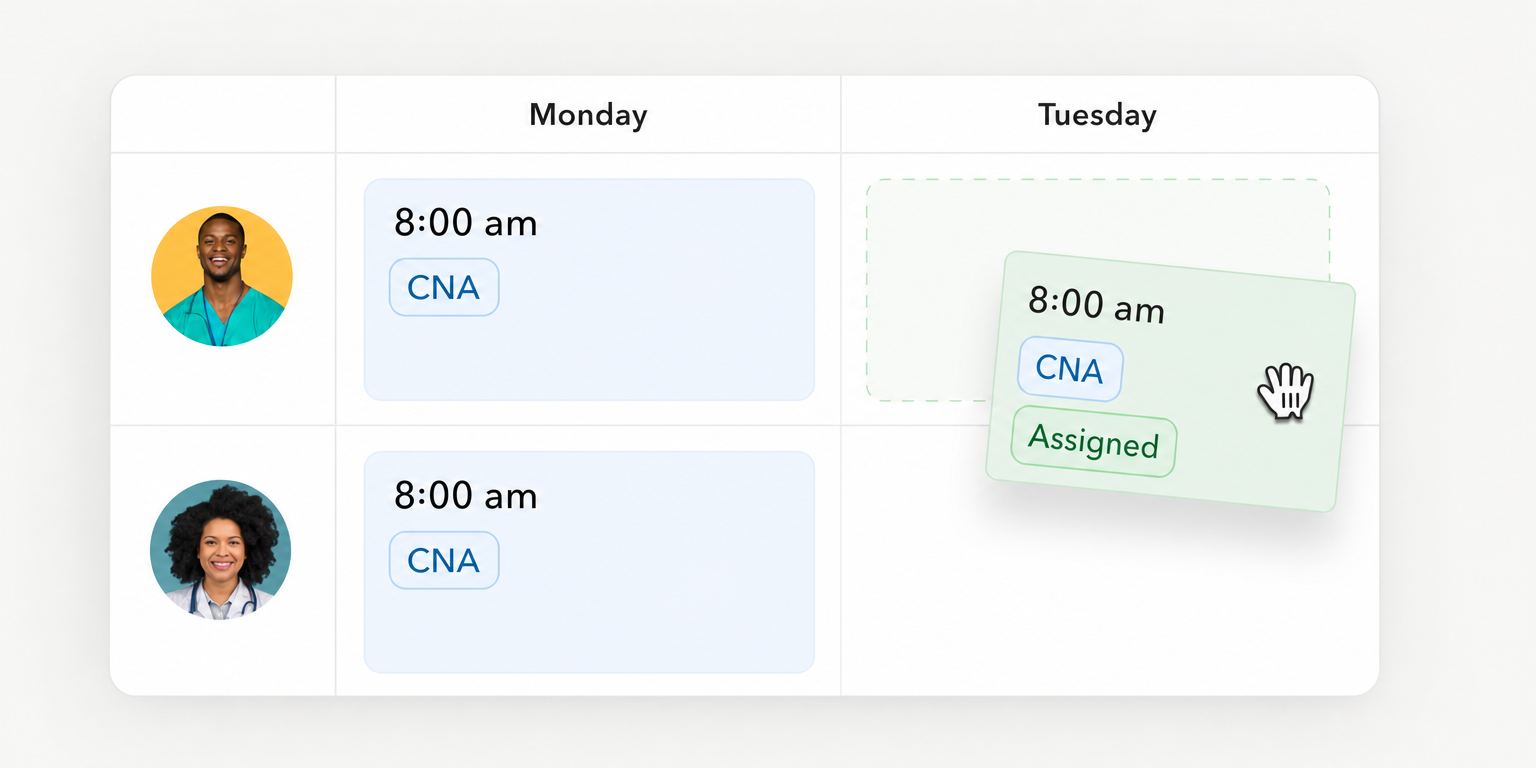
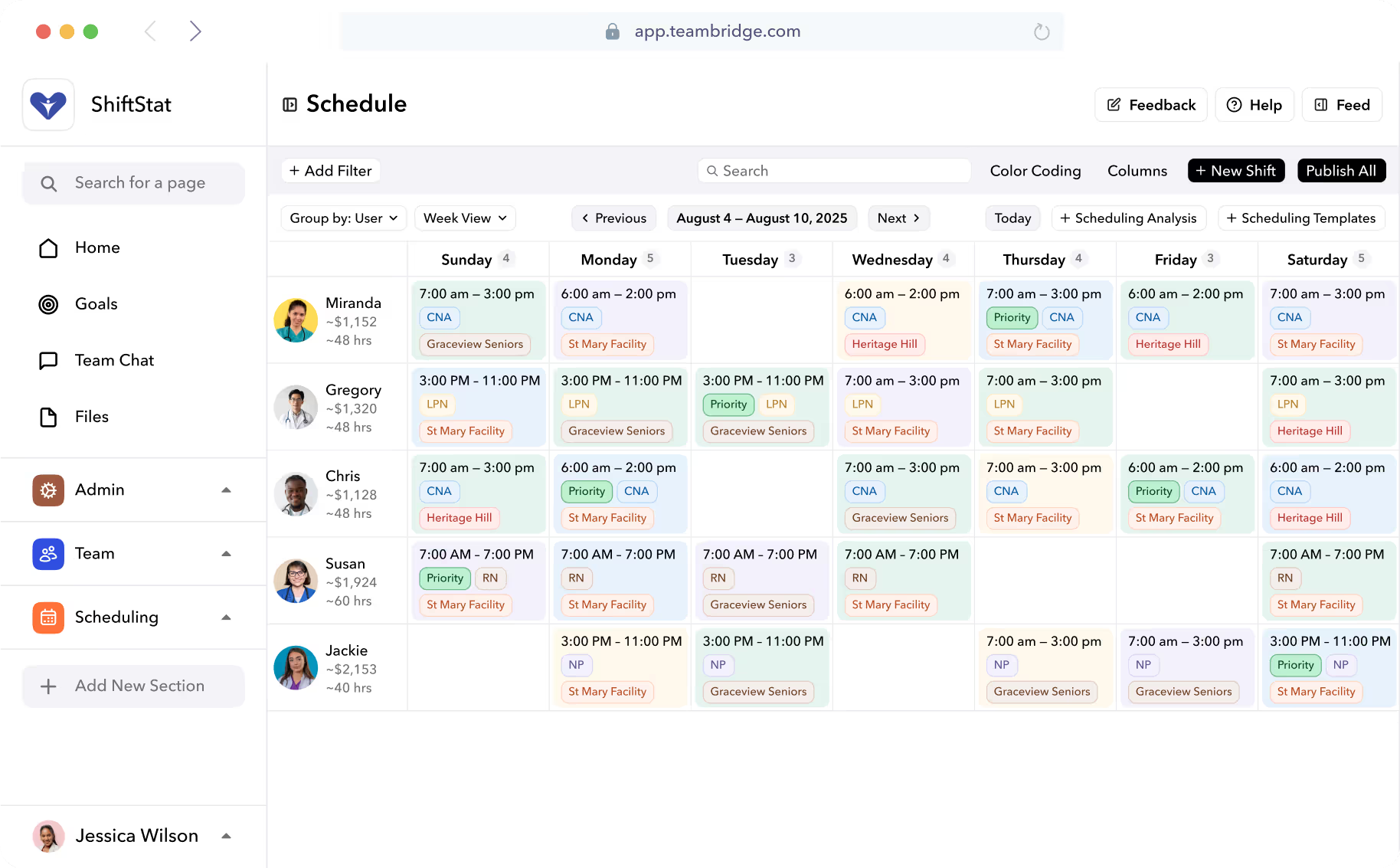
The only way to produce this record at scale — across hundreds of weekly offers to a rotating pool of workers — is to broadcast shifts in-platform and capture responses in the same system. Our scheduling tools are designed to produce this footprint by default: every broadcast, every acknowledgment, every decline is written to an immutable log with the worker ID, timestamp, and delivery channel attached.
Ready to move?
Ready to see Teambridge in action?
Onboarding Paperwork That Preempts the "I Didn't Know" Defense
Even a perfect offer record can lose at hearing if the underlying policies were never acknowledged. This is where most agencies get ambushed.
Many agencies require workers to call in within 24 to 48 hours of an assignment ending to remain eligible for reassignment. If that policy isn't signed at onboarding, the worker's "nobody told me" defense wins.
In ASA-provision states (Arkansas, Colorado, Florida, Texas, and roughly a dozen others), failure to contact the agency before filing can itself disqualify the worker — but only if the policy was properly documented at hire. Without a signed acknowledgment, the ASA provision doesn't help you.
The onboarding stack that actually forecloses defenses
- Assignment availability policy — sets the expectation that workers accept suitable offers when available
- Suitable work definition — the agency's written standard for what counts as suitable, aligned to state factors
- Contact-in requirement — the 24/48/72-hour rule for reporting availability after an assignment ends
- Method of contact preferences — worker consents to SMS, in-app, email, and phone as valid channels
- Assignment-end acknowledgment — the worker acknowledges that ends of assignments are not terminations
- At-will and reassignment terms — clear language on continued employment status between assignments
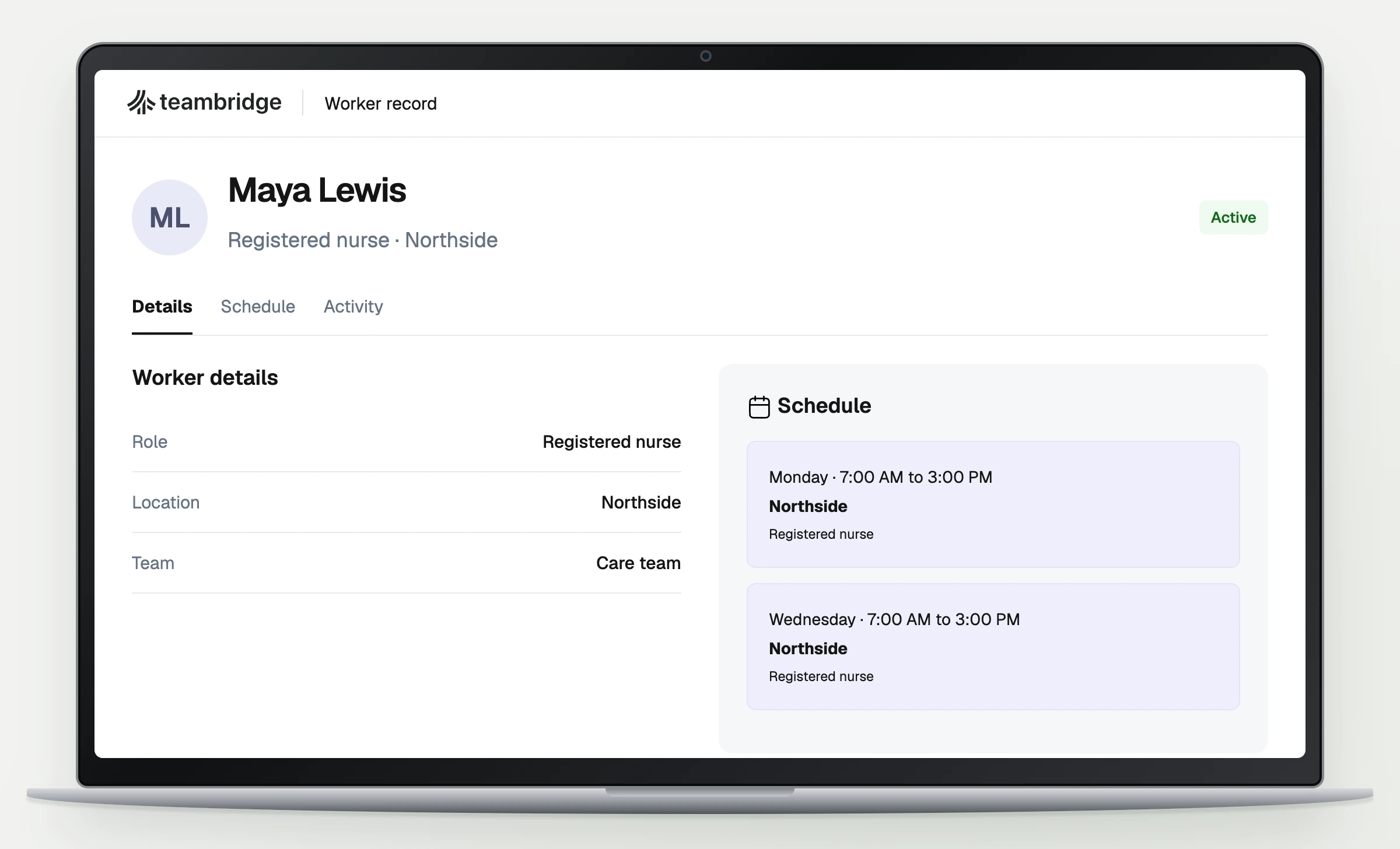
Each one has to be signed, timestamped, and retrievable in under two minutes when the hearing packet is due. Our onboarding workflows capture these signatures pre-day-one and store them on the worker record where they can be exported as evidence in a single click.
Tip
Draft the suitable work definition to mirror your state's statutory factors — health and safety risk, prior earnings, distance from home, skill match. When the adjudicator reviews the offer, your policy and their framework should be reading from the same page.
The Exit-and-Reassignment Log: Closing the Loop on Every Assignment End
When an assignment ends, two clocks start simultaneously. One is your reassignment window under agency policy. The other is the worker's UI eligibility clock. If you don't close the loop between them with documentation, the state fills in the blanks — and rarely in your favor.
The workflow that survives adjudication:
- Automated end-of-assignment trigger the day the placement closes
- Immediate log of separation reason (client-initiated end, worker-initiated end, project completion, misconduct, no-call/no-show)
- Documented offer of the next available assignment — or a documented, timestamped note that no suitable openings exist as of that date
- Worker acknowledgment of the reassignment offer or the no-work status
- Exit survey or interview capturing the worker's own words about the separation
The common trap: a recruiter says "we'll keep you in mind" or "let us know when you're available." That's not a documented offer of work. It's a courtesy. It won't hold up at hearing, and it won't trigger ASA-provision protection either.
Massachusetts case law is a useful mirror for what "documented offer" means. A temporary employee also does not have to take an assignment that is offered if the employee refuses for good cause and this singular contact is all that is necessary to meet the requirements of the statute. If an employee learns of the end of his assignment before the actual end date and discusses this with the temporary agency, that contact is sufficient to meet the required request for a new assignment, even though it occurred prior to the end of the original assignment.
A single documented contact matters. A vague "we'll be in touch" doesn't. Automation matters here because the volume kills manual logging — every closed assignment needs the trigger fired the same day, every time. Our automations run these end-of-assignment sequences in the background so nothing depends on a recruiter remembering to log it.
Preparing for the Hearing: What to Print, What to Screenshot, Who to Bring
When the notice of hearing arrives, the packet you assemble is the case. Adjudicators decide on documentary evidence and testimony — that's it.
The hearing packet checklist
- Signed onboarding policies (availability, suitable work definition, contact-in requirement)
- The offer record: shift details, wage, hours, location, delivery method, timestamps
- Delivery confirmation from the messaging channel used
- The worker's response or documented non-response
- All subsequent contact attempts with timestamps
- Comparison table: this offer vs. the worker's prior assignment (wage, hours, distance, skill match)
- State-specific suitable work factors applied point by point to this offer
Who testifies
The person who made the offer — usually the recruiter or account manager — testifies. Not the branch manager who heard about it secondhand. Adjudicators heavily weight direct testimony over hearsay, and inconsistencies between who did what and who's saying what will sink an otherwise strong case.
What loses cases
- Narratives written like performance reviews ("the worker was difficult") instead of incident reports ("on 3/14 at 9:42 AM, a shift was offered via in-app message; the worker declined at 10:07 AM citing distance")
- Missing timestamps
- Inconsistencies between the written record and verbal testimony
- Reliance on a personal cell phone screenshot with no metadata
Employers' first protest or response is usually their best opportunity to win. Therefore, they need to make sure to include all available evidence to support the protest.
The first response is not the hearing. It's the fact-finding questionnaire that comes with the initial claim notice. Treat it like the hearing anyway — everything you'd bring to a hearing should be attached to the first response, because that's when the state builds its initial determination.
Turn Every Shift Offer Into Evidence Before You Need It
Step back and look at where agencies actually lose. It's not that workers are lying — most refusals have some real reason behind them. It's that the offer, the refusal, and the policy live in three unlinked systems: a recruiter's phone, a client's timesheet, and a folder of onboarding PDFs.
By the time the state asks for proof, the recruiter has moved on to filling next week's shifts, the timesheet is buried in a client portal, and the onboarding folder is on a shared drive nobody has touched in six months. The fix isn't legal strategy. It's operations.
Every shift broadcast, every worker response, every policy acknowledgment should be captured in one system with immutable timestamps — ready to export as a hearing packet in minutes, not days. That's the difference between a defensible book of business and a rising SUTA rate.
See how Teambridge's scheduling and admin tools produce a defensible offer record by default, without adding steps to your recruiters' day. Purpose-built for staffing agencies running high shift volumes across rotating client sites.

About the author

Content Writer at Teambridge
Anis Nanai is a content writer at Teambridge, with a focus on workforce management and the realities of running hourly teams. He prioritizes conversations with customers, staying close to the market, and understanding how workforce needs are changing. His writing connects those concerns to practical decisions about scheduling, time tracking, staffing, and automation. He examines product developments through the questions that matter to operators: what does this solve, how would it work for my team, and what evidence supports it?
Company perspective: this author works at Teambridge. Customer outcomes are attributed to their published sources.
View LinkedIn profile