

The industry calls this time theft. That framing is wrong — or at least incomplete. Treating it as a people problem leads to surveillance software, sternly-worded policy memos, and a workforce that resents you. Treating it as a workflow problem leads to the actual fix: closing the gaps in your timecard-to-payroll pipeline where padding becomes frictionless.
This piece walks through what time theft actually costs, the seven patterns you'll find in any exception report, the FLSA exposure most operators underestimate, and what an honest detection-and-prevention stack looks like for a shift-based business.
What Time Theft Actually Costs an Operator Running 200+ Shifts a Week
Start with the headline number everyone cites. A Robert Half International study found employers lose about 4.5 hours every week per employee to time theft. That's roughly 11% of a 40-hour workweek. For an operator running 200 shifts a week at 8 hours each, that's not a rounding error — that's 720 hours of payroll going out the door against work that never happened.
Now layer in the buddy-punching tax. According to Nucleus Research, buddy punching affects up to 75% of small businesses in the U.S. and can lead to a loss of up to 2.2% of a company's annual gross payroll. In staffing, home care, and light industrial, 2.2% of gross payroll often is the entire margin line. You're not eating profit — you're erasing it.
And that's before you count exposure. Time theft costs U.S. employers between $450 billion and $550 billion annually according to the American Payroll Association. The per-employee cost averages $11,000 per year when accounting for inflated hours, buddy punching, extended breaks, and personal internet use during work hours.
| Metric | Cost per employee per year |
|---|---|
| 4.5 hours/week padded at $20/hr | $4,680 |
| Buddy punching share (2.2% of gross payroll on $42K wages) | $924 |
| Combined drag | ~$5,600 |
For a 250-person field workforce, that's roughly $1.4M of payroll buying nothing. The fact that it leaks out 6 minutes at a time is exactly why it never makes the P&L review.
Note
In staffing and home care, bill rates are typically set 30–60 days before payroll runs. Padded hours don't just inflate payroll — they collapse your spread on contracts you've already signed.
The Seven Patterns That Show Up in Timecard Exception Reports
If you've ever opened a Monday timecard queue, you already know these. The point isn't to memorize the taxonomy — it's to recognize that each pattern maps to a specific workflow gap.
1. Buddy punching
The classic. 75% of businesses are affected by some form of time theft including the recording of inaccurate time, conducting personal activities on the job, and taking frequent breaks. Nearly 25% of respondents in this survey acknowledged that they had participated in buddy punching. It thrives anywhere you use shared PINs, swipe cards, or a paper sign-in sheet at the trailer.
2. Rounding abuse
Quarter-hour rounding rules exist for a reason, but they're gameable. Some employees even find ways around basic electronic timekeeping systems—like waiting to punch out until the next quarter hour. Multiply that by 200 shifts and you're paying for half a head you didn't hire.
3. Padded edits
The "I forgot to clock in this morning, can you fix it to 7 a.m.?" pattern. Approximately 43% of hourly employees admit to exaggerating their work hours in anonymous surveys. Edits made without verification — and without a comment field tied to a manager approval — are where padding lives.
4. Long unapproved breaks
64% of workplaces report problems with employees returning late from breaks. Without an enforced break clock or a meal-break attestation, the 30-minute lunch becomes a 50-minute lunch becomes the standing pattern.
5. Off-site clock-ins
The mobile-app version of the old time clock cheat. Clock in from the parking lot, the freeway, the kid's school drop-off. If your time tracking accepts a punch from any GPS coordinate, you're paying for commute time.
6. Ghost shifts
Workers scheduled, marked present, never on site. Common in multi-site staffing where the on-site supervisor isn't the agency manager and no one is reconciling the schedule against client sign-off.
7. "Forgot to punch out" overtime
The most expensive pattern, because the FLSA does not care whether you authorized the hours. If an employee has already worked overtime hours, the Fair Labor Standards Act states that you're legally obligated to pay those wages. You're required to pay employees time and a half for any hours worked beyond 40 in a workweek, whether you authorized them ahead of time or not. Whether legitimate or not, you can't refuse to pay overtime for hours after they have already been worked.
Each of these is a workflow failure with a name. None of them require malice — most don't even require dishonesty. They require an opportunity.
Why Manual Timesheets and Paper Punch Clocks Guarantee Leakage
The deepest cause sits underneath all seven patterns: the tool itself.
These numbers paint a clear picture: time theft is not intentional fraud in most cases. It is a structural problem created by manual, honor-based timekeeping systems that lack verification. When you replace guesswork with automated time tracking, the opportunity for casual time inflation disappears.
Paper timesheets and Excel-based timecards have one defining property — they are editable after the fact by anyone with access. There is no signal at all that distinguishes a real 7:02 a.m. clock-in from a fabricated one. A PIN-based clock is barely better. A swipe card you can hand to a coworker is the same problem with a battery.

Contrast that with a verified clock-in: a mobile punch tied to a known device, a GPS coordinate inside a defined geofence, and a selfie or biometric check that the human at the device is the human assigned to the shift. None of those are surveillance. They're just receipts. Receipts the worker generates for themselves.
The ROI shows up fast once you switch. Automated time tracking reduces time theft by 25-40% within the first 90 days of deployment. Biometric verification goes even further on one specific pattern: Biometric time clocks reduce buddy punching by 95-100% because fingerprint or facial recognition cannot be shared. However, they only verify identity at clock-in and clock-out. They do not detect time theft during the workday, such as extended breaks or personal browsing.
Which is why the answer isn't a single gadget. It's a connected system.
The FLSA and Wage-and-Hour Risk Hiding Behind 'Small' Time Fraud
The cost line is the obvious problem. The compliance line is the one that ends careers.
The Fair Labor Standards Act doesn't care that your supervisor was "pretty sure" the timecard was right. Every covered employer must keep certain records for each non-exempt worker. The Act requires no particular form for the records, but does require that the records include certain identifying information about the employee and data about the hours worked and the wages earned. Those records have to be accurate. The DOL is explicit: Employers may use any timekeeping method they choose. For example, they may use a time clock, have a timekeeper keep track of employee's work hours, or tell their workers to write their own times on the records. Any timekeeping plan is acceptable as long as it is complete and accurate.
The word that does the work in that sentence is accurate. When records are sloppy or falsified, the legal default flips against you. In the event of an employee complaint or a DOL audit, these records serve as the primary evidence of compliance; if an employee claims unpaid wages and the employer lacks documentation to refute the claim, the employee's account of hours worked may be presumed correct under the "best evidence" rule, potentially leading to liability for back wages and penalties.
That's the trap. Workers padding 15 minutes feels like a small problem. A class action claiming systematic underpayment — defended with a paper timesheet stack — is a very large one. You can read the DOL's full position in Fact Sheet #21 on FLSA recordkeeping.
This is sharper in three industries:
- Home care. Electronic Visit Verification mandates require timestamped, geo-located proof of every visit. A padded timecard isn't just a payroll problem — it's a Medicaid billing problem. Teambridge's home care workflows are built around EVV from the start.
- Construction. Certified payroll, prevailing wage, and Davis-Bacon mean every hour is auditable by a public agency. Falsified records on a public job invite federal scrutiny. Our construction product page covers the job-site time tracking piece.
- Staffing. Client invoices are built on the same timecards as payroll. A padded hour is also an overbilled hour, and clients audit too.
Ready to move?
Ready to see Teambridge in action?
Detection: What Geofencing, Biometric Clock-In, and Exception Alerts Actually Catch
Detection is the boring half of the answer, but it's where most operators get the highest first-90-day return. The goal isn't to catch thieves. It's to make the wrong action take more effort than the right action.
A working detection stack has four layers.
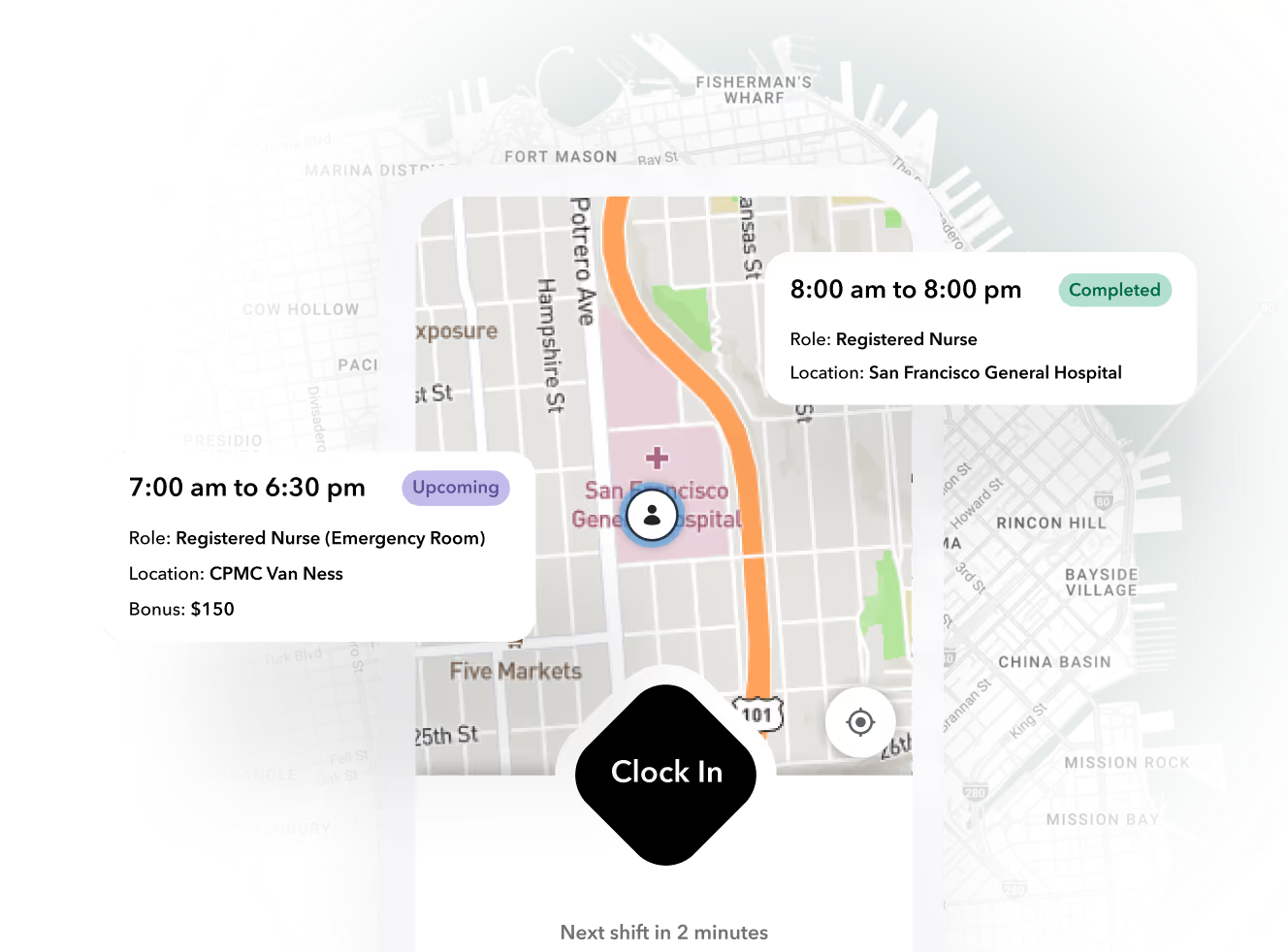
- GPS and geofence on every punch. A clock-in attempt outside the defined site radius either bounces or flags for approval. This kills off-site punching outright and most ghost-shift patterns.
- Biometric or selfie verification at the device. Face match against the employee record. As noted above, this is the single highest-leverage control against buddy punching.
- Edit history and exception alerts. Every manual edit creates a logged event with the editor's identity, the original value, the new value, and a required reason. Patterns get surfaced — say, the same supervisor editing the same worker's start time three weeks in a row.
- Break-rule enforcement. Mandatory clock-out for meal breaks, with a worker attestation if the break ran short. State meal-break compliance falls out for free.
Here's what an exception queue looks like before and after the stack lands.
| Pattern | Manual workflow Monday morning | Connected workflow Monday morning |
|---|---|---|
| Buddy punch | Invisible. Two badge swipes look identical. | Blocked at the device — face mismatch flagged in real time. |
| Off-site clock-in | Invisible. Paper says 7:00. | Flagged with GPS coordinate outside geofence. |
| Forgot to punch out | Supervisor estimates a time, no log. | Auto-prompted attestation from worker; manager approves with reason code. |
| Padded edit | Whiteout on the timesheet. | Audit log with before/after values and required justification. |
| Long break | Lunch field marked "30." | Actual break duration captured from clock-out/clock-in. |
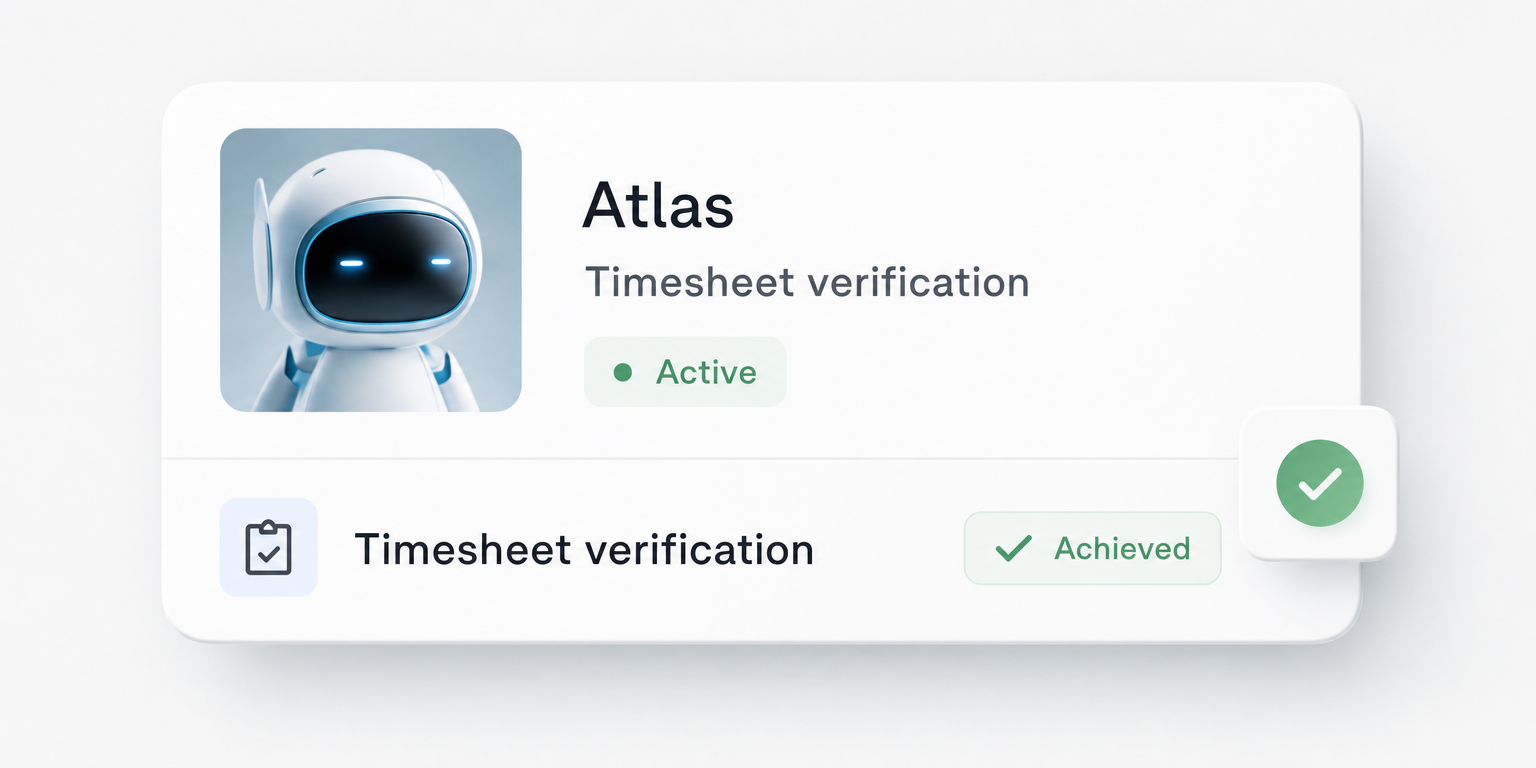
A clean exception queue is the deliverable. Teambridge's time tracking product is built to land here — verified punches, automatic exception surfacing, and a single screen for the payroll admin to approve, deny, or kick back. The point isn't to catch every minute. It's to make the gaps visible so manual reconciliation stops eating eight hours of admin time per pay period.

Prevention: Writing a Time Theft Policy Your Field Workers Will Actually Read
Detection without policy is surveillance theater. Policy without detection is a memo no one reads. You need both, and the policy has to be short enough that workers actually get to the end of it.
A time theft policy that holds up under HR review and in front of a workforce includes four things:
- Concrete definitions with examples. "Padding" is abstract. "Clocking in from home before driving to the site" is not. List the actual behaviors.
- Buddy punching named explicitly. Both the person clocked in and the person doing the clocking are in violation. State it.
- Edit rules. Who can edit a timecard, under what circumstances, with what required documentation, and within what window.
- Consequences spelled out in steps. First offense, second offense, termination threshold. No ambiguity.
Sign acknowledgment at onboarding, then surface it again any time a worker generates an exception that the manager has to approve. The point is to remove the "I didn't know" defense before it gets used.
Tip
The morale argument matters more than the legal one. Honest workers see padding go unpunished and disengage. When buddy punching goes unchecked, it signals that dishonesty is tolerated. Honest employees become frustrated when they see coworkers gaming the system without consequences, leading to decreased morale and increased turnover.
Pair the policy with manager mobile visibility. Supervisors should be able to see who is on the clock right now, where they punched in from, and which timecards have open exceptions — without logging into a desktop. That single capability collapses the time between a problem starting and a manager noticing.
Closing the Loop: Timecard → Approval → Payroll → Invoice Without Manual Touches
Here's the operator-honest version of the fix: you are not going to detect your way out of time theft. You are going to design your way out of it.
The gap where time theft lives is the gap between when a worker clocks out and when payroll runs. Every manual touch in that gap is an opportunity for padding, error, or after-the-fact "correction." Close the gap and most of the patterns above don't have anywhere to hide.
The connected workflow looks like this:
- Worker clocks in on a verified device, inside a geofence, with biometric or selfie check.
- Punch data flows directly into the timecard with no intermediate spreadsheet.
- Exceptions auto-surface in a single queue for the supervisor with reason codes and audit trail.
- Approved timecards flow into payroll with no re-entry.
- The same approved timecards flow into client invoicing with the contracted bill rate applied.
No paper. No "send me your hours by Sunday night" text message. No payroll admin retyping numbers from one screen into another. The Teambridge platform is built around that loop, and tying invoicing to the same verified timecard data is what closes the staffing-margin leak that buddy punching opens.
The outcome you should expect in the first quarter:
- Exception volume down 50–70% as off-site and buddy-punch patterns get blocked at the source.
- Payroll admin time per pay period cut in half.
- Edit history available for every shift, every worker, every supervisor — auditable from a phone.
- Client invoices reconciled to the same timecard data your payroll runs on, which kills both overbilling claims and underbilling leakage.
None of this requires treating your workforce like suspects. It requires building a system where the easy path is the right path. That's the entire idea.
Time theft was never a people problem. It was always a workflow problem. Fix the workflow and the rest of it gets quiet on its own.

About the author

Content Writer at Teambridge
Anis Nanai is a content writer at Teambridge, with a focus on workforce management and the realities of running hourly teams. He prioritizes conversations with customers, staying close to the market, and understanding how workforce needs are changing. His writing connects those concerns to practical decisions about scheduling, time tracking, staffing, and automation. He examines product developments through the questions that matter to operators: what does this solve, how would it work for my team, and what evidence supports it?
Company perspective: this author works at Teambridge. Customer outcomes are attributed to their published sources.
View LinkedIn profile