

Theft of time is one of the oldest leaks in shift work, and one of the most ignored. It hides inside manual timesheets, generous rounding policies, and clock-in systems that trust the punch instead of verifying it. For staffing agencies, healthcare operators, security firms, and field services running on thin margins, it's also one of the biggest controllable line items on the P&L.
This is a practical breakdown of what theft of time actually is, what it costs, why it happens, and how operators stop it without turning the workplace into a surveillance state.
What Theft of Time Actually Means (Beyond the Legal Definition)
In plain operator language, theft of time is an employee getting paid for hours they didn't actually work. That's it. The behavior runs across a wide spectrum.
On one end, you have outright fraud: deliberately altering the time that an employee clocks in or out on a time clock in order to receive additional pay or to cover up lateness or absences, or having a coworker punch in on their behalf. On the other end, you have passive forms — extended breaks, late clock-ins recorded as on-time, personal tasks on the clock, slow walks to the time clock at the end of a shift.
Time theft doesn't always have to be deliberate and malicious. It can also happen by accident or due to negligence. Time theft can result from activities as menial as arriving late or leaving early. It may even result from your employees' malicious actions, such as deliberately running errands during work hours.
It is not typically a federal crime, but it is almost always a violation of the employment agreement. Whether it is illegal depends on the specific actions taken by employees and the laws and regulations governing labor practices in a particular jurisdiction. Termination is on the table in most jurisdictions, provided the employer has documentation.
The important thing for operators: theft of time is the most common form of employee theft in hourly workforces, and the one most enabled by the timekeeping system itself.
The Real Cost: What Time Theft Drains From a Shift-Based Operation
The numbers are uncomfortable. A survey by Robert Half International found that the average employee steals about 4.5 hours each week from their employer, totaling almost six full work weeks annually. Six weeks. Per employee. Per year.
It scales fast. A study in the Kentucky CPA Journal called "Biting the Hand that Feeds: The Employee Theft Epidemic" found that time theft costs over $400 billion annually in lost productivity in the United States. As per the study, 75% of the businesses in the US are affected by time theft. It costs employers $11 billion annually and takes as much as 7% of your gross annual payroll.
Buddy punching alone — one specific category — is its own line item. 74% of employers experience payroll losses related to buddy punching (when one employee punches in for another). According to Nucleus Research, these losses average 2.2% of gross payroll, and that's just one form of time theft.
Apply that to a real operation:
| Operation size | Annual payroll (avg $18/hr) | 2.2% buddy punching cost |
|---|---|---|
| 10 employees | $374,400 | $8,237 |
| 25 employees | $936,000 | $20,592 |
| 50 employees | $1,872,000 | $41,184 |
| 100 employees | $3,744,000 | $82,368 |
For a 50-person company, that is over $41,000 per year walking out the door in unearned wages. That is a full-time employee's salary. Gone. For work that was never performed.
That is one form of time theft, in one operation, against one benchmark. Add extended breaks, unauthorized overtime, and ghost shifts and the real exposure for a 50-person field services or janitorial operation can clear six figures a year.
Warning
If you are running on a 3-5% net margin — common for staffing agencies, security firms, and janitorial services — a 2.2% payroll leak from buddy punching alone can wipe out 40-70% of your profit on a given contract.

The Six Forms of Time Theft That Actually Show Up on Timecards
This is what operators are actually dealing with, in order of how often it lands on a payroll exception report.
1. Buddy punching
One employee clocks in for another. Buddy punching is a form of time theft where one employee clocks in or out on behalf of another, usually to cover up tardiness, leaving early, or skipping a shift entirely. It's most common in workplaces that rely on manual time tracking systems like paper timesheets or physical punch clocks. Picture a janitorial crew lead at a hospital site punching in three coworkers who haven't arrived yet — multiplied across 40 sites, that's a real number.
2. Timecard padding and rounding
Employees adding minutes they didn't work. This happens on paper timesheets, but also on digital ones. Some employees even find ways around basic electronic timekeeping systems—like waiting to punch out until the next quarter hour. A few minutes per shift, compounded across a year, becomes a meaningful overtime bill.
3. Extended breaks and long lunches
The slow killer. Extending authorized mealtimes and breaks is another common form of time theft. A 30-minute lunch can easily turn into a 45-minute lunch, especially when employees are not required to clock out for their lunch breaks.
4. Early clock-in and late clock-out
The payroll-fattening favorite. Employees punching in 10 minutes before their shift and out 10 minutes after, every day, without doing anything during those windows. Over a 250-day year, 20 minutes per day at $20/hour is $1,667 per employee. For a 30-person crew, that's $50,000.
5. Personal activities on shift
Phone scrolling, errands, socializing, smoke breaks that double in length. For desk-based or front-facing roles, internet browsing dominates. For field roles, it's running personal errands between sites.
6. Ghost shifts and unverified remote/field work
The one operators see least but pay most for. A shift is logged. No one verifies the worker was at the site. Payroll runs. The client gets billed. Months later, the discrepancy surfaces in a site audit.
Why It Happens: Opportunity, Morale, and Manual Timesheets
Time theft is almost always a system problem before it's a people problem. Time theft is not intentional fraud in most cases. It is a structural problem created by manual, honor-based timekeeping systems that lack verification. When you replace guesswork with automated time tracking, the opportunity for casual time inflation disappears.
Three conditions create the opportunity:
- Unsupervised worksites. Distributed crews on hospital floors, construction sites, client offices, security posts — places where no manager is physically watching the clock-in.
- Manual or paper timesheets. The foreman writes down 15 names. No one verifies.
- Unclear policy. No definition of time theft in the handbook, no signed acknowledgement, no consistent enforcement when supervisors catch it.
Then there's motive: low morale, perceived pay injustice, burnout, and a peer culture where unpunished time theft signals the behavior is acceptable. Once one crew lead is padding hours and nothing happens, the rest of the crew learns the rule that actually applies.
It's worth saying out loud: when 4.5 hours per week is the average, this is not a problem of a few bad apples. It's an operating system that makes the dishonest path the easy one.
Ready to move?
Ready to see Teambridge in action?
Wage Theft vs. Time Theft: Don't Conflate Them
This distinction matters for any compliance-minded operator, especially in California, New York, Massachusetts, and other states with aggressive wage-and-hour enforcement.
- Time theft: employees taking pay for time not worked.
- Wage theft: employers failing to pay for time actually worked — unpaid overtime, missed-break premiums, off-the-clock prep, rounding against the employee.
The scale of wage theft dwarfs time theft. According to one estimate from the nonprofit think tank Economic Policy Institute, reported and unreported wage theft could amount to as much as $50 billion per year owed to workers. You can read the EPI report directly for the methodology.
Here's the operator insight: the same broken timekeeping system that lets time theft happen also exposes the employer to wage theft claims. If your timecards are unreliable in one direction, they're unreliable in the other. Time theft goes both ways. Employers that alter time cards, fail to pay proper overtime, or misclassify employees to avoid paying out benefits are committing time and wage theft.
Solve the timekeeping infrastructure once, and you close both exposures.
How to Detect and Prevent Theft of Time Without Building a Police State
This is the operator playbook. No generic HR advice. Five concrete moves.
1. Replace manual timesheets with verified clock-in
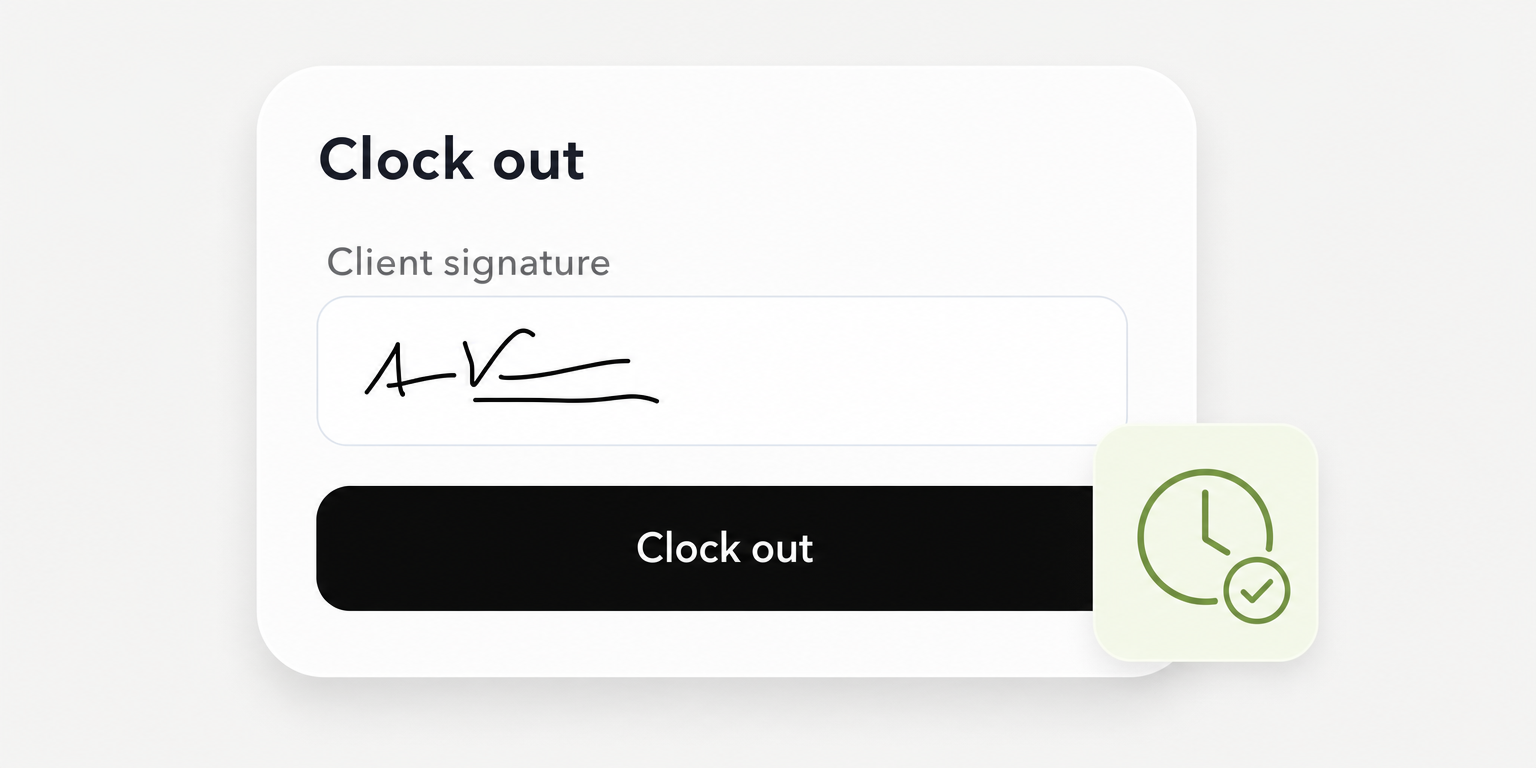
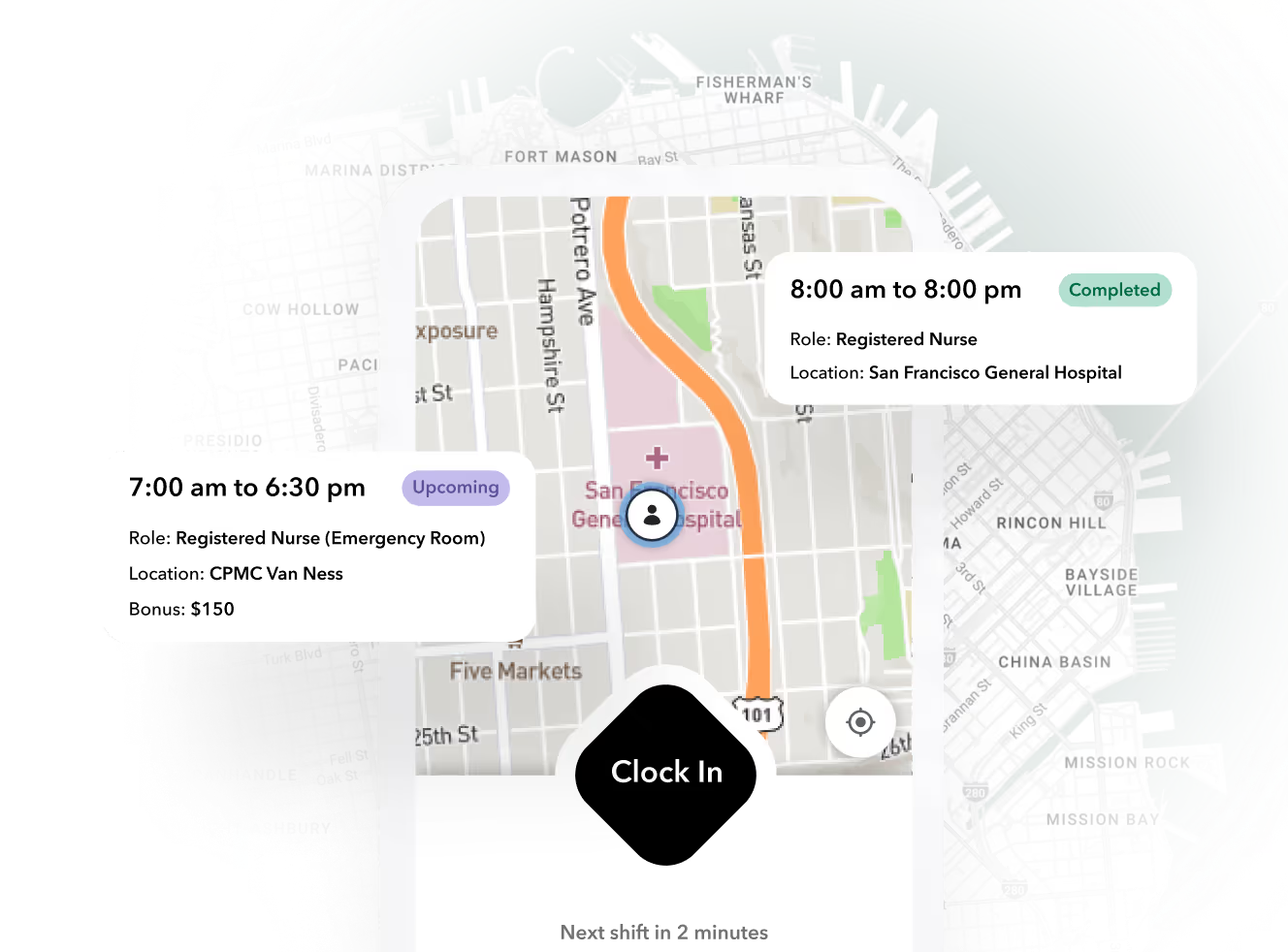
GPS-verified, geofenced clock-in tied to the assigned shift and worksite. The employee can only punch in when their device is physically inside the geofence of the job site they're scheduled for. A system where buddy punching is not just detectable but physically impossible, because a clock-in request initiated outside the defined work zone boundary is rejected before it ever reaches the payroll system. The control does not depend on anyone catching the fraud after the fact — the architecture removes the possibility at the point of attempt. Teambridge's Time Tracking product handles this natively.
2. Kill buddy punching with biometric or selfie verification
Biometric time clocks reduce buddy punching by 95-100% because fingerprint or facial recognition cannot be shared. However, they only verify identity at clock-in and clock-out. They do not detect time theft during the workday, such as extended breaks or personal browsing. Selfie-on-punch is the lower-friction version and works on any phone.
3. Auto-flag exceptions before payroll runs
This is where most operators leave money on the table. Even with verified clock-ins, you need the system to surface:
- Early clock-ins outside the scheduled window
- Late clock-outs and unapproved overtime
- Missed or extended breaks
- Punches outside the geofence
- Schedule-vs-actual variances over a threshold
A supervisor reviews and approves exceptions before payroll closes. Not after. Not next quarter. Before.
4. Put it in writing at onboarding
Define time theft in the handbook. Specify what counts: buddy punching, padding, extended breaks, ghost shifts. Spell out consequences. Get a signature on day one. This is what your employment counsel will ask for the first time you terminate someone for it.
5. Tie corrective action to evidence, not gut feel
A supervisor's hunch is not enough. GPS logs, selfie verification, schedule deviations, and exception reports — that's the documentation a termination needs to survive a wrongful-discharge claim.
Tip
The fastest single win for most operators is restricting early clock-ins. If a shift starts at 6:00 AM, the system rejects punches before 5:55 AM. This one rule, applied consistently, often eliminates 15-25% of payroll inflation without any other change.
For operators who want scheduling, time tracking, and pay tied together so exceptions surface automatically against the schedule, Teambridge's unified platform handles the full loop. For construction-style field operations where job-site verification is the core requirement, see how it's deployed for construction crews.
When You Catch It: Handling a Confirmed Case
When a supervisor flags a real incident, the temptation is to act fast. Don't. The cost of a botched termination — wrongful discharge claim, unemployment dispute, defamation risk — outruns the cost of the time theft itself.
- Document the discrepancy. Pull the timestamps, GPS data, selfie records, schedule, and any corroborating evidence (security footage, client check-in logs, coworker statements).
- Give the employee a formal opportunity to respond. Have a witness in the room. Take notes. Some incidents are honest mistakes — a missed clock-out, a phone with bad GPS — and you want them on the record.
- Match the consequence to the evidence. Verbal warning, written warning, suspension, or termination. First-time minor padding is not the same as a crew lead running ghost shifts for six months.
- Consult counsel before termination. Especially in jurisdictions with monitoring-notice requirements, biometric-data laws (Illinois BIPA, Texas, Washington), or strong wrongful-discharge statutes.
- Decide on restitution. You can pursue recovery of wages paid for unworked hours in many states, but it often costs more in time and legal fees than it returns. The deterrent value usually matters more than the recovery.
The Operator's Bottom Line
Theft of time is rampant. It costs U.S. employers hundreds of billions of dollars a year. It affects roughly three out of four businesses. And for shift-based operators running on labor margins, it is one of the largest controllable line items on the books.
It is also one of the most fixable.
The fix is not surveillance and it is not a culture of suspicion. The fix is a timekeeping system that makes the honest path the easy path: verified clock-in tied to the assigned shift, exceptions flagged for review before payroll, written policy signed at onboarding, and consistent enforcement when something is off. Do that and the casual time theft — the 80% of the problem — disappears on its own.
The operators who treat this as a system problem close the leak. The operators who treat it as a discipline problem keep paying for hours that were never worked.
If you want to see what verified clock-in, automatic exception handling, and overtime control look like in practice, take a look at Teambridge's Time Tracking product or the full workforce platform.

About the author

Content Writer at Teambridge
Anis Nanai is a content writer at Teambridge, with a focus on workforce management and the realities of running hourly teams. He prioritizes conversations with customers, staying close to the market, and understanding how workforce needs are changing. His writing connects those concerns to practical decisions about scheduling, time tracking, staffing, and automation. He examines product developments through the questions that matter to operators: what does this solve, how would it work for my team, and what evidence supports it?
Company perspective: this author works at Teambridge. Customer outcomes are attributed to their published sources.
View LinkedIn profile