

A message about changed reporting instructions is not finished when it reaches a phone. Someone must answer, confirm the right location, and leave enough context for the next supervisor if the question remains open.
Employee chat must support replies and accountable follow through
Use the audit below during vendor demonstrations and a controlled pilot. These are proposed acceptance tests, not claims that every employee chat product supports each behavior. Assign named people to the owner roles before testing.
Copy the table into your review document. For each row, record the observed result, evidence location, and any unresolved exception in the relevant cell.
| Stage | Owner | Vendor question | Pass signal | Fail signal | Escalation |
|---|---|---|---|---|---|
| Before access | Operations and IT | Who can workers contact, and what history can they see? | Worker reaches approved supervisor and sees approved history only. | Legitimate contact is blocked or unintended history appears. | IT reviews access; operations reviews routing. |
| During conversation | Shift supervisor | Can a worker ask and receive a useful reply through the intended channel? | Reply identifies the relevant shift or location. | Only a broadcast is demonstrated, or nobody owns the reply. | Operations blocks approval until a reply path works. |
| Supervisor handover | Incoming supervisor | How do I find pending requests and take responsibility? | Context and next reply owner remain accessible. | Request depends on the outgoing supervisor being available. | Operations requires a handover procedure and retest. |
| Membership changes | IT and HR | What access and records remain after transfer or departure? | Observed behavior matches approved policy. | Access is unintended or retained history is unexplained. | IT and HR hold approval pending evidence. |
Keep delivery, reading, reply, and resolution separate in the review. A delivered message may still be unread. A read message may still need an answer, and a reply may leave the underlying request unresolved.
A read receipt is evidence about message interaction, not proof that the worker has an answer or that the work is complete.
Before access, test who workers can contact and what they can see
Operations should define the contact path before IT evaluates permissions. A worker needs to know where to send a reporting question, who covers that route when the usual manager is unavailable, and which route is appropriate for a sensitive issue. Requiring a personal phone number should not be the only workable option.
Ask the vendor to demonstrate access using a worker account, not just an administrator account. Test a worker assigned to one crew and a supervisor responsible for another. The question is whether each account can do the intended work without gaining unrelated access.
Permission controls can also have administrative limits. Connecteam’s chat permissions documentation describes restrictions on who can initiate conversations, including contact with direct managers. It specifies that Chat Permissions settings are available to Owners through the desktop dashboard, rather than to Admins or through the mobile app.
That is a reason to ask every vendor who can change routing rules. Require the demonstration to identify the necessary access level, show the change being saved, and then verify its effect from the worker account. If the intended administrator lacks permission, name the authorized person who will handle exceptions.
History needs a separate test. Connecteam’s team membership documentation says newly added team chat members can access previous chat history. That is documented behavior for Connecteam, not a universal rule for employee chat.
Before adding a test worker, place synthetic messages in the conversation that represent approved and restricted information. Compare what becomes visible with your access policy. Unexpected visibility goes to IT before approval, even if sending messages works perfectly.
The first stage passes only when approved contact paths work and history exposure matches policy. A polished administrator demonstration does not substitute for either result.
Put the workflow into practice
See how your team could use this workflow
During conversation, prove a worker can get a useful reply
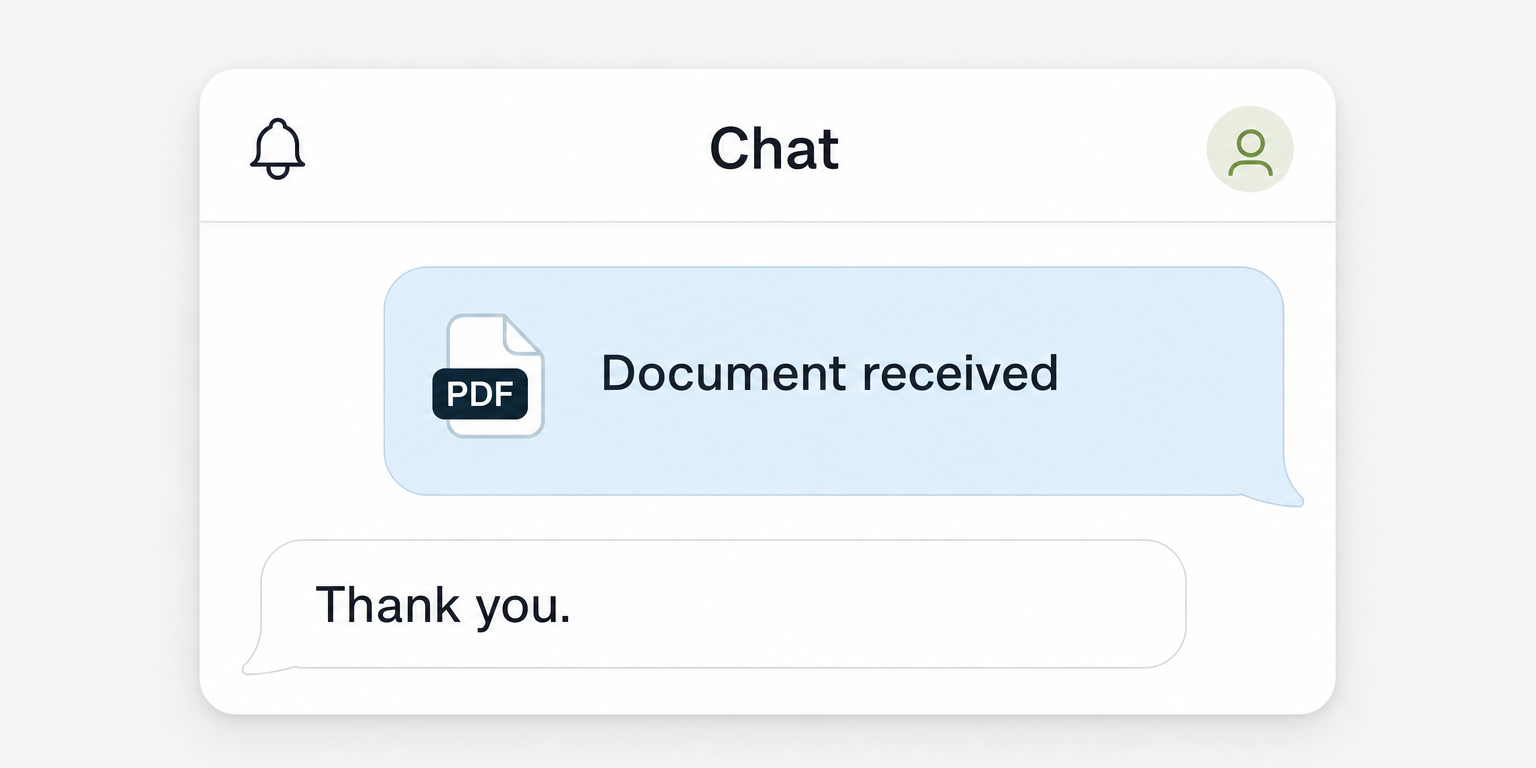
Give the shift supervisor ownership of a realistic exchange. Use a hypothetical worker asking, “My instructions say the north entrance, but the latest message says the loading office. Where should I report for tonight’s shift?” The supervisor must respond with the location and enough shift context to remove the ambiguity.
Run the exchange through the channel workers will actually use. If the proposed setup includes an app and text messages, test each relevant path rather than assuming the experience carries across them. Record where the reply appears and whether the worker can continue the conversation there.
A useful test follows this sequence:
- The worker sends the question using their normal account and device.
- The responsible supervisor finds it and replies with the correct reporting instructions.
- The worker receives the reply and can ask a follow up question.
- The supervisor records whether the issue is resolved or still needs action through the agreed process.
Ask what happens outside staffed response hours. The operating policy should name the next available responder or an approved urgent contact route. It should not leave workers guessing or imply that they must remain available while off shift.
Receipt behavior deserves its own evidence check. Microsoft’s Teams read receipt documentation explains that receipts depend on settings and how recipients interact with messages. Viewing a notification is not equivalent to opening the conversation for receipt purposes.
Use this evidence panel to guide questions, not to rank vendors:
Operator view
Supporting evidence
https://support.microsoft.com/en-us/teams/chat/use-read-receipts-for-messages-in-microsoft-teams
https://www.teambridge.com/product/communication
Pass this stage when both sides complete the exchange and know who owns any remaining action. Fail it when the demonstration proves only that a manager can send an announcement. A broadcast can distribute instructions, but it does not demonstrate an employee reply path.
Products discussed
Employee Chat Checklist for Hourly Teams and Shift Managers tools mentioned
Official marks identify the products materially discussed in this section.
At supervisor handover, keep unresolved requests visible
The incoming supervisor should run this test from their own account. Leave the reporting question unresolved, switch supervisors, and ask the replacement to identify the request, understand the work context, and establish who will answer next. Keep the outgoing supervisor unavailable during the test.
Be precise about what the new supervisor can inspect. Connecteam’s message read status documentation says users can check who viewed messages they sent themselves. That restriction concerns receipt visibility; it does not establish that an incoming supervisor cannot read conversation content.
Test content access, receipt access, and request ownership separately. Do not require broad access to private conversations just to make handover convenient. Operations and IT must agree on the smallest amount of context the next supervisor needs.
There are two operating choices to evaluate:
- Shared visibility: Authorized supervisors can access the relevant pending conversation or request state. Test the actual permissions and how the next responder is identified.
- Manual handover: The outgoing supervisor records the unresolved question, relevant work context, and next owner in an approved shared record. Test whether the incoming supervisor can find and use it without another explanation.
These choices are not interchangeable product features. Manual handover creates a recurring management task, and someone must own its completion.
A hypothetical handover failure shows how to complete the audit
Assume a warehouse uses rotating supervisors and an approved shared handover log. A worker asks which entrance to use, but the outgoing supervisor leaves before confirming the answer. The incoming supervisor can see the schedule but cannot find the question through the approved process.
In the table’s handover row, record: Fail. Request unavailable to incoming supervisor. Assign the operations manager to establish the manual handover procedure. The required evidence is a retest in which the incoming supervisor finds the question, accepts responsibility, and sends the worker a useful reply.
This example does not assume a vendor has a shared inbox or request assignment feature. It shows how to document a limitation without calling it a pass or granting unnecessary conversation access.
After transfers and departures, retest access and history
IT and HR should test membership changes against the company’s approved access and retention policy. A worker moving crews creates two questions: what remains visible from the old crew, and what becomes visible in the new one? Departure adds another question about what authorized managers can still retrieve.
Use synthetic conversations for these tests. Record the account’s access before the change, have an authorized administrator make and save the change, then inspect the resulting access from the affected account. Ask the vendor how active sessions and other configured channels are handled rather than assuming the account change settles every path.
Connecteam’s membership documentation describes membership changes associated with Smart Groups and access to prior history for newly added members. It supports testing those transitions. It does not establish that removing someone deletes previous messages or downloaded copies.
Warning
Removing a member, disabling an account, and deleting conversation records are different actions. Require evidence for each behavior your policy depends on. Unexplained access or retention behavior remains unverified and blocks approval.
Have HR identify what records the organization expects to retain and who may retrieve them. Have IT verify the access behavior and document any unresolved exception. Do not turn a vendor’s membership description into a claim that a particular retention obligation has been satisfied.
Evaluate Teambridge against the same conversation tests
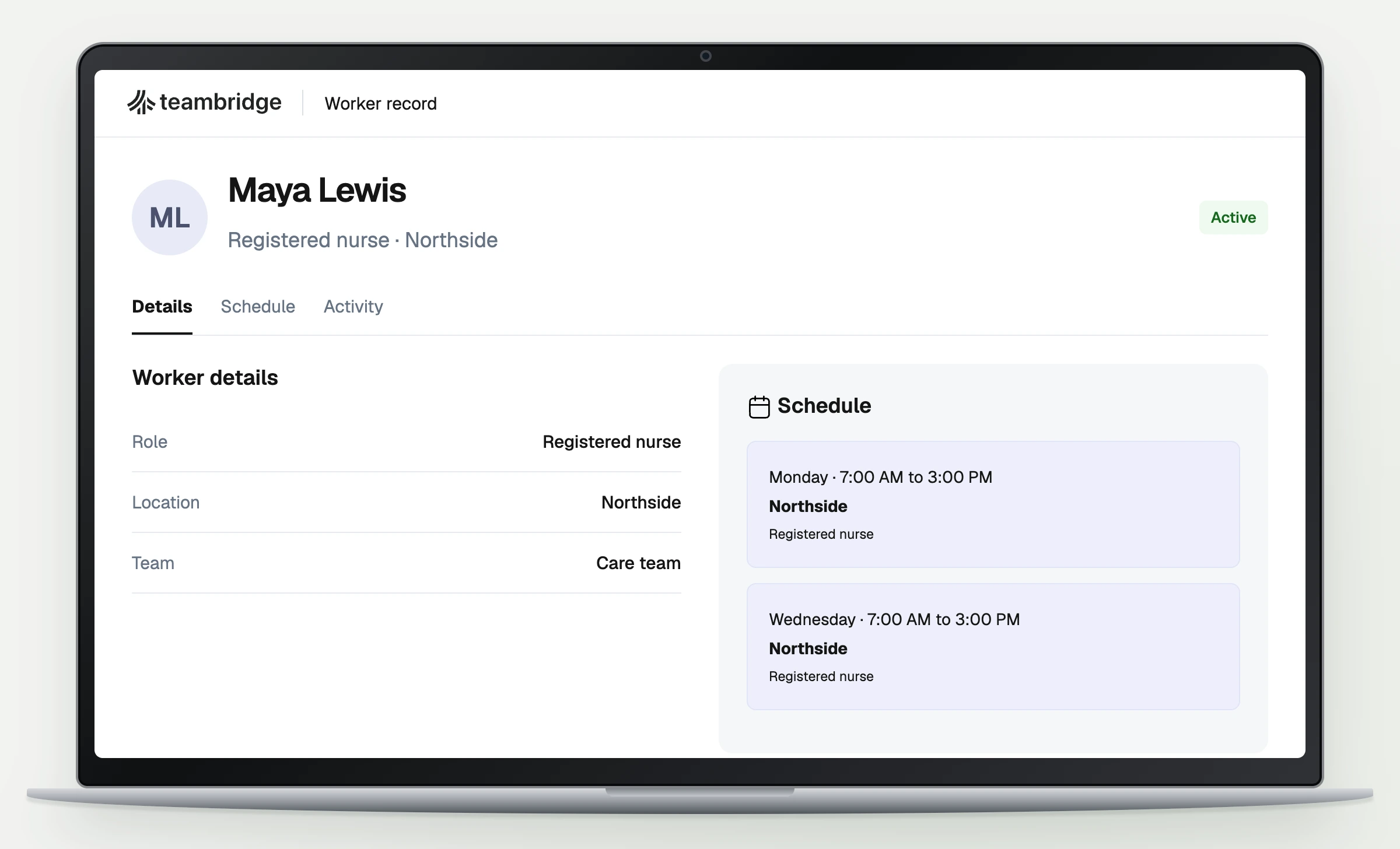
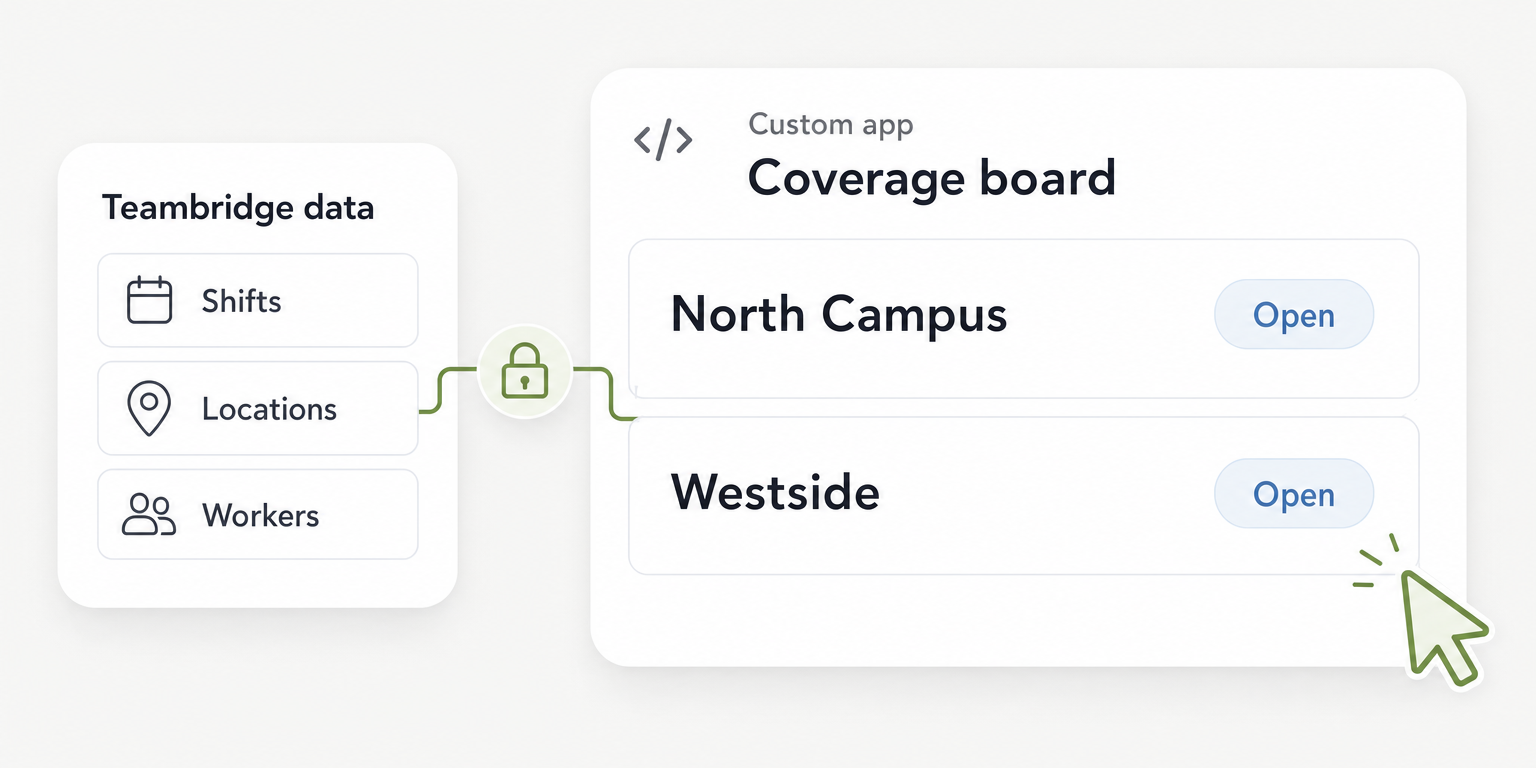
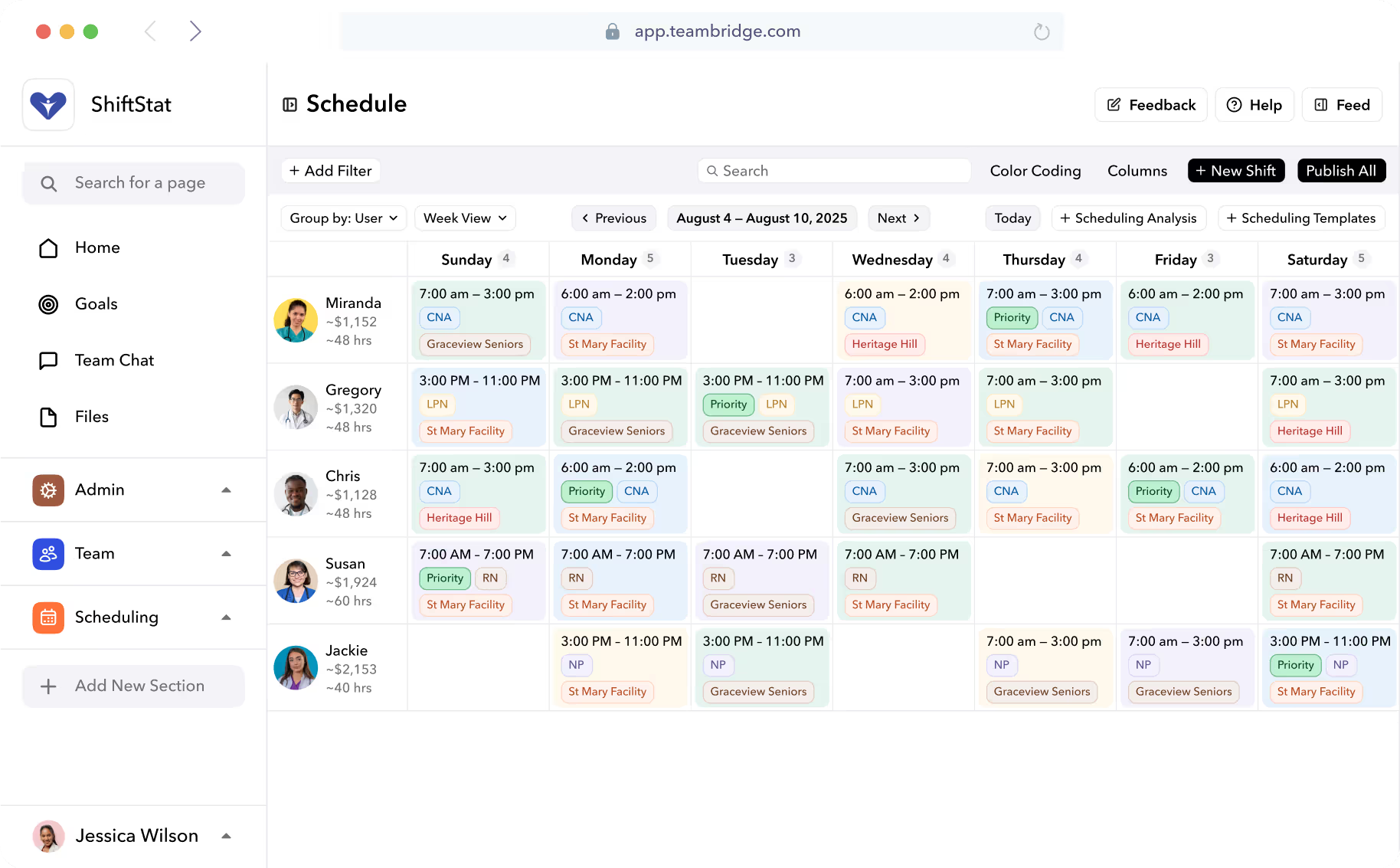
Teambridge’s all in one platform for hourly teams brings scheduling and time tracking into workforce operations tailored to each company. For this evaluation, the relevant question is whether a conversation can carry enough work context for a manager to answer correctly. Keep the demonstration focused on that question.
Use the Teambridge communication page to frame questions about audience configuration, supported channels, and conversation states. Ask the demonstrator to identify the configured worker records and permissions behind the example. Then run the same worker exchange and supervisor transition used for every option.
Do not infer identical reply behavior across channels or universal access to message states. The communication page describes channels where enabled and configured, and delivery, read, acknowledgment, and reply states for supported flows. Require evidence for the specific setup your crews will use.
The product view must come from an approved capture of the shipped product. The communication page’s illustrative conversation artwork is not evidence of the tested experience.
Keep the product boundary explicit: workforce context does not prove shared supervisor access, automatic request resolution, or compliance with your retention policy. The public product pages are not configuration instructions. Obtain product documentation or a recorded demonstration showing required permissions, saved changes, and the exception path before accepting implementation details.
Choose employee chat only after every failed check has an owner
The operations leader should review the completed audit table with IT, HR, and the supervisors who performed the tests. Every row needs an observed result and retrievable evidence. Missing evidence stays unverified, even when the vendor expects the behavior to work.
Unexpected conversation access or an unusable reply path blocks approval. A handover limitation requires an accepted operating procedure and a successful retest. Record who accepts any remaining limitation and who will own the recurring work it creates.
Choose based on the worker’s actual exchange and the incoming supervisor’s ability to continue it. Bring the completed employee chat checklist to a Teambridge demonstration and ask the team to prove the unresolved checks using your intended roles, channels, and handover process.

About the author

Content Writer at Teambridge
Anis Nanai is a content writer at Teambridge, with a focus on workforce management and the realities of running hourly teams. He prioritizes conversations with customers, staying close to the market, and understanding how workforce needs are changing. His writing connects those concerns to practical decisions about scheduling, time tracking, staffing, and automation. He examines product developments through the questions that matter to operators: what does this solve, how would it work for my team, and what evidence supports it?
Company perspective: this author works at Teambridge. Customer outcomes are attributed to their published sources.
View LinkedIn profile