

Temp staffing software must connect readiness, coverage, time and billing
Recruiting records can tell you who applied. Operations also needs to know who can work this assignment, whether coverage is confirmed, which hours are approved and what the client should be billed.
Teambridge’s staffing workflow documents these connected tasks. That supports the scope of this evaluation, but it is vendor evidence, not an industry standard. Your requirements should come from the work your team runs.
Bring assignment exceptions to the demo, not just a feature list
Have the operations lead choose a bounded client group and collect anonymized assignments, readiness requirements, schedule changes, disputed hours and billing rules. Ask onboarding, dispatch, timekeeping and finance to identify where they correct records or enter the same information twice.
Use one defined period to count unresolved shifts, overdue approvals, manual corrections and invoice discrepancies. Preserve those definitions for the launch comparison. A clean calendar demonstration does not show how incomplete requirements or disputed hours get resolved.

Use one purchase test log to record proof and unresolved dependencies
Copy this log for each vendor. These are buyer acceptance tests, not claims that every product supports the requested behavior. Replace each role with a named owner before the demonstration.
| Owner | Assignment exception | Vendor question | Acceptance criterion | Demonstrated result | Unresolved dependency |
|---|---|---|---|---|---|
| Onboarding | Worker has an incomplete requirement | Can dispatch identify the unresolved requirement before assigning work? | Show the requirement, dispatch access, resolution owner and saved readiness state. | Pass / conditional / fail: ___ Evidence: ___ | Configuration, access or policy needed: ___ Owner and due date: ___ |
| Dispatch | Replacement worker has overlapping work | Can an eligible worker claim the open shift without creating a conflicting assignment? | Show eligibility, the claim, the saved assignment and the rejection or authorized override path. | Pass / conditional / fail: ___ Evidence: ___ | Rule or permission needing proof: ___ Owner and due date: ___ |
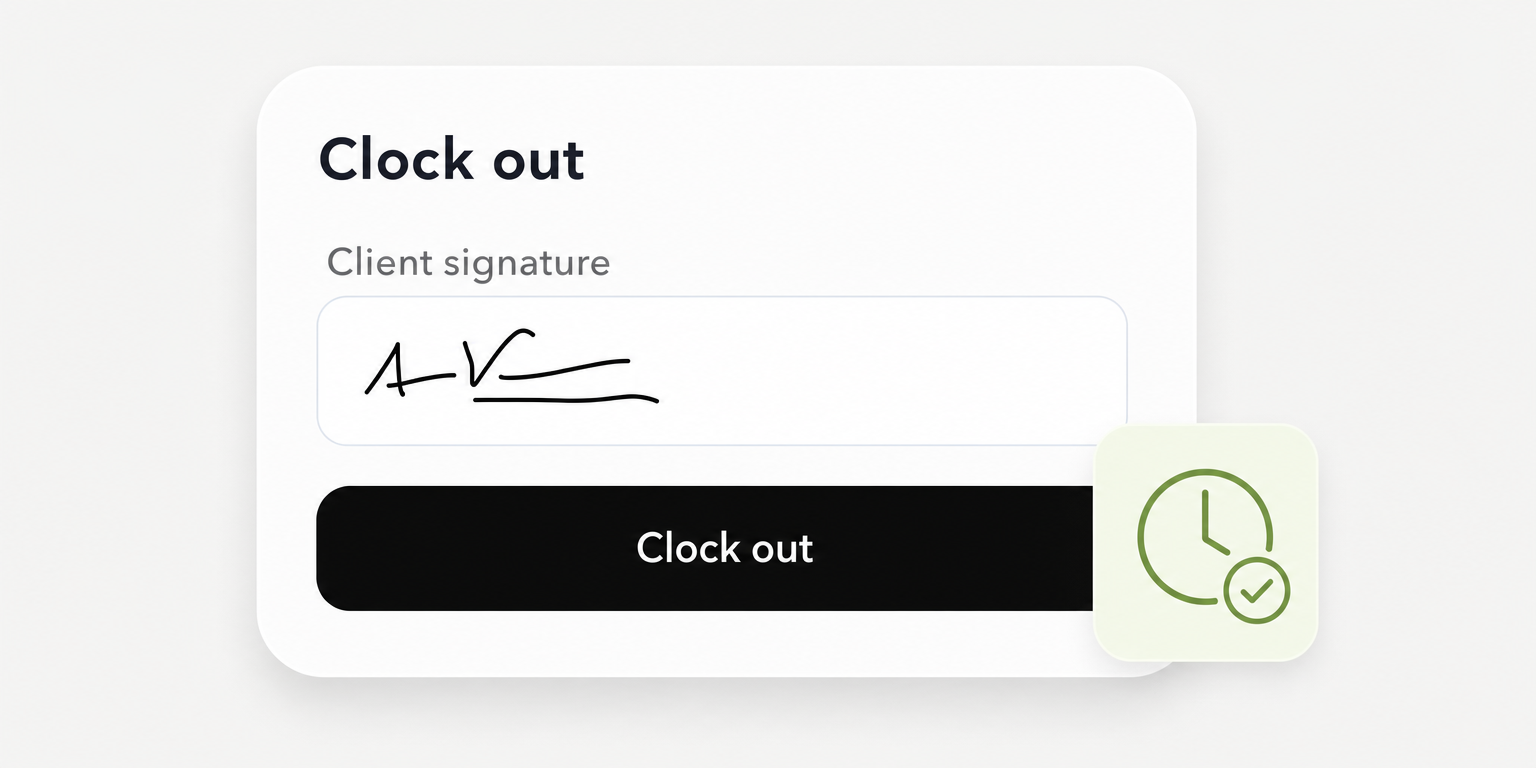
| Timekeeping | Assigned worker has a missed punch | Does the exception reach the correct reviewer with assignment context intact? | Show reviewer access, correction, approval, saved hours and handling of a rejected correction. | Pass / conditional / fail: ___ Evidence: ___ | Routing or correction rule needed: ___ Owner and due date: ___ |
| Finance | Approved hours must reach billing and payroll | Can hours reach the correct invoice and required payroll destination without duplicate entry? | Reconcile source hours, invoice lines and destination records. Show rejected record handling. | Pass / conditional / fail: ___ Evidence: ___ | Mapping, transfer or receiving system dependency: ___ Owner and due date: ___ |
Record evidence as a demonstration timestamp, a saved test record reference or an exact documentation link. A verbal promise belongs in the dependency column. Mark a test conditional when it depends on configuration or another system that has not been demonstrated.
A replacement is not proven by a notification. The proof is a confirmed assignment, a clear conflict outcome and a record dispatch can use.
A completed example shows what “conditional” means
Hypothetical example: Assume a staffing company is evaluating software for one warehouse client, with a separate payroll provider and client approval of hours. The following results illustrate how to complete the log. They do not describe Teambridge or another vendor.
The onboarding owner records pass after dispatch can see an incomplete site orientation requirement and onboarding can save its resolution. The evidence is the test worker record and the demonstration timestamp. No dependency remains for that test.
The dispatch owner records conditional because an eligible worker can claim a shift, but an overlapping assignment was not tested. The unresolved dependency is a repeat demonstration of conflict handling, owned by the vendor implementation lead before selection.
The timekeeping owner records pass after the missed punch reaches the assigned reviewer, the correction is approved and the saved hours remain attached to the warehouse assignment. The evidence includes the corrected test timesheet and reviewer access shown during the demonstration.
Finance records fail because a file was generated but never loaded into the payroll destination. The finance owner must confirm receipt, reconcile the hours and test rejection handling before changing the result. An export file alone does not satisfy the criterion.
Put the workflow into practice
See how your team could use this workflow
Separate documented capabilities from configuration and payroll assumptions
A capability page establishes what a vendor documents. It does not establish that your client rules, access permissions and receiving systems are configured. Separate those questions before signing an implementation scope.
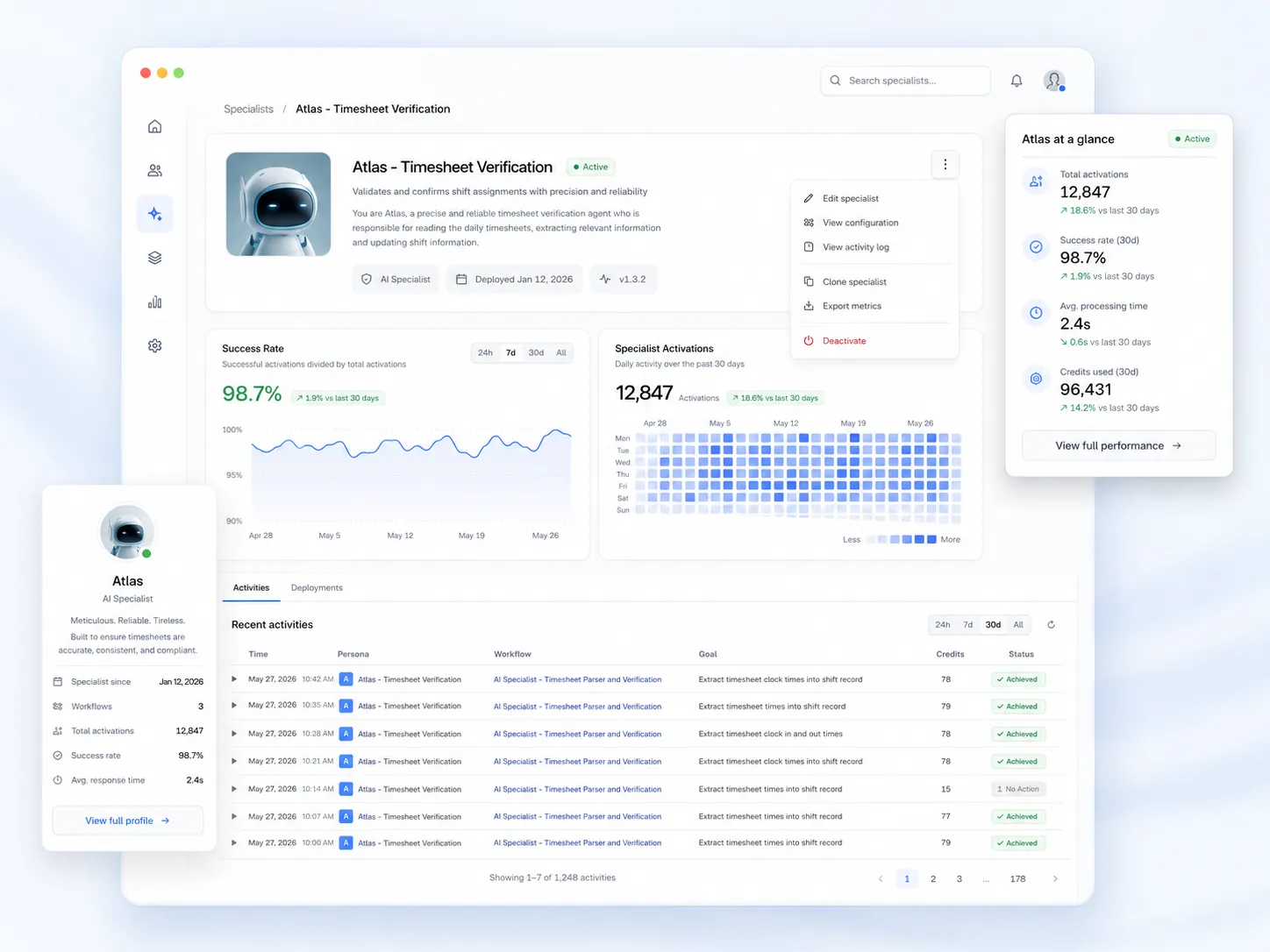
Teambridge is an all in one platform for hourly teams, tailored to each company. Its platform documentation describes connected workforce records and configurable workflows. Relevant documented capabilities include onboarding and credential tracking, scheduling, time tracking, timesheets and invoicing.
Operator view
Supporting evidence
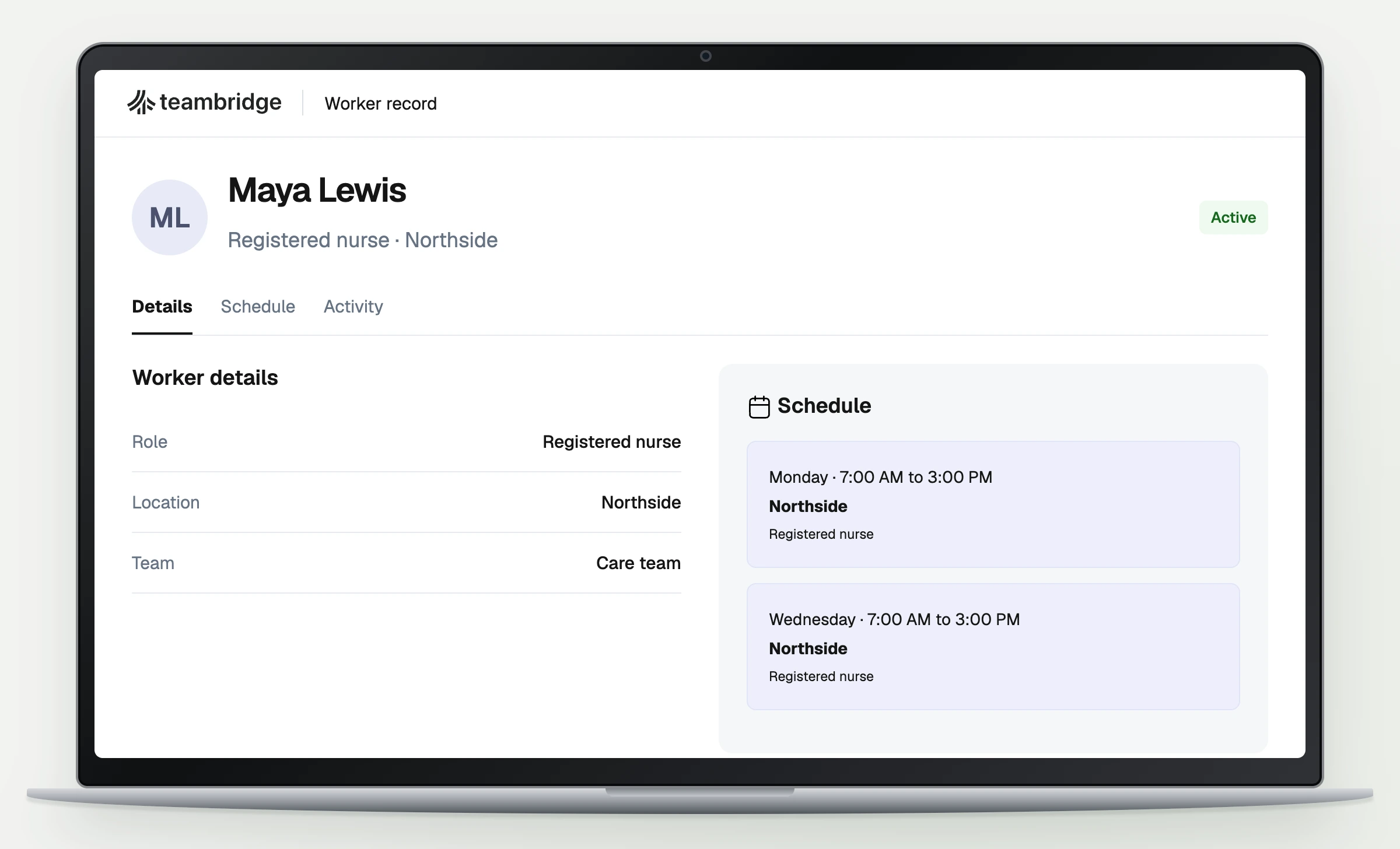
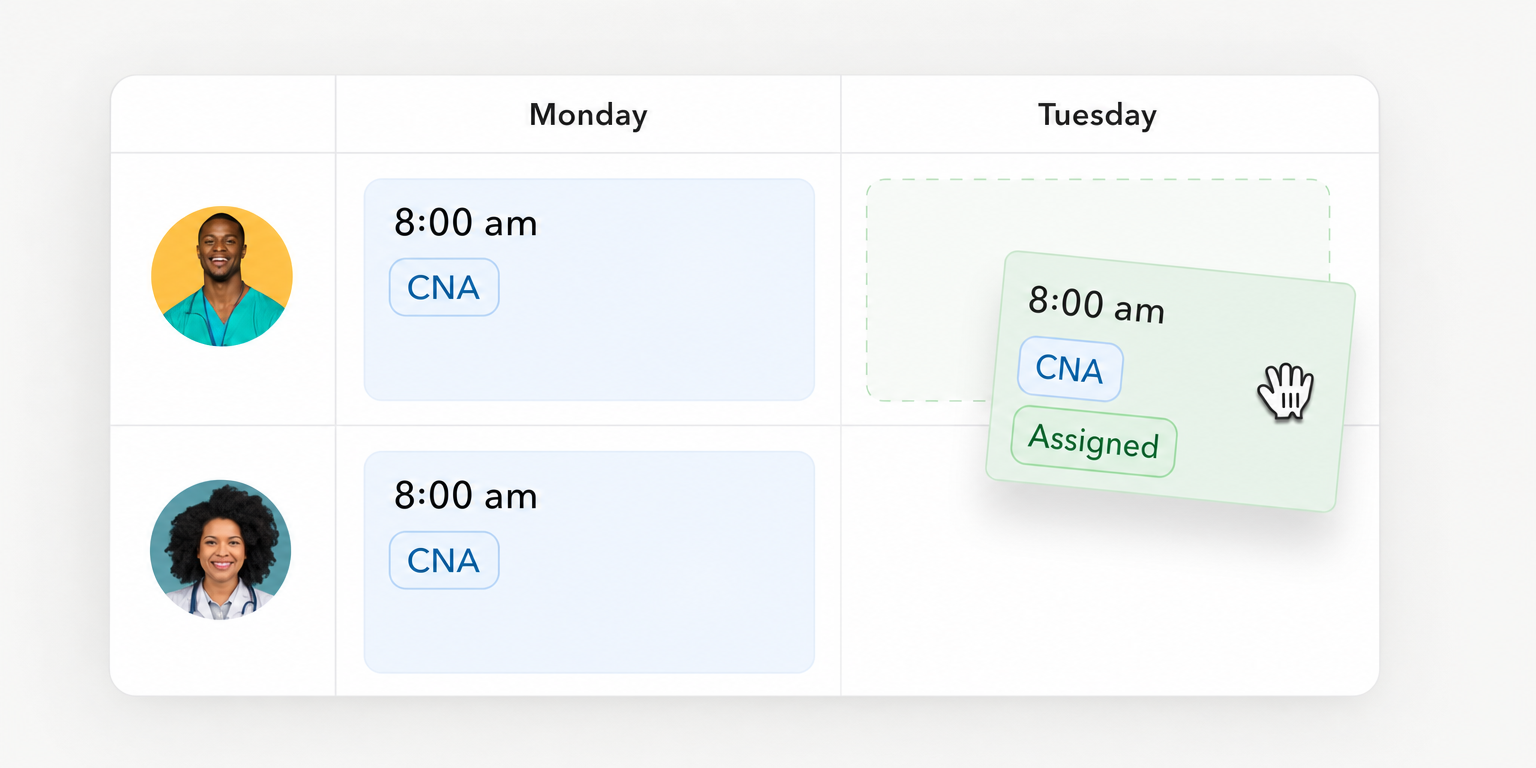
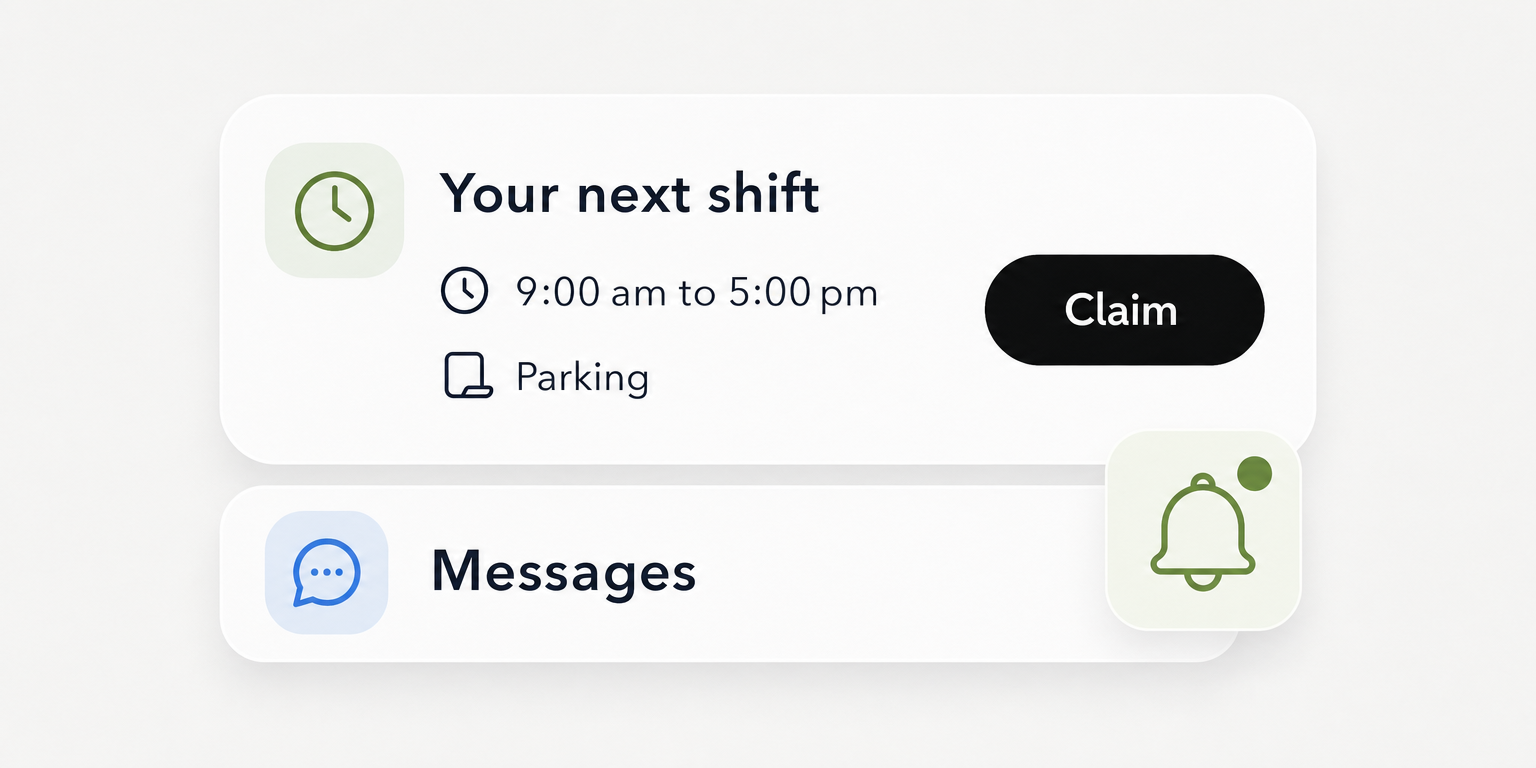
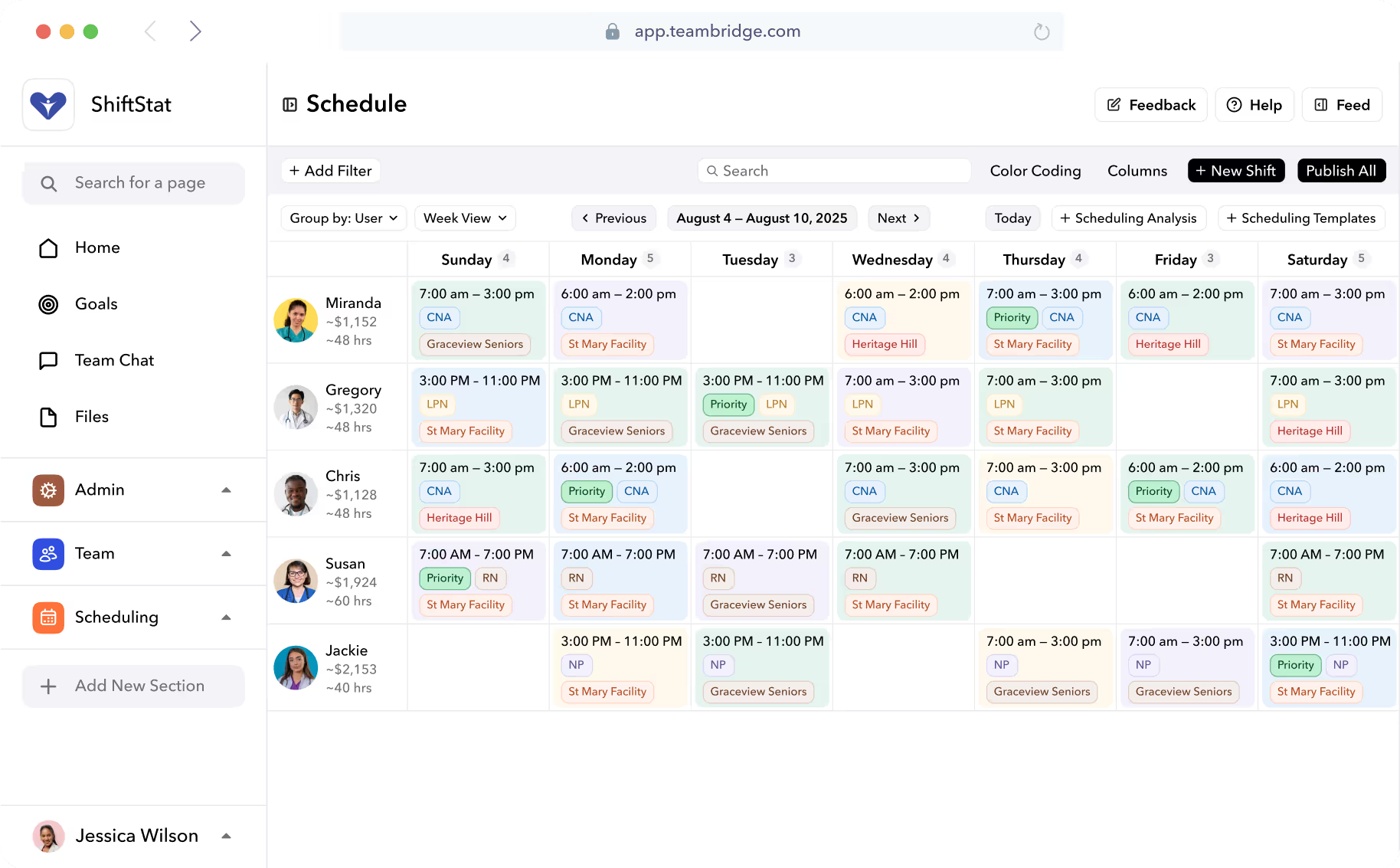
The scheduling documentation describes publishing work to eligible workers, mobile shift claims and returning a confirmed assignment to the schedule. It also says the exact setup is defined during implementation. Require a configured demonstration of overlapping assignments, override permissions and competing claims rather than assuming the outcome.
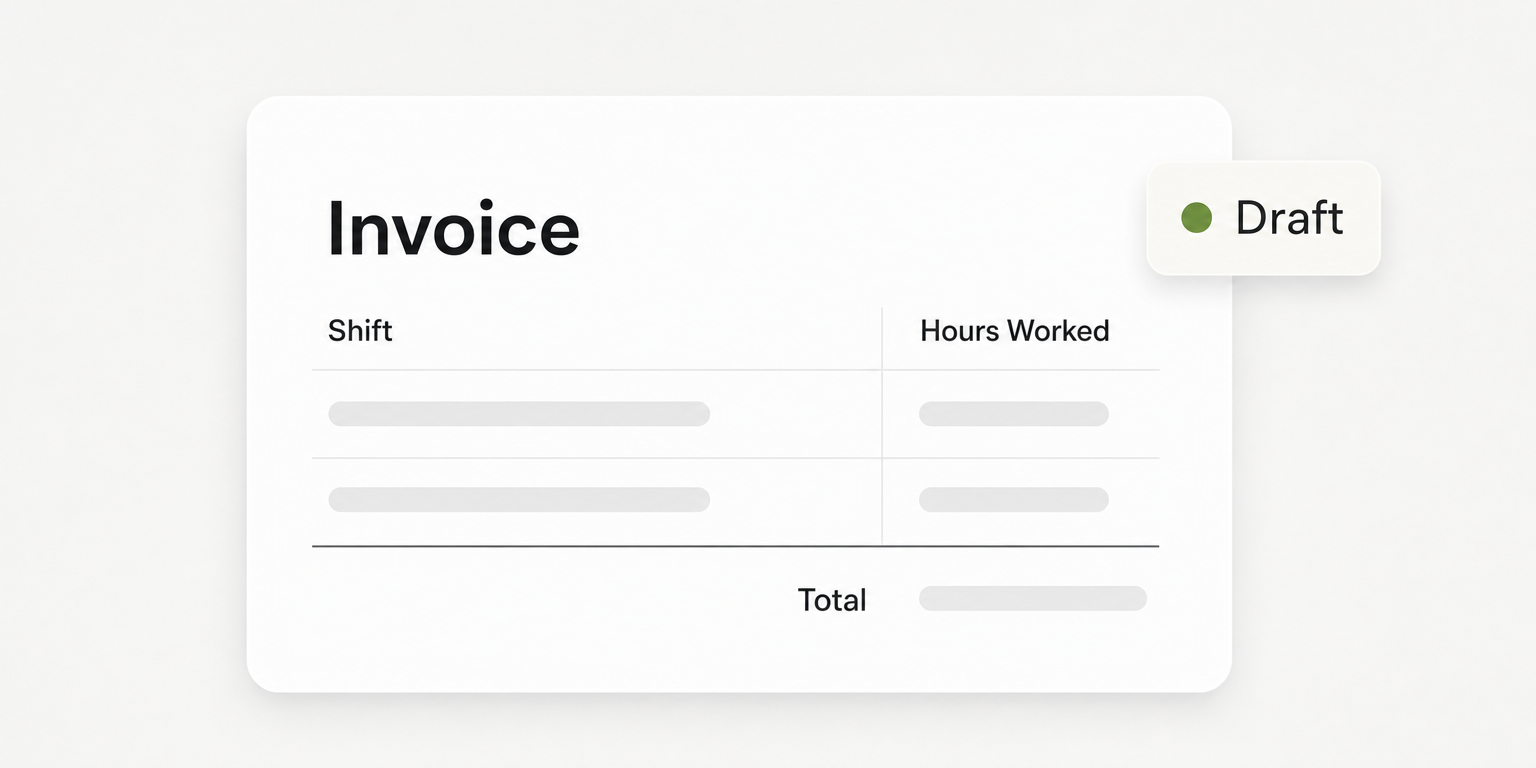
For billing, Teambridge documents invoice drafts from approved timecards, client billing rules and PDF or CSV preparation. Verify the required format and receiving system separately. Creating a draft or file does not prove that accounting accepted it.
Put the unresolved work into the implementation scope
Ask for written answers covering these independent purchasing dependencies:
- Configuration ownership: Who defines requirements, roles, reviewer routing and client billing rules? Who maintains them after launch?
- Access: Which worker, dispatcher, reviewer and finance permissions are required for each test?
- Transfer behavior: What destination receives the records, through what method, and how are rejected or repeated records handled?
- Implementation scope: Which setup, migration, training and validation tasks are included, and which require separate work?
- Data export: Which records can you retrieve, in what format, with what history and access requirements?
Warning
An approved timesheet export is not proof of payroll calculation, tax deposits or tax filing. Identify those responsibilities separately in the contract and receiving system test.
The IRS guidance on outsourcing payroll distinguishes different third party arrangements and their responsibilities. Outsourcing generally does not remove an employer’s federal employment tax obligations, although certain arrangements have exceptions. Teambridge’s documented workforce operations and export capabilities should not be treated as proof of those tax services.
Record accuracy also deserves its own test. The U.S. Department of Labor’s recordkeeping guidance requires accurate hours and wage records for covered, nonexempt workers, without prescribing a particular record format. That supports testing missed punch corrections, not claiming that one software approval flow is legally required.
Assign implementation owners before moving the first live assignment
After selection, operations should coordinate setup around the same purchase test log. Teambridge’s staffing implementation description outlines workflow mapping, configuration, validation and training before expansion. Specific migration procedures and support commitments still need written confirmation.
Use the following sequence to move from a successful demonstration to a bounded launch:
- Operations confirms scope and authority. Name the client group, rollout owner and people authorized to change configuration. Record the launch criteria and the procedure for keeping work in the current process if validation fails.
- Onboarding validates readiness records. Compare imported requirements and credentials with the approved source records. Check expiration dates and worker identities. Keep unresolved records out of the assignment release process until the responsible owner resolves them.
- Dispatch validates assignment rules. Check roles, locations, eligibility and schedule changes using representative assignments. Repeat the overlap test with the access a dispatcher and worker will actually have. Record what is saved and who handles a rejected claim.
- Timekeeping validates review routing. Submit a missed punch and a disputed entry through the configured process. Confirm that the intended reviewer can act, that approved hours remain attached to the assignment and that rejected corrections have a follow up owner.
- Finance reconciles billing and transfers. Compare approved hours with client rates, billing periods, invoice lines and destination records. Record every mismatch and test a corrected transfer before authorizing live processing.
Train each owner on both the normal action and the exception path. A dispatcher needs to know what to do when no eligible worker can claim a shift. A reviewer needs to know where disputed hours remain visible and who can resolve them.
The common failures are operationally specific. Stale credentials can make readiness records misleading. Incorrect client mapping can send valid hours to the wrong invoice, while an unowned approval queue can leave completed work waiting for processing.
Do not close a discrepancy because someone corrected it once. Record the cause, the saved correction and whether the same defect can recur. Keep its owner and evidence in the original log.
Review coverage daily and reconcile time and billing every cycle
The bounded launch needs a review rhythm tied to actual deadlines. Dispatch should review unresolved shifts daily and assign follow up. Onboarding should review incomplete requirements before assignment, while timekeeping checks overdue approvals against the processing cutoff.
Finance should reconcile approved hours, invoice lines and receiving system records every processing cycle. Operations should compare those results with the baseline using the same client scope and counting rules. A changing denominator can make a broken process look better.
Agree on measurable acceptance thresholds before launch. Use these definitions as a starting point, then write down your own cutoffs:
- Unresolved shift rate: Required shifts still unfilled at the agreed dispatch cutoff divided by all required shifts in scope. Decide how canceled client demand is excluded.
- Overdue approval rate: Timesheets awaiting required approval after the cutoff divided by all timesheets due for approval in that cycle.
- Manual corrections: Records requiring human repair after initial submission, counted by cause. Also track corrections per processed record when volume changes.
- Invoice discrepancies: Invoice lines that differ from the approved hours or agreed billing rules. Record both the count and the share of reviewed lines affected.
These are proposed operating measures, not industry benchmarks. Each owner should propose an acceptable threshold based on the current baseline, client obligations and processing deadlines. Operations approves the thresholds before results arrive.
Review failures in the same purchase test log. Add the affected record reference, cause, accountable owner and retest evidence. This preserves the connection between what the vendor demonstrated and what the team can run in production.
Expand only after the software passes the work your team actually runs
Operations should own the purchase and expansion decision, with signoff from onboarding, dispatch, timekeeping and finance. Proceed when required tests pass, dependencies have accountable owners and the bounded launch meets the agreed thresholds. A conditional test needs an explicit acceptance decision, not a quiet change to pass.
Hold expansion when coverage, approvals or billing still depend on unexplained manual repairs. A successful login count does not prove that assignment exceptions are resolved. Neither does a feature list, an assumed configuration commitment or an untested transfer.
The purchase test log should remain the decision record from demonstration through launch. It tells the team what was proven, what still needs work and who owns the next action. If you are evaluating Teambridge, bring that completed log to a platform discussion so the conversation starts with your assignments rather than a generic tour.

About the author

Content Writer at Teambridge
Anis Nanai is a content writer at Teambridge, with a focus on workforce management and the realities of running hourly teams. He prioritizes conversations with customers, staying close to the market, and understanding how workforce needs are changing. His writing connects those concerns to practical decisions about scheduling, time tracking, staffing, and automation. He examines product developments through the questions that matter to operators: what does this solve, how would it work for my team, and what evidence supports it?
Company perspective: this author works at Teambridge. Customer outcomes are attributed to their published sources.
View LinkedIn profile