

This playbook walks through how to roll out multi-client, credential-aware scheduling for an agency: the data audit that has to happen first, the pilot sequence, a build-versus-buy decision table, a worked fill-rate scenario with real arithmetic, and the operating cadence that keeps the system honest after go-live.
Why Retail-Born Scheduling Tools Break Under Agency Workloads
Tools like When I Work are priced and built for single-location hourly teams. Per Business.com's review, plans start at $2.50 per user per month for a single location and $5 per user per month for multiple locations, covering scheduling, time tracking, and team messaging. That is a fair price for a restaurant or a small retailer. It is the wrong shape for an agency.
The failure modes schedulers actually feel are structural, not cosmetic:
- Stale availability. A worker updates availability once during onboarding, then never again. The system keeps suggesting them for shifts they cannot work, and the coordinator stops trusting the suggestions.
- Double-booked temps. The same worker appears in two client pools. The tool sees one person per location and lets both sites claim them.
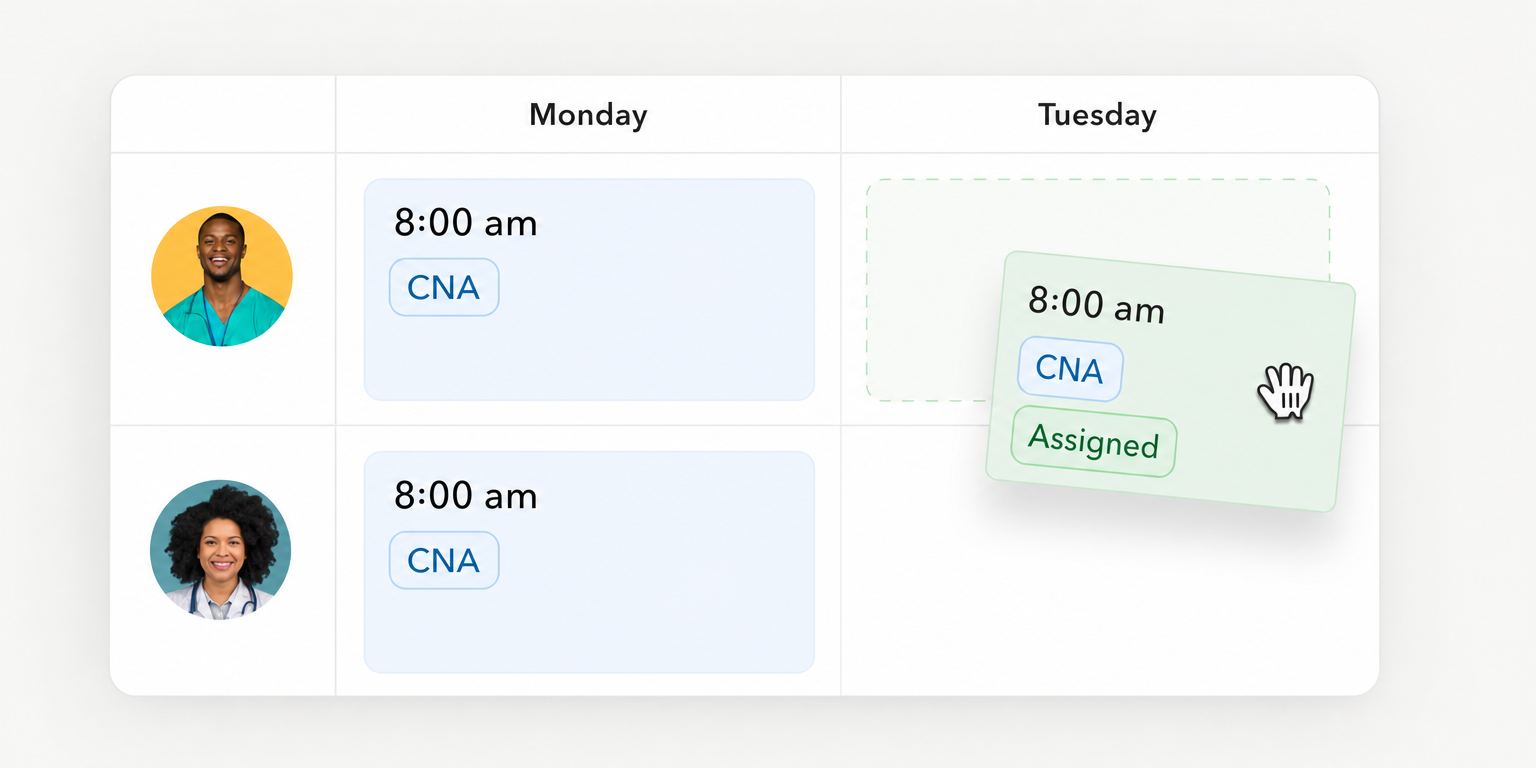
- No credential gating. A shift requires a forklift certification or an active CNA license, but the schedule cannot filter by certification, so the coordinator eyeballs every assignment against a separate spreadsheet.
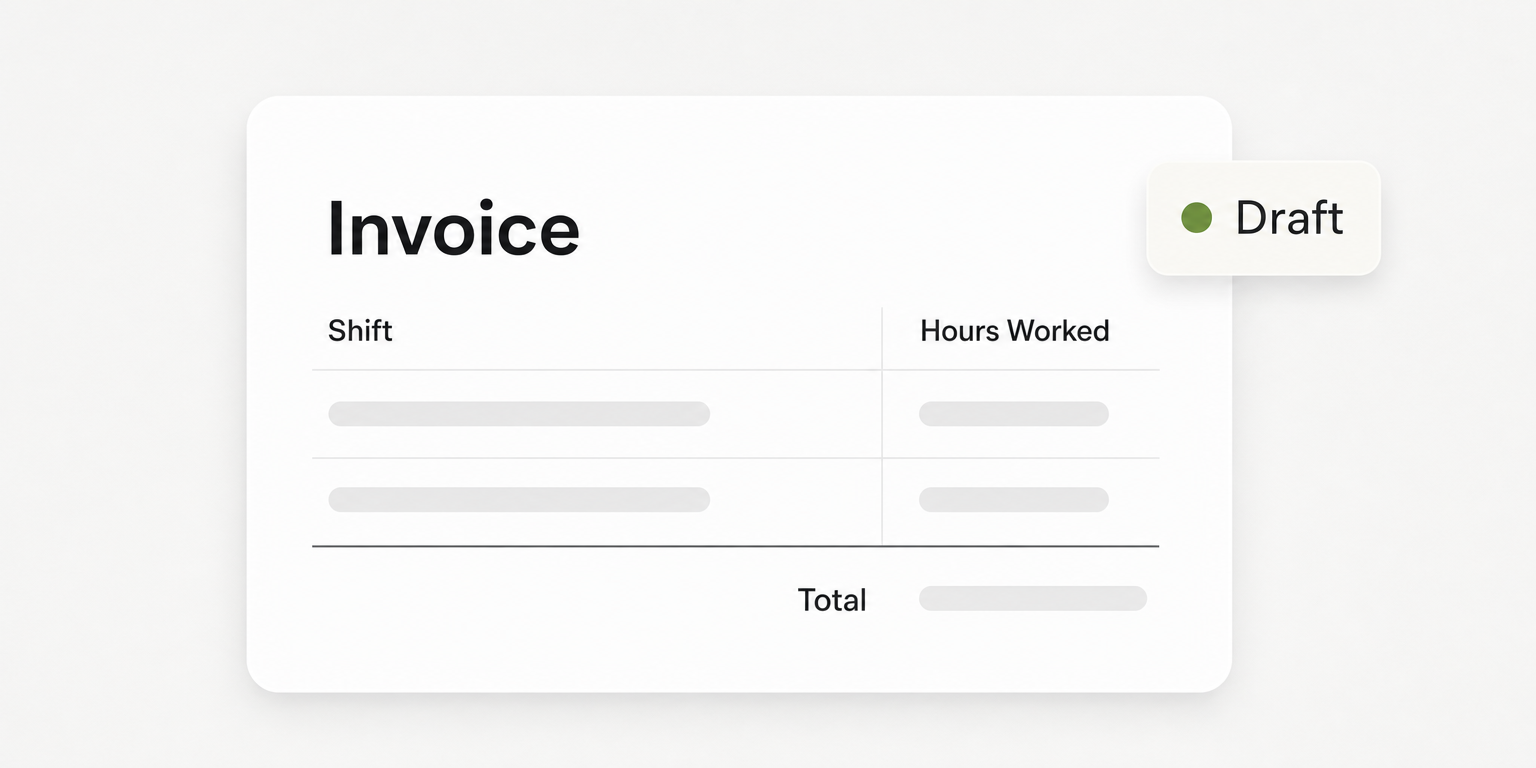
- Disconnect between schedule and time. Hours get captured in one system and exported to payroll in another, which is where billing errors and overtime surprises come from.
None of this is a knock on retail tools. It is a category mismatch. An agency's schedule is a revenue engine: every unfilled shift is margin that goes to a competitor. As Beeple's fill-rate analysis points out, most agencies never measure those leaks because the data is scattered across texts, spreadsheets, and one planner's memory.
Important
If your current tool cannot answer "which confirmed workers meet this site's credential requirements right now," every other feature is decoration. Credential gating is the load-bearing wall for agency scheduling.
The Agency Scheduling Readiness Audit: Data You Must Clean First
The single most common rollout failure is migrating dirty data. Auto-fill suggestions are only as good as the records behind them, and if you import expired certifications and six-month-old availability, the system will confidently recommend the wrong people from day one. Trust evaporates, coordinators go back to texting, and the rollout dies quietly.
Assign this audit to your ops lead, not IT. The person who knows which client sites require steel-toed boots and which workers no-show on Fridays is the one who should own the data. Timebox it to one week.
Audit checklist:
- Worker records. Deactivate anyone who has not worked in 90 days. Merge duplicate profiles from the spreadsheet era.
- Availability freshness dates. Every availability entry gets a timestamp. Anything older than 30 days gets re-collected through the mobile app before go-live.
- Credential and expiry fields. Certifications need expiry dates, not just yes/no flags. A forklift cert without an expiry date will silently disqualify a worker later.
- Client site requirements. Document per-site rules: required certs, dress codes, shift lengths, break rules, supervisor contacts.
- Pay-rate rules. Capture differentials by client, shift type, and weekend premiums, so time capture later feeds billing without manual adjustments.
Exit criteria for the week: 100 percent of active workers have current availability, and 100 percent of credential fields have expiry dates. If you cannot hit both, extend the audit rather than migrating anyway.
Ready to move?
Ready to see Teambridge in action?
Step-by-Step Rollout: Pilot One Client, Then Scale by Vertical
Do not migrate the whole book of business at once. Run a pilot, break things in a controlled environment, then expand.
- Pick a low-risk client with predictable volume. Owner: ops lead. Choose a site with steady weekly demand, a cooperative client contact, and simple credential requirements. Failure mode: picking your biggest client because the ROI story is better, then discovering edge cases in week two with your most visible account. Recovery: pause the pilot, keep the client on the old process, and fix the configuration before re-attempting.
- Configure site-level requirements and shift templates. Owner: implementation lead. Encode the credential rules, shift patterns, and pay differentials you documented in the audit. Failure mode: hard-coding today's schedule instead of reusable templates, which makes week three a manual rebuild.
- Onboard that client's worker pool and push availability collection through the mobile app. Owner: field supervisor. Workers update availability and upload credentials in the app, not over text. Failure mode: letting coordinators enter availability on workers' behalf, which recreates the stale-data problem inside the new system.
- Run two full schedule cycles. Owner: ops lead. Build the schedule with auto-fill, but have a coordinator review every suggestion against the old spreadsheet in parallel. This parallel run is how you catch configuration errors before they cost a client.
- Review exceptions. Owner: ops lead, 45 minutes weekly. Count unfilled shifts, declined offers, no-confirmations, and credential blocks. Every recurring exception is either a data problem or a configuration problem, and both are fixable.
- Expand to the next vertical. Owner: agency owner or GM. Move to the next client cluster only after the pilot holds a target fill rate for four consecutive weeks. Group expansions by vertical (light industrial, healthcare, hospitality) because credential rules and worker pools differ enough that each vertical deserves its own configuration pass.
Products discussed
Staffing and Scheduling Software: An Implementation Playbook for Agencies tools mentioned
Official marks identify the products materially discussed in this section.
Decision Table: Build, Buy a Point Tool, or Adopt an Operations Platform
Three realistic paths exist for agency scheduling. Logo subjects for the named products below: When I Work @ wheniwork.com, Teambridge @ teambridge.com.
| Criterion | Spreadsheets plus texting | Point scheduling tool (e.g., When I Work) | Connected workforce platform (e.g., Teambridge) |
|---|---|---|---|
| Multi-client sites | Manual tabs, error-prone | Supported on the $5/user tier | Native; sites carry their own requirements |
| Credential gating per shift | Coordinator memory plus a separate sheet | Limited or manual | Enforced at assignment; expired certs block the offer |
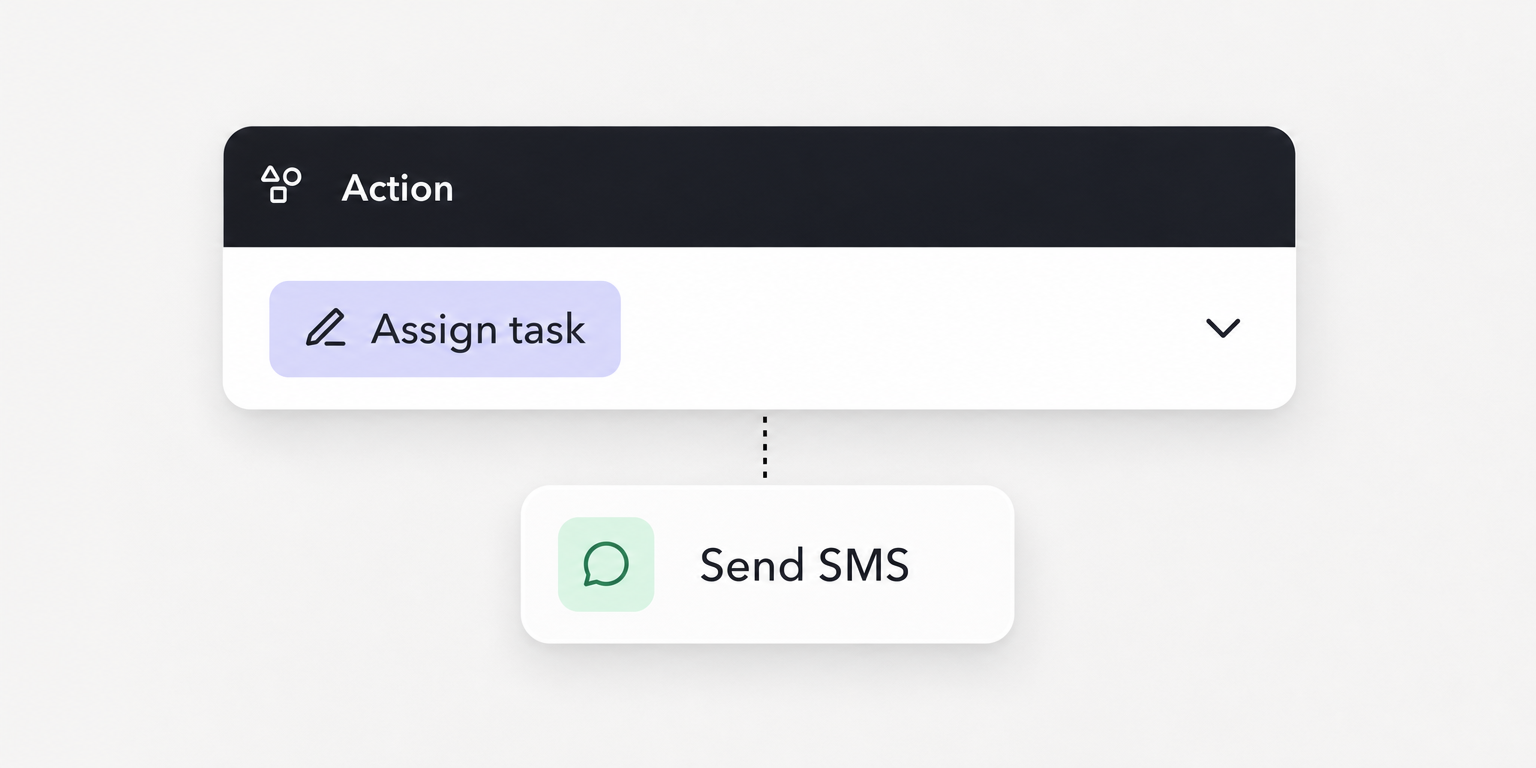
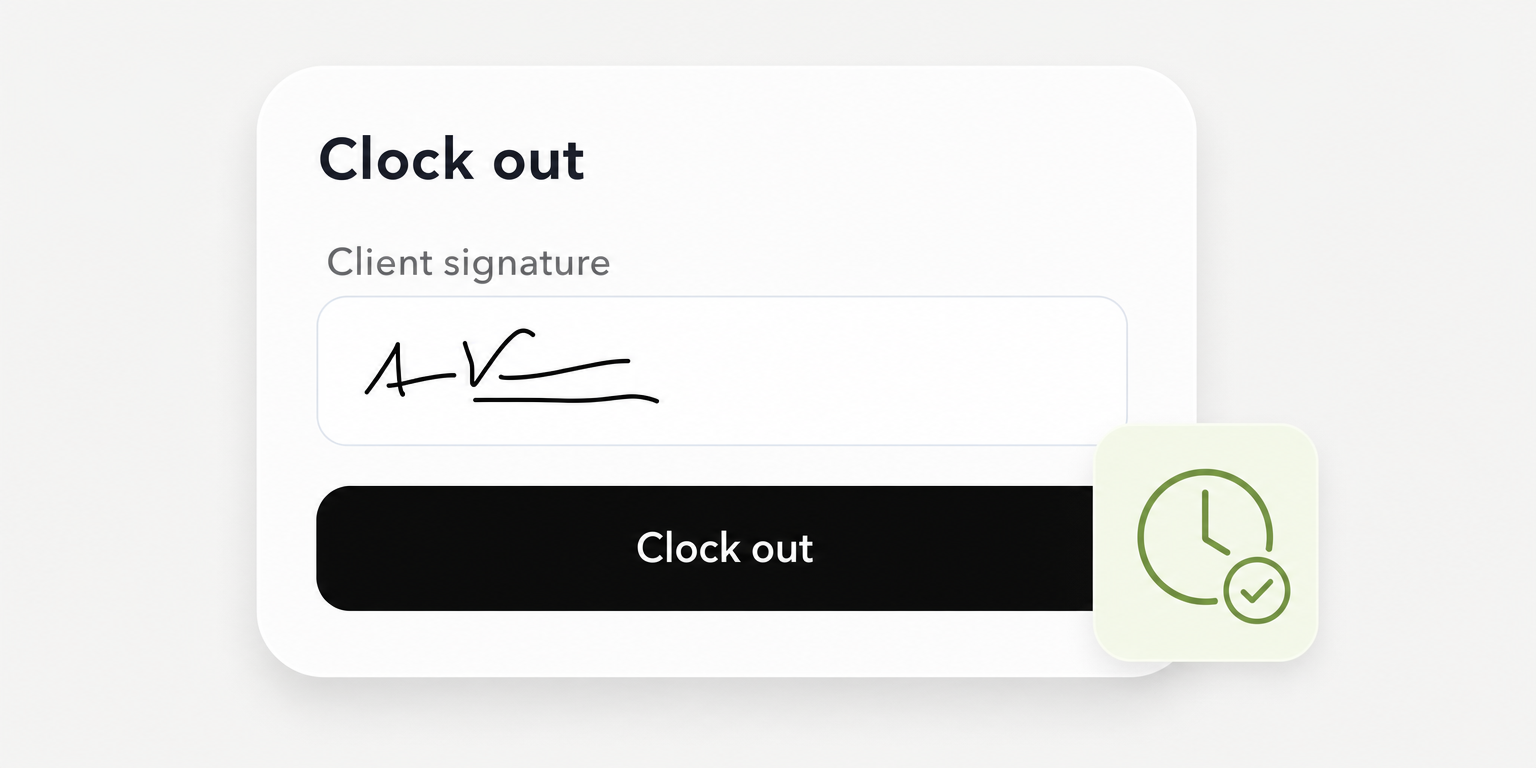
| Time capture feeds the same schedule | No | Time clock exists but lives beside the schedule | Same system: schedule, clock-in, hours, and billing connect |
| Cost at 200 workers | "Free," plus coordinator hours | Roughly $1,000/month at $5/user | Platform pricing; evaluate against coordinator hours saved |
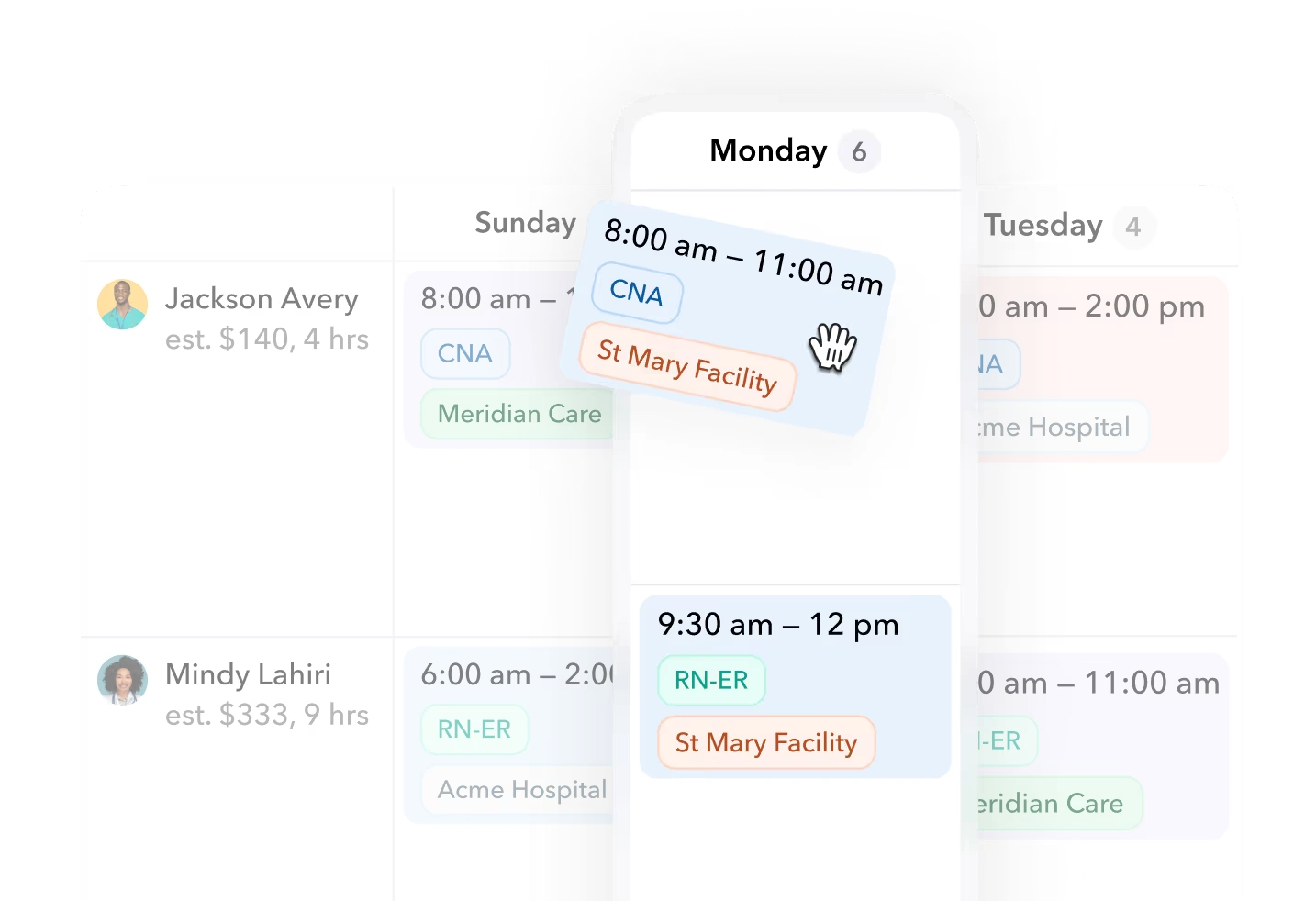
| Worker self-service | Text chains | Good for single-team swaps | Availability, credentials, claims, and confirmations in one app |
| Fill-rate visibility | None | Per-location reporting | Fill rate and time-to-fill by client and site |
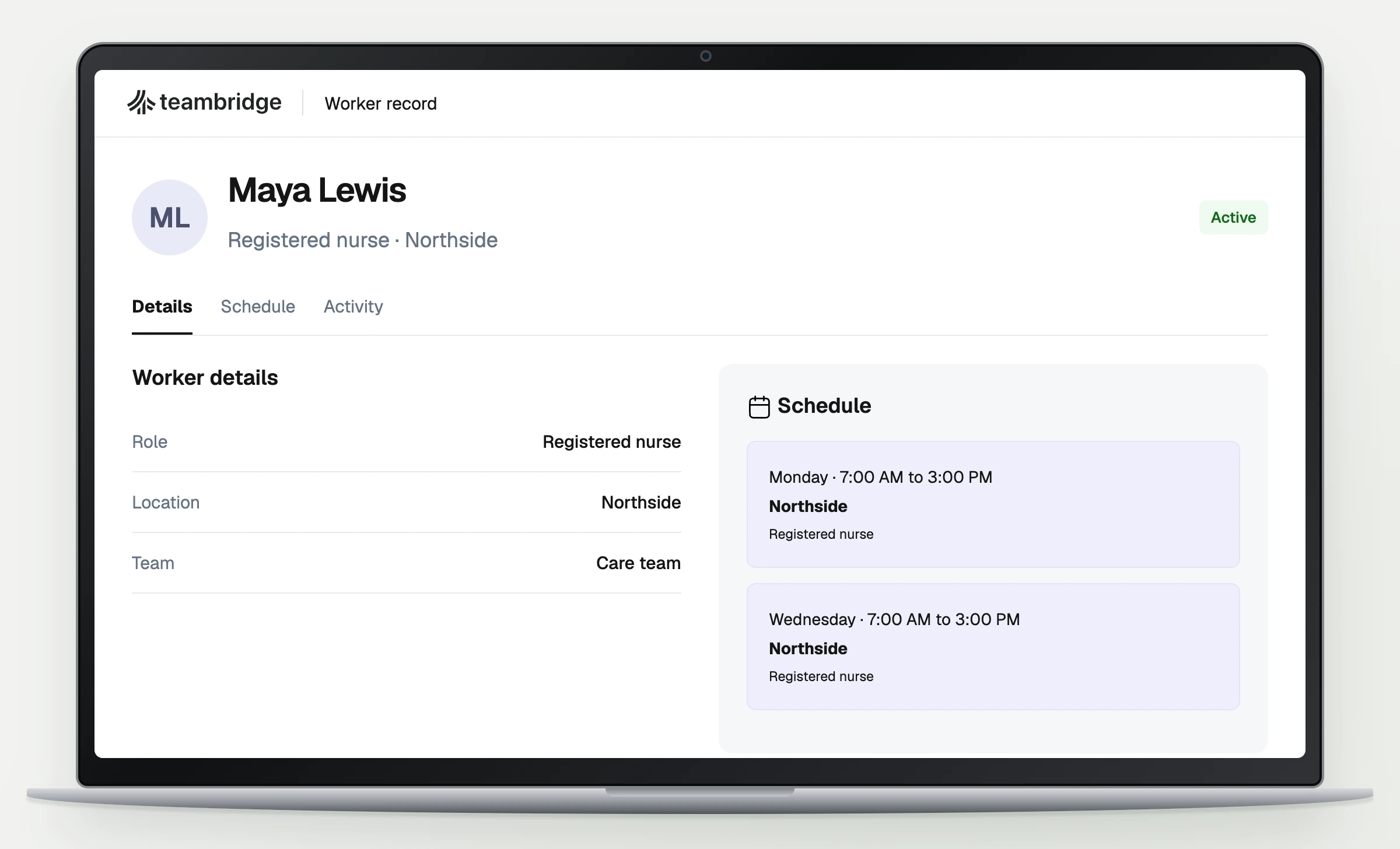
Be honest about boundaries. If you run a single-client agency with 15 workers and no credential requirements, a point tool is genuinely sufficient and cheaper. The platform path pays off when you juggle multiple clients, credential rules, and enough volume that coordinator hours become your real constraint. Teambridge is a workforce operations platform, not an ATS or payroll processor of record, so it replaces the scheduling-to-time-to-communication stack rather than your entire back office.
Worked Scenario: Filling a 40-Shift Light Industrial Week
This scenario is hypothetical. Assumptions are stated so you can rerun the math against your own operation: a light industrial agency fills 40 shifts per week across three client sites, five workers in the pool have forklift certifications expiring within 30 days, and an average week includes two same-day call-outs. Coordinator time is valued at $30 per hour fully loaded.
Hypothetical worked example
Manual phone tree versus credential-filtered broadcast
Same 40-shift week, three sites, two call-outs. Assumptions: $30/hour coordinator cost, 90 workers in pool, 5 certs expiring within 30 days.
- 01Manual: coordinator texts or calls workers one by one, roughly 4 to 5 minutes per shift across 40 shifts, about 3 hours total
- 02Manual: two call-outs trigger a second phone tree mid-shift; one shift goes unfilled because the backup worker's forklift cert lapsed unnoticed
- 03Automated: system filters the pool by site requirements and active credentials, broadcasts open shifts, workers claim first-come in the app
- 04Automated: confirmations arrive without chasing; the two call-outs rebroadcast only to credential-eligible workers within minutes
The arithmetic that matters: two unfilled shifts per week at a typical light industrial margin, compounded over 52 weeks, is a five-figure revenue leak. The coordinator time difference, roughly 2.5 hours per week, is real but secondary. The point of automation is not a smaller phone bill. It is the credential check happening before the offer goes out instead of after the worker shows up.
Operating Cadence: The Daily, Weekly, and Monthly Rhythm That Keeps Schedules Full
Software does not keep schedules full. A cadence does. Assign each ritual an owner and a hard time limit, because rituals without time limits are the first thing busy weeks kill.
- Daily exception review, 15 minutes, ops lead. Unfilled shifts for tomorrow, offers with no confirmation after four hours, and any credential blocks that surfaced overnight. Fifteen minutes, standing, done by 8:30 a.m.
- Weekly availability refresh, 30 minutes, field supervisors. Push an in-app availability prompt to every worker who has not updated in 14 days. Stale availability is the slow poison of auto-fill, and this is the antidote.
- Monthly credential sweep plus fill-rate review, 60 minutes, agency owner. Pull every credential expiring in the next 60 days and trigger renewal outreach. Then review fill rate and time-to-fill by client, and flag any account trending below target two months running.
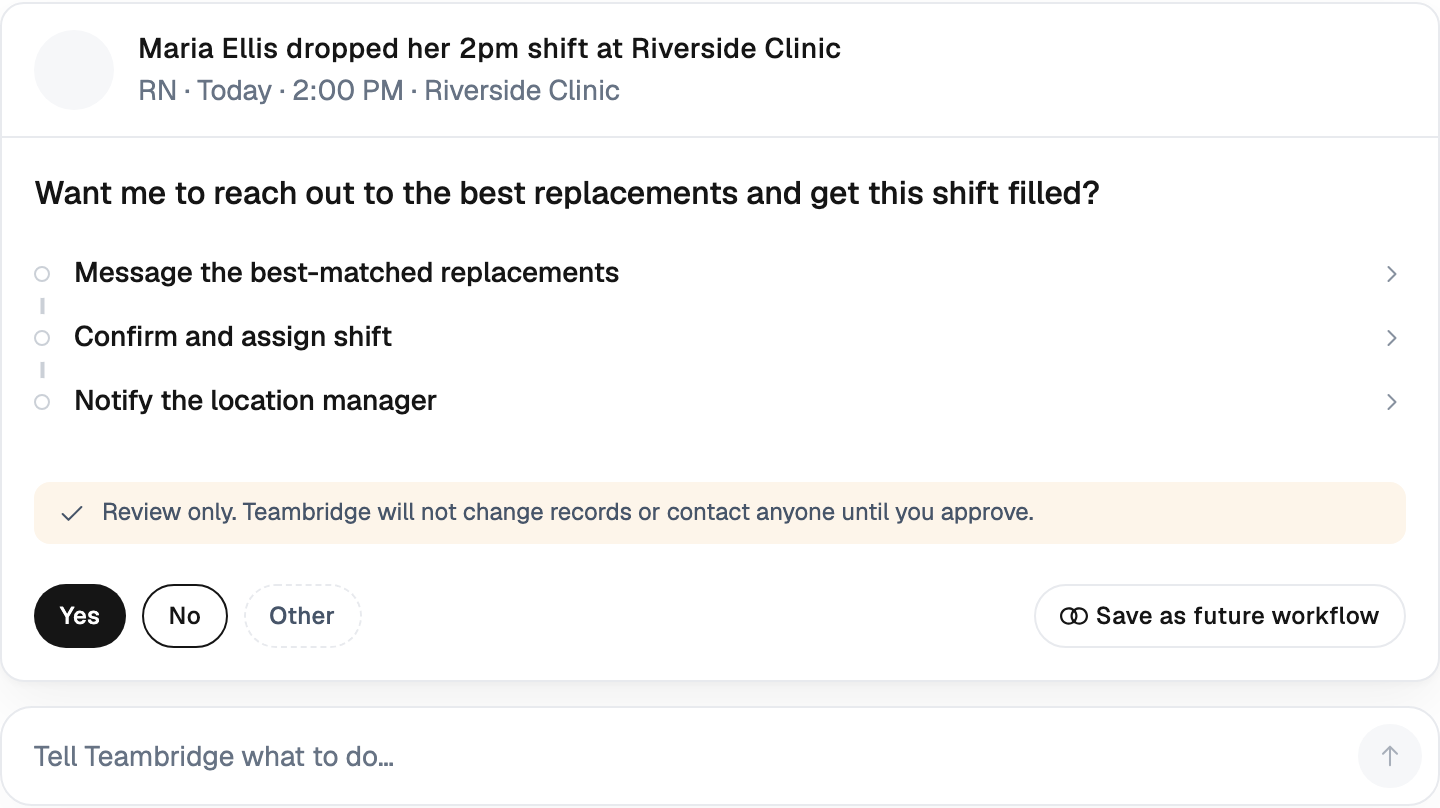
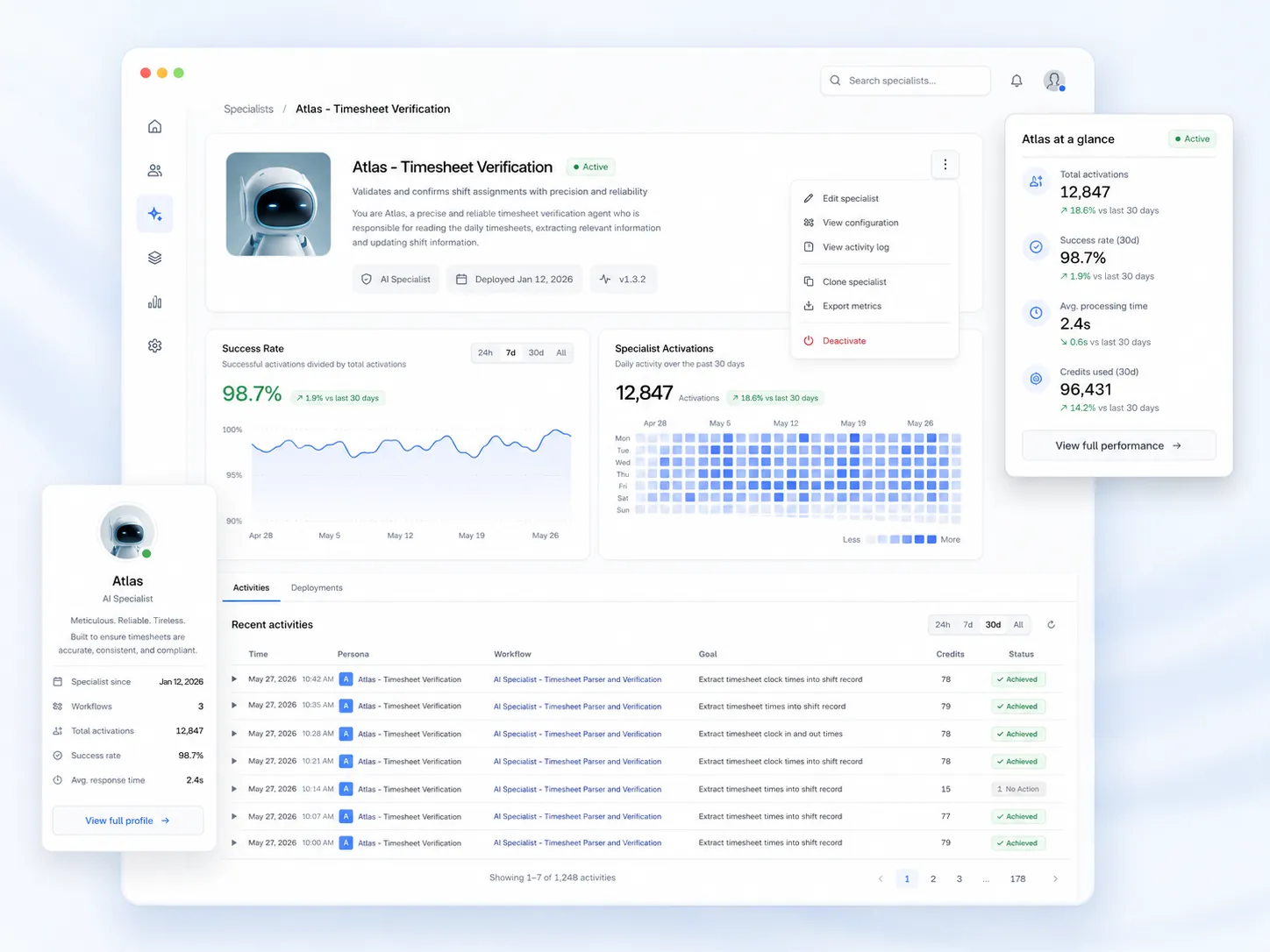
This is where a connected system earns its keep. On the Teambridge platform, scheduling, time tracking, and communication live in one place, so the daily exception review is one screen instead of three exports. And Teambridge's AI Specialists run in the background chasing confirmations and flagging expiring credentials, which compresses the daily ritual from hunting to approving.
Measuring Success: Fill Rate, Time-to-Fill, and Scheduler Hours Saved
Define three metrics before the pilot starts, and hold a 90-day review gate before you declare victory.
Shift fill rate = filled shifts divided by posted shifts, measured weekly per client. Baseline from your manual process first; most agencies discover their true fill rate is lower than they assumed once every request is actually recorded. A realistic 90-day target is a five-point improvement over baseline.
Time-to-fill = elapsed time from shift posted to shift confirmed, averaged per week. Call-out refills should be measured separately because that is where credential-filtered broadcasts show the biggest gap against phone trees.
Coordinator hours spent scheduling = tracked honestly, including texting and re-work. Compare against the pilot baseline. Saving even two hours per coordinator per week across a five-person team is a meaningful labor recovery at agency margins.
Note
The 90-day gate: expand past the pilot only if fill rate improved at least five points, time-to-fill on call-outs dropped by half, and coordinator scheduling hours fell measurably. If two of three fail, fix configuration before scaling. Scaling a broken setup just breaks more clients at once.
If you are evaluating the platform path for your agency, look at how other operators run this motion in Teambridge customer stories, then pressure-test the economics against your own fill-rate leak using the worked example above.

About the author

Content Writer at Teambridge
Anis Nanai is a content writer at Teambridge, with a focus on workforce management and the realities of running hourly teams. He prioritizes conversations with customers, staying close to the market, and understanding how workforce needs are changing. His writing connects those concerns to practical decisions about scheduling, time tracking, staffing, and automation. He examines product developments through the questions that matter to operators: what does this solve, how would it work for my team, and what evidence supports it?
Company perspective: this author works at Teambridge. Customer outcomes are attributed to their published sources.
View LinkedIn profile