

Rounding changes payroll inputs; exact time removes that transformation
Use this comparison to assess your calculation path. These are operating criteria, not a legal approval checklist.
| Decision criterion | Time clock rounding | Exact time |
|---|---|---|
| Payroll input | Transforms time using a defined interval rule | Uses reviewed work duration without interval rounding |
| Best fit | An existing interval workflow whose legality and actual compensation outcomes have been reviewed | A workflow whose time and payroll systems can process precise work durations |
| Main tradeoff | Retains an interval workflow but adds a transformation requiring outcome testing | Removes interval rounding but not work classification or exception review |
| Employee outcome review | Inspect individual gains and losses over time | Inspect omitted work, deductions, edits, and calculation accuracy |
| Records to preserve | Raw punches, reviewed work intervals, adjustments, and calculated results | Raw punches, reviewed work intervals, adjustments, and calculated results |
| Legal boundary | Federal acceptance is conditional, and state restrictions require review | Precise timestamps alone do not establish that all compensable work was paid |
The federal distinction comes from 29 CFR 785.48. The separate question of what counts as work is addressed in the Department of Labor’s hours worked guidance. Keep those questions separate when reviewing settings: a mathematically correct transformation can still start from an incomplete work record.
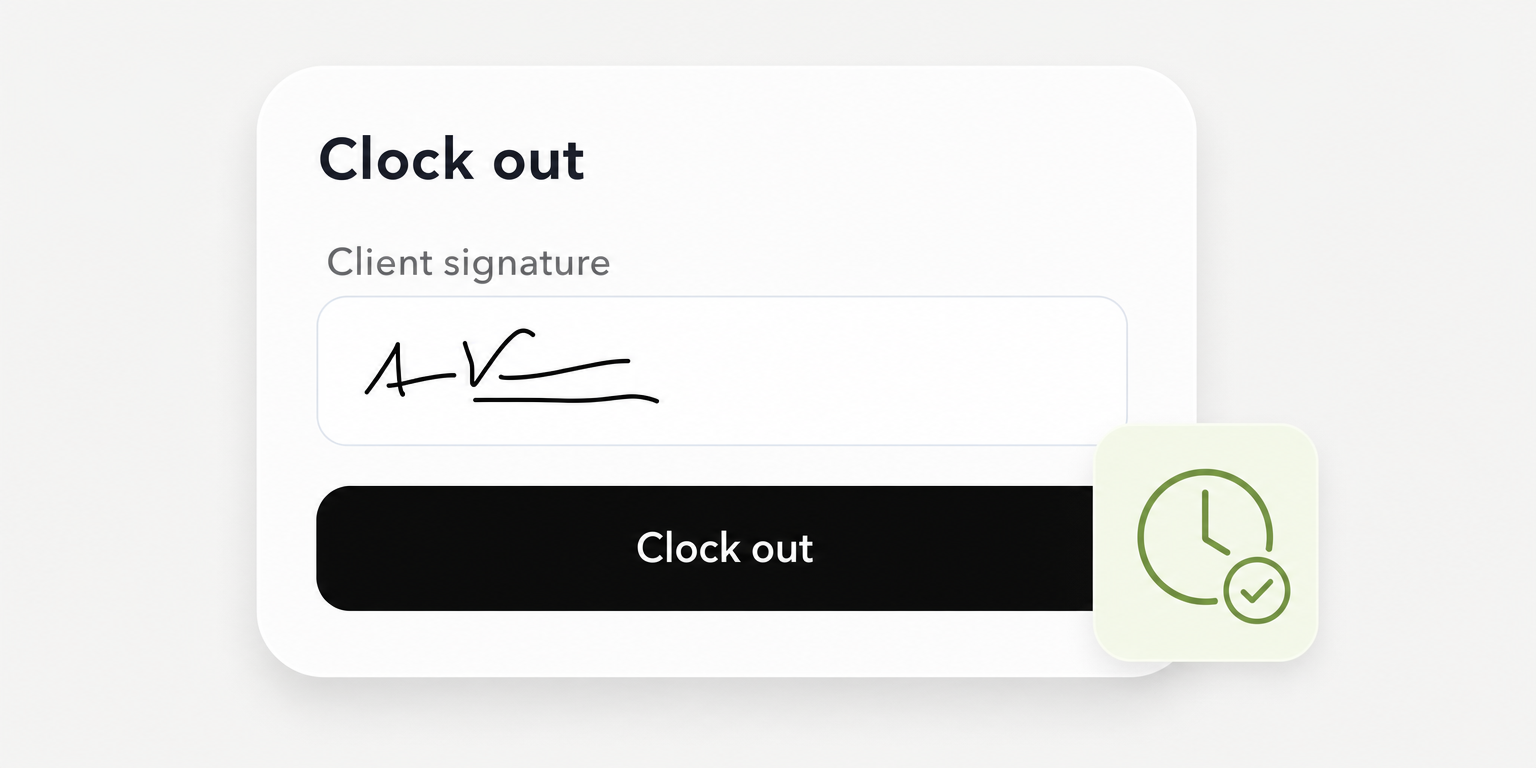
Vendor supplied illustration with example data. It shows configured clock out fields, not rounding controls or a customer record.
Copy an employee rounding review that shows both gains and losses
Copy the worksheet below into your review file. The seeded rows are hypothetical arithmetic examples, not employee records or evidence that rounding is neutral in practice.
Assume punches occur on whole minutes, each punch rounds to the nearest quarter hour, every elapsed minute is compensable, and there are no breaks. The scheduled reference interval is 09:00 to 17:00. Under these assumptions, the raw interval also equals the reviewed work interval.
| Hypothetical example | Raw punches | Rounded punches | Exact compensable minutes | Rounded minutes | Employee effect |
|---|---|---|---|---|---|
| Early arrival | 08:56 to 17:00 | 09:00 to 17:00 | 484 | 480 | Loses 4 minutes |
| Late arrival | 09:04 to 17:00 | 09:00 to 17:00 | 476 | 480 | Gains 4 minutes |
| Early departure | 09:00 to 16:56 | 09:00 to 17:00 | 476 | 480 | Gains 4 minutes |
| Late departure | 09:00 to 17:04 | 09:00 to 17:00 | 484 | 480 | Loses 4 minutes |
For operational reuse, add these fields to the same worksheet:
- Employee identifier, jurisdiction, and work date.
- Review period, site, schedule, and rule version.
- Reviewed work intervals and adjustment reason.
- Applicable pay codes and signed minute difference.
Keep each original timestamp even if the reviewer determines that part of the recorded interval was not work. Put that determination in the reviewed interval and adjustment fields, rather than overwriting the source record. If a record is unresolved, label it unresolved instead of silently treating the scheduled interval as actual work.
The worksheet should also identify what the system rounds: individual punches, interval durations, or another calculation input. These examples round each punch. A system that rounds duration can produce different results, so test the actual configured behavior rather than assuming the table describes it.
Warning
These four rows deliberately balance. They illustrate arithmetic, not legal neutrality. A zero total does not establish that each employee was properly compensated over time.

A recorded punch does not settle whether the interval is paid work
Keep three records distinguishable:
- Raw punch: What the clock captured, including the original timestamp.
- Reviewed work interval: The interval determined to be compensable, with the basis for adjustments.
- Payroll calculation: The application of rounding, pay rates, overtime, and currency precision as applicable.
Under 29 CFR 785.48(a), voluntary early arrival or late presence without work is different from actual working time. An early punch does not automatically establish that every intervening minute was work.
The reverse is equally important. The Department of Labor explains that work suffered or permitted must be paid, even when it was not requested. A scheduled 09:00 start is not, by itself, a reason to erase compensable work that began at 08:56.
That makes the hypothetical worksheet’s assumption material. If the employee started working at 08:56, the early arrival row shows four minutes removed by rounding. If the employee arrived early but did no work until 09:00, the reviewed compensable interval would differ before any rounding calculation occurred.
Exact time does not eliminate this review. Missed punches, work during deducted meals, edits, and work outside recorded intervals can still leave paid time incomplete. Removing interval rounding addresses one transformation, not every source of underpayment.
Also distinguish interval rounding from decimal hour display and final currency rounding. A system may display fewer decimal places while retaining greater calculation precision, or it may export the displayed value. Inspect the exported input and resulting pay rather than judging precision from the screen alone.
Put the workflow into practice
See how your team could use this workflow
Inspect losses by employee before trusting the workforce total
Add a signed difference to each worksheet row using this formula:
Signed minute difference = rounded payroll minutes minus reviewed exact compensable minutes.
A positive value means rounding added minutes. A negative value means it removed minutes. Retain the interval level results, including every losing interval, and then total the differences separately for each employee across a documented review period.
The balanced examples show why employee grouping matters. Suppose, hypothetically, the early arrival and late departure rows belonged to one employee, while the other two rows belonged to another. The first employee would have a net loss of 8 minutes; the second would have a net gain of 8 minutes. The workforce total would be zero while still containing an employee with a loss.
A balanced workforce total can conceal an individual employee’s loss.
Inspect losing employees before using the aggregate as a summary. Then inspect the losing intervals within every employee’s record, including those whose overall result is positive. That preserves patterns that a single net value can hide.
Document how you selected the sample. A convenient week can miss recurring work before a shift starts, departures just beyond a rounding boundary, or a site with different clock rules. Include variation across pay periods, sites, schedules, and rule configurations where those differences exist.
Do not treat net minutes as the complete wage effect. Recalculate pay under both methods using the applicable rates, pay codes, and overtime rules. Minutes added in one context may not have the same dollar effect as minutes removed in another, and changed work duration can affect overtime calculations.
This is an operational inspection method informed by the federal condition on rounding, not a prescribed legal audit protocol. Four balanced rows, a zero workforce total, or one favorable sample cannot prove compliance. No sample size or review period here is a legal safe harbor.
Federal rounding permission is conditional, not nationwide approval
Section 785.48(b) recognizes rounding to the nearest five minutes, tenth of an hour, or quarter hour, provided its application does not, over time, fail to compensate employees properly for all time actually worked. A setting that rounds in both directions is not enough to establish that condition. Actual compensation outcomes matter.
State rules require separate attention. In Donohue v. AMN Services, the California Supreme Court held that employers cannot round time punches in the meal period context. That holding should not be stretched into a claim that it resolves every shift rounding practice or every jurisdiction.
Operator view
Supporting evidence
These sources do not provide a complete current assessment of every state’s shift rounding rules. Before retaining or changing rounding, obtain current jurisdiction specific review for the employees and activities affected. Do not assume that one national setting is appropriate everywhere.
Switching to exact time removes the interval rounding question from that calculation path. It does not independently resolve hours worked, meal deductions, or payroll calculation obligations.
Preserve raw punches before changing any payroll setting
Before changing production settings, preserve a distinguishable record of the source timestamp, reviewed compensable interval, adjustment reason, rule version, and payroll result. Otherwise, a later reviewer may be unable to tell whether a difference came from the employee’s punch, a supervisor’s correction, or the calculation rule.
Treat that separation as a buyer and operator requirement. Ask the vendor to demonstrate what access is needed to change a setting, what gets saved, whether historical results change, and how an unresolved exception is held for review. Keep the current calculation intact until the proposed path has been tested against retained records.
Where staffing timecards, client VMS entries, and badge records disagree, use the separate timecard reconciliation guide to investigate those source differences. Do not use rounding to make conflicting records look aligned before determining what work occurred.
Teambridge’s time tracking page describes mobile time capture and timecard exception review. Those workflows are relevant to reviewing incomplete records before payroll calculations. The illustration in this article shows example shift notes and signature fields collected at clock out; it does not show rounding settings or prove raw punch retention.
The public page does not establish specific rounding controls, immutable raw punch retention, permission requirements, or rule version history. Verify those capabilities directly. Teambridge is an operational option for time capture and review, not evidence that a rounding policy is lawful or that every payroll calculation is correct.
Choose the method your payroll team can explain and validate
Exact time is a practical fit when downstream systems can process precise work durations without silently introducing interval rounding later. It removes a transformation and its associated outcome testing. Your team still needs to review work intervals, deductions, edits, exports, and calculated pay.
Retaining rounding means carrying an additional obligation to understand its actual effect. That decision requires jurisdiction specific review and continuing inspection of employee compensation outcomes, not confidence in a symmetric setting or a balanced workforce total.
Start with the records you have, not a production toggle. Preserve the current inputs and results, populate the employee rounding review for a documented sample, and investigate losses. Then validate the selected calculation path through payroll, including rates and overtime, before changing production settings.
If Teambridge is part of your evaluation, use its documented time tracking workflow as a starting point for a demonstration of record review. Ask separately about retention, access, exports, and calculation behavior. The final test is whether your team can explain how the original punch became reviewed work and how that work became pay.

About the author

Content Writer at Teambridge
Anis Nanai is a content writer at Teambridge, with a focus on workforce management and the realities of running hourly teams. He prioritizes conversations with customers, staying close to the market, and understanding how workforce needs are changing. His writing connects those concerns to practical decisions about scheduling, time tracking, staffing, and automation. He examines product developments through the questions that matter to operators: what does this solve, how would it work for my team, and what evidence supports it?
Company perspective: this author works at Teambridge. Customer outcomes are attributed to their published sources.
View LinkedIn profile