

That takes two separate checks. Your overtime workweek must support the rotation, and your Friday coverage must survive by role, location, and service window. A calendar showing 80 hours answers neither question on its own.
A 9/80 work schedule changes attendance days, not total hours
A common arrangement puts nine paid working hours on Monday through Thursday, eight on the first Friday, and no scheduled work on the second Friday. The arithmetic is 80 hours across nine attendance days, not a reduction in contracted hours.
| Rotation week | Monday | Tuesday | Wednesday | Thursday | Friday | Calendar-week hours |
|---|---|---|---|---|---|---|
| Week 1 | 9 hours | 9 hours | 9 hours | 9 hours | 8 hours | 44 |
| Week 2 | 9 hours | 9 hours | 9 hours | 9 hours | Off | 36 |
These are paid working hours; unpaid meal periods would extend attendance time. The table describes the rotation, not the workweek used to calculate overtime.
This configuration appears in Article V of a DOE-hosted collective bargaining agreement. That historical agreement also places the Friday workweek boundary after four Friday hours. It documents one negotiated implementation, not a universal rule or evidence of productivity gains.
Do not confuse 9/80 with four ten-hour days every week. That arrangement distributes 40 hours across four attendance days each week, while 9/80 distributes 80 across nine days over two weeks. Neither is a reduced-hours, 32-hour workweek.
The fixed workweek boundary explains how 44 calendar hours can fit
Four time frames need separate names: the calendar week displayed on the schedule, the two-week rotation, the payroll pay period, and the overtime workweek. They can overlap without being identical. A biweekly paycheck does not make 80 hours the federal overtime threshold.
Under the general federal framework, covered nonexempt employees receive at least one and one-half times their regular rate for hours worked beyond 40 in a workweek. The Department of Labor defines that workweek as a fixed, recurring 168-hour period that may begin on any day and hour. Employers cannot average hours across two weeks to avoid overtime.
A 44-hour calendar week and a 36-hour calendar week are not permission to average overtime. The established workweek determines where worked hours belong.
Hypothetical calculation: a Friday-noon boundary
Assume an established workweek beginning Friday at noon. Employees work nine paid hours each Monday through Thursday. On their working Friday, they work from 8 a.m. to 5 p.m., with a duty-free unpaid lunch from noon to 1 p.m.
That Friday contains four working hours before the boundary and four after it. Following consecutive Friday-noon-to-Friday-noon windows produces the following calculation:
Decision framework
Three checks before selecting a system
Hypothetical: four hours after the working-Friday boundary, then 36 Monday through Thursday before the off-Friday. Framework: DOL Fact Sheet 23.
Hypothetical: the off-Friday contributes zero, followed by 36 Monday through Thursday and four hours before the next working-Friday boundary. Framework: DOL Fact Sheet 23.
The boundary stays at noon even if lunch moves. Moving the unpaid meal period can change how many worked hours fall on either side; it does not move the workweek itself. A late finish or extra assignment can also change the totals.
This demonstrates federal workweek arithmetic, not legal approval of a particular employer's schedule. Document the actual boundary and have payroll validate its treatment before publishing the rotation.

Alternating Fridays need coverage by role and site, not headcount
A shared Friday closure and staggered Friday cohorts solve different operating problems. A closure works only where service can stop. Staggered cohorts keep people working each Friday, but splitting a team into two equal groups does not establish that either group contains the required roles.
Daily totals can also hide a gap. Having a qualified employee on site for part of Friday does not cover an opening or closing period outside that person's shift. Check concurrent coverage within each required service window, not just the number of people scheduled that day.
Editable alternating-Friday coverage ledger
Copy this blank ledger into your planning sheet. Add separate rows for both Friday dates in the rotation, then repeat by site, required role, and service window. Split a window whenever staffing availability or required coverage changes.
| Friday date | Site | Required role | Required service window | Minimum concurrent coverage | Assigned cohort | Scheduled qualified coverage | Qualified backup | Uncovered hours |
|---|---|---|---|---|---|---|---|---|
Enter names or assignment references and covered times under scheduled qualified coverage. Record both the identity and availability of the qualified backup. In uncovered hours, record the portions of the service window that fall below minimum coverage, rather than subtracting total daily staffing hours from demand.
A backup is not dependable simply because their name appears in the sheet. Confirm their qualifications, location, availability, and competing assignments. If the backup is someone scheduled to be off, make that dependency visible rather than treating it as protected coverage.
Warning
If routine Friday coverage depends on recalling employees from their promised day off, the rotation has not protected that day. Separate emergency contingencies from the staffing plan needed to run an ordinary Friday.
The ledger forces the decision before the promise: close, stagger qualified coverage, narrow participation, or keep the existing pattern. None of those choices requires pretending every role can use the same rotation.
Ready to move?
Ready to see Teambridge in action?
Longer weekdays help only when those hours match the work
The additional weekday hour has operational value only if useful work or service demand exists during it. It may extend a service window or allow a task to finish without a handoff. It does not replace a missing Friday receptionist, machine operator, or care assignment.
Assess demand timing rather than declaring entire industries suitable or unsuitable. A team able to pause service every other Friday faces a different decision from one with fixed client windows, continuous coverage, or a single qualified backup. Even within one location, different roles may need different arrangements.
Employees also trade fewer attendance days for longer daily commitments. One fewer commute may be valuable, while a later finish may conflict with caregiving, transport, or another fixed commitment. Ask about actual start and finish times, including meal periods, rather than asking whether an extra Friday off sounds attractive.
The reviewed evidence supports schedule mechanics and overtime principles. It does not establish generalizable 9/80 performance gains in productivity, recruitment, retention, or fatigue. Those are questions for local measurement, not benefits to put in the launch announcement as settled facts.
If productivity is part of the business case, specify what it means for the work: completed tasks, service response, rework, or another relevant output measure. Longer attendance alone is not evidence of higher output, and employee preference alone does not establish service feasibility.
Holidays, call-ins, and daily overtime can change the rotation
The clean calendar is the easiest version of 9/80. Before launch, define scheduling and pay treatment for exceptions that change either attendance or worked hours:
- Off-Friday call-ins: Record when work occurs relative to the fixed boundary and who authorized the assignment.
- Late finishes or changed meals: Preserve actual worked time rather than forcing it back into the planned split.
- PTO and holidays: Define leave charging, holiday credit, and coverage under the applicable policies and agreements.
- Absences in scarce roles: Identify whether backup coverage requires moving work or recalling an off-duty employee.
An off-Friday call-in does not automatically trigger federal overtime. The DOL overtime guidance explains that work on a regular rest day is not itself the federal trigger. Its effect depends on worked hours in the applicable workweek, alongside any other governing requirements.
Paid time and worked time also need separate treatment. The DOL Hours Worked Advisor states that paid holiday, vacation, and sick-leave time need not count as hours worked for the general FLSA overtime calculation. That distinction does not settle an employer's leave policy, contractual premiums, or other applicable obligations.
California requires a separate feasibility check
A federal 40-hour calculation does not resolve state daily overtime requirements. California Wage Order 4, sections 3(B) and 3(C), contains conditions for qualifying alternative workweeks, including advance adoption through a secret-ballot vote with at least two-thirds approval of affected employees in the work unit. It also specifies written disclosures and a discussion meeting at least 14 days before voting.
That is a bounded checkpoint, not a nationwide compliance recipe or a finding that Wage Order 4 applies to every reader. Confirm the applicable wage order, exemptions, agreements, industry rules, and adoption requirements with qualified advisers. Employee enthusiasm and a Friday-noon split are not substitutes for that review.
Judge a 9/80 pilot by protected days off and service coverage
Run a bounded pilot before making the arrangement permanent. This is an editorial recommendation, not a research-validated pilot duration: choose a period that includes both Fridays repeatedly and represents the demand you need to serve. Compare it with a baseline that has reasonably similar workload and staffing.
Use the coverage ledger as the operating record, then evaluate the pilot in this order:
- Set acceptance thresholds before launch. Decide locally what uncovered service, overtime, and off-day work are acceptable, and who can stop or adjust the pilot.
- Record actual coverage and exceptions. Compare scheduled qualified coverage with what happened, including uncovered windows and backup substitutions.
- Review the employee tradeoff. Track requests to leave the rotation and ask whether the longer weekdays are sustainable.
- Decide whether to retain, narrow, or revert. Assess results by participating role and site rather than allowing a strong average to hide a failing assignment.
Define an off-day recall as work performed on a scheduled day off. Distinguish a planned backup arrangement from an unplanned coverage failure, but count both when evaluating whether employees received their promised time away. A known recall may be operationally controlled while still reducing the benefit.
Track overtime hours against the actual overtime workweek, not the calendar's 44/36 totals. Keep service measures alongside labor measures so a reduction in overtime does not conceal unfilled work. Worker feedback should cover daily sustainability as well as satisfaction with the off-Friday.
Seasonal demand, staffing changes, and simultaneous process changes limit causal conclusions. An improving pilot does not prove that 9/80 caused higher productivity. It can still provide enough operating evidence to decide whether the arrangement is workable for the participating team.
Verify scheduling and payroll support before promising Fridays off
Adopt the pattern only when required coverage survives both Fridays, the workweek configuration has been validated, and the pilot protects the promised time off. Scheduling software should help maintain that plan without hiding the exceptions. Payroll support must be checked separately against the fixed boundary and actual worked hours.
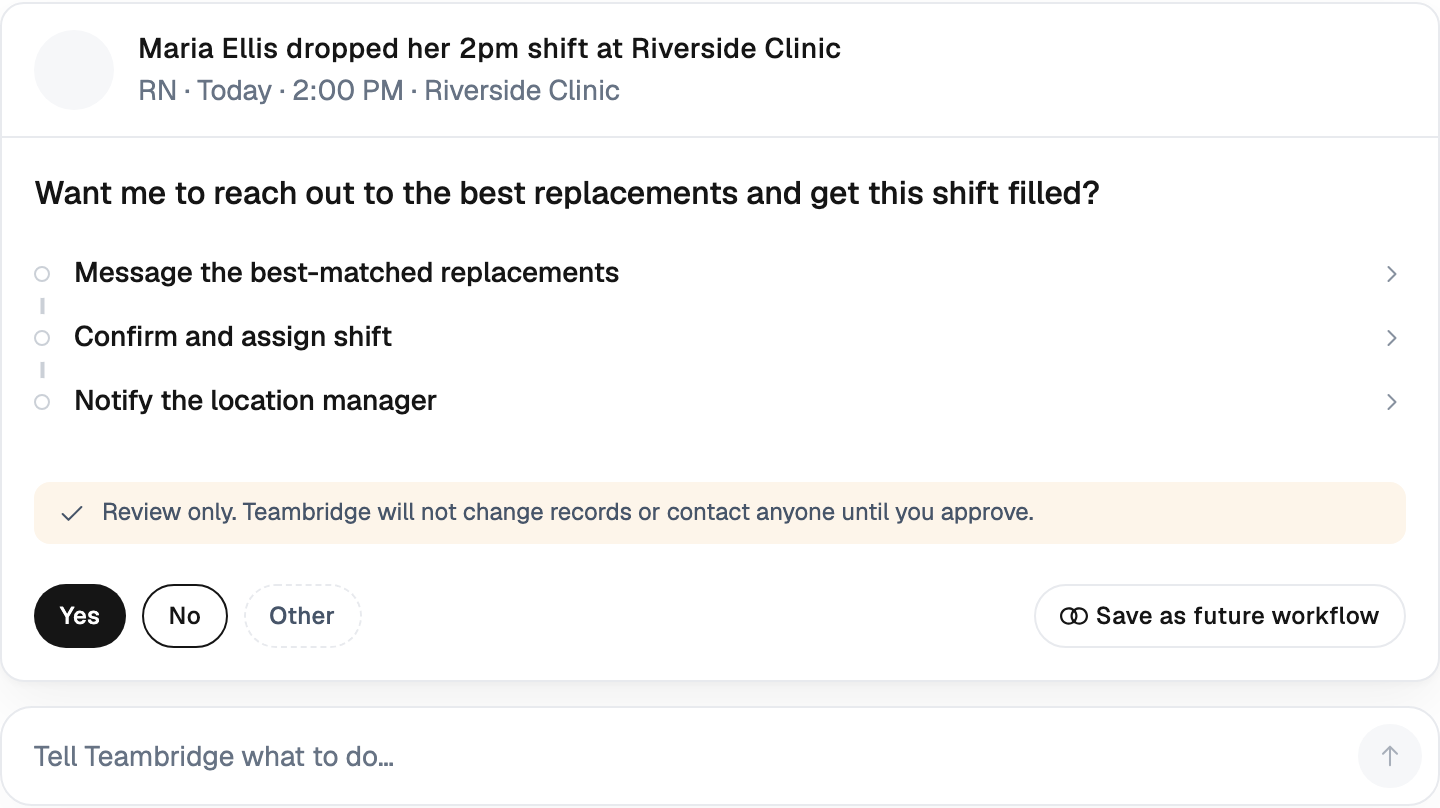
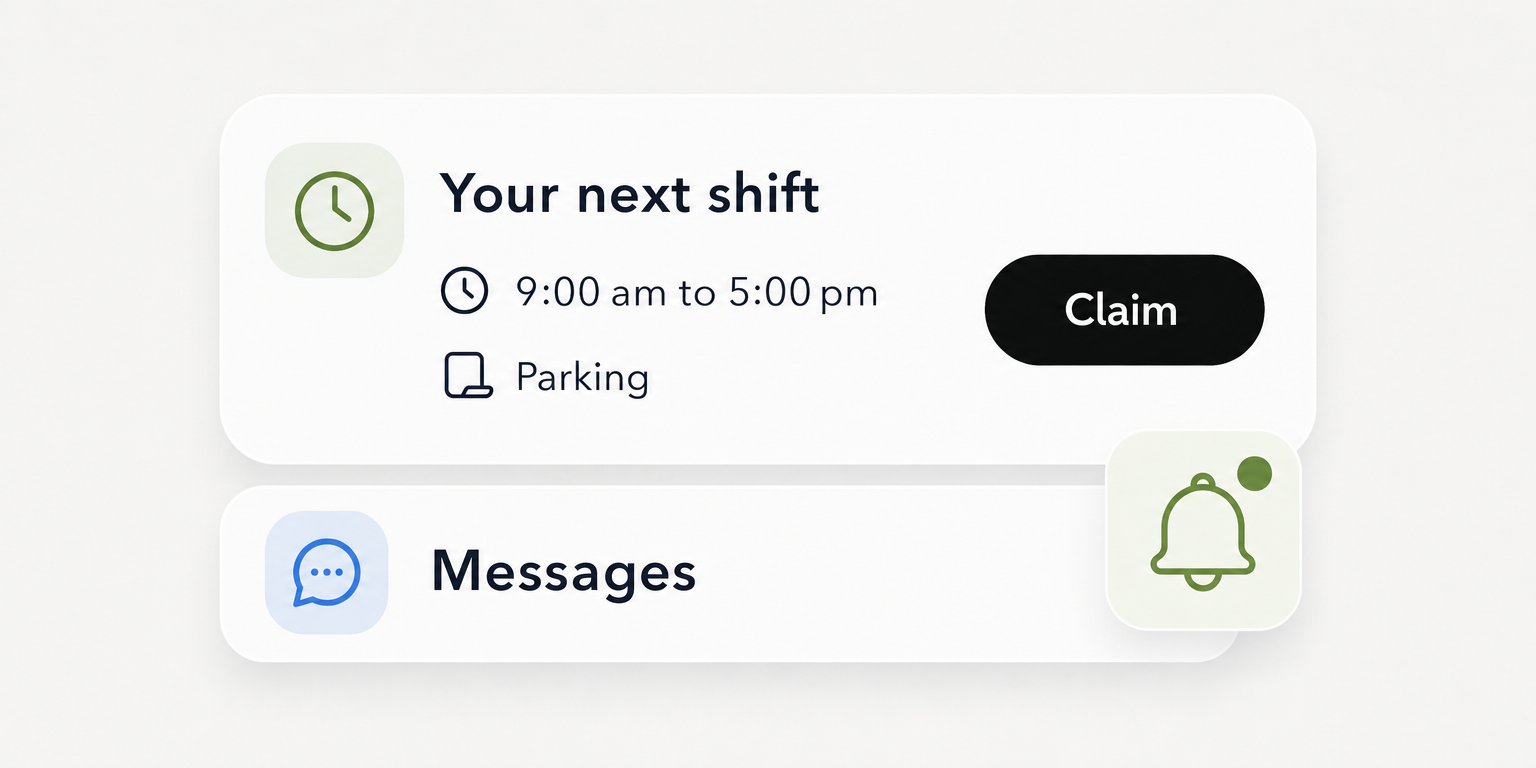
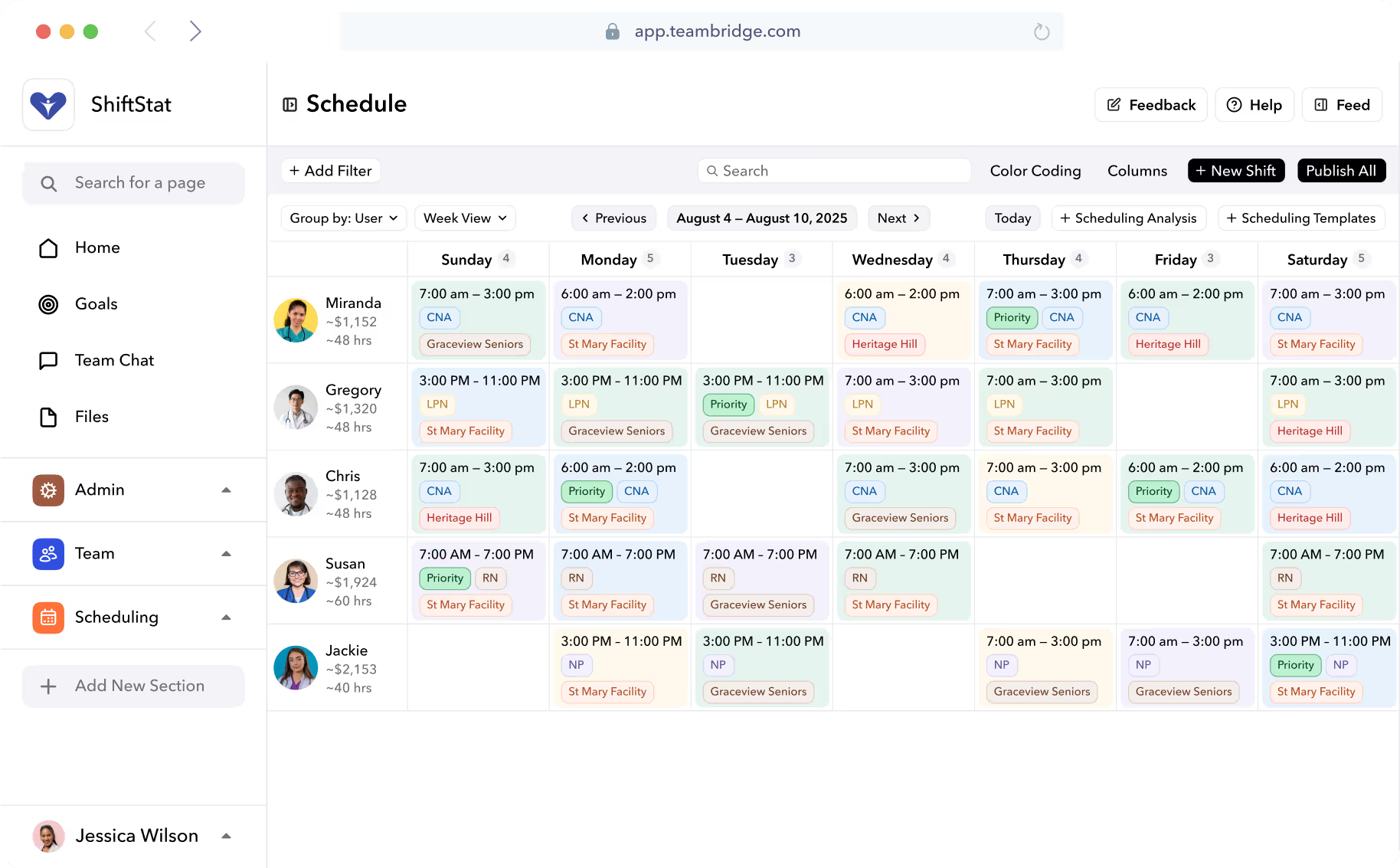
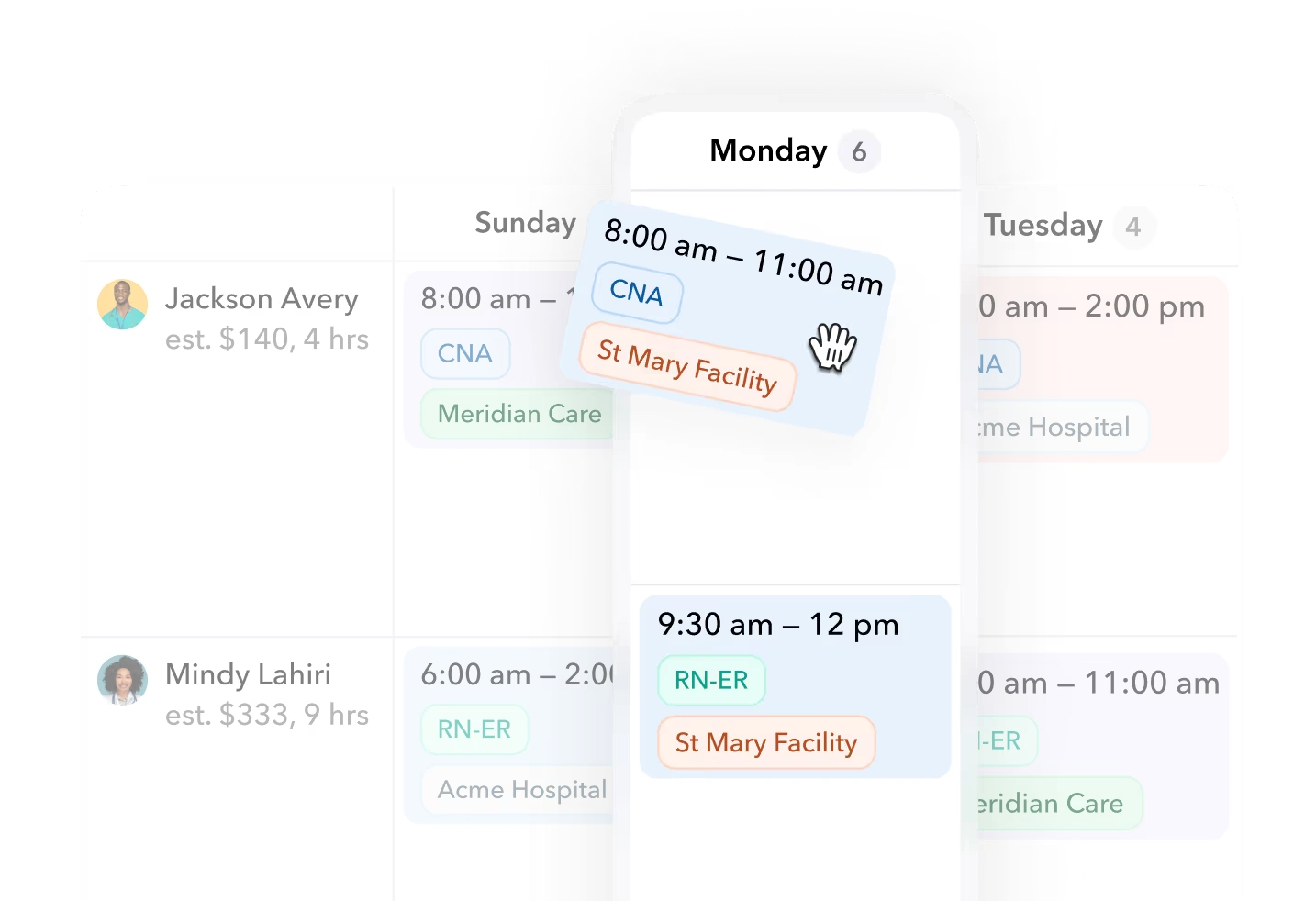
Teambridge scheduling is one operational option for coordinating qualified coverage. The page documents filtering by role, credentials, location, and worker fields, using availability and preferences, and allowing eligible workers to claim shifts from mobile. Those capabilities map to filling Friday assignments, not to proving that a 9/80 arrangement is legally valid.
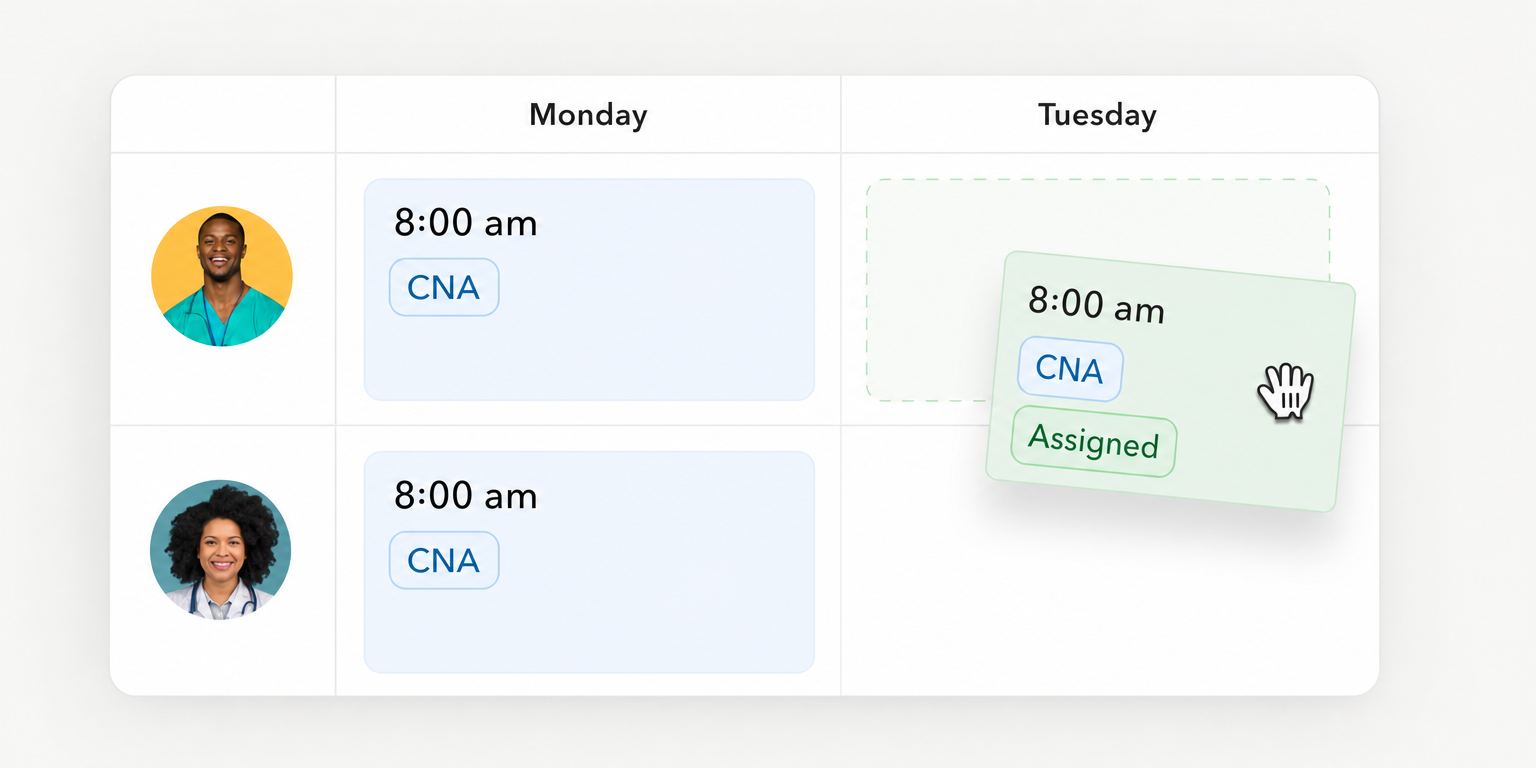
The Teambridge scheduling workspace shows worker rows, shift times, role labels, and facilities.
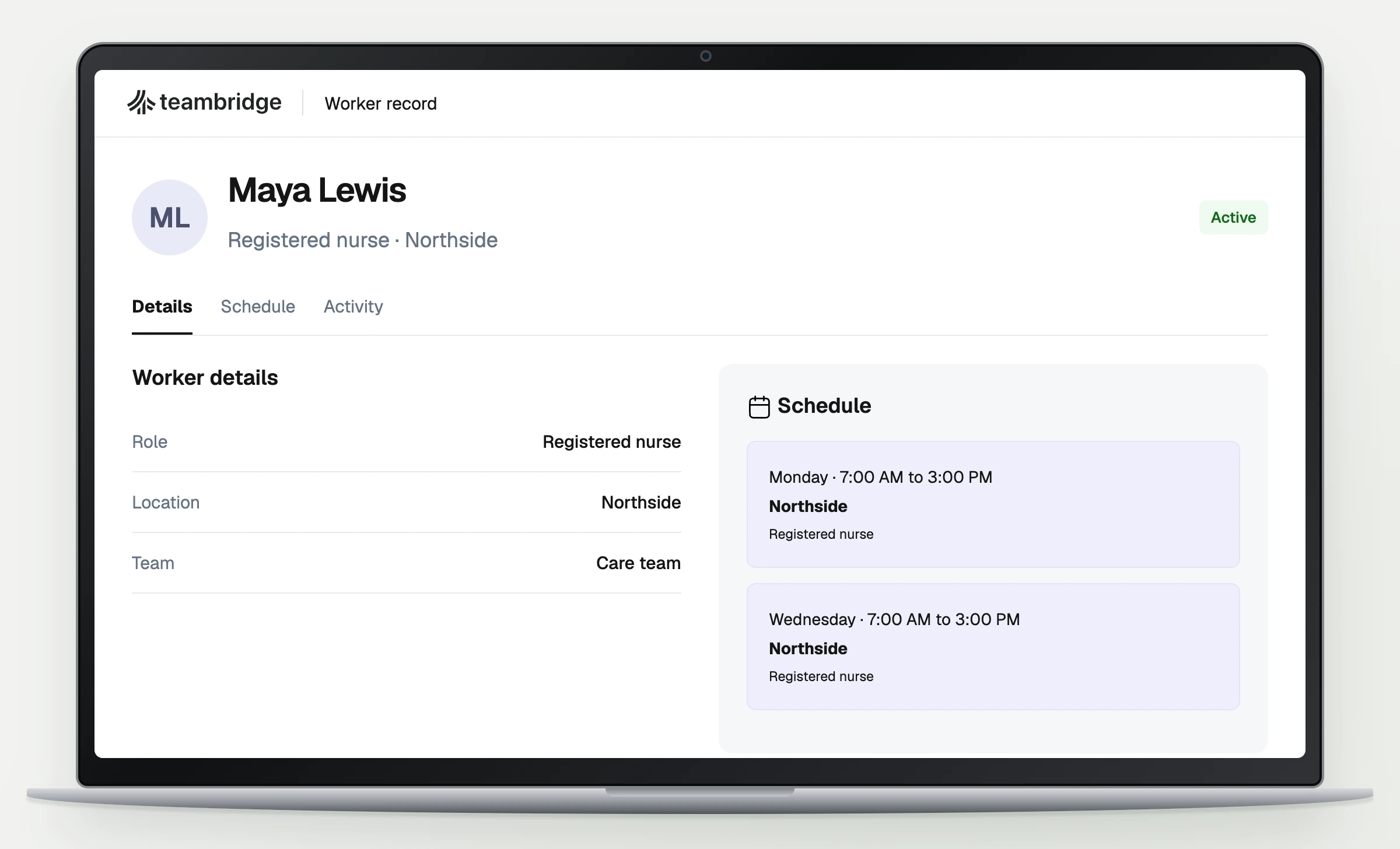
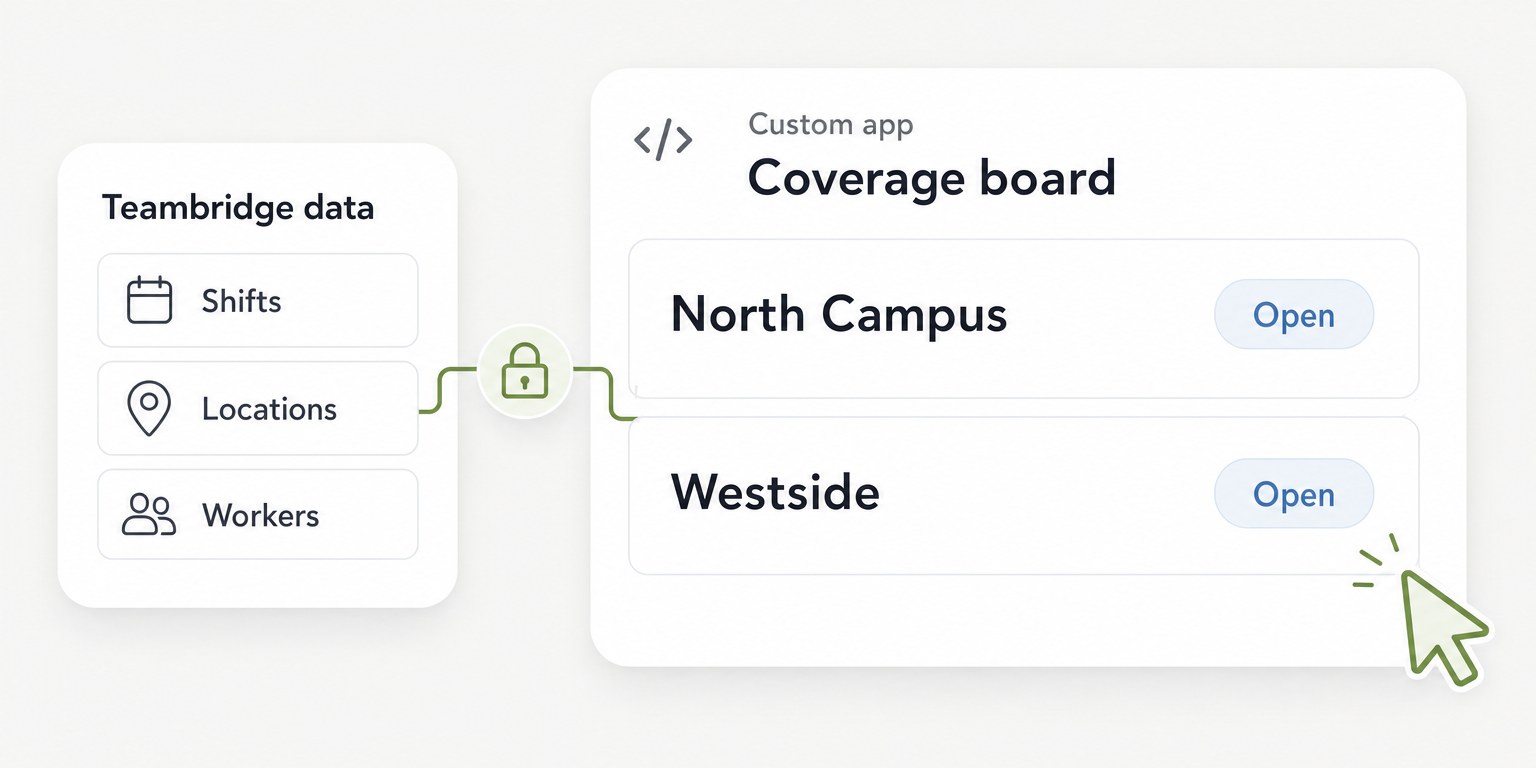
The Teambridge platform depicts a claimed shift updating the schedule and worker record. Connected assignment records can support coordination, but connected records alone do not guarantee correct overtime treatment. Neither reviewed page establishes native Friday-noon split-workweek payroll calculation support.
Ask for a demonstration using your boundary, working Friday, off-Friday recall, changed meal period, and leave cases. Confirm what the scheduling system records, what reaches payroll, and where calculation and approval happen. An attractive rotation on screen is not enough.
Bring your proposed rotation and completed coverage ledger to a Teambridge walkthrough so scheduling behavior and payroll handoffs can be checked against your actual requirements. The decision is whether you can keep service covered and the day off intact, not whether the calendar can display an empty Friday.

About the author

Content Writer at Teambridge
Anis Nanai is a content writer at Teambridge, with a focus on workforce management and the realities of running hourly teams. He prioritizes conversations with customers, staying close to the market, and understanding how workforce needs are changing. His writing connects those concerns to practical decisions about scheduling, time tracking, staffing, and automation. He examines product developments through the questions that matter to operators: what does this solve, how would it work for my team, and what evidence supports it?
Company perspective: this author works at Teambridge. Customer outcomes are attributed to their published sources.
View LinkedIn profile