A location can have a complete schedule while the business still has an uncovered shift. If two managers assign the same employee, both calendars may look finished until someone checks the worker’s combined commitments.
For shared staff, the best employee scheduling app is the one whose assignment controls match how your managers divide authority. This comparison examines Connecteam, When I Work, and Teambridge through that narrower operating question: what happens when two locations want the same person?
Two workable location schedules can double-book one employee
Consider a hypothetical situation: two locations, two managers with assignment access, and one employee who is eligible and available at both sites before either assignment. One manager needs coverage from 9 a.m. to 1 p.m. The other needs noon to 4 p.m. on the same day.
Each assignment works in isolation. Together, they create an overlap that the employee cannot fulfill. The buying question is whether the application exposes that collision, prevents it, or permits someone to accept it deliberately.
That is different from asking whether an app supports multiple locations. A location calendar establishes where work belongs. It does not, by itself, establish who can commit a shared employee or whose assignment takes priority.
A broad app comparison can help you shortlist scheduling, messaging, and time-tracking tools. Shared staffing needs another layer of evaluation: visibility across schedules, assignment authority, employee claim behavior, and the configuration that connects them.
The findings below come from vendor documentation supplied for this comparison, not hands-on testing. Where documentation leaves behavior unresolved, the table preserves that uncertainty rather than treating it as a missing feature.
Connecteam, When I Work, and Teambridge expose different shared-staff boundaries
The clearest documented distinction is between seeing shared work and controlling it. Connecteam describes bypassable cross-schedule warnings. When I Work describes a labor-sharing workflow with configurable pickup approval. Teambridge describes requirement-based worker filtering and implementation-defined scheduling configuration.
| Decision criterion | Connecteam | When I Work | Teambridge |
|---|---|---|---|
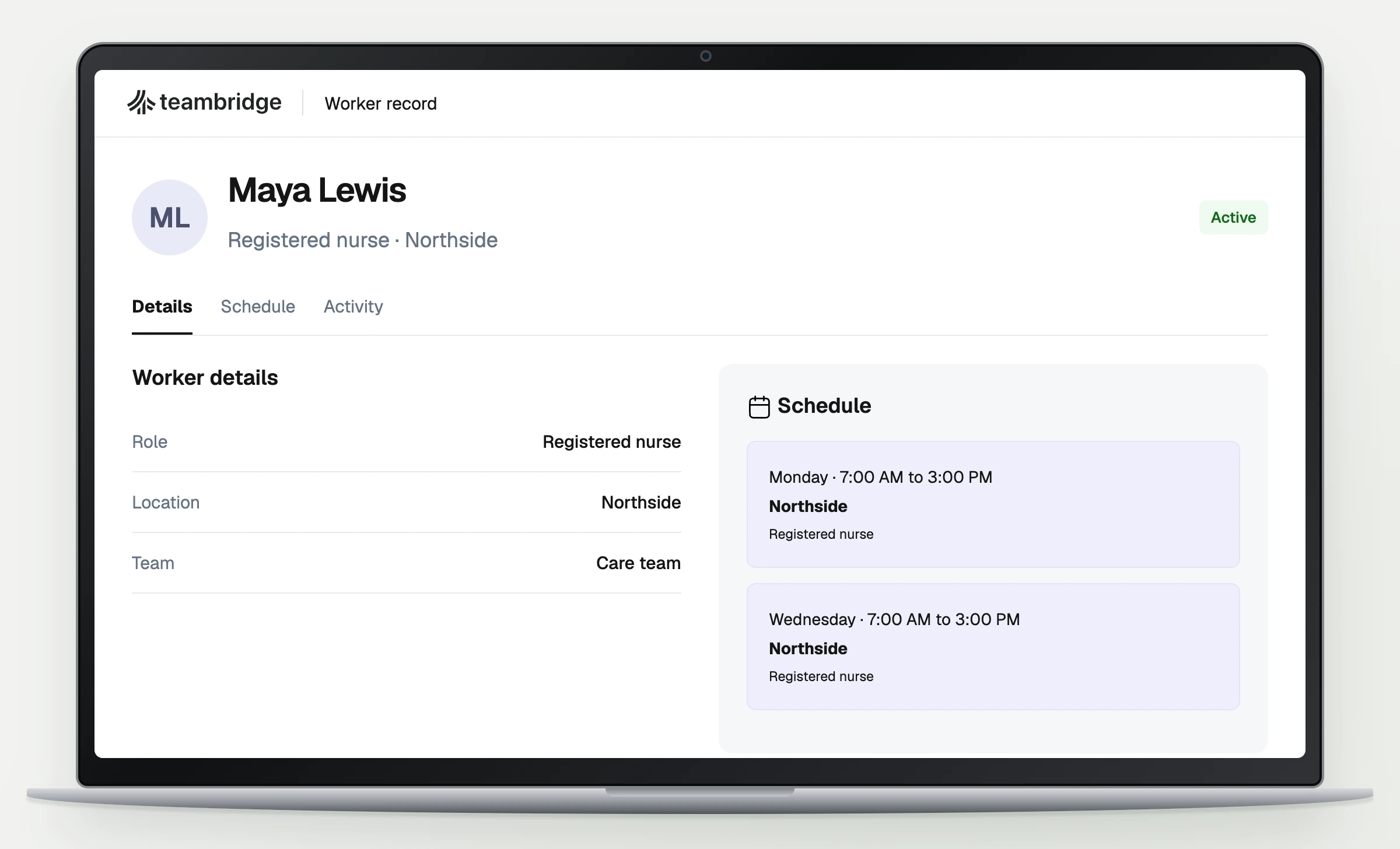
| Shared-worker visibility | Documents cross-schedule overlaps, unavailability, and time off when enabled; events appear in user view, not job view. | Documents visibility into shifts for users assigned to multiple schedules; Essentials lists multi-location scheduling. | Documents filtering by worker location; demonstrate the visibility each manager receives across locations. |
| Assignment rules | Advertises AI scheduling using availability, roles, and costs; cross-schedule conflict warnings can be bypassed. | Pro lists scheduling rules and labor sharing; labor-sharing documentation describes eligible, available workers. | Documents filtering by role, credentials, location, tier, and worker fields, alongside availability and hours. |
| Manager authority | Demonstrate who can assign despite a warning and what evidence an override leaves. | Pro lists role permissions; labor sharing does not require prior approval from the worker’s regular scheduling manager. | Confirm configured assignment permissions and override authority. |
| Employee claims | Open-shift claims can require approval; test a claim after another schedule assigns the worker. | Essentials lists OpenShifts and swaps; labor-sharing pickup approval defaults to on and can be disabled. | Documents mobile claims returning confirmed assignments to the schedule; test overlapping claims and pending states. |
| Required subscription | Cross-schedule issues require Operations Expert, activation on each schedule, and relevant viewing settings. | Distinguish Essentials multi-location scheduling from Pro labor sharing; clarify pricing-page inconsistencies. | Confirm the required subscription and commercial scope with the vendor. |
| Implementation scope | Confirm schedule structure, cross-schedule data settings, draft-shift inclusion, and required hubs. | Enable labor sharing and configure permissions and approval; shared OpenShifts have documented template and recurrence limits. | Client- or location-specific assignment configuration is defined during implementation. |
Connecteam’s cross-schedule documentation explicitly allows assignment despite a conflict notification. Administrators must enable other schedules’ data on each schedule, while draft-shift inclusion is optional. Its scheduling page separately describes availability-based scheduling and approval for open-shift claims.
For When I Work, the separate schedules guide says managers can see all shifts for workers assigned to multiple schedules, but shift exchanges are limited to workers belonging to the same schedule. The Labor Sharing guide describes distributing OpenShifts to eligible workers on other schedules and directly assigning available, qualified workers. Shared OpenShifts do not support repeating shifts or shift templates.
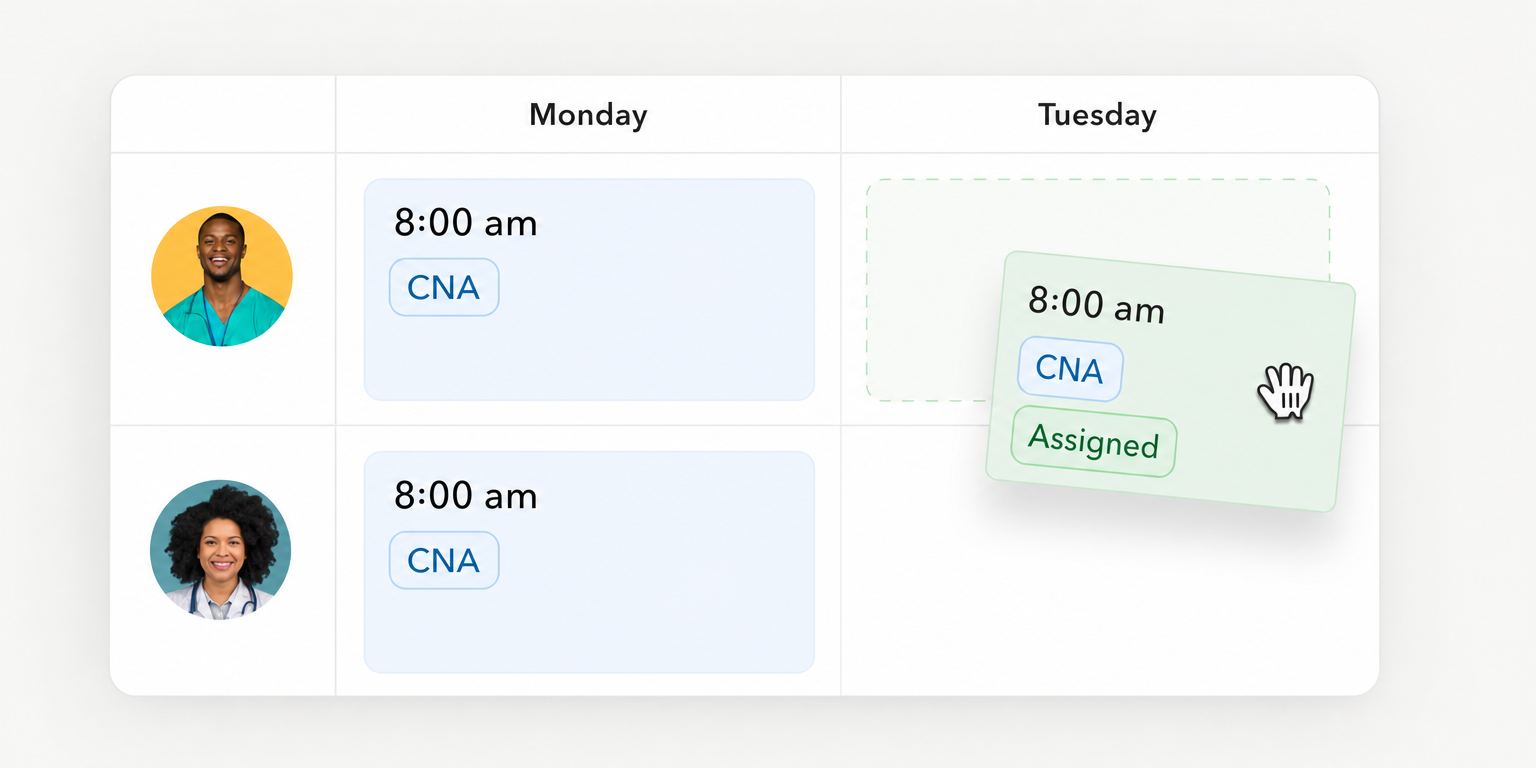
Teambridge scheduling documents worker filtering and mobile claims, with client- or location-specific configuration established during implementation. It does not establish a universal overlap block, protection against simultaneous assignments, or a universal override hierarchy. Those require demonstration in the proposed configuration.
Visibility tells a manager that another commitment exists. Assignment protection determines whether the next commitment can be saved.
Ready to move?
Ready to see Teambridge in action?
A conflict warning is not the same as a protected assignment
There are four distinct behaviors to evaluate. Visibility shows another location’s assignment. A warning identifies a potential problem but may leave the decision with the manager. A block prevents saving, while an authorized override permits a defined exception.
These are evaluation categories, not capabilities this article attributes to every product. Connecteam’s documented warning-and-bypass behavior makes the distinction especially important: it can support manager discretion, but it is not an unconditional overlap prohibition.
Shared coverage changes who can commit an employee
A broad staffing pool gives managers more people to approach. It can also create disputes over whose work takes priority. Before selecting permissions, decide whether a borrowing manager can assign someone directly or must request approval from a home manager.
When I Work’s documentation provides a concrete example of that tradeoff. Labor sharing does not require approval from the employee’s regular scheduling manager before sharing, while pickup approval is a separate setting. An organization expecting home-manager consent should resolve that expectation during the demonstration, not after rollout.
Local discretion may be appropriate when managers routinely coordinate exceptions. A stronger restriction may be preferable when an accepted shift must be treated as a firm commitment. Neither approach works well if managers believe the application is enforcing a policy that exists only in an operating manual.
A claim button does not establish the final assignment state
Ask whether an employee’s claim immediately confirms the shift or creates a request awaiting approval. Then ask what happens if the employee becomes unavailable between opening the job and submitting the claim. If approval is required, the approval step also needs testing against newer assignments.
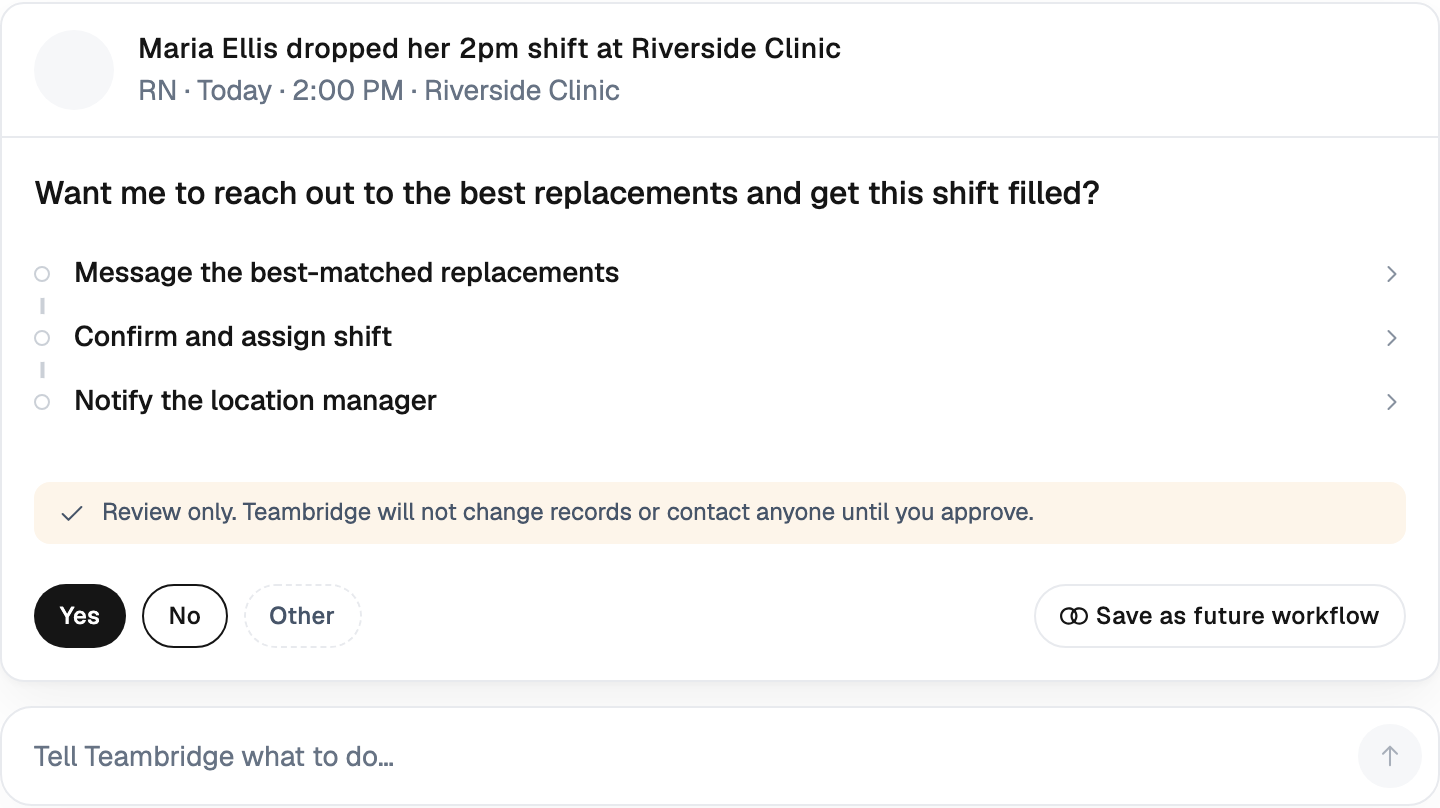
Teambridge’s documented filtering and claims workflow is relevant here, but the interface alone cannot answer those questions.
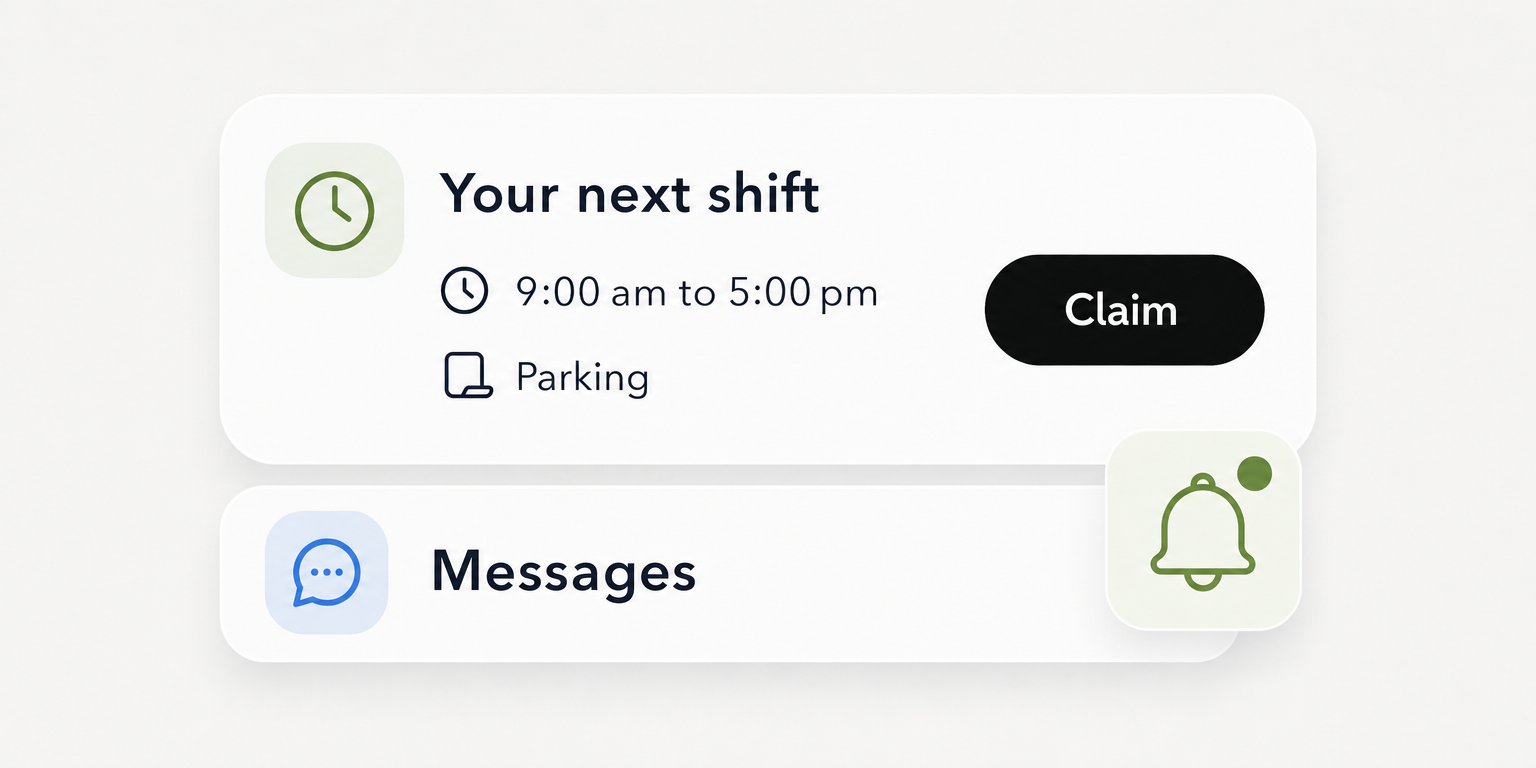
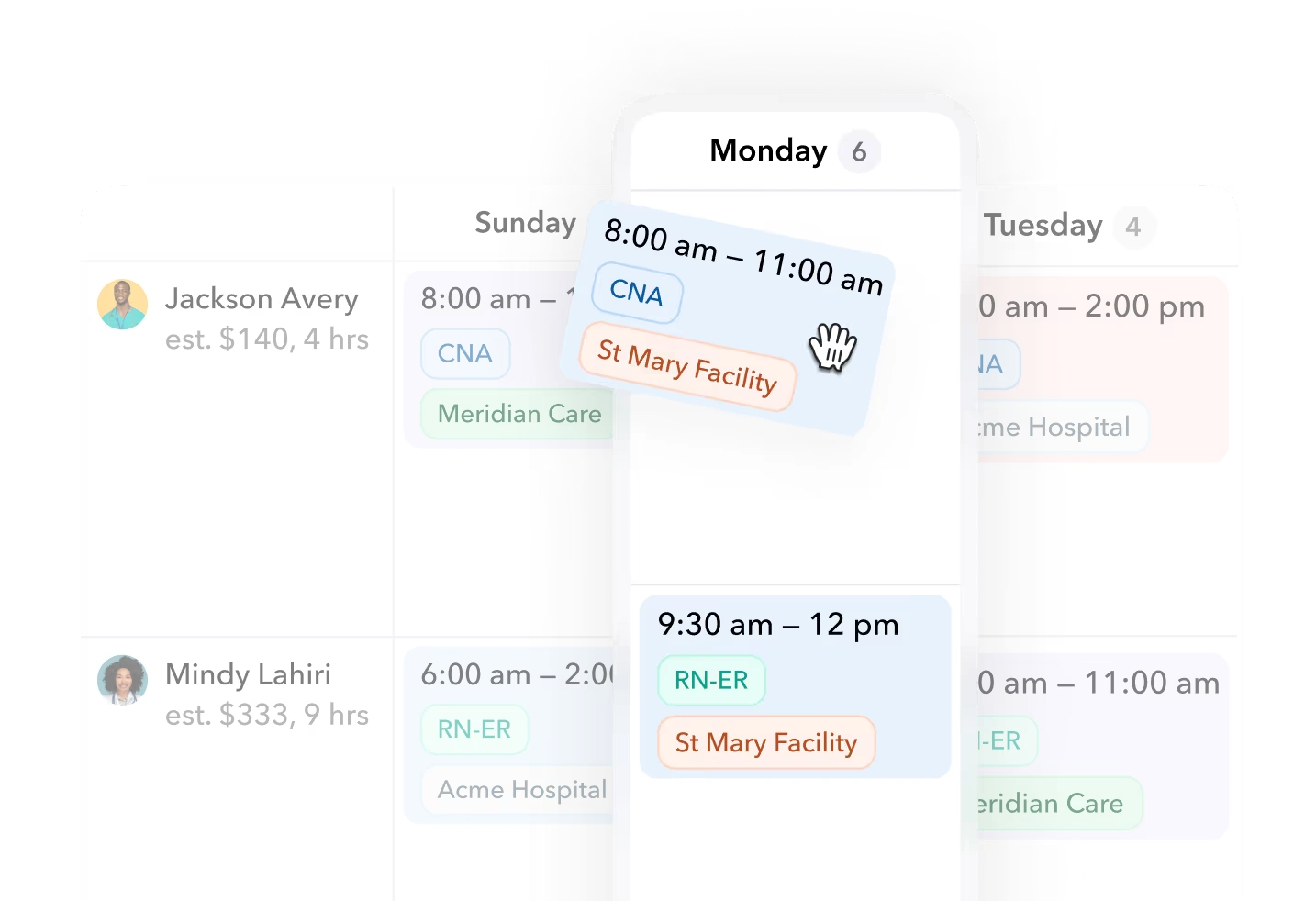
Teambridge’s worker-app view shows a claimable job and recommended and matched work. It does not demonstrate successful assignment or collision prevention.
Warning
Do not accept a conflict notification as proof of double-booking prevention. Record whether the conflicting assignment can still be saved, who can save it, and what the employee sees afterward.
Products discussed
Best Employee Scheduling App for Shared Staff and Sites tools mentioned
Official marks identify the products materially discussed in this section.
Price the shared-labor configuration, not the entry-level calendar
An entry scheduling plan is not necessarily the plan that supports your shared-worker policy. Compare the subscription and setup needed to reproduce the behavior you require, rather than the lowest advertised price.
Connecteam separates Operations, Communications, and HR into selectable hubs with their own plan choices. Scheduling belongs to Operations, and its documented cross-schedule issues require Operations Expert. That makes the relevant comparison a configured Operations subscription, plus any additional hubs your workflow actually needs.
When I Work’s plan cards distinguish Essentials multi-location scheduling from Pro labor sharing. Its pricing-page FAQ uses different single-location and multi-location language, and the page also presents inconsistent language about included time and attendance versus an add-time-tracking toggle. Those differences need written clarification before an all-in total is credible.
Teambridge’s reviewed scheduling page directs buyers toward a demonstration without displaying subscription prices. That supports a vendor-confirmed quote, not a claim that Teambridge is cheaper or more expensive.
Decision framework
Three checks before selecting a system
Require written confirmation of the paid-user definition, schedule and location limits, required hubs or modules, implementation charges, and ongoing configuration responsibility. Ask whether workers shared across schedules count once or create any additional commercial obligation. Pricing pages can change, so attach the dated quote to the configuration you tested.
Run a shared-worker collision test before accepting a vendor’s answer
Use the following shared-worker collision test record as the reusable operating artifact for finalist demonstrations. It captures observed behavior, not a salesperson’s yes-or-no answer to “Do you prevent conflicts?”
The hypothetical assumptions remain explicit: two locations, two managers with assignment access, one initially unassigned employee eligible and available at both locations, and shifts from 9 a.m. to 1 p.m. and noon to 4 p.m. on the same day. Use the same time zone. Confirm the employee’s records satisfy both assignments before starting.
Keep the second session open while the first assignment changes
- Record the proposed setup. Capture the product, quoted plan, schedule structure, permissions, approval settings, and whether draft shifts participate in conflict checking. Confirm it matches the configuration you would buy.
- Open both manager sessions. Have both managers view the initially unassigned employee. Keep the second manager’s session open rather than refreshing it after every action.
- Commit the first assignment. Assign the employee to the 9 a.m. to 1 p.m. shift. From the second manager’s existing session, attempt the noon to 4 p.m. assignment.
- Observe the entire result. Record warnings, blocks, available overrides, employee notifications, and the final schedule state after refreshing both sessions. If an override is allowed, capture the authority used and distinguish it from an unintended double-booking.
- Reset and repeat through employee pickup. Have the employee open the overlapping job before the first assignment is committed, then attempt to claim it afterward. If the claim enters approval, complete that step and check the final assignment state again.
Run separate records for manager assignment, employee claim, and any approval or authorized-override attempt. Leave results blank until observed. A missing demonstration is unresolved evidence, not a pass or an automatic failure.
| Shared-worker collision test record | Observed result |
|---|---|
| Product and test date | |
| Quoted plan and included modules | |
| Configuration, permissions, and approval settings | |
| Attempt type | |
| Warning shown and when it appeared | |
| Block behavior at save, claim, or approval | |
| Override authority and evidence retained | |
| Employee notification and assignment status shown | |
| Final schedule state across both locations | |
| Evidence captured: recording, screenshots, or logs |
The decisive evidence is the final state, not the first message on screen. A warning followed by two confirmed assignments is different from a blocked save. A pending claim is different from a confirmed shift, and an approved exception is different from an accidental collision.
Choose the operating tradeoff your managers can actually support
The following best-fit recommendations are editorial inferences from the documented scope, not hands-on rankings:
- Consider Connecteam when scheduling belongs alongside broader frontline operating tools. Its documented cross-schedule warnings give buyers something concrete to evaluate. The tradeoff is verifying Operations Expert, per-schedule configuration, viewing settings, and whether bypassable warnings satisfy your policy.
- Consider When I Work when a published scheduling plan ladder and cross-schedule labor sharing fit the operation. Its documentation explains borrowing workers and pickup approval. The tradeoff is separating multi-location access from labor sharing, resolving quote inclusions, and deciding whether its assignment authority matches your managers’ responsibilities.
- Consider Teambridge when multi-site or client-based assignments depend on worker and shift requirements. Its documented filtering and configurable operations are relevant to that workload. The tradeoff is implementation-defined configuration, vendor-confirmed pricing, and demonstrating the actual collision and override behavior.
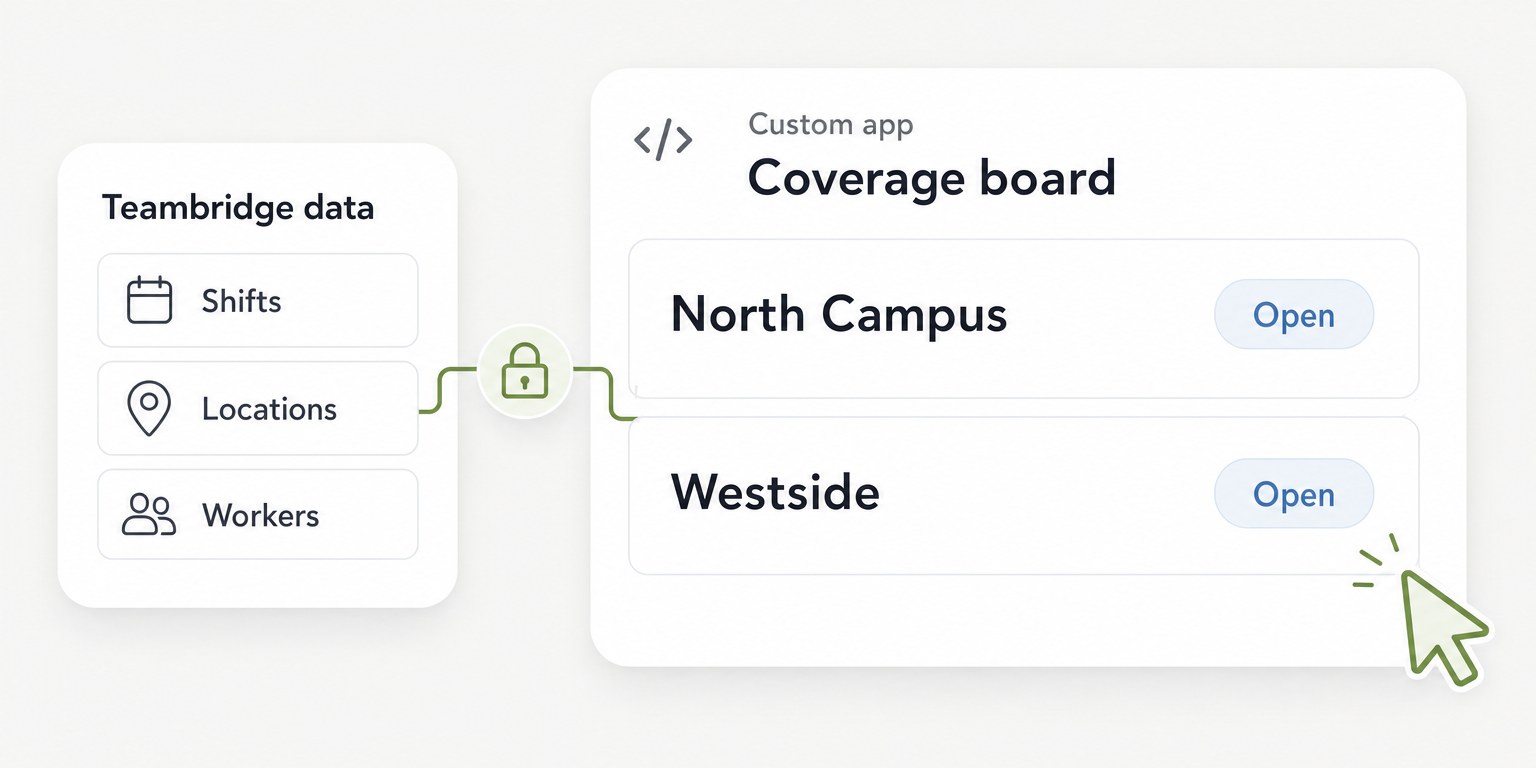
For a broader workforce workflow, the Teambridge platform documents configurable records, permissions, forms, workflows, and approval points around shared workforce data. That is useful context for connecting assignment work to other operations. It is not proof that every scheduling restriction is preconfigured or that the system independently determines your staffing policies.
Bring the completed collision test record and unresolved configuration questions to your finalists. Ask each vendor to put the demonstrated setup into the proposed scope, including who maintains permissions and rules after launch. If requirement-based, multi-site workforce operations fit your needs, use a Teambridge demo to run that test against the configuration you would actually purchase.