
Choosing the right platform to manage recruiting or healthcare staffing isn’t always simple. Most teams are juggling tight deadlines, shifting priorities, and a constant need for accurate, up-to-date information. Bullhorn and Symplr both try to solve these challenges in different ways.
Quick look
We’ll break things down in a clear, problem-and-solution flow:
- What each platform is built for: Because tools designed for completely different industries can look similar at first glance.
- How they handle everyday work pains: Like sourcing candidates, managing compliance, scheduling, and keeping data clean.
- Where each platform fits best: So you can quickly see which one aligns with your workflows, not just in theory, but in the real world.
The goal here is simple: give you the information you need to make a confident, well-grounded decision.
Who Bullhorn and Symplr are best for
Bullhorn and Symplr serve very different needs, which is why teams tend to gravitate toward one or the other. Bullhorn is built for fast-moving recruiting environments where staying organized, keeping clients updated, and moving candidates through the pipeline without bottlenecks is the daily challenge. Symplr, on the other hand, is designed for healthcare organizations that deal with strict compliance requirements, credentialing workflows, and the constant coordination of clinical staff. For teams focused on high-volume recruiting, Bullhorn often feels like the more natural fit. For those whose work centers on provider documentation, regulatory standards, and healthcare workforce management, Symplr is designed around those needs.
Platform overviews
Bullhorn at a glance
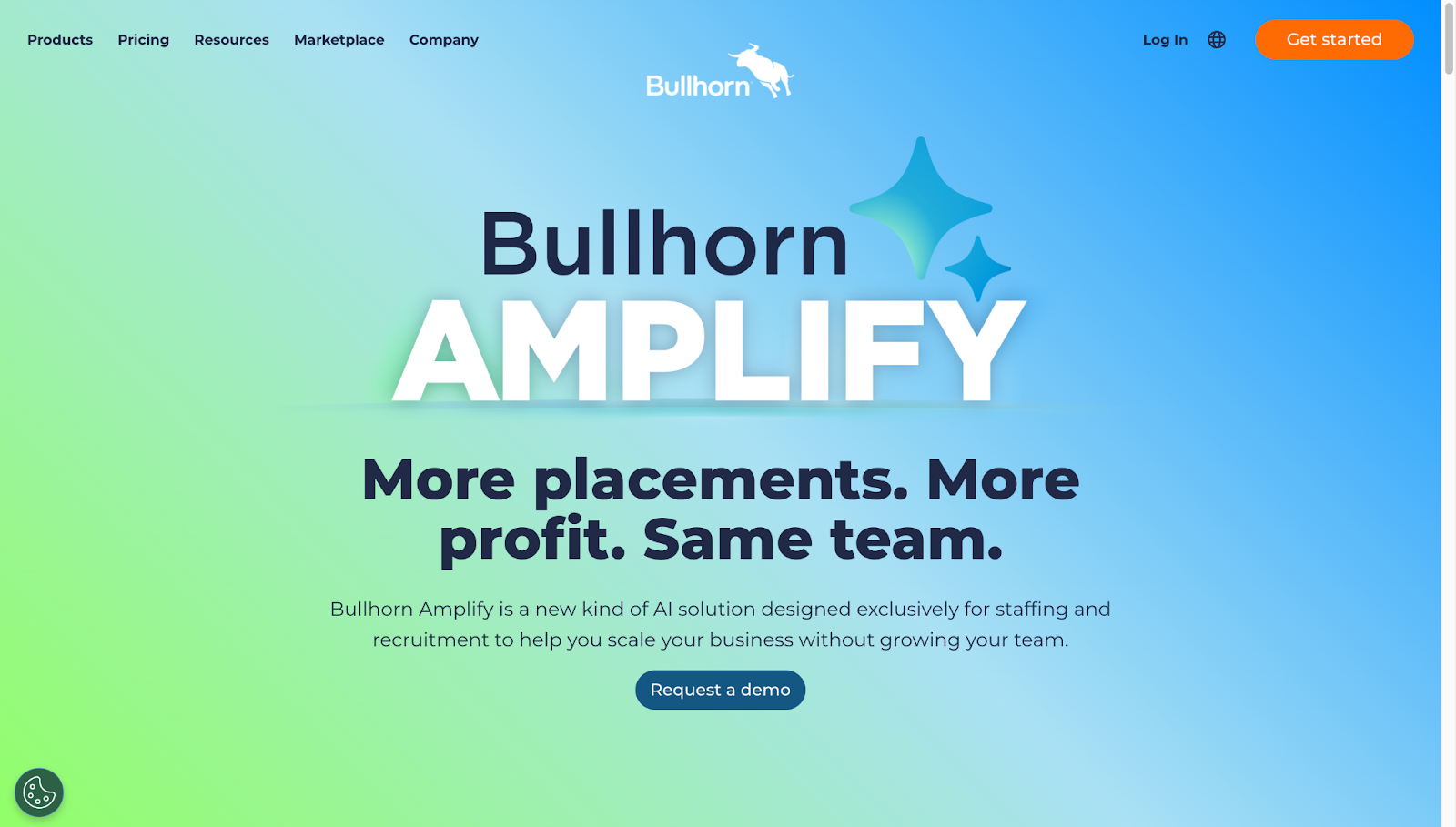
Bullhorn is a cloud-based recruiting platform commonly used by staffing firms and recruitment teams. It includes applicant tracking features, CRM components, sourcing tools, real-time notifications, and modules for managing placements. The system is designed to centralize activities such as pipeline tracking, job requisitions, client communication, and contractor onboarding within one interface.
Symplr at a glance
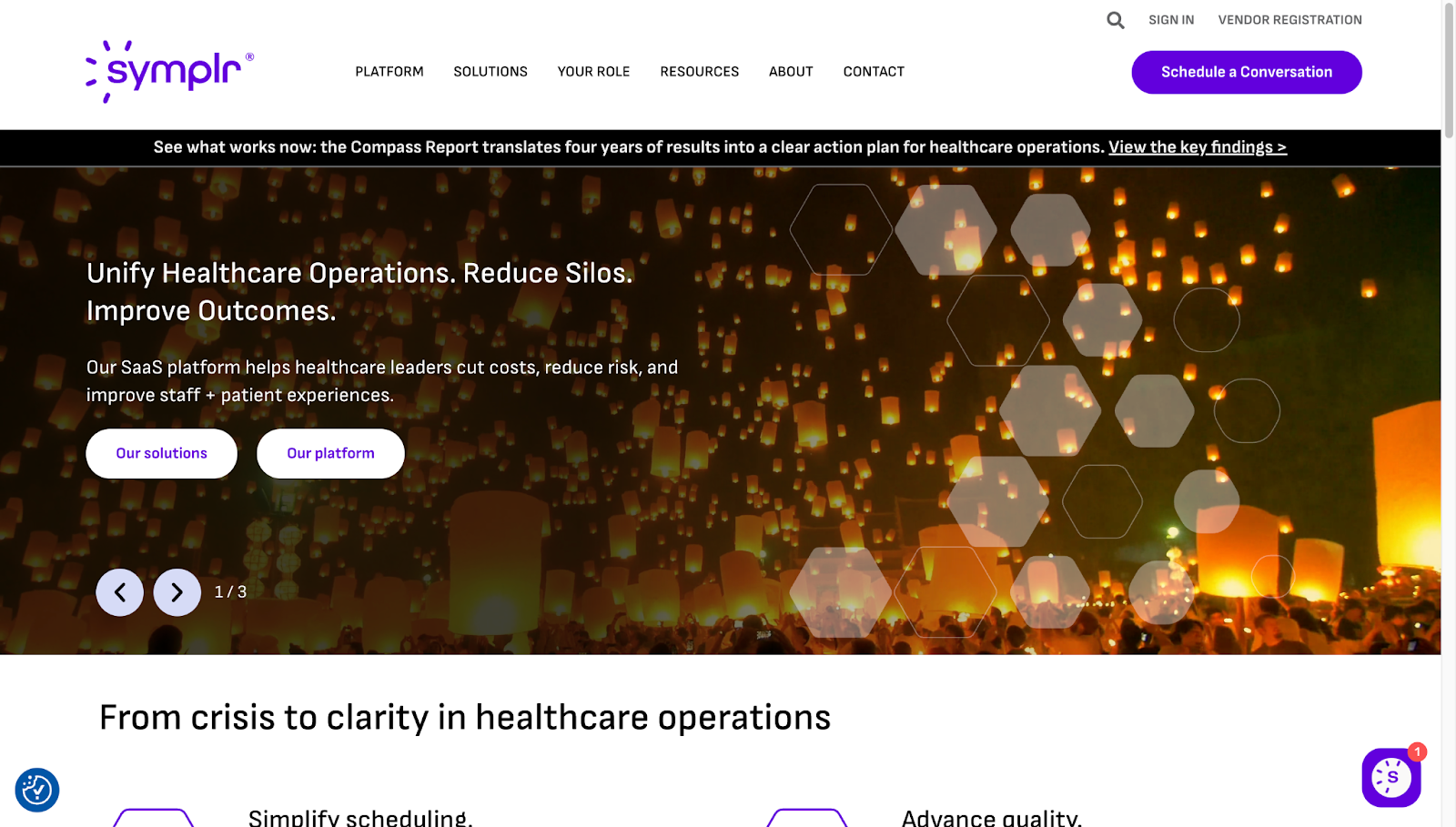
Symplr is a workforce management platform used primarily in healthcare settings. It includes tools for provider credentialing, compliance tracking, employee management, and vendor oversight. The system is structured to support workflows related to staffing, onboarding, documentation, and performance requirements. It is commonly used by hospitals, clinics, and other healthcare organizations that need to manage regulated workforce processes at scale.
Comparing core features
Recruiting and ATS capabilities
Bullhorn focuses on traditional recruiting tasks. It offers tools for parsing resumes, organizing candidate information, communicating with applicants, and coordinating interviews. These features are meant to help recruiting teams keep track of high volumes of candidates and job activity in one place.
Symplr also includes applicant tracking, but it’s tailored to healthcare roles. Credential checks, compliance steps, and background requirements are built into the workflow, reflecting the regulatory nature of clinical hiring. Its recruiting features are more structured around risk, documentation, and verification rather than sourcing or outreach.
CRM and client management
Bullhorn includes CRM functionality that allows teams to monitor client activity, track communication, and follow sales pipelines. It’s designed for agencies that need to manage both candidate pipelines and client relationships together.
Symplr takes a different approach. Instead of general CRM tools, it focuses on maintaining provider and vendor records. The system is centered on keeping accurate documentation and history for healthcare professionals, not managing broad sales relationships.
Talent management and workforce features
Symplr goes deeper into workforce management, especially for clinical environments. This includes scheduling, attendance tracking, compliance monitoring, and performance-related workflows. It reflects the operational realities of coordinating large provider teams with strict documentation requirements.
Bullhorn does offer tools for placed workers, mainly onboarding, time entry, and payroll-related integrations, but any full workforce oversight capabilities are only achieved through external acquisitions. These features don’t have the same depth and connectivity when compared to a more integrated system.
Integrations and ecosystem
Bullhorn connects with recruiting-related tools such as job boards, background check providers, and marketing automation systems. These integrations support agencies that rely heavily on sourcing workflows and front-office coordination.
Symplr integrates with systems more common in healthcare, like EMRs, HRIS platforms, and healthcare-specific HCM solutions. These connections help centralize provider records and support compliance-heavy operations.
Reporting and analytics
Bullhorn’s reporting centers on recruiting performance like pipeline progression, sourcing efficiency, and placement activity. It’s designed to help teams understand where candidates are getting stuck and how workflows are performing.
Symplr’s analytics focus on workforce utilization, compliance issues, credentialing timelines, and labor patterns. Its reporting is geared toward understanding workforce readiness and operational risk within healthcare settings.
Pricing comparison
Bullhorn
Bullhorn uses a subscription model where pricing varies based on the number of users and the modules an organization needs. Tools such as the ATS, CRM features, sourcing add-ons, and back-office components are packaged separately, so the total cost depends on how much of the platform a team chooses to implement. Most staffing firms request a quote to get an accurate breakdown.
Symplr
Symplr also follows a modular pricing approach, especially for its workforce and compliance tools. Healthcare organizations typically pay for the specific functions they rely on such as credentialing workflows, time and attendance, or broader workforce management features. Pricing varies based on provider volume and operational scope, so a custom quote is usually required to understand the full cost.
Who Bullhorn or Symplr could work for
When Bullhorn is the better choice
Bullhorn tends to align with organizations that focus primarily on traditional recruiting workflows. Teams that handle large volumes of job postings, candidate outreach, and client communication often use it to keep these activities organized in one system. It’s generally suited for staffing environments where applicant tracking, sourcing processes, and front-office coordination are the core operational needs.
When Symplr is the better choice
Symplr is typically a stronger fit for healthcare organizations and healthcare staffing providers that manage credentialing requirements, compliance steps, and ongoing workforce oversight. Its workflows reflect the documentation, verification, and scheduling demands common in clinical environments. Teams responsible for managing providers, maintaining regulatory records, or coordinating shifts often rely on Symplr’s healthcare-specific tools.
Pros and cons for each platform
Bullhorn
Pros:
- Deep applicant tracking system functionality
- Robust CRM for managing client pipelines
- Wide range of recruiting software integrations
- Strong automation for minimizing manual processes
- High ease of use for recruiters and staffing firms
Cons:
- Fragmented healthcare workforce management tools through add-ons or integrations
- Pricing may be higher for smaller agencies
Symplr
Pros:
- Purpose-built for healthcare staffing and healthcare workforce management
- Strong credentialing and compliance management capabilities
- Streamlined onboarding process for healthcare providers
- Seamless integration with HRIS, EMR, and HCM systems
- Effective for large, complex healthcare staffing environments
Cons:
- Less depth in general recruiting and sourcing
- Not designed to replace a complete sales CRM
When you need more than Bullhorn or Symplr
Your final decision depends on the type of work your organization handles every day. Bullhorn is built around traditional recruiting activity, making it a better match for teams that prioritize applicant tracking, sourcing, and client coordination. Symplr, meanwhile, is geared toward healthcare environments where credentialing, compliance, and provider management drive most operational needs. But many organizations find they need capabilities that span both sides, recruiting, scheduling, compliance, and ongoing workforce oversight. If your workflows don’t fit neatly into one category, it may be worth considering a third option that brings these functions together in a single system.
Why Teambridge is the best alternative
Teambridge takes a more all-in-one approach than both Bullhorn and Symplr by combining applicant tracking, scheduling, time and attendance, onboarding, credentialing, and team communication into a single platform. Instead of relying on separate tools for recruiting, compliance, and shift management, organizations can manage the entire workforce lifecycle in one system. This setup reduces the manual coordination, data handoffs, and system switching that often slow teams down, especially for staffing firms, healthcare organizations, and shift-based operations.
Designed as “workforce infrastructure,” Teambridge focuses on fast-moving and dynamic environments, where schedules change quickly and credential requirements need to stay active and updated. Its mobile-first design and automation features support both admins and frontline teams, offering a more flexible, customizable, and consolidated alternative for organizations that need recruiting and workforce management working together rather than in separate systems.
Book a demo today to see how Teambridge can help you scale faster, make smarter decisions, and drive impact where it matters most.