

That gap is why the employee communication app category exists. But most products in the category were designed for engagement programs and company newsfeeds. For operators running hourly workforces, communication is not a culture initiative. It is the connective tissue between a schedule change and a confirmed worker standing on site.
This explainer defines what the category actually does, shows the workflow when messaging lives inside workforce operations, walks a labeled worked scenario, compares the three common approaches, and ends with a decision checklist you can reuse in any vendor evaluation.
Why 20% email open rates leave shift workers unreachable
Internal email open rates for hourly populations routinely land in the 20 to 25 percent range, and that assumes the worker has an address at all. Deskless workers often onboard with a phone number and nothing else. Even when they do have email, the message competes with a personal inbox they check after a shift, if that.
The operational consequence is not low engagement. It is specific and billable:
- A staffing coordinator sends a venue change to 40 event staff and 11 show up at the wrong door.
- A healthcare float pool manager emails a shift offer; by the time anyone replies, the unit is already short.
- A credential notice goes unread, and a worker arrives on site with a lapsed certification the client rejects.
Every one of those is a communication failure that shows up as an operational cost: overtime to cover gaps, client credits, compliance exposure. Treating communication as an HR perk is how agencies end up running mission-critical dispatch over SMS threads on a coordinator's personal phone.
What an employee communication app actually does
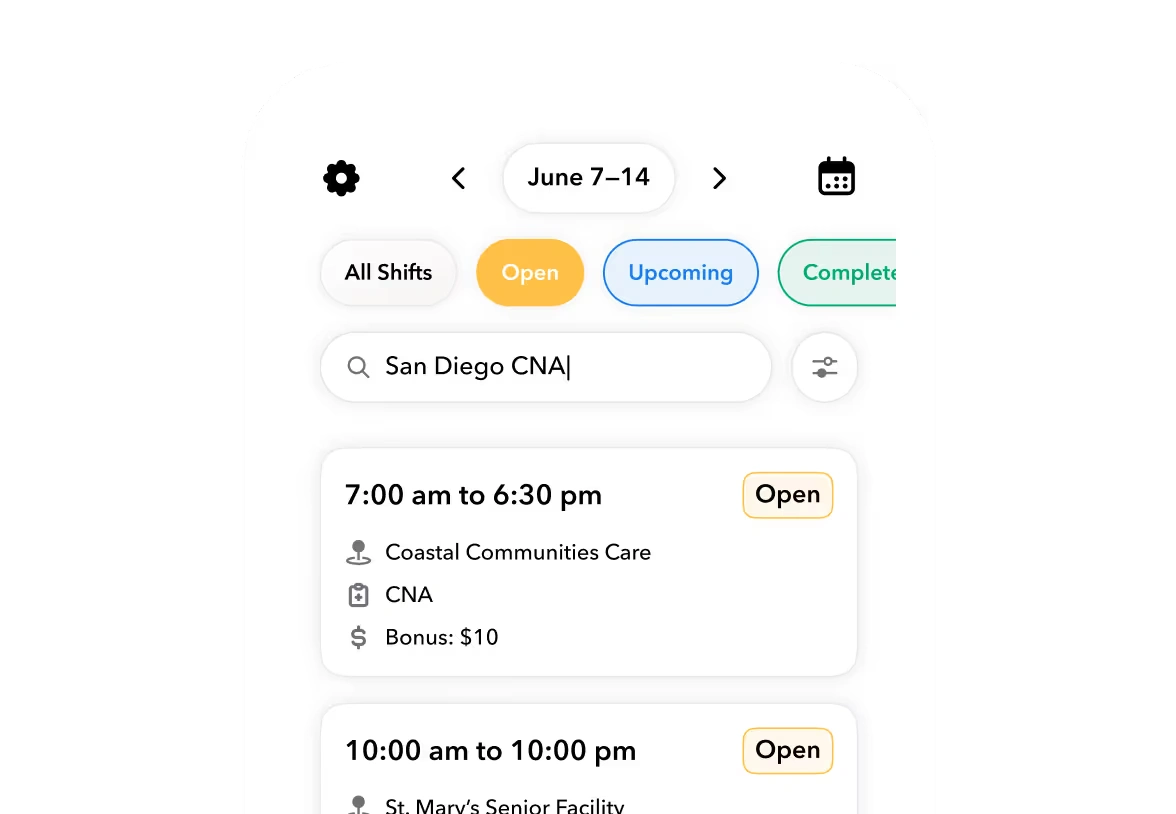
Strip away the engagement marketing and a communication tool for shift workforces has five jobs:
- Broadcast announcements to a defined audience, with delivery tracked.
- 1:1 and group messaging between coordinators, supervisors, and workers.
- Read receipts and confirmation states, so a coordinator knows who has acknowledged, not just who was sent a message.
- SMS fallback, so a worker without the app installed still receives the message as a text.
- Audience segmentation by role, site, credential status, or scheduled shift, so a message about a kitchen call time goes only to kitchen staff on that event.
This is where the category splits from general chat tools. Slack and Microsoft Teams assume company-managed accounts, desk access, and persistent employment. A staffing agency's workforce is fluid: workers activate for an event, go quiet for weeks, and may never touch a laptop. Tools that require a corporate identity provider or an email-based invite fail at the first login screen.
Ready to move?
Ready to see Teambridge in action?
The workflow: from schedule change to confirmed worker in five steps
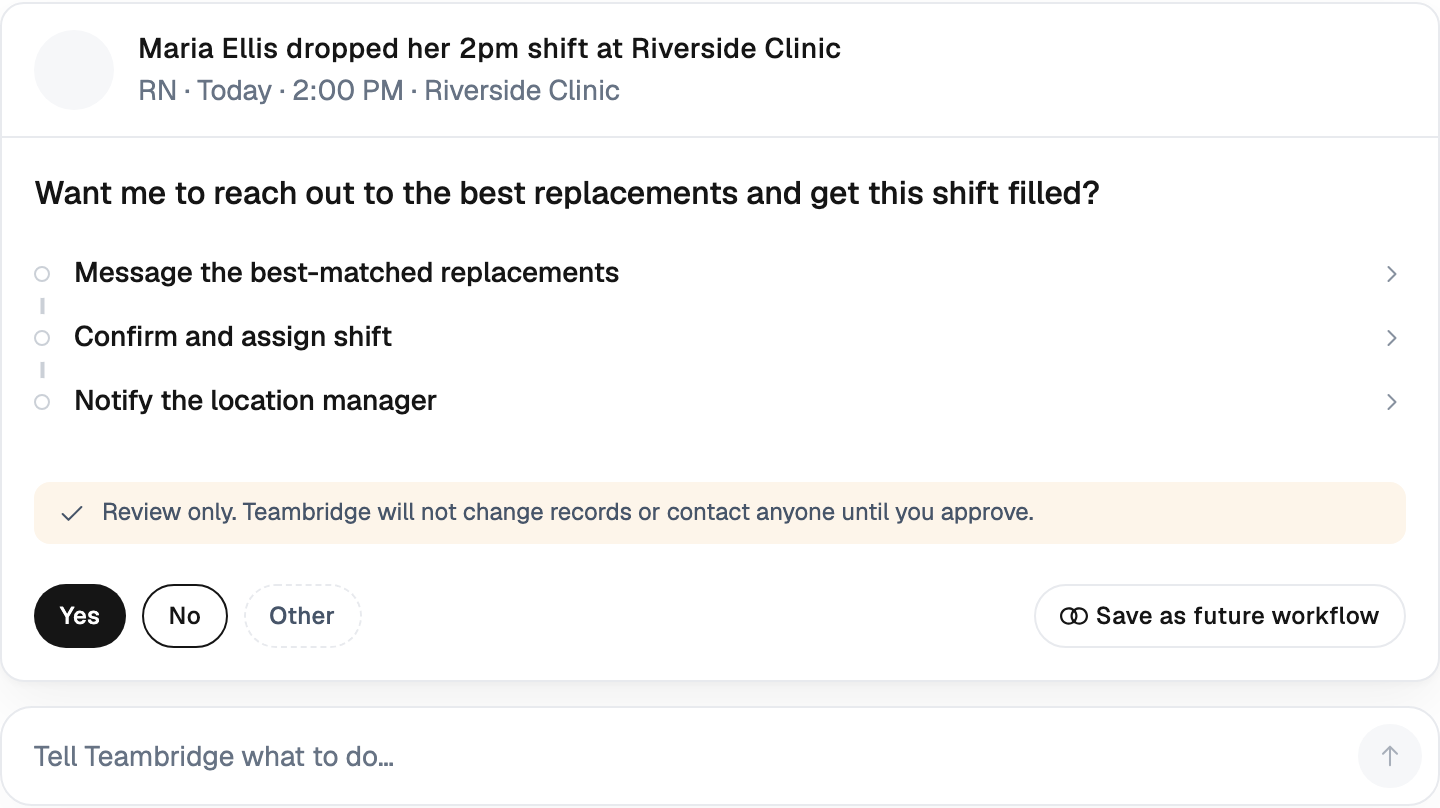
When communication lives inside the same system as scheduling and time tracking, a message can trigger an action instead of just a notification. Here is the operating sequence when a client changes an order:
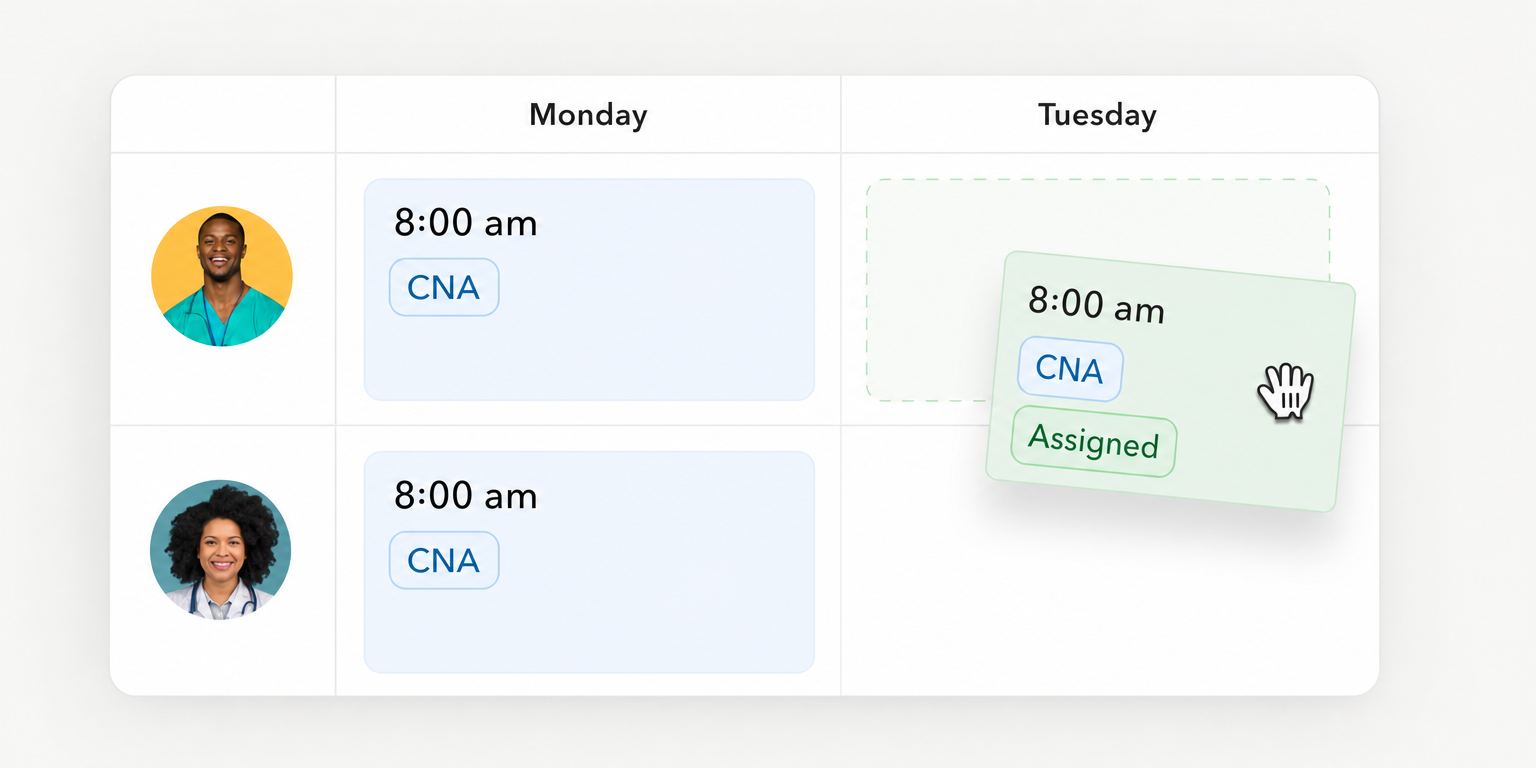
- The schedule changes. A client cancels a shift or adds headcount. The change lands in the scheduling system, not in a coordinator's inbox.
- The system identifies eligible workers. Availability, role, and credential status filter the audience automatically. A worker with an expiring food handler card never gets offered the catering shift.
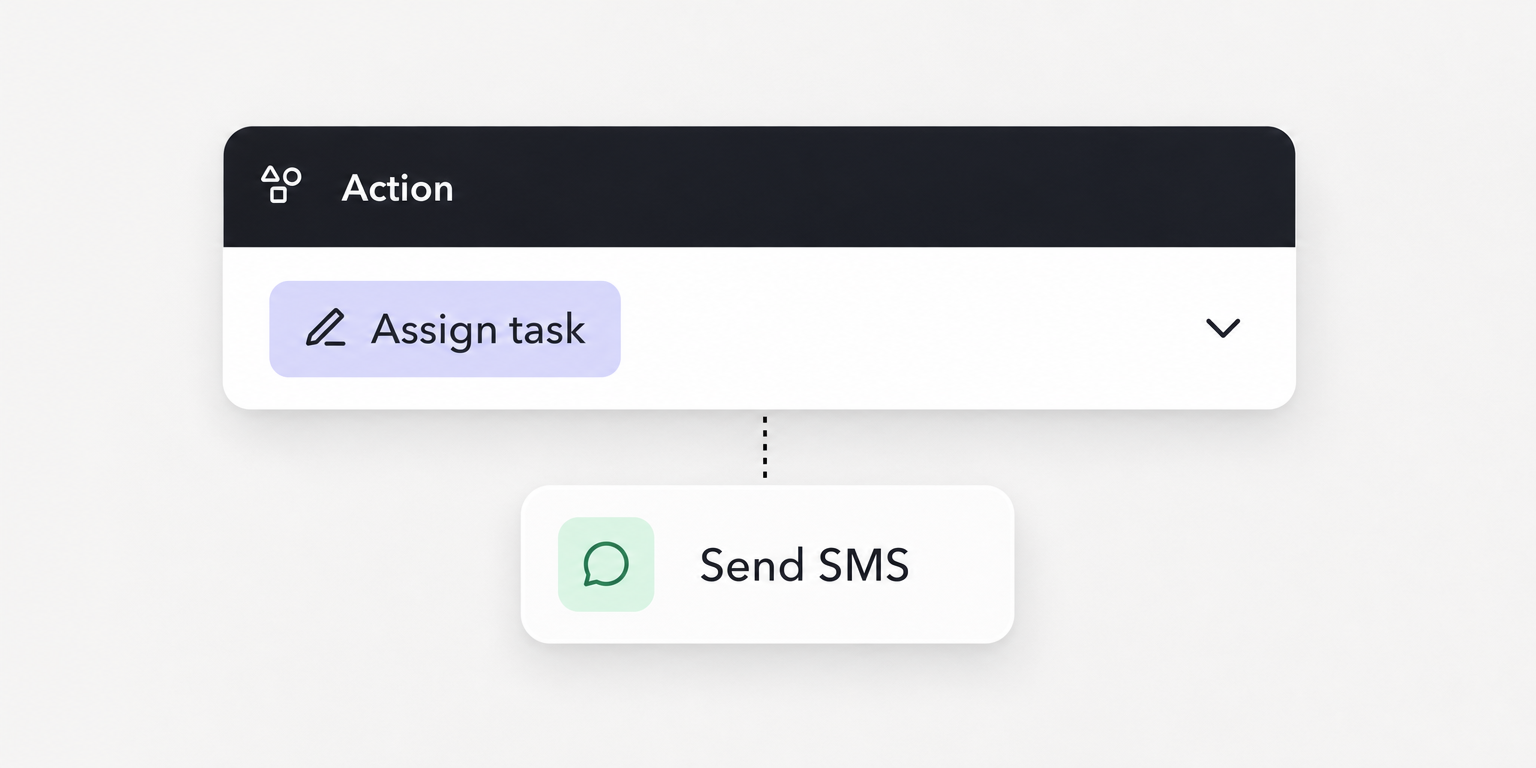
- A targeted broadcast goes out. Only the eligible segment receives it, in-app first, with SMS fallback for anyone without the app installed.
- Workers confirm in place. A tap on the notification confirms or declines the shift. No reply-all, no phone tag.
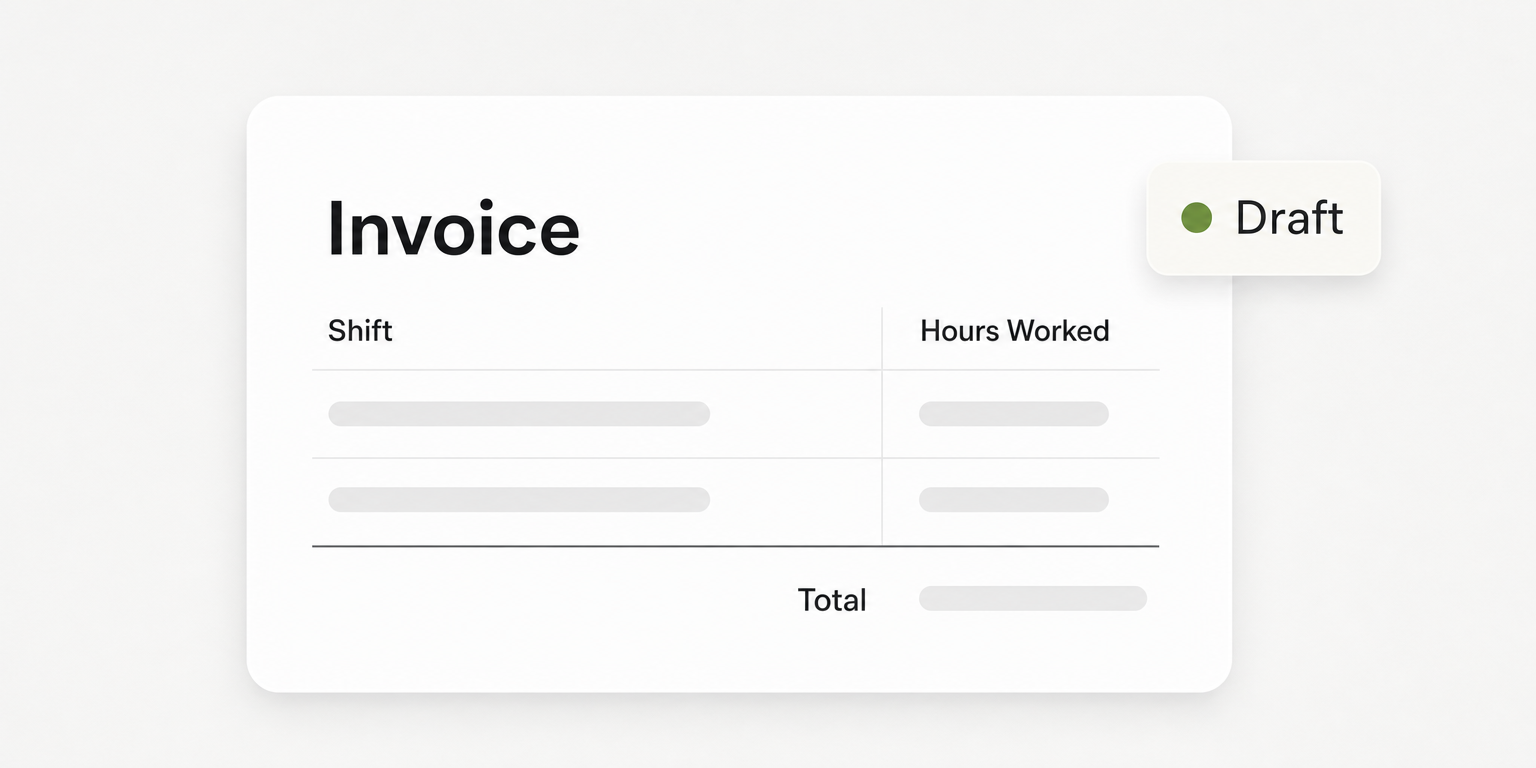
- The schedule and time tracking update. The confirmed worker appears on the roster, and their timecard is ready for the shift. Nothing gets re-keyed.
Compare that to the phone-tree approach most agencies still run: a coordinator works a spreadsheet, calls or texts workers one at a time, tracks responses in a second spreadsheet, and updates the schedule by hand at the end. It works at ten workers. It collapses at a hundred.
The Teambridge Communication feature is built on this model: messaging tied to the worker's schedule and credential record, so coordinators only message people who are actually scheduled and eligible, and every confirmation writes back to the roster inside the Teambridge platform.
Products discussed
Employee Communication App for Shift Workforces: How It Works tools mentioned
Official marks identify the products materially discussed in this section.
Worked scenario: filling 40 event shifts in 90 minutes
This is a labeled hypothetical with stated assumptions. It is not a customer result.
A live events staffing agency gets a venue change notice at 4:00 PM for a 6:00 PM call time. Forty workers are confirmed across three roles: 20 general event staff, 12 bartenders, 8 setup crew. Every worker needs the new address, the new load-in door, and a re-confirmation that they can still make it.
Assumptions, stated openly:
- Manual method: 3 minutes per contact attempt, 50% voicemail rate meaning half of workers need a second attempt, one coordinator working the list.
- Broadcast method: one segmented send per role, workers confirm in-app or by SMS reply, coordinator chases only non-responders.
Operator view
Manual call tree versus segmented broadcast: 40 workers, 120-minute window
Assumptions: 3 minutes per contact attempt, 50% of workers need a second attempt, one coordinator. Broadcast assumes 80% confirm without a chase, 20% need a follow-up call.
- 01Filter the roster by role: 20 event staff, 12 bartenders, 8 setup crew.
- 02Send one broadcast per segment with the new venue details and a confirm button.
- 03Watch the confirmation dashboard fill; SMS fallback reaches workers without the app.
- 04Call only the non-responders, the 8 workers who have not confirmed after 30 minutes.
- 05Escalate any declines to backfill from the eligible bench, filtered by credential.
The math moves with the assumptions. If your workforce answers texts at 95%, the manual approach degrades less. If your average worker is mid-shift at another job at 4 PM, the voicemail rate climbs past 50% and the manual model breaks harder. The point is not the specific numbers. It is that broadcast-plus-confirmation converts a linear, one-coordinator problem into a parallel one where the workers do the responding.
Standalone apps versus communication built into the operations platform
There are three realistic approaches, and they are not interchangeable.
| Dimension | Consumer group texts | Standalone communication app | Platform-native communication |
|---|---|---|---|
| Example | WhatsApp, iMessage | Connecteam @ connecteam.com, Blink @ joinblink.com | Teambridge Communication |
| Cost | Free | Per hub, per user tiers | Included in the platform |
| Segmentation by role, site, credential | None | Role and group based | Native, driven by schedule and credential data |
| SMS fallback | It is SMS, but unmanaged | Varies by vendor | Built in |
| Read receipts and confirmation states | Read only, no confirm action | Yes | Yes, and confirmations write back to the schedule |
| Audit trail | On a personal phone | In the app | In the system of record |
| Re-keying confirmations into scheduling | Always | Usually | Never |
A note on real costs: Connecteam prices each of its three hubs separately, so the Communications hub is a distinct subscription from the Operations hub that holds scheduling and time tracking. A team that wants chat plus scheduling pays for two hubs, and the two still do not share a confirmation workflow the way a single data model does.
Boundary, stated plainly: Teambridge fits multi-site hourly workforces in staffing, healthcare, venues, retail, and facilities, where communication must connect to scheduling, credentials, and timecards. A desk-based organization that wants a social intranet, company newsfeed, and recognition program is better served by a tool like Blink, which is built for that job. Blink reports 87% adoption at JD Sports for exactly that kind of frontline engagement use case.
Adoption is the real feature: SMS fallback and no-email sign-in
Most communication rollouts fail for predictable reasons. Workers have no corporate email, so the invite never arrives. Devices are old, storage is full, and a 200 MB app download is a hard no. And there is no reason to open yet another app unless something they need lives inside it.
The mechanics that actually drive adoption:
- Phone-number sign-in. The worker's identity is their mobile number, not an email they do not have.
- SMS fallback. The message lands as a text even if the app is never installed. The app becomes an upgrade, not a gate.
- A reason to open it. If the schedule, the timecard, and the shift offers all live in the same app, workers open it because their pay depends on it.
- Relevant messages only. When managers can only message workers who are actually scheduled or eligible, the channel stays high-signal and workers do not mute it.
Published benchmarks from the frontline category show what good looks like: Blink cites 87% adoption at JD Sports and 88% at easyJet on its customer page. Those are engagement-app numbers, and they come from large retail rollouts with real change management behind them. Treat anything above 80% weekly active use as a strong outcome, and be skeptical of any vendor that cannot show you adoption data at all.
Important
Adoption is a workflow property, not a communications property. If the app only carries announcements, workers will ignore it. If it carries the schedule, the shift offers, and the timecard, adoption follows the paycheck.
Decision framework: what to check before you buy
Use this checklist in any vendor evaluation. Each question maps to a failure mode we see in real operations.
- Can you segment by site, role, and credential status? If segmentation is manual list-building, it will not survive a 4 PM emergency.
- Does it fall back to SMS? Ask whether the fallback is native or a third-party integration, and who pays for message volume.
- Do read receipts feed an exception queue a coordinator actually works? A read count on a dashboard is not a workflow. You want a list of non-responders to chase.
- Does messaging connect to scheduling and time tracking? If not, your team re-keys every confirmation, and the tool adds work instead of removing it.
- What happens to message history when a worker leaves? For staffing agencies, the audit trail matters when a client disputes whether a change was communicated. Ask where history lives and how long it is retained.
- How does a worker sign in? Email-based invites are a disqualifier for deskless populations.
The decision rule at the end: if your communication needs are engagement-oriented, meaning news, recognition, and culture for a stable employed workforce, a standalone app like Blink or Connecteam's Communications hub is enough. If a missed message means a missed shift, an unfilled post, or a compliance gap, communication belongs inside the workforce platform where the schedule and the credential data already live.
To see the platform-native version, start with Teambridge Communication and the broader Teambridge platform, or browse customer stories from staffing agencies and venue operators running this workflow in production.
About the author
Content Writer at Teambridge
Anis Nanai is a content writer at Teambridge, with a focus on workforce management and the realities of running hourly teams. He prioritizes conversations with customers, staying close to the market, and understanding how workforce needs are changing. His writing connects those concerns to practical decisions about scheduling, time tracking, staffing, and automation. He examines product developments through the questions that matter to operators: what does this solve, how would it work for my team, and what evidence supports it?
Company perspective: this author works at Teambridge. Customer outcomes are attributed to their published sources.
View LinkedIn profile