

Build the matrix around four separate readiness records
Use the following copyable matrix as an assignment readiness record. Each row connects one employee with a defined role, skill and equipment scope. Repeat the row when the equipment or permitted work changes enough to require a separate decision.
The blank row is the reusable template. The completed row is entirely hypothetical, including Operator A, the packaging station, evidence reference and dates. It assumes locally defined inspection criteria and a supervisor who controls assignment permission.
| Role | Specific skill and equipment | Required performance criteria | Employee | Self assessment | Observed proficiency | Training status | Assignment permission | Evidence reference | Assessor | Assessment date | Recheck date |
|---|---|---|---|---|---|---|---|---|---|---|---|
| [Role] | [Task and equipment identifier] | [Observable acceptance criteria] | [Employee identifier] | [Not assessed, 0, 1 or 2] | [Not assessed, 0, 1 or 2] | [Required training and completion record] | [Permitted scope, restrictions and approving supervisor] | [Record location] | [Assessor identity] | [Date] | [Planned date] |
| Packaging operator | Label inspection at packaging station P1 | Compare label with approved job specification; identify a mismatch; hold affected packaging and notify supervisor | Operator A | 2 | 1 | Local label inspection training complete; training record T014 | Supervised label inspection only; approved by responsible packaging supervisor | Observation record 014 | Training coordinator acting as assessor | September 22, 2026 | October 6, 2026 |
Use the same scale without merging the records
This is a proposed operating design, not a NIST standard. Apply this illustrative scale separately to self assessment and observation:
- Not assessed: No assessment is recorded in that column.
- 0: The task is not yet demonstrated.
- 1: The task is demonstrated with coaching.
- 2: The task is demonstrated independently against the stated criteria.
For self assessment, these values represent the employee's account of their ability. For observed proficiency, they represent the assessor's recorded finding. A self reported 2 is not evidence that an assessor observed independent performance.
Assignment permission is a separate decision, never a formula calculated from either rating. Record the permitted scope, any supervision requirement and the approving supervisor. In a live record, replace role labels such as “training coordinator” with an identifiable assessor so another supervisor can trace the decision.
A completed training record can still mean supervised work only
In the hypothetical row, Operator A reports level 2 after completing local label inspection training. During a trial, the training coordinator has to prompt the operator to compare the label with the approved job specification before accepting it. The coordinator therefore records observed proficiency at level 1 and describes the prompt in observation record 014.
Neither record overwrites the other. Self assessment identifies confidence and can help the coordinator decide where to focus the trial. Observation records what actually happened under the stated conditions.
Training completion also remains intact. The worker completed the assigned training, but the observed trial did not demonstrate independent performance against the local criteria. The supervisor permits supervised label inspection only, rather than changing the training status to make the columns agree.
Completed training describes an activity finished. Assignment permission describes work the employee may perform.
The October 6, 2026 recheck is a planned review in this fictional example, not a completed assessment or a universal interval. Until a new decision is recorded, the row does not support using Operator A as an independent replacement at station P1.
Important
A training record or numerical rating is not a professional license or independent credential verification. Keep any separately required qualification checks outside this illustrative scale and retain their supporting evidence.
Define the task before deciding what proficiency means
“Packaging” is too broad to support a coverage decision. An employee might inspect labels correctly but not be approved to change machine settings, clear a jam or release a production batch. A single packaging score hides those boundaries.
Write each row around a task a supervisor can actually assign. Identify the equipment, the work included and the observable acceptance criteria. Where an equipment family shares one assessment, document that scope rather than assuming that experience on one station transfers to every station.
For the hypothetical P1 task, the criteria are local choices: compare the label with the approved job specification, identify a mismatch, hold the affected packaging and notify the supervisor. They do not establish permission to adjust the label applicator or perform maintenance. Those activities would require their own requirements and assignment decisions.
NIST's analysis of the Manufacturing USA occupation and competency framework supports using explicit occupation and skill language to create common understanding. It does not certify an individual operator or prescribe this matrix's rating scale.
NIST's Training Within Industry guidance describes Job Instruction through preparation, demonstration, trainee trial runs and follow up as coaching decreases. That supports recording a demonstrated task rather than treating attendance as proof of proficiency.
Operator view
Supporting evidence
The evidence reference should lead to more than a completion badge. A useful observation record identifies the task version, conditions of the trial, criteria checked and any prompts required. That gives the next assessor something concrete to reassess and the supervisor a basis for limiting the assignment.
Put the workflow into practice
See how your team could use this workflow
A qualified backup must match the assignment, not just the score
A backup is qualified for a particular assignment under particular conditions. The question is not whether someone has the highest overall score. It is whether their evidence and permission match the work that needs coverage.
Attach this checklist to the matrix review when identifying a backup:
- Confirm the exact task, equipment and scope of the uncovered assignment.
- Compare observed evidence with the performance criteria required for that role.
- Confirm completion of the required training using its supporting record.
- Review restrictions, required supervision and the status of any planned recheck.
- Verify separately required credentials through the appropriate process, not through the numerical score.
- Record the responsible supervisor's assignment decision, including any conditions or unresolved gaps.
Operator A does not qualify as an independent backup for the hypothetical P1 assignment. The recorded permission requires supervision. If the uncovered assignment has no suitable supervision, the worker's confidence and completed training do not close that gap.
The same reasoning applies when a worker has observed proficiency at level 2 but the evidence covers different equipment. Do not stretch the row to cover an assignment it was never intended to support. Ask the responsible supervisor or assessor to resolve the scope before using the employee as coverage.
Missing evidence requires review, not an assumed pass. Keep the assignment decision pending or restricted under local policy until the responsible person resolves the missing record. Avoid replacing “Not assessed” with 0, because no recorded assessment and an observed performance gap are different conditions.
A due recheck also needs interpretation under the site's policy. The date should prompt the specified review action, not silently extend permission or automatically impose a universal expiration rule that the organization never established.
Onboarding documents support the matrix but do not prove proficiency
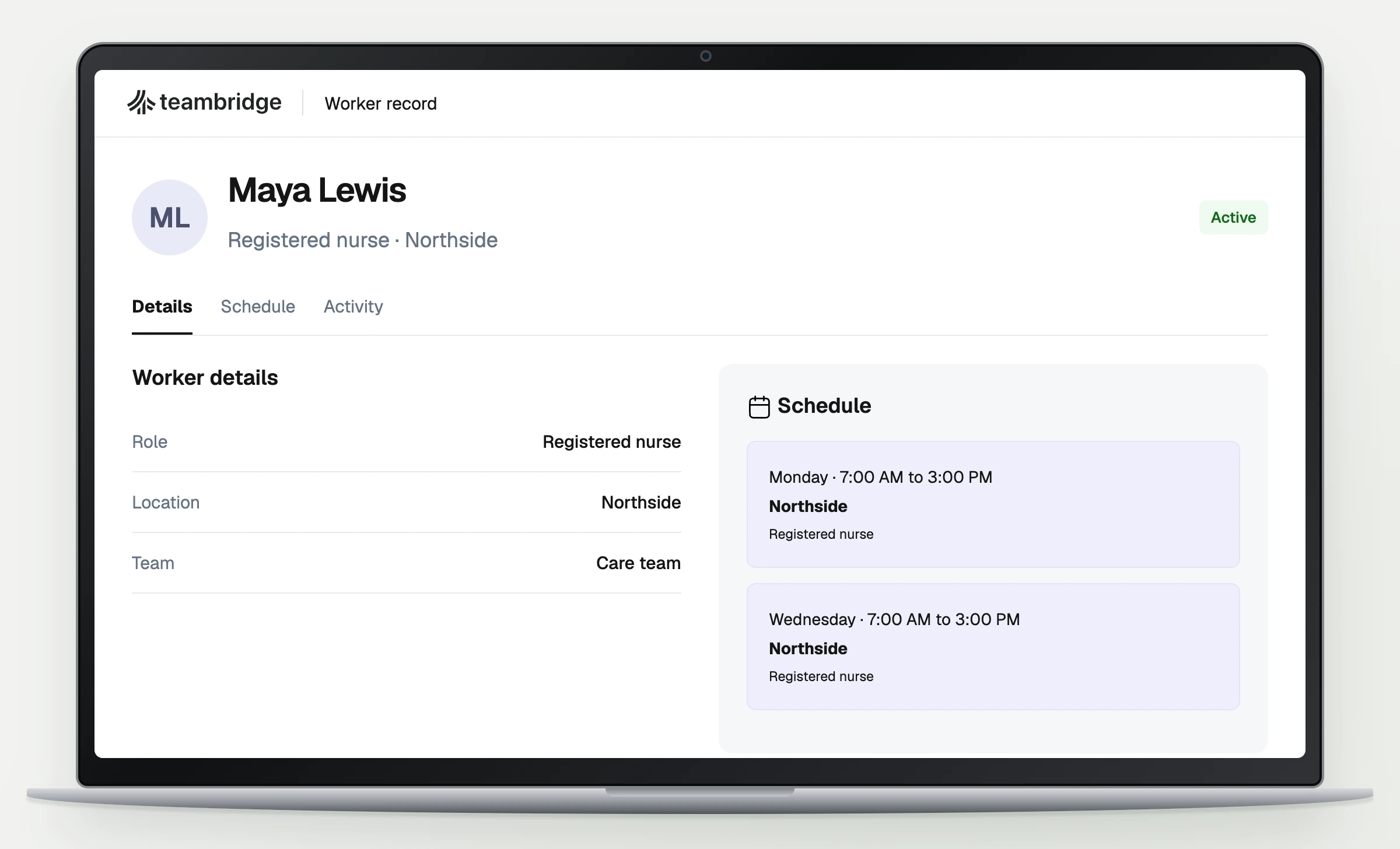
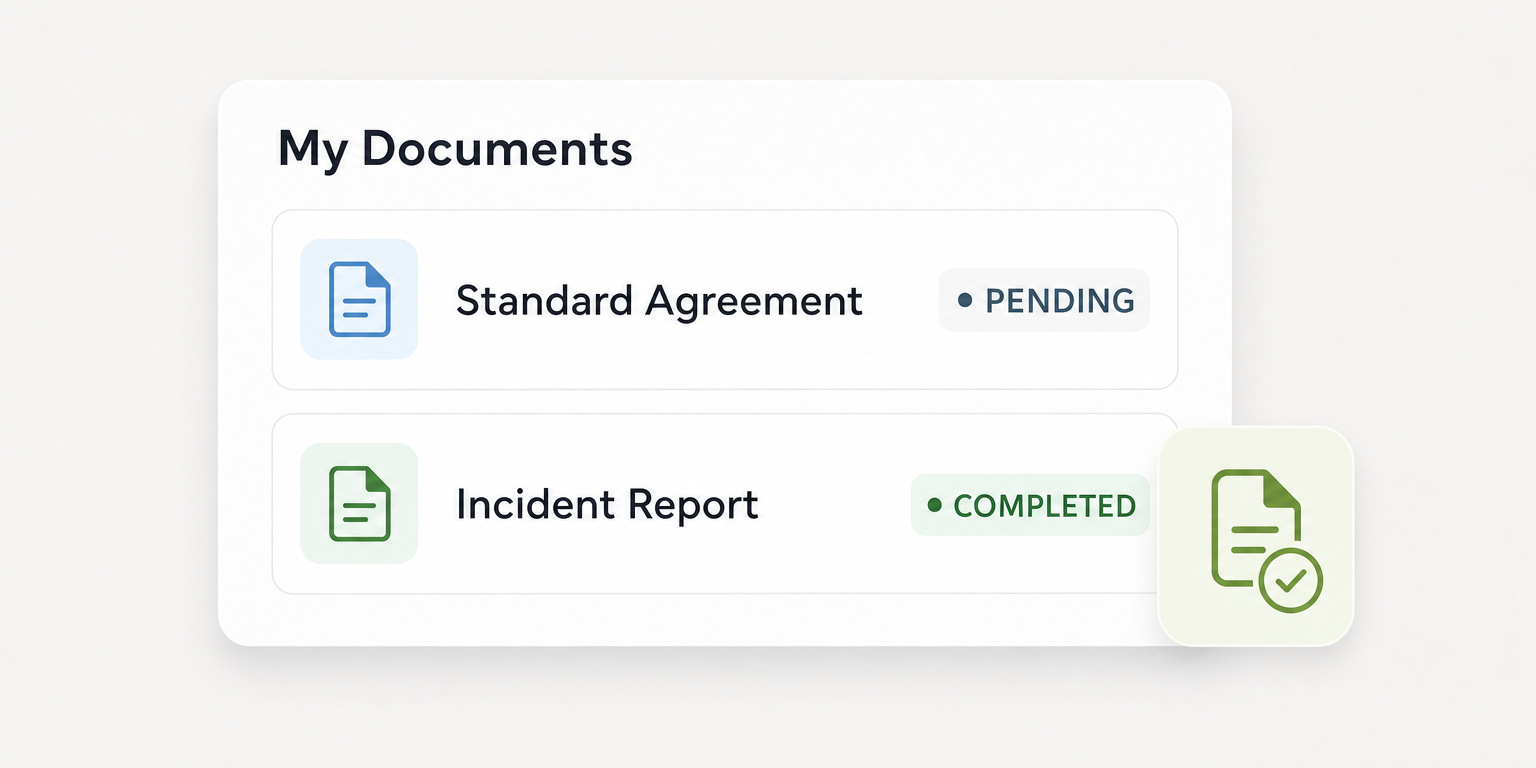
The matrix depends on supporting records being available and reviewed. Teambridge Onboarding is an operational option for collecting that material: its product page describes forms and files attached to worker requirements, credential uploads, missing item requests and manager review queues.
The same page describes document extraction by Scout and states that extraction supports review while the customer's approval policy controls the outcome. Extracting a date or document field is not the same as establishing that an employee can perform the P1 task independently.
Use those capabilities for the document collection and review portion of the workflow. Keep practical observation and assignment permission tied to the people responsible for those decisions. The cited product overview does not establish a native manufacturing skills matrix, practical assessment capability or independent credential verification.
Before implementing a connected workflow, obtain product documentation for required access, configuration, saved review states and exception handling. The public overview alone does not establish those implementation details. In particular, confirm how the organization will distinguish a reviewed document from an approved work assignment without assuming that one status creates the other.
For the broader training program around these records, use the manufacturing onboarding best practices guide. The narrower purpose here is to make assignment readiness legible after supporting documents have been collected.
Keep assignment permission current after the first assessment
Give each part of the record an owner. The training coordinator maintains the supporting training evidence. The assessor records observed performance, and the responsible supervisor owns assignment permission under local policy.
When reassessing an employee, retain the earlier evidence reference and add the new assessment rather than leaving only an unexplained replacement score. The supervisor should be able to tell what changed, who observed it and why the permitted scope changed. The matrix can remain compact while linked records preserve that history.
Changed equipment, a revised task, an observed performance gap or a scheduled recheck can all trigger review. Define the response locally and account for any applicable task requirements. Do not borrow a reassessment interval from an unrelated equipment category or treat the example's dates as a policy.
Start with one manufacturing role and the tasks that make coverage difficult. Populate the matrix, then test it against an actual backup decision: can another supervisor identify the evidence, understand the restrictions and determine who owns permission without asking around?
If the answer is no, repair the missing field or decision. A useful employee skills matrix does not merely display training progress. It makes the difference between completed learning and permitted work visible before the assignment is made.

About the author

Content Writer at Teambridge
Anis Nanai is a content writer at Teambridge, with a focus on workforce management and the realities of running hourly teams. He prioritizes conversations with customers, staying close to the market, and understanding how workforce needs are changing. His writing connects those concerns to practical decisions about scheduling, time tracking, staffing, and automation. He examines product developments through the questions that matter to operators: what does this solve, how would it work for my team, and what evidence supports it?
Company perspective: this author works at Teambridge. Customer outcomes are attributed to their published sources.
View LinkedIn profile