

Healthcare recruitment software must prove the path from application to first shift
Use the purchase audit below during vendor demonstrations. These are proposed acceptance tests, not documented capabilities of every vendor. The accountable owner decides whether the evidence is sufficient and owns escalation when a test fails.
Copy the table into your review document. In each pass evidence cell, record the result, a reference to the demonstrated record, and any unresolved work.
| Stage | Accountable owner | Vendor question | Pass evidence | Failure requiring escalation |
|---|---|---|---|---|
| Application | Recruiting lead | Can an RN submit experience, availability, and preferred locations by phone? | Submitted details remain usable in the candidate record without reentry. | Missing information or mobile access failure. |
| Selection | Hiring manager | Who owns the next decision, and where is it recorded? | Reviewer, unresolved question, and decision are visible to authorized users. | Advancement without an accountable decision. |
| Credential review | Credentialing lead | Can you distinguish uploaded, reviewed, approved, and expired records? | Reviewer retrieves supporting evidence and explains each status. | Upload alone grants approval. |
| First shift | Staffing manager | What happens when a required credential expires before the shift? | Assignment behavior follows the organization’s documented policy. | Assignment proceeds contrary to that policy. |
| System transfer | Implementation lead | Which fields, documents, and decisions arrive, and who sees errors? | Required records arrive intact; duplicate and failure handling are demonstrated. | Lost history, ambiguous duplicates, or silent failure. |
Before the demo, agree on one role, the information recruiters need, and the approvals required before assignment. Use fictional records rather than real applicant information. Give the vendor your test conditions in advance so the meeting produces evidence rather than a tour of unrelated features.
The package matters as much as the screen. Ask which demonstrated functions are included in the proposal, which need configuration, and which depend on another provider.
Application checks: Can an RN submit the information recruiters actually need?
The recruiting lead owns this check. Have the vendor demonstrate an application on a phone, then open the resulting candidate record using the access a recruiter would actually have.
For the sample RN, capture experience, availability, and preferred locations. Include an availability constraint that affects placement, such as nights only at one location. A generic “available” field may not give the recruiter enough information to make a useful decision.
The application passes when submitted information remains usable after submission. Recruiters should be able to find the details without asking the candidate to repeat them or reconstructing the application from messages.
Test an interrupted submission as well. Ask what the candidate can recover, what the recruiter can see, and how an incomplete record differs from a submitted application. Treat recovery behavior as a requirement to demonstrate, not an assumed feature.
Warning
Application design needs stage controls. EEOC guidance says employers generally cannot ask disability related questions or require medical examinations before a conditional offer. Have HR review proposed fields before making them part of the application test.
Escalate missing fields and mobile access problems to the recruiting lead. The buying mistake is approving an attractive application screen without checking the record it leaves behind.

Selection checks: Who owns the candidate’s next decision?
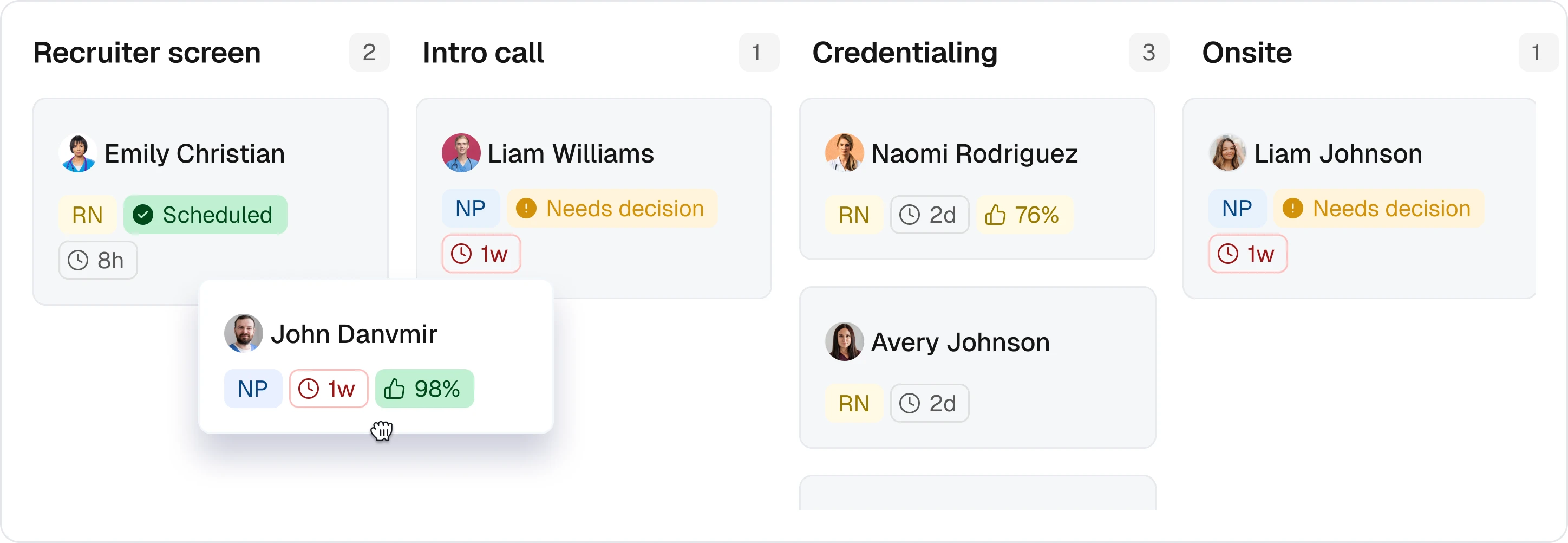
The hiring manager owns the selection row. Start with a candidate awaiting review and ask the vendor to identify the responsible reviewer, the unresolved question, and the next action.
Then have that reviewer record a decision. Reopen the candidate record with another authorized user to check whether the decision, owner, and supporting note remain visible. A status label such as “in progress” does not establish who must act.
The test passes when the people handling the candidate can distinguish a pending review from an approved decision. It fails when a candidate advances without accountable approval or when the team needs a separate spreadsheet to track who owes the next answer.
Ask what happens if the reviewer is unavailable. The demonstration should show how responsibility changes, who can make that change, and what history remains. Escalate ambiguous approval authority to the hiring manager rather than leaving the vendor to define your hiring policy.
Confirm the proposed package’s recruiting scope explicitly:
- Does it include the applicant tracking functions demonstrated?
- Does interview coordination require another product or service?
- Where does candidate sourcing happen, and who owns that record?
These are purchasing questions, not claims about Teambridge. A workforce platform’s operational scope does not, by itself, establish sourcing or interview management capabilities.
Credential checks: An uploaded license is not approval to work
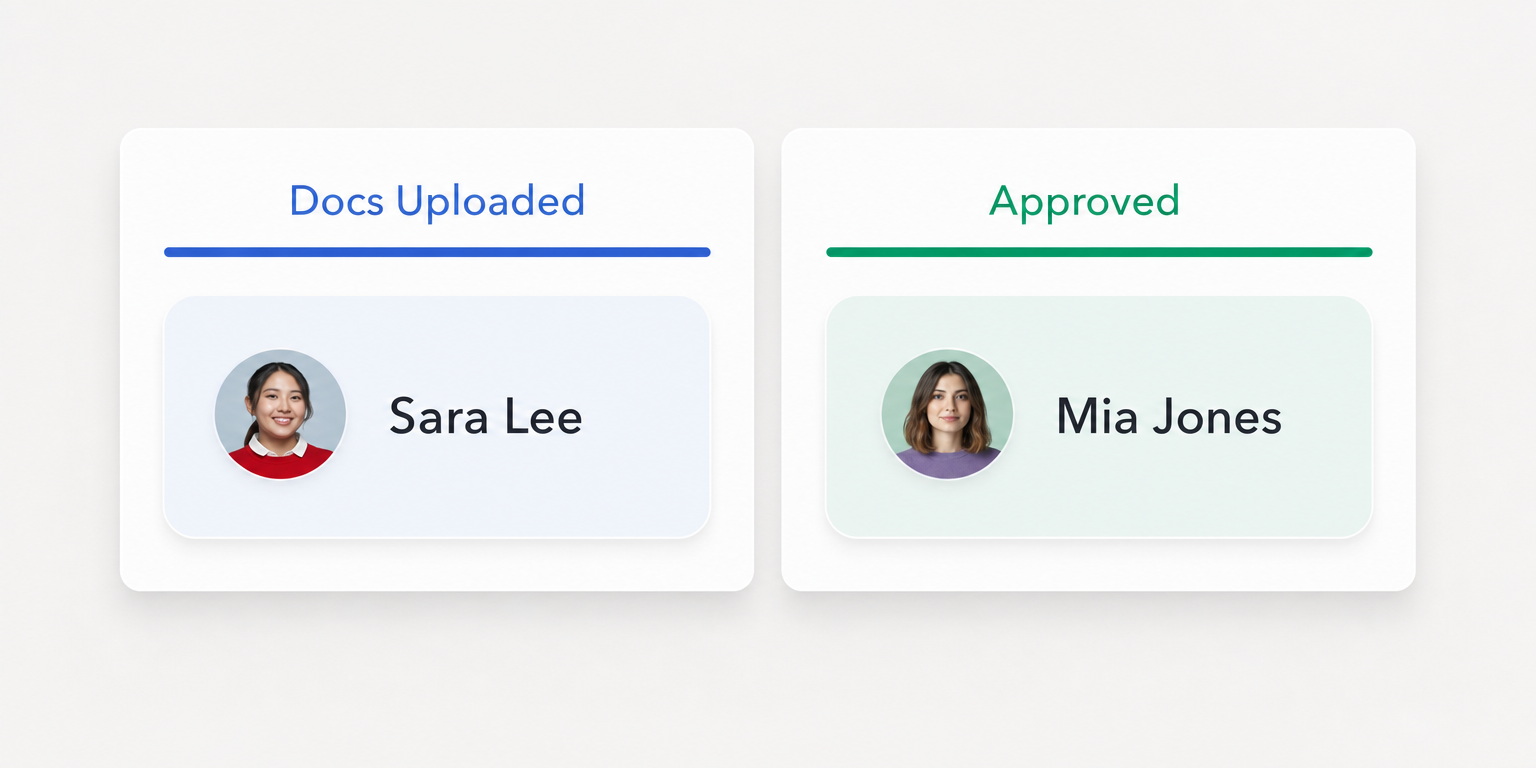
The credentialing lead owns this row. Give the vendor sample records representing an uploaded document, a reviewed document, an approved credential, and an expired credential. Ask the reviewer to explain the status of each and retrieve its supporting evidence.
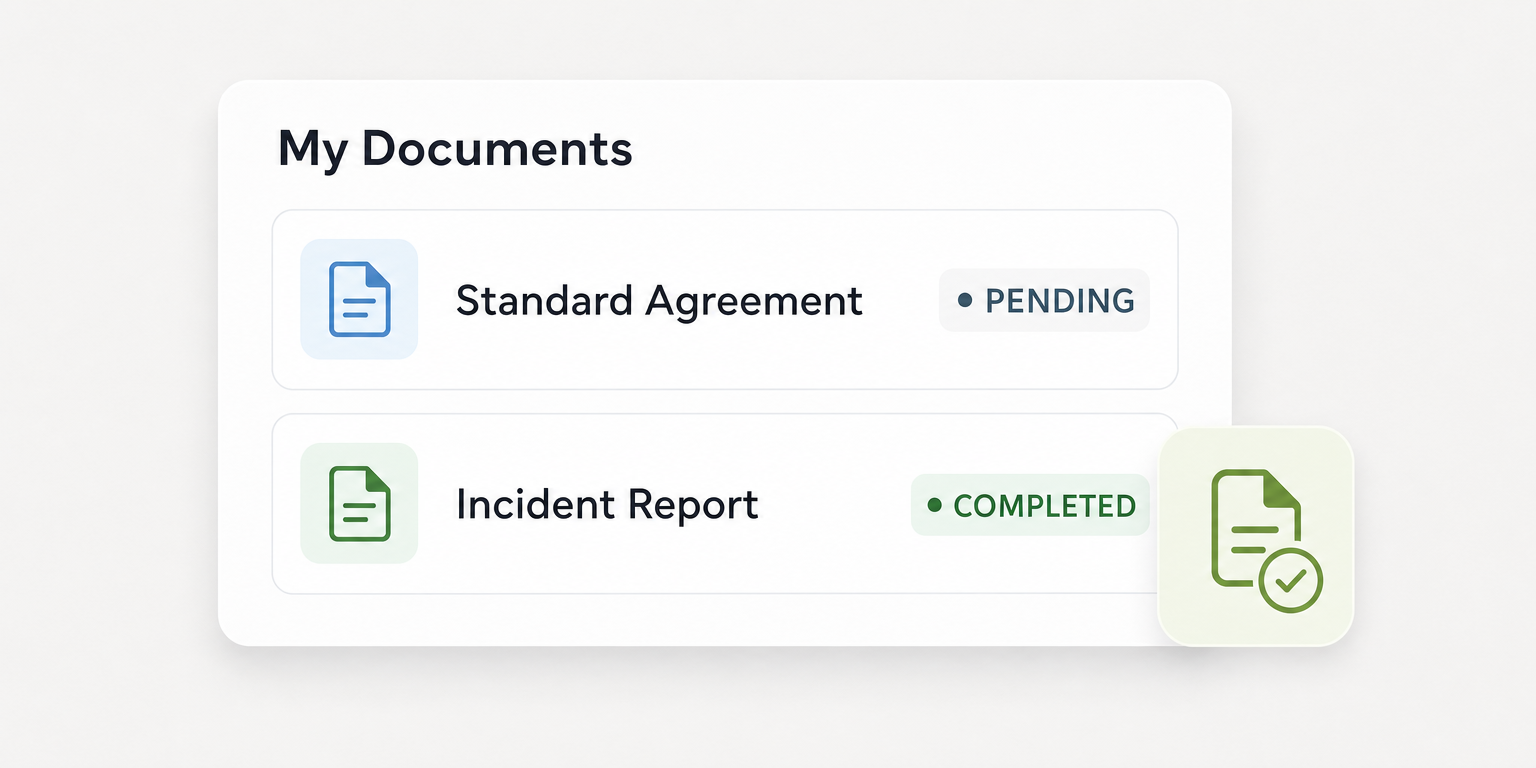
Collection and approval are separate actions. Teambridge’s onboarding documentation describes document collection and credential tracking while stating that the organization defines required checks and remains responsible for credential approval.
License verification also has its own evidence source. NCSBN’s license verification guidance describes Nursys as a source of nurse licensure, discipline, and practice privilege information for participating jurisdictions. Its QuickConfirm service lets employers and recruiters retrieve licensure and applicable discipline documentation.
Ask the vendor where verification evidence comes from, when it was checked, and where the reviewer’s approval is saved. Do not assume an uploaded license image provides the same evidence as a licensing source. Do not infer a Nursys integration from a vendor’s use of the phrase “credential tracking.”
A saved document proves that a file was collected. Your credentialing lead still needs to explain the approval decision.
Test access with the roles that will use the system. Ask who can upload, review, approve, and change a credential status, then reopen the record to inspect the saved decision. If upload alone creates approval, escalate that behavior before accepting the workflow.
Visual evidence requirement: use an approved actual product capture. The onboarding page’s sample tracker preview is not evidence of a customer deployment or a verified live application capture. Collection does not replace the organization’s approval decision.
Put the workflow into practice
See how your team could use this workflow
First shift checks: Test a credential that expires before the start
The staffing manager owns the first shift row. This is where a promising candidate record must support an actual assignment decision.
Hypothetical test: An RN is available for a proposed shift, but a credential required by the organization expires before the shift begins. Assume the organization has documented a policy requiring that credential to remain valid throughout the shift. This scenario tests your policy configuration, not a universal licensing rule.
Run the demonstration in this order:
- Open the RN record and confirm the credential status, expiration, availability, and proposed shift.
- Attempt the assignment using the staffing manager’s intended access.
- Inspect the outcome, the saved decision, and any exception presented to the user.
- Supply renewal evidence, complete the required review, and repeat the assignment test.
The system passes when the demonstrated behavior follows the documented policy. If the policy permits an exception, ask who may authorize it and what evidence remains. If the policy permits none, an ordinary scheduling user should not be able to bypass it in the tested configuration.
For a hypothetical completed audit entry, suppose the vendor allows assignment despite the expired credential. Record the first shift row as “Fail,” name the staffing manager as owner, and cite the demonstrated assignment record. The resolution is to correct the proposed configuration and rerun the test before acceptance, not simply promise that implementation will handle it.
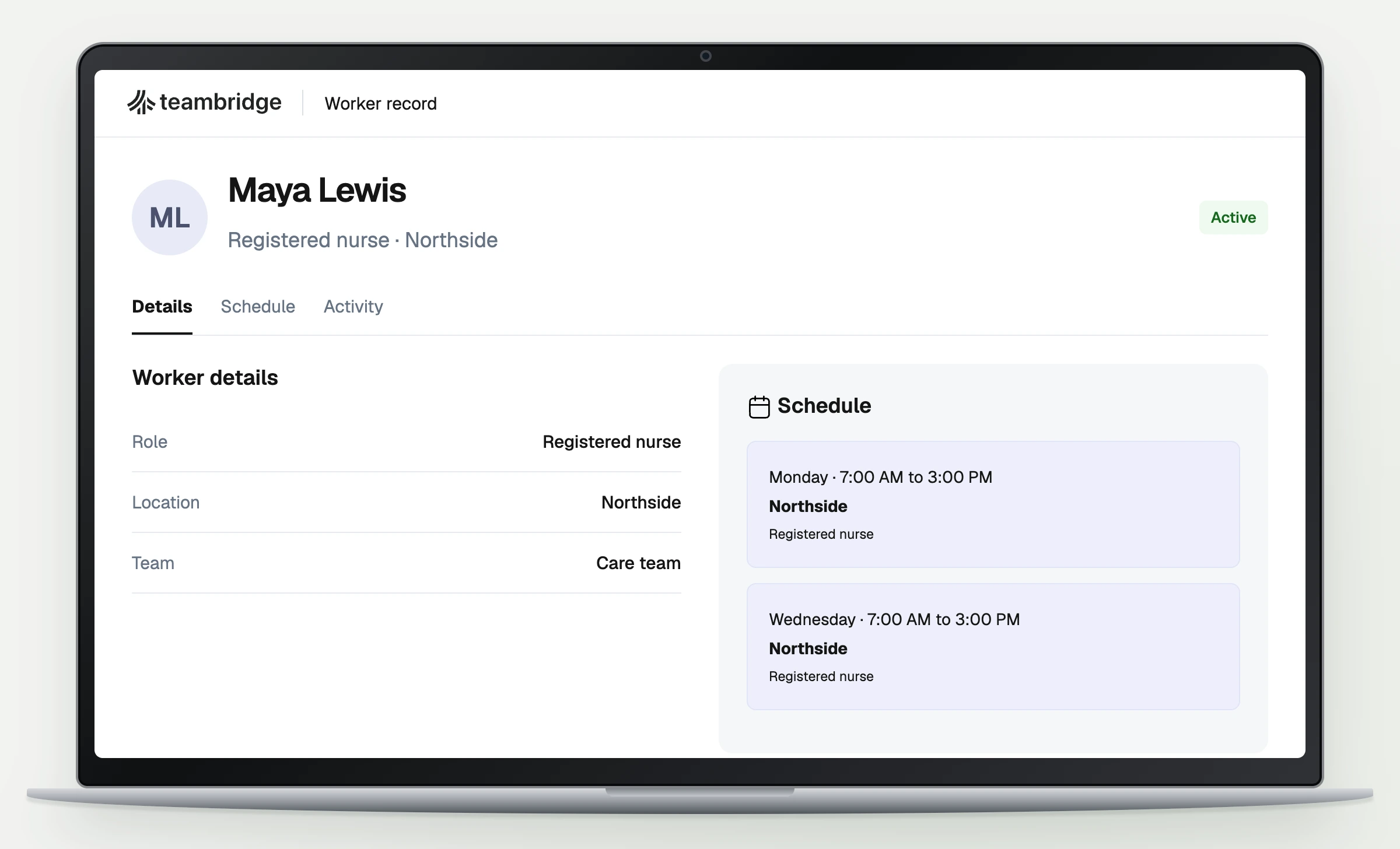
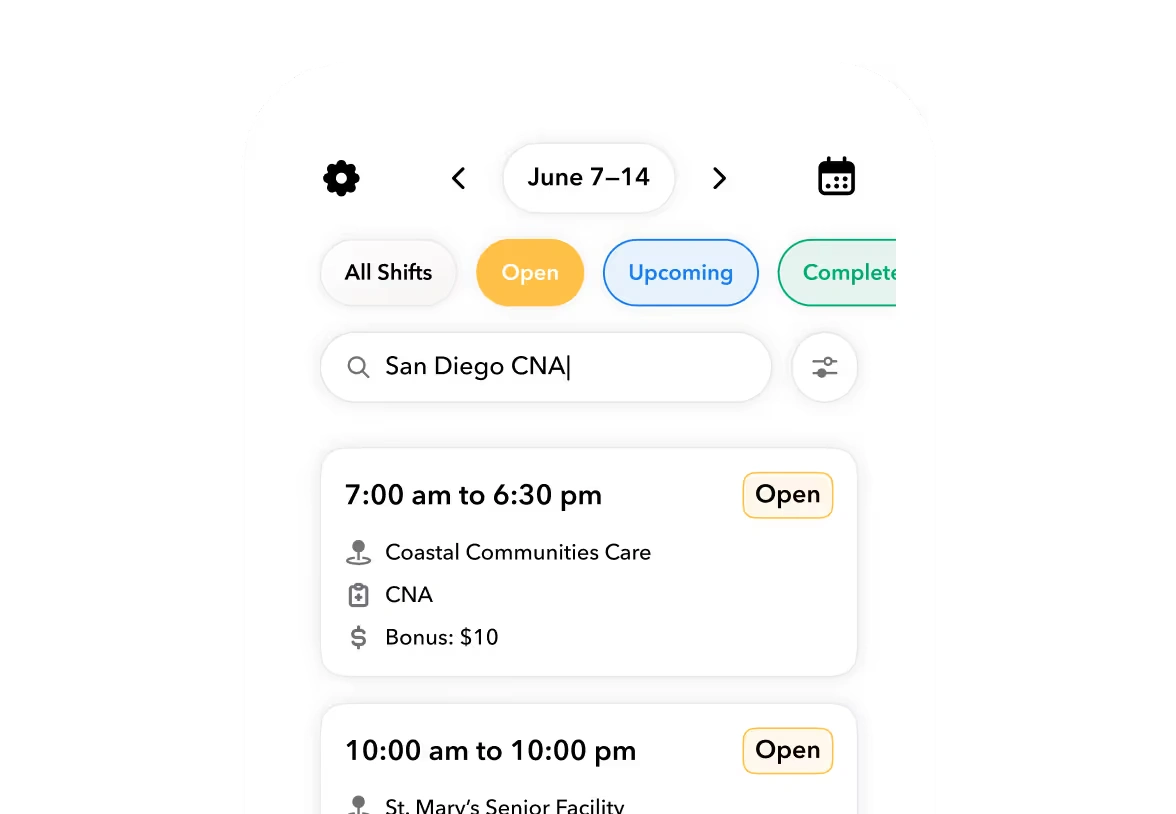
Teambridge’s scheduling documentation describes scheduling around role, location, credentials, availability, and other worker fields. It also states that the exact setup is defined during implementation. That supports requesting a configured demonstration; it does not establish that every tracked expiration automatically blocks every assignment.
Escalate any assignment that contradicts your stated requirements. A warning that the scheduler can ignore may not satisfy a policy that requires a hard restriction.
System transfer checks: Preserve candidate records and expose failed handoffs
The implementation lead owns this check. Whether recruitment and scheduling share one platform or use separate products, identify what must remain available when an approved candidate becomes an operational worker record.
Specify required fields, documents, and decisions before testing the transfer. Include availability and location preferences, but also the approval evidence that operations needs. Decide which users need access to the underlying records and which only need the resulting readiness status.
Ask the vendor to demonstrate a successful transfer and then a deliberate failure using fictional data. Inspect the destination record rather than accepting a success message on the sending side.
A useful test answers four questions:
- Which system owns the record after transfer?
- What happens when a matching worker record already exists?
- Who sees an incomplete or failed transfer?
- How is the failure corrected without obscuring the approved record?
Pass when required information arrives intact and the vendor demonstrates duplicate and error handling. Fail when approval history disappears, a duplicate makes the approved record ambiguous, or the transfer fails silently.
Separate demonstrated behavior from promised implementation work. Naming two products in a proposal does not prove that the required integration exists. Ask for the applicable documentation, required access, field mapping, and the person responsible for resolving an error.
If the vendor cannot demonstrate the transfer yet, mark the row unresolved. The implementation lead should identify the missing evidence and acceptance condition before the purchase decision, not after recruiters have begun moving candidates.
Approve the purchase only when every failed check has a resolution
Review the completed audit with its owners. A critical failure needs a demonstrated resolution before approval. Remaining configuration work needs an accountable person, a verification method, and an agreed acceptance condition.
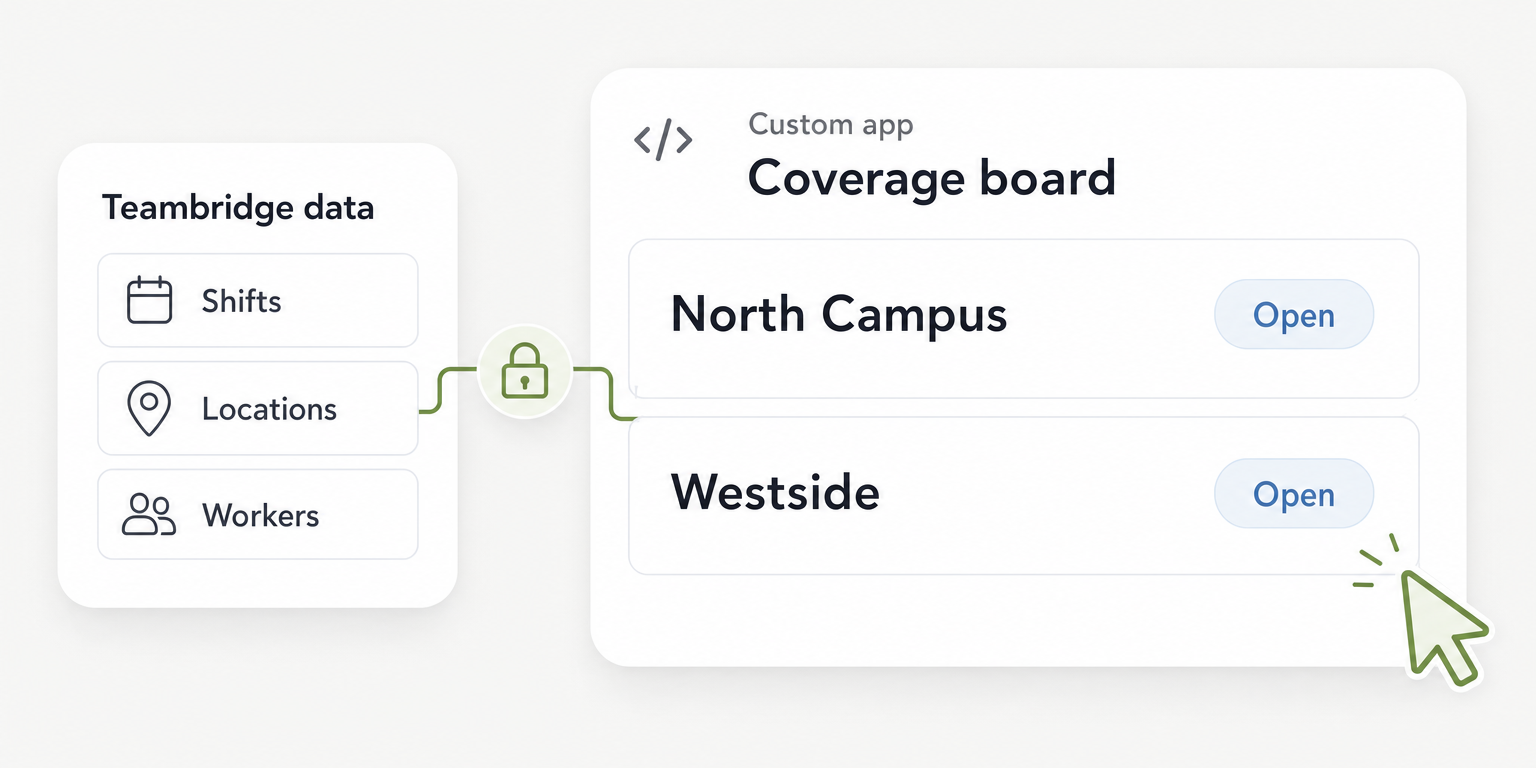
Evaluate Teambridge where it maps to workforce operations. Teambridge is an all in one platform for hourly teams, tailored to each company. Its platform documentation covers scheduling, time tracking, onboarding, and workflows; its onboarding documentation covers credential tracking.
Operator view
Supporting evidence
Platform
Onboarding
That evidence establishes an operational scope to evaluate. It does not establish sourcing, interview management, applicant tracking package inclusion, or the exact behavior of your proposed implementation. Request specific documentation and demonstrations for those requirements.
Keep the audit attached to the purchase decision. Record which tests passed, which failures were corrected, and who will verify outstanding work. Do not turn an unresolved requirement into a pass because a vendor says it is possible.
Bring your completed healthcare recruitment purchase audit to vendor demonstrations. Choose from the evidence your team can inspect, including the exception paths, rather than from feature lists alone.

About the author

Content Writer at Teambridge
Anis Nanai is a content writer at Teambridge, with a focus on workforce management and the realities of running hourly teams. He prioritizes conversations with customers, staying close to the market, and understanding how workforce needs are changing. His writing connects those concerns to practical decisions about scheduling, time tracking, staffing, and automation. He examines product developments through the questions that matter to operators: what does this solve, how would it work for my team, and what evidence supports it?
Company perspective: this author works at Teambridge. Customer outcomes are attributed to their published sources.
View LinkedIn profile